
超薄玻璃

Search documents
央视“财经老王”专访工信部部长李乐成
Yang Shi Xin Wen· 2026-01-13 01:31
Group 1 - The core viewpoint emphasizes the importance of technological innovation and industrial integration in driving China's economic growth, with a strong focus on artificial intelligence and its applications [1][11][13] - The Ministry of Industry and Information Technology (MIIT) plans to enhance the quality of technological supply and elevate the role of enterprises in innovation, aiming for a transformation of technological achievements [7][9] - Key sectors identified for growth include integrated circuits, new materials, aerospace, biomanufacturing, embodied intelligence, and 6G technology [7][9] Group 2 - The MIIT is implementing a new round of central financial support policies for specialized and innovative small and medium-sized enterprises (SMEs) to boost R&D investment and enhance their vitality [11] - The ministry aims to create a national pilot service network for manufacturing to bridge the gap between laboratories and production lines, promoting seamless integration of innovation and industry [9] - The focus on artificial intelligence is highlighted as a competitive edge for China, with expectations for significant advancements and surprises in the future [11][13]

驱动传统产业升级,贵州各地企业向“新”而行强根基
Xin Lang Cai Jing· 2026-01-09 11:28
Group 1: Industry Upgrades and Innovations - The "14th Five-Year Plan" emphasizes optimizing and upgrading traditional industries, encouraging enterprises to enhance technology innovation and product quality to revitalize traditional sectors [1] - A glass manufacturing company in Guizhou has achieved a breakthrough in producing 1.4mm ultra-thin glass, reducing thickness from 2mm to 1.4mm through precise temperature control and parameter adjustments [3] - The glass industry upgrade is not only about making products thinner but also about creating specialized products, such as low-radiation coated glass for green buildings, fostering a complementary differentiation among companies [5] Group 2: Economic Development and Support Mechanisms - The Guizhou Luobi Economic Development Zone has become the largest glass industry cluster in the province, housing 20 upstream and downstream glass enterprises, and is working towards becoming a significant glass industry base in Southwest China [8] - The local government is implementing a service mechanism to support existing enterprises in stabilizing and increasing production, aiming to help them achieve full production capacity [8] Group 3: Specific Industry Performance - The lighter and more efficient production methods in the lighter manufacturing sector have led to an annual output of over 1.2 billion lighters, generating a revenue of 420 million yuan, with a global market share of 6.7% for "Cingong-made" lighters [10][13] - Guizhou's liquor industry is also evolving, with companies developing new products and diversifying markets, resulting in a 15% year-on-year increase in production value [15][17] - The liquor company has adopted a dual strategy of producing both strong and sauce-flavored varieties to cater to different regional preferences, with a target growth rate of around 30% for the current year [21]
华夏银行石家庄分行:“科技+绿色”双轮驱动 助力玻璃产业“智”造升级
Zhong Guo Jin Rong Xin Xi Wang· 2025-12-29 05:20
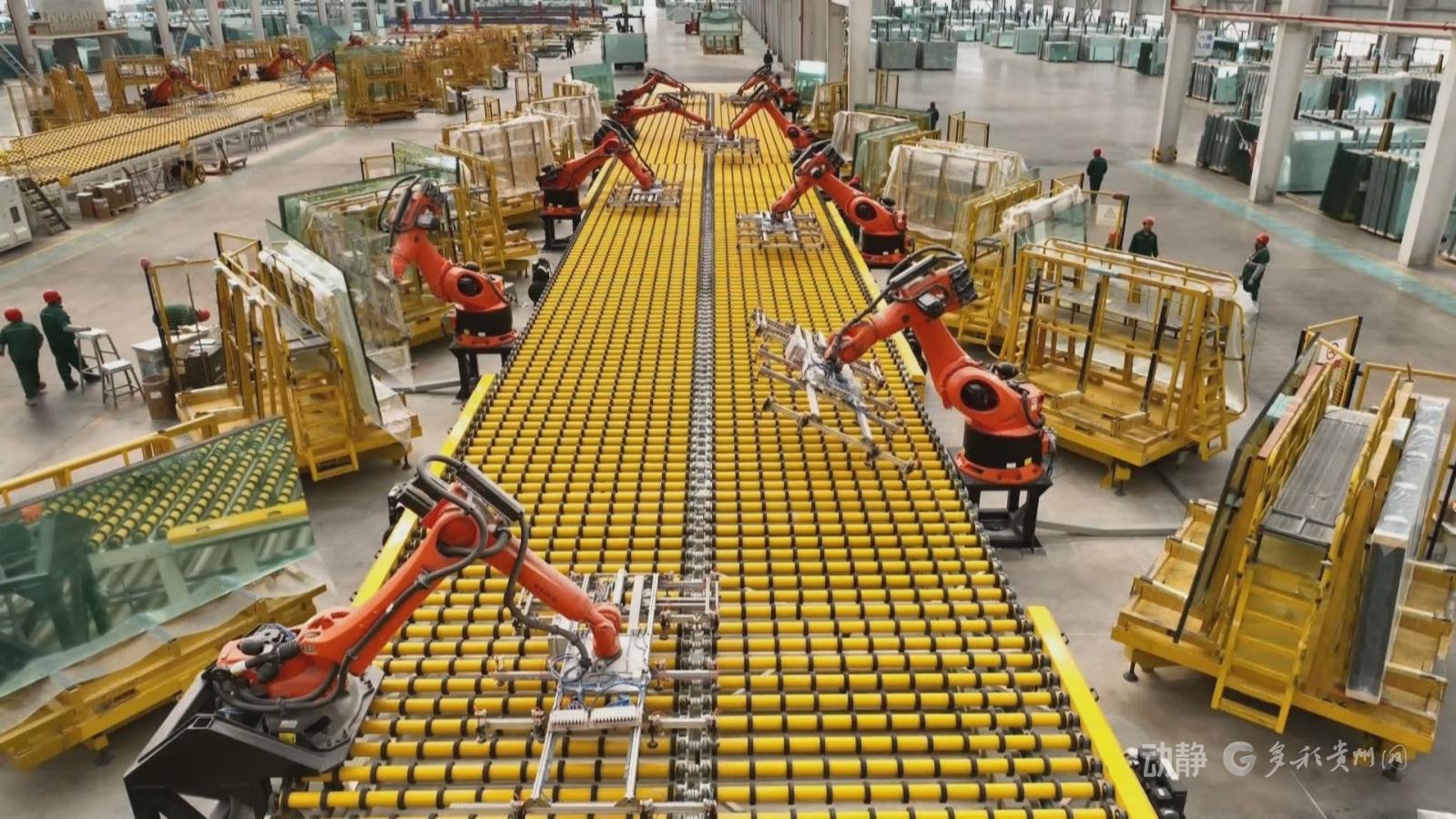
Core Insights - The transformation of the glass industry in Shihezi City, Hebei Province, is significantly supported by Huaxia Bank's financial services, which have provided over 350 million yuan in loans for equipment upgrades and technological renovations, all meeting green and technological standards [1][3] Group 1: Financial Support and Impact - Huaxia Bank's Shijiazhuang branch has issued the first equipment upgrade loan of 70 million yuan, followed by an additional 76 million yuan, enabling the replacement of an old production line and the establishment of a new intelligent green production line [2] - The new production line is expected to enhance production efficiency by over 30% and reduce energy consumption per unit by 15%, leading to a carbon reduction of over 10,000 tons annually [2] - The bank's technology loans have exceeded 10 billion yuan by the end of November, with a growth rate of 24.9%, supporting over 300 technology-oriented enterprises [3] Group 2: Industry Transformation - The glass industry in Shihezi City is transitioning from traditional building glass to high-end special glass, with over 70% of production capacity now in high-end glass [3] - The implementation of "one furnace, two lines" technology has reduced natural gas consumption by 30 to 40 cubic meters per ton of glass and improved the quality rate by 15% [3] - Waste emissions have decreased by 78%, and energy consumption per unit product has dropped from 15-16 kg of standard coal to 10-12 kg [3] Group 3: Future Focus - Huaxia Bank aims to continue focusing on the dual development of technology and green finance, reinforcing the foundation for industrial upgrades in the glass sector [4]

“一带一路”俄罗斯超薄玻璃市场发展环境及投资建议评估预测报告(2026版)
Sou Hu Cai Jing· 2025-12-25 01:30
Core Insights - The ultra-thin glass market is projected to grow from $13.2 billion in 2025 to approximately $29.5 billion by 2033, indicating a significant expansion driven by various industries [3][5]. Group 1: Market Overview - Ultra-thin glass is characterized by its thickness ranging from micrometers to a few millimeters, produced using modern techniques like float glass process and chemical vapor deposition (CVD) [3]. - The material is widely used in consumer electronics, automotive displays, medical devices, and solar technology due to its lightweight, durability, and optical clarity [3][5]. Group 2: Demand Drivers - The rapid development and widespread adoption of smartphones, tablets, and wearable devices are key drivers for market expansion, with consumer preferences leaning towards sleek, high-resolution displays [5]. - Innovations such as foldable phones and flexible displays heavily rely on ultra-thin glass, which meets the demand for thinner, lighter, and stronger electronic devices [5]. Group 3: Technological Advancements - Continuous improvements in glass manufacturing technologies, including innovations in float glass and CVD processes, have enhanced the production capabilities of ultra-thin glass [5][6]. - These advancements have led to better glass quality, reduced material thickness, and lower overall manufacturing costs, facilitating broader market adoption [5]. Group 4: Industrial Applications - In the automotive and aerospace sectors, ultra-thin glass is increasingly used for next-generation displays, head-up displays (HUD), and lightweight glass to improve fuel efficiency and extend electric vehicle (EV) range [6]. - The material's high optical clarity and lightweight properties are crucial for applications in cockpit displays and cabin interiors in aerospace [6]. Group 5: Challenges - The inherent brittleness of ultra-thin glass poses challenges throughout its lifecycle, necessitating robust handling procedures and high-performance packaging to minimize damage risks [6][7]. - High manufacturing costs compared to traditional materials present a significant barrier to entry in price-sensitive markets, requiring ongoing innovations in industrial-scale production to achieve cost reductions [7]. Group 6: Compatibility and Technical Barriers - Integrating ultra-thin glass with emerging technologies, such as flexible substrates and multi-layer foldable displays, presents significant technical challenges [7]. - Ensuring reliable adhesion with other functional layers and maintaining mechanical durability under repeated bending cycles are critical for the successful application of ultra-thin glass in next-generation devices [7].
华为将投150亿发展生态;淘宝闪购团购业务上线丨新鲜早科技
2 1 Shi Ji Jing Ji Bao Dao· 2025-09-22 02:35
Group 1: Technology Sector Developments - Huawei plans to invest 15 billion yuan in ecosystem development, with over 1,300 software and hardware products compatible with HarmonyOS and 17 million devices running HarmonyOS 5 [2] - Neuralink aims to start brain-computer interface trials in October for individuals who have lost their ability to speak, allowing them to convert thoughts into text without a keyboard [3] - Xiaomi's collaboration with Apple allows for deeper integration of Apple CarPlay in Xiaomi vehicles, with over 50% of Xiaomi SU7 owners using Apple phones [4] Group 2: Regulatory and Compliance Responses - Weibo has established a special rectification team to address issues raised by regulatory authorities regarding the management of trending topics and information content [5] - Kuaishou has also formed a special team to improve its trending topic management mechanisms in response to regulatory feedback [6] - TikTok's parent company, ByteDance, is committed to complying with Chinese laws while ensuring TikTok's continued operation in the U.S. [7] Group 3: Business Collaborations and Investments - Midea Group and Huawei have signed a strategic cooperation agreement to leverage their strengths in technology and information communication across various sectors [9] - Zhejiang Shikong Daoyu has secured 2 billion yuan in investments for its global headquarters project and business development in satellite communications [15] - Baoli International plans to invest in semiconductor testing equipment company Hongtai Technology, reflecting confidence in the semiconductor testing industry [16] Group 4: Market and Product Launches - Taobao has launched a trial for its flash purchase group buying service in cities like Shanghai and Shenzhen, covering various food categories [8] - Microsoft will increase the prices of several Xbox consoles in the U.S. starting in October due to changes in the macroeconomic environment [10]
煅烧“冬储玻璃”的期货力量
Zheng Quan Ri Bao· 2025-07-16 16:22
Core Viewpoint - The transformation of the glass industry in Shahe, Hebei Province, showcases the evolution from a small workshop to a modern industrial cluster, highlighting China's manufacturing upgrade and the development of new productive forces [1][4]. Industry Development - The Shahe glass industry has evolved from producing low-end building glass using recycled materials to adopting advanced technologies like float glass production, significantly enhancing efficiency and reducing energy consumption [3][4]. - Currently, Shahe produces 20% of the national glass output, with over 600 deep processing enterprises and more than 1,000 product varieties, establishing itself as one of the largest glass industry hubs in China [4]. Technological Innovation - The industry has embraced automation and intelligent production, with companies like Dejin Glass implementing unmanned operations and real-time monitoring systems to enhance production efficiency [2][3]. - The focus on high-end, intelligent, and green production has led to the establishment of advanced production lines for automotive glass and other high-tech applications, breaking foreign technology monopolies [3][4]. Futures Market Impact - The introduction of glass futures has enabled local enterprises to manage risks associated with seasonal price fluctuations and inventory challenges, transitioning from passive to proactive risk management strategies [5][6][7]. - The futures market has become an essential tool for over 80% of glass production capacity in Shahe, facilitating better resource allocation and production planning [8]. Collaborative Efforts - The glass industry in Shahe has developed a collaborative ecosystem where production, trade, and processing enterprises work together to utilize futures for risk management, enhancing overall industry resilience [8][9]. - Future initiatives will focus on integrating price management, financial circulation, and technological upgrades to further advance the industry's transformation towards high-end, intelligent, and green production [8][9].
亚玛顿:布局海外产能,关注钙钛矿、超薄玻璃-20250429
HTSC· 2025-04-29 04:10
Investment Rating - The investment rating for the company is maintained as "Buy" with a target price of 17.72 RMB [8][9]. Core Views - The company reported a revenue of 289 million RMB and a net profit attributable to shareholders of -13 million RMB for 2024, reflecting a year-on-year decline of 20.3% and 2.1 million RMB respectively, which aligns with the midpoint of the earnings forecast [1]. - In Q1 2025, the company achieved a revenue of 56 million RMB and a net profit of 0.5 million RMB, showing a year-on-year decline of 36.8% and 58.3% respectively, although the gross margin improved compared to the previous quarter [1]. - The company is focusing on overseas capacity expansion, particularly in the photovoltaic glass sector, with a planned investment of 240 million USD in a production line in the UAE, which is expected to enhance its international competitiveness [4]. - The company has a differentiated competitive advantage in ultra-thin glass products, with sales of 1.6mm ultra-thin photovoltaic glass accounting for over 50% of its total sales in 2024 [4]. Summary by Sections Financial Performance - The company’s revenue from solar glass, solar modules, electricity sales, and electronic glass products for 2024 was 262 million RMB, 4 million RMB, 5 million RMB, and 16 million RMB respectively, with year-on-year changes of -20.2%, -76.8%, -6.1%, and +68.7% [2]. - The overall gross margin for the company improved from 2.3% in Q4 2024 to 7.2% in Q1 2025, with expectations for continued improvement in Q2 as photovoltaic glass prices stabilize [2]. Cost and Cash Flow - The company’s expense ratio for 2024 was 7.2%, an increase of 1.7 percentage points year-on-year, driven by a decline in revenue [3]. - Operating cash flow improved significantly, reaching 340 million RMB in 2024, a year-on-year increase of 187.7%, primarily due to reduced cash payments for goods and services [3]. Profitability Forecast - The company’s EPS is projected to be 0.18 RMB, 0.80 RMB, and 0.90 RMB for 2025-2027, with upward adjustments of 18% and 9% for 2025 and 2026 respectively [5]. - The target price of 17.72 RMB corresponds to a PB ratio of 1.2x for 2025, reflecting the unique characteristics and first-mover advantages of the ultra-thin glass segment [5]. Market Position - The company is leveraging its early technology experience in TCO glass and mature electronic display panel technology to develop ITO conductive glass, which meets the market demand for high-strength, low-thickness cover glass for large-size perovskite products [4].

亚玛顿(002623):布局海外产能,关注钙钛矿、超薄玻璃
HTSC· 2025-04-29 02:23
Investment Rating - The investment rating for the company is "Accumulate" with a target price of 17.72 RMB [8][9]. Core Views - The company reported a revenue of 289 million RMB and a net profit attributable to the parent company of -13 million RMB for 2024, reflecting a year-on-year decline of 20.3% and 2.1 million RMB respectively. The performance aligns with the midpoint of the earnings forecast [1]. - In Q1 2025, the company achieved a revenue of 56 million RMB and a net profit of 0.5 million RMB, showing a year-on-year decline of 36.8% and 58.3% respectively. Despite the decline in revenue and profit, the gross margin improved compared to the previous quarter [1]. - The company is focusing on overseas capacity expansion, with a planned investment of 240 million USD in the UAE to build a production line for 500,000 tons of photovoltaic glass annually, enhancing its international competitiveness [4]. - The company maintains a differentiated competitive strategy, with over 50% of its sales in ultra-thin photovoltaic glass in 2024, and is developing innovative technologies for ITO conductive glass to meet future market demands [4]. Summary by Sections Financial Performance - In 2024, the company’s revenue from solar glass, solar modules, electricity sales, and electronic glass was 262 million RMB, 4 million RMB, 5 million RMB, and 16 million RMB respectively, with year-on-year changes of -20.2%, -76.8%, -6.1%, and +68.7%. The gross margins were 2.8%, -2.0%, 28.7%, and 11.7% respectively [2]. - The overall gross margin improved from 2.3% in Q4 2024 to 7.2% in Q1 2025, with expectations for continued improvement in Q2 as photovoltaic glass prices stabilize [2]. Cost and Cash Flow - The company’s expense ratio for 2024 was 7.2%, an increase of 1.7 percentage points year-on-year, driven by a decline in revenue. The operating cash flow improved significantly to 340 million RMB, a year-on-year increase of 187.7% [3]. Market Position and Strategy - The company is enhancing its competitive edge through overseas capacity expansion and a focus on differentiated products, particularly in the ultra-thin glass segment [4]. - The company’s unique technology and early experience in TCO glass production position it well for future market demands in high-strength, low-thickness glass for perovskite products [4]. Earnings Forecast and Valuation - The earnings per share (EPS) forecast for 2025-2027 is adjusted to 0.18 RMB, 0.80 RMB, and 0.90 RMB respectively, reflecting an 18% and 9% increase from previous estimates. The target price is set at 17.72 RMB, based on a price-to-book ratio of 1.2x for 2025 [5].