供应链中断

Search documents
European vehicle production at risk after Nexperia governance dispute
Yahoo Finance· 2025-10-17 09:54
Core Viewpoint - The Dutch government's emergency governance measures on semiconductor maker Nexperia have raised concerns about the supply of critical chips to the European automotive industry, potentially impacting vehicle production and supply chains [1][2]. Group 1: Government Actions and Management Changes - The Dutch Ministry of Economic Affairs has invoked the Goods Availability Act, restricting Nexperia from making significant business decisions without government approval for one year [1]. - Nexperia's former CEO Zhang Xuezheng has been suspended due to management issues, with CFO Stefan Tilger appointed as interim CEO [2]. - The Dutch Enterprise Chamber has expressed provisional doubts about Nexperia's management, indicating potential risks to semiconductor availability [2]. Group 2: Impact on the Automotive Industry - Nexperia is a key supplier of components for electronic control units and vehicle electrical systems, and disruptions in its supply could halt production at parts suppliers and assembly lines [3][4]. - The European Automobile Manufacturers' Association (ACEA) has warned that existing stocks of Nexperia components may deplete within weeks, complicating the situation for automakers [5]. - Although alternative chips are available, the process of re-homologation and ramp-up could take several months, further exacerbating supply chain issues [5]. Group 3: Broader Industry Concerns - ACEA director general Sigrid de Vries highlighted that while automakers have diversified supply chains, risks remain significant across the industry, affecting many suppliers and virtually all ACEA members [5]. - The situation is compounded by intensified pressure on Nexperia due to export regulations from the US and China, which may further limit its operational capabilities [6].
波兰封边境卡千亿中欧班列:300 列货车滞留,欧洲供应链要崩?
Sou Hu Cai Jing· 2025-10-15 02:38
Core Insights - The closure of the Poland-Belarus border has severely disrupted the Central European freight transport, with over 300 freight trains currently stalled, impacting trade significantly [2] - The situation has forced companies, particularly in the automotive sector, to resort to air freight for essential components, leading to an eightfold increase in costs, which will ultimately be passed on to consumers [3] - Poland's actions appear contradictory, as it seeks to export agricultural products to China while simultaneously blocking freight trains, indicating a geopolitical maneuvering [3] Group 1: Impact on Trade and Logistics - The Malashevich hub, a critical point for Central European freight, is paralyzed due to the border closure, with a backlog of goods expected to take three to four weeks to clear [2] - Companies relying on timely deliveries are facing significant challenges, with some forced to switch to sea freight, extending delivery times from 30 to 45 days [3] - The European Chamber of Commerce has warned that supply chain disruptions have already increased costs by 15%, with further delays likely to exacerbate the situation [3] Group 2: Company Responses and Strategic Adjustments - Companies that previously relied heavily on a single transport route are now scrambling to adapt, highlighting the risks of over-reliance on one supply chain [3] - BYD has established a factory in Hungary, allowing it to supply 80% of its European market locally, thus avoiding the current disruptions [3] - The ongoing situation serves as a wake-up call for many businesses to diversify their logistics strategies to mitigate future risks [3]


China Hits Back at Trump’s Tariffs with Rare Earth Restrictions — Wipes Over $500M from Crypto Market
Yahoo Finance· 2025-10-14 11:45
Group 1: Export Controls and Market Impact - China has tightened export controls on rare earth magnets, leading to a $7 billion sell-off in cryptocurrencies and escalating tensions with the U.S. [1] - The new measures expand existing restrictions to five additional rare earth elements, requiring export approval for products containing more than 0.1% of Chinese-sourced rare earths [3][4] - China's rare earth exports fell by 31% in September, indicating a slowdown prior to the latest restrictions [5] Group 2: Industry Implications - With China controlling over 90% of global rare earth processing capacity, the new policy raises concerns about supply chain disruptions and increased production costs worldwide [4] - The review process for export licenses has become more stringent, with applications facing longer approval times and additional documentation requests [4][5] - The tightening of controls has already led to magnet shortages and temporary shutdowns at automotive plants earlier this year [5] Group 3: Government Responses - China's Ministry of Commerce defended the export controls as legitimate actions to refine the export management system and safeguard national security [6] - In response, President Trump announced a 100% tariff on all Chinese imports, accusing China of aggressive export tactics [7]
Evercore ISI:铝厂火灾将给福特带来高达10亿美元的损失
Wen Hua Cai Jing· 2025-10-09 02:01
Core Viewpoint - A fire at an aluminum plant in New York is expected to significantly impact Ford's production of the F150 truck, potentially leading to losses of up to $1 billion for the automaker [1] Group 1: Incident Details - The fire occurred on September 16 and is expected to halt most operations at the aluminum plant until the first quarter of 2026 [1] - The incident will affect the supply of metal for Ford's best-selling F150 truck, particularly as the year-end approaches [1] Group 2: Company Response - Ford has been working closely with Novelis, one of its aluminum suppliers, to address the situation and explore alternative solutions to minimize potential disruptions [1] - A dedicated team has been assigned to manage the response to the supply chain interruption caused by the fire [1] Group 3: Industry Impact - While other automakers may also be affected by the fire, Ford is expected to experience the most significant impact due to its reliance on aluminum for the F150 truck's body, which was adopted over a decade ago to reduce vehicle weight [1]

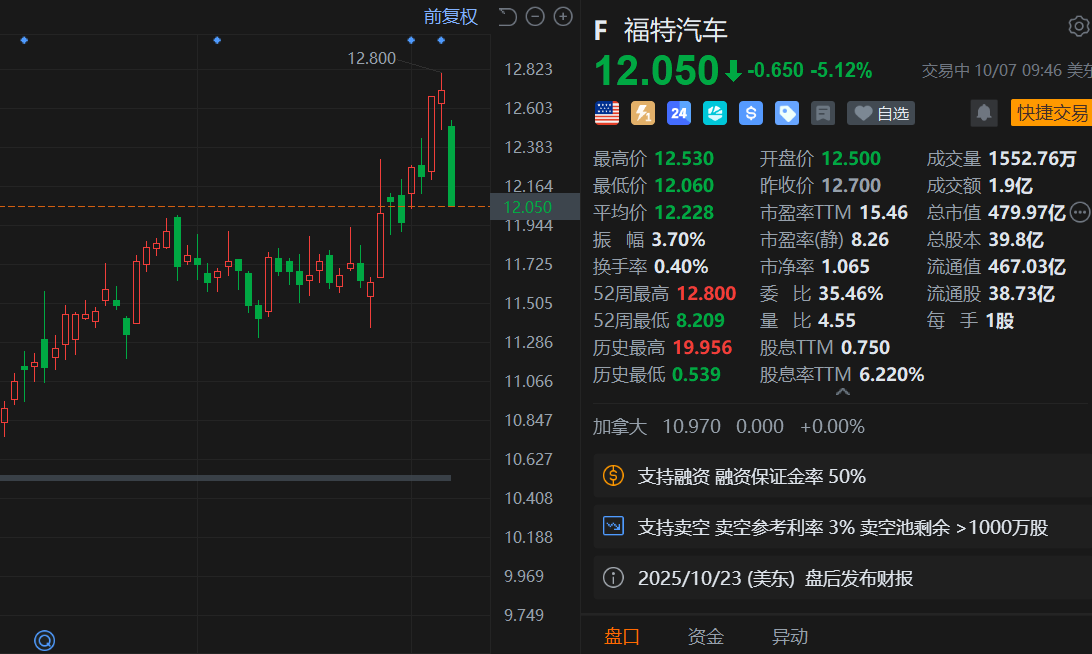
美股异动|福特盘初跌超5% 供应商工厂起火预计将导致业务中断数月
Ge Long Hui· 2025-10-07 13:53
Core Viewpoint - Ford Motor Company experienced a rapid decline of over 5% in stock price due to a significant fire at Novelis' plant in Oswego, New York, which is a key supplier of aluminum sheets, providing approximately 40% of the aluminum used in the U.S. automotive industry [1] Group 1: Impact on Ford - The fire at Novelis' facility is expected to halt production until early next year, leading to significant delays in the production of certain Ford vehicle models [1] - The incident is anticipated to affect not only Ford but also other automotive manufacturers reliant on Novelis for aluminum supply [1] Group 2: Market Reaction - Following the news, Ford's stock opened at a price of 12.500, reflecting a decrease of 0.650 or 5.12% from the previous close of 12.700 [2] - The trading volume for Ford shares reached 15.5276 million, indicating heightened market activity in response to the news [2]
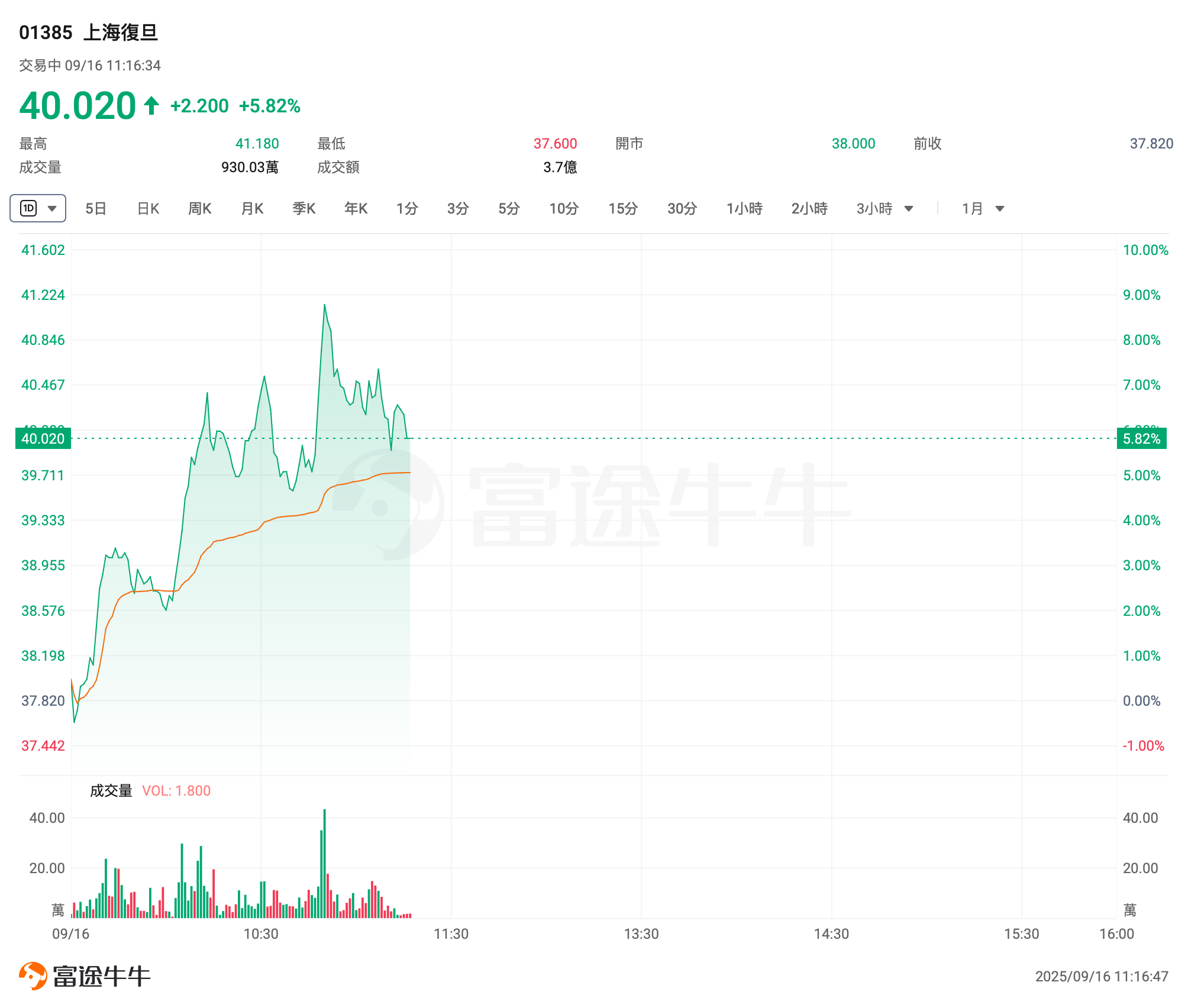
上海复旦盘中一度涨超7%,公司已为供应链中断做好充分准备,大摩称需求方面影响有限
Zhi Tong Cai Jing· 2025-09-16 05:04
Core Viewpoint - The U.S. Department of Commerce's Bureau of Industry and Security (BIS) has added 23 Chinese entities, including Fudan Microelectronics, to its Entity List, impacting the semiconductor sector [3] Company Summary - Fudan Microelectronics has increased its strategic reserves of wafers and key raw materials, with inventory growing from approximately 600 million yuan at the end of 2020 to about 3.1 billion yuan by mid-2025, enhancing supply chain stability and risk resilience [3] - The company has begun wafer production at local fabs since 2023 and is gradually shifting FPGA production to mainland China, indicating preparedness for supply chain disruptions [3] - Morgan Stanley's report suggests limited impact on demand, as overseas sales accounted for only 6% of the company's total revenue last year, although short-term selling pressure may arise [3]
大行评级|大摩:上海复旦短期或面临沽售压力,但需求方面影响有限
Ge Long Hui· 2025-09-16 02:40
Core Viewpoint - Morgan Stanley's research report indicates that Shanghai Fudan is well-prepared for supply chain disruptions caused by being placed on the U.S. trade blacklist, having started local wafer production in 2023 and gradually shifting FPGA production to mainland China [1] Group 1: Company Preparedness - The company has begun wafer production at local fabs since 2023 [1] - FPGA production is being gradually transferred to mainland China [1] Group 2: Demand Impact - The impact on demand is considered limited, as overseas sales accounted for only 6% of total revenue last year [1] Group 3: Market Reaction - There may be short-term selling pressure due to U.S. asset management firms being prohibited from trading Shanghai Fudan's shares [1] - Morgan Stanley has set a target price of HKD 32.8 and maintains an "Overweight" rating on the stock [1]
ADP首席经济学家Nela Richardson:美国企业招聘放缓可能有多种原因
Xin Hua Cai Jing· 2025-09-04 13:43
Core Insights - The slowdown in hiring by U.S. companies may be attributed to various factors such as labor shortages, lack of consumer confidence, and supply chain disruptions [1] Group 1 - U.S. companies are experiencing a slowdown in recruitment activities [1] - Factors contributing to this slowdown include labor shortages, which indicate a tight labor market [1] - Consumer confidence is reportedly low, which may affect hiring decisions [1] - Supply chain disruptions are also impacting the ability of companies to hire effectively [1]

X @外汇交易员
外汇交易员· 2025-08-28 07:46
Economic Impact - The Bank of Korea anticipates a significant blow to the South Korean economy due to the 15% US tariff on Korean exports, affecting trade, financial markets, and business confidence [1] - The US tariff is projected to decrease South Korea's economic growth by 0.45 percentage points this year and 0.6 percentage points by 2026 [1] - The US tariff is also expected to reduce South Korea's CPI by 0.15 percentage points this year and 25 percentage points by 2026 [1] Industry Specific Concerns - The steel and automotive industries are particularly vulnerable to the US tariffs [1] - Increased investment in the US, driven by the tariffs, could potentially deplete South Korean industries [1] Long-Term Risks - South Korea faces the risk of supply chain disruptions, industrial hollowing-out, and shifts in the global trade landscape [1] - These risks could permanently reshape the South Korean economy, potentially leading to job losses and talent drain [1]
兖煤澳大利亚2025年上半年营收26.75亿澳元,同比减少15%,税后利润1.63亿澳元,下降61%,产量增长11%
Jin Rong Jie· 2025-08-20 01:07
Core Viewpoint - Yancoal Australia reported a significant decline in revenue and profit for the first half of 2025, primarily due to falling global coal prices and supply chain disruptions [1][3]. Financial Performance - The company's revenue for the first half of 2025 was AUD 2.675 billion, a 15% decrease year-on-year [1]. - After-tax profit dropped to AUD 163 million, reflecting a substantial 61% decline compared to the previous year [1]. Coal Production and Sales - Despite challenges, the company achieved an 11% increase in equity coal production, reaching 18.9 million tons [1][4]. - However, coal sales decreased by 2%, falling from 16.9 million tons in the first half of 2024 to 16.6 million tons [4]. Price Trends - The average selling price of self-produced coal fell by 15%, from AUD 176 per ton in the first half of 2024 to AUD 149 per ton [3]. - Major coal price indices experienced significant declines, with the GCNewc thermal coal index dropping by USD 28 per ton (21%) and the API5 coal index decreasing by USD 19 per ton (21%) [3]. Supply Chain Issues - Supply chain disruptions, particularly due to severe weather in New South Wales, led to operational delays and increased inventory levels [4]. - The company faced challenges with rail network interruptions and restricted vessel passage at Newcastle port, resulting in coal stockpiling and cash flow impacts [4]. Outlook and Guidance - Yancoal Australia remains optimistic about achieving its full-year production target of 35 million to 39 million tons, supported by strong production capacity and operational efficiency [6]. - The company aims to maintain cash operating costs within the lower half of its guidance range, with costs reported at AUD 93 per ton [6]. - Capital expenditures are on track, with AUD 407 million spent in the first half, expected to reach the full-year guidance of AUD 750 million to AUD 900 million [6].