信用体系

Search documents
深挖这一市场潜力促进消费增长,国外经验带来哪些启示?
Zhong Guo Qi Che Bao Wang· 2025-12-17 07:46
Core Insights - The used car market is becoming a significant growth curve in the consumer sector across multiple countries, reflecting the maturity of the automotive industry [3] - Developed economies like the US, Europe, and Japan have established unique development models for their used car industries through policy innovation, technological empowerment, and ecological restructuring [3] Group 1: US Used Car Market Overview - The US used car market is characterized by a well-regulated and prosperous trading system, with a high ratio of used car transactions to new car sales [4] - A federal and state-level regulatory framework ensures the healthy development of the market, mandating dealers to disclose vehicle history, including accidents and maintenance records [4] - Third-party organizations have emerged to enhance consumer transparency by providing detailed vehicle history reports, accessible through the vehicle identification number (VIN) [5] Group 2: Consumer Trust and Financial Innovations - The acceptance of used cars among American consumers is high, with 30%-40% of buyers opting for 3-5 year-old vehicles due to their cost-effectiveness and practicality [6] - Financial innovations such as low-interest loans and flexible financing options have lowered the barriers for consumers, enhancing the overall purchasing experience [6] - Consumer protection measures like a "7-day no-reason return" policy and "90-day quality warranty" further bolster consumer confidence in purchasing used cars [6] Group 3: Circular Economy and Technological Advancements - The US used car market promotes a circular economy by ensuring that only vehicles that pass strict inspections enter the market, while those that do not meet standards are scrapped [7] - Digital transaction channels are evolving, with innovations like VR viewing and unmanned delivery reducing transaction times significantly [7] - A robust credit system is supported by third-party organizations that provide comprehensive vehicle history reports, maintaining high consumer trust levels [7] Group 4: Recommendations for Other Markets - Experts suggest that other countries should establish a regulatory framework combining laws, standards, and oversight to clarify responsibilities in used car transactions and punish fraudulent activities [8] - A unified national inspection and evaluation standard is recommended, along with the introduction of third-party certification agencies to ensure objective and reliable vehicle assessments [8] - Establishing a national used car information database is advised to eliminate information asymmetry, allowing consumers to make informed decisions based on comprehensive vehicle history [9]


锐评|解决信任危机不能光靠“巨型吊牌”
Sou Hu Cai Jing· 2025-11-24 20:12
Core Viewpoint - The emergence of oversized anti-tampering tags in online clothing shopping reflects the high "trust cost" in the e-commerce sector, driven by rampant "wear and return" practices that burden retailers [2][3]. Group 1: Industry Challenges - The fashion industry is facing significant pressures from high inventory and rapid turnover, exacerbated by the increasing prevalence of "wear and return" incidents [2]. - Public data indicates that the return rate for women's clothing in e-commerce is as high as 50% to 60%, with live-streaming returns exceeding 80% [2]. Group 2: Consumer Behavior - Reports highlight that some consumers purchase clothing for one-time events, such as weddings or trips, and return them after use, contributing to increased operational costs for retailers [2]. - Student groups have been known to collectively purchase clothing for events and exploit platform rules for returns, often returning items that are wrinkled, stained, or visibly worn [2]. Group 3: Retailer Responses - Retailers are resorting to physical measures like oversized tags to deter opportunistic consumers who intend to "rent" clothing for free, as traditional methods of counteraction are ineffective under current platform rules [2][3]. - The oversized tags, while seemingly absurd, serve to protect the integrity of the consumption ecosystem by making it more difficult for dishonest consumers to exploit return policies [3]. Group 4: Future Considerations - There is a need for the establishment of more reasonable return policies and a transparent credit system to prevent exacerbating competition and "involution" in the market [3][4]. - A sustainable trading ecosystem requires collaboration between retailers and consumers, emphasizing the importance of mutual trust rather than reliance on physical deterrents [4].

建设统一信用市场 筑牢信用经济基石
Shang Hai Zheng Quan Bao· 2025-11-19 18:24
Core Viewpoint - The construction of a unified credit market is essential for enhancing financial service efficiency and achieving the strategic goals outlined in the "14th Five-Year Plan" [1][5][11]. Group 1: Importance of Credit System - A robust credit system is a fundamental component of the socialist market economy and is crucial for improving financial market functions [2][3]. - The credit system's development has been prioritized since the 18th National Congress, with significant progress in top-level design and the establishment of a national platform [2][3][4]. Group 2: Current Challenges in Credit Market - The credit market faces four main shortcomings: limited accessibility of credit services, low proportion of credit financing, inadequate credit infrastructure, and insufficient credit rating and pricing [6][7][8][9]. - As of November 2024, over 90% of small and micro enterprises have never received bank loans, indicating a significant gap in credit service accessibility [6]. - Credit financing remains low, with credit loans accounting for less than 40% of total loans among major banks, and the credit bond market developing slowly [7]. Group 3: Strategic Recommendations for Credit Market Development - The "14th Five-Year Plan" emphasizes the need to enhance the credit market by improving infrastructure, elevating credit assessment capabilities, and fostering a culture of credit awareness [11][12][18]. - Establishing a high-standard credit infrastructure is critical, including a unified national credit information platform and improved data sharing mechanisms [15][16]. - Strengthening the role of intermediary institutions in credit assessment and pricing is essential for the effective operation of the credit market [18][19]. Group 4: Enhancing Enterprise Credit Management - Enterprises should recognize credit as a core asset and integrate credit management into their strategic operations [21][22]. - There is a need for a supportive ecosystem that includes public platforms for credit services and training programs for small and micro enterprises to enhance their credit management capabilities [23].
深度| 扫街榜小店引流破亿,高德美团进入新基建之战
Guan Cha Zhe Wang· 2025-10-11 11:35
Core Insights - Offline dining merchants have unexpectedly become the focal point in this year's local lifestyle competition, with the launch of Gaode's "Street Scanning List" injecting new vitality into the market [1][3][6] Group 1: Market Dynamics - Gaode's "Street Scanning List" has attracted over 400 million users within 23 days of its launch, indicating strong market acceptance and user engagement [6][7][9] - During the recent National Day and Mid-Autumn Festival holidays, Gaode drove over 100 million customer visits to offline dining establishments, showcasing its impact on consumer behavior [3][6] - The competition between Gaode and Meituan is not just about market share but represents a broader battle for establishing a new infrastructure for local services [5][11] Group 2: Consumer Behavior and Trends - The "Street Scanning List" and similar recommendation systems are evolving into essential infrastructure, akin to logistics and payment systems, enhancing the commercial and social value of local dining experiences [5][10][11] - The rise of small local eateries during the holidays reflects a shift in consumer preferences towards authentic dining experiences, with over 70% of popular dining spots seeing a more than 200% increase in traffic compared to pre-holiday levels [3][10] Group 3: Competitive Landscape - The competition in the local lifestyle market is characterized by a focus on building a reliable credit system for offline services, with both Gaode and Meituan striving to differentiate themselves through technology and algorithmic capabilities [9][12][14] - The ongoing battle for consumer trust and credibility in the evaluation of local dining options is central to the competition, as establishing a trustworthy credit system is crucial for market leadership [12][13][14]


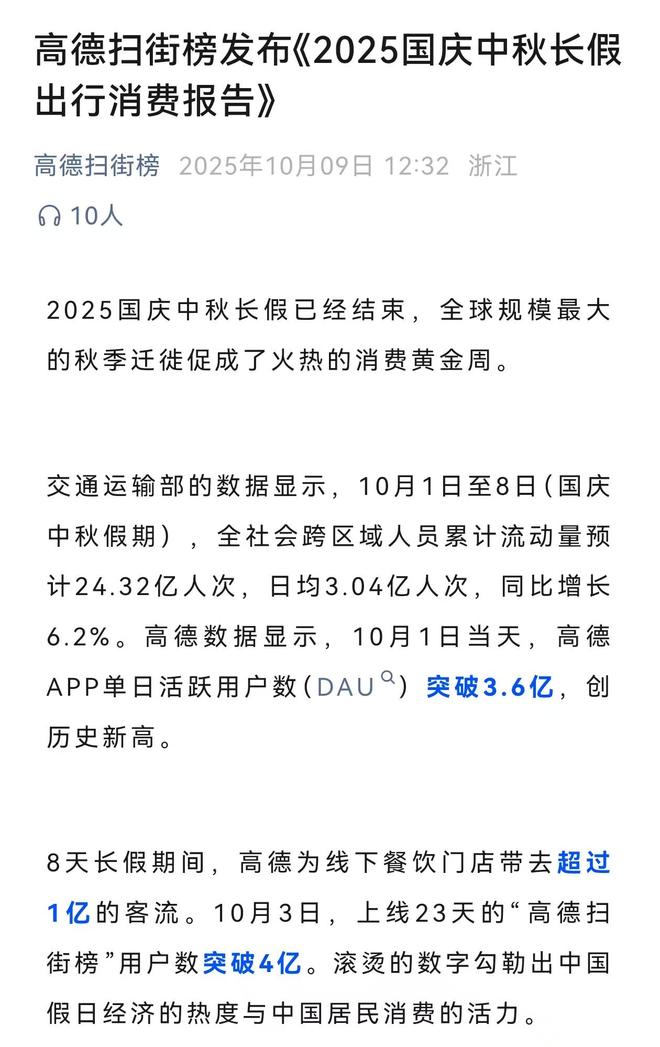
23天,4亿人用了高德扫街榜
Sou Hu Cai Jing· 2025-10-04 04:20
Core Insights - On October 1, 2023, Gaode App achieved a record of 300 million daily active users (DAU), surpassing last year's peak, and reached 360 million DAU on October 2, indicating its status as a national-level application in China [3][6][14] - Gaode's recent launch of the "Gaode Street Ranking" has significantly contributed to its user growth, with over 400 million users engaging with the feature within 23 days of its launch [7][14] - The app has evolved beyond navigation to become a comprehensive lifestyle service platform, integrating various functionalities such as food discovery, travel planning, and social recommendations [19][20][24] User Engagement and Growth - The DAU of Gaode during the National Day holiday indicates that approximately one in three internet users in China accessed the app, highlighting its widespread adoption [6][16] - The "Gaode Street Ranking" has a penetration rate of nearly 50% among Gaode's total user base, showcasing its popularity and user engagement [16][24] - The app's features, such as real-time location sharing for group travel and the ability to find essential services, have seen exponential growth in usage during holiday periods [18][19] Technological Innovation - Gaode's approach to the "Gaode Street Ranking" relies on real user behavior data rather than traditional rating systems, addressing the issue of unreliable reviews [9][10] - The integration of AI algorithms to analyze user data enhances the app's ability to provide accurate and relevant recommendations, establishing a new credit system for offline businesses [13][20] - The app's transformation into a multi-functional platform reflects a strategic shift towards leveraging technology to meet diverse consumer needs [24][25] Strategic Positioning - Gaode is positioned as a key player in Alibaba's broader strategy to create a comprehensive consumption platform, aiming to rival major applications like Taobao [22][23] - The app's evolution from a navigation tool to a lifestyle service hub illustrates a significant shift in the internet application landscape, focusing on user behavior to drive value creation [24][25] - As of July 2025, Gaode is projected to have 890 million monthly active users, solidifying its status as Alibaba's second-largest app [23]
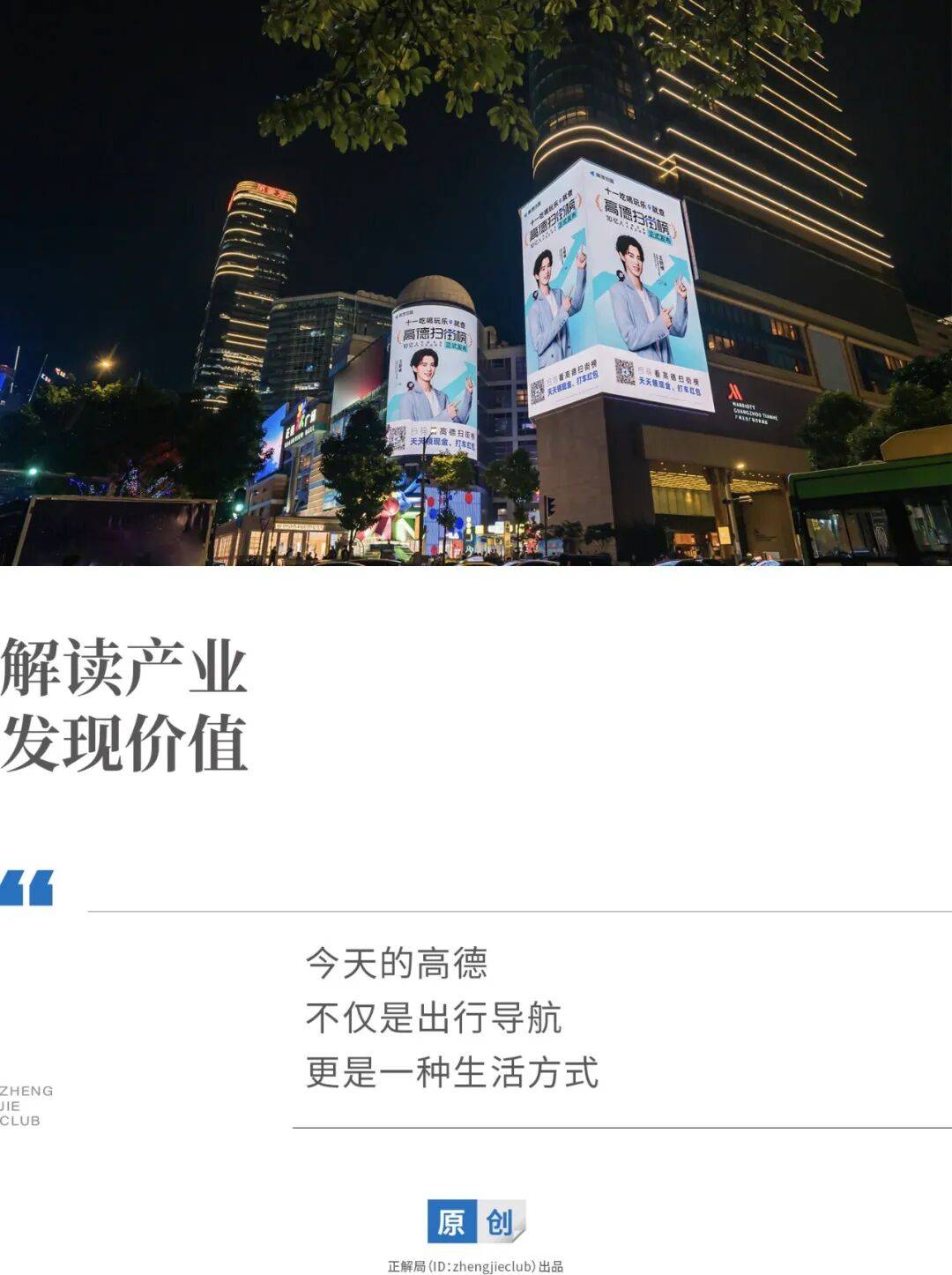
高德“免单”三天吸引15万咨询,餐饮业“用脚投票”逃离“内卷”红海
Zheng Quan Shi Bao· 2025-09-27 12:30
Group 1 - The core point of the article highlights the surge in interest from restaurant businesses in migrating online, driven by Gaode's announcement to waive the first-year store opening fees and provide supportive policies [1][2] - Within just 72 hours of the announcement, Gaode received over 150,000 inquiries from restaurants, indicating a strong demand for online presence among small and medium-sized enterprises in the competitive food service industry [2][3] - The current challenges faced by the restaurant industry include rising operational costs and a lack of trust in online rating systems, which have led to a cycle of financial strain for many businesses [3][4] Group 2 - Gaode's recent initiatives, including the "Street Ranking" and the "Good Store Support Plan," aim to create a new service credit system for offline dining and service industries, with a goal of adding approximately 10 million customers daily [4][5] - The "Street Ranking" has shown early success, with participating small restaurants experiencing significant increases in traffic, such as a 540% rise for a specific store in Guangzhou [5][6] - Experts believe that Gaode's approach could reshape the competitive landscape of the restaurant industry by fostering a more equitable and transparent environment, shifting the focus from marketing budgets to product quality and genuine customer feedback [6][7]
高德“免单”三天吸引15万咨询,餐饮业“用脚投票”逃离“内卷”红海
证券时报· 2025-09-27 12:19
Core Insights - The article highlights the significant shift of offline restaurants towards online platforms, driven by Gaode's announcement to waive the first-year store opening fees and provide supportive policies [1][2]. Group 1: Market Response - Within just 72 hours of the announcement, Gaode received over 150,000 inquiries from restaurants, averaging 50,000 inquiries per day, indicating a strong interest from merchants to join the platform before the National Day holiday [2][4]. - The surge in inquiries reflects the widespread anxiety and demand among offline merchants, particularly small and medium-sized restaurants, seeking new avenues in a highly competitive market [4]. Group 2: Industry Challenges - The restaurant industry is facing a dual pressure of rising costs and declining trust, with promotional expenses on mainstream platforms becoming a heavy burden for many restaurant owners [5]. - Issues such as "paying for good reviews" and "professional fake reviews" have undermined the credibility of online rating systems, creating a vicious cycle for merchants who feel compelled to engage in these practices to maintain visibility [5]. Group 3: Gaode's Strategic Initiatives - Gaode's recent initiatives, including the "Street Ranking" and the "Smoke Fire Good Store Support Plan," aim to address these challenges by providing over 1 billion yuan in subsidies and enhancing visibility for participating stores [6]. - The "Street Ranking" leverages real user navigation data to create a more trustworthy evaluation system, significantly reducing the likelihood of manipulated ratings [6]. - Early results show that the "Street Ranking" has led to a 187% increase in traffic for featured stores, with some individual stores experiencing traffic growth of up to 540% [6]. Group 4: Future Outlook - The overwhelming response from merchants indicates a desire for a fairer and more transparent competitive environment, moving away from the ineffective "involution" of marketing budgets [8]. - Gaode's approach is seen as a significant attempt to reshape the offline consumption ecosystem through technology and trust, with potential long-term benefits for the restaurant industry [8]. - Future initiatives will continue to evolve based on the actual needs of restaurant merchants, aiming to create more business opportunities [8].

甘孜 好风景带来好“钱景”
Jin Rong Shi Bao· 2025-09-23 03:35
Group 1 - The core idea of the articles revolves around the financial support provided by Postal Savings Bank in Ganzi Prefecture, which has revitalized local tourism and traditional crafts through innovative credit solutions [1][2] - The establishment of a credit system has enabled local entrepreneurs, like Abou, to transform traditional Tibetan houses into profitable "smart homestays" by securing loans without collateral, averaging 30,000 yuan per household [1] - The bank's "credit + guarantee" model addresses the "light asset" challenges in the tourism industry, facilitating collective entrepreneurship among herders and creating a sustainable business model that includes enterprise operation, collective dividends, and individual entrepreneurship [1] Group 2 - The transformation of a long-abandoned spring into a hot spring complex was made possible by a 5 million yuan loan from the Postal Savings Bank, which utilized a model based on project prospects, credit ratings, and collective guarantees [2] - Local villagers have benefited significantly from this project, with annual dividends reaching 48,000 yuan, surpassing previous agricultural and pastoral incomes [2] - The People's Bank of China in Ganzi Prefecture is actively working to improve the financing environment for private enterprises by enhancing government financing guarantee systems and optimizing risk-sharing mechanisms with financial institutions [2]
高德的对手是大众点评,还是服务业信任赤字?
Tai Mei Ti A P P· 2025-09-11 11:22
Core Insights - The article discusses the launch of Gaode's "Street Ranking" as a new AI-driven credit infrastructure for offline services, aiming to address the credit deficit in China's service industry [1][2][24] - Gaode's initiative is positioned not merely as a competitor to existing platforms like Meituan, but as a transformative approach to building a reliable credit system for offline services [2][24] Summary by Sections Gaode's Strategic Move - Gaode's "Street Ranking" product aims to create a new credit foundation for offline services, leveraging AI and real user behavior data [2][19] - The launch attracted over 40 million users on its first day, indicating strong initial interest [1] Historical Context - The article draws parallels between Gaode's initiative and the evolution of Alipay, which established a credit system for online transactions in 2003 [4][6] - Alipay's success in building trust in online commerce is highlighted as a model for Gaode to replicate in the offline service sector [7][25] Market Dynamics - The offline service market in China is experiencing rapid growth, with service consumption increasing from 7.2 trillion yuan to 18.3 trillion yuan from 2013 to 2024 [7] - Gaode's focus on credit innovation is seen as essential for enhancing consumer confidence and improving transaction efficiency in the service sector [24][26] Credit System Challenges - The article discusses the challenges of establishing a credit system for offline services, including issues of information asymmetry and the need for reliable consumer feedback [9][12] - Traditional review systems are criticized for their subjectivity and potential for manipulation, necessitating a more robust solution [12][13] Gaode's Approach - Gaode's "Street Ranking" utilizes AI to analyze multiple dimensions of user behavior, such as navigation and visit frequency, to create a more accurate credit score for businesses [19][20] - The integration of Alipay's credit system allows for a weighted evaluation of user reviews, enhancing the credibility of the rankings [19][21] Future Implications - The initiative is positioned as a long-term project aimed at transforming the offline service landscape in China, with expectations of significant economic potential once a reliable credit system is established [26] - The article concludes with a vision of a future where enhanced credit systems can unlock greater consumer spending and improve service quality across the industry [26]

阿里向美团发起全面进攻
商业洞察· 2025-09-11 09:24
Core Viewpoint - Alibaba and Meituan have initiated a new competitive front, with Alibaba's Gaode Map launching the "Gaode Street Ranking," a behavior-based ranking system aimed at supporting offline dining and service consumption, emphasizing that the ranking will "never be commercialized" [4][6]. Summary by Sections Gaode "Street Ranking" Implementation - Gaode's approach leverages large-scale verifiable "behavior data," with 170 million daily users contributing to a sample pool through searches, collections, navigation, and visit trajectories [11]. - Key factors include store visit numbers, repurchase rates, purpose-driven visits, and local versus national appeal, which differ from traditional UGC reviews that rely on subjective ratings [11]. - The ranking system incorporates a credit evaluation weighted by Sesame Credit and employs AI risk control to filter noise, with various rankings updated daily based on dynamic data [11]. Commercial Intentions Behind the Ranking - The ranking aims to rebuild trust by establishing a new standard based on trajectories and credit, transforming "good stores" into reusable credit assets [12]. - Gaode seeks to expand its offline entry points, with daily searches exceeding 120 million and restaurant coverage over 7 million, transitioning from a "tool" to a "decision-making" platform [12]. - The initiative includes a "Good Store Support Plan" with over 1 billion yuan in subsidies and incentives to drive foot traffic to stores, indicating a direct intervention in offline consumption [12]. Competitive Landscape with Meituan - The Gaode Street Ranking fits into Alibaba's broader strategy to compete with Meituan, with Taobao Flash Sale corresponding to Meituan's delivery services, and Fliggy targeting Meituan's travel segment [17][18]. - Taobao Flash Sale combines e-commerce with instant fulfillment, leveraging Alibaba's supply chain to address Meituan's SKU breadth and product strength [18]. - Fliggy aims to integrate e-commerce advantages into travel services, potentially enhancing Alibaba's competitiveness in the travel sector against Meituan [19]. Strengths and Weaknesses of the Ranking System - The ranking's strength lies in its reliance on actual consumer behavior, providing a more accurate reflection of popularity compared to traditional review systems [20]. - However, the data may not always lead to correct consumption decisions, as trending restaurants may not necessarily offer quality food [20]. - Meituan's advantages remain in delivery density and community engagement, but if Gaode's standards gain traction, Alibaba could increasingly challenge Meituan's market position [20].