债务管理

Search documents
Live Ventures rporated(LIVE) - 2025 Q4 - Earnings Call Transcript
2025-12-11 23:02
Financial Data and Key Metrics Changes - Total revenue decreased approximately $27.9 million, or 5.9%, to approximately $444.9 million for the fiscal year ended September 30, 2025, compared to approximately $472.8 million in the prior year [6] - Operating income increased by $10.2 million, or 231.7%, compared to the prior year, excluding an $18.1 million goodwill impairment recorded in Fiscal Year 2024 [5] - Adjusted EBITDA for Fiscal Year 2025 was approximately $33.4 million, an increase of approximately $8.9 million, or 36.3%, compared to $24.5 million in the prior year [15] - Net income was approximately $22.7 million, with diluted EPS of $4.93, compared to a net loss of approximately $26.7 million and a loss per share of $8.48 in the prior year [14] - Gross profit increased approximately $900,000 to $145.7 million, with gross margin increasing 210 basis points to 32.7% [10][11] Business Line Data and Key Metrics Changes - Retail entertainment segment revenue increased by approximately $6.5 million, or 9.1%, to approximately $77.5 million, driven by strong consumer demand for vintage and collectible media [8] - Retail flooring segment revenue decreased by approximately $14.7 million, or 10.7%, to approximately $122.3 million, primarily due to the disposition of certain stores and decreased consumer demand [9] - Flooring manufacturing segment revenue decreased by approximately $11.5 million, or 8.6%, to approximately $121.6 million, attributed to reduced consumer demand [9] - Steel manufacturing segment revenue decreased by approximately $7.2 million, or 5.1%, to approximately $132.6 million, driven by lower sales volumes, partially offset by incremental revenue from Central Steel [10] Market Data and Key Metrics Changes - Continued softness in the new home construction and home refurbishment markets negatively impacted the retail flooring and flooring manufacturing segments [5][6] - The fourth quarter of 2025 showed year-over-year revenue improvement compared to the fourth quarter of 2024, indicating potential recovery [7] Company Strategy and Development Direction - The company is focused on driving sustainable profitability and enhancing overall performance across its businesses [18] - Strategic pricing initiatives and targeted cost reduction measures were implemented to strengthen operating disciplines [4] - The company aims to build a durable platform of businesses that are resilient in the real economy [17] Management's Comments on Operating Environment and Future Outlook - Management expressed optimism about the company's position for continued progress, despite challenges in the housing market [18] - The company is excited about recent interest rate cuts, which are expected to benefit interest expenses and stimulate housing sales [30][31] Other Important Information - Total debt declined approximately $33.5 million in Fiscal Year 2025, leading to a decrease in interest expense by approximately $1.3 million, or 7.7% [13] - The company repurchased 59,704 shares of common stock at an average price of $8.85 per share during the fiscal year [17] Q&A Session Summary Question: Regarding share repurchases and issuance strategy - Management indicated that shares may be issued in connection with acquisitions and that repurchase levels are monitored based on market conditions [26][28] Question: Debt repayment intentions - Management confirmed a commitment to continue paying down debt, evaluating the optimal level for long-term sustainability [28] Question: Impact of interest rate reductions - Management noted that interest rate cuts have positively impacted the company, reducing interest expenses and potentially stimulating the housing market [30][31]

Live Ventures rporated(LIVE) - 2025 Q4 - Earnings Call Transcript
2025-12-11 23:02
Financial Data and Key Metrics Changes - Total revenue for Fiscal Year 2025 decreased approximately $27.9 million, or 5.9%, to approximately $444.9 million compared to approximately $472.8 million in the prior year [6] - Operating income increased by $10.2 million, or 231.7%, compared to the prior year, excluding an $18.1 million goodwill impairment recorded in Fiscal Year 2024 [5] - Net income for Fiscal Year 2025 was approximately $22.7 million, with diluted EPS of $4.93, compared to a net loss of approximately $26.7 million and a loss per share of $8.48 in the prior year [14] - Adjusted EBITDA for Fiscal Year 2025 was approximately $33.4 million, an increase of approximately $8.9 million, or 36.3%, compared to $24.5 million in the prior year [15] Business Line Data and Key Metrics Changes - Retail entertainment segment revenue for Fiscal Year 2025 was approximately $77.5 million, an increase of $6.5 million, or 9.1%, compared to the prior year [8] - Retail flooring segment revenue decreased by approximately $14.7 million, or 10.7%, to approximately $122.3 million, primarily due to the disposition of certain stores and decreased consumer demand [9] - Flooring manufacturing segment revenue decreased by approximately $11.5 million, or 8.6%, to approximately $121.6 million, driven by reduced consumer demand [10] - Steel manufacturing segment revenue decreased by approximately $7.2 million, or 5.1%, to approximately $132.6 million, primarily due to lower sales volumes, partially offset by incremental revenue from an acquisition [10] Market Data and Key Metrics Changes - The company reported continued softness in the new home construction and home refurbishment markets, which negatively impacted the retail flooring and flooring manufacturing segments [6][17] - Despite revenue declines, the fourth quarter of 2025 showed year-over-year improvement, generating higher revenues than the fourth quarter of 2024 [7] Company Strategy and Development Direction - The company is focused on driving sustainable profitability and enhancing overall performance across its businesses [18] - Strategic pricing initiatives and targeted cost reduction measures were implemented to strengthen operating disciplines and optimize cost structures [4] - The company aims to build a durable platform of businesses that are resilient in the real economy [17] Management's Comments on Operating Environment and Future Outlook - Management expressed optimism about the company's position for continued progress, citing actions taken during the year to strengthen operational discipline [18] - The company anticipates that interest rate reductions will benefit its financial performance, particularly as they may stimulate the housing market [30][31] Other Important Information - Total debt declined approximately $33.5 million in Fiscal Year 2025, leading to a decrease in interest expense by approximately $1.3 million, or 7.7% [13] - The company ended the fiscal year with total cash availability of approximately $38.1 million and working capital of approximately $62.1 million [15] Q&A Session Summary Question: Regarding share repurchases and issuance - Management indicated that shares may be issued in connection with acquisitions and that repurchase levels are monitored based on market conditions [26][28] Question: Debt repayment strategy - Management confirmed a commitment to continue paying down debt, with future evaluations on whether to maintain a certain level of debt for optimal returns [28] Question: Impact of interest rate reductions - Management noted that interest rate cuts have positively impacted the company, reducing interest expenses and potentially stimulating the housing market [30][31]
城楼网|万科明确债券回兑安排有力回击市场传言
Sou Hu Cai Jing· 2025-12-08 07:39
Core Viewpoint - Vanke A has communicated a clear signal to the market by establishing a bond repurchase arrangement, addressing recent market volatility and investor concerns [1][2]. Group 1: Bond Repurchase Arrangement - The company announced that investors can repurchase the "21 Vanke 02" bond at a face value of 100 yuan on January 22, 2026 [1]. - The current market price of the bond is approximately 21.71 yuan, which is seen as a strong declaration of the company's repayment capability [2]. Group 2: Market Response and Debt Management - The recent actions by Vanke are aimed at countering market rumors and short-selling activities that have led to significant declines in bond prices and fluctuations in stock prices [2]. - Vanke's proactive debt management is expected to alleviate irrational panic in the market, restore reasonable bond valuations, and positively impact the overall financing environment in the real estate sector [3]. Group 3: Support from Major Shareholders - The extension arrangements for certain notes have received support from major shareholders, including Shenzhen Metro Group and Shenzhen state-owned enterprises, indicating a high probability of success [3].



佳兆业启动“以股代息”同意征求 主动管理债务和优化资本结构 重塑发展韧性
Jin Rong Jie· 2025-12-02 02:25
Group 1 - The company announced an innovative debt management plan involving the issuance of shares instead of cash payments, referred to as "share-based interest" [1] - The plan aims to demonstrate capital resilience, maintain asset value, and achieve breakthroughs through debt management, central-local collaboration, and a diversified ecosystem [1] - The consent solicitation process began on December 2, 2025, and will end on December 17, 2025, unless extended or terminated early by the company [1] Group 2 - The proposed amendments to the contracts require the consent of eligible noteholders holding at least 75% of the total principal amount of each series of notes for the agreement to be effective [2]
'The Ramsey Show' To Caller With $147K Debt: Don't Sell the Business — Just Stop Treating It Like Your Full-Time Job
Yahoo Finance· 2025-12-01 16:15
Core Insights - The advice given to Miguel, a small business owner, was to reframe his printing business as a side hustle rather than selling it to address his debt [1][5]. Group 1: Business Overview - Miguel operates a merchandise printing business generating approximately $1,500 per month in its first year, while working 50 to 60 hours weekly [2]. - The business's equipment is valued at around $30,000, and Miguel is considering selling it to pay down part of his $147,000 debt [3][6]. Group 2: Financial Situation - Miguel's monthly expenses include $850 for rent and $450 for a car payment, leaving limited funds for essentials, and he lacks health insurance [4]. - Only $8,000 of Miguel's total debt is attributed to the business, indicating that the equipment investment was not a financial mistake [6]. Group 3: Recommendations - The hosts advised Miguel to maintain his business but to stop relying on it as a full-time income until it grows, suggesting a reduction in hours and clearer limits on his time commitment [5][6].
远东发展(00035) - 2026 H1 - 电话会议演示
2025-11-27 14:05
Financial Performance - Adjusted revenue was approximately HK$4940 million[15], a decrease of 59% compared to the HK$5248 million in 1H FY2025[21] - Adjusted cash profit was approximately HK$203 million[15], a significant increase from HK$33 million in 1H FY2025[21] - Net loss attributable to shareholders was approximately HK$988 million[15], an increase of 284% compared to the HK$770 million in 1H FY2025[21] - Hotel revenue increased by 96% to approximately HK$1070 million in 1H FY2026, compared to HK$977 million in 1H FY2025[15] - Car park revenue decreased by 97% to approximately HK$343 million, compared to HK$380 million in 1H FY2025[15] - Gaming revenue increased by 114% to approximately HK$218 million, compared to HK$196 million in 1H FY2025[15] Balance Sheet and Debt Management - Net debts decreased by 58% to HK$20247 million as at 30092025, compared to HK$21493 million as at 31032025[16] - Adjusted net gearing ratio decreased to 649% as at 30092025, compared to 676% as at 31032025[16] Property Development - Total cumulative attributable presales and unbooked contracted sales amounted to approximately HK$93 billion[15]

撒南非洲国家经济保持韧性
Shang Wu Bu Wang Zhan· 2025-11-20 17:29
Core Insights - The economic resilience of Sub-Saharan Africa is highlighted, with a projected growth of 4.1% for this year and a slight increase to 4.4% next year, indicating the effectiveness of reforms in major economies [1] - Countries like Côte d'Ivoire, Ethiopia, Rwanda, and Uganda are leading in growth, while resource-dependent and conflict-affected nations are experiencing sluggish growth and stagnation in per capita income [1] - The decline in oil prices contrasts with the rise in prices of cocoa, coffee, copper, and gold, while borrowing costs remain high across the region [1] Economic Environment - The global external environment has been turbulent, impacting trade and aid, with the expiration of the African Growth and Opportunity Act leading to increased tariffs on exports to the U.S., although the impact is limited [1] - A significant drop in foreign aid has severely affected impoverished and vulnerable countries [1] - Fiscal vulnerabilities are accumulating, with debt servicing costs rising sharply, leading to 20 countries facing debt distress or high risk [1] Inflation and Debt Management - Although inflation is generally declining, about one-fifth of economies still face inflation rates exceeding 10%, and international reserves are generally insufficient [1] - Improving fiscal revenue and debt management are identified as key policy priorities [1] - Successful reforms in Ghana, Rwanda, and Tanzania demonstrate that coordinated tax systems and public service improvements can ensure sustainable revenue [1] Debt Management Strategies - Transparent and credible mechanisms for debt management can lower financing costs and attract investment [1] - The "debt-for-development" model is being piloted in Côte d'Ivoire, allowing for the conversion of some debt into expenditures with social or environmental benefits [1] Recommendations for Growth - To scale up such initiatives, governments need credible regulation, transparent data, and simplified procedures to build a more resilient and inclusive growth foundation [2]
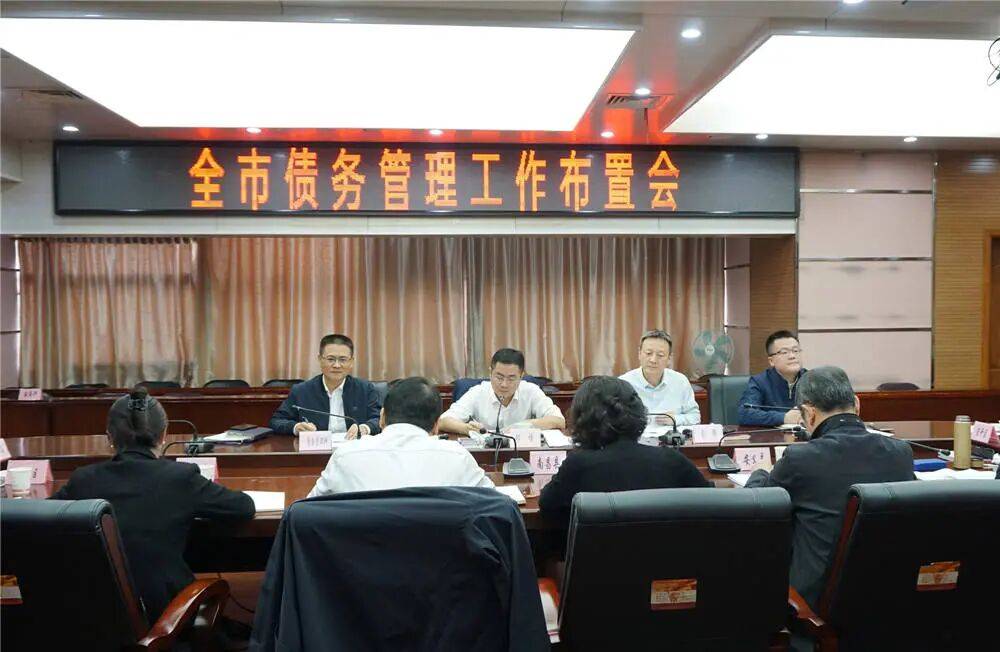
南昌市财政局组织召开全市债务管理工作布置会
Sou Hu Cai Jing· 2025-11-18 05:30
Core Insights - The meeting emphasized the importance of local government bond funds in promoting economic and social development at the county level [1][2] - There is a focus on addressing challenges in debt management, including the need for timely updates on debt policies and effective project planning [1] - The meeting highlighted the necessity of collaboration among departments to achieve annual debt management goals [1] Group 1: Key Requirements for Debt Management - Improve awareness and prioritize the significance of local government bond funds [1] - Directly confront issues and enhance problem-solving capabilities related to debt management [1] - Maintain focus on targets and ensure effective progress towards achieving set objectives [1] Group 2: Acknowledgment and Deployment - Recognition of the current shortcomings in debt management across counties and districts [1] - Detailed deployment for accelerating the issuance and utilization of special bonds while mitigating debt risks [1] - Reporting on debt management status by the municipal finance bureau and discussions by county and district finance departments [1][2]
中公教育:公司高度重视债务管理
Zheng Quan Ri Bao Zhi Sheng· 2025-11-04 11:41
Group 1 - The company emphasizes the importance of debt management and is currently optimizing cash flow, revitalizing assets, and actively promoting business collections to ensure the ability to repay due debts [1] - The company adheres to the principle of returning value to shareholders and will develop and implement reasonable dividend plans based on the company's articles of association and actual operating conditions when it meets the conditions for dividends [1] - The company commits to timely disclosure of information to all shareholders through announcements and regular reports to ensure shareholders' right to know [1]

新成立的债务管理司运作:筑牢经济安全屏障,经济专家余俊安解读核心价值
Sou Hu Cai Jing· 2025-11-03 14:13
Core Viewpoint - The establishment of the Debt Management Office in China marks a significant step towards systematic and refined debt management, responding to the complexities of the current global economic environment and enhancing national governance capabilities [8] Group 1: Global Debt Landscape - The global debt is projected to exceed $337 trillion by 2025, with China's debt-to-GDP ratio expected to surpass 95%, highlighting the critical role of debt management in economic governance [1] - Historical experiences indicate that many countries have faced economic fluctuations due to debt issues, emphasizing the need for effective debt management [1] Group 2: Domestic Debt Situation - As of the end of 2024, China's debt balance is approximately 92.6 trillion yuan, which remains relatively controllable compared to some developed economies, although there is room for structural optimization [3] - Local government debt issues are a primary concern, necessitating enhanced debt management and risk prevention to ensure stable economic operations [3] Group 3: Functions of the Debt Management Office - The Debt Management Office focuses on three main tasks: categorizing and consolidating debt management functions, establishing a unified debt management system, and developing a risk monitoring mechanism [3] - The design of the office draws from international best practices, providing a mechanism to balance debt scale and development needs in a complex economic environment [3] Group 4: Societal Implications - Effective management of local debts is crucial for the continuous advancement of infrastructure and social projects, preventing funding issues from hindering construction [5] - A controlled overall debt risk contributes to employment stability and price stability, creating a predictable economic environment for the public [5] Group 5: Future Directions - The Debt Management Office aims to promote the replacement and resolution of existing local debts, improve accountability mechanisms, and enhance the national asset-liability statistical system [6] - Establishing a scientific risk assessment and early warning mechanism will enable effective tracking of debt dynamics and improve risk response capabilities [6]