光储融合

Search documents
“最贵新股”上市以来首亏 “微逆之王”能靠储能讲出新故事吗?
Sou Hu Cai Jing· 2026-02-07 01:35
Core Viewpoint - HeMai Co., Ltd. (禾迈股份) has experienced a dramatic decline in stock price and market value, reflecting the harsh cycle of the photovoltaic industry, transitioning from a peak valuation to significant losses and inventory issues [2][4]. Financial Performance - HeMai's net profit from 2021 to 2024 was 2.02 billion, 5.33 billion, 5.12 billion, and 3.44 billion respectively, with a projected net loss of 1.35 billion to 1.65 billion for 2025, marking the first annual loss since its listing [4][5]. - The company’s stock price peaked at 1,300 yuan per share, with a market capitalization nearing 100 billion yuan, but has since dropped significantly, resulting in a market value loss exceeding 70 billion yuan [2][5]. Market Dynamics - The global micro-inverter market grew from 2.958 billion USD in 2019 to 4.275 billion USD in 2021, with a compound annual growth rate exceeding 50%, but demand has since plummeted due to various market pressures [5][6]. - In 2023, the demand for micro-inverters fell sharply, with exports to the U.S. declining by 30%, leading to a significant inventory surplus in the industry [6]. Production and Inventory Issues - HeMai's production capacity reached 6 million units in 2023, but actual sales were only 3.5 million units, resulting in a capacity utilization rate of less than 60% [6]. - The company's inventory surged from 380 million yuan in 2021 to 1.25 billion yuan in 2023, with a significant portion of products facing obsolescence and price drops exceeding 40% [7]. Strategic Shifts - HeMai is transitioning from being a micro-inverter supplier to a comprehensive energy storage solution provider, aiming to leverage synergies between micro-inverters and energy storage systems [9][10]. - The company has restructured into three divisions and six product lines, with a focus on global marketing and rapid growth in its energy storage business, which generated 312 million yuan in revenue in 2024 [10][11]. Future Outlook - HeMai anticipates that its energy storage business will exceed 1 billion yuan in revenue by 2026, with a gross margin of 30% to 40% for its household and commercial storage products [10][11]. - The company is actively expanding into high-margin overseas markets and investing heavily in research and development, with R&D spending increasing from 46 million yuan in 2021 to 266 million yuan in 2024 [11][12].


天合光能中国区分销生态伙伴年度大会圆满落幕
Xin Lang Cai Jing· 2026-02-05 12:27
Core Insights - The conference "Gathering Light, Storing Power, and Winning Together" held by Trina Solar emphasized the shift from a "price war" to a "value war" in the solar industry, focusing on long-term asset operation and value realization [2][28] - Trina Solar's strategy for 2026 includes a commitment to technology integration, business collaboration, and scenario-based solutions to enhance the synergy between solar and storage [2][28] Industry Trends - The industry is moving towards prioritizing terminal scenarios and brand value in solar project development, with a call to avoid blindly pursuing high efficiency and power [30][32] - The concept of "true value" in terminal scenarios is defined as the ability to generate more electricity and revenue, rather than just theoretical parameters [30][32] Strategic Directions - EPC (Engineering, Procurement, and Construction) companies are encouraged to adopt a "lean total package + value-added services" approach, while energy management companies (EMC) should standardize energy storage solutions [32] - The focus for 2026 is on eliminating inefficient players and rewarding those who adopt refined practices, marking a pivotal moment for the industry [32] Partner Engagement - Trina Solar signed strategic agreements with 27 partners, reinforcing long-term collaboration and commitment to creating a healthy industry ecosystem [21][47] - The company aims to provide certainty in navigating market fluctuations by focusing on technological breakthroughs and expanding its ecosystem [45][47] Future Outlook - The conference concluded with a strong message of hope and collaboration, emphasizing that the future of the solar industry lies in mutual growth and shared values [52][28] - Trina Solar is dedicated to working closely with partners to enhance product value and ensure sustainable development in the solar and storage sectors [52][28]

中信建投朱玥:光伏周期磨底显分化 行业迈入价值竞争新阶段
Zhong Guo Zheng Quan Bao· 2026-02-03 23:33
Core Viewpoint - The A-share photovoltaic sector is experiencing a recovery phase in 2026, driven by policy adjustments and stabilized industry chain prices, leading to significant structural differentiation within the industry [1][2]. Group 1: Market Performance - The photovoltaic concept index in A-shares rose by 5.99% on February 3, 2026, and has accumulated a 21.42% increase year-to-date [2]. - The current market sentiment reflects a consensus that the industry's darkest period has passed, with a shift from a one-sided decline to a stabilization phase [2]. Group 2: Structural Changes - The industry is expected to enter a deep restructuring phase in 2026, moving away from a broad-based uptrend driven by demand surges to a more competitive landscape focused on technology, brand strength, and cash flow [2][3]. - Companies with strong technological capabilities, global channel layouts, and healthy cash flows are anticipated to outperform, with leading firms likely to gain valuation premiums through market share concentration [2][3]. Group 3: Policy and Competitive Landscape - The transition from a focus on scale expansion to value creation is driven by a reduction in the marginal returns of scale due to overcapacity [4]. - The competitive logic is shifting towards three dimensions: technology premium, brand and service capabilities, and intellectual property barriers [4][6]. - Policies aimed at curbing low-cost bidding and promoting high-quality development are reshaping the competitive landscape, with a focus on sustainable profit margins [7][8]. Group 4: Technological Advancements - The industry is moving towards high-quality development driven by technology and cash flow, with investment opportunities concentrated in leading enterprises [7]. - New battery technologies and the integration of solar and storage systems are identified as key growth areas, with advancements in BC technology and high-efficiency TOPCon expected to drive future performance [8]. Group 5: Emerging Opportunities - The rise of space photovoltaics presents new opportunities, although it currently does not alter the core investment logic of ground-based photovoltaics [4][5]. - The focus on customized, precision manufacturing for space applications contrasts with traditional mass production, indicating a shift in manufacturing strategies [5][6].

中信建投朱玥: 光伏周期磨底显分化 行业迈入价值竞争新阶段
Zhong Guo Zheng Quan Bao· 2026-02-03 22:08
Core Viewpoint - The A-share photovoltaic sector is experiencing a recovery phase driven by policy adjustments and stabilization of industry chain prices, with a significant structural differentiation expected in 2026 [1][2] Market Performance - The photovoltaic concept index surged by 5.99% on February 3, 2026, and has accumulated a 21.42% increase year-to-date, indicating a consensus that the industry's darkest period has passed [2] - The current market trend reflects a shift from a one-sided decline to a stabilization phase, with funds beginning to cautiously allocate towards leading companies capable of withstanding economic cycles [2] Structural Changes - The industry is expected to undergo significant structural differentiation in 2026, moving away from a broad-based uptrend driven by demand surges to a more competitive landscape focused on technology, brand strength, and cash flow [2][3] - The investment focus will shift from pure manufacturing to companies that can provide comprehensive solutions, possess strong brand premiums, and have unique advantages in niche markets [3] Policy Impact - Recent policies, including reduced export tax rates and anti-monopoly measures, signify a transition from extensive growth to high-quality development in the Chinese photovoltaic industry [3] - The reduction of aggressive bidding practices and the disappearance of tax incentives are pushing companies to maintain profit margins and stabilize prices within the industry chain [3][8] Competitive Dynamics - The competition is shifting from scale expansion to value creation, driven by diminishing returns on scale due to overcapacity [4] - The new competitive logic emphasizes three dimensions: technology premium, brand and service capabilities, and intellectual property barriers [4][7] Emerging Opportunities - The rise of commercial space-related industries and the potential for space photovoltaics are opening new avenues for investment, although ground-based photovoltaics remain the primary focus [4][5] - The transition from low-cost competition to high-value offerings is expected to reshape the industry landscape, with a focus on performance over cost in space photovoltaics [5][6] Investment Focus - Short-term investment opportunities are concentrated in leading companies within the main industry chain, driven by policy changes aimed at curbing low-price competition [8] - Long-term growth prospects are linked to advancements in battery technologies and the integration of solar and storage solutions, addressing grid consumption challenges [9]
光伏周期磨底显分化 行业迈入价值竞争新阶段
Zhong Guo Zheng Quan Bao· 2026-02-03 20:27
Core Viewpoint - The A-share photovoltaic sector is experiencing a recovery phase in 2026, driven by policy adjustments and stabilized prices within the industry, leading to significant structural differentiation and a shift in competitive logic from scale expansion to technology, brand, and cash flow competition [1][2]. Market Performance - The photovoltaic concept index in A-shares rose by 5.99% on February 3, 2026, and has accumulated a 21.42% increase year-to-date, indicating a consensus that the industry's darkest period has passed and a recovery is underway [1]. Structural Differentiation - The photovoltaic sector is expected to see increased differentiation and structural recovery in 2026, with a shift away from the previous broad-based growth driven by demand surges. Companies with technological capabilities, global channel layouts, and healthy cash flows are likely to outperform [2]. Policy Impact - Policies such as reduced export tax rates and anti-monopoly measures signify a transition from extensive expansion to high-quality development in the Chinese photovoltaic industry. This shift is leading to a stabilization of industry chain prices and a focus on maintaining reasonable profit margins [2][6]. Shift in Competitive Logic - The competition in the photovoltaic industry is transitioning from scale-based strategies to value-based strategies, focusing on technology premiums, brand and service capabilities, and intellectual property barriers. This change is driven by diminishing returns from scale effects due to overcapacity [3][5]. Emerging Opportunities - The rise of commercial space-related industries and the potential for space photovoltaics present new investment opportunities, although ground-based photovoltaics remain the primary focus for energy transition and carbon neutrality [4]. Growth Drivers - The core growth opportunities in the photovoltaic industry are now centered on leading enterprises in the main industry chain, driven by policies aimed at curbing low-price competition and promoting supply-side reforms [6]. Technological Advancements - New battery technologies and the integration of energy storage are critical for industry growth, with advancements in BC technology and high-efficiency TOPCon being key areas of focus. These technologies are expected to enhance conversion efficiency and reduce costs [6][7]. Energy Storage Integration - The integration of energy storage is essential for overcoming grid consumption bottlenecks, with increased storage capacity helping to reduce curtailment rates and create new grid connection opportunities for photovoltaic plants [7].
创维集团将私有化退市 光伏业务正加快海外拓展步伐
Bei Jing Shang Bao· 2026-01-22 02:07
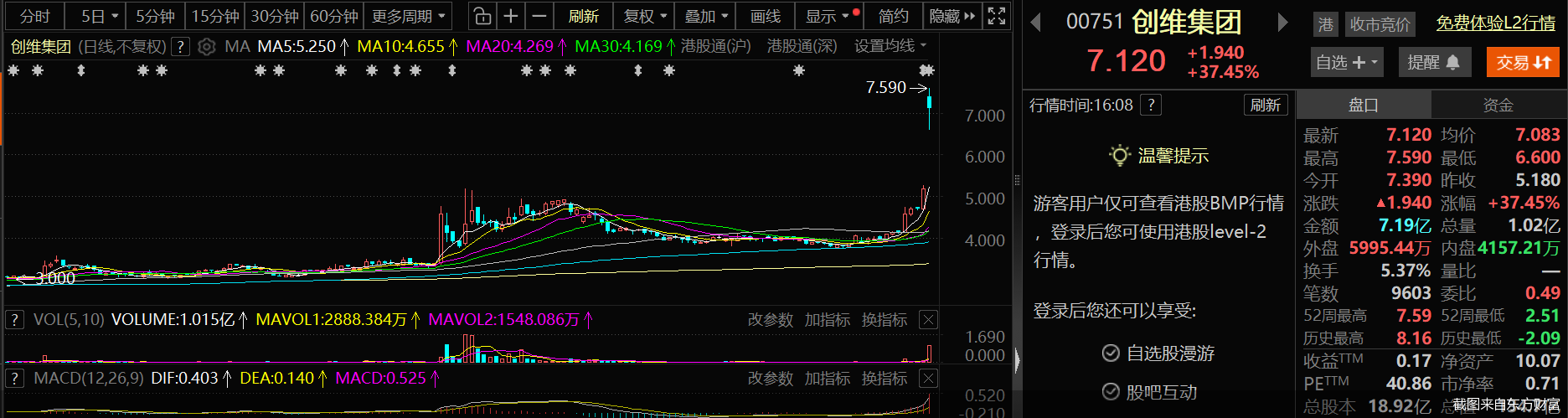
Core Insights - The photovoltaic industry is experiencing significant developments, with Skyworth Group announcing its privatization and the spin-off of Skyworth Photovoltaics for a public listing [1] - Skyworth Group's stock surged by 37.45% to HKD 7.12 per share following the announcement, resulting in a market capitalization of HKD 13.47 billion [1] - Skyworth Photovoltaics is expected to surpass Skyworth Television in revenue for the first time in 2025, indicating strong growth potential [2] Group 1: Company Developments - Skyworth Group's board has approved a share distribution plan and a share buyback program, leading to the application for delisting from the stock exchange [1] - The company operates in four main sectors: smart home appliances, smart system technology, new energy, and modern services, with new energy primarily focused on Skyworth Photovoltaics [1] - Skyworth Photovoltaics has rapidly become a leading player in the household photovoltaic sector, leveraging the group's appliance channels and user base [1] Group 2: Financial Performance - In the first half of 2025, Skyworth Group reported a revenue of approximately CNY 36.26 billion, a year-on-year increase of 20.3% [2] - The new energy segment generated revenue of CNY 13.84 billion, reflecting a significant year-on-year growth of 53.5% [2] Group 3: Market Expansion and Strategy - Skyworth Photovoltaics is accelerating its overseas expansion, with its first commercial photovoltaic project in Thailand already underway [2] - The project at UMC Steel's facility is expected to generate approximately 4.422 million kWh in its first year, with all produced clean energy used for the plant's operations [2] - The integration of solar and storage solutions is becoming a trend in the industry, with major players like JA Solar and LONGi also focusing on energy storage [3] - Skyworth plans to enter the home energy storage market, leveraging its accumulated user resources and expertise in digital management and AI optimization [3]
创维集团将私有化退市
Bei Jing Shang Bao· 2026-01-21 16:13
Core Viewpoint - The photovoltaic industry is experiencing significant developments, with Skyworth Group announcing its privatization and the spin-off of Skyworth Photovoltaics for a public listing, leading to a substantial stock price increase and a market capitalization of HKD 13.47 billion [1] Group 1: Company Developments - Skyworth Group's board decided on a share distribution and a share buyback plan, which will lead to the delisting of the company and the listing of Skyworth Photovoltaics on the Hong Kong Stock Exchange [1] - Skyworth Group operates in four main business segments: smart home appliances, smart system technology, new energy, and modern services, with the new energy segment primarily focused on Skyworth Photovoltaics [1] - Skyworth Photovoltaics has rapidly become a leading player in the household photovoltaic sector, leveraging the group's appliance channels and user base to penetrate lower-tier markets [1] Group 2: Financial Performance - Skyworth Photovoltaics is projected to surpass Skyworth Television in revenue for the first time in 2025, reflecting its strong growth trajectory [2] - In the first half of 2025, Skyworth Group reported a revenue of approximately CNY 36.264 billion, a year-on-year increase of 20.3%, with the new energy segment generating CNY 13.836 billion, up 53.5% year-on-year [2] Group 3: Market Expansion and Trends - The company is accelerating its overseas expansion, with the first commercial photovoltaic project in Thailand already underway, expected to generate approximately 4.422 million kWh in its first year [2] - The integration of solar and storage solutions is becoming a trend in the photovoltaic industry, with major players like JA Solar, JinkoSolar, Trina Solar, and LONGi Solar investing in energy storage [3] - Skyworth plans to enter the energy storage market, leveraging its accumulated user resources and expertise in digital management and AI optimization from its photovoltaic projects [3]
创维集团大动作!拟私有化退市,并分拆创维光伏上市
Bei Jing Shang Bao· 2026-01-21 10:21
Core Viewpoint - The photovoltaic industry is experiencing significant developments as Skyworth Group announces its privatization and the spin-off of Skyworth Photovoltaics for a public listing, leading to a substantial stock price increase of 37.45% on January 21, 2026 [1]. Group 1: Company Developments - Skyworth Group plans to privatize and delist from the stock exchange, while simultaneously spinning off Skyworth Photovoltaics for a public listing on the Hong Kong Stock Exchange [1]. - Following the announcement, Skyworth Group's stock surged to HKD 7.12 per share, with a total market capitalization of HKD 134.7 billion [1]. - The company will implement a share buyback plan and distribute shares of Skyworth Photovoltaics to all shareholders [1][2]. Group 2: Financial Performance - In the first half of 2025, Skyworth Group reported a revenue of approximately CNY 362.64 billion, marking a year-on-year growth of 20.3% [4]. - The revenue from the new energy business reached CNY 138.36 billion, reflecting a significant increase of 53.5% compared to the previous year [4]. Group 3: Market Expansion and Future Growth - Skyworth Photovoltaics is expected to surpass Skyworth Television in revenue for the first time in 2025, indicating strong growth potential [4]. - The company is accelerating its overseas expansion, with its first commercial photovoltaic project in Thailand already underway, expected to generate approximately 4.422 million kWh in its first year [5]. - Skyworth aims to enter the energy storage market, leveraging its existing user base and technological expertise in digital management and AI optimization [5].
助力投资者捕捉光伏拐点机遇,光伏ETF富国今日起正式发行
Quan Jing Wang· 2026-01-19 04:34
Group 1 - The core point of the news is that the State Grid Corporation announced a historic investment plan of 4 trillion yuan during the "14th Five-Year Plan" period, representing a 40% increase compared to the previous period, which is seen as a significant boost for the photovoltaic industry [1] - The substantial investment aims to address the bottleneck of grid absorption capacity, which has hindered the effective integration of clean electricity into the grid despite rapid growth in photovoltaic installations [1] - The State Grid also plans to add approximately 200 million kilowatts of wind and solar energy installations annually during the "14th Five-Year Plan," indicating a booming period for wind and solar energy, along with potential growth in energy storage resources [1] Group 2 - The photovoltaic industry has undergone deep price adjustments and intense competition, with the "anti-involution" policy helping to optimize the industry structure by curbing disorderly low-price competition [2] - As a result of the "anti-involution" policy, capacity expansion in segments like silicon wafers and modules has largely ceased, and the supply-demand imbalance is expected to improve by 2026, with signs of price recovery in the industry [2] - The integration of solar and storage ("光储融合") is creating new growth opportunities, as energy storage is becoming essential for stabilizing the grid amid the rapid growth of renewable energy installations [2] Group 3 - Investors are focusing on how to effectively share in the growth dividends of the photovoltaic industry, with individual stock investments facing risks from technological changes and fluctuations in specific segments [3] - The photovoltaic ETF, 富国 (subscription code: 560233, trading code: 560230), offers a convenient way to invest in core companies across the industry, tracking the CSI Photovoltaic Industry Index, which covers various segments of the photovoltaic supply chain [3] - The index's top three weighted sectors—photovoltaic cells and modules, inverters, and silicon materials—are core to the photovoltaic industry, capturing the overall performance of listed companies in the sector [3]
2026年新型储能十大预测
行家说储能· 2026-01-14 11:44
Core Viewpoint - The new energy storage industry is at a critical juncture in 2026, transitioning towards market-oriented independence amidst the dissolution of old paradigms and the construction of new models [2]. Group 1: Global Energy Storage Market - The global new energy storage installed capacity is expected to reach 123.87GW/392.76GWh in 2026, with a growth rate of 42% [4]. - The global commercial and industrial (C&I) storage market is projected to grow significantly, with an expected installed capacity of 30.14GWh in 2026, representing a year-on-year increase of 58.96% [7]. - By 2030, the global new energy storage installed capacity is anticipated to reach 850.5GWh, indicating a robust growth trajectory [6]. Group 2: China's Energy Storage Market - In China, the C&I storage market is expected to achieve an installed capacity of 12.11GWh in 2025, with a growth rate of 61.4% [11]. - The transition from a single peak-valley price profit model to a diversified revenue model is anticipated as the market reforms accelerate [13]. - The capacity price mechanism reform is expected to stimulate independent storage, with various provinces introducing capacity compensation policies [16]. Group 3: Technological Advancements - The integration of AI and digital technologies is becoming a key trend in the evolution of energy storage systems, enhancing operational efficiency and predictive capabilities [29]. - The development of long-duration energy storage solutions is expected to gain momentum, with over 30GWh of new installations projected for 2026 [22]. - The competitive landscape is shifting towards a focus on technological capabilities, project experience, and financial strength among leading firms [35]. Group 4: Market Dynamics and Competition - The energy storage market is experiencing a significant reshaping, with a wave of new entrants leading to a temporary dilution of market concentration [33]. - As the market matures, competition will increasingly focus on understanding electricity market rules, operational capabilities, and customized solutions for specific scenarios [35]. - The emergence of virtual power plants is expected to open new market opportunities for C&I storage, transitioning from a single revenue model to a more diversified approach [27].