内外双循环

Search documents
“十五五”时期经济大省如何持续挑大梁
Jing Ji Guan Cha Wang· 2025-10-27 09:34
Core Points - The Fourth Plenary Session of the 20th Central Committee of the Communist Party of China outlined the main goals for economic and social development during the "15th Five-Year Plan" period, emphasizing the role of key economic provinces in driving growth and establishing a high-quality regional economic layout [1][10] - Economic provinces, particularly Guangdong, Jiangsu, Shandong, Zhejiang, Sichuan, and Henan, contribute over 40% to the national economy, showcasing their importance in achieving national economic stability and growth [1][2] Economic Growth of Major Provinces - Shandong's GDP reached 98,566 billion yuan in 2024, nearing the 10 trillion yuan mark, while Guangdong became the first province to exceed 14 trillion yuan in GDP [2] - During the "14th Five-Year Plan" period, major economic provinces consistently outperformed the national average GDP growth rate, with Shandong achieving a growth rate of 5.7%, surpassing the national average by 0.7 percentage points [3][4] Role in Domestic Consumption - Major economic provinces have significantly contributed to domestic consumption, with retail sales growth rates exceeding the national average. Shandong's retail sales grew by 5.0% in 2024, with notable increases in both goods and dining sectors [4][5] - The implementation of consumption-boosting policies in Shandong aims to enhance consumer spending across various sectors, laying a solid foundation for future growth [5] Technological and Industrial Advancements - Major economic provinces account for over 70% of China's large-scale industrial and high-tech enterprises, positioning them as key players in driving innovation and economic resilience [6] - The "14th Five-Year Plan" period saw a 42% increase in the value added by high-tech manufacturing compared to the end of the "13th Five-Year Plan," with the "new economy" contributing 18% to GDP [6][7] Future Economic Goals - The "15th Five-Year Plan" period is critical for achieving the long-term goal of doubling GDP per capita by 2035, requiring an average annual GDP growth rate of over 4.4% from 2026 to 2035 [8][9] - Major economic provinces are expected to continue their leadership role in economic growth, supported by robust fiscal strength, extensive financial resources, and a comprehensive industrial system [10][11]
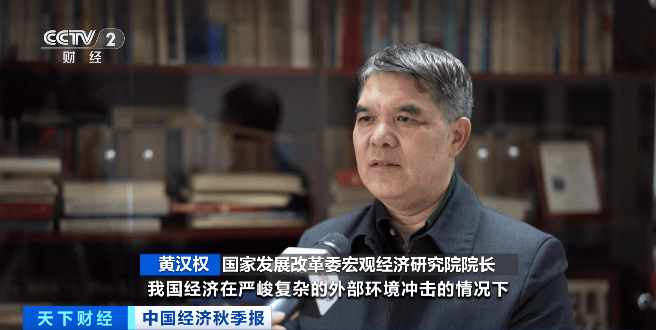
专家:前三季度我国经济展现出较强韧性和活力
Sou Hu Cai Jing· 2025-10-20 10:47
Core Insights - China's economy demonstrates resilience and vitality despite severe external challenges, with notable performance in technological innovation, industrial upgrading, and internal-external circulation [3] - Consumer spending contributes over half to economic growth, indicating a foundational role in the economy, with record travel and tourism revenues during recent holidays [5] - The first three quarters show effective qualitative improvement and reasonable quantitative growth in economic development, with measures to promote a unified national market further boosting domestic demand and stabilizing foreign trade [7] Group 1 - The overall economic operation remains stable, showcasing strong resilience and vitality under complex external conditions [3] - New emerging industries are growing rapidly, and traditional industries are undergoing transformation and upgrading, supporting high-quality economic development [3] - Consumer demand is increasingly evident, with significant growth in service needs reflected in record holiday travel and tourism [5] Group 2 - The construction of a unified national market is progressing, with detailed measures implemented to enhance domestic demand [7] - The linkage between internal and external circulation is being effectively maintained, contributing to the stability of foreign trade [7] - The economic data from the first three quarters indicates a balance between qualitative enhancement and quantitative growth [7]

从“硬核”数据透视前三季度经济发展成绩单 “稳”“进”“韧”特性没有改变
Yang Shi Wang· 2025-10-20 05:41
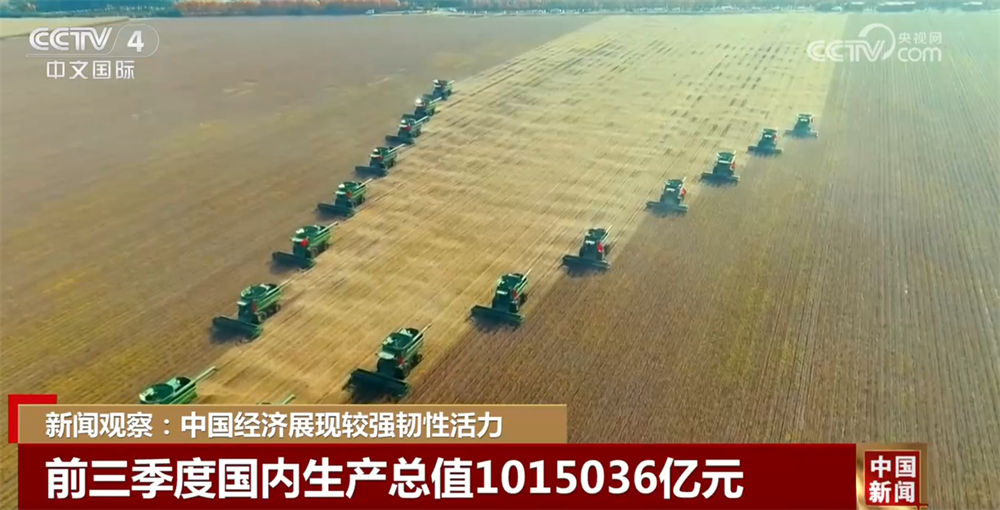
Core Points - China's GDP for the first three quarters reached 10,150.36 billion yuan, with a year-on-year growth of 5.2%, indicating resilience and vitality in the economy [1][2][5] Economic Growth - The GDP growth of 5.2% positions China among the top major economies globally, highlighting its role as a significant growth source for the world economy [5] - The first industry added value was 58.06 billion yuan, growing by 3.8%; the second industry added value was 364.02 billion yuan, growing by 4.9%; and the third industry added value was 592.95 billion yuan, growing by 5.4% [2] Structural Adjustment - The economy is experiencing a steady growth while accelerating structural adjustments, with emerging industries rapidly developing and traditional industries undergoing transformation [7][9] - The rapid growth of emerging industries and the transformation of traditional industries are crucial for supporting high-quality economic development [9] Industrial Production - The industrial production saw a significant increase, with the added value of large-scale industries growing by 6.2% year-on-year, particularly in equipment manufacturing and high-tech manufacturing [11] - The service sector's added value grew by 5.4%, indicating stable growth, while retail sales reached 365.877 billion yuan, with a year-on-year increase of 4.5% [11] Quality and Quantity of Economic Development - The data from the first three quarters reflect an effective improvement in the quality of economic development and reasonable growth in quantity, with measures to boost domestic demand and stabilize foreign trade [13]
看浙江的出口韧性
Sou Hu Cai Jing· 2025-09-16 00:39
Core Insights - Zhejiang's export value from January to August 2023 ranks second nationally, with a year-on-year growth of 7.7%, outpacing the national average by 0.8 percentage points [1][2] - The province's economic resilience is highlighted by its significant contribution to overall economic growth, with exports accounting for 15.9% of the national total [1] - The long-term innovation in institutional mechanisms has been crucial for Zhejiang's export resilience, supported by the dual engines of enterprise reform and China's WTO accession [1] Export Structure and Trade Dynamics - General trade is a strong point for Zhejiang, with 76.4% of the province's exports coming from this category, which is 10 percentage points higher than the national average [2] - The export structure is diversifying, with a notable decrease in the share of textiles and garments, which fell to 16.5%, while electromechanical products now account for over 50% of the province's exports [2] - The export of electrical equipment leads the electromechanical sector, with a total export value of 102.8 billion yuan, reflecting an 11.6% year-on-year increase [2] Regional Export Distribution - Zhejiang exhibits a combination of concentrated and dispersed export characteristics, with strong market foundations in Europe and North America, where exports account for 24.4% and 15.7% of total exports, respectively [3] - The province's ability to expand into emerging markets is evident, as its export shares to Latin America, Africa, and Oceania exceed national averages [3] Global and National Export Trends - Global export growth has significantly declined since 2012, with an average annual growth rate of only 2.2% from 2011 to 2024, which is 9.2 percentage points lower than the previous decade [3][4] - China's export growth from 2011 to 2024 is projected at an average of 5.0%, which is higher than the global average but lower than the previous decade's performance by 16.7 percentage points [4] Strategic Recommendations - Strengthening domestic demand and enhancing internal circulation is crucial, with the province's industrial exports projected to be 128.4% of its industrial added value in 2024 [5] - Investment in central and northeastern regions is recommended to bolster internal circulation, alongside promoting "sales of real estate" nationwide to enhance Zhejiang's role as a dual circulation hub [5] - Utilizing port advantages to increase imports can balance trade and enhance domestic supply, contributing to coordinated economic development [5]
(经济观察)出海企业迎新支持 中国部署完善海外综合服务体系
Zhong Guo Xin Wen Wang· 2025-09-13 01:14
Core Insights - The Chinese government is enhancing support for outbound enterprises to participate in international cooperation and competition, aiming to create a robust overseas comprehensive service system [1][2] - The recent meeting signals a clear intention to help Chinese companies "go steady" and "go far" in their international ventures [1] Group 1: Government Initiatives - The meeting proposed strengthening collaboration across legal, financial, and logistics services, enriching service products, and establishing service platforms to support outbound enterprises [2] - It encourages the development of comprehensive service ports and overseas service stations in key countries, facilitating a full-process service for companies going abroad [2] Group 2: Market and Social Dynamics - The meeting emphasizes enhancing the functions of business associations and cultivating professional service institutions with strong cross-border capabilities, highlighting a market-oriented and socialized approach [3] - Empowering business associations will enable companies to access policy and market information promptly, while encouraging the development of cross-border services will enhance the overall competitiveness of enterprises [3] Group 3: Long-term Implications - The construction of an overseas comprehensive service system is linked to China's broader strategy of opening up, supporting high-quality outbound ventures that align with domestic institutional reforms [3]
"天时"与"基本面"的共振:奥克斯电气叩响港股大门
Ge Long Hui· 2025-09-02 03:50
Group 1 - The core viewpoint of the article highlights the successful IPO of Aux Electric on the Hong Kong Stock Exchange, emphasizing its growth potential and strategic opportunities in the global HVAC market [1][3][6] - Aux Electric's revenue is projected to grow from 19.528 billion RMB in 2022 to 29.759 billion RMB in 2024, with a compound annual growth rate (CAGR) of 23.4%, while net profit is expected to rise from 1.442 billion RMB to 2.910 billion RMB, achieving a CAGR of 42.1% [1][5] - The company's net profit margin is anticipated to increase from 7.4% in 2022 to 9.8% in 2024, further reaching 9.9% in the first three months of 2025, indicating a positive trend [1][5] Group 2 - Aux Electric's dual-market strategy under the "dual circulation" framework has shown remarkable adaptability and growth potential, with overseas revenue share increasing from 42.9% in 2022 to 57.1% in Q1 2025 [2][4] - The company has invested over 1.6 billion RMB in R&D, establishing research centers in Ningbo, Zhuhai, and overseas, and holds over 12,000 registered patents, enhancing its global competitiveness [2][4] - The global air conditioning market is projected to reach 1.3 trillion RMB in 2024 and exceed 1.5 trillion RMB by 2028, with Aux Electric positioned as the fifth-largest air conditioning provider globally, outpacing industry growth rates [4][5] Group 3 - The timing of Aux Electric's IPO aligns with a positive shift in the Hong Kong stock market, with the Hang Seng Index and Hang Seng Tech Index showing strong resilience and growth in 2023 [3][5] - Southbound capital inflows have been significant, with net purchases nearing 98 billion HKD this year, indicating strong investor interest in the Hong Kong market, particularly for new listings and small to mid-cap growth stocks [3][5] - The active IPO market reflects a resurgence in investor enthusiasm, with 54 new listings in the first eight months of the year, raising approximately 132.26 billion HKD, a 567.5% increase year-on-year [3][5] Group 4 - Aux Electric's successful listing is seen as a representation of Chinese manufacturing's advancement in the global value chain, showcasing resilience and innovative vitality under the "dual circulation" strategy [6] - The recognition from the capital market serves as validation of the company's past achievements and future growth potential, positioning Aux Electric as a typical example of a company that creates real value [6]
金融风险防范化解五年迈一大步,“十五五”如何兼顾化险与发展|“十四五”规划收官
Di Yi Cai Jing· 2025-08-26 11:31
Core Insights - The "14th Five-Year Plan" has emphasized the importance of financial risk prevention and resolution, leading to a more robust financial firewall against internal and external risks [1][3][12] - The number of high-risk financial institutions has significantly decreased, with a notable reduction from a peak of 649 institutions in Q3 2019 to approximately 357 by the end of 2023 [3][4][10] - The reform and risk resolution efforts for small and medium-sized banks have accelerated, focusing on capital replenishment, mergers, and market exits [4][5][11] Financial Risk Prevention and Resolution - As of June 2025, the number of financial institutions participating in deposit insurance has decreased to 3,554 from 4,025 at the end of 2020, indicating a trend of consolidation [1] - The "14th Five-Year Plan" has called for a financial safety strategy, which includes the establishment of a financial stability guarantee fund to address risk [6][12] - The financial stability guarantee fund is designed to work alongside the deposit insurance fund, creating a comprehensive risk management framework [7][12] High-Risk Financial Institutions - The proportion of high-risk financial institutions has been declining, with the asset ratio of these institutions dropping to 1.78% of total banking assets by the end of 2023 [4][12] - The majority of high-risk institutions are concentrated in rural credit institutions and village banks, with significant regional disparities in risk levels [3][4] Reform of Small and Medium-Sized Banks - Since 2022, ten provinces have established provincial-level rural commercial banks or cooperative banks to facilitate structural reorganization and risk resolution in local small banks [5][11] - The reform efforts for small and medium-sized banks have been characterized by a focus on enhancing their operational capabilities and financial health [11][12] Future Outlook - The "15th Five-Year Plan" aims to integrate risk resolution with the transformation and development of local small and medium-sized financial institutions, highlighting the importance of both aspects [9][10] - Recommendations for future actions include optimizing the regulatory environment for small banks, enhancing their capital strength, and improving their service capabilities through financial technology [11][12] - The focus will also be on strengthening the financial safety net and enhancing the ability to respond to external risks, particularly in light of global economic uncertainties [8][13]
“柯新亚”跨境专线首发
Ren Min Ri Bao· 2025-08-25 22:27
Core Viewpoint - The launch of the "Kexinya" freight train service from Shaoxing, Zhejiang, marks the establishment of a new efficient international logistics channel for textile exports, significantly reducing transportation time by approximately 2 days compared to previous methods [1] Group 1: Logistics and Transportation - The "Kexinya" cross-border line starts from Shaoxing's Keqiao District and relies on key ports in Xinjiang, including Ili, Kashgar, and Aksu, covering major economic cities in Central Asia such as Kazakhstan, Uzbekistan, and Kyrgyzstan [1] - This new logistics channel aims to create a stable multimodal transport system, enhancing international logistics speed and reducing costs [1] Group 2: Trade and Economic Impact - The China Light Textile City in Shaoxing has an annual transaction volume exceeding 400 billion yuan, with nearly 60% of its exports directed towards Central Asia, the Middle East, and Europe [1] - The increased trade frequency with Central Asia is expected to stimulate both domestic and international economic cycles [1]
这才是特朗普不敢制裁我们的原因,鲁比奥说了实话,印度自吞苦果
Sou Hu Cai Jing· 2025-08-19 05:13
Group 1 - The article discusses Trump's decision to impose additional tariffs on India while refraining from similar actions against China, suggesting a strategic choice to avoid escalating tensions with China [3][21] - India's exports to the U.S. have significantly slowed, dropping from double-digit growth to less than three percent, indicating a weakening trade relationship [3][19] - The U.S. maintains tariffs on Chinese goods, with the White House citing an "observation period," which can be extended indefinitely, reflecting a cautious approach towards China [3][21] Group 2 - India imports two million barrels of oil daily from Russia, primarily for domestic use, while China processes a significant portion of its Russian oil for export, highlighting differences in energy strategies [4][18] - The potential impact of U.S. tariffs on Chinese refineries could lead to a spike in global fuel prices, directly affecting U.S. inflation, which is a concern for the Trump administration [5][21] - China's financial leverage, including its holdings of U.S. Treasury bonds and its role in the dollar clearing network, provides it with significant bargaining power [6][32] Group 3 - The article emphasizes the asymmetrical vulnerabilities in the U.S.-China-India dynamic, where India's reliance on low-margin pharmaceutical sectors limits its ability to compete with China's manufacturing capabilities [11][19] - The U.S. pharmaceutical, electronics, and automotive industries have a high dependency on China, complicating any potential shifts to India [8][19] - India's manufacturing sector struggles with foundational issues, making it difficult to replace Chinese supply chains effectively [11][19] Group 4 - The article highlights the psychological aspect of Trump's tariff strategy, using India as a scapegoat to project a tough stance on China without triggering a market backlash [9][21] - India's "Make in India" initiative faces challenges due to a lack of foundational capabilities in critical sectors like semiconductors and precision machinery [11][19] - The geopolitical landscape is shifting, with China's Belt and Road Initiative enhancing its influence in the Indian Ocean, while India's strategic position remains precarious [16][23] Group 5 - The article notes that the U.S. is cautious about imposing severe sanctions on China due to the potential backlash on its own economy, while India is left to bear the brunt of U.S. tariff policies [21][32] - The capital markets reacted differently to the tariff news, with the Indian rupee depreciating and foreign capital exiting, while the Chinese yuan remained stable [19][46] - The contrasting paths of China and India in terms of industrial strategy and infrastructure development are highlighted, with China focusing on heavy industry and technology while India remains reliant on services [19][41]




强化民生导向 在保障改善民生中扩大消费需求 | 中共中央政治局会议解读
Yang Shi Wang· 2025-07-31 08:25
Group 1 - The core viewpoint of the meeting is to analyze the current economic situation and deploy economic work for the second half of the year, aiming for a successful conclusion of the "14th Five-Year Plan" and the initiation of the "15th Five-Year Plan" [1] - The meeting emphasizes the need to maintain a stable and progressive work approach, ensuring policy continuity and stability while enhancing flexibility and foresight to achieve annual economic and social development goals [3][5] - The macroeconomic policy focus includes stabilizing employment, enterprises, markets, and expectations, with a continuous strengthening of the policy's orientation towards people's livelihoods [7] Group 2 - The meeting highlights the importance of boosting consumption and developing service consumption, indicating that while expanding commodity consumption, new growth points in service consumption should be cultivated [10][12] - Experts note that service consumption is increasingly significant as living standards rise, and it is a primary direction for consumption upgrading, which aligns with the public's aspirations for a better life [14][16] - Service consumption plays a crucial role in meeting livelihood needs, promoting consumption industry upgrades, and creating new consumption scenarios, which is beneficial for achieving a virtuous cycle of internal and external circulation [18]