协同

Search documents
粤港澳三地中秋美食节同步启动
Xin Hua Wang· 2025-09-29 00:30
Core Points - The 2025 Shenzhen-Hong Kong-Macao Mid-Autumn Food Festival was launched on September 27, featuring a 10-day event with food tasting, traditional handicraft experiences, and cultural exhibitions, aimed at enhancing tourism during the National Day and Mid-Autumn Festival holidays [1][2] - The event promotes deep integration of culture, tourism, and commerce in the Guangdong-Hong Kong-Macao Greater Bay Area, with the introduction of the "Shenzhen-Hong Kong-Macao Travel Pass" and exclusive discount coupons from hundreds of merchants [1] - The main venue in Luohu, Shenzhen, features over 80 stalls offering local delicacies from Shenzhen, Hong Kong, and Macao, creating a "reunion feast" that showcases the culinary diversity of the region [1] Summary by Sections Event Overview - The Mid-Autumn Food Festival includes various activities such as food tasting, traditional handicraft experiences, and cultural exhibitions, lasting for 10 days [1] - The event aims to attract tourists during the National Day and Mid-Autumn Festival holidays, enhancing the appeal of the Greater Bay Area as a travel destination [1] Cultural and Culinary Highlights - The event features over 80 food stalls in Luohu, showcasing dishes like Shenzhen盆菜, Hong Kong碗仔翅, and Macao蛋挞, emphasizing regional culinary collaboration [1] - The festival incorporates elements from the 15th National Games, symbolizing the themes of "sharing, integration, and collaboration" through its design [2] Participation and Engagement - Local vendors from Hong Kong's Temple Street and Macao's 官也街 participate, offering a variety of international and local cuisines, enhancing the multicultural experience for visitors [1][2] - The event has garnered positive responses from attendees, highlighting the excitement and anticipation for the holiday season [2]
陈春花:面对今天最大的机会变量,组织重塑的三个关键词
Jing Ji Guan Cha Bao· 2025-09-24 00:27
Group 1 - The core viewpoint emphasizes that organizations must view changes, such as artificial intelligence and digital transformation, as opportunities rather than challenges [1][2] - Digital intelligence technology is identified as the most significant variable affecting survival and business models today [2][4] - Organizations need to adapt to a new environment where technology is prioritized, and traditional linear concepts of time are redefined [4][5] Group 2 - The three fundamental activities of humans—material production, interpersonal communication, and self-awareness—are now all applicable in economic activities due to digital intelligence technology [5][6] - The shift in wealth production methods reflects changing values and work orientations among younger generations, indicating a need for organizations to understand these changes [7][8] Group 3 - The transition from digitalization to digital intelligence involves three essential characteristics: connection, symbiosis, and present-focused thinking [9][10][11] - Digital intelligence is characterized by collaboration, adaptability, and precision in decision-making through data [11][12][13] Group 4 - The impact of digital intelligence on organizations is summarized in three keywords: empowerment, symbiosis, and collaboration [14][15][16] - Organizations must shift from control to empowerment to retain talent and foster connections [14][16] - Emphasizing symbiosis over competition is crucial for survival in the current ecosystem [15][16][17] Group 5 - The need for collaboration rather than division is highlighted, suggesting that organizations should assess their roles as enablers or isolated entities [17][18] - The challenges posed by digital intelligence require organizations to seek certainty and opportunities externally while maximizing internal value [18]
第3选择:职场冲突的新解法
3 6 Ke· 2025-08-11 02:53
Group 1 - The core idea of the article revolves around the concept of the "Third Option," which emphasizes finding collaborative solutions in conflicts rather than engaging in zero-sum games [1][5][13] - The case of ByteDance illustrates how a product team and a technical team resolved their conflict by breaking down a feature into three versions, leading to unexpected user approval and collaboration [1][3] - The "Third Option" is contrasted with traditional approaches to conflict resolution, which often involve compromise or confrontation, highlighting the potential for creating greater value through collaboration [3][5] Group 2 - The article discusses the "Four Steps to Collaboration" as a practical guide to implementing the "Third Option" in workplace conflicts [6] - The first step involves inviting the other party to explore a better solution together, signaling a willingness to cooperate [7] - The second step focuses on defining mutually recognized success criteria to ensure that both parties have a clear understanding of what constitutes a win [8] - The third step encourages brainstorming without limitations to generate creative solutions [9] - The final step is to confirm the collaborative solution and take action, ensuring it meets the established success criteria [10] Group 3 - The article warns against the "GET Trap," which refers to the pitfalls of focusing on personal gain, being controlled by emotions, and defending one's territory, ultimately hindering collaboration [12] - It emphasizes that the essence of the "Third Option" lies in improving communication and overcoming limited thinking, rather than competing for scarce resources [13] - The article concludes by reiterating that true success in conflicts comes from creating win-win situations, rather than viewing life as a zero-sum game [13]



民航青海空管分局圆满完成西宁机场T3航站楼转场保障工作
Zhong Guo Min Hang Wang· 2025-08-08 03:46
Core Viewpoint - The successful launch of the T3 terminal at Xining Airport marks a significant milestone in the development of a modern transportation hub, showcasing the effective air traffic management and operational coordination by the Civil Aviation Qinghai Air Traffic Control Bureau [1][3][7] Group 1: Operational Readiness - The first flight from the T3 terminal took off smoothly on August 7, indicating the successful transition to the new facility [1] - The air traffic control bureau implemented a comprehensive support system characterized by "zero errors, high efficiency, and strong collaboration" to ensure the terminal's operational readiness [1][3] Group 2: Coordination and Planning - The bureau's leadership proactively planned and coordinated efforts to address challenges related to the operational mode switch, parameter changes, and increased flight volume due to the T3 terminal's opening [3][5] - Detailed ground operation plans were developed, including specific taxiway paths for different aircraft types to ensure safety and efficiency during ground operations [3][5] Group 3: Safety and Risk Management - Prior to the terminal's opening, the air traffic control bureau conducted multiple simulations to identify potential conflict areas and optimize operational procedures [5][7] - The meteorological department provided timely weather updates and forecasts during the transition period, ensuring effective communication with airport and airline companies [7] Group 4: Future Developments - The Civil Aviation Qinghai Air Traffic Control Bureau aims to continuously optimize operational processes and enhance collaborative mechanisms to provide safer, more efficient, and smarter air traffic services [7]
极氪告别纽交所回归吉利:新能源整合迈入深水区
3 6 Ke· 2025-07-17 11:33
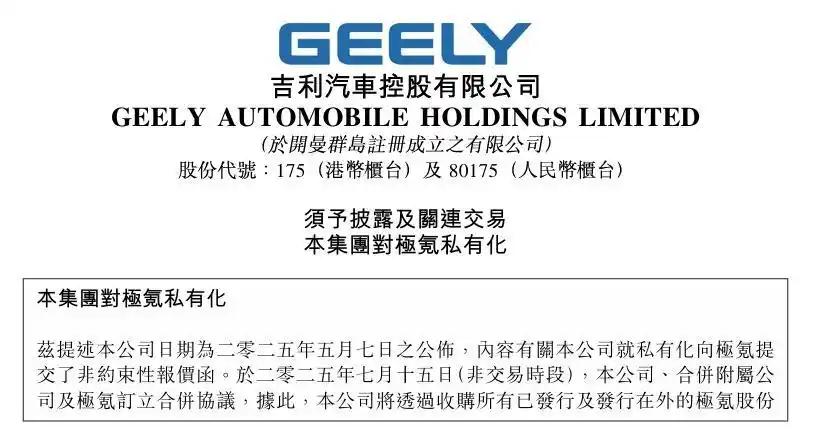
Core Viewpoint - The merger between Geely Auto and Zeekr Smart Technology marks a significant step in the consolidation of China's electric vehicle industry, transitioning from "barbaric growth" to "stock competition" and aiming to enhance competitiveness through resource restructuring and strategic collaboration [1][2]. Group 1: Merger Details - Geely Auto has signed a merger agreement with Zeekr, resulting in Zeekr's delisting from the NYSE and becoming a wholly-owned subsidiary of Geely [1]. - Geely previously held 65.7% of Zeekr's shares and will acquire the remaining shares through a combination of cash and stock swap, with a total valuation of approximately 17.2 billion RMB [2]. - The transaction price includes $2.687 in cash per share and a swap of 1.23 shares of Geely's new stock, representing an 18.9% premium over the last trading day [2]. Group 2: Strategic Restructuring - The merger is part of a broader strategy to optimize brand positioning and eliminate overlaps, creating two main groups: Geely Auto Group focusing on the mainstream market and Zeekr Technology Group targeting the high-end luxury electric vehicle market [4]. - This "two-horizontal" layout aims to complement brand positioning, with Zeekr focusing on high-end electric vehicles and Geely Galaxy leveraging hybrid technology for mainstream market advantages [4]. Group 3: Cost Efficiency and Innovation - Geely is implementing centralized management of technology resources and supply chains, establishing a unified research institute to streamline R&D and reduce costs [6]. - Post-merger, R&D costs have decreased by 10%-20%, and supply chain costs have dropped by 5%-8%, leading to faster product iterations [6]. - For example, the development cycle for the Geely Galaxy L7 has been shortened by 30%, with costs reduced by 15%, achieving over 20,000 sales in the first month [6]. Group 4: Strategic Focus and Market Positioning - The "Taizhou Declaration" emphasizes strategic focus, urging companies to move from a broad brand strategy to a concentrated development of smart electric technologies [7][9]. - The merger aims to enhance Geely's market penetration, with the share of new energy vehicles increasing from 52% in 2024 to 73% in 2025, reflecting a 73% year-on-year sales growth [9]. Group 5: Globalization Strategy - The merger allows Geely to adjust its global strategy, combining Zeekr's overseas channels with local manufacturing capabilities, aiming to enter 50 countries by 2025 [12]. - Geely plans to leverage resources from Volvo and Polestar to create a closed-loop system of "Chinese R&D, global manufacturing, and local service" [12]. Group 6: Challenges Ahead - The success of the merger will depend on balancing brand positioning and integrating organizational cultures, as differences in management philosophies may pose challenges [15]. - The pressure from price wars in the electric vehicle market necessitates a careful balance between cost control and product quality to maintain profitability [17].
阿里于无声处
Hu Xiu· 2025-05-15 23:15
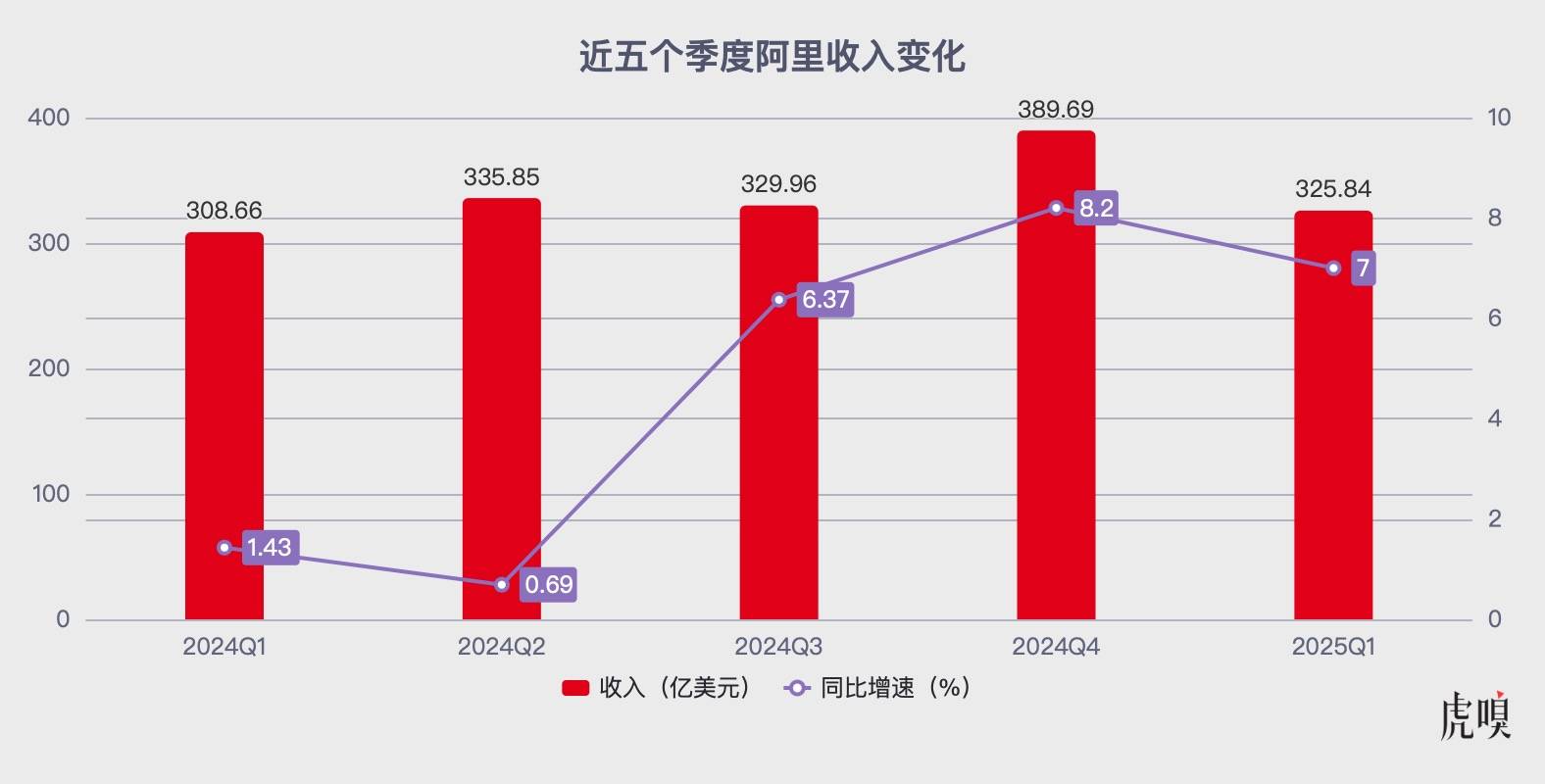
Core Insights - Alibaba is undergoing significant internal changes, focusing on cultural development and strategic projects to enhance collaboration since the implementation of the "1+6+N" reform in March 2023 [1][3][4] - The company has categorized its business into three strategic directions: e-commerce, AI + cloud, and internet platform services, with key battles identified within each category [2][10] - Recent initiatives include the establishment of cross-departmental project teams and a renewed emphasis on entrepreneurial spirit, as evidenced by the recreation of the "Lake House" at headquarters [3][10] Strategic Directions - The three strategic directions identified by Alibaba's CEO include e-commerce (domestic and international), AI + cloud (including cloud services and foundational models), and internet platform services [2][10] - Key battles within these directions focus on immediate retail in e-commerce, foundational models in AI and cloud, and the potential for "national-level applications" in AI to C products [2][10][12] Organizational Changes - Alibaba is implementing a new employee badge system and updating the mechanism for cross-organizational mobility, allowing employees to retain their tenure and long-term incentives when transferring [1][3] - The company is exploring changes in performance assessment, organizational structure, and management tools, with plans for gradual implementation based on pilot programs [5][19] Financial Performance - For the fourth quarter of fiscal year 2025, Alibaba reported a revenue increase of 7% year-on-year to 236.45 billion yuan, with operating profit rising 93% to 28.47 billion yuan [17] - The growth in revenue is primarily driven by the performance of AI and cloud services, as well as the stability and growth of the e-commerce sector, which together account for over 69.8% of total revenue [17] Market Challenges - Despite positive internal changes, Alibaba faces intense competition in the e-commerce sector from rivals like JD.com and Pinduoduo, as well as increased investment from Tencent in the e-commerce space [8][18] - The AI to C market is becoming increasingly competitive, with significant players like ByteDance and Tencent entering the fray, making it challenging for Alibaba to establish a strong foothold [8][18]