协调发展

Search documents
经济日报金观平:下好城乡一体规划这盘棋
Jin Rong Jie· 2026-02-14 22:55
春节前夕,习近平总书记在北京考察时指出,加强城乡一体规划,促进城乡联动发展、融合发展、协调 发展。 协调发展是下好全国发展"一盘棋"的制胜要诀,也是实现共同富裕的内在要求。在中国式现代 化的新征程上,协调发展的重要性愈发凸显。 我国幅员辽阔,各地区资源禀赋、发展基础差异显著, 城乡区域发展不平衡不充分问题较为突出,已成为制约高质量发展的重要瓶颈之一。破解这一发展难 题,必须纵深推进城乡区域协调发展,进一步拓展发展空间,让城乡之间、区域和区域之间更好地实现 融合联动。 协调发展体现了目标导向与问题导向的统一,它既是发展手段又是发展目标。实践中,城 乡联动和区域融合发展,正是落实协调发展理念的两大实践路径:前者能够有效释放乡村投资和消费潜 力,后者将促进生产要素跨区域高效流动,有助于形成优势互补、协调发展的区域发展新格局。 ...
新视野 | 坚持协调发展 促进城乡融合和区域联动
Zhong Yang Ji Wei Guo Jia Jian Wei Wang Zhan· 2026-02-03 00:10
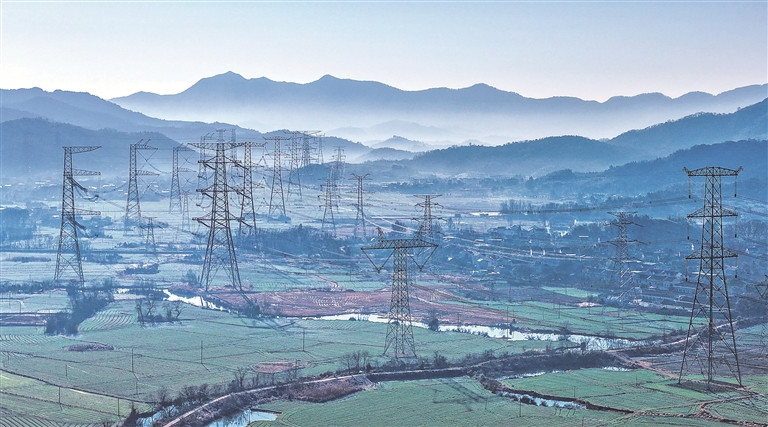
Group 1 - The "West-East Power Transmission" ultra-high voltage project plays a crucial role in efficiently delivering clean energy from the central and western regions to the eastern regions, supporting energy conservation and green development in the Yangtze River Delta [2] - The central economic work conference emphasizes the importance of coordinated development, promoting urban-rural integration and regional collaboration as a direction for high-quality economic growth [2][3] - Coordinated development is a key component of the new development concept, aiming for a dynamic balance that enhances both qualitative and quantitative economic growth while addressing regional disparities [3][4] Group 2 - Significant achievements in coordinated development have been made during the 14th Five-Year Plan period, with urban-rural integration showing strong vitality and potential, as county economies reached 54 trillion yuan, accounting for nearly 40% of the national GDP [5] - The construction of two green development belts has shown notable results, with improvements in ecological quality in the Yangtze River and Yellow River basins, and the proportion of good water quality in the Yangtze River increasing from 67% to 96.5% [5] - Cross-regional cooperation has become tighter, with major economic regions like Beijing-Tianjin-Hebei, Yangtze River Delta, and Guangdong-Hong Kong-Macau Greater Bay Area forming world-class industrial clusters in sectors like integrated circuits and biotechnology [6] Group 3 - The 15th Five-Year Plan period will focus on deeper implementation of regional coordinated development strategies, emphasizing urbanization and rural revitalization centered around counties [8] - Enhancing urban-rural integration involves improving county infrastructure and public services, fostering local industries based on regional characteristics, and promoting a unified land market [8] - Strengthening regional collaboration includes optimizing spatial development, enhancing transportation and logistics connectivity, and establishing mechanisms for ecological governance and public service sharing across regions [9]

报告显示:10年来中国经济高质量发展指数提高24.9%
Ren Min Wang· 2026-01-14 02:59
Core Insights - The "China Economic High-Quality Development Report (2025)" indicates a significant increase in China's economic high-quality development index from 32.43 in 2015 to 40.52 in 2025, marking a 24.9% growth over the decade, with innovation development being a key driver [1] Group 1: Economic Development Index - The five sub-indices of high-quality development have shown substantial growth: innovation development increased by 85.09%, coordinated development by 23.73%, green development by 18.26%, open development by 7.64%, and shared development by 9.19% [1] - Eastern regions maintain a higher economic high-quality development index compared to central, western, and northeastern regions, although central and western provinces have shown faster growth, narrowing the gap with eastern provinces [1] Group 2: Recommendations for Future Development - The report suggests enhancing the overall synergy of the five development concepts: innovation, coordination, green, openness, and sharing, while continuing to leverage the leading role of economically strong provinces [2] - It emphasizes the need for increased investment in technological innovation and improving the institutional environment for innovation [2] - The report advocates for accelerating the construction of a modern industrial system and improving energy efficiency while promoting a green and low-carbon energy transition [2]
开局之年怎么干?2026年中国经济展望→
Xin Lang Cai Jing· 2026-01-13 11:35
Group 1 - The core focus for 2026 includes promoting high-quality and full employment, improving income distribution systems, and enhancing social security systems [1] - The emphasis on high-quality development in real estate and population, along with the equalization of basic public services, reflects a deepening of past practices in improving people's livelihoods [1] - The strategic goal of becoming a technology powerhouse by 2035 highlights the importance of original innovation and the integration of technological and industrial innovation [2] Group 2 - The external environment for China in 2026 is expected to be increasingly complex, necessitating the consolidation of its large-scale market advantages to support high-quality development [3] - Coordinated development and urban-rural integration are identified as key economic tasks for 2026, aiming to enhance the flow of resources and promote domestic circulation [4] - The importance of expanding high-level openness to win competitive advantages in international trade is emphasized, aligning with the central economic work conference's directives [4]
筑牢起步根基 续写发展新篇
Xin Lang Cai Jing· 2026-01-12 16:57
Core Insights - The article emphasizes the comprehensive implementation of the central economic work conference's spirit, focusing on key tasks such as expanding institutional openness, promoting coordinated development, leading with "dual carbon" initiatives, and ensuring bottom-line safety for economic and social development in the 14th Five-Year Plan period [1] Group 1: Deepening Opening Up - Multiple departments are implementing practical measures to expand the depth and breadth of opening up, injecting open momentum into high-quality development [2] - The National Development and Reform Commission (NDRC) has proposed to steadily expand institutional openness and promote high-quality development of the Belt and Road Initiative [3] Group 2: Coordinated Development - The central economic work conference calls for promoting urban-rural integration and regional linkage to address unbalanced development issues [6] - The NDRC emphasizes the need for a people-centered new urbanization and regional strategic implementation to enhance urban-rural integration [7] Group 3: Green Transformation - Various departments are responding to the call for a comprehensive green transformation, focusing on energy structure optimization and industrial green upgrades [9] - The NDRC plans to implement a dual control system for carbon emissions and strengthen evaluation and assessment [10] Group 4: Risk Prevention - The central economic work conference highlights the importance of risk awareness and bottom-line thinking, focusing on local debt, financial markets, and safety production [12] - The People's Bank of China has outlined specific measures for financial risk management, including supporting the resolution of financing platform debt risks [13]
【滨州日报评论员文章】重点围绕“八个方面”提质增效
Xin Lang Cai Jing· 2026-01-11 15:08
Core Viewpoint - The main task of this year's economic work is to establish a "1+1388" work framework, focusing on enhancing quality and efficiency in eight key areas: expanding domestic demand, industrial upgrading, innovation-driven development, reform and opening up, coordinated development, green transformation, social welfare, and safety development [1][2][3]. Group 1: Expanding Domestic Demand - Emphasis on tapping into consumer potential, stimulating market vitality, and enhancing investment efficiency to promote demand expansion and quality improvement [1]. - Development of new consumption formats such as rural e-commerce and instant retail to encourage consumer spending [1]. Group 2: Industrial Upgrading - Support for the "5210N" modern industrial cluster to strengthen industrial groups and promote digital transformation [2]. - Focus on high-end traditional industries, large-scale emerging industries, and collaborative future industries to build a modern industrial system centered on advanced manufacturing [2]. Group 3: Innovation-Driven Development - Implementation of a "five-pronged" approach to enhance innovation capabilities and foster high-tech enterprises with significant R&D investment and market share [2]. - Development of production capacity tailored to local conditions and establishment of industry-education integration communities [2]. Group 4: Reform and Opening Up - Commitment to deepening reforms and expanding the open economy to enhance the business environment and stimulate high-quality development [2]. - Planning for new reform initiatives to inject vitality into the economy [2]. Group 5: Coordinated Development - Promotion of urbanization and rural revitalization, enhancing urban quality and strengthening county economies [2]. - Focus on regional integration and coordinated development across different areas [2]. Group 6: Green Transformation - Adherence to "dual carbon" goals and implementation of major national strategies to build a new energy system and promote pollution prevention [2]. - Efforts to create beautiful cities, villages, and rivers as part of a comprehensive green transformation [2]. Group 7: Social Welfare - Prioritization of social welfare to enhance public services and ensure high-quality population development [3]. - Continuous improvement of social security, medical insurance, and low-income support to increase public satisfaction [3]. Group 8: Safety Development - Focus on integrating safety into development and enhancing overall national security awareness [3]. - Strengthening social governance and risk prevention to build a resilient economy and society [3].
共谱高质量发展协奏曲(编辑手记)
Ren Min Ri Bao· 2026-01-08 23:09
Group 1 - The core viewpoint emphasizes the importance of coordinated development as both a means and a goal for achieving common prosperity, as highlighted by General Secretary Xi Jinping [1] - The strategy of regional coordinated development is crucial for enhancing overall economic efficiency and achieving high-quality development across various regions, including the western, northeastern, central, and eastern areas of China [1] - The implementation of major regional strategies, such as the Yangtze River Economic Belt and the ecological protection of the Yellow River Basin, is advancing the formation of a high-quality regional economic layout [1] Group 2 - The article discusses the deepening of the household registration system reform and the new round of urbanization for agricultural transfer populations, leading to more farmers settling in cities [2] - It highlights the integration of urban and rural infrastructure and public services, which is essential for addressing the imbalance in development and enhancing rural living conditions [2] - The focus on urban-rural integration is seen as a key to unlocking the potential of the rural consumption market and stimulating economic connections between urban and rural areas [2]
从决胜到开局
Jing Ji Wang· 2025-12-31 07:14
Group 1 - The year 2025 is significant as it marks both the decisive year of the "14th Five-Year Plan" and the planning year for the "15th Five-Year Plan" [1] - The Central Economic Work Conference focuses on the current economic situation and outlines strategies for expanding domestic demand, supporting the private economy, advancing artificial intelligence, promoting institutional openness, facilitating green transformation, ensuring coordinated development, and enhancing urban-rural integration [1] - These strategies are crucial not only for the long-term strategic layout of the country but also closely related to the daily lives and happiness of the citizens [2] Group 2 - The article emphasizes the importance of understanding the implications of the "15th Five-Year Plan" suggestions, particularly in the context of consumption upgrades and the integration of quality goods and services into everyday life [2] - It highlights opportunities for small and medium-sized enterprises in the AI era and addresses challenges related to home-based elderly care [2] - The publication aims to provide valuable development references for the new journey of the "15th Five-Year Plan" by interviewing experts, scholars, and business representatives [2]
将在七个重点方面“持续用力”
Xin Lang Cai Jing· 2025-12-30 20:11
Core Viewpoint - Chengdu's economic work for 2026 will focus on seven key areas to enhance effective demand, deepen the integration of technology and industry, expand open cooperation, promote coordinated development, advance urban renewal, optimize the development environment, and improve public welfare and safety [1] Group 1: Expanding Effective Demand - The emphasis will be on expanding effective demand and creating new space for domestic demand growth, integrating consumption promotion with investment expansion [2] - Specific actions include implementing special initiatives to boost consumption, enhancing the second-hand car market, and improving investment mechanisms to support high-quality economic development [2][3] Group 2: Deepening Technology-Industry Integration - The goal is to foster new productive forces through organized innovation and effective transformation, with a focus on enhancing enterprise innovation capabilities [3] - A comprehensive service system for investment will be established to support technology transfer and innovation funding [3] Group 3: Expanding Open Cooperation - The strategy includes enhancing the open economy by coordinating foreign affairs, investment, trade, and promoting the capabilities of free trade zones and cooperation parks [5] - Plans to increase international cooperation and participation in overseas exhibitions will be implemented to boost local products' global presence [5] Group 4: Promoting Coordinated Development - The focus will be on regional collaboration and urban-rural integration, with strategies to strengthen the Chengdu-Chongqing economic circle and promote urbanization [6] - Specific initiatives will include optimizing the economic layout and enhancing the capacity for population and economic growth [6] Group 5: Advancing Urban Renewal - Urban renewal will be prioritized to improve city functionality and quality, with a focus on infrastructure safety and the renovation of old neighborhoods [7][8] - The aim is to create a comprehensive urban development model that integrates various aspects of city life [8] Group 6: Optimizing Development Environment - The city will enhance its business environment to stimulate high-quality development, focusing on legal protections for market entities and efficient service delivery [9] - Collaboration with educational institutions will be emphasized to attract high-end talent and foster innovation [9] Group 7: Enhancing Public Welfare and Safety - Efforts will be made to improve public services and enhance citizens' sense of happiness and security, with a focus on sports and cultural events to drive economic activity [10][11] - Long-term goals include significant improvements in economic strength, technological capability, and overall quality of life for residents [11]
加速构建协同发展格局 2024年京津冀区域协同发展指数继续提升 - 国家统计局
Guo Jia Tong Ji Ju· 2025-12-29 09:36
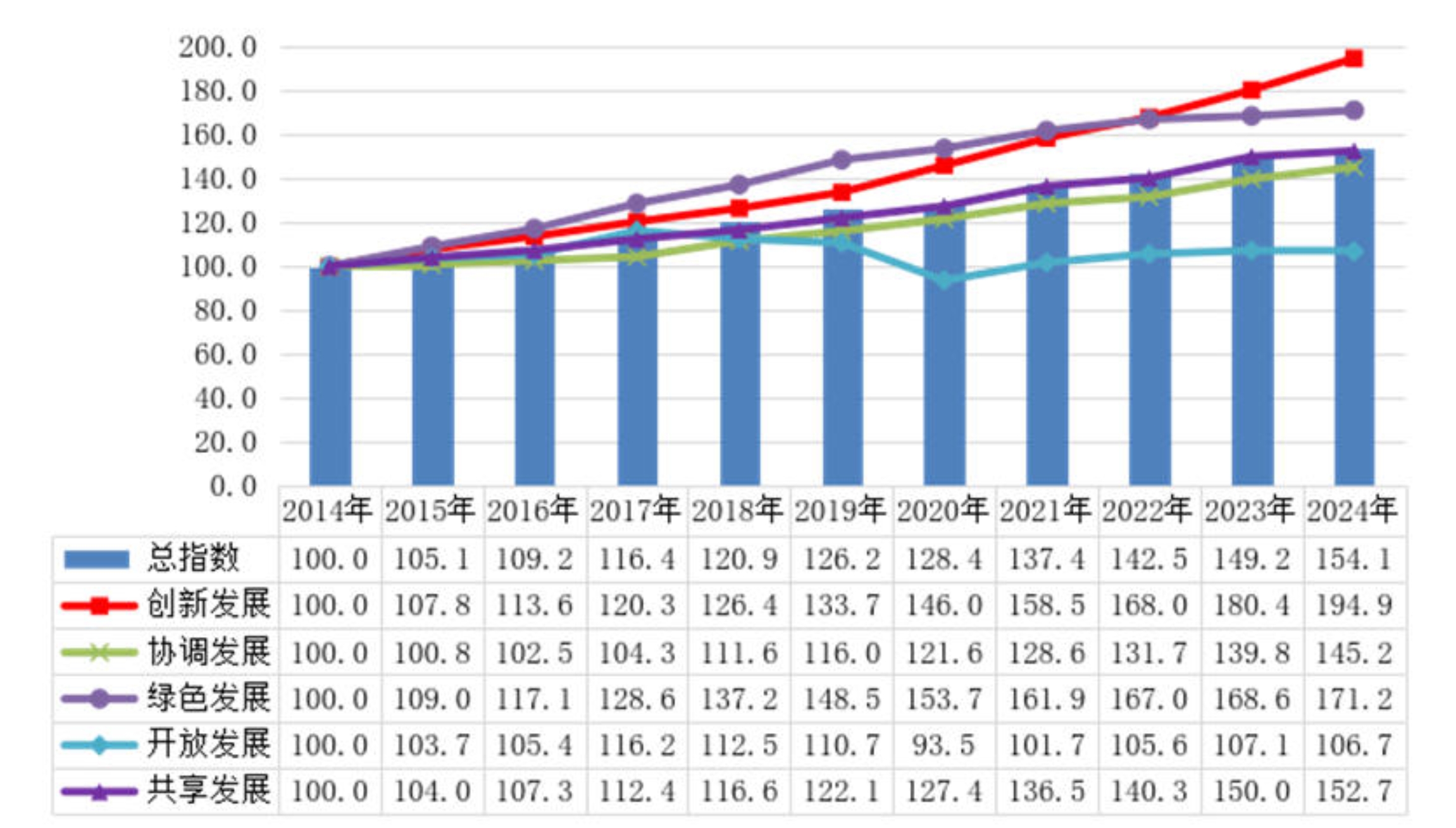
Core Viewpoint - The 2024 report on the coordinated development of the Beijing-Tianjin-Hebei region indicates significant progress in innovation, coordination, green development, openness, and shared growth, with the overall development index rising to 154.1, a 4.9 increase from 2023 [2][3]. Innovation Development - The innovation development index reached 194.9, an increase of 14.5 from 2023, marking the highest growth among sub-indices [3]. - The region's R&D expenditure intensity is 4.22%, up by 0.2 percentage points from the previous year, with Beijing leading at 6.58% [3]. - Patent authorizations totaled 355,000, a 2.9% increase, with an effective invention patent ownership of 74.3 per ten thousand people, growing by 15.7% [3]. - Labor productivity in the region is 215,000 yuan per person, reflecting a 4.4% increase from the previous year [3]. Coordinated Development - The coordinated development index improved to 145.2, up by 5.4 from 2023 [5]. - The added value of high-tech manufacturing in the region grew by 9.6%, 8.9%, and 11.2% for Beijing, Tianjin, and Hebei, respectively [5]. - Over 10,000 branch institutions of legal entities from the region were established in other areas, a 4.6% increase from the previous year [5]. - The urbanization rate in the region reached 71.2%, up by 0.6 percentage points, with the urban-rural income ratio decreasing to 2.51 [5]. Green Development - The green development index rose to 171.2, an increase of 2.6 from 2023 [6]. - PM2.5 average concentrations were 30.5, 38.1, and 37.7 micrograms per cubic meter for Beijing, Tianjin, and Hebei, respectively, with reductions of 4.7%, 8.0%, and 2.3% [6]. - The proportion of national surface water quality meeting or exceeding Class III standards is 82.6%, an increase of 2.2 percentage points [6]. - Average green space per ten thousand people increased to 23.8 hectares, up by 1.1 hectares from the previous year [6]. Open Development - The open development index decreased to 106.7, down by 0.4 from 2023 [8]. - The total import and export value for the region was 5.03 trillion yuan, a 0.1% increase, maintaining growth for four consecutive years [8]. - High-tech product exports saw significant growth, with automotive exports up by 56.4%, mobile phones by 24.7%, and wind turbine generators by 58.3% [8]. - International cargo throughput reached 820 million tons, a 10.6% increase, with 12 new direct shipping routes established [8]. Shared Development - The shared development index increased to 152.7, up by 2.7 from 2023 [9]. - The operational mileage of railways and highways in the region exceeded 11,000 kilometers [9]. - The average public budget expenditure per capita for education, social security, employment, and healthcare was 8,159.5 yuan, a 0.6% increase [9]. - The number of participants in basic pension insurance reached 86.36 million, an increase of 747,000 from the previous year [9].