原创IP

Search documents
《唐诡3》开播4天破万,郭家班又赢了?
3 6 Ke· 2025-11-20 03:36
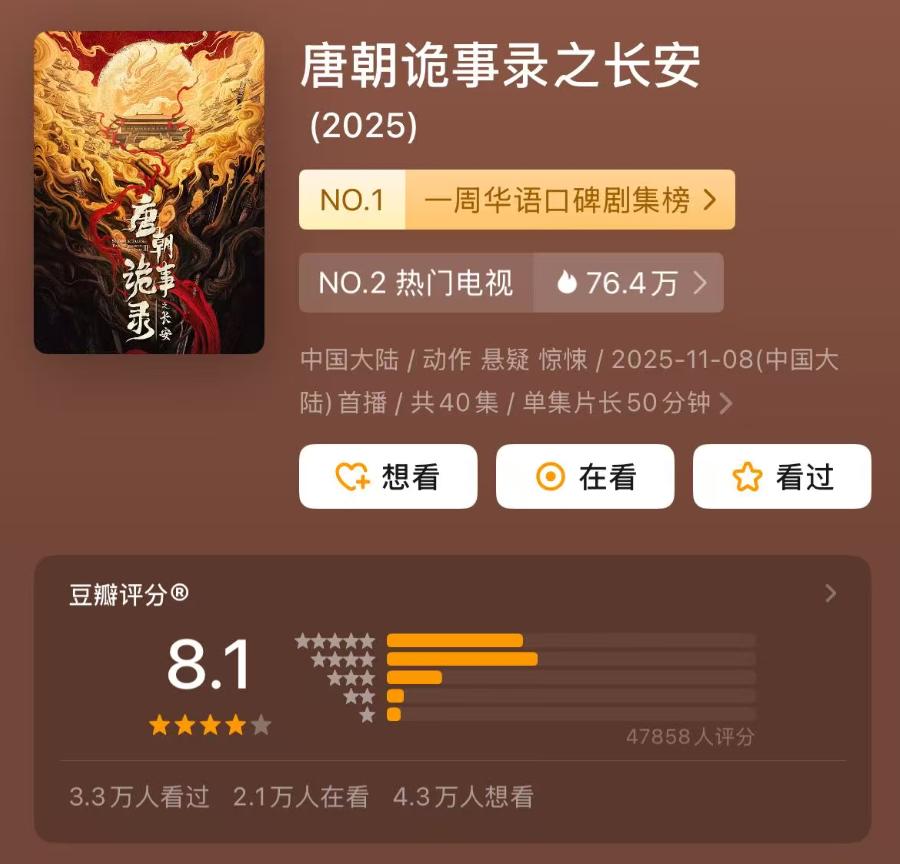
Core Insights - "Tang Dynasty Strange Stories 3" has become the fifth drama on iQIYI to surpass 10,000 views within four days of its release, indicating strong audience engagement and interest in the series [1] - The series has received a favorable rating of 8.1 on Douban, setting a record for the fastest rating in the franchise, suggesting positive viewer feedback and potential for further rating increases [1] Company Analysis - Changxin Media, known for its "family workshop" model, has successfully established the "Tang Strange" series as a quality IP in the market without relying on major stars or big IPs [3] - The company has a history of appealing to various age groups, leveraging its past successes in different genres to attract a diverse audience [4] - The production team, often referred to as the "Guo family class," consists of closely-knit members, which allows for better cost control and emotional resonance with the audience [13][15] Audience Engagement - The series effectively captures the attention of both older and younger audiences by addressing themes of family, loyalty, and the struggles of ordinary people, which resonate across generations [19][21] - The "Tang Strange" series has been successful in creating emotional connections with viewers, particularly through its portrayal of relatable characters and their dilemmas [19][21] Market Strategy - Changxin Media's collaboration with iQIYI to explore international markets, particularly in Singapore, reflects a strategic approach to expand its audience base and leverage local resources [12] - The company is also exploring innovative ways to enhance the IP's value through collaborations with gaming and immersive experiences, indicating a forward-thinking approach to content monetization [34] Challenges and Opportunities - The phenomenon of "drama being popular but actors not gaining fame" highlights a unique aspect of Changxin Media's strategy, where the focus is on the quality of the production rather than individual star power [24][29] - The need to further engage younger audiences is critical, as they represent a significant portion of online discussions and consumption, suggesting that future strategies may need to adapt to capture this demographic more effectively [34]

中国玩具海外“爆单” 企业开启“年末冲刺”模式
Sou Hu Cai Jing· 2025-11-02 19:41
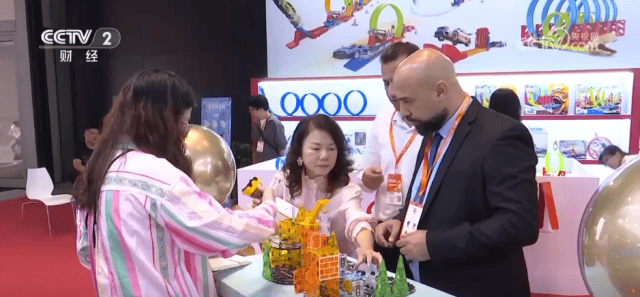
Core Viewpoint - China remains the world's largest toy producer and exporter, with Guangdong Shantou Chenghai holding a 60% share of the global toy market, showcasing resilience and efficiency in the supply chain despite the off-peak season for traditional exports [1][3]. Group 1: Export Trends - Local toy manufacturers are experiencing a busy export period, with over 70% of their business coming from exports, and an expected 30% increase in shipment volume compared to last year [3][11]. - The ongoing export season has been extended due to tariff fluctuations, leading to a shift in overseas orders and a busy schedule for manufacturers [3][7]. Group 2: Market Dynamics - There is a growing trend among overseas buyers for toys with independent IP brands, indicating that the international market is becoming a new growth point for Chinese original IP [8][10]. - The demand for new products is increasing, particularly in Southeast Asia, with the speed of new product launches nearly doubling compared to last year [10][11]. Group 3: Supply Chain and Innovation - Companies are enhancing their supply chain management to meet rising order demands, with advanced storage solutions and automated sorting systems in place [13]. - The toy market is witnessing a surge in AI toys, which are attracting significant attention from overseas buyers, highlighting the competitive edge of domestic products due to lower costs and local manufacturing advantages [14][18]. Group 4: Future Market Potential - The global AI toy market is projected to grow significantly, with an expected increase from $18.1 billion in 2024 to $60 billion by 2033, reflecting a compound annual growth rate of approximately 14% [20].
外贸一线观察 | 中国玩具海外“爆单” 企业开启“年末冲刺”模式
Yang Shi Wang· 2025-11-02 07:05
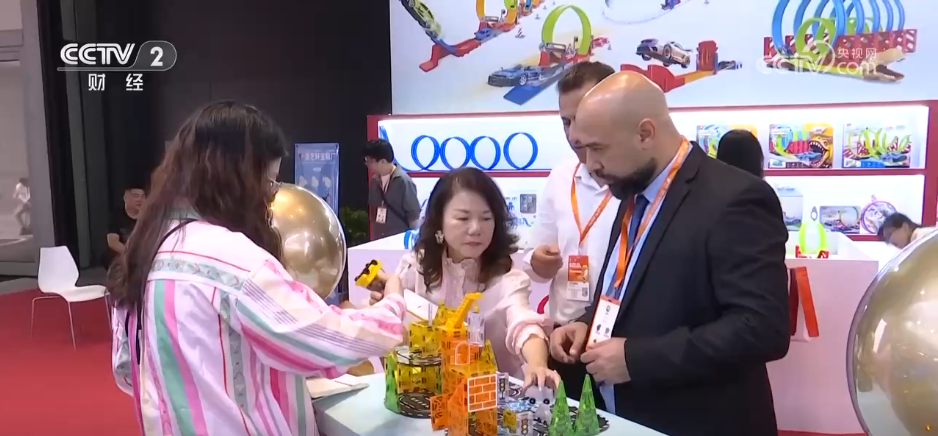
Core Insights - China remains the world's largest toy producer and exporter, with Guangdong Shantou Chenghai holding a 60% share of the global toy market [1] - Despite not being the traditional peak export season, local companies are still experiencing high shipping volumes to meet demand for the Christmas sales season [3][4] Group 1: Export Trends - The export business of a toy factory in Shantou Chenghai accounts for over 70% of its operations, with an expected 30% increase in shipment volume compared to last year due to extended busy periods [4][6] - The ongoing export season has led to a new order cycle for the following year, with companies working overtime to fulfill orders despite earlier international challenges [6][10] Group 2: Market Dynamics - There is a growing interest from overseas buyers in toys with independent IP brands, indicating a shift towards Chinese original IP as a new growth point in international markets [7][9] - The trend of "chasing new products" among overseas clients is particularly strong in Southeast Asia, with the speed of new product launches nearly doubling compared to last year [9] Group 3: Supply Chain and Innovation - Companies are enhancing their supply chain management capabilities, with advanced storage solutions and automation to meet increasing order demands [12] - The toy market is experiencing a wave of smart toys, with AI-driven products gaining significant attention from international buyers [13][15] Group 4: Competitive Landscape - Domestic AI toys are competitively priced, starting at a few hundred yuan, compared to similar international products priced above 3000 yuan, providing a strong advantage in the global market [17] - The global AI toy market is projected to grow from $18.1 billion in 2024 to $60 billion by 2033, with a compound annual growth rate of approximately 14% [19]
文化底蕴+现代视觉魅力,中国动画电影进军日本市场
Sou Hu Cai Jing· 2025-10-30 11:28
Core Insights - Chinese animation is gaining international influence, transitioning from single film exports to a full industry chain development of original IPs [1][3] - The proportion of animated films at international film festivals, such as the Tokyo International Film Festival, is increasing, indicating a growing recognition of Chinese animated works [1] - Technological advancements, including AI and computer graphics, are being utilized in the production of Chinese animated films, enhancing their appeal [1][3] Industry Development - "Nezha 2" has become the highest-grossing animated film in global box office history, followed by "The King's Avatar: For the Glory" and "Wang Wang Mountain Monster" [3] - Chinese animated films are increasingly being released in Japanese theaters, showcasing a strong growth trend in overseas market collaborations [3] - The rise of Chinese animation has led to an increase in the development of merchandise and lifestyle products based on animated characters, reflecting a broader cultural exchange between China and Japan [5] Cultural Exchange - Chinese animation is becoming a new trend in cultural exchange between China and Japan, with collectible toys and trendy products gaining popularity among young people in Japan [5] - The chairman of the Japan Animation and Game Industry Association believes that China's cultural industry will achieve significant development in the future [7]

日本导演竹内亮:非常期待广东东莞打造新的原创IP
2 1 Shi Ji Jing Ji Bao Dao· 2025-10-10 15:48
Core Insights - The article highlights the cultural exchange between the Guangdong-Hong Kong-Macao Greater Bay Area and the Tokyo Bay Area through the medium of anime and trendy toys, showcasing advancements in both Chinese and Japanese animation industries [1][2] - Dongguan is recognized not only as a major manufacturing hub for toys but also as a creative center for original intellectual property (IP) development, moving beyond mere OEM production [1][2] Industry Overview - Dongguan has over 4,000 toy production companies and nearly 1,500 supporting enterprises, establishing itself as China's largest toy export base [1] - The latest data indicates that 288 large-scale toy enterprises in Dongguan generated a total output value of 26.2 billion yuan, with one in four global anime derivative products bearing a Dongguan mark [1] Creative Development - The emphasis on creating original IP is seen as a significant strength for Dongguan, with expectations for the region to start producing new IPs in the future [2]
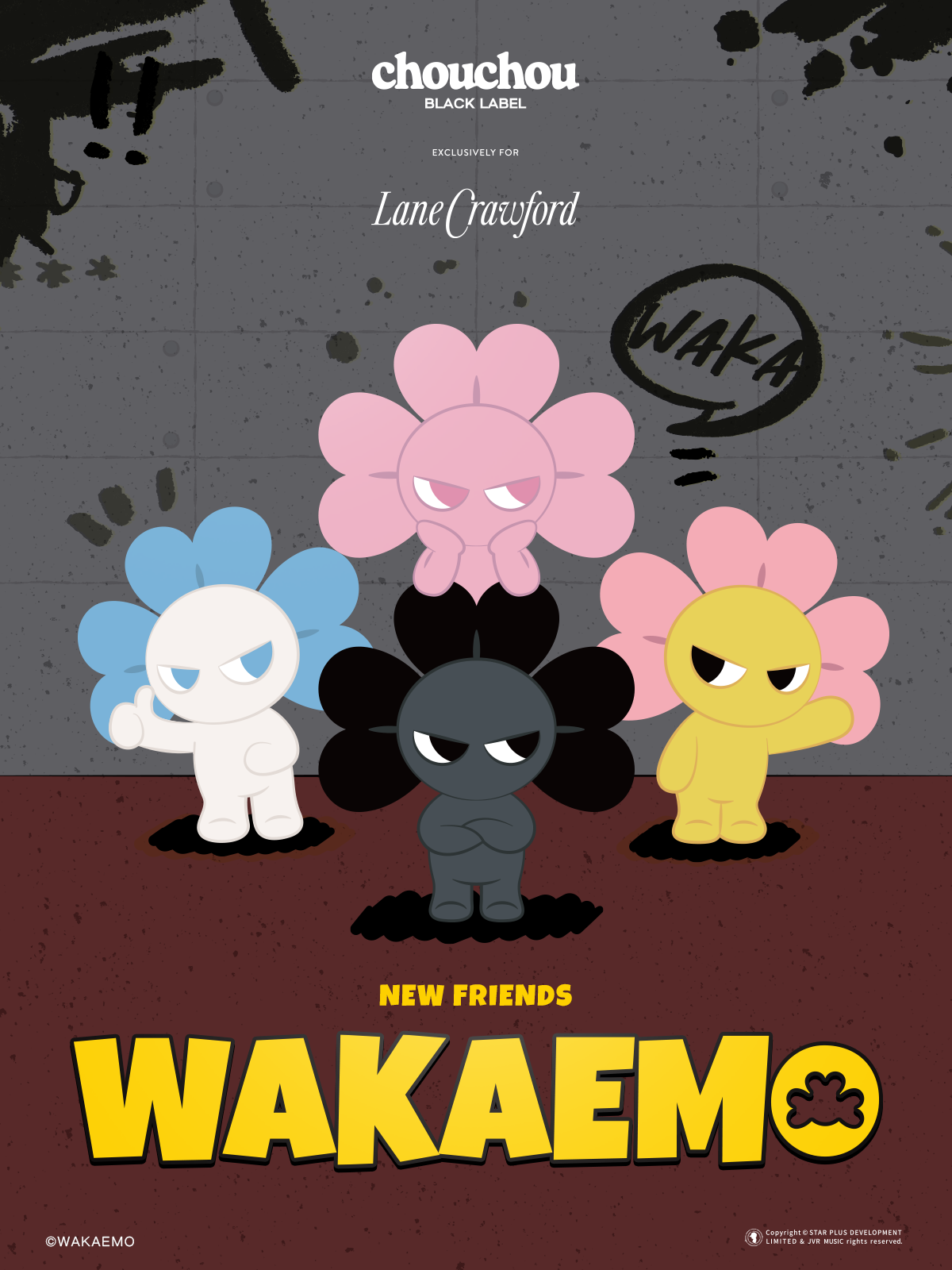
IP矩阵再扩容,巨星传奇推出全新原创IP“WAKAEMO”
Zheng Quan Shi Bao Wang· 2025-09-28 06:38
Core Insights - The launch of the new original IP character "WAKAEMO" by the company represents a strategic move to capitalize on the trends of personalized and emotional consumption in the潮玩 market [1][3] - The潮玩 market is experiencing explosive growth, with a 330.2% year-on-year increase in platform order volume and a 309.7% increase in transaction value in the second quarter [2] - The company is expanding its IP matrix by not only focusing on the official二次元 IP image of Jay Chou but also entering the original IP market to enhance its offerings [2][3] Group 1 - The "WAKAEMO" character is designed as an emotional carrier for the brand, with a unique personality that resonates with consumers' unexpressed feelings [1] - The company is launching a limited-time pop-up store featuring the "WAKAEMO" character and a range of new products, including pillows and gift boxes, to engage with fans [1] - The pop-up event also includes a promotional offer for fans holding tickets to Jay Chou's concert, enhancing customer engagement [1] Group 2 - The潮玩 market is increasingly dominated by original IPs, with only four overseas IPs making it to the top 20 sales list in the first half of the year [2] - The company is taking steps towards internationalization in IP operations, as evidenced by the global launch of its "Hundred International Trend Artists Co-Creation Plan" in Wuhan [2] - The trend indicates that rebellious and unique IPs are becoming more popular, attracting a significant consumer base [2]
IP矩阵再扩容 巨星传奇推出全新原创IP“WAKAEMO”
Quan Jing Wang· 2025-09-28 04:41
Core Insights - The company, Giant Star Legend, has expanded its IP matrix by launching a new original IP character "WAKAEMO" [1] - The limited-time pop-up store for the brand "Zhou Classmate Black Label" opened in Shanghai and will run until November 30 [1] - The new IP "WAKAEMO" is designed to resonate with human emotions and is characterized as cold, stable, and somewhat awkward, serving as an emotional companion [1] Product Launch and Market Trends - The pop-up event will feature a range of new products including pillows, bags, and eye masks, along with limited edition gift boxes [3] - Fans holding tickets from Jay Chou's concert can receive exclusive themed stickers at the store [3] - According to the "2025 Xianyu Trendy Toy Consumption Insight Report," the trendy toy market is expected to see explosive growth, with a 330.2% increase in order volume and a 309.7% rise in transaction value in Q2 [3] Industry Dynamics - The domestic trendy toy market is currently dominated by Chinese original IPs, with only four overseas IPs making it to the top 20 sales list in the first half of the year [3] - The market is experiencing a polarization trend, with original IPs entering a golden period of growth, particularly those that are rebellious and unique [3] - The company is strategically positioning itself in the personalized and emotional consumption trends of the trendy toy market [4] Strategic Initiatives - Giant Star Legend is deepening its operations around Jay Chou's official IP while also entering the original IP market to enrich its IP matrix [4] - The company launched a global co-creation plan with international trendy artists, marking a significant step towards internationalization in IP operations [4] - The introduction of "WAKAEMO" is seen as a crucial step in building a sustainable IP ecosystem, enhancing the company's core competitiveness in content creation [4]
中国二次元市场5年翻番,原创IP崛起
日经中文网· 2025-08-10 00:33
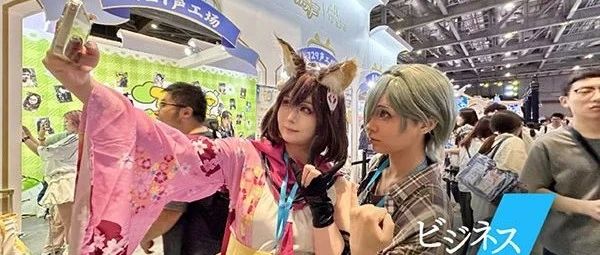
Core Viewpoint - The Chinese secondary dimension market is expected to reach approximately 597.7 billion yuan in 2024, nearly double the size of 2019, driven by the growing popularity of domestic IPs and government support for their development [1][9]. Market Expansion - The market for character-related sectors such as animation and gaming in China is rapidly expanding, with a projected market size of about 12 trillion yen (approximately 580.5 billion yuan) in 2024, doubling from five years ago [1]. - The "BiliBili World" event in Shanghai attracted around 300,000 attendees over three days, indicating a significant increase in interest and participation in the secondary dimension culture [8]. Domestic IP Popularity - The popularity of domestic characters is on the rise, exemplified by the success of the animated film "Nezha," which grossed over 15.4 billion yuan during the Spring Festival, setting a record for Chinese box office earnings [12]. - The top trending IPs on China's second-hand trading platform include "Love and Deep Space" and "Identity V," showcasing the growing presence of Chinese IPs alongside popular Japanese works [15]. Government Support - The Chinese government is actively promoting the development of original IP brands, as outlined in the "Special Action Plan for Boosting Consumption," which emphasizes support for the animation, gaming, and esports sectors [14]. - Policies in Shanghai aim to revitalize tourism through IP and support the development of original IPs, reflecting a broader governmental strategy to enhance the domestic market [14]. Future Projections - The secondary dimension market in China is projected to expand to 834.4 billion yuan by 2029, driven by increased production and circulation of animation and gaming content, as well as the growth of emotional value consumption [9].

拆解潮玩之都东莞的流量密码
2 1 Shi Ji Jing Ji Bao Dao· 2025-08-09 12:23
Core Insights - The article highlights the transformation of Dongguan from a "world factory" to a "trendy toy capital," driven by the rising global demand for Chinese original IPs and trendy toys [1][11] - According to Goldman Sachs, China's share of the trendy toy market in overseas markets is projected to increase from 3% in 2020 to 18% by 2025, indicating strong growth potential for the industry [1][11] - Dongguan produces 25% of global anime derivatives and 80% of China's trendy toys, showcasing its comprehensive industry chain from IP design to smart manufacturing and cross-border distribution [1][11] Industry Development - The trendy toy sector is experiencing a surge, with products like LABUBU's "Front High Energy" series becoming bestsellers [3][4] - Dongguan's manufacturing capabilities have evolved over decades, allowing it to quickly adapt to new product trends and maintain a competitive edge in the trendy toy market [4][6] - The city has established a collaborative ecosystem among its various districts, each specializing in different aspects of toy production, which enhances the industry's responsiveness [6][14] IP Creation and Brand Development - Many companies in Dongguan are shifting focus from OEM to developing their own IPs, recognizing the high profit margins associated with original creations [7][11] - The establishment of companies like Dongguan Duolang Cultural Creative Co. and ToyCity reflects the trend of nurturing original IPs, with ToyCity successfully launching 20 original IPs [8][11] - The article emphasizes the importance of original IPs for sustaining a company's vitality in the trendy toy industry, as seen with companies like Modonghe [13][14] Technological Integration - The integration of AI and digital technologies is reshaping traditional production processes, allowing for faster development cycles and more flexible manufacturing [9][19] - Companies are investing in smart manufacturing technologies, with projects like the 200 million yuan investment in a new smart factory aimed at enhancing production efficiency [9][19] - The collaboration between Dongguan and tech institutions aims to establish a talent training system for AI-driven toy design and manufacturing [19] Policy Support and Future Outlook - Dongguan has implemented various supportive policies to foster the growth of the trendy toy industry, including financial backing for original IP development and market expansion [15][19] - The establishment of the "China Trendy Toy Capital·Comic Expo Center" aims to create a hub for showcasing, trading, and incubating trendy toy products [15][19] - The article concludes that the future of Dongguan's trendy toy industry will revolve around AI, IP development, and international market expansion, marking the beginning of a new phase in its evolution [19]


拆解潮玩之都东莞的流量密码
21世纪经济报道· 2025-08-09 12:14
Core Viewpoint - The article highlights the transformation of Dongguan from a "world factory" to a "trendy toy capital," driven by the booming demand for Chinese original IPs and the city's robust manufacturing capabilities [1][9]. Industry Overview - Dongguan produces 25% of global anime derivatives and 80% of China's trendy toys, establishing a complete industry chain from IP design to smart manufacturing and cross-border circulation [1][5]. - The market share of Chinese trendy toys in overseas markets is projected to rise from 3% in 2020 to 18% by 2025, indicating strong growth potential [1]. Manufacturing and Supply Chain - Dongguan's manufacturing sector has evolved from OEM to ODM, significantly enhancing its production capabilities and technical expertise, particularly through decades of experience working with global brands like Disney and Marvel [5][12]. - The city has developed a collaborative network among its various towns, each specializing in different aspects of toy production, which supports rapid response to market demands [5][12]. Innovation and Technology - Companies like Weisi are adopting modular approaches and advanced technologies such as 3D printing and AI to streamline production processes, reducing mold development time by 80% and overall production cycles from 60 days to 10 days [7][16]. - The establishment of AI technology sharing centers aims to integrate AI into toy design and manufacturing, enhancing the industry's innovation capabilities [16]. IP Development and Market Trends - The trend of developing original IPs is becoming a focal point for many Dongguan toy companies, with firms like ToyCity and Mo Dong He focusing on creating unique characters and stories to drive sales [6][11]. - The rise of Z-generation consumers is fueling demand for emotional value in products, leading to a surge in the popularity of original IPs and trendy toys [9][13]. Government Support and Future Prospects - Dongguan has implemented various supportive policies to foster the growth of the trendy toy industry, including financial incentives for R&D and market expansion [12][13]. - The city is positioning itself as a hub for trendy toy IP transformation, aiming to create a comprehensive ecosystem that integrates design, production, and sales [13][16].