
处方外流

Search documents
互联网卖药规模超500亿
第一财经· 2025-11-30 13:34
Core Viewpoint - The prescription drug market in China is experiencing significant growth through e-commerce platforms, driven by policy changes and increasing consumer demand for innovative drugs, particularly in the chronic disease sector [3][4][5]. Group 1: Market Trends - The online retail market for pharmaceuticals in China has surpassed 50 billion yuan, with a notable growth rate of approximately 40% expected from 2024 to the first half of 2025 [9]. - The share of public hospitals in the terminal drug market has decreased from about 70% in 2017 to approximately 59.8% in 2024, while online pharmacies have seen a growth rate of about 14.4% [5][10]. - E-commerce platforms are becoming a new growth point for prescription drug sales, with their market share reaching around 10% in the outpatient market [4][5]. Group 2: Regulatory Environment - The National Medical Products Administration and the State Administration for Market Regulation have intensified oversight of online medical advertising, particularly concerning prescription drugs [3][15]. - There is a need for stricter regulations on online pharmacies to prevent misuse and ensure compliance with prescription safety [15][19]. - New guidelines are being proposed to regulate promotional activities for prescription drugs, prohibiting practices such as "buy one, get one free" offers [18][19]. Group 3: Insurance and Payment Models - Some regions in China have begun allowing users to pay for online prescriptions directly from their medical insurance accounts, indicating a shift towards integrating e-commerce with healthcare financing [13]. - Commercial health insurance is increasingly being seen as a supplementary means to cover drug payments, with new products being developed to include online pharmacy discounts [11][13]. - The role of commercial insurance in the online drug purchasing landscape is evolving, focusing more on providing discounts rather than new coverage responsibilities [13][14]. Group 4: Consumer Behavior and Drug Attributes - Innovative drugs, particularly those for chronic diseases like diabetes and obesity, are gaining traction in the consumer market due to their perceived value and accessibility through online platforms [8][9]. - The sales dynamics for chronic disease medications are shifting, with a growing emphasis on consumer awareness and purchasing power influencing sales strategies [9][10]. - The rise of online platforms allows pharmaceutical companies to reach potential consumers more effectively, leveraging data analytics for targeted marketing [9][10].


益丰药房(603939):头部连锁药房,质效并举赋能长足发展
Guoxin Securities· 2025-11-30 09:17
Investment Rating - The investment rating for the company is "Outperform the Market" (maintained) [2] Core Viewpoints - The company has steadily developed into a leading chain pharmacy enterprise in China over the past 20 years, with a strong market presence in Central South, East China, and South China regions, and a total of over 14,666 stores by September 2025, serving 110 million members [3][4] - The retail pharmacy industry is undergoing a transformation from scale expansion to quality competition, with a market size of 929.3 billion yuan in 2023, growing by 6.5% year-on-year, but showing signs of slowing growth [3][46] - The company has shown slight revenue growth and strong profit growth in the first three quarters of 2025, with operating income of 17.286 billion yuan (up 0.4% year-on-year) and net profit of 1.225 billion yuan (up 10.3% year-on-year) [20][21] - The company is expected to maintain growth through refined operations and the development of a new retail system, with projected revenues of 24.546 billion yuan, 27.292 billion yuan, and 30.444 billion yuan for 2025-2027, representing year-on-year growth rates of 2.0%, 11.2%, and 11.5% respectively [3][20] Summary by Sections Company Overview - The company has expanded its operational regions and has a strong financing and acquisition capability, establishing itself as a leading chain pharmacy since its founding in 2001 [5] - The company has a clear shareholding structure, with the controlling shareholder being Chairman Gao Yi, who holds 11.67% of the shares directly [8] Industry Status - The retail pharmacy market is experiencing a decline in growth rates, with the number of retail pharmacies decreasing from 706,000 in Q3 2024 to 699,000 in Q1 2025 due to industry slowdown and online competition [3][46] - The industry is expected to see increased concentration and chain rates, with larger chain enterprises likely to gain competitive advantages over smaller pharmacies [3][46] Operational Effectiveness - The company has implemented a "fleet-type" store network strategy, enhancing customer repurchase rates through a membership system and digitalization [3][29] - The company has issued convertible bonds to raise 1.797 billion yuan for projects aimed at improving operational efficiency and logistics capabilities [18] Performance Review - The company has maintained stable expense ratios, with a gross margin of 40.4% and a net margin of 7.6% in the first three quarters of 2025 [29] - The retail business remains the primary revenue source, while the franchise and distribution business has shown significant growth, with a 17.5% increase in revenue [32] Future Outlook - The company is expected to benefit from the trend of prescription drug outflow, which is anticipated to provide new growth opportunities in the retail pharmacy market [57][62] - The company is focusing on expanding its new retail system, enhancing its O2O and B2C channels, and leveraging its large member base to drive sales [93]

融泰药业:以短期利润换未来 持续投入技术研发
Quan Jing Wang· 2025-11-20 09:04
Core Insights - Rongtai Pharmaceutical is a leading provider of marketing and supply chain solutions in China's outpatient pharmaceutical market, ranking fourth among service providers based on projected 2024 revenue [1] - The company has established partnerships with 1,291 pharmaceutical companies and offers a total of 5,161 SKUs, including products from 15 of the top 20 global pharmaceutical companies [1] - Despite revenue growth from 2.427 billion to 2.875 billion yuan from 2022 to 2024, net profit has declined due to investments in five subsidiaries and ongoing digital platform and smart supply chain system developments [1][2] Financial Performance - As of June 30, 2025, Rongtai Pharmaceutical's total assets amounted to 1.46 billion yuan, with accounts receivable and inventory totaling 1.04 billion yuan [2] - The company reported a revenue of 2.875 billion yuan for 2024, with a cash and cash equivalents balance of 116 million yuan at the end of the period [2] - Inventory turnover days are approximately 40 days, while accounts receivable turnover days are around 60 days [2] Market Trends - The outpatient pharmaceutical retail market is projected to increase its share of the overall pharmaceutical market from 40.2% in 2024 to 47.9% by 2030, according to Frost & Sullivan [2] - Rongtai Pharmaceutical is transitioning from a traditional distributor to a digital service provider, focusing on high-value digital services such as data monitoring and inventory management as future revenue sources [2] Strategic Direction - The company plans to strengthen its "supply chain + digitalization" model and continue investing in technology research and development [3] - The smart supply chain management system has shown improvements in logistics accuracy and timeliness, along with full-chain cost control [3] - As the pharmaceutical industry undergoes digital transformation and prescription outflow trends develop, Rongtai's investments and market positioning may influence its future competitive standing [3]
大参林(603233):头部连锁药房,立足华南翼展全国
Guoxin Securities· 2025-11-18 13:58
Investment Rating - The report assigns an "Outperform" rating for the company [6] Core Views - The company has shown impressive profit growth in the first three quarters of 2025, with revenue reaching 20.068 billion yuan, a year-on-year increase of 1.7%, and net profit attributable to shareholders of 1.081 billion yuan, up 26.0% [1][9] - The company is expanding its market presence across China, leveraging a combination of self-built stores, franchises, and acquisitions, establishing a leading position in the industry [3][78] - The company is expected to achieve revenue of 27.205 billion yuan in 2025, with a projected growth rate of 2.7% [3][101] Financial Performance - In the first three quarters of 2025, the company's sales expense ratio decreased to 21.8%, while the net profit margin improved to 5.8% [2][17] - The gross profit margin for the retail business was 37.7%, reflecting a 0.4 percentage point increase [2][17] - The company anticipates a steady increase in revenue and profit over the next few years, with net profit expected to reach 1.208 billion yuan in 2025, a growth of 32.0% [3][101] Business Model and Strategy - The company operates a diversified business model that includes direct retail, franchise operations, and distribution, focusing on high-margin products [41][90] - The company has developed a robust supply chain and logistics system to enhance operational efficiency and customer service [41][88] - The franchise model is becoming a significant growth driver, with the number of franchise stores increasing substantially [82][86] Market Position and Expansion - The company has established a strong presence in South China and is expanding into other regions, including the Yangtze River Delta and Northeast China [3][78] - As of the end of Q3 2025, the company had a total of 17,385 stores, with a significant proportion being franchise stores [28][80] - The company is well-positioned to capitalize on the ongoing transformation in the pharmacy industry, which is shifting from rapid expansion to deeper integration [3][44] Future Outlook - The company is expected to benefit from structural growth opportunities in the pharmacy sector, driven by trends such as prescription drug outflow and the professionalization of retail endpoints [3][60] - The projected revenue for 2026 and 2027 is 30.071 billion yuan and 33.363 billion yuan, respectively, indicating a positive growth trajectory [3][101]

大参林(603233):头部连锁药房 立足华南翼展全国
Xin Lang Cai Jing· 2025-11-18 12:27
Core Viewpoint - The company has demonstrated strong profit growth in the first three quarters of 2025, with a notable increase in net profit driven by improved marketing strategies and cost efficiency measures [1][2]. Financial Performance - In the first three quarters of 2025, the company achieved operating revenue of 20.068 billion, a year-on-year increase of 1.7%, and a net profit attributable to shareholders of 1.081 billion, up 26.0% [1]. - For Q3 2025, the company reported operating revenue of 6.546 billion, reflecting a 2.5% year-on-year growth, and a net profit of 283 million, which is a 41.0% increase [1]. - The overall expense ratio has shown a downward trend, with the sales expense ratio at 21.8% (down 1.6 percentage points), management expense ratio at 4.4% (up 0.2 percentage points), financial expense ratio at 0.6% (down 0.2 percentage points), and R&D expense ratio remaining stable at 0.2% [2]. - The gross profit margin for the first three quarters of 2025 was 34.8% (up 0.1 percentage points), and the net profit margin was 5.8% (up 1.2 percentage points) [2]. Market Position and Strategy - The company is establishing a leading position in the pharmaceutical retail industry during a phase of transformation characterized by consolidation and slower growth [3]. - The company is expanding its presence across China through a combination of self-built stores, franchises, and acquisitions, currently covering 21 provinces and cities [3]. - The company is expected to leverage its scale, operational capabilities, and specialized services to continue increasing market share and benefit from favorable competition and policy changes [3]. Future Projections - Revenue projections for 2025-2027 are 27.205 billion, 30.071 billion, and 33.363 billion, representing year-on-year growth rates of 2.7%, 10.5%, and 11.0% respectively [3]. - Net profit projections for the same period are 1.208 billion, 1.485 billion, and 1.798 billion, with growth rates of 32.0%, 23.0%, and 21.1% respectively [3]. - The current stock price corresponds to a price-to-earnings ratio of 17.6, 14.3, and 11.8 for the years 2025, 2026, and 2027 [3].
万联晨会-20251117
Wanlian Securities· 2025-11-17 01:02
Core Insights - The A-share market experienced fluctuations, with the Shanghai Composite Index closing down 0.97% at 3990.49 points, and the Shenzhen Component Index down 1.93% [1][7] - The industrial production showed steady growth, with the national industrial added value increasing by 4.9% year-on-year in October, and the equipment manufacturing sector growing by 8.0% [2][8] - The retail sales of consumer goods totaled 46,291 billion yuan in October, reflecting a year-on-year growth of 2.9% [2][23] Market Review - The A-share market saw a total trading volume of approximately 1.96 trillion yuan, with over 3000 stocks declining [1][7] - The Hong Kong Hang Seng Index closed down 1.85%, while the U.S. stock indices showed mixed results, with the Dow Jones down 0.65% and the Nasdaq up 0.13% [1][7] Economic Data - The consumer price index (CPI) turned from decline to increase, rising by 0.2% year-on-year in October, compared to a decrease of 0.3% in the previous month [2][8] - Fixed asset investment (excluding rural households) decreased by 1.7% year-on-year, while manufacturing investment continued to grow [2][8] Industry Analysis - The offline pharmacy sector showed significant profit growth in Q3 2025, indicating effective cost control and efficiency improvements [9][14] - The pharmaceutical sector's performance in Q3 was better than the previous two quarters, with the medical research outsourcing and chemical preparation sub-sectors showing notable gains [10][12] Investment Recommendations - The long-term logic of prescription outflow remains unchanged, benefiting leading pharmacies with strong service capabilities and supply chain systems [14] - The report suggests focusing on leading brokerage firms with relatively low valuations, as the brokerage sector is expected to see performance improvements [15][17] Retail Sector Insights - The retail sector's performance in October showed a decline in commodity retail growth, while dining revenue growth improved [23][24] - Online retail sales for the first ten months of 2025 increased by 9.6% year-on-year, accounting for 31.03% of total retail sales [25][26]
益丰药房(603939):头部连锁药房,稳健运营扩张维持增长动力
Guoxin Securities· 2025-11-11 03:27
Investment Rating - The report maintains an "Outperform" rating for the company [6]. Core Views - The company is a leading chain pharmacy in China, with a strong market presence in Central South, East China, and South China regions. It is expected to enhance its industry position through refined operations and the development of a new retail system, maintaining steady growth in revenue and profit [4][34]. - The company has shown slight revenue growth and strong profit growth in the first three quarters of 2025, with total revenue reaching 17.286 billion yuan, a year-on-year increase of 0.4%, and net profit attributable to shareholders of 1.225 billion yuan, up 10.3% year-on-year [1][9]. Summary by Sections Financial Performance - In Q3 2025, the company achieved revenue of 5.564 billion yuan, a 2.0% year-on-year increase, and net profit of 345 million yuan, up 10.1% year-on-year. The company is experiencing a marginal improvement trend in both revenue and profit due to the clearing of closed stores and initial alleviation of industry competition pressure [1][9]. - The company’s gross margin for the first three quarters of 2025 was 40.4%, with a net margin of 7.6%. The retail business achieved a gross margin of 42.0%, while the franchise and distribution business had a gross margin of 10.9% [2][15]. Operational Efficiency - The company maintains stable expense ratios, with a sales expense ratio of 25.0%, a management expense ratio of 4.7%, and a financial expense ratio of 0.7%. This stability is attributed to the company's strong operational capabilities [2][15]. - The company has been focusing on high-margin non-pharmaceutical products, which are expected to continue increasing their revenue share, thereby enhancing overall gross margin [2][15]. Market Position and Strategy - The company is transitioning from a focus on scale to quality and efficiency in response to increasing demand driven by aging populations and healthcare spending. The company has established a "fleet-type" store network to enhance operational efficiency and customer loyalty [3][34]. - The company has a total of 14,666 stores as of Q3 2025, with a slight decrease in total store count compared to the end of 2024. The company is adjusting its store expansion strategy in response to industry trends [29][87]. Future Projections - Revenue projections for 2025-2027 are 24.546 billion yuan, 27.292 billion yuan, and 30.444 billion yuan, with year-on-year growth rates of 2.0%, 11.2%, and 11.5% respectively. Net profit projections for the same period are 1.725 billion yuan, 2.007 billion yuan, and 2.316 billion yuan, with growth rates of 12.8%, 16.4%, and 15.4% respectively [4][5].
融泰药业IPO:盈利能力跑输行业多项指标释放预警信号 管理层与大股东联系紧密关联交易公允性待考
Xin Lang Zheng Quan· 2025-11-07 09:20
Core Viewpoint - The pharmaceutical distribution industry in China is undergoing significant changes due to policy reforms, with Guangdong Rontai Pharmaceutical Co., Ltd. (Rontai Pharma) facing multiple challenges as it seeks to go public on the Hong Kong Stock Exchange [1][2]. Industry Overview - The implementation of the two-invoice system and the normalization of volume-based procurement have significantly compressed drug price margins, driving a trend towards prescription outflow [2]. - Major national players like China National Pharmaceutical Group, Shanghai Pharmaceuticals, China Resources Pharmaceutical, and Jiuzhoutong have captured 45.76% of the market share, highlighting the increasing concentration in the industry [2]. Company Positioning - Rontai Pharma ranks as the fourth largest provider of marketing and supply chain solutions in China's outpatient pharmaceutical market, and it holds the top position in the segment targeting individual customers [2]. - Despite its ranking, Rontai Pharma's market share is only 1.2%, which is significantly lower than the leading companies [2]. Financial Performance - Revenue is projected to grow from 2.427 billion yuan in 2022 to 2.875 billion yuan in 2024, reflecting a compound annual growth rate of 8.8% [3]. - However, net profit is expected to decline sharply from 14.78 million yuan to 3.74 million yuan, a decrease of nearly 75% [3]. - The overall gross margin has decreased from 7.6% in 2022 to 6% in 2024, indicating declining profitability compared to competitors [3]. Operational Efficiency - Rontai Pharma's debt-to-asset ratio reached 70% as of June 30, 2025, significantly exceeding healthy industry levels [4]. - The company has a short-term debt of 5.18 billion yuan, while cash and cash equivalents stand at only 1.16 billion yuan, indicating a short-term repayment gap of nearly 400 million yuan [4]. - Operating cash flow has been negative, with a cumulative outflow of 519 million yuan from 2022 to the first half of 2025, suggesting poor cash management [4]. Business Model Challenges - Rontai Pharma's business model relies heavily on third-party e-commerce platforms, which account for 56% of its revenue, limiting its control over customer interactions [7]. - The company faces competition from upstream pharmaceutical companies building their own digital marketing systems and downstream e-commerce platforms extending their reach [7]. Valuation and Investor Sentiment - The company's valuation before its IPO was 2.67 billion yuan, with a price-to-sales ratio of less than 1, significantly below the industry average of 1.5-2 [8]. - Early investors have begun to reduce their stakes, which may indicate a lack of confidence in the company's future performance [8]. Governance and Related Party Transactions - The management team has connections to Kangzhe Group, raising questions about the fairness of related party transactions, which have involved significant procurement amounts [8].
新股前瞻|净利润过山车叠加补血压力,4000亿市场为何难撑融泰药业规模增长?
智通财经网· 2025-10-14 02:40
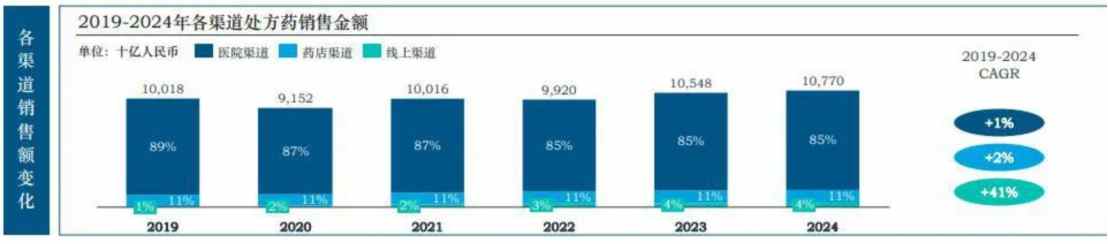
Core Viewpoint - The pharmaceutical sales landscape in China is undergoing significant transformation due to national procurement and medical insurance negotiation policies, leading to a growing demand for outpatient pharmaceutical services, with Rongtai Pharmaceutical aiming to capitalize on this trend by listing on the Hong Kong Stock Exchange [1][2]. Market Overview - The outpatient pharmaceutical service market in China is projected to grow from RMB 159.7 billion in 2019 to RMB 242 billion by 2024, with an expected compound annual growth rate (CAGR) of 10.1% from 2024 to 2030, reaching RMB 430 billion by 2030 [3][8]. - Rongtai Pharmaceutical is positioned as the fourth largest provider of marketing and supply chain solutions in the outpatient pharmaceutical market, with a market share of 1.2% [2][11]. Growth Drivers - The growth of online channels, with a CAGR of 41% from 2019 to 2024, is primarily driven by the outflow of hospital prescriptions and the establishment of prescription transfer platforms [3][6]. - The company has developed a digital marketing system and integrated logistics infrastructure to enhance market efficiency and accessibility for upstream pharmaceutical companies [8][9]. Financial Performance - Rongtai Pharmaceutical's revenue is projected to grow from approximately RMB 5.336 billion in 2022 to RMB 7.949 billion in 2024, reflecting a CAGR of 22.05% [11]. - Despite revenue growth, the company's gross margin has declined from 7.6% in 2022 to 6.0% in 2024, significantly below the average gross margin of 54% in the Hong Kong pharmaceutical industry [11][13]. Challenges - The company faces challenges in increasing its market share, as it ranks fourth in the outpatient pharmaceutical service market, significantly trailing behind the leading competitor with a market share of 11.4% [11]. - Rongtai Pharmaceutical's accounts receivable turnover days have increased from 49 to 63 days, indicating rising collection pressure, with accounts receivable growing by 38.4% from RMB 455 million in 2022 to RMB 629 million by mid-2025 [15].
万联晨会-20251014
Wanlian Securities· 2025-10-14 01:01
Market Overview - The A-share market experienced a significant drop at the opening but managed to recover, with the Shanghai Composite Index down 0.19% at 3889.5 points, the Shenzhen Component Index down 0.93%, and the ChiNext Index down 1.11%. The total trading volume in the Shanghai and Shenzhen markets was 2.35 trillion yuan [1][7] - In terms of industry performance, sectors such as non-ferrous metals, environmental protection, and steel led the gains, while the automotive, home appliances, and beauty care sectors lagged behind [1][7] - Concept stocks related to rare earth permanent magnets, military equipment restructuring, and photolithography saw increases, while sectors like short drama games, reducers, and AI PCs experienced declines [1][7] - The Hong Kong Hang Seng Index closed down 1.52% at 25889.48 points, with the Hang Seng Tech Index down 1.82%. In overseas markets, all three major U.S. stock indices rose, with the Dow Jones up 1.29%, the S&P 500 up 1.56%, and the Nasdaq up 2.21% [1][7] Important News - The Chinese government has officially implemented a special port fee for U.S. vessels, which applies to ships owned or operated by U.S. entities or individuals, as well as those with significant U.S. ownership [2][7] - According to customs statistics, China's goods trade import and export in September reached 4.04 trillion yuan, a year-on-year increase of 8%. Exports were 2.34 trillion yuan, up 8.4%, and imports were 1.7 trillion yuan, up 7.5%, marking four consecutive months of year-on-year growth [2][8] - In September, China's rare earth exports totaled 4000.3 tons, marking a decline for the third consecutive month [2][8] Industry Insights - The offline pharmacy sector is currently in a recovery phase under policy pressure, with a focus on improving the operational fundamentals of companies [3][9] - In September, the offline pharmacy sector underperformed the broader market, primarily due to ongoing pressure from medical insurance policies and centralized procurement, leading to accelerated supply-side clearing and a focus on enhancing individual store efficiency [9][11] - The valuation of the offline pharmacy sector is at a historical low, with the index's price-to-earnings ratio at 23.01 times as of October 10, 2025, compared to historical percentiles from previous years [9][11] Tourism Industry - During the 2025 National Day holiday, domestic travel saw an increase in volume but a decrease in price, with 888 million domestic trips taken, an increase of 123 million from the previous year [12][13] - The average daily expenditure per person during the holiday was 113.88 yuan, a decrease of 12.98% compared to the previous year, indicating a trend towards more cautious spending among consumers [13][15] - Cross-border tourism showed significant growth, with a total of 16.34 million inbound and outbound travelers during the holiday, reflecting a 11.5% increase year-on-year [14][15]