
宏观审慎管理体系

Search documents
潘功胜最新发声!事关货币政策、金融市场运行
Sou Hu Cai Jing· 2026-01-23 09:25
Core Viewpoint - The People's Bank of China (PBOC) aims to enhance financial services for high-quality economic development while implementing a moderately accommodative monetary policy to support stable growth and financial market stability by 2025 [1][2]. Monetary Policy Implementation - In 2025, the social financing scale is expected to grow by 8.3%, and the broad money supply is projected to increase by 8.5%, both significantly exceeding nominal GDP growth [2]. - The PBOC will continue to implement a moderately accommodative monetary policy, focusing on promoting stable economic growth and reasonable price recovery [2][3]. Structural Policy Measures - The PBOC plans to optimize the design and management of structural monetary policy tools, enhancing support for key strategic areas and weak links [3]. - Specific measures include lowering interest rates on various structural monetary policy tools by 0.25 percentage points and increasing the quotas for rural and small enterprise loans [3][10]. Financial Market Stability - The PBOC emphasizes maintaining the stability of the financial market, managing expectations, and ensuring the RMB exchange rate remains stable [4][5]. - The bond market is expected to develop healthily, with the 10-year government bond yield stabilizing around 1.8% to 1.9% [2]. Macro-Prudential Management - The PBOC aims to construct a comprehensive macro-prudential management system, focusing on the relationship between macroeconomic operations and financial risks [6][7]. - Key tasks include enhancing monitoring and assessment of systemic financial risks and expanding the coverage of macro-prudential management to new areas such as internet finance [6]. International Financial Cooperation - The PBOC is committed to advancing global financial governance reforms and international financial cooperation, promoting a fair and inclusive global financial governance system [7][8]. - Efforts include enhancing the cross-border payment system for RMB and participating in international macro policy coordination [8]. Support for Key Sectors - The PBOC will guide financial institutions to support domestic demand, technological innovation, and small and micro enterprises, with specific measures to enhance consumer finance and support for technology and small businesses [9][10]. - A dedicated 500 billion yuan service for consumption and elderly care loans will be established, alongside increased quotas for technology innovation loans [10][11].
中国人民银行党委书记、行长潘功胜接受记者采访
券商中国· 2026-01-23 09:02
Core Viewpoint - The article emphasizes the importance of financial support for the real economy and the implementation of a moderately loose monetary policy by the People's Bank of China (PBOC) to ensure stable economic growth and a smooth financial market [1][2]. Summary by Sections Financial Support Achievements - In 2025, social financing scale increased by 8.3% year-on-year, and broad money supply grew by 8.5%, both significantly higher than nominal GDP growth [2]. - The average interest rate for newly issued corporate loans and personal housing loans was approximately 3.1% [2]. - Loans in technology, green, inclusive, elderly care, and digital sectors maintained double-digit growth, outpacing overall loan growth [2]. - The bond market saw the issuance of technology innovation bonds totaling 1.8 trillion yuan [2]. - The RMB exchange rate remained stable against a basket of currencies, and the 10-year government bond yield stabilized around 1.8% to 1.9% [2]. Monetary Policy Implementation - The PBOC plans to continue implementing moderately loose monetary policy in 2026, focusing on promoting stable economic growth and reasonable price recovery [2][5]. - The PBOC will utilize various monetary policy tools flexibly to maintain ample liquidity and ensure that the growth of social financing and money supply aligns with economic growth and price level expectations [3][4]. Structural Policy Adjustments - The PBOC aims to optimize the design and management of structural monetary policy tools, focusing on key strategic areas and weak links [4]. - Recent adjustments include lowering the interest rates of various structural monetary policy tools by 0.25 percentage points and increasing the quotas for agricultural and small enterprise loans [4][12]. - The PBOC has set up a 1 trillion yuan re-lending facility specifically for private enterprises and combined the technology innovation and private enterprise bond risk-sharing tools [4][12]. Macro-Prudential Management - The PBOC is focused on building a comprehensive macro-prudential management system that covers the relationship between macroeconomic operations and financial risks, key areas of financial markets, and the spillover effects of international economic and financial market risks [8][9]. - Key tasks include enhancing monitoring and assessment of systemic financial risks and expanding the coverage of macro-prudential management to new areas such as internet finance [8][9]. International Financial Cooperation - The PBOC is committed to deepening financial cooperation and governance reforms on a global scale, promoting a fair and inclusive global financial governance system [10][11]. - Initiatives include enhancing the cross-border payment system for the RMB and actively participating in international financial governance and cooperation [10][11]. Support for Key Sectors - The PBOC will enhance support for expanding domestic demand, technological innovation, and small and micro enterprises, with specific measures to improve financial services in these areas [11][12]. - A dedicated 500 billion yuan re-lending facility for consumer services and elderly care has been established, alongside increased quotas for technology innovation loans [12].

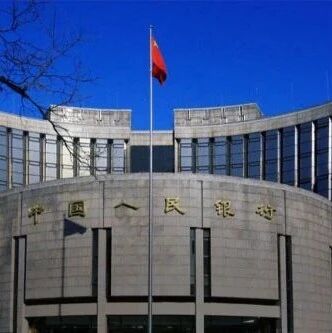
权威访谈·开局“十五五”丨为实现“十五五”良好开局提供有力金融支撑
Ren Min Ri Bao· 2026-01-23 05:26
Core Viewpoint - The Chinese government emphasizes the implementation of a more proactive macro policy to achieve qualitative and effective economic growth while maintaining social stability, as highlighted by President Xi Jinping [1]. Group 1: Monetary Policy Implementation - The People's Bank of China (PBOC) has been implementing a moderately loose monetary policy since last year, focusing on supporting stable growth and high-quality development of the real economy and financial markets [2][3]. - In 2024, existing policies will continue to play a role, and new monetary policies will be introduced in 2025 to support economic stability and financial market operations [2]. - The PBOC aims to maintain liquidity and ensure that the growth of social financing and money supply aligns with economic growth and price expectations, with room for further interest rate cuts [3]. Group 2: Structural Policy Measures - The PBOC will optimize structural monetary policy tools to enhance support for key strategic areas and weak links, including a recent reduction in the interest rates of various structural monetary policy tools by 0.25 percentage points [3]. - The PBOC will also focus on maintaining stable financial markets and managing expectations, ensuring the RMB exchange rate remains stable [3]. Group 3: Financial Support for Key Areas - The PBOC plans to enhance financial services for high-quality economic development by increasing support for consumption, technology innovation, and small and micro enterprises [8][9]. - A special fund of 500 billion yuan will be allocated for consumer services and elderly care, while the quota for technology innovation loans will be increased to 1.2 trillion yuan [8]. - The PBOC will also increase the re-lending and re-discount quotas for small and micro enterprises by 500 billion yuan, focusing on supporting private enterprises [9]. Group 4: Macro-Prudential Management - The PBOC aims to build a robust monetary policy system and a comprehensive macro-prudential management framework to support high-quality financial development during the 14th Five-Year Plan [4][5]. - Key initiatives include enhancing risk monitoring, expanding the scope of macro-prudential management, and improving the legal framework for macro-prudential policies [6][7]. Group 5: International Financial Cooperation - The PBOC will actively engage in global financial governance reforms and international cooperation, promoting a fair and inclusive global financial governance system [13]. - Efforts will include deepening financial sector openness, advancing the internationalization of the RMB, and enhancing cross-border payment systems [13].
潘功胜:央行还将做好利率政策执行和监督,建立在特定情景下向非银机构提供流动性的机制性安排|快讯
Sou Hu Cai Jing· 2026-01-23 03:37
文/刘佳 1月23日,据《经济日报》消息,中国人民银行党委书记、行长潘功胜在专访中首次谈及"十五五"开局 之年货币政策的发力方向并表示,2026年,人民银行将认真贯彻落实中央经济工作会议精神,继续实施 好适度宽松的货币政策,把促进经济稳定增长、物价合理回升作为货币政策的重要考量,发挥增量政策 和存量政策集成效应,为经济稳定增长、高质量发展和金融市场稳定运行营造良好的货币金融环境,为 实现"十五五"良好开局提供有力的金融支撑。 总量政策方面,潘功胜指出,把握好政策实施的力度、节奏和时机,灵活高效运用降准降息等多种货币 政策工具,保持流动性充裕,使社会融资规模、货币供应量增长同经济增长、价格总水平预期目标相匹 配。今年降准降息还有一定的空间。人民银行还将做好利率政策执行和监督,促进社会综合融资成本低 位运行。 结构性政策方面,潘功胜表示,坚持聚焦重点、合理适度、有进有退,不断优化结构性货币政策工具的 设计和管理,引导金融机构加大对重大战略、重点领域和薄弱环节的支持力度。前几天,人民银行已经 发布了一批在年初先行出台的货币金融政策,对结构性货币政策工具的政策要素作了优化完善。 "同时,我们还要继续维护好金融市场的平 ...
提升金融服务实体经济高质量发展质效——访中国人民银行党委书记、行长潘功胜
Jing Ji Ri Bao· 2026-01-23 03:00
Core Viewpoint - The Central Economic Work Conference emphasizes the continuation of a moderately loose monetary policy to support key areas such as domestic demand, technological innovation, and small and medium-sized enterprises as part of the "14th Five-Year Plan" [1][2]. Monetary Policy Implementation - The People's Bank of China (PBOC) will implement a moderately loose monetary policy, focusing on stabilizing economic growth and ensuring reasonable price recovery as key considerations [2]. - The PBOC plans to maintain ample liquidity and align social financing scale and money supply growth with economic growth and price level expectations, indicating room for further cuts in reserve requirement ratios (RRR) and interest rates this year [2]. - Structural monetary policy tools will be optimized to enhance support for major strategies and key areas, with recent policy adjustments already made to improve these tools [2]. Financial Market Stability - The PBOC aims to maintain stable financial market operations and manage expectations, ensuring the RMB exchange rate remains stable at a reasonable level [3]. - There will be a focus on strengthening supervision across various markets, including bonds, foreign exchange, and gold, while establishing mechanisms to provide liquidity to non-bank institutions under specific scenarios [3]. Monetary Policy Framework - The PBOC will optimize the monetary policy target system, reducing emphasis on quantitative targets and allowing for more effective interest rate adjustments [4]. - A market-oriented interest rate formation and transmission mechanism will be improved to enhance the flow of central bank policy rates to market rates [4]. - The PBOC will enhance the structure of monetary policy tools to better guide financial institutions in optimizing loan allocations [4]. Macro-Prudential Management - The PBOC will strengthen monitoring and assessment of systemic financial risks, establishing a standardized and systematic framework for risk evaluation [6]. - There will be an expansion of macro-prudential management coverage to include new areas such as financial markets and internet finance [6]. - The PBOC aims to improve the legal and governance mechanisms for macro-prudential management, coordinating it with monetary policy and micro-prudential regulation [6]. Support for Key Areas - The PBOC will enhance policy support for expanding domestic demand, technological innovation, and small and medium-sized enterprises, with specific measures to improve financial services for these sectors [7]. - A dedicated fund of 500 billion RMB will be established to support consumption and elderly care, while 1.2 trillion RMB will be allocated for technological innovation and transformation [7]. - The PBOC will increase the re-lending and re-discount quotas for small and micro enterprises, aiming to improve financing accessibility and affordability [7]. Collaboration and Coordination - The PBOC will strengthen collaboration with various government departments to enhance information sharing and service capabilities [8]. - There will be an emphasis on improving the internal incentive mechanisms of financial institutions and enhancing the use of financial technology [8]. - Coordination between monetary and fiscal policies will be prioritized to amplify the effects of financial support [8]. International Financial Cooperation - The PBOC will actively engage in global financial governance reforms and international cooperation, promoting a fair and inclusive global financial governance system [9]. - Efforts will be made to deepen financial sector openness and support the internationalization of the RMB [9]. - The PBOC will participate in international financial governance and cooperation, focusing on macro policy coordination and the development of international financial regulatory rules [10].
央行行长潘功胜:今年降准降息还有一定空间
Qi Huo Ri Bao Wang· 2026-01-23 01:44
Core Viewpoint - The article emphasizes the importance of financial policies in supporting China's economic modernization and outlines the People's Bank of China's (PBOC) strategies for implementing a moderately accommodative monetary policy during the 14th Five-Year Plan period [1][2]. Group 1: Implementation of Monetary Policy - The PBOC will continue to implement a moderately accommodative monetary policy to promote stable economic growth and reasonable price recovery, focusing on creating a favorable monetary environment for high-quality development [2]. - The PBOC plans to utilize various monetary policy tools, including reserve requirement ratio (RRR) cuts and interest rate reductions, to ensure ample liquidity and align social financing and money supply growth with economic growth targets [2][3]. - Specific measures include lowering the interest rates of structural monetary policy tools by 0.25 percentage points and increasing the quotas for rural and small enterprise loans by 500 billion yuan to 4.35 trillion yuan [3]. Group 2: Financial System Development - The PBOC aims to construct a scientific and robust monetary policy system and a comprehensive macro-prudential management system to support high-quality financial development during the 14th Five-Year Plan [4]. - Key initiatives include optimizing the monetary policy target system, enhancing the market-based interest rate formation mechanism, and improving the structure of monetary policy tools to better guide financial institutions [4][5]. - The PBOC will also focus on strengthening the monitoring and assessment of systemic financial risks and expanding the coverage of macro-prudential management to include new financial sectors [5]. Group 3: Support for Real Economy - The PBOC will enhance financial support for key areas such as domestic demand expansion, technological innovation, and small and micro enterprises, which are crucial for high-quality development [6][7]. - Specific actions include establishing a 500 billion yuan re-loan for consumer services and elderly care, increasing re-loan quotas for technology innovation, and improving financing accessibility for small and micro enterprises [6][7]. - Collaboration with various government departments will be emphasized to improve the effectiveness and convenience of financial services [7]. Group 4: Global Financial Governance - The PBOC will actively promote global financial governance reforms and international financial cooperation, advocating for a fair and inclusive global financial governance system [8][10]. - Efforts will include deepening institutional openness in the financial sector, advancing the internationalization of the renminbi, and enhancing cross-border payment systems [9][10]. - The PBOC will also engage in international macro policy coordination and contribute to the reform of the International Monetary Fund to enhance the representation of developing economies [10].
潘功胜:2026年将继续实施好适度宽松的货币政策
Xin Hua She· 2026-01-23 00:55
Core Viewpoint - The article emphasizes the importance of a favorable monetary and financial environment to support high-quality economic development in China, as outlined in the "14th Five-Year Plan" and recent central economic work meetings [1][2]. Group 1: Monetary Policy Implementation - The People's Bank of China (PBOC) will continue to implement a moderately accommodative monetary policy in 2026, focusing on stabilizing economic growth and ensuring reasonable price recovery [2]. - The PBOC plans to utilize various monetary policy tools, including reserve requirement ratio (RRR) cuts and interest rate reductions, to maintain ample liquidity and align social financing and money supply growth with economic growth targets [2][3]. - Specific measures include lowering the interest rates of structural monetary policy tools by 0.25 percentage points and increasing the quotas for agricultural and small enterprise loans [3]. Group 2: Financial System Development - The PBOC aims to construct a scientific and robust monetary policy system and a comprehensive macro-prudential management system as strategic initiatives for high-quality financial development during the "14th Five-Year Plan" [4]. - Key areas of focus include optimizing the monetary policy target system, improving the mechanism for basic currency issuance, and enhancing the market-based interest rate formation and transmission mechanisms [5]. Group 3: Support for Real Economy - The PBOC will enhance financial support for key areas such as domestic demand expansion, technological innovation, and small and micro enterprises, which are crucial for promoting high-quality development [7][8]. - Specific initiatives include a dedicated 500 billion yuan for consumer and elderly care loans, increasing the quotas for technology innovation loans, and establishing a 1 trillion yuan special loan for private enterprises [7][8]. Group 4: Global Financial Governance - The PBOC will actively promote global financial governance reform and international financial cooperation, emphasizing multilateralism and the construction of a fair and inclusive global financial governance system [9][10]. - Efforts will include deepening institutional openness in the financial sector, enhancing the cross-border payment system for the yuan, and participating in international financial governance and cooperation [10].
中国人民银行党委书记、行长潘功胜:为实现“十五五”良好开局提供有力金融支撑
Xin Lang Cai Jing· 2026-01-23 00:20
Core Viewpoint - The People's Bank of China (PBOC) emphasizes the implementation of a moderately accommodative monetary policy to support stable economic growth and achieve a strong start for the 14th Five-Year Plan [1][2]. Group 1: Monetary Policy Implementation - The PBOC has implemented a moderately accommodative monetary policy since last year, focusing on enhancing the intersection of central bank policies and market concerns, with plans for continued support in 2024 and 2025 [2][15]. - In 2026, the PBOC will continue to prioritize economic stability and reasonable price recovery as key considerations in monetary policy, aiming to create a favorable financial environment for high-quality development [2][15]. Group 2: Total and Structural Policies - The PBOC will flexibly utilize various monetary policy tools, such as reserve requirement ratio (RRR) cuts and interest rate reductions, to maintain ample liquidity and align social financing scale and money supply growth with economic growth targets [3][16]. - Structural monetary policy tools will be optimized to enhance support for major strategies and key areas, with a recent reduction of 0.25 percentage points in the interest rates of various structural monetary policy tools [3][16]. Group 3: Macro-Prudential Management - The PBOC aims to construct a robust monetary policy system and a comprehensive macro-prudential management framework to support high-quality financial development during the 14th Five-Year Plan [4][18]. - Key initiatives include enhancing risk monitoring and assessment, expanding the coverage of macro-prudential management, and improving the legal framework for macro-prudential policies [8][23]. Group 4: Financial Support for Key Areas - The PBOC plans to increase policy support for expanding domestic demand, technological innovation, and small and micro enterprises, including a dedicated 500 billion yuan for consumer and pension-related loans [9][24]. - An additional 400 billion yuan will be allocated to the existing 800 billion yuan for technology innovation and transformation loans, raising the total to 1.2 trillion yuan [9][25]. Group 5: International Financial Cooperation - The PBOC will actively engage in global governance initiatives, promoting high-level openness in the financial services sector and supporting the internationalization of the renminbi [14][29]. - Efforts will include developing a secure and efficient cross-border payment system and participating in international financial governance and cooperation [14][30].
央行行长潘功胜:营造良好货币金融环境,有力支撑经济高质量发展
Xin Hua Cai Jing· 2026-01-22 23:43
金融是国民经济的血脉,关系中国式现代化建设全局。"十五五"规划建议明确"加快建设金融强国",提 出"完善中央银行制度"等具体举措。近期召开的中央经济工作会议围绕继续实施适度宽松的货币政策作 出一系列部署。 "十五五"新开局,如何实施好适度宽松的货币政策?建设金融强国将在哪些重点方面推进?怎样提升金 融服务实体经济高质量发展质效?新华社记者采访了中国人民银行党委书记、行长潘功胜。 继续实施好适度宽松的货币政策 问:中央经济工作会议提出,要继续实施适度宽松的货币政策。中国人民银行将如何落实这一要求? 答:2026年,中国人民银行将继续实施好适度宽松的货币政策,把促进经济稳定增长、物价合理回升作 为货币政策的重要考量,发挥增量政策和存量政策集成效应,为经济稳定增长、高质量发展和金融市场 稳定运行营造良好的货币金融环境,为实现"十五五"良好开局提供有力的金融支撑。 总量政策方面,灵活高效运用降准降息等多种货币政策工具,保持流动性充裕,使社会融资规模、货币 供应量增长同经济增长、价格总水平预期目标相匹配。今年降准降息还有一定的空间。人民银行还将做 好利率政策执行和监督,促进社会综合融资成本低位运行。 结构性政策方面,中 ...
提升金融服务实体经济高质量发展质效
Jing Ji Ri Bao· 2026-01-22 23:29
Core Viewpoint - The People's Bank of China (PBOC) will continue to implement a moderately loose monetary policy to support economic stability, price recovery, and financial market stability, particularly in the context of the 14th Five-Year Plan [2][3]. Monetary Policy Implementation - The PBOC aims to maintain ample liquidity and match the growth of social financing and money supply with economic growth and price level expectations, indicating room for further cuts in reserve requirement ratios (RRR) and interest rates this year [2][3]. - Structural monetary policy tools will be optimized to enhance support for key strategic areas and weak links, with recent policy adjustments already made to improve these tools [2][3]. Financial Market Stability - The PBOC will focus on maintaining stable financial markets, managing expectations, and ensuring the RMB exchange rate remains stable within a reasonable range [3][4]. - Mechanisms will be established to provide liquidity to non-bank institutions under specific scenarios, and two monetary policy tools will be utilized to support capital market stability [3][4]. Macro-Prudential Management - A comprehensive macro-prudential management system will be developed, focusing on monitoring systemic financial risks and expanding the coverage of macro-prudential management to include new financial sectors [6][10]. - The PBOC will enhance the standardization and effectiveness of macro-prudential management tools and improve the legal framework supporting these policies [6][10]. Support for Key Areas - The PBOC will increase policy support for expanding domestic demand, technological innovation, and small and micro enterprises, including a dedicated 500 billion yuan for consumer and elderly care loans [7][8]. - An additional 400 billion yuan will be allocated to support technological innovation, raising the total to 1.2 trillion yuan, with a focus on high R&D investment private small and medium enterprises [7][8]. Collaboration and Coordination - The PBOC emphasizes collaboration with various government departments to enhance financial services and improve the effectiveness of financial support for the real economy [8]. - Coordination between monetary and fiscal policies will be strengthened to amplify the effects of financial support through measures like interest subsidies and guarantees [8][10]. International Financial Cooperation - The PBOC will actively participate in global financial governance reforms and international cooperation, promoting a fair and inclusive global financial governance system [9][10]. - Efforts will be made to enhance the internationalization of the RMB and develop a secure and efficient cross-border payment system [9][10].