差异化战略

Search documents
阳雪兵:差异化战略重塑兴蓝风电核心竞争力
中国能源报· 2025-10-27 08:04
Core Viewpoint - Hunan Xinglan Wind Power Co., Ltd. adopts a differentiated strategy to navigate the challenges of technological convergence and price wars in the wind power industry, focusing on "value co-existence" to enhance customer advantages and address pain points [3][6]. Group 1: Technological Differentiation - The company maintains a consistent core business and technological accumulation despite undergoing several name changes, leveraging a comprehensive solution called "one base, two machines" developed over ten years in deep-sea wind power [5]. - The "one base, two machines" solution is not a conceptual product but a strategic layout based on deep technical accumulation, validated through engineering applications in Europe [5]. - The company integrates European engineering experience with China's complete industrial chain capabilities to commercialize its solutions, moving from single equipment sales to providing a full-stack wind power generation system [5]. Group 2: Business Model Innovation - The company addresses the imbalance in value distribution within the wind power industry by innovating its business model around "deep binding and value co-existence," focusing on early project planning and customized configurations [6]. - This deep cooperation model breaks down traditional barriers of information and trust, allowing for objective and fair value distribution throughout the project lifecycle [6]. - The company extends value realization beyond equipment sales to include project development, customized design, and smart operations, creating a more resilient and profitable business ecosystem [6]. Group 3: Long-term Vision and Strategy - The company emphasizes that the essence of differentiation lies in the underlying technological logic and corporate values, which guide its strategic decisions [8]. - The establishment of a national key laboratory for offshore wind power equipment and efficient utilization of wind energy enhances the company's research capabilities and supports its long-term vision [8]. - The company adopts a stable growth strategy, focusing on core product layouts in various regions, including promoting 5.X-7.X MW distributed wind power in the central and southern regions and 9-11 MW centralized wind power in the "Three North" regions [9]. Group 4: Industry Challenges and Future Outlook - The company acknowledges the dual nature of opportunities and challenges in the wind power industry, advocating for a shift from traditional extensive development to a more refined approach [11]. - The company has developed a digital intelligent operation and maintenance platform to enhance operational efficiency and reduce maintenance costs, marking a transition to predictive maintenance [11]. - The company warns of potential risks in offshore wind power, including large component failures and unforeseen uncertainties, emphasizing the need for a proactive risk management approach [11]. Group 5: Quality Development and Execution - The company identifies the gaps in the industry as stemming from information, cognitive, and execution disparities, stressing the importance of aligning knowledge with action for high-quality development [12]. - The future of the industry is predicted to be driven by the integration of physical and data layers, with a focus on understanding the physical mechanisms behind failures to enhance predictive maintenance capabilities [12].

差异化战略重塑兴蓝风电核心竞争力
中国能源报· 2025-10-22 08:45
Core Viewpoint - The article discusses how Hunan Xinglan Wind Power Co., Ltd. is navigating the challenges of the wind power industry through a differentiated strategy focused on "value symbiosis" and comprehensive system solutions, despite the increasing price wars and technological convergence in the sector [3][5]. Group 1: Differentiation Strategy - Xinglan Wind Power has adopted a unique development path post-equity restructuring, emphasizing a differentiated strategy to address customer pain points and enhance their advantages [3]. - The company has developed a comprehensive solution called "one base, two machines," which integrates various components of wind power systems, moving away from traditional single-unit sales to a full-stack wind power generation system [4][5]. - This approach allows for significant optimization in cost per kilowatt-hour, lightweight design, and enhanced survival capabilities in extreme environments, aligning closely with customer needs [4]. Group 2: Business Model Innovation - The company focuses on "deep binding and value symbiosis," creating a community of destiny with project owners to address the imbalance in value distribution within the wind power industry [5]. - By engaging in early project planning and economic assessments, Xinglan ensures project feasibility and offers customized solutions across various levels, breaking down traditional barriers of information asymmetry [5][10]. - This collaborative model enhances long-term profitability and resilience by extending value realization beyond equipment sales to project development and smart operations [5]. Group 3: Technological and Research Development - Xinglan Wind Power leads the establishment of a national key laboratory for offshore wind power equipment and efficient wind energy utilization, focusing on cutting-edge technologies [7]. - The company emphasizes a long-term perspective in its technological development, opting for robust designs that ensure reliability over short-term cost reductions [7][9]. - The firm has developed a digital intelligent operation and maintenance platform that transitions from reactive to predictive maintenance, significantly improving operational efficiency and reducing costs [9]. Group 4: Market Positioning and Future Outlook - Xinglan Wind Power has a clear product focus, promoting different wind power platforms tailored to specific regional needs, such as distributed wind power in the southeast and concentrated wind power in the northern regions [8]. - The company is well-positioned to leverage its reputation in the international market, particularly in Europe and the Shanghai Cooperation Organization countries, where its direct-drive permanent magnet wind turbines are highly regarded [8]. - Looking ahead, the company acknowledges the dual nature of opportunities and challenges in the wind power sector, emphasizing the need for refined management and operational strategies to build a resilient industry framework [9][10].

横店东磁1-9月预盈13.9亿元-15.3亿元,同比预增50.1%至65.2%
Ju Chao Zi Xun· 2025-10-13 02:56
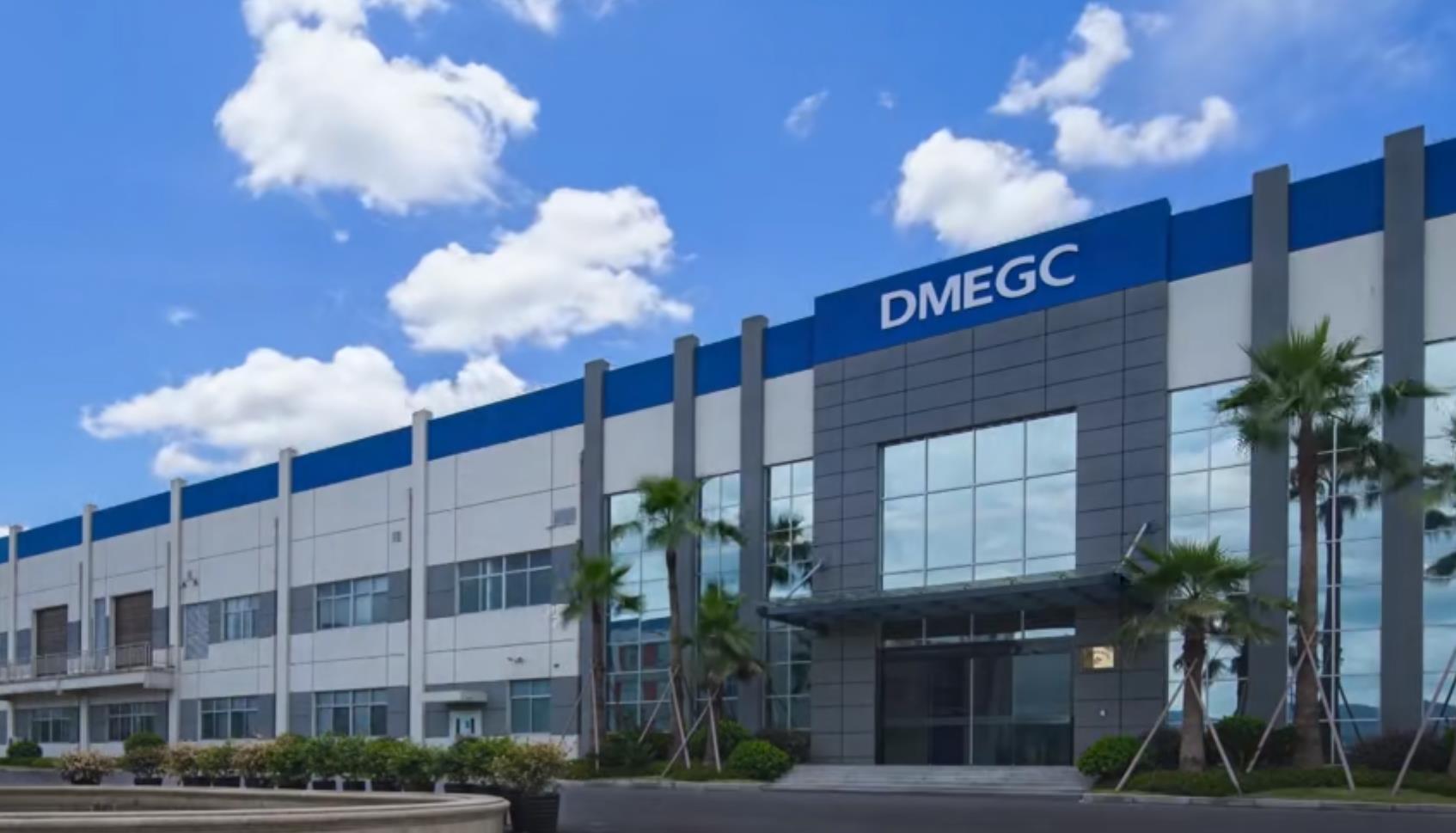
Core Viewpoint - The company, Hengdian Group DMEGC Magnetics Co., Ltd., anticipates significant profit growth for the first three quarters of 2025, with net profit expected to increase by 50.1% to 65.2% compared to the same period last year [2][3]. Financial Performance - The projected net profit attributable to shareholders is between 139,000 million and 153,000 million yuan, compared to 92,632.08 million yuan in the same period last year [2][3]. - The expected net profit after deducting non-recurring gains and losses is forecasted to be between 140,000 million and 153,000 million yuan, up from 88,513.45 million yuan year-on-year, representing a growth of 58.2% to 72.9% [2][3]. - Basic earnings per share are estimated to be between 0.87 yuan and 0.95 yuan, compared to 0.57 yuan in the previous year [2][3]. Industry Position and Product Development - The company maintains a leading position in the magnetic materials industry, with increasing market share in the home appliance and automotive sectors [2][4]. - The company has achieved rapid growth in shipments of new magnetic products across various fields, including onboard chargers for electric vehicles, charging modules for charging stations, thermal management systems, and power supply units for AI servers [2][4]. - The company has enhanced operational efficiency and profitability through organizational restructuring and digital transformation initiatives [2][4]. Solar and Lithium Battery Industries - In the solar industry, the company has strengthened its differentiated strategy by investing in R&D, technological upgrades, and process optimization, leading to the launch of ultra-high power products [4]. - The company has effectively managed cost fluctuations through proactive supply chain management and has seen improved shipment volumes in both domestic and international markets [4]. - In the lithium battery sector, the company focuses on standardized and refined management to ensure stable product quality while targeting small power applications across multiple fields [4].

为什么日本车站里的甜品店每周都换?
东京烘焙职业人· 2025-10-12 08:32
Core Viewpoint - The article discusses the unique concept of "limited-time dessert shops" in Japan, particularly at train stations, highlighting how this model has evolved and its cultural significance in attracting customers through novelty and seasonal offerings [7][21]. Group 1: Concept and Evolution - The idea of rotating dessert shops at train stations is rooted in Japan's cultural affinity for "limited-time" products, which creates a sense of scarcity and new experiences for consumers [7][21]. - The emergence of these dessert shops can be traced back to the privatization of Japan's national railways in 1987, which led companies to seek new revenue streams beyond ticket sales [11][12]. - JR East's "ecute" brand, launched in 2005, marked the beginning of integrating commercial spaces within train stations, paving the way for the later development of limited-time dessert shops [13][15]. Group 2: Market Dynamics - The success of "ecute" demonstrated the commercial potential of train stations, inspiring other private railway companies to explore similar concepts, leading to the establishment of Sweets Mode and Sweets Box in 2007 and 2008, respectively [17][18]. - The appeal of desserts lies in their ability to provide a small luxury in daily life, especially during economic downturns, making them a popular choice for consumers seeking happiness [21][22]. - The rotating nature of these dessert shops keeps the offerings fresh and engaging, encouraging repeat visits from customers who are eager to try new products [21][22]. Group 3: Business Strategy and Impact - Over 900 dessert shops participate in this rotating model, allowing brands to test new markets and gather customer feedback with minimal investment [22][25]. - The limited-time nature of these shops creates a sense of urgency and excitement, benefiting both the train stations and the brands involved [25][26]. - The article emphasizes the innovative marketing strategies employed by Japanese train companies, which differ significantly from more traditional approaches seen in other markets [35][36].
从AI基建竞赛看全球科技产业格局重构
Zheng Quan Ri Bao· 2025-09-28 16:06
Core Insights - The global competition among tech giants in AI infrastructure investment has intensified, with Alibaba announcing a plan to invest 380 billion yuan in AI infrastructure and Nvidia committing up to 100 billion USD to OpenAI for building AI data centers [1][2] - The focus of competition has shifted from model innovation to computing power, driven by the increasing demand for AI applications across various industries [2][3] - Tech giants are adopting differentiated strategies to build diverse ecosystems, with unique technological advantages allowing them to attract specific partners and enhance their competitive edge [3][4] Investment Trends - Alibaba's significant investment in AI infrastructure signals a broader trend among tech giants to enhance their capabilities in AI [1] - Nvidia's investment in OpenAI highlights the growing importance of partnerships in the AI infrastructure space [1][2] Competitive Landscape - The competition is evolving from a focus on algorithm breakthroughs to large-scale expansion of AI infrastructure, reflecting both technological and market dynamics [2][3] - Companies like OpenAI, Nvidia, and Oracle are forming strategic alliances to create closed-loop ecosystems, while Alibaba aims to build a comprehensive stack from chips to platforms [3][4] Ecosystem Development - The construction of ecosystems by tech giants is becoming more complex and diverse, with different players choosing various technological paths [3][4] - A thriving ecosystem can provide resources, application scenarios, and user feedback, fostering continuous innovation and reinforcing competitive advantages [3][4] Industry Evolution - The AI infrastructure competition is driving a shift from "closed innovation" to "open co-creation," with companies integrating AI into various business sectors [5][6] - The future competitiveness will depend not only on computing power or model parameters but also on the ability to deeply integrate industries [5][6]




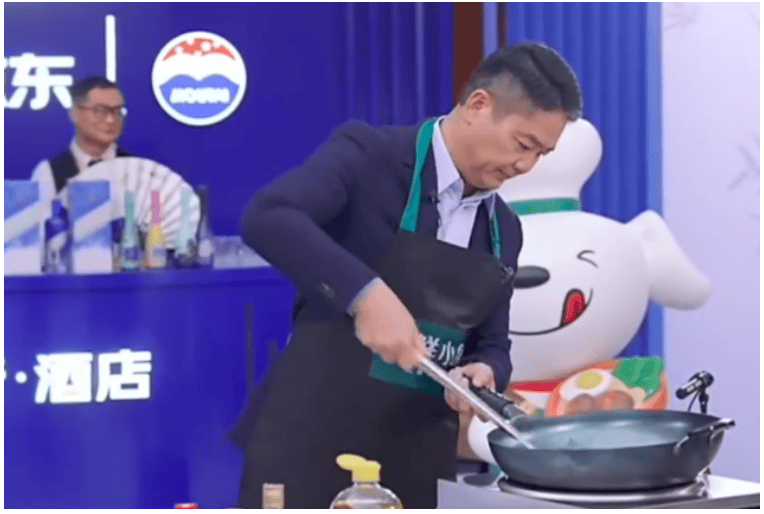
围裙CEO的商业智慧:从一盘猪头肉看京东的本地生活突围
Sou Hu Cai Jing· 2025-09-17 07:40
Core Insights - The live cooking event featuring Liu Qiangdong is a strategic move by JD.com to enhance its local lifestyle services, blending user engagement, ecosystem building, and strategic differentiation [1][3]. Group 1: Cultural Integration and Brand Strategy - The choice of "Huang Gou Zhutou Rou," a traditional dish with a 300-year history, reflects JD.com's deep understanding of local culture and its commitment to integrating cultural elements into its business model rather than engaging in price wars [3]. - Liu Qiangdong's humorous remarks during the event highlight JD.com's ability to maintain a relaxed and humorous brand image amidst fierce competition, emphasizing the importance of personalized brand representation over cold commercial declarations [3][4]. Group 2: Differentiation in Business Strategy - JD.com’s declaration of not engaging in price wars reveals its differentiated strategy in the hotel and travel sector, focusing on long-term ecological balance rather than short-term profit maximization through squeezing hotel operators [3]. - The "Seven Fresh Kitchen" initiative connects JD.com's 800 million high-spending users with the primary clientele of four-star hotels, creating a virtuous cycle of "food attraction to travel conversion," which is more persuasive than traditional advertising [3]. Group 3: Humanized Brand Communication - Liu Qiangdong's appearance as a chef breaks down barriers between corporate leaders and consumers, fostering a sense of relatability and human connection, which is essential for modern business leaders [4]. - The event signifies a shift in commercial competition from mere price battles to a focus on value creation, as more business leaders engage authentically with users [4].

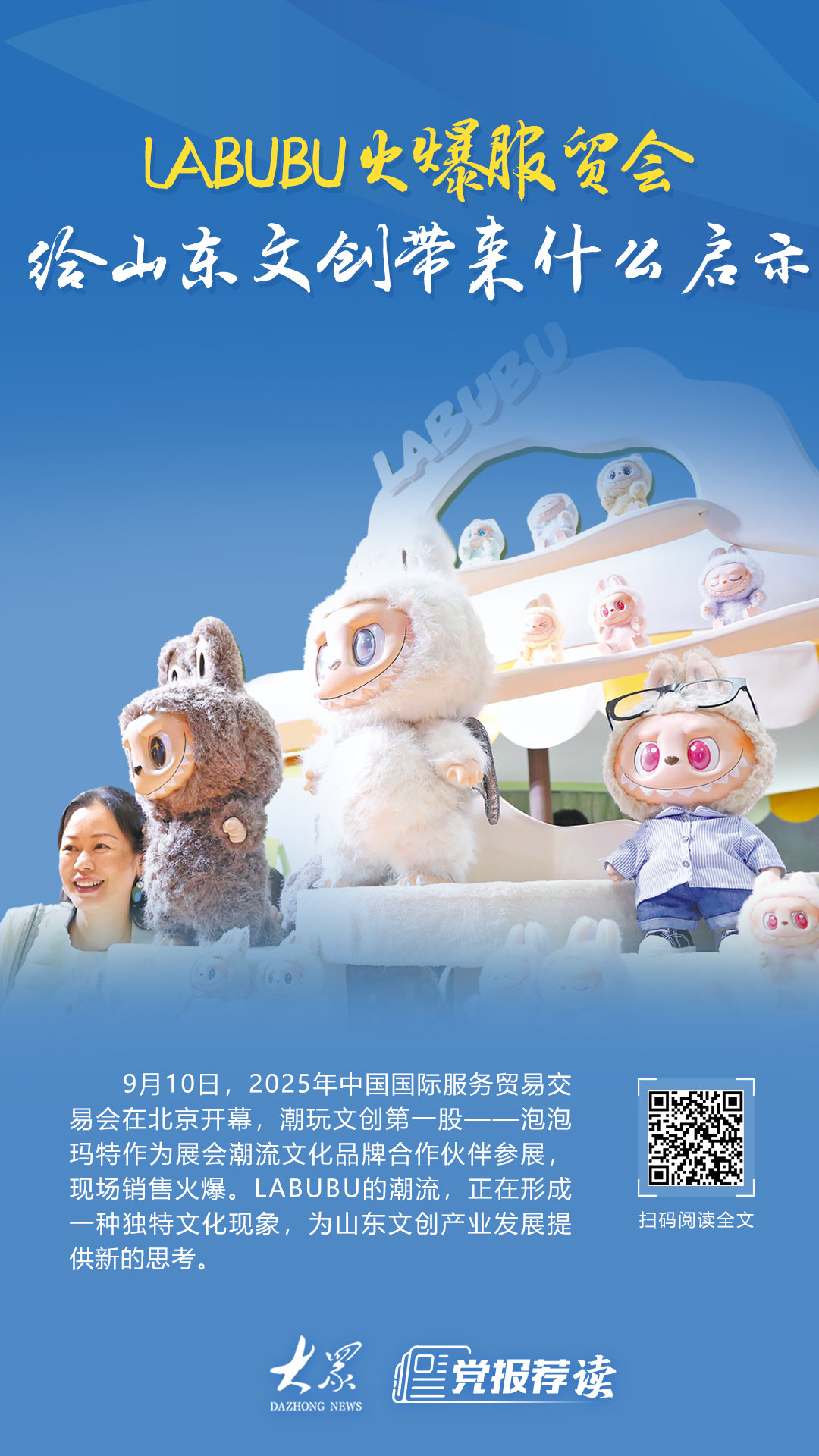
LABUBU火爆服贸会,给山东文创带来三重启示
Qi Lu Wan Bao Wang· 2025-09-12 01:53
Core Insights - The article highlights the success of LABUBU, a character from the Chinese cultural brand Pop Mart, which has gained immense popularity at the 2025 China International Service Trade Fair, showcasing a unique cultural phenomenon among young consumers [5][9][12] Group 1: Emotional Consumption - LABUBU's design, characterized as "ugly-cute," resonates with young consumers' aesthetic preferences, serving as a means for emotional expression and social identity [8][9] - A report indicates that nearly 60% of young people are willing to pay for emotional value, reflecting a 16.2% increase from 2024, with an average monthly expenditure of 949 yuan on emotional consumption [9] Group 2: Storytelling in IP - LABUBU is not just a toy; it is part of a broader narrative universe with distinct character backgrounds, enhancing its market appeal [10][11] - Successful cultural products often incorporate rich storytelling elements, which foster emotional connections and increase consumer purchase intent [12][13] Group 3: Differentiation Strategy - The global cultural trade has expanded significantly, with the value increasing from $150 billion in 2000 to over $1 trillion by 2024, representing 9% of total global service trade [14] - Chinese cultural products, including LABUBU, are increasingly entering international markets, employing differentiation strategies tailored to local consumer preferences [14][15]
新农股份(002942) - 2025年半年度网上业绩说明会
2025-09-02 09:38
Group 1: Financial Performance - The company achieved a revenue of 591 million yuan in the first half of 2025, representing a year-on-year growth of 9.70% [2] - The net profit attributable to shareholders reached 90.59 million yuan, with a year-on-year increase of 32.84% [2] Group 2: Business Strategy and Growth Drivers - The growth was primarily driven by the enhancement of the technical marketing model in the formulation business, which deepened service to target markets and improved sales quality [2] - The industrial products and overseas formulation business focused on key products and clients, leading to continued growth in overseas sales [2] - Increased investment in R&D, with R&D expenses amounting to 29.47 million yuan, accounting for 4.98% of revenue [2] Group 3: Environmental and Safety Management - The company has implemented a robust EHS management system, ensuring 100% compliance with pollutant discharge standards through real-time monitoring and safety training [3] Group 4: International Market Expansion - The overseas formulation business has seen growth due to deepening market presence in Southeast Asia and expansion into Eastern Europe and South America [3][4] - The company has established partnerships with international agricultural enterprises, enhancing its market position [4] Group 5: Future Development Plans - The company aims to solidify its market position in the bactericide sector and enhance its service value through strategic product focus and brand development [4] - Plans to maintain competitive advantages include a differentiated strategy focusing on core crops and continuous improvement in product quality [4][5] Group 6: Competitive Advantages - The company possesses strong R&D capabilities, having introduced advanced production technologies and holding multiple national honors [5] - A comprehensive product range covering the entire pesticide industry chain, which reduces costs and improves product quality [5]
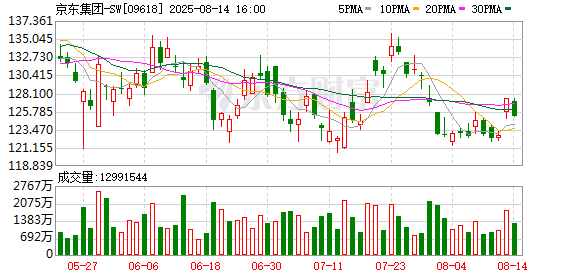
京东第二季度收入同比增速创近三年新高
Zheng Quan Ri Bao· 2025-08-14 16:50
Core Insights - JD Group reported a revenue of 356.7 billion yuan for Q2 2025, marking a year-on-year growth of 22.4%, the highest growth rate in nearly three years [2] - The company's R&D expenditure reached 5.3 billion yuan in Q2, up 25.7% year-on-year, with cumulative R&D investment exceeding 150 billion yuan since the full technology transformation in 2017 [2] - Active user numbers and shopping frequency both saw over 40% year-on-year growth, with active users achieving double-digit growth for seven consecutive quarters [2] Retail Business Performance - JD's retail business generated 310.1 billion yuan in revenue for Q2, a 20.6% increase year-on-year, with operating profit at 13.9 billion yuan and an operating margin of 4.5% [3] - The "618 Shopping Festival" saw record-breaking performance, with order numbers exceeding 2.2 billion and daily active users on the JD app reaching an all-time high [3][4] - The number of JD's 3C digital stores surpassed 3,000, and the company opened 24 JD MALL locations, enhancing its offline presence [3] New Business Developments - JD's new business segment, particularly its food delivery service, experienced a 199% year-on-year revenue growth in Q2, with daily orders surpassing 25 million during the "618" period [5] - The food delivery service now covers 350 cities and has over 150,000 quality restaurant partners, with nearly 200 brands achieving sales exceeding 1 million yuan [5] - JD launched the "Seven Fresh Kitchen" initiative to innovate the supply chain model in the food delivery market, with plans to establish 10,000 locations nationwide within three years [5][6] Strategic Focus - The company emphasizes the integration of its supply chain and differentiated strategies to enhance profitability, focusing on consumer-to-manufacturer (C2M) models to reduce inventory turnover and procurement costs [4] - JD aims to maintain a strong user experience and operational efficiency while strategically advancing new business areas like food delivery [6] - The collaboration between JD's existing retail and new business segments is expected to drive long-term growth and efficiency improvements [6]
外卖大战风向变了:内卷式竞争,没有出路
3 6 Ke· 2025-08-14 10:40
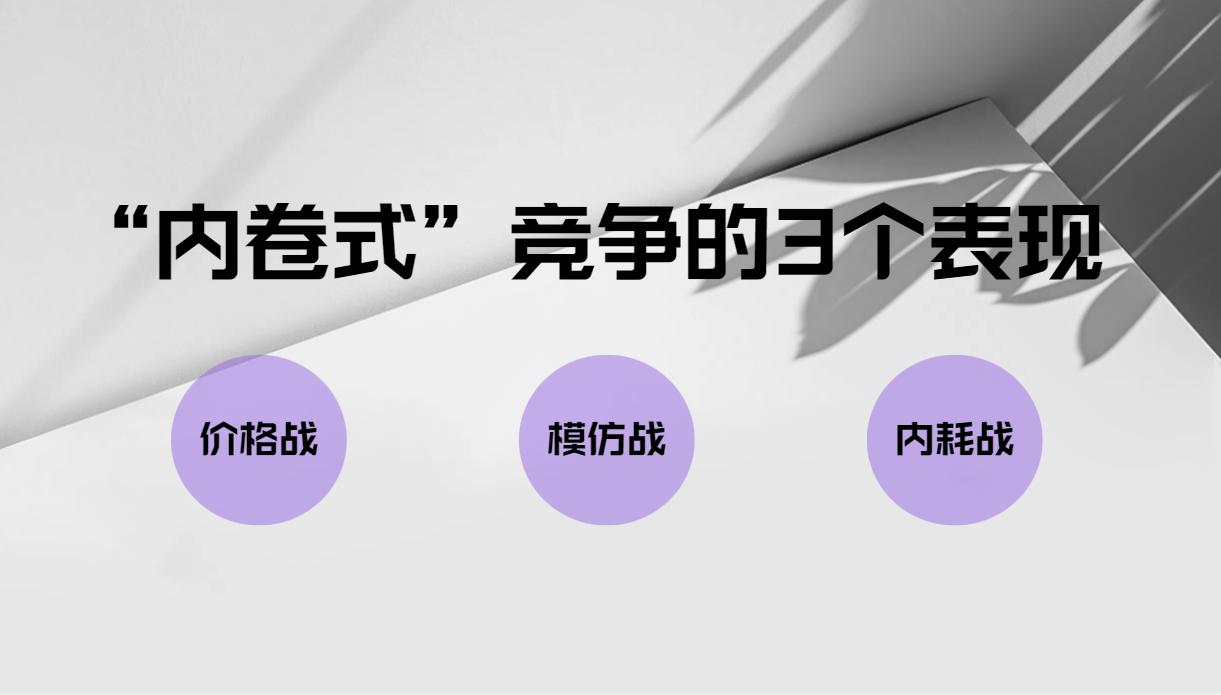
Core Viewpoint - The ongoing competition in the food delivery industry is shifting from aggressive subsidy wars to a more rational approach, as major players like JD.com, Meituan, and Ele.me express their intention to resist "involutionary" competition [1][2][3]. Group 1: Characteristics of Involutionary Competition - Involutionary competition is characterized by chaotic expansion and zero-sum games among companies vying for limited market share [8]. - Three typical manifestations of involutionary competition include: 1. Price Wars: When prices are driven down to unsustainable levels, leading to losses across the industry [9]. 2. Imitation Wars: Companies blindly follow trends without maintaining their unique offerings, resulting in homogenized products [10]. 3. Internal Strife: Companies focus on undermining competitors rather than expanding the market, often through unethical practices [12][13]. Group 2: Strategies to Avoid Involutionary Competition - Companies should focus on creating value rather than competing on price, ensuring customers perceive their offerings as worth the price [16][20]. - Differentiation is essential for competitive advantage, allowing companies to avoid resource-draining competition by offering unique value propositions [21][24]. - Transitioning from zero-sum games to win-win relationships is crucial, as illustrated by the example of Ford and General Motors, where mutual support can lead to overall industry health [25][30].