
时尚消费

Search documents
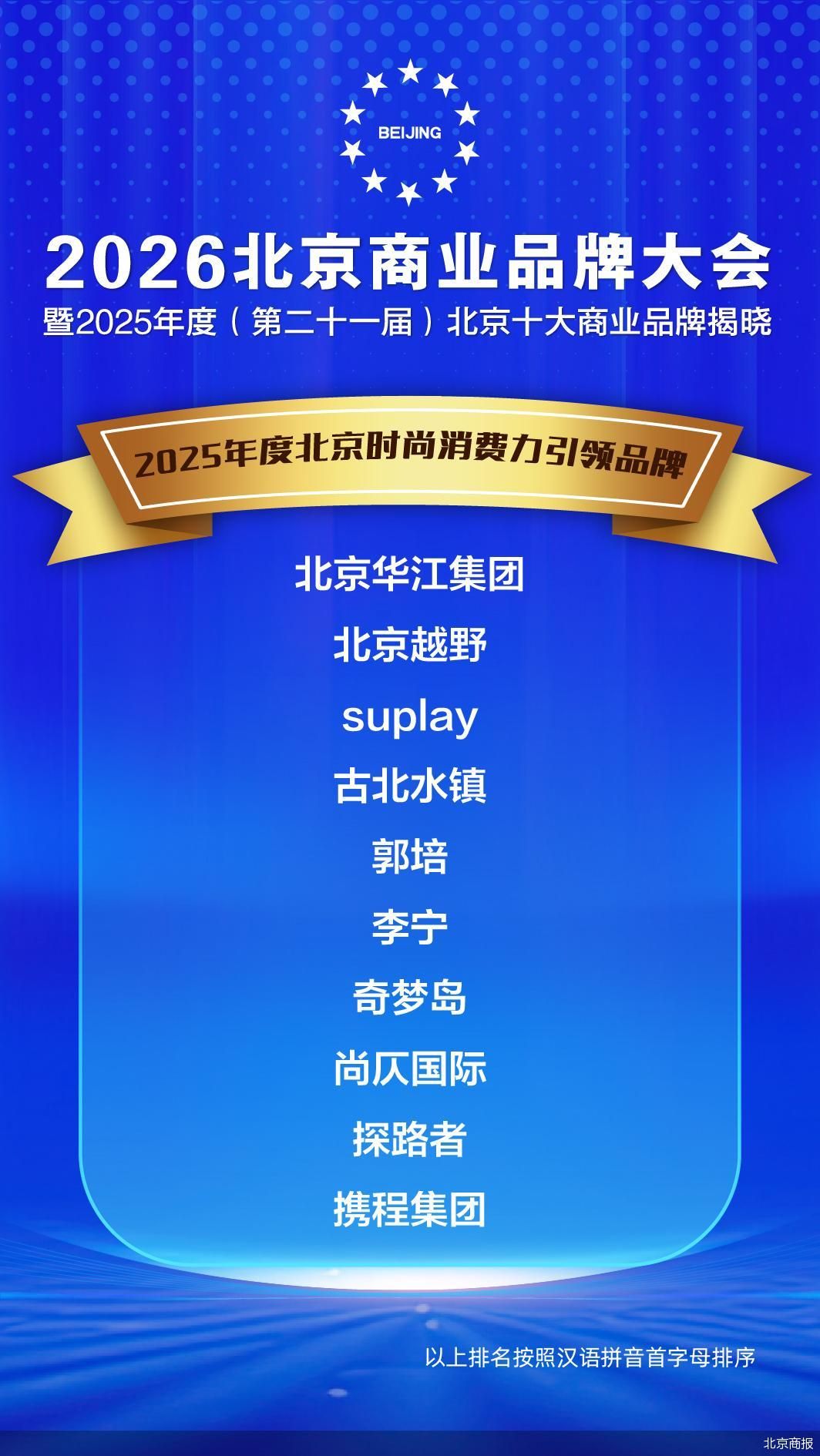
10家品牌荣膺“2025年度北京时尚消费力引领品牌”
Bei Jing Shang Bao· 2026-01-16 09:11
Group 1 - The 2026 Beijing Commercial Brand Conference and the announcement of the 2025 Top Ten Commercial Brands took place in Beijing, focusing on the theme "New Demand, New Supply" [1] - The event was guided by the Beijing Municipal Bureau of Commerce and organized by the Beijing Daily Media Group and the Beijing Commercial Association, highlighting the highest level of commercial brands in Beijing [1] - Ten brands were recognized as the "2025 Beijing Fashion Consumption Power Leading Brands," including Beijing Huajiang Group, Beijing Off-road, Suplay, and others, aimed at promoting fashion consumption trends in Beijing [1] Group 2 - The main list of the "2025 Top Ten Commercial Brands" represents brands with significant market influence and leadership in industry development [4] - Four permanent sub-lists were introduced: "Beijing Commercial Quality Service Brand," "Beijing Commercial Model Innovation Brand," "Beijing Commercial Craftsmanship Brand," and "Beijing Commercial New Star Brand" [4] - Three special annual sub-lists were introduced for the first time, recognizing outstanding cases in financial product innovation, cultural and commercial tourism integration, and fashion consumption leadership [4]

解读潮尚消费 北京商业论坛举办
Bei Jing Shang Bao· 2026-01-16 06:01
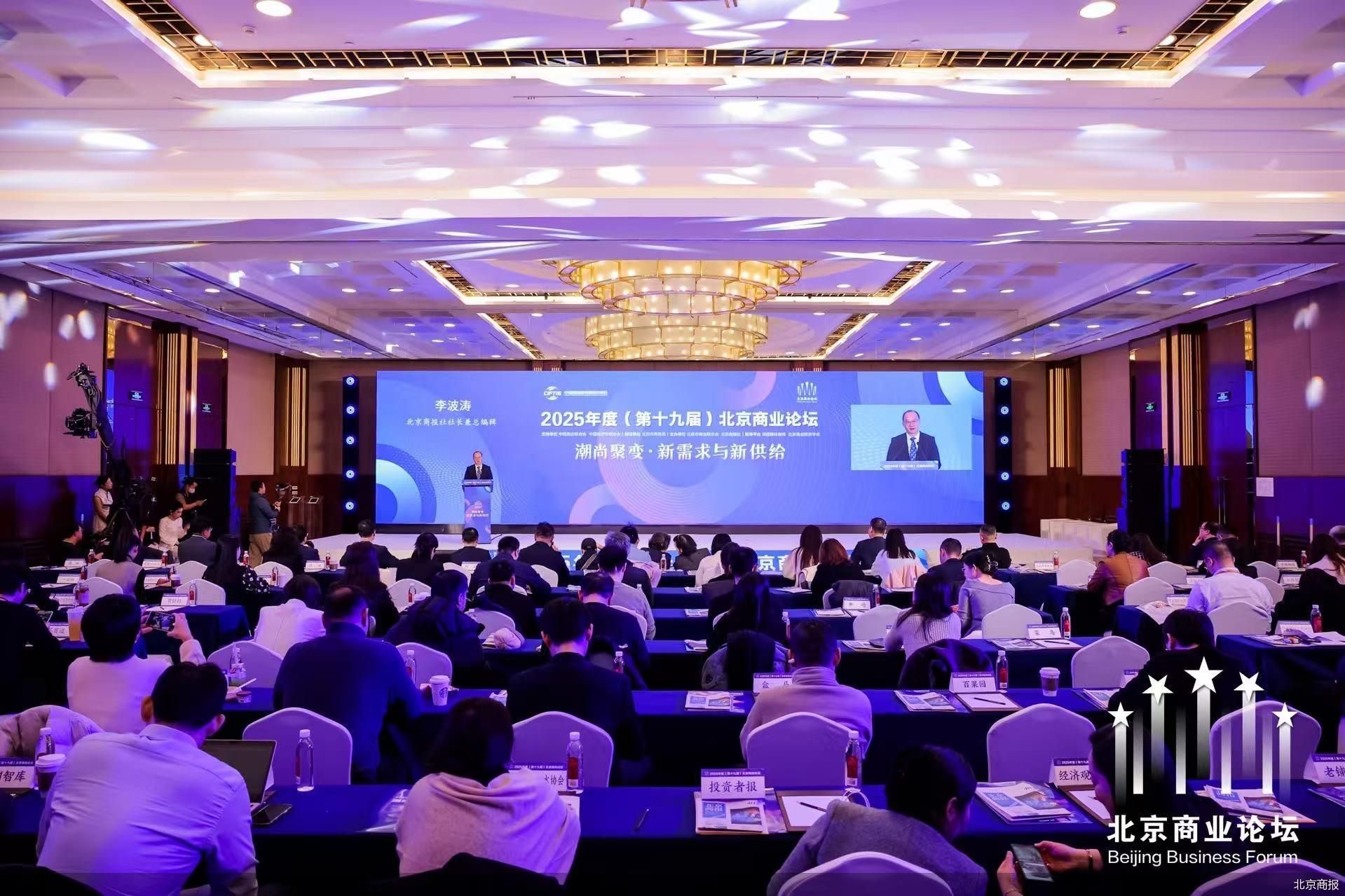
Core Insights - The integration of traditional and fashionable elements is crucial for revitalizing consumption and fostering growth highlights in the current macro context of supporting new consumption trends and products [1][3] - The 2025 Beijing Commercial Forum, themed "潮尚聚变·新需求与新供给," gathered representatives from various sectors to discuss fashion consumption and trends, aiming to contribute wisdom for expanding consumption and enhancing commercial quality [1][3] Group 1: Fashion Consumption Dynamics - The "14th Five-Year Plan" emphasizes leading new supply with new demand, which has been vividly practiced through the rise of fashion and trend consumption over the past year [3] - Fashion consumption is seen as a vital engine for boosting urban vitality and consumption, with Beijing leveraging its cultural foundation and innovative drive to enhance both qualitative and quantitative growth in this sector [3][6] - The emergence of experience-based consumption centered around fashion has become a significant growth driver in Beijing's market, with the "first store economy" and cultural tourism integration demonstrating strong consumption spillover effects [3][6] Group 2: Insights from the Blue Book - The annual report "2025 Beijing Commercial Development Blue Book" focuses on "reconstructing consumption through trends," documenting the shift in Beijing's consumption from "functional satisfaction" to "experience enhancement" [5][6] - Key findings include the rise of consumption content like trendy toys and concerts as social connectors, the development of unique Citywalk routes, and the emergence of small bars as part of Beijing's night economy [6] - The Blue Book highlights the construction of a new consumption ecosystem in Beijing that combines international flair with local vibrancy, emphasizing that quality consumption is characterized by fashion and trend attributes [6] Group 3: Forum Discussions and Future Trends - The forum's agenda reflects a deep understanding of current market conditions and commercial trends, focusing on hot topics such as fashion trends, pet economy, and live-streaming e-commerce [7] - Experts predict that fashion consumption could become a trillion-yuan growth point during the "14th Five-Year Plan," driven by innovation and cultural richness in China [7] - A strategic cooperation agreement was signed between the "Beijing Top Ten Commercial Brand Activities" committee and Ningbo Bank's Beijing branch to explore financial services that better meet the needs of the consumption sector [7][8]
国务院发展研究中心市场经济研究所原所长王微:时尚消费的本质是创新消费
Bei Jing Shang Bao· 2026-01-16 05:08
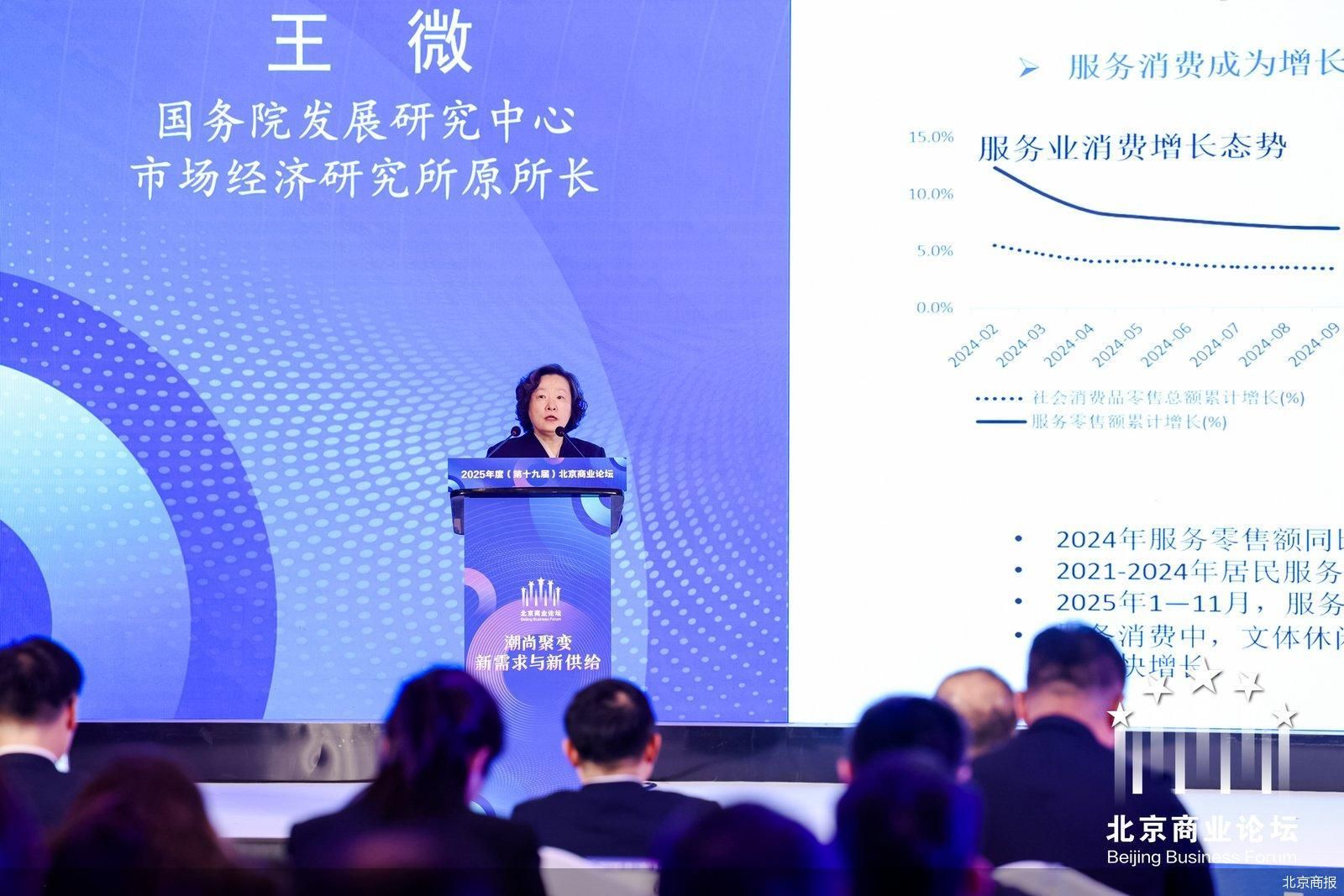
Core Viewpoint - The 2025 Beijing Business Forum emphasizes the theme of "Trendy Transformation: New Demand and New Supply," focusing on fashion consumption and trends to enhance consumer capacity and commercial quality [1][3] Group 1: Consumption Growth Points - During the 14th Five-Year Plan period, China is expected to see the emergence of more trillion and hundred billion-level consumption growth points, particularly in areas such as quality enhancement, service expansion, green health, and digital innovation [3] - Fashion consumption is projected to become a significant trillion-level consumption growth point during the 14th Five-Year Plan, moving beyond traditional clothing and accessories to encompass broader innovative consumption [3] Group 2: Importance of Fashion Consumption - Fashion consumption is identified as a crucial commercial element driving consumption innovation and is seen as a key factor in leading and boosting mass consumption, creating substantial commercial value [3] - The essence of fashion consumption is linked to cultural and social symbols, possessing significant commercial, market, and social value, which is particularly relevant to the Chinese market [3] - China's rich cultural heritage provides a strong foundation for fashion consumption to become a leading force in consumer trends in Beijing and nationwide [3]
北京商报社社长兼总编辑李波涛:“潮流时尚”是打造消费新场景的现实切口
Bei Jing Shang Bao· 2026-01-16 04:29
Group 1 - The core theme of the 2025 Beijing Commercial Forum is "潮尚聚变·新需求与新供给," focusing on fashion consumption and trends, aiming to contribute wisdom for expanding consumption, enhancing business quality, and breaking through brand challenges [1] - The characteristics of commercial consumption in 2025 are defined as "多、快、好、省," indicating diversified consumer demands, rapid product iterations, higher quality expectations, and price sensitivity [1] - "Fashion sense" is identified as a fundamental characteristic of "good consumption," suggesting that it may serve as an effective means for innovation and competitiveness in the market [1] Group 2 - From the "people, goods, and venues" perspective, popular products like Pop Mart and WAKUKU are highlighted for meeting emotional and social needs, while experiential consumption through events like music festivals and sports competitions offers enhanced value to consumers [2] - The silver economy and service consumption are noted as annual highlights with significant potential for growth [2] - Beijing Business News aims to be an observer of the circulation industry's upgrades and a promoter of high-quality development through collaboration with various sectors [2]
情绪价值、场景创新、文化跨界成消费增长点 《2025北京商业发展蓝皮书》解码时尚新生态
Bei Jing Shang Bao· 2026-01-16 03:01
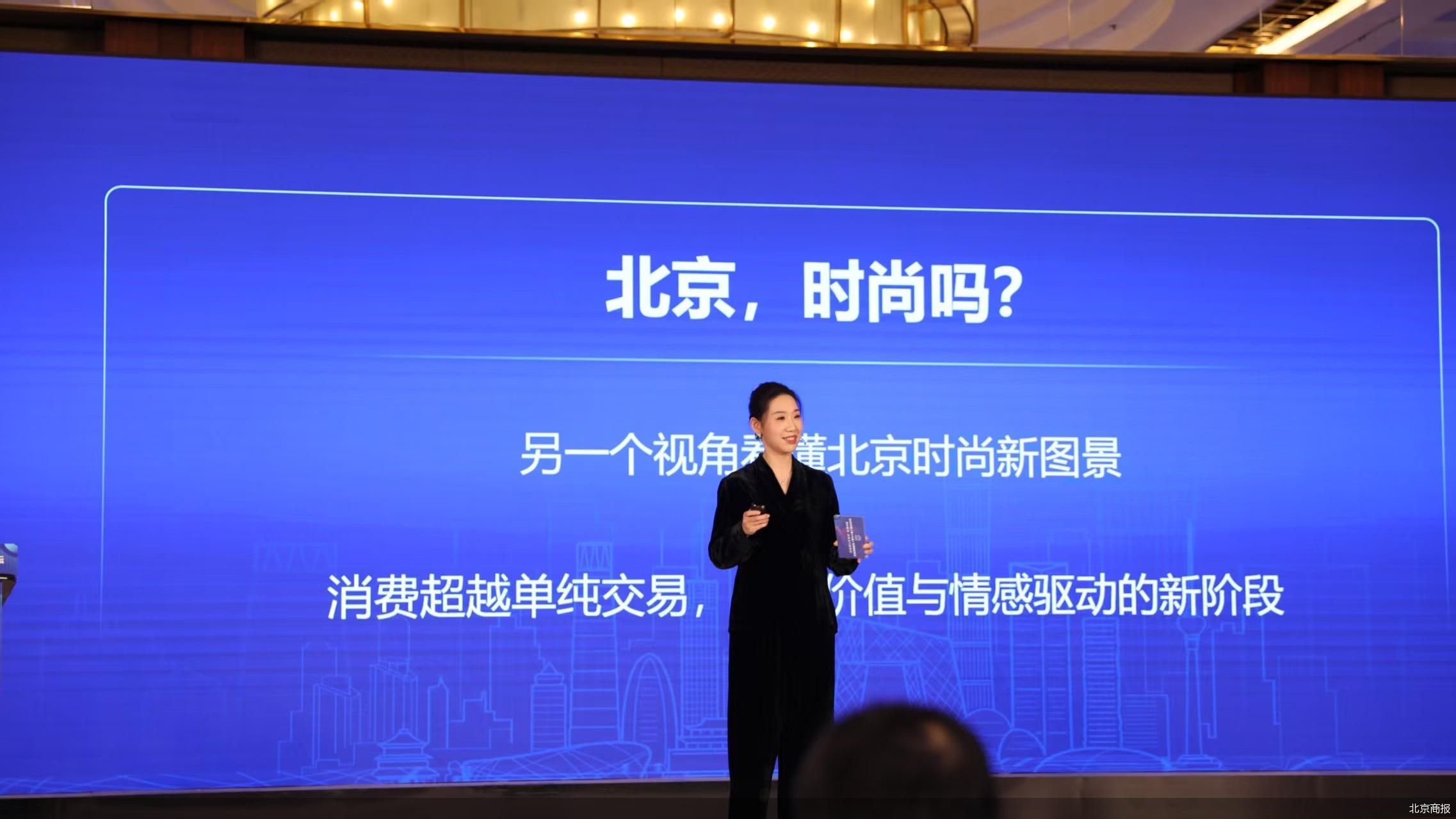
Core Insights - The 2025 Beijing Commercial Forum focused on the theme "Trendy Transformation: New Demand and New Supply," gathering representatives from various sectors to discuss fashion consumption and trends [1] - The annual report titled "2025 Beijing Commercial Development Blue Book" was released, highlighting new logic, scenarios, and dynamics in Beijing's commercial consumption [1] Group 1: Fashion Consumption Trends - Fashion consumption is expanding beyond traditional retail to encompass lifestyle products, including smart wearables, automobiles, and home goods, as well as services in entertainment, sports, and beauty [3] - Consumers are increasingly favoring products and services that provide emotional resonance, with immersive consumption experiences gaining popularity [3] - The "dimension economy," centered around intellectual property (IP), is emerging as a new retail engine, with IP-derived products evolving from toys to social currency [3] Group 2: Market Growth and New Business Models - In the first three quarters of 2025, new store openings in sectors such as fitness, wellness, medical beauty, and pet-related businesses in Beijing grew by 25% to 55%, significantly outpacing traditional retail and dining [3] - The rise of "Citywalk" trends has activated the cultural and commercial travel ecosystem, with a 66% year-on-year increase in the number of "smoky" small shops on Douyin [5] - The bar market in Beijing has shown robust growth, with overall consumption order volume increasing by over 35% and nighttime consumption orders rising nearly 40% [5] Group 3: Cultural Integration and Innovation - Cultural crossovers are accelerating the growth of domestic trends, with traditional crafts leveraging short video platforms for wider reach and engagement [6] - Douyin has seen over 200 million new videos related to national intangible cultural heritage, marking a 31% year-on-year increase [6] - Beijing is constructing a new consumption ecosystem characterized by both international flair and local vibrancy, emphasizing the importance of trendy and fashionable consumption as a means of innovation and competitive advantage [6]
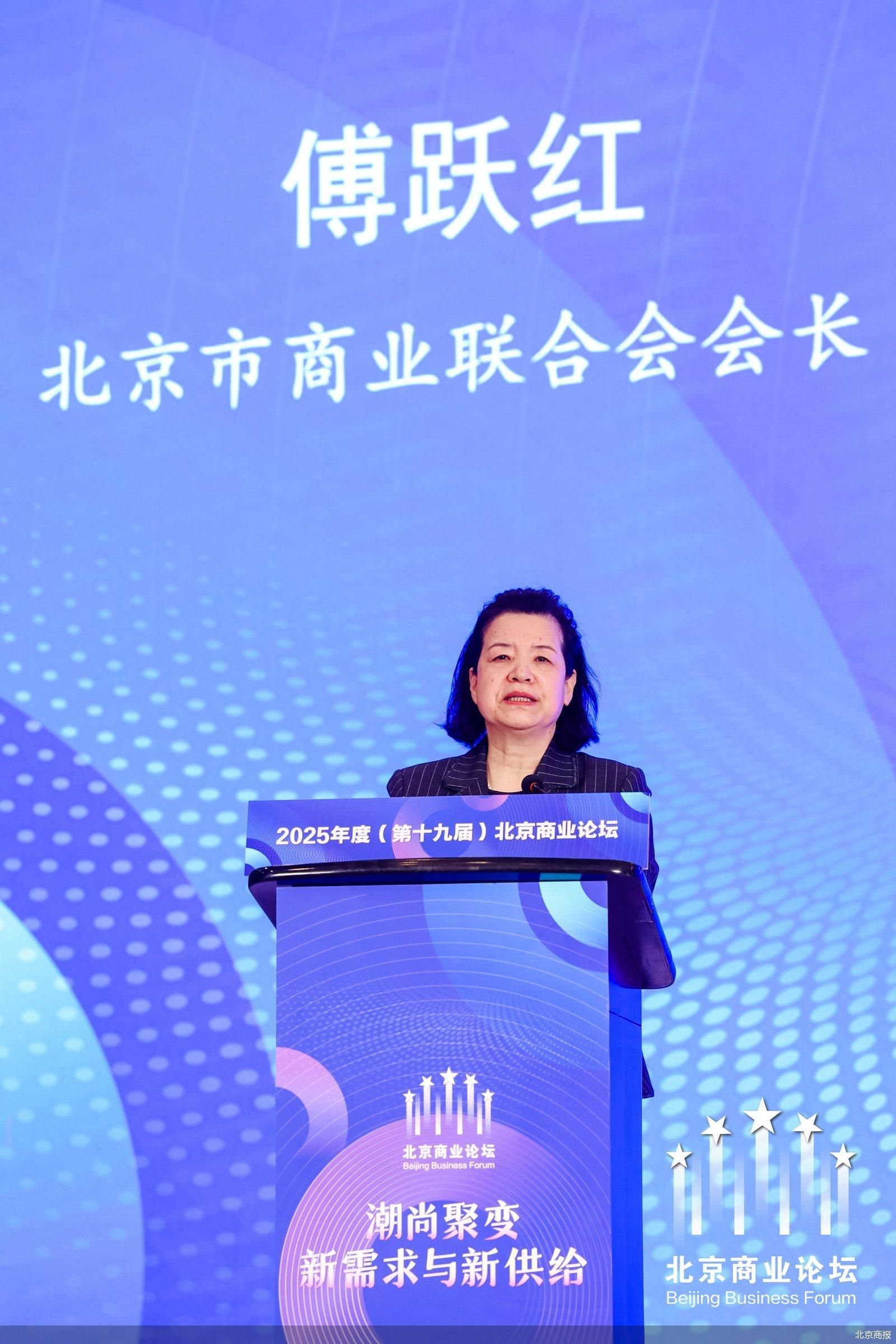
北京市商业联合会会长傅跃红:时尚消费是城市活力的重要彰显,更是提振消费的核心引擎
Bei Jing Shang Bao· 2026-01-16 02:48
Core Insights - The 2025 Beijing Commercial Forum was successfully held, focusing on the theme "Trendy Transformation: New Demand and New Supply" to discuss fashion consumption and trends [1] - The forum highlighted the importance of fashion consumption as a key driver for urban vitality and economic growth, with Beijing's total market consumption increasing by 1.4% year-on-year from January to November 2025 [4] - The city aims to become a global hub for fashion innovation and trends through various policy initiatives aimed at enhancing the fashion industry [4][5] Group 1 - Fashion consumption is a vital indicator of urban vitality and a core engine for boosting consumption [4] - Beijing's service consumption increased by 4.8% year-on-year, indicating positive growth trends in the market [4] - The rise of experience-based consumption centered around fashion has become a significant growth driver for the market [4] Group 2 - The city has implemented several policies, including the "Beijing Fashion Consumption Expansion Action Plan" and the "Beijing Fashion Industry High-Quality Development Implementation Plan (2025-2027)" to support the fashion sector [4] - Future trends in Beijing's fashion development include leveraging cultural advantages and integrating technology such as AI and big data into the fashion industry [5] - The goal is to cultivate more locally distinctive fashion brands and develop innovative products and services to support economic growth [5]
时尚消费驱动生活方式全面扩容
Bei Jing Shang Bao· 2026-01-15 12:14
Core Insights - Fashion consumption is becoming a significant driver of economic growth and urban vitality, characterized by a dialectical unity of "change and constancy" [1][2][3] - The current fashion consumption landscape has expanded beyond traditional categories like apparel and jewelry to include lifestyle products and services such as smart wearables, automobiles, home goods, entertainment, sports, and beauty [1][3][4] Industry Trends - Two major transformations in fashion consumption are emerging: 1. The integration of mixed-use formats, such as "retail + dining" and "retail + exhibitions," which deepens the connection between brands and consumers [1][4] 2. Rapid growth in health and self-care service consumption, with new store openings in major cities like Beijing, Shanghai, Guangzhou, and Shenzhen projected to increase by 25% to 55% by Q3 2025, significantly outpacing traditional retail and dining [1][4] Market Opportunities - The Chinese consumption market presents two structural opportunities: 1. Significant room for service consumption upgrade, with a 10-20 percentage point gap compared to developed economies in service expenditure [2][6] 2. Potential for increased spending by international tourists, with a 50% year-on-year growth in inbound visitors following the expansion of visa-free policies [6] Consumer Behavior - The definition of fashion consumption includes both changing trends and the enduring essence of leadership in consumer preferences, with a shift towards lifestyle-oriented consumption as income levels rise and consumer demographics evolve [3][5] - The establishment of flagship stores serves as a barometer for fashion consumption trends, with first-tier cities like Beijing and Shanghai accounting for 55% of new flagship stores in the first half of 2025 [5] City-Level Insights - Fashion consumption in China can be categorized into three tiers: 1. First tier: Beijing and Shanghai, which attract high-net-worth families and international tourists [5] 2. Second tier: Cities like Shenzhen, Chengdu, and Guangzhou, which are economic hubs with high consumer spending potential [5] 3. Third tier: Smaller cities where e-commerce and social media are driving fashion consumption among middle-income groups [5]

潮尚聚变,2025年度北京商业论坛解码消费新赛道
Bei Jing Shang Bao· 2026-01-13 12:36
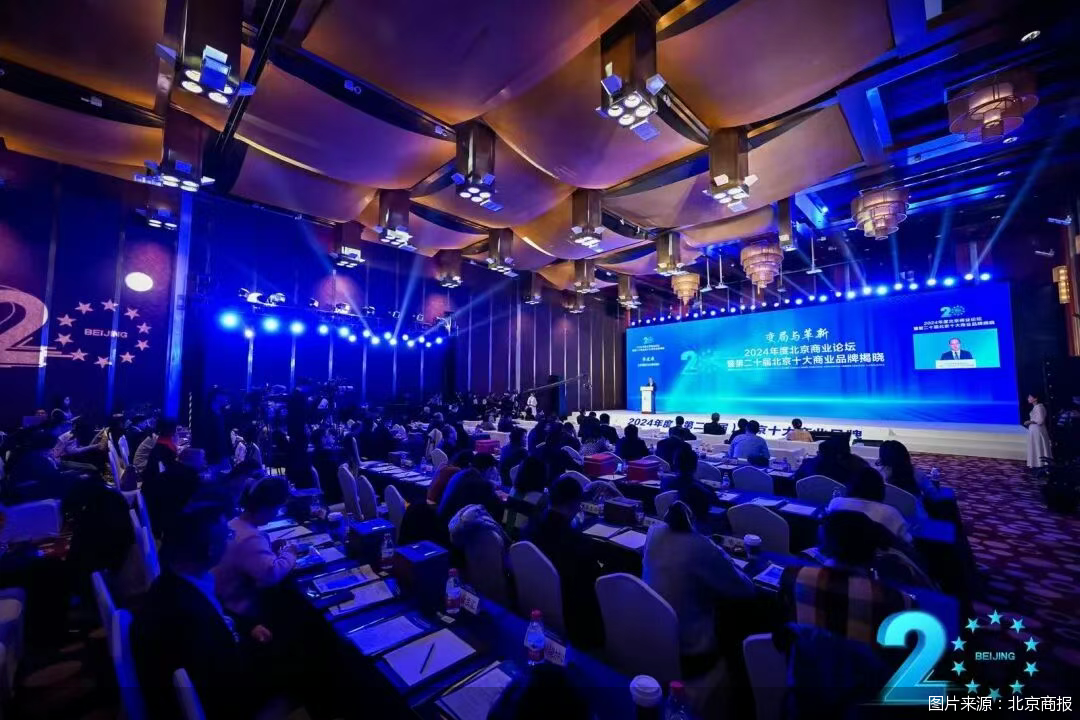
Core Insights - The emerging force centered around fashion consumption is profoundly shaping the commercial competitiveness of cities and unlocking infinite possibilities for future development [1] Group 1: Event Overview - The 2025 Beijing Commercial Forum, guided by the Beijing Municipal Bureau of Commerce and co-hosted by the Beijing Commercial Association and Beijing Business News, will be held on January 16 at the Beijing International Hotel [1] - The theme of this year's forum is "Trendy Transformation: New Demand and New Supply," focusing on emerging consumption and envisioning the future of Beijing's commerce [1] Group 2: Market Trends - Beijing's commercial landscape is entering a new transformation phase driven by innovation and experience, with trends like fashion consumption and emotional consumption showcasing strong market potential and a siphoning effect [3] - The "14th Five-Year Plan" suggests that new demand should lead to new supply, and the dynamic interaction between "new demand and new supply" is a core dimension shaping the future commercial landscape [3] Group 3: Consumption Evolution - The report titled "2025 Beijing Commercial Development Blue Book" will be released at the forum, presenting new logic, scenarios, and dynamics of Beijing's commercial consumption under the theme "Trendy Reconstruction of Consumption" [4] - The report highlights the shift in Beijing's consumption from "functional satisfaction" to "experience upgrade," focusing on emotional value, scenario innovation, and cultural crossover [4] Group 4: New Consumption Models - Emerging consumption has led to diverse business models, transforming the commercial core from "transaction venues" to "fusion spaces," with traditional supermarkets incorporating AI and community discount stores reshaping community commerce [3][4] - The report identifies that "trendy consumption" is constructing a new consumption ecosystem that combines international flair with local vibrancy, emphasizing that true quality consumption is characterized by fashion and trend attributes [4] Group 5: Forum Agenda and Collaboration - The forum's agenda will focus on new consumption sectors such as fashion consumption, pet economy, and trendy toys, addressing cutting-edge industry trends [5] - A strategic cooperation agreement will be signed between the "Top Ten Commercial Brand Activities" committee and Ningbo Bank's Beijing branch to explore how financial services can better meet the needs of consumption-related financial services [5]
三里屯商圈焕新 北京时尚消费趋于体验驱动
Bei Jing Shang Bao· 2025-12-21 15:55
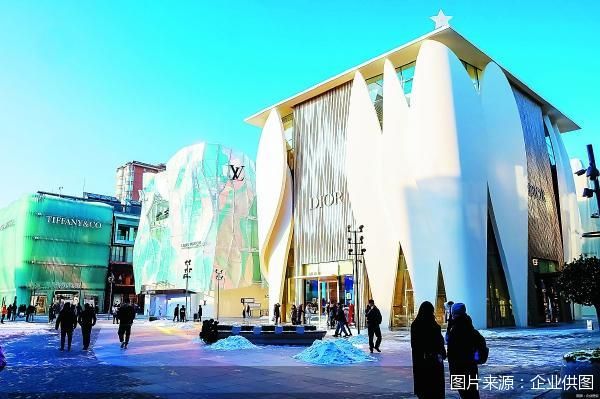
Core Insights - The transformation of the Sanlitun business district reflects the evolution of Beijing's fashion commerce, showcasing a blend of local culture and international trends [3][4] - LVMH's Greater China President, Wu Yue, emphasizes the growing importance of Chinese consumers in the global fashion landscape, highlighting the integration of local culture with international fashion [1][5] Group 1: Market Evolution - Sanlitun's development over the past 20 years has synchronized with the upgrade of China's fashion market, demonstrating a successful combination of internationalization and localization [3] - The area has evolved from a diplomatic hub to a forefront of urban internationalization, facilitating cultural exchange and interaction [3] Group 2: Consumer Behavior - The shift in consumer demand from "product-oriented" to "experience-driven" is a key trend, with emotional value becoming a crucial link in this transformation [4][10] - Retail development must focus on continuous interaction with consumers, adapting to their evolving needs and preferences [10] Group 3: Future Outlook - The significance of the Chinese market in the international fashion scene is expected to increase, with a historical shift from industrial exports to a vibrant fashion industry [11][12] - International high-end brands are adopting a long-term strategy, expressing confidence in the growth of the Chinese consumer base, which will further propel the global fashion industry [5][12]

深圳华强:今年,华强电子世界继续深耕差异化业态运营,按规划有序推进局部改造升级
Zheng Quan Ri Bao Wang· 2025-12-10 14:13
Core Viewpoint - Shenzhen Huaqiang (000062) is experiencing increased foot traffic in "Shenzhen Huaqiangbei," known as "China's No. 1 Electronics Street," due to rising consumer emphasis on product cost-effectiveness and offline experiences, alongside the ongoing "Belt and Road" initiative driving international procurement [1] Group 1: Business Environment - The operational environment, merchant quality, pricing, and product category richness in Huaqiangbei are advantageous, leading to a surge in foot traffic [1] - The peak daily foot traffic for individual stores has surpassed 50,000 visitors [1] Group 2: Market Strategy - Huaqiang Electronic World is leading the "fashion electronics product trend" in Huaqiangbei, attracting numerous domestic and international merchants and consumers for both online and offline purchases [1] - The "潮品电子区" (Trendy Electronics Zone) is fully rented, indicating strong demand for retail space [1] Group 3: Future Developments - The company continues to deepen differentiated operational strategies, systematically advancing local renovations and upgrades [1] - Plans are in place to expand the fashion electronics business area and create the "Huaqiang Fashion Digital Center," focusing on emerging categories such as VR glasses, smart wearables, AI translation devices, AI toys, robots, drones, electronic musical instruments, action cameras, and trendy digital products [1] - A large immersive shopping space has been established, integrating technology experience, fashionable consumption, and interactive social engagement, further enhancing the operational efficiency of merchants within the physical market [1]
