春季躁动

Search documents
春节后A股将会怎么走?以史为鉴这三大板块上涨概率更高,核心受益标的梳理
Xin Lang Cai Jing· 2026-02-23 00:19
Market Trends - The Shanghai Composite Index shows a significant "spring market" trend with a 75% probability of rising in the first five days after the Spring Festival, and a median increase of 1.64% [1] - Over the past decade, the coal, agriculture, forestry, animal husbandry, and military industries have performed well in the month following the Spring Festival, with the computer industry leading in the last two years [1] Industry Performance - In the past ten years, various industries have shown different performances post-Spring Festival, with coal, environmental protection, national defense, agriculture, and steel industries having notable fluctuations in their weekly and monthly gains [2] - The coal industry is expected to see a significant increase in production capacity in 2026, with an anticipated rise of 70 million tons in raw coal output, while policies may lead to a reduction of 150 million tons in capacity [2] Agricultural Sector Insights - The pig breeding sector is expected to see a gradual recovery in prices and profitability by 2026 due to ongoing capacity reduction in breeding sows [3] - The poultry farming sector is also expected to improve, with opportunities for leading companies in the meat chicken breeding market [3] Defense and Aerospace Industry - The defense industry is poised for growth in 2026, driven by geopolitical tensions and advancements in military technology, with a focus on precision-guided munitions and unmanned systems [4] - The commercial aerospace sector is expected to experience a boom, with several new rocket launches planned and advancements in reusable technology [4] Recommended Companies - In the defense sector, companies such as North Navigation, AVIC Shenyang Aircraft Corporation, and Inner Mongolia First Machinery Group are highlighted for their strategic positions in precision-guided munitions, new aircraft development, and unmanned systems [5] - In the commercial aerospace sector, Aerospace Electric and Guobo Electronics are recommended for their roles in providing critical components for satellite and rocket technologies [5]

中小盘宽基指数本周走强,科创100ETF易方达(588210)、创业板200ETF易方达(159572)标的指数涨超3%
Sou Hu Cai Jing· 2026-02-13 09:58
Market Performance - The Sci-Tech Innovation 100 Index increased by 3.7%, while the ChiNext Mid-Cap 200 Index rose by 3.5%. The CSI 500 and CSI 1000 indices both saw an increase of 1.9%, and the CSI 2000 Index grew by 1.2% [1][3]. Future Outlook - According to GF Securities, the A-share market is likely to experience a favorable upward trend in the next 1-2 months, driven by a combination of favorable timing, conditions, and human factors. Historically, February and the period around the Spring Festival are characterized by strong seasonal effects, with small-cap stocks typically outperforming [1]. Index Composition - The CSI 1000 Index consists of 1,000 smaller, liquid stocks outside the CSI 800 Index, reflecting the overall performance of small-cap companies in the A-share market, covering all 11 primary industries [5]. - The CSI 2000 Index is made up of 2,000 even smaller, liquid stocks outside the CSI 1000 Index, focusing on the performance of micro-cap stocks, also covering all 11 primary industries [5]. - The Sci-Tech Innovation 100 Index includes 100 medium-cap stocks from the Sci-Tech Innovation Board, with over 70% of its composition in the electronics, biopharmaceutical, computer, and power equipment sectors, particularly high in electronics and biopharmaceuticals [5]. - The ChiNext Mid-Cap 200 Index comprises 200 medium-cap stocks from the ChiNext market, reflecting the overall performance of representative mid-cap companies, with over 40% in the information technology sector [5]. Index Valuation Metrics - The rolling price-to-earnings (P/E) ratios for the indices are as follows: CSI 500 at 38.1x, CSI 1000 at 50.8x, CSI 2000 at 168.2x, Sci-Tech Innovation 100 at 212.4x, and ChiNext Mid-Cap 200 at 114.7x [3][6].


热推荐:华商基金海洋:均衡成长量化赋能
Xin Lang Ji Jin· 2026-02-13 02:36
Core Viewpoint - The A-share market is expected to experience a robust upward trend in 2026, with a solid foundation for the "spring rally" compared to previous years, driven by macroeconomic policies and risk appetite recovery [1] Group 1: Market Overview - In 2025, the A-share market showed significant structural opportunities, with major alpha concentrated in growth and cyclical sectors [5] - The first quarter saw a notable "spring rally," primarily driven by thematic trends in the technology sector, including robotics, low-altitude economy, and AI applications [5] - The second quarter experienced volatility due to external tariff expectations, leading to adjustments in broad market indices [5] - By the third quarter, there was a clear recovery in growth style valuations, particularly in computing power, semiconductors, and technology stocks, alongside a strong performance in the cyclical sector driven by liquidity easing [5] - The fourth quarter entered a phase of oscillation, characterized by alternating industry rotations as the main trading opportunity [5] Group 2: Investment Strategy - The investment strategy focuses on high-quality industry leaders, with a preference for mid to large-cap stocks to mitigate the impact of small-cap volatility [5] - The approach emphasizes balanced sector allocation to prevent excessive volatility from rapid industry rotations [5] - For 2026, the outlook remains positive, with broad market indices expected to maintain reasonable valuation levels, supported by ongoing technological innovation and favorable liquidity conditions [6] - The strategy will continue to utilize quantitative diversified allocation to maintain a stable return profile [6]

华商基金海洋:均衡成长 量化赋能
Xin Lang Cai Jing· 2026-02-13 02:03
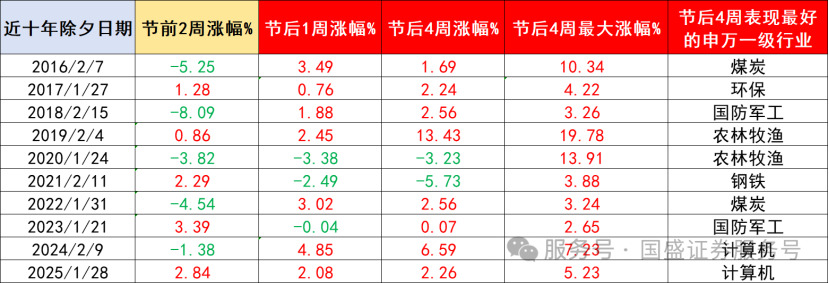
Group 1 - The A-share market in 2025 experienced a significant structural differentiation, leading to a robust upward trend, with expectations for a solid "spring rally" in 2026 [1][6] - The manager of Huashang Fund, Haiyang, employs a dual strategy of "balanced growth + quantitative empowerment" to navigate the spring rally effectively [1][6] - Haiyang remains optimistic about the macroeconomic state improving as counter-cyclical economic policies are gradually implemented, anticipating a recovery in quality small and mid-cap stocks as risk appetite increases [1][6] Group 2 - In 2025, the A-share market revealed clear structural opportunities, with major alpha concentrated in growth and cyclical sectors [4][10] - The first quarter saw a notable spring rally driven by thematic trends in the technology sector, with significant valuation increases in sub-sectors like robotics, low-altitude economy, and AI applications [4][10] - The investment strategy focused on high-quality industry leaders, favoring mid to large-cap stocks while reducing exposure to small-cap factors to mitigate volatility risks [4][10] Group 3 - Looking ahead to 2026, most broad market indices are expected to maintain reasonable valuation levels, with ongoing technological innovation and favorable liquidity conditions [5][11] - The market is anticipated to continue showcasing structural opportunities in both cyclical and technological sectors, with a positive outlook for small and mid-cap quality stocks as risk preferences recover [5][11] - Haiyang plans to maintain a diversified quantitative allocation strategy to ensure stable returns through product portfolio configuration [5][11]

广发证券首席策略分析师刘晨明 备战马年第一波上涨期
Shen Zhen Shang Bao· 2026-02-12 18:47
Core Viewpoint - The A-share market is expected to experience its first wave of upward momentum in the Year of the Horse, with optimism surrounding sectors such as the AI industry chain, space photovoltaics, and non-bank financials [1][2]. Group 1: Market Timing - The spring market rally is anticipated to begin in February, historically the strongest period for such movements, with a 100% probability of small-cap indices rising between the Spring Festival and the National People's Congress [1]. - Previous instances of early spring rallies occurred during economic upturns or policy shifts, with notable years being 2013, 2014, 2015, and 2020 [2]. Group 2: Market Conditions - The release of annual report forecasts has alleviated negative fundamental disturbances, with a record high of companies reporting low expectations or losses in 2025 [2]. - As negative financial news is digested, the market is expected to be in a better position starting in February, allowing for a more favorable trading environment [2]. Group 3: Investment Strategy - The correlation between spring rallies and corporate performance is strong, with recommended sectors including the ByteDance industry chain, space photovoltaics, and non-bank sectors such as brokerage and insurance [2]. - Other sectors to consider for investment include optical modules, semiconductors, humanoid robots, chips, PCBs, and innovative pharmaceuticals, with additional tracking suggested for metals, satellites, storage, chemicals, and power grids [2].

胜率78%,持股过节?
3 6 Ke· 2026-02-12 10:39
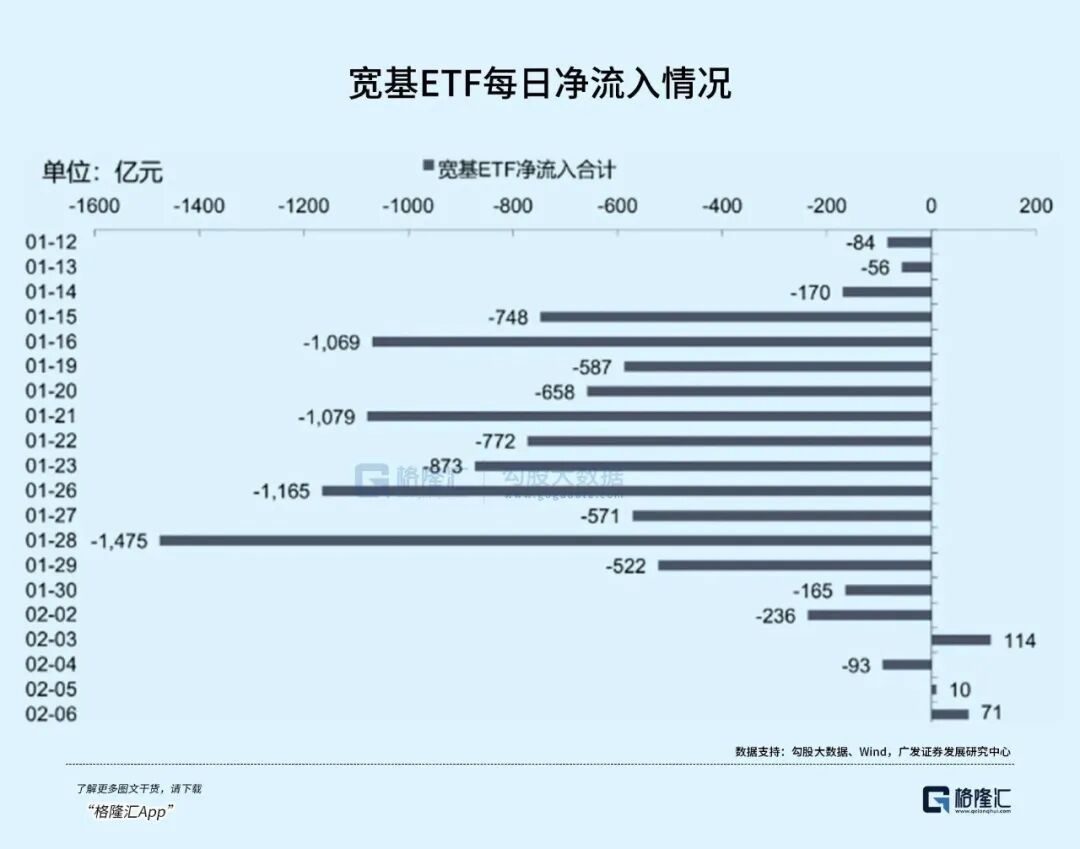
Core Viewpoint - The investment market is currently focused on the choice between "holding stocks during the holiday" or "holding cash during the holiday," with historical data suggesting a higher success rate for holding stocks post-holiday [1][12][13]. Market Trends - The stock index has begun a rebound, driven by AI catalysts, indicating a prelude to the Spring Festival market [2][11]. - The A-share market has shown a significant "pre-holiday effect," with trading volume decreasing to approximately 2.2 trillion yuan, and financing funds experiencing a net outflow for three consecutive weeks [2][18]. - The recent market volatility is attributed to a breakdown of short-term bullish trends and external pressures from commodity price fluctuations [3][4][5]. Investment Sentiment - There is a prevailing cautious sentiment among institutional investors, leading to reduced positions ahead of the long holiday to mitigate risks associated with overseas uncertainties [2][6]. - The recent adjustments in the market have created opportunities for recovery, with many institutions remaining optimistic about post-holiday performance due to unchanged core domestic fundamentals and policies [14][17]. Historical Performance - Historical data from 2017 to 2025 indicates that the average gain for the A-share market in the 10 trading days following the Spring Festival is 3.3%, compared to an average loss of -1.3% in the 10 days prior [13]. - The success rate for the A-share market in the first five and ten trading days after the Spring Festival is 78%, significantly higher than pre-holiday performance [13]. Sector Analysis - The recent market adjustments have led to a rotation among sectors, with notable performances in light communication, computing power chains, commercial aerospace, and cultural media [11]. - The AI sector remains a focal point, with significant developments such as the release of Seedance 2.0, which is expected to enhance the efficiency of AI-generated content production [24][30][32]. Liquidity and Fund Flows - Historical trends show that market liquidity typically contracts before the holiday due to increased cash withdrawal demands, but tends to rebound afterward [18]. - Recent data indicates that the outflow of broad-based ETFs has largely stabilized, with signs of net inflows emerging [7][8]. Future Outlook - The upcoming macroeconomic data releases from both China and the U.S. are anticipated to provide insights into the improvement of fundamentals, which could support market recovery [14]. - The potential for a "spring rally" remains, as historical patterns suggest that early-year market movements do not preclude continued upward trends in February and March [22][23].
胜率78%!持股过节?
Ge Long Hui A P P· 2026-02-12 09:35
Group 1 - The core topic of the article revolves around the investment strategies of "holding stocks during the holiday" versus "holding cash during the holiday," particularly in the context of the upcoming Chinese New Year [1] - Historical data shows that the A-share market has a significant "pre-holiday effect," with trading volumes typically decreasing before the holiday and increasing afterward, indicating a potential for market recovery post-holiday [2][17] - Recent market trends indicate a rebound in stock indices, driven by AI-related catalysts, suggesting a prelude to the holiday market performance [3][14] Group 2 - The article highlights that the cash withdrawal demand during the holiday season leads to a seasonal decline in the banking system's excess reserve ratio, impacting market liquidity [5] - The recent adjustments in the market are seen as a necessary phase for paving the way for post-holiday opportunities, with many institutions remaining optimistic about the market's performance after the holiday [15][34] - The article notes that the recent volatility in the market is influenced by external factors, including adjustments in commodity prices and the performance of major tech companies in the U.S. [8][9] Group 3 - The article discusses the recent performance of various sectors, particularly the rapid rotation among themes such as optical communication, computing power chains, and commercial aerospace, which have shown significant gains [14] - The "spring market" phenomenon has already begun, with indices like the CSI 500, 1000, and 2000 showing early upward trends since late December, indicating a bullish sentiment in the market [19][20] - The introduction of AI models like Seedance 2.0 is expected to catalyze further growth in the A-share market, particularly in the media sector, as it enhances content production efficiency [26][30] Group 4 - The article emphasizes that the upcoming macroeconomic data releases, including domestic inflation and social financing figures, are crucial for validating the improvement in the fundamental outlook [15][17] - The anticipated increase in liquidity post-holiday, combined with policy catalysts, is expected to create a favorable environment for market recovery and growth [22][31] - The article concludes that maintaining a stock position during the holiday is likely to yield higher returns, supported by historical performance data showing a positive trend in the market after the holiday [15][34]
胜率78%!持股过节?
格隆汇APP· 2026-02-12 08:47
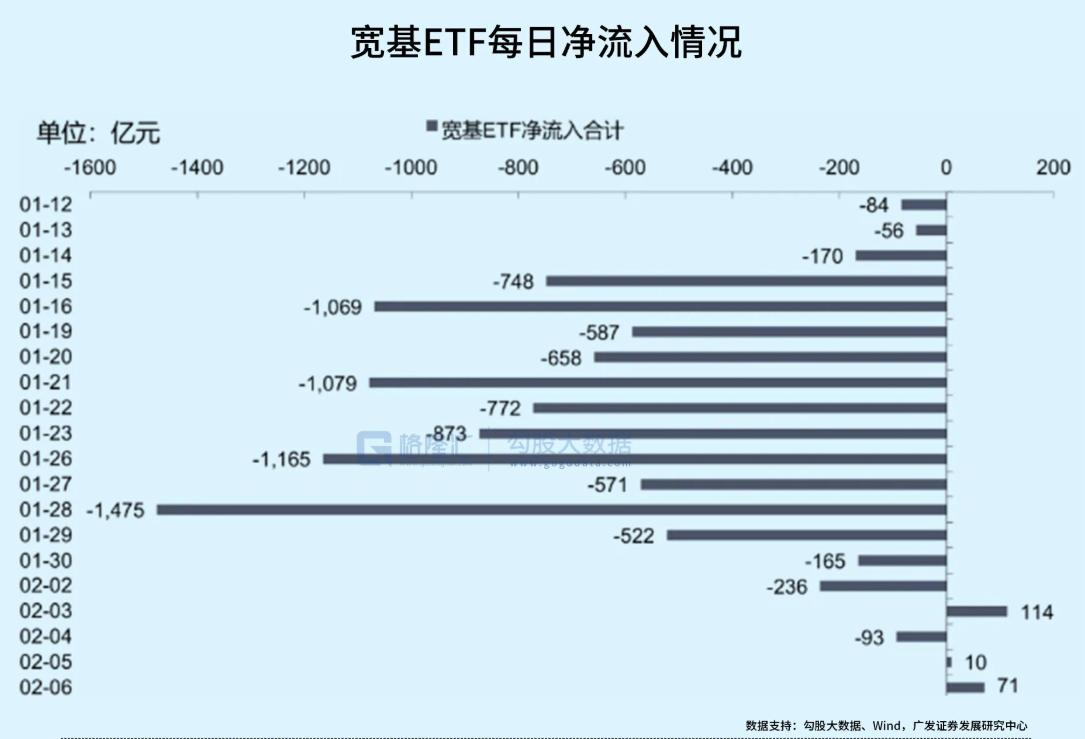
Core Viewpoint - The article discusses the investment strategies of "holding stocks during the festival" versus "holding cash during the festival," highlighting the significance of the Spring Festival on market dynamics and investor behavior [1]. Group 1: Market Trends and Performance - Historical data shows that the average return of the entire A-share market in the 10 trading days after the Spring Festival is 3.3%, while the average decline in the 10 trading days before is -1.3%, indicating a stronger post-festival performance [16][17]. - The trading volume in the A-share market has decreased to around 2.2 trillion yuan, with financing funds experiencing a net outflow for three consecutive weeks, consistent with the seasonal "calendar effect" before the Spring Festival [4][24]. - The market has shown a rebound this week, driven by AI catalysts, suggesting a prelude to the Spring Festival market dynamics [3][15]. Group 2: Investor Behavior and Sentiment - Investors tend to lock in profits and reduce positions before the long holiday due to cash withdrawal demands and uncertainties in overseas markets, leading to decreased trading volumes and increased market volatility [5][6]. - The sentiment among institutions remains optimistic regarding the post-festival market, as the recent adjustments present significant recovery opportunities [18][19]. - The recent adjustments have released some risks, and global assets, including Bitcoin and U.S. stocks, have shown signs of stabilization, indicating a gradual recovery in global risk appetite [12]. Group 3: Sector Performance and Opportunities - The recent adjustments in the market have led to a quick rotation among sectors, with notable performances in light communication, computing power chains, commercial aerospace, and cultural media [15]. - The AI sector has been a significant driver of market performance, with the recent launch of ByteDance's AI video generation model, Seedance 2.0, creating a surge in the media sector [30][36]. - The article emphasizes the potential for resource-based sectors, such as non-ferrous metals and chemicals, to recover significantly due to supply-demand fundamentals [43]. Group 4: Future Outlook - The upcoming macroeconomic data releases from both China and the U.S. are expected to provide insights into the improvement of the domestic economy and calibrate monetary policy expectations [19]. - The article suggests that the "Spring Rally" may continue into February and March, supported by ample liquidity and policy catalysts, encouraging investors to participate in the market [29][41].

机构称春节前后小盘风格有望占优,关注中证2000ETF易方达(159532)、中证500ETF易方达(510580)配置价值
Mei Ri Jing Ji Xin Wen· 2026-02-11 11:08
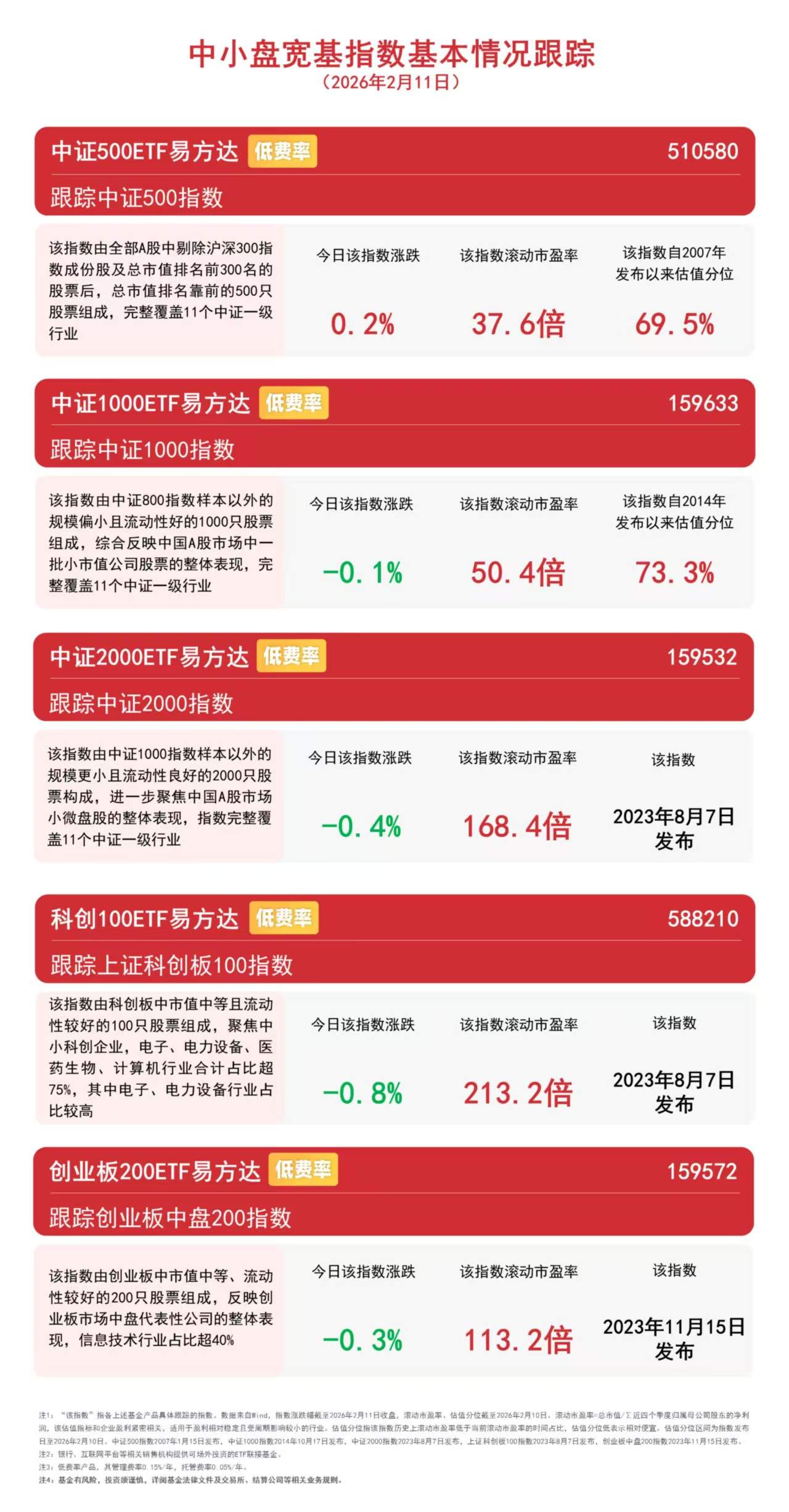
Group 1 - The core viewpoint is that A-shares are likely to experience a favorable upward trend in the next 1-2 months, driven by a combination of favorable timing, conditions, and human factors, particularly during the strong seasonal effect of spring and around the Chinese New Year [1] - The CSI 500 index rose by 0.2%, while the CSI 1000 index fell by 0.1%, the CSI 2000 index decreased by 0.4%, the STAR 100 index dropped by 0.8%, and the ChiNext Mid-cap 200 index declined by 0.3% [1] Group 2 - The CSI 500 ETF, which tracks the CSI 500 index, has a rolling price-to-earnings ratio of 37.6 times since its inception [3] - The CSI 1000 index, composed of 1,000 smaller and more liquid stocks, has a rolling price-to-earnings ratio of 50.4 times [4] - The CSI 2000 index, focusing on even smaller and more liquid stocks, has a rolling price-to-earnings ratio of 168.4 times since its launch [5]
历史数据复盘!本轮春季行情走到什么阶段了?
天天基金网· 2026-02-11 09:28
Core Viewpoint - The article discusses the current stage of the spring market rally in A-shares, highlighting the historical calendar effect that typically leads to a "spring surge" around the New Year and the "Two Sessions" period, with most years experiencing this phenomenon except for 2022 and 2015 [1][7]. Historical Data Analysis - Historical data shows that the spring market rally has an average duration of about 40 trading days, with an average increase of approximately 13.97% in the Shanghai Composite Index [7]. - The starting points of past spring rallies are somewhat dispersed, primarily occurring in December (5 times), January (7 times), and February (3 times) since 2010 [7]. Current Market Outlook - The current policy environment, fundamental expectations, and liquidity conditions supporting the spring rally have not fundamentally changed, suggesting a high probability of market recovery post-Spring Festival [7][8]. - Historical trends indicate that the spring rally could provide around 20% upside potential, with the current market still having room for further development [4][8]. Investment Strategy - The article suggests a short-term holding strategy during the holiday period, emphasizing the importance of focusing on high-probability stocks, particularly in sectors like power equipment, storage and semiconductor equipment, chemicals, engineering machinery, agriculture, and personal care [5][8]. - It is recommended to consider consumer and travel chains that benefit from the long holiday for potential low-cost investments [5]. Future Market Conditions - The next 1-2 months are expected to present favorable conditions for A-shares, with February and the period around the Spring Festival being historically the strongest for the "spring surge" effect, favoring small-cap stocks [4][8].