
智慧化

Search documents
用心用情化解“登记难”,3.5万户居民顺利领到不动产权证
Chang Jiang Ri Bao· 2025-12-02 00:35
Core Viewpoint - The article highlights the collaborative efforts of various departments in Wuhan to resolve long-standing issues related to real estate registration, ultimately benefiting residents and enhancing service efficiency [1][2][4]. Group 1: Real Estate Registration Challenges - Residents in Wuhan have faced difficulties in obtaining property certificates due to historical issues such as incomplete land use procedures and unpaid taxes by developers [1][2]. - The city has established a joint mechanism involving multiple departments to address 12 typical historical issues related to real estate registration [1]. Group 2: Solutions Implemented - Specific measures have been taken, such as replacing traditional acceptance processes with fire safety and quality assessments, and allowing owners to share the costs of obtaining certificates [1]. - In Han Yang District, a solution called "quantifying mortgage rights" was proposed to facilitate the issuance of property certificates, resulting in 228 certificates being successfully delivered to homeowners [2]. Group 3: Service Improvement Initiatives - The city has initiated a one-stop service for real estate registration, including dedicated service windows and specialized personnel to assist residents [3]. - Continuous innovation in service delivery has been emphasized, with services being brought directly to communities and special provisions for vulnerable groups [4]. Group 4: Impact and Achievements - As a result of these coordinated efforts, Wuhan has successfully assisted 35,000 households in obtaining property certificates this year [4].
高德与浙江文旅签署战略合作协议
Guan Cha Zhe Wang· 2025-12-01 07:14
Core Insights - Alibaba's Gaode signed a strategic cooperation framework agreement with Zhejiang's Cultural and Tourism Department to enhance the "Street Scanning List" initiative, aiming to promote high-quality development in Zhejiang's cultural tourism industry [1][2] - The collaboration will involve data sharing, joint promotions, and the creation of themed lists, including a "Hi Travel Street Scanning List" to guide tourism in Zhejiang [1] - The partnership marks the first strategic cooperation between Gaode's Street Scanning List and a provincial cultural tourism authority, highlighting a significant step towards digital and intelligent development in the industry [1] Group 1 - The agreement emphasizes principles of government guidance, market operation, resource sharing, and win-win cooperation in areas such as list co-construction and content operation [1] - Gaode will leverage its technological capabilities alongside authoritative data from Zhejiang's Cultural and Tourism Department to create diverse themed lists featuring local cuisine, attractions, and hotels [1] - The initiative aims to establish a new online promotional platform for Zhejiang's cultural tourism, enhancing the visibility of major attractions and museums [1] Group 2 - The Street Scanning List has become a new entry point for urban exploration, with over 70 million daily active users reported in October [2] - During the 2025 National Day holiday, Gaode is expected to bring over 20.76 million visitors to Zhejiang, with the Street Scanning List contributing 12.87 million [2] - Gaode plans to use the innovative practices from Zhejiang as a model for collaboration with other local governments nationwide, promoting standardized and intelligent development in the cultural tourism sector [2]
连云港:绿色低碳赋能智慧化工园区
Xin Hua Ri Bao· 2025-11-20 06:40
Core Viewpoint - Lianyungang has prioritized green and low-carbon development as a fundamental strategy to optimize ecological issues, focusing on carbon reduction, pollution reduction, greening, and growth [1] Group 1: Industrial Development - The industrial parks in Lianyungang are becoming crucial areas for expanding port functions and developing new strategic growth points [1] - The Xuwei New District has emerged as one of the seven major petrochemical industrial bases in the country, featuring a sophisticated water resource recycling system [1] Group 2: Environmental Initiatives - The intelligent water treatment center in Xuwei New District achieves a 70% wastewater recycling rate, with an annual reuse volume of 18 million cubic meters [1] - Xuwei New District has been recognized as a national "14th Five-Year" smart chemical park case, reflecting its commitment to smart construction and digital infrastructure [1] Group 3: Future Goals - During the "14th Five-Year" period, Xuwei New District is advancing plans for zero-carbon park construction, aiming to establish the world's first zero-carbon petrochemical park [1] - The district is part of the first batch of pilot industrial parks for collaborative innovation in pollution reduction and carbon reduction, as designated by the Ministry of Ecology and Environment [1]

中国物流如何“规模涨、成本降”?
Yang Shi Xin Wen Ke Hu Duan· 2025-11-01 10:12
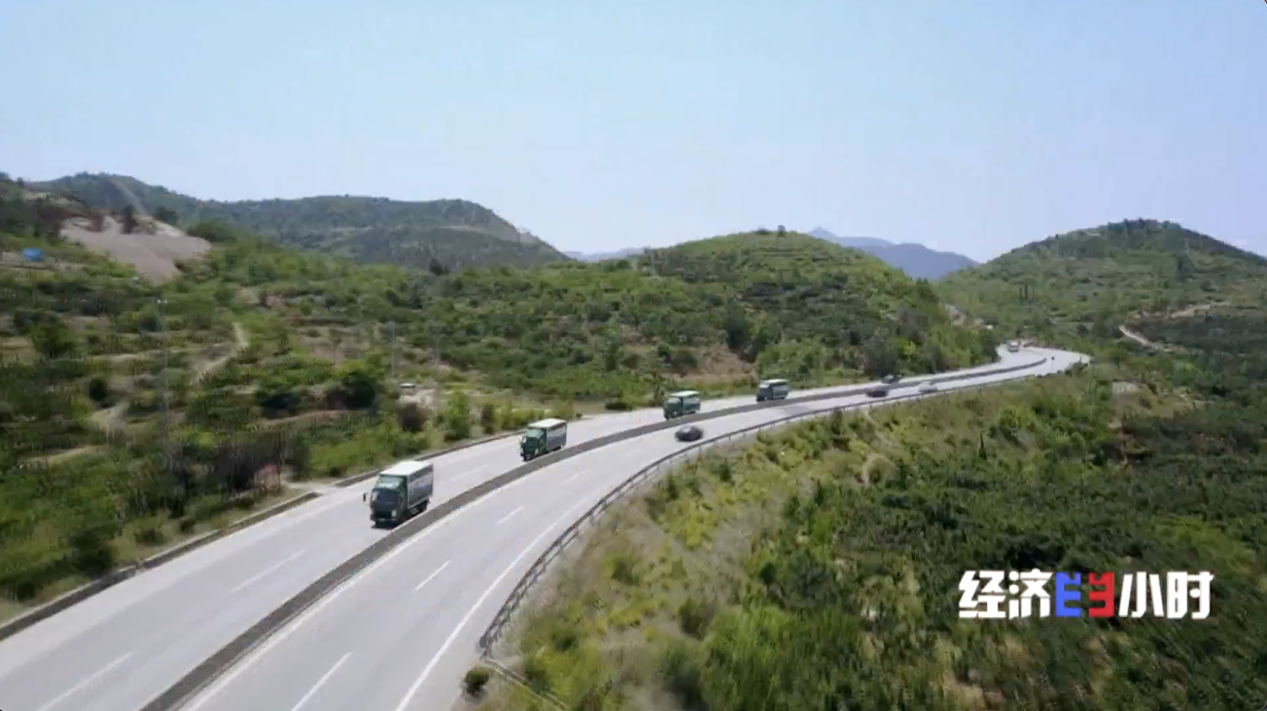
Core Insights - The total social logistics volume in China reached 263.2 trillion yuan in the first three quarters of 2025, marking a year-on-year growth of 5.4% [1] - The total logistics cost was 14.2 trillion yuan, with a GDP ratio of 14.0%, a slight decrease of 0.1 percentage points compared to the same period last year [1] Logistics Innovations - An international logistics company in Chongqing launched an intelligent booking system in collaboration with railway departments, enhancing international freight services along the New International Land-Sea Trade Corridor [3] - In March 2024, Chongqing customs and transportation companies shifted the cargo consolidation point from Shanghai to Chongqing, streamlining customs declaration and reducing storage costs [5] - A new rapid customs clearance method called "One Code Pass" allows foreign trade vessels to be identified and processed while still at sea, improving efficiency [7] Transportation Efficiency - The Yuzui Railway Freight Station in Chongqing has introduced specialized railcars for transporting automobiles, significantly increasing loading efficiency [7] - Chongqing produced 1.9308 million vehicles in the first three quarters of this year, ranking third among provinces in China, with most exports utilizing the New International Land-Sea Trade Corridor [9] Trade Corridor Development - The New International Land-Sea Trade Corridor is a vital trade route connecting western provinces of China with ASEAN countries, with Qinzhou Port being a key node [11] - In 2024, Qinzhou Port's cargo throughput exceeded 200 million tons, with container volume nearing 7 million TEUs, reflecting a 9.5% year-on-year growth in the first half of 2025 [11] Digital Transformation - The integration of smart and digital management systems is crucial for enhancing logistics efficiency, with real-time data sharing between customs, ports, and railways [13] - The implementation of a joint command smart control system at Qinzhou Port allows for online real-time monitoring of cargo, improving regulatory efficiency [14] Economic Impact - The New International Land-Sea Trade Corridor facilitated a record high import and export volume of 702.42 billion yuan in the first three quarters, representing a 17% year-on-year increase [16] - A fruit trading company reduced the spoilage rate of durians from approximately 40% to below 10% by leveraging the corridor's efficient transport conditions and advanced preservation technology [17] Logistics Industry Growth - A car import-export company in Chengdu has developed a mixed loading method for vehicles, significantly lowering transportation costs [19] - During the 14th Five-Year Plan period, China's logistics industry is expected to expand by approximately 4 trillion yuan, maintaining its position as the world's largest logistics market for the next decade [23]

重磅利好!9部门发布!
Zhong Guo Ji Jin Bao· 2025-10-16 04:16
Core Viewpoint - The action plan aims to promote the construction of new urban infrastructure that is digital, networked, and intelligent, enhancing urban risk prevention and governance capabilities by 2027 [1][4][6]. Group 1: Financing Mechanisms - Establish a diversified financing system led by government investment and supported by enterprise investment, encouraging local governments to strengthen policy guidance through reward and subsidy mechanisms [2][30]. - Support eligible projects to issue Real Estate Investment Trusts (REITs) in the infrastructure sector, while promoting market-oriented credit allocation by financial institutions without increasing local government hidden debts [2][30]. Group 2: Smart Urban Infrastructure - Implement action plans for the construction and renovation of smart municipal infrastructure, focusing on safety management and the integration of information technology [2][7]. - Promote the development of smart city infrastructure in conjunction with intelligent connected vehicles, enhancing urban travel environments and digital governance [2][8]. Group 3: Smart Residential Areas - Advance the construction of smart residential areas and community embedded service facilities, improving safety and management systems for residential buildings [3][10]. - Support the digital transformation of urban commercial areas and enhance the management of residential properties through smart technologies [3][10]. Group 4: Digital Home Development - Strengthen the construction of residential information infrastructure, promoting the installation of high-speed fiber networks and smart home products in both new and existing homes [3][11]. - Encourage the interconnectivity of digital home product platforms to enhance user experience and data security [3][11]. Group 5: Intelligent Construction and Industrialization - Foster the development of intelligent construction industry bases in cities, promoting the application of Building Information Modeling (BIM) technology across various infrastructure projects [3][12][18]. - Encourage the intelligent production and upgrading of construction components, integrating automation and innovative technologies [3][12][20]. Group 6: Urban Information Model (CIM) Platform - Build a comprehensive data resource system to enhance information sharing across urban planning, construction, and management sectors [3][13][22]. - Develop the CIM platform as a digital foundation for urban governance, facilitating multi-domain applications and risk assessments [3][13][24]. Group 7: Urban Operation Management - Promote a unified urban operation management service platform to enhance real-time monitoring and coordination of urban services [3][14][25]. - Establish a three-tiered platform system for urban operation management, ensuring data sharing and collaborative governance [3][14][26]. Group 8: Support Measures - Drive technological empowerment and talent cultivation in the new urban infrastructure sector, enhancing research and development capabilities [3][15][29]. - Strengthen data sharing and security measures to ensure the safe and efficient operation of urban infrastructure [3][15][31].
以数字化赋能基层治理创新
Jing Ji Ri Bao· 2025-10-15 22:12
Core Insights - Grassroots governance is identified as the cornerstone of national governance, a stabilizer for social development, and an accelerator for high-quality economic growth [1] - The integration of advanced technologies such as big data, cloud computing, blockchain, and artificial intelligence is being utilized to enhance grassroots governance and urban management [1][2] Group 1 - The key to digital empowerment in grassroots governance innovation is to awaken dormant data, facilitating data flow and breaking down information silos [1] - The State Council's opinion on strengthening grassroots governance emphasizes the integration of data resources and the establishment of comprehensive data collection at the village and community levels [1] - Local practices, such as Hangzhou's "One Table Pass" application, demonstrate the digitalization of governance, aiding in cost reduction and efficiency for enterprises [1] Group 2 - Digital technology aids in transitioning from a "one-size-fits-all" approach to a more precise service model, allowing services to proactively reach individuals [2] - Beijing's implementation opinion on modernizing grassroots governance aims to enhance the precision and intelligence of governance [2] - The establishment of an enterprise economic big data platform allows managers to observe economic dynamics and identify challenges faced by enterprises, providing data support for targeted interventions [2] Group 3 - Future improvements in grassroots digital governance should be demand-driven, empowering local communities with rights to call for services, evaluate, and supervise [2] - A three-tiered linkage system among districts, streets, and communities is proposed to efficiently address governance issues at the grassroots level [2] - Emphasizing party leadership is crucial for resolving grassroots governance challenges and establishing a responsive service mechanism for the public [2]
城市空间存量规划频谱发布,助推地方经济活化
Jing Ji Guan Cha Bao· 2025-10-11 09:45
Core Insights - The Ministry of Natural Resources has approved the "Guidelines for Optimizing Urban Stock Space Activation," marking a shift towards utilizing existing land rather than large-scale construction as China enters the "stock era" of urban development [1][3] - The guidelines provide a technical standard focused on stock activation, outlining principles and specific technical guidance for local governments to address challenges in stock governance [1][3] - The guidelines emphasize a layered and dynamic approach to land planning, allowing for flexibility and adjustments based on actual conditions, thereby enhancing operational elasticity in urban stock space activation [1][3] Policy and Economic Impact - Future policies are expected to include measures related to land use conversion, mixed-use development, flexible lease terms, and financial support to reduce the difficulty and cost of activating stock space [2] - There is significant economic value in underutilized industrial land, vacant commercial properties, and old residential areas, which can be transformed into effective investments and growth points for the economy [2] - In 2024, over 60,000 urban renewal projects are anticipated to be implemented, with an estimated investment of approximately 2.9 trillion yuan, stimulating growth in related industries such as building materials and smart devices [2] Environmental and Technological Focus - Stock activation promotes the renovation of existing buildings, which is a key strategy for carbon reduction by avoiding emissions associated with new construction [3] - The application of energy-efficient and low-carbon technologies, as well as smart city solutions, will enhance the efficiency and precision of stock space activation [3] - The release of the guidelines signifies a strong national push towards urban transformation in the stock era, addressing issues like land resource constraints and inefficient spatial structures [3][4] Challenges and Future Outlook - Despite challenges related to property rights, funding, planning, and social factors, the optimization of urban stock space is expected to yield significant economic, social, cultural, and ecological benefits [4] - The initiative is seen as a long-term strategy that will integrate various aspects of urban development, acting as a catalyst for future growth [4]
皇氏集团:以科技赋能生产 打造“智慧化、数字化”牧业
Zhong Zheng Wang· 2025-10-09 08:12
Core Insights - The dairy industry is transitioning from traditional production models to smart and digital transformations, with a focus on milk source quality control and production efficiency as core competitive factors [1] Group 1: Smart Farm Development - The company is establishing a comprehensive "cloud" farm management system that covers all aspects of dairy cow management and nutrition feeding, allowing technicians to monitor cow conditions in real-time [2] - A large-scale breeding base for water buffalo has been constructed in Anshun County, set to be operational in the second half of 2024, marking it as one of the largest and most intelligent breeding bases in China [2] - The Guizhou modern smart farm, with an investment of 130 million yuan, features over 7,000 sets of intelligent equipment, enabling precise feeding and breeding plans through data analysis [2] Group 2: National Production Network - The company emphasizes "quality first, innovation-driven" in its dairy processing plant construction, implementing smart manufacturing and digital transformation to enhance quality management [3] - The smart factory in Fuyang, Anhui, is recognized as a model for industrial 5.0 standards, enhancing production and quality management levels [3] - The Fuyang smart factory will become the largest water buffalo milk production base in East China, addressing regional capacity gaps and strengthening market competitiveness [3] Group 3: R&D Investment - In the first half of 2025, the company's R&D expenses amounted to 29.11 million yuan, representing 3.22% of total revenue, an increase of 0.32 percentage points from the first quarter of 2025 [4] - The company plans to continue increasing R&D investments to support the construction of smart farms and factories, driving high-quality development in the water buffalo industry [4]

探寻旅游消费新密钥 2025长三角慢生活旅游发展大会在安徽祁门举办
Sou Hu Cai Jing· 2025-10-02 21:33
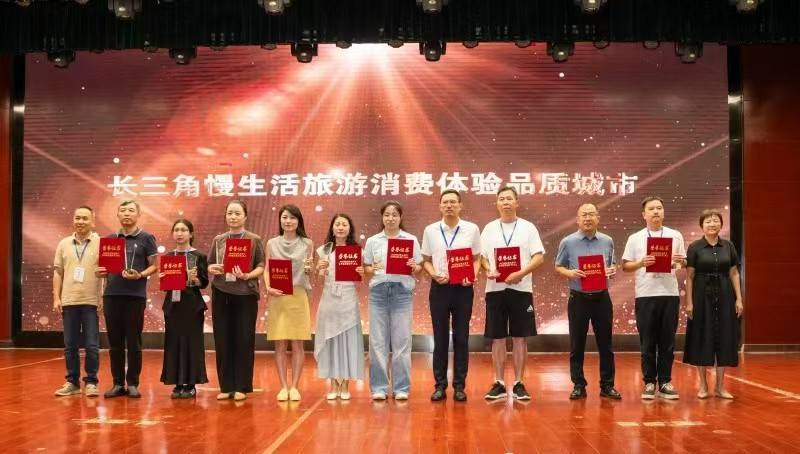
Core Insights - The 2025 Yangtze River Delta Slow Life Tourism Development Conference was held in Qimen County, Anhui, focusing on "exploring the keys to tourism consumption and promoting sustainable development" [1] - The conference released an honor list of "Yangtze River Delta Slow Life Tourism Consumption Experience Quality Destinations," with 60 units selected [1][8] - Experts discussed various topics, including enhancing tourism product quality, improving visitor satisfaction, and converting "flow" into "stay" to promote sustainable tourism development in the region [1][3] Policy and Market Trends - Since 2025, national policies have been introduced to boost cultural and tourism consumption, including 48 measures to support new business models like tourism trains and aerial tours [3] - The shift from traditional sightseeing to immersive experiences is highlighted, with "slow travel" becoming a key driver for tourism consumption potential [3] - The Yangtze River Delta region is experiencing new opportunities for deep integration of tourism and related industries, with innovative products and services emerging [3] Expert Insights and Strategies - Experts emphasized that "slow life" tourism should not equate to "slow service," advocating for smart technology as a crucial tool for enhancing visitor experiences and operational efficiency [5] - Various experts presented on topics such as the economic impact of quality tourism services and the integration of cultural and sports tourism for psychological healing [5][6] - Case studies from regions like Jiangsu's tourism areas showcased innovative practices in tourism integration and service enhancement [6] Regional Development and Initiatives - Qimen County was recognized as a "Quality Research Base" and is promoting "tea tourism" as a new development brand [8][10] - The county aims to develop four key areas: tea tourism integration, ecological health, cultural experiences, and outdoor activities, leveraging local projects to enhance its unique advantages [11] - The conference served as a platform for collaboration and knowledge sharing among cities in the Yangtze River Delta to explore new development paths in slow life tourism [11]
对话产业链大佬 - 详解AIDC液冷阀门
2025-09-04 14:36
Summary of AIDC Liquid Cooling Valve Conference Call Industry Overview - The conference focuses on the liquid cooling valve industry, particularly in the context of data centers and the impact of national carbon neutrality goals on the development of liquid cooling systems [1][2][3]. Key Points and Arguments - **Technological Advancements**: Data centers have shifted from air cooling to liquid cooling systems due to increased chip power and national carbon neutrality requirements. The technical specifications for liquid cooling valves have become more stringent, including the use of at least 304 stainless steel, zero leakage rates, adjustable ratios of 100:1, and specific control precision [2][4]. - **Price Trends**: The prices of liquid cooling valves have been on the rise, influenced by increased costs of materials such as steel and chips. For instance, the cost of flow and energy valves for data centers in China is expected to increase by 27% to 30% in 2024 [6][7]. - **Market Competition**: The liquid cooling valve market in China is highly competitive, with widespread price wars. The bidding process often favors the lowest price, leading to continuous price competition [23][24]. - **Future Demand**: The demand for liquid cooling valves is projected to grow significantly over the next 5 to 10 years, driven by the increasing number of data centers and the adoption of AI algorithms that require enhanced cooling capabilities [3][24]. Additional Important Insights - **Certification Standards**: There are different certification standards for domestic and international data centers. Domestic projects typically require certifications from Hefei or Tianjin, while European and American projects require C1 and UL certifications, respectively [12]. - **Customer Preferences**: When selecting suppliers for liquid cooling system valves, customers prioritize technology, service, and price. Brand recognition also plays a crucial role in the decision-making process [3][37]. - **Challenges for Domestic Brands**: Domestic companies face challenges in entering the liquid cooling valve market, including the need for recognition, certification costs, and meeting high technical standards [27]. - **After-Sales Service Importance**: After-sales service is critical in the valve industry, as valve failures can directly impact system operations. Companies are advised to provide prompt service to ensure customer satisfaction [14]. Conclusion The liquid cooling valve industry is poised for significant growth, driven by technological advancements and increasing demand from data centers. However, companies must navigate a competitive landscape characterized by price wars and stringent technical requirements.