
智能家居生态

Search documents
到2027年,我国将形成3个万亿级消费领域
Ren Min Wang· 2025-11-28 06:42
Core Viewpoint - The implementation plan aims to enhance the adaptability of supply and demand in consumer goods, targeting significant optimization of the supply structure by 2027, with the formation of three trillion-level consumption fields and ten hundred-billion-level consumption hotspots [1][2]. Group 1: Key Consumption Fields - The three trillion-level consumption fields identified include elderly products, smart connected vehicles, and consumer electronics [4]. - The elderly products market is projected to grow from 2.6 trillion yuan in 2014 to 5.4 trillion yuan by 2024, with a compound annual growth rate of 7.3%, highlighting the importance of the silver economy [4]. Group 2: Emerging Consumption Hotspots - The ten hundred-billion-level consumption hotspots encompass baby products, smart wearable devices, cosmetics, fitness equipment, outdoor products, pet food, civilian drones, trendy toys, jewelry, and national trend clothing, all showing strong growth momentum and development potential [4]. - The rise of health-conscious living and the concept of national fitness have led to increased demand for outdoor products and fitness equipment, while the IP economy aligns with the consumption preferences of younger demographics, driving the popularity of trendy toy products globally [4]. Group 3: Strategic Focus - The plan emphasizes supply-side structural reforms, accelerating brand leadership, standard upgrades, and the application of new technologies to stimulate the multiplier effect and structural dividends of China's vast domestic market [1][3]. - The multi-faceted and layered approach to consumption hotspots is expected to significantly enhance the resilience and vitality of the domestic consumption market, providing solid support for the construction of a new development pattern [3].
五部门发文:2027年形成3个万亿级、10个千亿消费领域!
DT新材料· 2025-11-27 16:05
Core Insights - The article discusses the implementation plan approved by the State Council to enhance the adaptability of consumer goods supply and demand, aiming for significant optimization of the supply structure by 2027, with the creation of three trillion-level consumption fields and ten hundred-billion-level consumption hotspots [1][2]. Group 1: Key Consumption Areas - The three trillion-level consumption fields identified include elderly products, smart connected vehicles, and consumer electronics. The market for elderly products is projected to grow from 2.6 trillion yuan in 2014 to 5.4 trillion yuan by 2024, with a compound annual growth rate of 7.3% [2]. - The ten hundred-billion-level consumption hotspots encompass baby products, smart wearable devices, cosmetics, fitness equipment, outdoor products, pet food and supplies, civilian drones, trendy toys, jewelry, and national trend clothing. These areas are showing strong growth momentum and significant development potential [2]. Group 2: Market Trends and Opportunities - The article highlights the dual approach of "stock optimization" and "incremental creation" to stimulate consumption. Stock optimization focuses on enhancing product quality and cultural elements, while incremental creation targets new products and services for emerging demographics and needs, such as smart home ecosystems and solutions for the aging population [1][2]. - The diversification and vitality of the consumption market are emphasized, with trends like health living and fitness driving demand for outdoor and fitness products, and the IP economy appealing to younger consumers through trendy products [2].


家纺货源群电商群,家纺电商供应链
Sou Hu Cai Jing· 2025-11-27 02:39
Core Insights - The home textile e-commerce industry is undergoing a transformation from traditional durable goods to experience-driven fast-moving consumer goods, reshaping product forms and the entire value chain [4] - Consumer behavior is shifting towards emotional consumption, where purchases are driven by psychological satisfaction rather than just functional needs [5] - The sleep economy is entering a precise era, with smart bedding systems enhancing customer loyalty and significantly increasing average transaction values [6] Group 1: Industry Transformation - The home textile industry is evolving into an experience-oriented sector, moving away from the traditional durable goods model [4] - The introduction of smart materials and technologies is revolutionizing product offerings, allowing for dynamic adjustments rather than static protection [8] - The shift from standardized production to personalized customization is becoming a key trend, with flexible manufacturing processes gaining traction [10] Group 2: Consumer Behavior - Emotional consumption is becoming a dominant trend, with consumers seeking products that provide psychological comfort [5] - The integration of color psychology into product design is emerging, with specific color combinations shown to alleviate anxiety and improve sleep [9] - Subscription-based services for home textiles are gaining popularity, particularly among high-end users, with acceptance rates reaching 42% [24] Group 3: Technological Advancements - The adoption of digital printing technology has significantly reduced costs for small batch customizations, enabling quicker market validation [12] - AI algorithms are being utilized to predict regional consumer preferences, leading to tailored product strategies [14] - AR/VR technologies are enhancing the shopping experience by allowing consumers to visualize products in virtual settings, resulting in improved conversion rates [17] Group 4: Market Dynamics - The competitive landscape is shifting from product-based competition to ecosystem-based competition, where comprehensive solutions are prioritized [21] - Home textile products are becoming crucial data entry points in smart home ecosystems, linking sleep data with other smart devices [22] - Cross-industry collaborations are emerging, blurring the lines between home textiles and health or beauty sectors, creating new market opportunities [25] Group 5: Future Challenges - The industry faces challenges related to data privacy, necessitating the establishment of transparent data usage rules and security systems [27] - The demand for agile supply chains is increasing, with digital supply chain management becoming a core competitive advantage [28] - There is a significant shortage of professionals who possess both home textile expertise and digital operational skills, which could hinder industry growth [29] Conclusion - The home textile e-commerce sector is transitioning from a transactional model to a lifestyle solution model, driven by a user experience-centric revolution that is fundamentally altering the industry landscape [30]
股东会开成“朋友会”!董明珠为何这么说?
新华网财经· 2025-11-25 06:18
Core Viewpoint - The article discusses the recent Gree Electric Appliances shareholder meeting, highlighting the company's strategic focus on international expansion, industrial equipment, and stable dividend policies, while showcasing a shift in management engagement with shareholders [1][2][10]. Group 1: International Expansion - The first focal point of the shareholder meeting was the company's international expansion strategy, particularly in emerging markets like Africa and Latin America [3]. - Gree's president, Zhang Wei, noted a significant shift in export structure, with self-owned brands now accounting for nearly 80% of exports, up from less than 30% [4]. - The company aims to enhance its brand presence in new markets, emphasizing that international expansion remains a critical growth area [4][6]. Group 2: Industrial Equipment and Smart Manufacturing - Gree Electric is advancing into the industrial equipment sector, which is viewed as an independent and essential segment rather than a mere extension of home appliances [7]. - The company has achieved notable breakthroughs in smart manufacturing, particularly with its five-axis gantry machining centers, which rank among the top three globally in the automotive parts processing sector [7]. - Gree aims for its industrial segment to exceed a scale of 100 billion yuan, utilizing a dual-channel approach of direct sales and agency partnerships [7][8]. Group 3: Dividend Policy - Gree Electric plans to distribute a cash dividend of 10 yuan per 10 shares, totaling 5.585 billion yuan for the 2025 mid-term profit distribution [10]. - Since its listing, Gree has distributed over 177.6 billion yuan in dividends, with more than 172.2 billion yuan distributed since 2012 [10][11]. - The company maintains a commitment to high and stable dividend trends, which is a key focus for shareholders [12]. Group 4: Management Engagement and Strategy - The shareholder meeting featured a more engaged management team, with Zhang Wei emphasizing the importance of showcasing the capabilities of different business leaders [2]. - Gree's chairman, Dong Mingzhu, highlighted the company's commitment to quality and the importance of maintaining a balance between product development and shareholder returns [15]. - The company is also undergoing a channel transformation to a flatter structure, allowing direct connections between end distributors and headquarters [13].


股东会开成“朋友会”!董明珠为何这么说?
Shang Hai Zheng Quan Bao· 2025-11-24 14:31
Core Viewpoint - Gree Electric Appliances held its second extraordinary shareholders' meeting for 2025, focusing on strategic discussions about its future growth, including international expansion and diversification into industrial equipment and smart ecosystems [1][3]. Group 1: Shareholder Meeting Highlights - The attendance at the meeting was relatively low, with only about 70 shareholders present, but the engagement level was high, with numerous questions directed at the management team [1]. - Chairman Dong Mingzhu emphasized the importance of showcasing the new management team and their responsibilities in various fields [3]. Group 2: International Expansion - Gree's international strategy has shifted from OEM to focusing on its own brand, with the proportion of self-owned brands in exports increasing from less than 30% to nearly 80% [4]. - The company aims to balance the development of self-owned brand channels in emerging markets, indicating that international expansion remains a key growth area [4][5]. Group 3: Industrial Equipment and Smart Ecosystems - Gree Electric is not only focusing on home appliances but is also making significant strides in the industrial equipment sector, with expectations for this segment to exceed 100 billion yuan [5]. - The company is utilizing a dual-channel approach of direct sales and agency models for its industrial products, leveraging existing home appliance channels for synergy [5]. Group 4: Dividend Policy - Gree plans to distribute a cash dividend of 10 yuan per 10 shares, totaling 5.585 billion yuan, continuing its trend of stable dividends [6]. - Since its listing, Gree has distributed over 177.6 billion yuan in dividends, with a significant portion occurring since 2012 [6][7]. - The company remains committed to maintaining a high and stable dividend policy, which is closely tied to its operational philosophy [7]. Group 5: Sales and Channel Reform - Gree's new sales initiative, "Dong Mingzhu Health Home," has seen over 1,000 stores opened since its launch, indicating a shift in sales strategy [8]. - The company is pursuing a flat channel reform to eliminate middle layers, allowing direct connections between end distributors and headquarters [8]. Group 6: Quality and Product Focus - Dong Mingzhu reiterated that Gree's international efforts are not just about products but also about enhancing the reputation of Chinese manufacturing, emphasizing quality over cost-cutting [9]. - The company believes that its success in various fields stems from its core technology in air conditioning, which has allowed it to expand into other areas like refrigeration and heating [10].

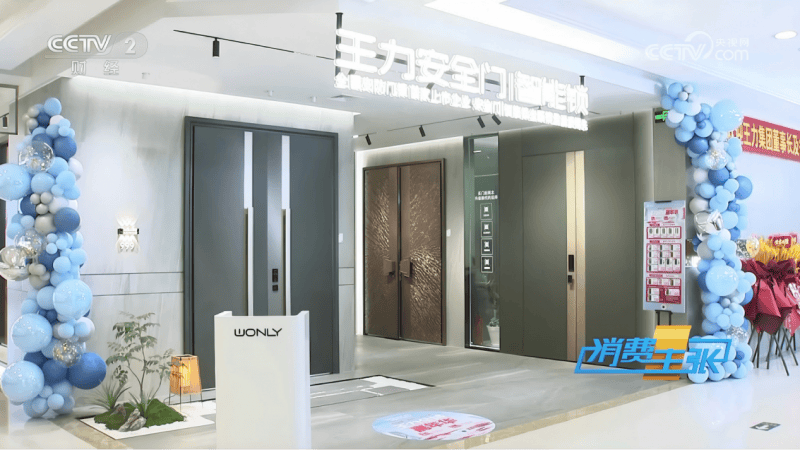
央视权威点赞!王力安防实力出圈,引领智能家居消费新风向
Sou Hu Cai Jing· 2025-11-12 10:46
Core Insights - The report highlights the growing consumer demand for high-quality home security products during the "Double Eleven" shopping season, focusing on the innovative capabilities of Wangli Security [1][8] - Wangli Security is positioned as a leader in the smart home industry, utilizing advanced technology to address consumer pain points and enhance the overall home experience [1][8] Consumer Trends - Consumers are increasingly seeking smart security doors that integrate multiple functions while ensuring basic safety, reflecting a shift in home security preferences [2][5] - Feedback from consumers indicates a desire for user-friendly designs, particularly for families with elderly members or children, while also expressing concerns about the responsiveness of smart locks [2][5] Technological Innovations - Wangli's X70 robot security door is notable for its unique feature of formaldehyde monitoring, providing 24-hour air quality surveillance and alerting users via a smart screen and mobile app when levels exceed safe limits [5][7] - The product also includes various smart functionalities such as remote opening, anti-pinch features, voice messaging, and weather updates, transforming the door from a passive barrier to an active participant in home management [5][7] Strategic Vision - Wangli Security aims to transition from "single product intelligence" to a "whole-house smart ecosystem," with the smart door serving as the entry point for a comprehensive smart home solution [5][7] - The company has developed the "Aiganzhen" whole-house smart system, which automates various home functions across multiple living spaces, enhancing user convenience and experience [5][7] Company Development - Wangli Security emphasizes research and development as its core competitive advantage, with significant investments in technology and a dedicated team to drive product innovation and market leadership [7][8] - The company has received recognition from national media, reinforcing its reputation and trust among consumers, and is committed to integrating cutting-edge technologies like AI and IoT into home security solutions [7][8]

科技大事件 丨 iPhone Air 2 被曝大幅推迟;95 岁「股神」巴菲特发表谢幕信
Sou Hu Cai Jing· 2025-11-11 06:15
Group 1: Apple iPhone Air 2 Delay - Apple has indefinitely postponed the release of the next-generation iPhone Air due to poor sales performance, with Foxconn dismantling most of the production lines while still hoping for a 2027 release [1][2] - The iPhone Air 2 was initially planned to launch in the fall alongside iPhone 18 Pro/Max and iPhone Fold, aiming to be lighter and equipped with a larger battery [2] - Although the project has been removed from the development schedule, some engineering teams and manufacturing partners continue to work on it, but no new release timeline has been provided, which is considered unprecedented [1][3] Group 2: Samsung SmartThings Update - Samsung has updated its iOS SmartThings app to support Siri shortcuts, enhancing the integration of Apple devices within its smart home ecosystem [4][5] - This update allows users to create personalized automation scenarios, such as "Good Morning" or "Leaving Home," which can be triggered via voice commands [5] Group 3: Xiaomi Automotive Sales - Xiaomi's automotive division reported retail sales of 48,654 vehicles in October, with the YU7 model selling 33,662 units, surpassing Tesla Model Y sales for the month [9][10] - The company aims to maintain a delivery volume exceeding 40,000 units by October 2025 [9] Group 4: Honor 400 Series Performance - Honor's 400 series has achieved global shipments exceeding 6 million units, with first-day sales up 195% compared to the 300 series and 138% compared to the 200 series [8][9] - The series has shown strong market performance, with overseas sales reaching 2-3 times that of its predecessor [9] Group 5: Warren Buffett's Philanthropic Actions - Warren Buffett has converted 1,800 shares of Class A stock into 2.7 million shares of Class B stock for donation to four family charitable foundations, valued at over $1.3 billion [10][11] - He announced that he will no longer write annual reports or speak extensively at shareholder meetings, indicating a shift in his engagement with the company [11] Group 6: NIO's Future Plans - NIO's CEO Li Bin confirmed that the Firefly model will have a larger battery pack in the future, expected to be at least 50% larger than the current version [14] - The Firefly model, launched in April, has already surpassed 20,000 units in deliveries within five months [14] Group 7: DJI Product Update - DJI is expected to release the Osmo Pocket 4 in December, a product that has not been updated for over two years [15][17] - The new camera may feature a 50-megapixel sensor and has entered beta testing, with some users currently evaluating its stability [17]


格力电器:公司重视产品智能化与用户体验提升
Zheng Quan Ri Bao Wang· 2025-09-26 08:11
Core Viewpoint - Gree Electric Appliances emphasizes the importance of product intelligence and user experience enhancement, aiming to build an open smart home ecosystem through its "Gree+" APP, which integrates various home appliances and third-party smart products [1] Group 1: Smart Home Ecosystem - The "Gree+" APP connects Gree's entire range of air conditioning, environmental appliances, kitchen appliances, and third-party products related to lighting, security, and entertainment [1] - Users can manage devices and control operations conveniently through voice interaction and room zoning management features [1] Group 2: Product Innovation and User Experience - The company is committed to meeting user needs through a diversified product matrix and technological innovation [1] - Continuous improvement of the smart product ecosystem and in-depth research on user experience are key focuses for the company [1] - The integration of intelligence with daily life scenarios is a priority for Gree Electric Appliances [1]
扫地机器人企业追觅跨界布局电视
WitsView睿智显示· 2025-09-06 01:12
Core Viewpoint - The Mini LED backlight television market is experiencing significant growth, with a projected shipment increase of 50% to 11.56 million units this year, driven by rising consumer demand and government subsidies for energy-efficient products [2]. Group 1: Market Overview - The Mini LED backlight television has become a popular choice in the TV market, supported by energy-saving standards that qualify for subsidies [2]. - The competitive landscape is intensifying, with major brands like TCL, Hisense, and Xiaomi actively promoting Mini LED products amid ongoing trade-in policies [6]. - A total of 43 new Mini LED products are expected to launch in 2025, indicating a robust market entry by various manufacturers [6]. Group 2: Company Developments - The company ZhiMi has entered the Mini LED television market, launching products such as the Aura V3000 Mini LED TV and X1 Ultra monitor [3][4]. - ZhiMi aims to leverage its existing user base and sales network, which includes 6,000 offline channels across over 100 countries, to support the promotion of its Mini LED televisions [4][10]. - The company has diversified its product offerings beyond cleaning appliances to include televisions, refrigerators, and other smart home devices, indicating a strategic move towards creating a comprehensive smart home ecosystem [4][10]. Group 3: Competitive Challenges - ZhiMi faces significant competition from established brands in the Mini LED television market, which may pose challenges in gaining market share [10]. - The maturity of the market suggests that consumer awareness is high, and ZhiMi must differentiate its products to attract attention [10]. - The simultaneous expansion into multiple product categories raises questions about ZhiMi's resource allocation and strategic focus [10].

大疆影石追觅 “三国杀”
Hu Xiu· 2025-09-01 10:32
Core Viewpoint - The drone industry, previously dominated by DJI, is expected to enter a competitive phase by 2025, characterized by a "multi-line melee" that will redefine the smart imaging and smart home ecosystems [1] Industry Summary - The past decade has seen DJI as the sole leader in the drone market, but the landscape is changing as multiple competitors emerge [1] - The competition will extend beyond just market share of individual products, indicating a shift towards a broader ecosystem approach in smart imaging and smart home technologies [1]