
止损

Search documents
贺博生:12.17黄金原油晚间行情涨跌趋势分析及美盘最新独家操作建议
Sou Hu Cai Jing· 2025-12-17 12:50
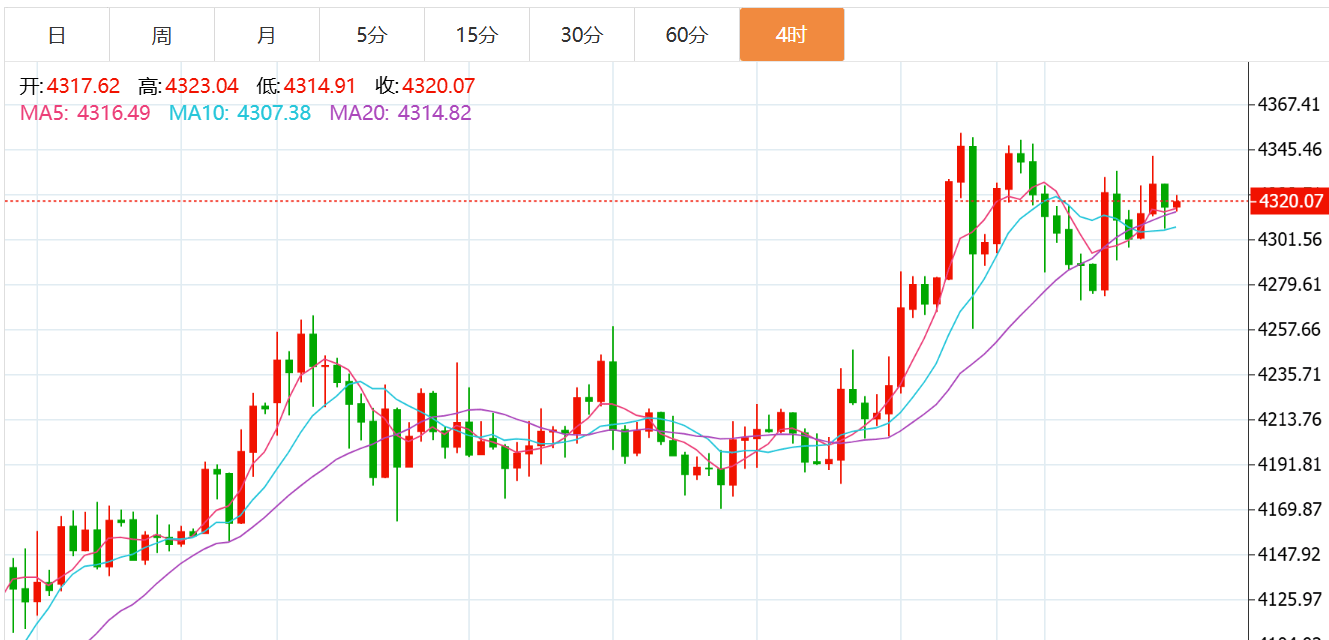
Group 1: Market Analysis - Gold prices have continued to rise, reaching a seven-week high and surpassing the $4,300 mark, driven by U.S. labor market data and Federal Reserve policy expectations [2][3] - The U.S. non-farm payrolls increased by 64,000 in November, slightly above the market expectation of 50,000, while the unemployment rate rose to 4.6% from 4.4% [2] - The average hourly wage growth has slowed, indicating a deceleration in wage increases, which supports the notion of potential interest rate cuts by the Federal Reserve in 2026 [2] Group 2: Technical Analysis of Gold - Gold experienced fluctuations, initially facing resistance at $4,320 and later rebounding to around $4,300, with a daily close forming a doji candlestick pattern [3] - The market sentiment showed signs of correction, suggesting a possible short-term adjustment, with key resistance levels at $4,355 and support around $4,300 [3][5] - The trading strategy for gold suggests focusing on buying on dips and selling on rebounds, with specific attention to the $4,350-$4,370 resistance and $4,300-$4,280 support levels [5] Group 3: Oil Market Analysis - International oil prices showed a slight rebound but failed to maintain strength, having broken key support levels, with Brent crude trading around $55.67 per barrel [6] - The market sentiment has turned bearish, with significant reductions in net long positions for Brent crude oil, indicating a shift towards a more negative outlook [6] - The technical indicators suggest a continued downward trend for oil prices, with a focus on resistance at $58.0-$59.0 and support at $55.0-$54.0 [7]

贺博生:12.15黄金原油最新行情价格涨跌趋势分析及今日多空操作建议
Sou Hu Cai Jing· 2025-12-15 05:38
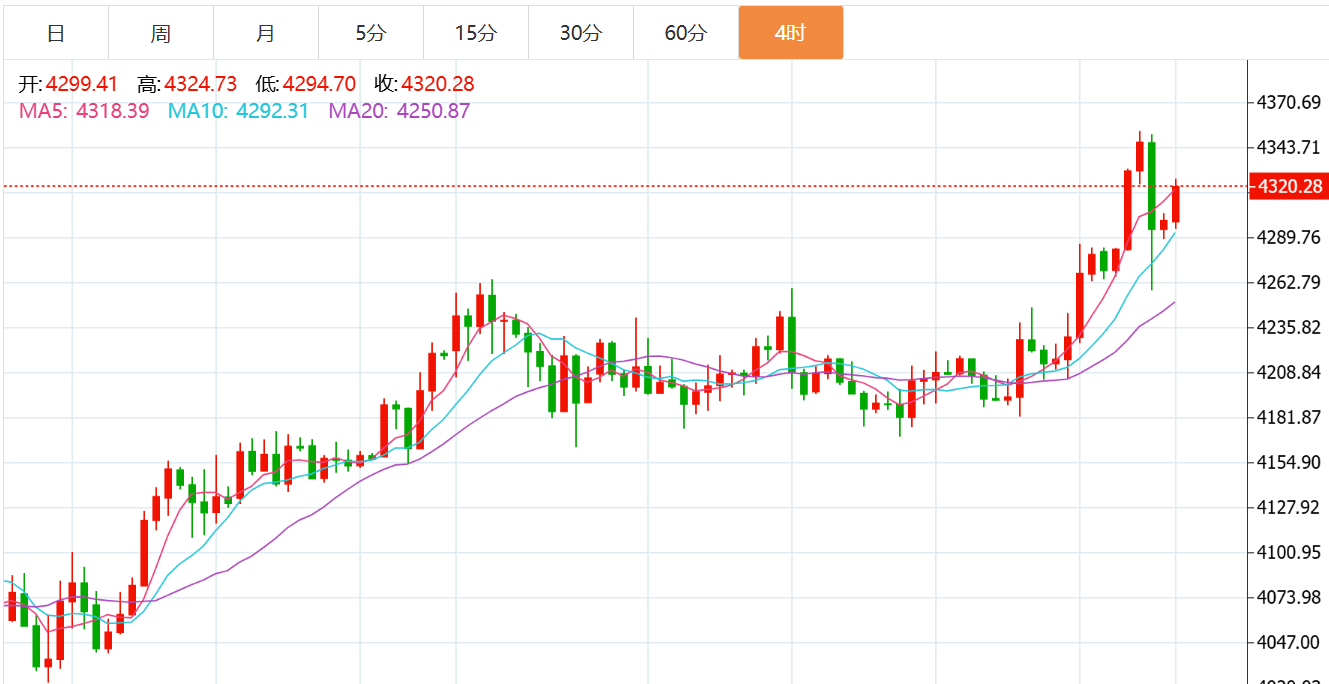
Group 1: Gold Market Analysis - The current price of spot gold is around $4319.17 per ounce, showing a slight upward trend despite the Federal Reserve's cautious stance on further rate cuts [2] - Investors anticipate two rate cuts next year, providing strong support for gold as a traditional safe-haven asset amid increasing global uncertainty [2] - Last week, spot gold rose by 0.48%, closing near $4300 per ounce, with an intraday high of $4353 per ounce, marking the highest level since October 21 [2] - The market's bullish sentiment is bolstered by the Fed's recent rate cut of 25 basis points, which has heightened expectations for a loose monetary policy [2] Group 2: Technical Analysis of Gold - Gold is expected to maintain a range-bound consolidation at the beginning of the week, with significant data releases scheduled, including U.S. non-farm payrolls and CPI data [3] - Previous price action showed gold facing resistance at the $4380 level, forming a "double top" bearish pattern before stabilizing around $3900 [3] - The current market structure suggests a "bullish flag" formation, indicating a strong foundation for future price increases [3] - Daily charts indicate a clear bullish trend, with gold prices successfully breaking above the previous consolidation range and maintaining above the $4200 level [5] - Short-term indicators show continued bullish momentum, with MACD and RSI supporting upward movement, suggesting further upside potential [5] Group 3: Oil Market Analysis - The price of U.S. crude oil is trading around $57.53 per barrel, with a weekly decline exceeding 4% due to concerns over global supply surplus and geopolitical tensions [6] - Both Brent and U.S. crude oil prices closed lower last week, with Brent settling at $61.12 per barrel and U.S. crude at $57.44 per barrel, reflecting ongoing bearish sentiment [6] Group 4: Technical Analysis of Oil - The daily chart indicates a minor consolidation phase for oil prices, testing the previous low around $56 [7] - The MACD indicator shows a lack of strong bearish momentum, but if the $56 support is broken, a downward trend may ensue [7] - Short-term price action is expected to remain within a narrow range of $56.80 to $58.10, with resistance at the upper boundary [7]
止损为盾 信仰作剑
Qi Huo Ri Bao Wang· 2025-12-08 01:33
Core Insights - The article highlights the success of a trader, Han Guo Xi, who won the championship in the options category of a national futures simulation trading competition, attributing his success to a strict risk management system centered around stop-loss strategies [1][2]. Group 1: Trading Philosophy and Strategy - Han Guo Xi emphasizes the importance of setting fixed stop-loss levels that are automatically executed by software, which prevents emotional decision-making during trading [2]. - His trading strategy is notably straightforward, focusing on buying call and put options, which reflects his understanding of the essence of options trading [2][3]. - He believes that macroeconomic factors driving the changes in underlying asset prices are fundamental to decision-making, rather than relying solely on lagging risk metrics like Delta and Gamma [3]. Group 2: Psychological Aspects of Trading - Han Guo Xi identifies the psychological pressure of real trading as a significant difference from simulation trading, which can lead to operational distortions [3]. - He advocates treating simulation trading with the same seriousness as real trading to enhance trading skills and discipline [3]. - His key takeaway from the competition is the importance of mastering probabilities and patterns, refining his trading system, and cultivating confidence, which he considers essential for success in trading [3].
自称“投机”的400多亿私募创始人,做了一场让价值投资者无比共鸣的分享……
聪明投资者· 2025-12-01 07:04
Core Viewpoint - The discussion emphasizes the importance of understanding the distinction between investment and speculation, highlighting that successful speculation requires a solid foundation in investment principles [5][11][97]. Group 1: Investment Philosophy - Honesty is crucial in investment, and one must respect facts and changing realities rather than relying solely on past research [6][7]. - Continuous research on each company is essential, with quarterly reports serving as opportunities to validate or refute investment judgments [7][62]. - The investment approach should be specific to each industry rather than making broad assumptions about the economy [8][75]. Group 2: Speculation Insights - Speculation is defined as earning returns based on price differences of the same stock at different times, while investment is about increasing a company's intrinsic value [26][28]. - Successful speculation requires understanding market emotions and the underlying value of companies, as market sentiment can significantly influence stock prices in the short term [34][36]. - The company adopts a strict stop-loss discipline, with a focus on controlling losses rather than proving investment judgments correct [46][91]. Group 3: Market Dynamics - The company believes that market emotions can often overshadow fundamental values, especially in the short term, making it essential to analyze historical price movements to gauge current sentiment [63][64]. - The approach to speculation involves being skeptical of both the market and oneself, maintaining a balance between confidence and doubt [41][44]. - The company emphasizes the need to adapt to changing market conditions and avoid rigid long-term commitments without ongoing evaluation [60][62]. Group 4: Risk Management - The company employs a diversified strategy across multiple markets and industries to mitigate risks, with strict loss limits in place [12][46]. - Understanding the cyclical nature of industries is vital, and the company focuses on short to medium-term changes rather than long-term predictions [87][88]. - The company’s stop-loss strategy is based on the ability to bear losses rather than subjective judgments about market conditions [91][92].

坚守“趋势为王”的交易之道
Qi Huo Ri Bao Wang· 2025-11-28 01:00
Core Insights - The key to success in the trading competition for Chengdu Kaipule Asset Management Co., Ltd. was not precise predictions but the inherent advantages of an institutional trend-following system [1][2] - The best-performing strategy this year was index arbitrage, focusing on long positions in the CSI 500 and CSI 1000 indices while shorting the SSE 50 index [2] Strategy and Performance - The trading strategy was designed to capture the upward trend in the A-share market while providing effective risk hedging [2] - The approach involved a systematic analysis of macroeconomic cycles, identifying benefiting or adversely affected asset classes, and continuously tracking key data [2][4] - The transition from subjective prediction to systematic trend-following has led to significant improvements in trading performance [4] Risk Management - Emphasis on stop-loss mechanisms as a critical aspect of trading, including hard stop-loss orders and proactive exit strategies when market movements deviate from expectations [6] - The importance of capital management, including profit withdrawal to reset risk levels and a "anti-fragile" system design to safeguard profits during extreme market conditions [6] - Position management strategies include calculating position sizes based on maximum risk exposure and adjusting positions based on market changes [6] Personal Development and Philosophy - The trading journey has been characterized by exploration, setbacks, and transformation, leading to a refined trading philosophy [3][5] - The trader's unique emotional management approach focuses on allowing emotions to be managed through a behavioral system rather than confronting them directly [5] - The recognition of trading as a form of self-discovery, where understanding personal emotions like greed and fear contributes to long-term growth [6]
止损是保住本金的最后一道防线
Qi Huo Ri Bao Wang· 2025-11-19 01:04
Core Insights - The article highlights the success of Wang Ran, a trader who emerged as the sixth place winner in the national futures trading competition, emphasizing his emotional stability and experience in trading [1] Group 1: Key Factors for Success - Risk management and decisive action during critical moments were identified as the two main pillars of Wang Ran's success in the competition [2] - Wang Ran's strategy involved a combination of fundamental and technical analysis, where fundamentals set the direction, technicals determine entry points, and drawdown rates establish stop-loss levels [3] Group 2: Trading Philosophy and Experience - Wang Ran's trading journey was marked by challenges, including significant losses during the 2008 soybean oil market, which taught him the principle of market reversals [4] - His trading philosophy emphasizes the importance of risk control, with strict discipline in managing exposure, ensuring that each trade only risks 1-3% of the total capital [4]
股指期货什么时候重仓或者轻仓?
Sou Hu Cai Jing· 2025-11-18 15:01
Group 1 - The trading strategy significantly influences the position size, with short-term trading allowing for better prediction of market movements compared to long-term trading [2] - Key entry timing is crucial, accounting for at least half of the overall trading success, especially when entering with large positions [3] - In heavy trading, it is essential to execute stop-loss orders decisively to avoid deep losses, as heavy positions do not provide the same cushion as lighter ones [5] Group 2 - It is advisable to maintain a light position under normal circumstances and only increase to a heavy position when key signals arise, with 30% being considered a heavy position in futures trading [6] - Common trading mistakes often stem from holding onto losing positions rather than the act of trading heavily; many traders fail not because of heavy positions but due to holding against market trends [7] - The ability to add to positions in a favorable market context is more likely to yield profits, emphasizing the importance of recognizing and acting on key opportunities [7]

趋势为舵 自律为锚
Qi Huo Ri Bao Wang· 2025-11-11 01:07
Core Insights - The article highlights the success of a trader, Pu Yuhan, who excelled in the 12th Global Derivatives Trading Competition through a disciplined approach focused on trend-following and light position management [1][2]. Group 1: Trading Strategy - Pu Yuhan attributes her success to a mechanical execution of a "trend + light position" system, emphasizing that there are no "eureka moments" in trading [1]. - The key to her performance was a position in A50 index futures, which she entered after analyzing macro policy signals and market sentiment, predicting a bullish trend [1]. - During market fluctuations, she maintained composure due to her light position strategy, which kept volatility within manageable limits [1]. Group 2: Market Environment - The current market environment is favorable for trend-following strategies, with the A50 index reflecting macroeconomic conditions and benefiting from dual drivers of policy expectations and fundamental recovery [2]. - Pu Yuhan has shifted her focus from frequent trading to concentrating on major trends, believing that patience in holding positions is more effective than chasing short-term fluctuations [2]. Group 3: Trading Philosophy - Pu Yuhan's trading philosophy centers on the concept of a "prolonged battle," emphasizing that long-term survival in the market leads to compounding benefits [2]. - She views trading as a marathon requiring patience and perseverance, with a mindset shift from seeking quick profits to pursuing stable long-term returns being crucial [2]. Group 4: Risk Management - Pu Yuhan considers "stop-loss" as a lifeline, always pre-setting stop-loss levels to protect her account from significant losses [3]. - She emphasizes the importance of "profit withdrawal" in risk management, which helps dilute risks and allows for a more composed trading mindset [3]. - Adhering to a "pyramid scaling" principle, she starts with light positions and only increases her stake when market trends are confirmed, maintaining strict limits on total position size [3]. Group 5: Advice for New Traders - Pu Yuhan advises new traders to practice with "money they can afford to lose" and to focus on survival in the initial years rather than seeking quick wealth [3].
不投资也是一种下注:你在重仓做空未来,这才是人生最大的冒险
雪球· 2025-11-06 13:00
Core Viewpoint - The article emphasizes the importance of participating in stock market investments as a means of asset allocation and personal growth, suggesting that early involvement can lead to better learning experiences and financial outcomes [3][10][22]. Investment Philosophy - The stock market is portrayed as a necessary arena for asset allocation, where holding only cash equates to betting against future economic growth [5]. - Real estate investment, particularly through high leverage, is framed as a long-term bet on regional prosperity and population inflow [6]. - Continuous education and skill acquisition are discussed as investments that may depreciate over time, highlighting the risks of relying solely on a single skill [7][8]. Learning Through Experience - The article argues that engaging in stock market trading enhances cognitive and analytical skills, allowing individuals to better navigate societal scams and emotional manipulations [8][9]. - It posits that financial market investment serves as a rapid path to personal development and understanding of the complex interplay of economic, political, and social factors [9]. Importance of Early Involvement - Early participation in the stock market is encouraged, as the cost of mistakes is lower when financial stakes are smaller [10][11]. - The analogy of children learning to walk is used to illustrate that early failures lead to quicker recovery and learning [10]. Feedback and Adaptation - Successful investment is linked to the ability to learn from failures and adapt strategies accordingly, emphasizing the importance of feedback in the learning process [12][13]. - The article warns against the pitfalls of not utilizing past experiences, comparing it to a robot learning to walk through trial and error [14]. Resilience and Growth - The narrative stresses that resilience in the face of setbacks is crucial for personal and professional growth, with a focus on maintaining a positive attitude during challenges [18]. - It highlights that true strength is demonstrated by how one responds to adversity, rather than merely achieving success [18]. Experience vs. Talent - The article contrasts fields where youthful talent thrives, such as mathematics and programming, with those where experience is paramount, like law and management [19][20]. - It concludes that trading is an experience-based field where understanding risk and managing investments is critical for long-term success [22]. Asset Allocation Strategy - The "雪球三分法" (Snowball Three-Part Method) is introduced as a strategy for asset allocation, advocating for diversification across assets, markets, and time to optimize returns and manage risks [24][25]. - This method aims to achieve a balanced investment portfolio that can withstand market fluctuations and provide long-term growth [25].

真正的智慧在于“应对”
Qi Huo Ri Bao Wang· 2025-10-31 01:07
Core Insights - The article highlights the journey of a trader, Gao Miao, who emphasizes the importance of self-reflection, connection with peers, and self-awareness in trading success [1][2][3] Trading Philosophy - Gao Miao believes that the core of his success lies not in pinpointing exact entry points but in holding onto profitable positions [1] - He uses valuation as a key reference for trading decisions, focusing on whether a commodity is overvalued or undervalued, and then applying technical analysis for entry and exit points [1] Lessons from Failure - Gao Miao experienced a significant loss of 3 million yuan due to a misguided short position on soda ash, which he attributed to his unwillingness to acknowledge mistakes [2] - This failure prompted a deep self-analysis and led to the establishment of a new trading system that includes mandatory stop-loss orders and a focus on position management [2] Trading System Evolution - Gao Miao's trading system continues to evolve, but he adheres to two fundamental principles: thorough research and maintaining composure amidst external distractions, and setting stop-loss orders upon opening positions [3] - He emphasizes the importance of position management as a means to control losses and maintain a balanced mindset [3] Future Aspirations - Gao Miao views his recent award as a new and challenging beginning, motivating him to aim for better drawdown control and sustainable account growth towards financial freedom [3] - He believes that true wisdom in trading lies in the ability to respond to market changes rather than attempting to predict them [3] Advice for New Traders - Gao Miao advises new traders to respect the market and trade with light positions [4]