
气候融资

Search documents
对话联合国绿色气候基金首席投资官:破解中小企业气候融资困局,构建包容发展新生态
Xin Lang Cai Jing· 2025-12-11 02:32
登录新浪财经APP 搜索【信披】查看更多考评等级 当前,全球气候行动正从承诺向落地深化,在ESG投资理念逐步普及、各国国家自主贡献(NDCs)目 标加速推进的背景下,联合国绿色气候基金(Green Climate Fund, 简称GCF)作为全球重要的多边气候 融资机制,正通过资金催化与伙伴协作助力全球低碳转型。但当前气候融资领域仍面临诸多阻碍:ESG 被部分地区过度政治化、中小企业减碳融资门槛高、最脆弱群体及社区的气候项目易被忽视,这些问题 如何破解?绿色气候基金在撬动私营部门参与、支持发展中国家气候项目上已取得哪些切实成效?针对 气候项目中"短期成本压力"与"长期可持续影响"的核心矛盾,绿色气候基金的资助模式又具备哪些创新 优势?近日,新浪财经对话联合国绿色气候基金首席投资官亨利·冈萨雷斯(Henry Gonzalez),共同深 入探讨全球气候融资的现实瓶颈与突破路径,以及绿色气候基金如何为各国气候行动提供兼具资金支持 与系统性解决方案。 Gonzalez 联合国绿色气候基金首席投资官Henry 以下为对话实录: Q:我们了解到您在可持续发展与影响力投资领域拥有超过25年的专业经验,在ESG及影响力投资领 ...


气候大会风向变化:谈判进展缓慢,绿色产业影响凸显
Xin Lang Cai Jing· 2025-12-10 03:52
Core Insights - COP30, held in Belém, Brazil, marked the tenth anniversary of the Paris Agreement, but achieved only symbolic progress on key issues, failing to meet the expectations of climate-vulnerable countries for stronger climate action [3][23] - The focus of global climate governance is shifting from multilateral political consultations to economic and industrial decision-making, highlighting the importance of translating international consensus into domestic policies and investment actions [3][23] - Despite the absence of the United States, China and the European Union reached a high-level joint statement, demonstrating their commitment to advancing the Paris Agreement through dialogue and cooperation [3][23] Multilateral Dialogue in Climate and Trade - Trade issues were formally included in the climate conference discussions, with a consensus reached to establish the "Climate-Trade Comprehensive Forum" (IFCCT) to address carbon border measures and low-carbon product standards [4][24] - The forum aims to provide a communication channel rather than establish unified rules, potentially easing policy friction amid increasing fragmentation of global standards [4][24] - The inclusion of trade in climate negotiations is seen as a significant breakthrough, reflecting the integration of climate and economic issues [5][25] China's Growing Influence - China's presence at COP30 was prominent, with a central exhibition area attracting significant attention and participation from various countries, showcasing its climate actions and low-carbon technologies [7][27] - The country is increasingly taking on a coordinating role among developing nations, moving beyond a unified stance with the G77 group to facilitate consensus on key issues [11][31] - China's new Nationally Determined Contributions (NDC) target aims for significant reductions in greenhouse gas emissions and an increase in the share of non-fossil energy by 2035 [9][29] Climate Financing - COP30 emphasized the need for a financing roadmap of $1.3 trillion and a minimum of $300 billion from developed countries to support climate action in developing nations [16][36] - The conference highlighted the challenges posed by the absence of U.S. funding commitments, which has created a significant gap in climate financing that cannot be filled by other countries alone [17][37] - The decision to establish a two-year work program on climate financing reflects ongoing difficulties in advancing funding mechanisms, particularly for adaptation efforts, which are currently underfunded [18][39]

COP30峰会无果而终
Zhong Guo Hua Gong Bao· 2025-11-28 03:09
Core Insights - The COP30 climate conference in Belem, Brazil, ended without consensus on a fossil fuel transition roadmap, disappointing climate activists and highlighting ongoing divisions among nearly 200 participating countries [2][3] - The final communiqué of the summit did not mention "fossil fuels," marking a significant setback in global warming response efforts [2][3] - The conference acknowledged the failure to meet the 1.5°C temperature control target set by the Paris Agreement, with projections indicating a potential rise of 2.6°C to 3.1°C by 2100 if current trends continue [2][6] Fossil Fuel Transition Roadmap - Over 80 countries, including Colombia, the UK, Germany, and Kenya, supported the creation of a formal fossil fuel transition roadmap prior to the conference [3] - The initiative faced strong opposition from major oil-producing countries led by Saudi Arabia, resulting in its rejection [3] - The absence of the strong language regarding the "phasing out of fossil fuels" from the previous COP28 summit was noted as a significant regression [3] Climate Financing Gaps - Developed countries pledged to double "adaptation funding" by 2035, with a target of $300 billion, of which approximately $120 billion is allocated for the most vulnerable nations [4] - This timeline is five years later than what developing countries requested, and the total amount falls short of the thousands of billions needed by countries most affected by climate change [4] - The voices of island nations, which are at risk of being submerged, were overshadowed by larger countries with fossil fuel interests [4] Shift from Prevention to Adaptation - COP30 marked a notable shift in focus from "prevention" of climate change to "adaptation" to its impacts, acknowledging the failure to meet the 1.5°C target [5][6] - The conference recognized that future efforts would need to concentrate on mitigating the damage from climate change rather than preventing it [5][6] Overall Conference Outcomes - COP30 continued the trend of recent climate summits failing to achieve significant progress, with increasing divisions among countries [6] - Criticism was directed at the lack of actionable outcomes, with calls for concrete results rather than vague roadmaps [3][6] - Experts emphasized that without progress on fossil fuel phase-out, achievements in other areas like forest protection and adaptation funding would lack significance [6]
绿色转型 钱从何来?
Jin Rong Shi Bao· 2025-11-25 01:09
Core Insights - The COP30 conference in Brazil focuses on financing for climate action, particularly for developing countries facing significant funding gaps for emission reduction projects [1][2] - Developed countries have historically fallen short of their climate financing commitments, with only about $116 billion provided by 2022, far below the promised $100 billion annually [1][2] - The new collective quantified goal (NCQG) aims to increase annual climate financing from developed countries to at least $300 billion by 2035, with a total target of $1.3 trillion for climate financing [2][3] Funding Gaps and Challenges - Developing countries need to achieve at least 8% emission reductions by 2030, but face substantial funding shortages for large-scale projects and adaptation infrastructure [1] - The current annual funding gap is estimated to be in the hundreds of billions, necessitating a multi-faceted approach to fill this gap [3][4] Diversification of Funding Sources - Public funding remains a critical support, with bilateral public climate financing expected to grow from $43.4 billion in 2022 to $50 billion by 2025 [4] - To meet the $90 billion public funding target by 2035, a 6% annual growth rate is required, alongside an increase in private financing [4] Activation of Private Capital - Engaging private capital is seen as essential for addressing funding gaps, particularly for small and medium-sized emission reduction projects [5][6] - Recommendations include establishing demand aggregation platforms and standardizing data to overcome investment barriers [5] Focus on Vulnerable Regions - Special attention is needed for climate-vulnerable regions, such as parts of Africa and small island nations, which face severe climate risks [6] - Funding should prioritize urgent projects like agricultural improvements and protective infrastructure to enhance climate resilience [6] Recommendations for Funding Mechanisms - Experts suggest increasing the proportion of grants and reducing loans to avoid exacerbating debt burdens in developing countries [6] - Establishing dedicated international institutions for fund allocation and management is recommended to ensure efficient and compliant use of resources [6]
为应对气候变化注入信心与动力(国际视点)
Ren Min Ri Bao· 2025-11-24 22:31
Core Points - The COP30 conference concluded in Belem, Brazil, with a political document titled "Global Mobilization and Collaborative Action to Address Climate Change Challenges," demonstrating a commitment to green and low-carbon transformation [1][2] - The conference emphasized the importance of international cooperation in climate action, releasing a report with 117 "Accelerated Solutions Plans" across six key themes [2][3] - A significant outcome was the commitment from developed countries to double climate adaptation funding for developing nations by 2025 compared to 2019 levels, with a further doubling by 2035 [2][4] Group 1 - The final political document of COP30 provides specific pathways for the implementation of the Paris Agreement, focusing on mitigation, adaptation, climate financing, and international cooperation [2][4] - The conference established 59 "Global Adaptation Goal Indicators" to create a more diverse climate action assessment system, moving beyond traditional carbon emission metrics [3] - The conference highlighted the need for a $1 trillion investment in clean energy and grid infrastructure, which is expected to inject new momentum into the global economy and improve the quality of life for millions [3][6] Group 2 - Over 120 countries have submitted new national contributions, with 194 parties recognizing the core role of the Paris Agreement and committing to accelerate action [4][5] - The inclusion of trade issues in the conference outcomes emphasizes the need for sustainable development in developing countries, avoiding unilateral actions that create trade discrimination [5] - China's initiatives at COP30, including the launch of a carbon trading market alliance and a flagship project for South-South cooperation, received widespread international acclaim [6][7] Group 3 - China's achievements in green and low-carbon transformation are notable, with wind and solar power capacity exceeding 1.69 billion kilowatts, three times that of 2020 [7] - The emphasis on multilateralism and the principle of common but differentiated responsibilities was reinforced, with mechanisms established to oppose unilateral measures [7][8] - China's leadership in renewable energy and its commitment to sustainable development are recognized as vital contributions to global climate governance [8]
国际观察丨COP30凝聚全球共识 应对气候变化迈入新阶段
Xin Hua She· 2025-11-24 00:40
Core Points - The COP30 conference concluded successfully, emphasizing the global consensus on the Paris Agreement and the irreversible trend towards green transformation [1][3][4] Group 1: Conference Outcomes - COP30 adopted the significant political document titled "Global Mobilization for Collaborative Action on Climate Change Challenges," addressing key issues such as climate change mitigation, adaptation, financing, and international cooperation [3] - Developed countries are urged to double their adaptation funding to developing nations by 2025 compared to 2019 levels, with a further doubling by 2035 [3] - For the first time, trade issues were included in the conference outcomes, highlighting the need to avoid unilateral actions that create unfair trade discrimination against developing countries [3][4] Group 2: Global Support and Reactions - The outcomes received support from various parties, including the Alliance of Small Island States, which acknowledged the progress made despite imperfections [4] - The representative of the least developed countries expressed satisfaction with the commitment to increase adaptation funding for developing nations by 2035, emphasizing support for vulnerable populations [4] Group 3: Political Context and Implications - This conference marked the first absence of the U.S. federal government since the inception of the UN climate change conferences in 1995, reflecting a significant shift in global climate diplomacy [3][8] - The conference showcased a strong political will among parties to unite against climate change, indicating a global trend towards low-emission and climate-resilient societies [7][8] Group 4: China's Role - China played a pivotal role in advocating for the interests of developing countries, emphasizing the principle of common but differentiated responsibilities and opposing unilateral measures [9] - The country has signed numerous cooperation agreements with developing nations, implementing over 300 capacity-building projects to support climate change initiatives [9][10]
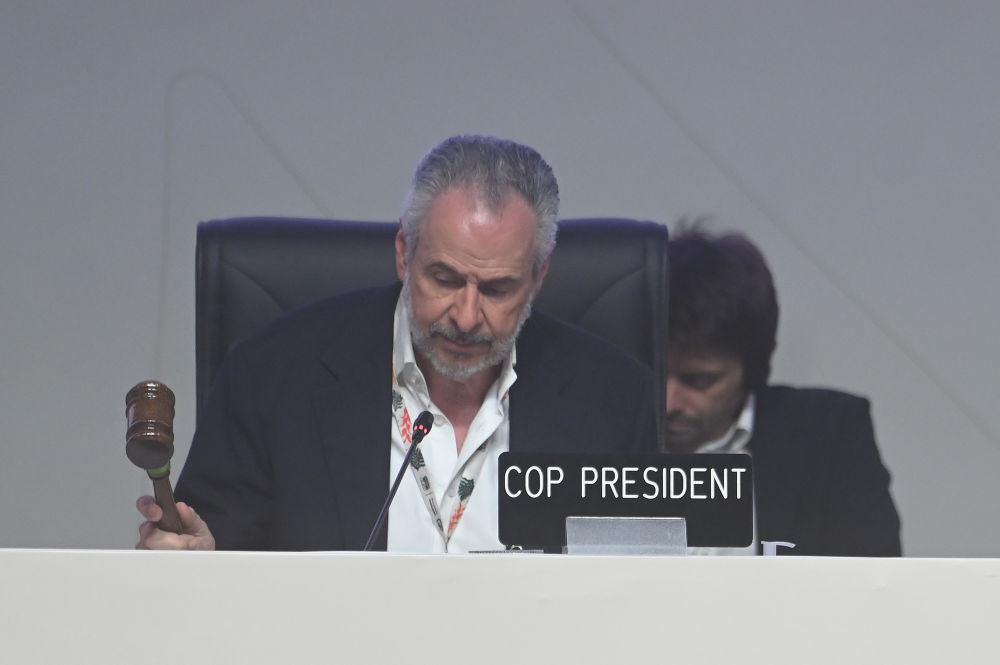
国际观察丨COP30凝聚全球共识 应对气候变化迈入新阶段
Xin Hua She· 2025-11-24 00:07
Core Points - The COP30 conference concluded with significant agreements, emphasizing the global consensus on the Paris Agreement and the irreversible trend towards green transformation [1][3][4] Group 1: Conference Outcomes - The conference adopted the political document "Global Mobilization: United Cooperation to Address Climate Change Challenges," which includes commitments on climate financing and international cooperation [3] - Developed countries are required to double their climate adaptation funding to developing countries by 2025 compared to 2019 levels, with a further doubling by 2035 [3] - For the first time, trade issues were included in the conference outcomes, stressing the need to avoid unilateral actions that create unfair trade discrimination against developing countries [3] Group 2: Global Support and Reactions - The outcomes received support from various groups, including the Alliance of Small Island States, which acknowledged the progress made despite imperfections [4] - The representative of the least developed countries expressed satisfaction with the commitment to increase adaptation funding for developing countries by 2035, highlighting the support for vulnerable populations [4] Group 3: Political Context and Implications - The absence of the U.S. federal government at the conference marked a significant shift, as it was the first time since 1995 that the U.S. did not send high-level representatives [7] - The conference showcased a strong political will among parties to unite against climate change, reflecting a global trend towards low-carbon and climate-resilient societies [7][8] - The conference's success was framed as a victory for science and multilateralism, indicating a collective desire to combat climate change despite geopolitical tensions [7][8] Group 4: China's Role - China played a pivotal role in advocating for the interests of developing countries, emphasizing the principle of common but differentiated responsibilities and opposing unilateral measures [9] - The country has signed numerous cooperation agreements with developing nations, implementing over 300 capacity-building projects to support climate action [9][10] - China's approach highlights the importance of harmonious coexistence between humans and nature, as reflected in its dual carbon goals and leadership in renewable energy [10]
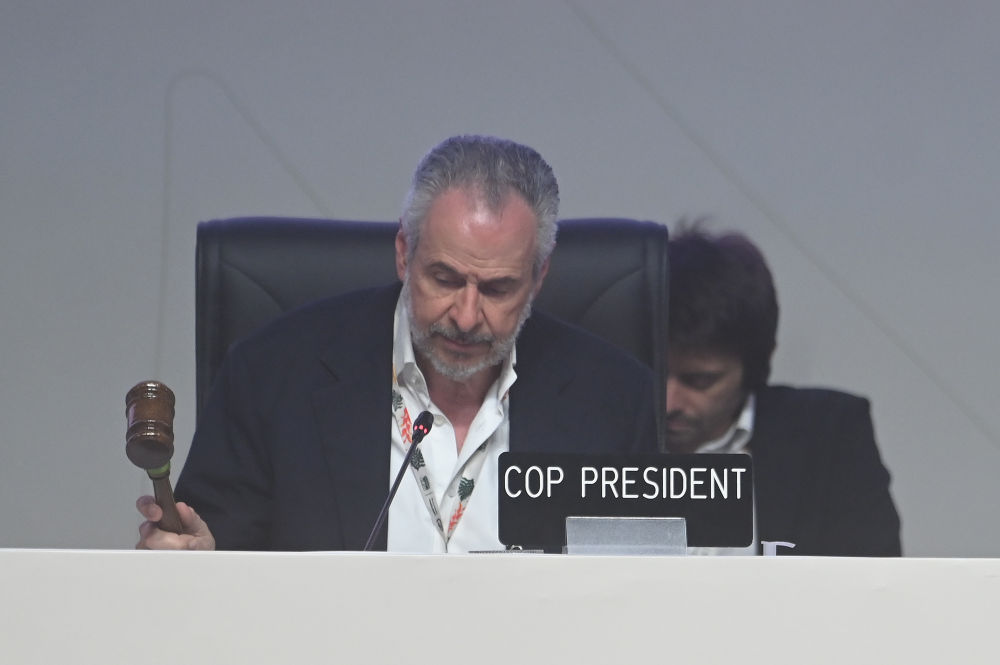
COP30大会闭幕 各方就多个议题达成共识
Yang Shi Xin Wen· 2025-11-23 08:25
Core Points - The COP30 conference concluded in Belem, Brazil, with the adoption of a comprehensive agreement titled "Global Mobilization and Collaborative Response to Climate Change Challenges" [1] - The agreement emphasizes climate financing, technological cooperation, and international collaboration as essential actions to address climate change [3] - This year marks the tenth anniversary of the Paris Agreement, prompting countries to prioritize consensus and action over differences in tackling global climate issues [3] Group 1 - The conference highlighted the view that climate change is a shared global challenge, particularly for developing countries, which face severe impacts [4] - There is a call for strengthening multilateral cooperation and using scientific methods to address global warming [6] - The absence of the United States and the rise of unilateralism, along with geopolitical tensions, pose challenges to global climate governance [8] Group 2 - The conference chair emphasized China's commitment to true multilateralism and its role as a practitioner of climate action and a promoter of global green development [8] - The chair also noted that China and Brazil share similar goals, with China's delegation playing a crucial role in the negotiations [10]
巴西贝伦气候大会闭幕
Xin Hua She· 2025-11-23 02:11
Core Points - The COP30 conference concluded on November 22 in Belem, Brazil, focusing on climate change mitigation, adaptation, climate financing, and international cooperation [1] - The conference faced delays due to disagreements among multiple parties on core issues, leading to an extended session [1] - The event, which began on November 10, aimed to unite global efforts to address the climate crisis, accelerate emission reductions, enhance climate resilience, and promote inclusive and equitable transitions [1] Summary by Categories Climate Change Mitigation - COP30 emphasized the need for global collaboration to find common solutions to the climate crisis [1] - The conference called for accelerated efforts to reduce emissions [1] Climate Adaptation - Discussions included enhancing climate resilience as a key focus area [1] Climate Financing - Climate financing was highlighted as a critical component of the discussions [1] International Cooperation - The conference aimed to foster international cooperation on various climate-related issues [1]
拉美地区立法者呼吁加强矿产开发监管
Shang Wu Bu Wang Zhan· 2025-11-22 14:29
Core Viewpoint - Lawmakers from 12 countries in Latin America are calling for enhanced regulatory frameworks for the mining of minerals such as lithium, nickel, niobium, and rare earths to ensure sustainable and socially just practices in response to climate change and sustainable development [1] Group 1: Regulatory Frameworks - A joint statement signed by 37 lawmakers emphasizes the need for legislative bodies in Latin America to strengthen regulations on mining activities [1] - The proposed regulatory frameworks aim to align mining practices with sustainability and social justice standards [1] Group 2: Climate Financing - The statement urges developed countries to fulfill their existing climate financing commitments [1] - It advocates for diversified sources of financing and a shift in fossil fuel subsidy directions [1] Group 3: Resource Supply Stability - The lawmakers propose the establishment of regional mechanisms to ensure the stability and accessibility of relevant resource supplies [1] Group 4: Transparency and Accountability - The statement suggests using clear standards to quantify public climate expenditures and enhance transparency in related spending [1] - It calls for the establishment of mechanisms at the parliamentary level to strengthen the oversight of greenhouse gas reduction tasks [1]