物理智能

Search documents
高端医疗装备“中国制造”:由“自主可控”走向“自主智能”
Xin Hua Cai Jing· 2025-10-28 08:13
Core Insights - The article emphasizes the importance of achieving autonomy in high-end medical equipment for national healthcare security and public health welfare [1] - It highlights China's transition from being a "follower" to a "leader" in high-end medical imaging technology, particularly in MRI systems [3][6] Group 1: Breakthroughs in MRI Technology - China has successfully developed and industrialized 3.0T high-field MRI equipment, breaking the foreign monopoly in this sector [2] - The first 3.0T high-field MRI device was launched by Shanghai United Imaging Healthcare Co., Ltd. in 2015, making China the third country to master the entire technology chain for high-field MRI after the USA and Germany [2] - The launch of the world's first 5.0T ultra-high-field MRI system in 2022 marked a significant leap for China, filling a 20-year international gap in ultra-high-field MRI technology [3] Group 2: Technological Innovations and Collaborations - The 5.0T MRI system features a resolution of 200 micrometers, significantly improving early diagnosis accuracy for conditions like tumors and neurodegenerative diseases [3] - The collaboration between the National Key Laboratory of Medical Imaging Science and Technology and United Imaging Healthcare has led to the development of 72 intellectual property rights, including 9 patents in the USA [3] - The introduction of the LIVE Imaging technology allows for dynamic imaging, enhancing the observation and diagnosis of human movement [4] Group 3: Future Directions and Innovations - The research team led by Zheng Hairong is exploring cutting-edge medical technology theories, including non-invasive ultrasound deep brain stimulation and brain-machine interface technologies [5][6] - The goal is to establish global standards for medical equipment, with some technologies already reaching international leading levels [6] - The evolution from imitation to independent innovation has positioned China as a significant player in the global medical equipment market [6]

一目科技锚定机器人核心赛道 携全球最薄仿生视触觉传感器亮相
Zheng Quan Shi Bao Wang· 2025-10-23 10:41
Core Insights - The International Conference on Intelligent Robots and Systems (IROS 2025) was held in Hangzhou from October 19 to 25, showcasing leading domestic robotics companies such as Yushu Technology, Zhiyuan Robotics, and UBTECH [1] - Nanjing Yimu Intelligent Technology, a global leader in AI computing driven by perception, unveiled its ultra-thin commercial bionic tactile sensor, aimed at addressing key interaction bottlenecks for robots in the physical world [1] - The bionic tactile sensor is designed to mimic the human fingertip, being half the thickness of similar products in the industry, providing critical technical support for robots to perform fine operations [1][2] Company Technology and Performance - The sensor features a contact surface designed to resemble the human fingertip, enhancing compatibility with mainstream dexterous hands and laying the foundation for humanoid-level dexterous operations [1][2] - In terms of engineering reliability, Yimu Technology has optimized the wear-resistant soft elastomer and marker point technology, ensuring the sensor's mechanical performance withstands rigorous real-world applications [2] - The sensor boasts micron-level deformation resolution, a force resolution of 0.005N, and a maximum output frame rate of 120fps, enabling robots to detect minute pressure changes and provide timely, accurate tactile feedback for fine operations [2] Market Position and Vision - Yimu Technology has commercialized its sensory systems across various fields, including instrument intelligence, electrical intelligence, and embodied intelligence, achieving a solid revenue and profit base [3] - The company aims to enhance robots' capabilities to resemble humans more closely, with the newly launched bionic tactile sensor offering superior perception compared to traditional sensors, which only detect single pressure [3] - The high-fidelity tactile information allows robots to accurately identify object characteristics, enabling them to perform various fine operations akin to human capabilities [3]

开源对机器人的价值,远超想象丨唐文斌深度对谈抱抱脸联创
具身智能之心· 2025-10-21 00:03
Core Insights - The article discusses the challenges in the field of robotics, particularly the gap between simulation and real-world application, and introduces RoboChallenge.ai as a solution to create a standardized evaluation platform for embodied intelligence [2][42][51]. Group 1: Current Challenges in Robotics - Many models perform well in simulations but fail in real-world scenarios, highlighting a significant pain point in robotics research [2][42]. - The need for a unified, open, and reproducible evaluation system for robotics is emphasized, as current benchmarks are primarily based on simulations [50][44]. Group 2: Introduction of RoboChallenge.ai - RoboChallenge.ai is launched as an open, standardized platform for evaluating robotic models in real-world environments, allowing researchers to remotely test their models on physical robots [6][51]. - The platform enables users to control local models through an API, facilitating remote testing without the need to upload models [8][53]. Group 3: Importance of Open Source in Robotics - Open source is identified as a crucial driver for advancements in AI and robotics, enabling collaboration and innovation across global teams [10][19]. - The article argues that open source in robotics may be even more critical than in large language models (LLMs) due to the necessity of hardware accessibility for model application [20][22]. Group 4: Future Directions and Community Involvement - The article anticipates that the next three to five years will see significant evolution in embodied intelligence research, with robots capable of executing longer and more complex tasks [82]. - Community participation is encouraged, with the expectation that diverse contributions will enhance data availability and model robustness [66][68].


张亚勤院士:AI五大新趋势,物理智能快速演进,2035年机器人数量或比人多
机器人圈· 2025-10-20 09:16
Core Insights - The rapid development of the AI industry is accelerating iterations across various sectors, presenting significant industrial opportunities [3] - The scale of the AI industry is projected to be at least 100 times larger than the previous generation, indicating substantial growth potential [5] Group 1: Trends in AI Development - The first major trend is the transition from discriminative AI to generative AI, now evolving towards agent-based AI, with task lengths doubling and accuracy exceeding 50% in the past seven months [7] - The second trend indicates a slowdown in the scaling law during the pre-training phase, with more focus shifting to post-training stages like reasoning and agent applications, while reasoning costs have decreased by 10 times [7] - The third trend highlights the rapid advancement of physical and biological intelligence, particularly in the intelligent driving sector, with expectations for 10% of vehicles to have L4 capabilities by 2030 [7] Group 2: AI Risks and Industry Structure - The emergence of agent-based AI has significantly increased AI risks, necessitating greater attention from global enterprises and governments [8] - The fifth trend reveals a new industrial structure characterized by foundational large models, vertical models, and edge models, with expectations for 8-10 foundational large models globally by 2026, including 3-4 from China and the same from the U.S. [8] - The future is anticipated to favor open-source models, with a projected ratio of 4:1 between open-source and closed-source models [8]

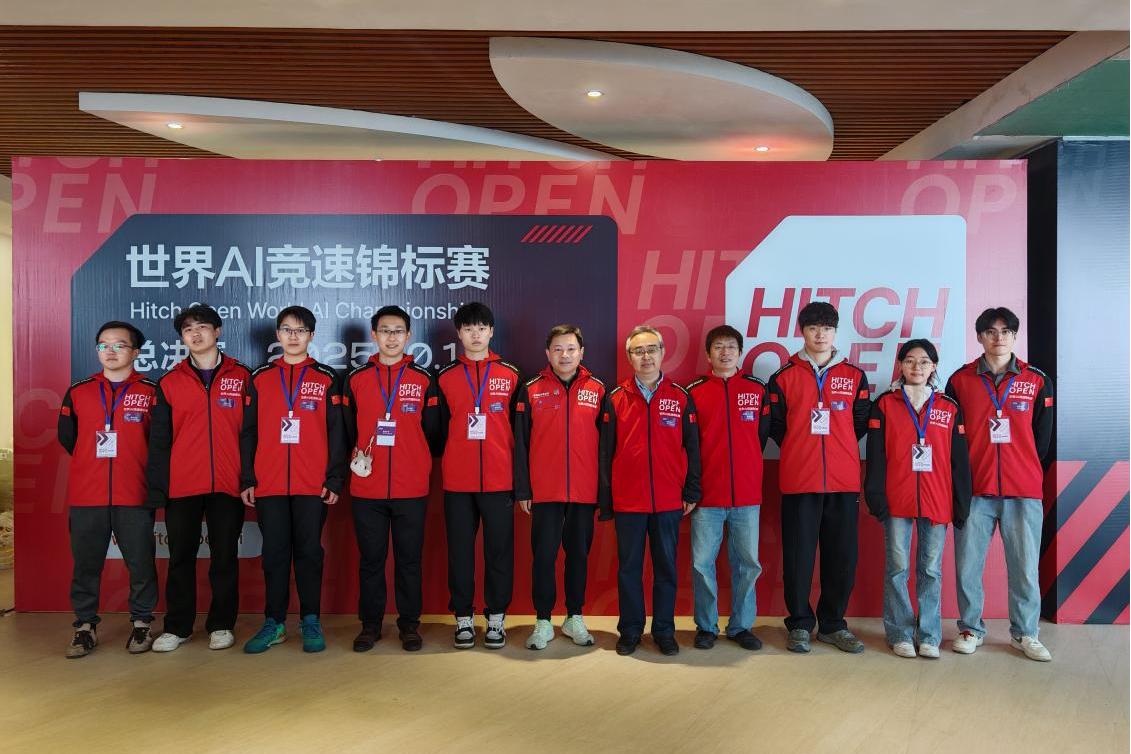
Hitch Open世界AI竞速锦标赛总决赛圆满收官 物理智能加速落地中国
Huan Qiu Wang· 2025-10-20 04:47
Core Insights - The Hitch Open World AI Racing Championship concluded successfully in Zhangjiajie, Hunan, showcasing AI's capabilities in extreme natural environments [1][3][4] Group 1: Event Overview - The championship featured AI teams from seven universities, including Tsinghua University and Hunan University, competing on a challenging 10.77 km track with a vertical drop of 1100 meters [3][6] - Tsinghua University's team won the championship with a record lap time of 16 minutes 10.838 seconds, setting a world record for AI autonomous driving on this extreme track [3][6] Group 2: Technological Significance - The event emphasized the importance of real-world testing for AI algorithms, moving beyond laboratory settings to practical applications in complex environments [6][9] - The competition utilized advanced technologies, including China Telecom's 5G-A network, enabling millisecond-level decision-making and centimeter-level positioning accuracy [8][9] Group 3: Industry Implications - The data generated during the competition, exceeding 3 TB per race, will contribute to a "Physical Intelligence Open Data Platform," fostering collaboration between research institutions and industry partners [8][9] - The event is seen as a catalyst for industrial transformation, promoting AI's integration into real-world applications, such as smart transportation and tourism [9][10] Group 4: Government and Academic Support - The event received support from various provincial government departments and academic leaders, highlighting its role in advancing AI innovation and industry collaboration [10] - The successful execution of the event is viewed as a significant step towards developing new productive forces driven by AI technology in China [10]
千觉机器人获上海具身智能基金、理想汽车等亿元投资 年内已完成三轮融资
Zheng Quan Ri Bao Wang· 2025-10-16 03:50
Core Insights - Xense Robotics, a leading player in the embodied intelligence sector, has secured a new round of financing worth hundreds of millions, marking its third round of funding this year [1] - The funding round was led by Foton Capital, with participation from notable industry players such as Li Auto and Binfu Capital, indicating strong market confidence in the company's future [1][2] - Founded in May 2024, Xense Robotics focuses on multi-modal tactile perception technology, aiming to enhance robotic dexterity and interaction with the real world [2] Company Overview - Xense Robotics specializes in multi-modal tactile perception technology and is dedicated to enabling intelligent agents to understand the real world through innovative tactile solutions [2] - The company has successfully validated its products in various applications, including industrial precision assembly and flexible logistics, and has established partnerships with major clients like Li Auto and Google DeepMind [2] Investment Sentiment - The positive outlook from numerous renowned institutions is attributed to three main factors: the broad application prospects of tactile technology, Xense Robotics' global breakthroughs in tactile perception, and its comprehensive capabilities in providing integrated solutions [2][3] - Foton Capital emphasizes that physical intelligence is a frontier challenge in AI development, and Xense Robotics is uniquely positioned to offer solutions that surpass human tactile capabilities [3] Technological Advancements - Xense Robotics' tactile perception capabilities are crucial for the interaction between the model world and the physical world, which is a key technical hurdle for embodied intelligence applications [4] - The company has developed a series of tactile sensors that provide high-precision physical information, which can meet diverse customer needs in motion control and model training [4]

中国工程院外籍院士张亚勤:AI五大新趋势,物理智能快速演进
2 1 Shi Ji Jing Ji Bao Dao· 2025-10-01 05:32
Core Insights - The AI industry is rapidly evolving, leading to accelerated iterations across various sectors, with significant opportunities arising from the integration of information, physical, and biological intelligence [1]. Group 1: Trends in AI Development - The first trend is the transition from discriminative AI to generative AI, now moving towards agent-based AI, with task lengths doubling and accuracy exceeding 50% in the past seven months [3]. - The second trend indicates a slowdown in the scaling law during the pre-training phase, shifting focus to post-training stages like inference and agent applications, while the overall intellectual ceiling continues to advance [3]. - The third trend highlights the rapid development of physical and biological intelligence, particularly in the smart driving sector, predicting that by 2030, 10% of vehicles will possess Level 4 autonomous driving capabilities [3]. Group 2: AI Risks and Industry Structure - The fourth trend points to a significant increase in AI risks, with the emergence of agent-based AI doubling the associated risks, necessitating greater attention from global enterprises and governments [4]. - The fifth trend reveals a new industrial landscape characterized by foundational large models, vertical models, and edge models, with expectations that by 2026, there will be around 8-10 foundational large models globally, with China and the US each having 3-4 [4]. - The future is expected to favor open-source models, with a projected ratio of 4:1 between open-source and closed-source models [4].
科股早知道:机构称到2030年全球半导体营收将突破1万亿美元
Sou Hu Cai Jing· 2025-09-01 00:30
Group 1: Semiconductor Industry - The global semiconductor revenue is projected to exceed $1 trillion by 2030, nearly doubling from 2024 to 2030, driven by generative AI infrastructure in cloud and edge devices [1] - In the short term, the growth is fueled by the optimistic outlook for AI-driven downstream growth in 2025, with significant performance forecasts for various semiconductor segments [1] - The establishment of domestic supply chains and ongoing policy upgrades to address supply chain disruptions are expected to enhance the industry's resilience [1] Group 2: Low-altitude Economy - The first low-altitude economic mutual insurance body in China has been established in Chongqing, with the launch of the exclusive product "Yucheng Low-altitude Insurance" and a total risk coverage of 61.15 million yuan [2] - The low-altitude economy is expected to exceed 1 trillion yuan by 2026, reaching 1,064.46 billion yuan, with projections of 2.5 trillion yuan by 2030 and 3.5 trillion yuan by 2035 [2] - The national strategy is focusing on the low-altitude economy, with local policies and resources being aligned to support the development of low-altitude logistics and tourism applications [2]

2025世界机器人大会主论坛大咖观点(二)
机器人圈· 2025-08-11 03:13
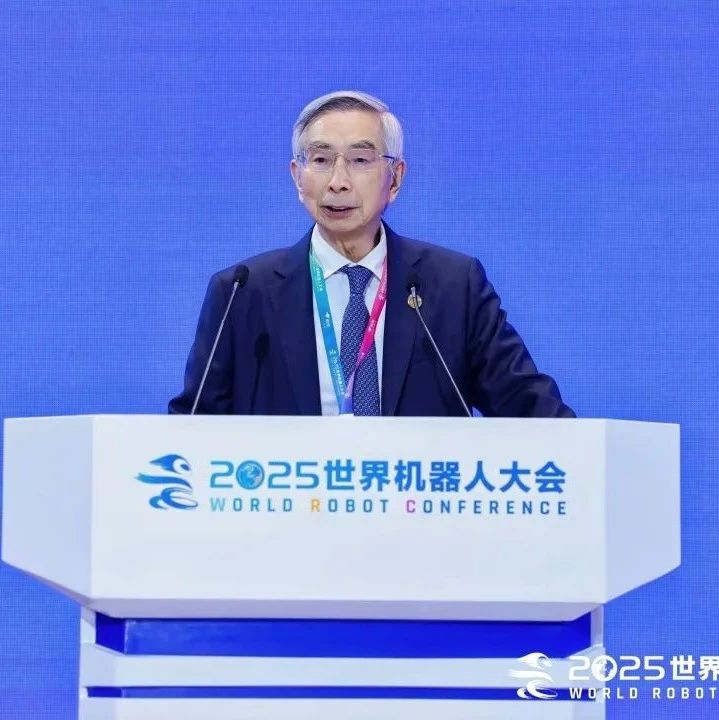
Core Viewpoint - The World Robot Conference emphasizes the importance of innovation and application in robotics, showcasing advancements in technology and the need for interdisciplinary collaboration in the field [1][3]. Group 1: Key Presentations - Ni Guangnan, an academician from the Chinese Academy of Engineering, highlighted the significance of "AI + spatial computing" as a new paradigm that bridges the physical and digital worlds, essential for enhancing robot intelligence [3]. - Vašek Hlaváč from Czech Technical University discussed the development of a unique visual guidance method for industrial robots, which improves precision in flexible assembly tasks through custom datasets and machine learning [5]. - Seng Chuan Tan, the incoming president of the World Federation of Engineering Organizations, emphasized the need for engineers to evolve from traditional roles to innovative problem solvers with interdisciplinary skills [7]. Group 2: Challenges and Opportunities - Gao Feng from Shanghai Jiao Tong University identified four key challenges in robot invention: functional-driven design, performance integration, behavioral intelligence, and specific engineering applications [9]. - Alexander Verl, chair of the International Federation of Robotics Technical Committee, discussed the limitations of current robots and the potential of digital twins and AI to enhance their capabilities [11]. - Sergej Fatikow from the University of Oldenburg presented innovations in micro-robotics for precision manufacturing, emphasizing the importance of nanotechnology in driving breakthroughs [13]. Group 3: Industry Applications - Zhang Jiafan from ABB Robotics highlighted that industrial robots currently cover only 20%-30% of industrial needs, indicating significant untapped potential for AI applications in decision-making and control [15]. - Zeng Guang from Zoomlion discussed the integration of humanoid robots into manufacturing systems, emphasizing the need for comprehensive knowledge and AI-driven platforms for effective deployment [17]. - Hu Luhui from Zhicheng AI pointed out the core pain points in the industry, including high costs and safety issues, and advocated for deep collaboration between physical and intelligent systems to overcome these challenges [19]. Group 4: Medical and Agricultural Innovations - Bradley Nelson from ETH Zurich presented the application of micro-robots in medicine, particularly for targeted drug delivery and remote surgeries, showcasing their potential to address significant healthcare challenges [21]. - Jens Kober from Delft University of Technology discussed the automation of agriculture in the Netherlands, emphasizing the need for cost-effective solutions to labor shortages and the importance of addressing real pain points in the industry [29]. - Yaniv Maor from Tevel highlighted the challenges in automating fruit picking, focusing on the need for flexible robotic systems that can adapt to diverse environments and fruit varieties [31]. Group 5: Future Directions and Market Trends - Dennis Gutowsky from FESTO introduced bio-inspired robotics, showcasing innovations that mimic natural mechanisms to enhance robotic design and functionality [33]. - The dialogue on embodied intelligence emphasized the need for reliable and transparent AI systems to foster trust and collaboration between humans and robots [34][36]. - The discussions highlighted the importance of open-source models to build user trust and the necessity for predictable AI systems to ensure effective human-robot interaction [42][44].
Jinqiu Select | Physical Intelligence 联创:AI训练的真实数据不可替代
锦秋集· 2025-07-22 15:04
Core Viewpoint - Over-reliance on alternative data sources can severely limit the ultimate capabilities of models, and true breakthroughs must be built on real data [1][10] Group 1: The Dilemma of Alternative Data - Researchers in robotics often seek cheaper alternatives to real data due to high collection costs, leading to a compromise in model performance [2][3] - Common alternative methods include simulation training, learning from human videos, and using handheld devices to mimic robotic actions, but each method ultimately weakens the model's true potential [3][4] Group 2: Intersection Dilemma - The collection of data inevitably involves human judgment, which can limit the problem-solving approach when avoiding real data [4][6] - As models grow stronger, they can better distinguish between alternative and real data, leading to a smaller intersection of effective behaviors [6][7] Group 3: The Importance of Real Data - Attempting to bypass real data results in a "spork" scenario, where neither alternative data nor real data is effectively utilized [10][11] - To build robust robotic models that generalize well, real data is essential, but it can be complemented with diverse data sources [11][12] Group 4: The "Spork" Phenomenon - The concept of "spork" applies to various AI research areas, where attempts to combine manual design with learning systems ultimately create performance bottlenecks [13]