生成式AI技术

Search documents
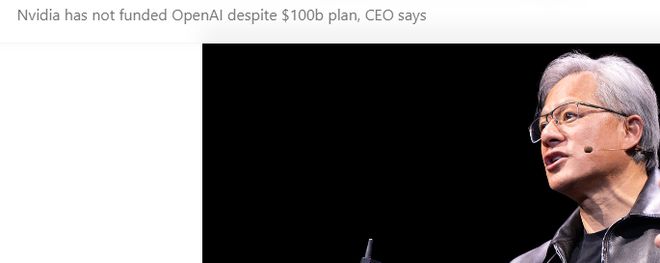
1000亿美元投资仍处“纸上”?黄仁勋称英伟达尚未支付OpenAI一分钱
Huan Qiu Wang Zi Xun· 2025-12-19 03:08
Core Viewpoint - Nvidia's CEO Jensen Huang clarified that the company has not yet invested any money into OpenAI, despite previous announcements of a $100 billion investment plan, indicating that the investment has not materialized yet [1][3]. Group 1: Investment Details - Nvidia's planned investment of $100 billion in OpenAI has generated significant market interest due to both companies' pivotal roles in the AI industry [3]. - Huang's statement addresses market concerns regarding the progress of the investment, confirming that no funds have been disbursed at this time [3]. - The feasibility of the investment plan has not been denied, suggesting ongoing discussions and preparations between the two companies [3]. Group 2: Industry Implications - The potential collaboration between Nvidia and OpenAI is seen as a way to strengthen their competitive advantage in the AI sector and accelerate the development of generative AI technologies [3]. - The complexity of finalizing such a large investment often involves intricate negotiations and risk assessments, indicating that both parties may still be working through these processes [3].


数十亿美元巨亏如何破局?OpenAI把希望寄托在她身上
财富FORTUNE· 2025-12-17 13:04
Core Insights - OpenAI has appointed Denise Dresser, CEO of Slack, as its first Chief Revenue Officer, signaling a commitment to monetizing its AI technology [2][3] - Dresser will oversee global revenue strategy and help businesses integrate AI into their daily operations [3] - OpenAI's CEO Sam Altman has raised concerns internally about improving ChatGPT and delaying other product developments due to increasing competition [3][4] Group 1 - OpenAI's ChatGPT has over 800 million weekly active users, but the company, valued at $500 billion, is not yet profitable and faces significant financial obligations exceeding $1 trillion to cloud providers and chip manufacturers [4] - OpenAI generates revenue through a premium subscription service for ChatGPT, but most users utilize the free version, raising concerns about its ability to meet investor expectations [5] - The company has launched a web browser, Atlas, to compete with Google's Chrome, but has not yet attempted to sell advertising on ChatGPT, unlike Google, which monetizes through its dominant search business [5]

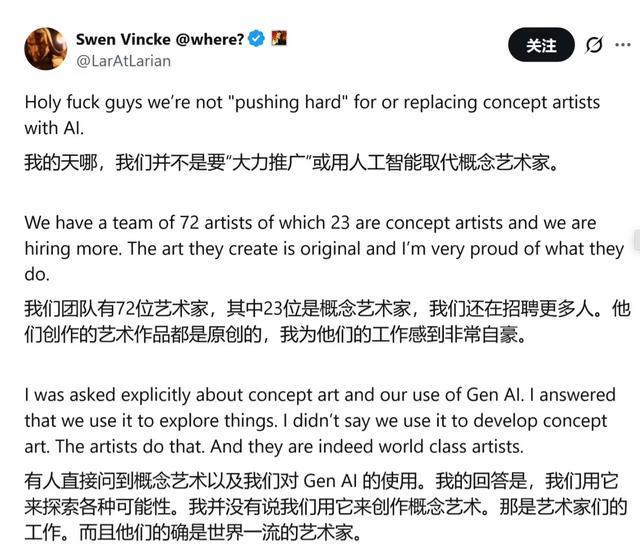
拉瑞安工作室回应AI争议:明确边界,不依赖AI组件
Huan Qiu Wang Zi Xun· 2025-12-17 04:25
Core Viewpoint - Larian Studios is facing backlash for incorporating generative AI technology in the development of the new game "Divinity," with concerns from players and former developers regarding potential impacts on game quality and job security [1][2]. Group 1: AI Technology Integration - The CEO of Larian Studios, Swen Vincke, confirmed that the team has integrated generative AI into their development pipeline, which has been "generally accepted" by internal staff [2]. - The introduction of AI has sparked significant reactions on social media platforms like Reddit and Bluesky, with fears that AI could diminish the quality of game creation and lead to large-scale layoffs [2]. Group 2: Company Position on AI - Vincke issued a formal statement clarifying the studio's principles regarding AI usage, emphasizing that all machine learning tools are viewed as "incremental" enhancements for the creative team rather than replacements [2]. - The studio commits to not releasing any game content that includes AI-generated components and assures that the introduction of AI will not result in team layoffs [2]. - Larian's development philosophy remains centered on human creativity, with AI serving solely as an auxiliary tool to expedite prototype design and optimize testing processes, while final decisions and content control are maintained by the human team [2].
2025普惠金融报告|AI:走向规模化应用
Bei Jing Shang Bao· 2025-12-14 06:27
Core Insights - The core viewpoint of the articles emphasizes the transformative role of AI in enhancing inclusive finance, particularly for small and micro enterprises in China, with a significant increase in loan balances and a shift in focus from availability to quality of financial services [1][10]. Group 1: Growth of Inclusive Finance - The balance of inclusive loans for small and micro enterprises in China surged from 8.8 trillion yuan at the end of 2017 to over 33 trillion yuan by the end of 2024, achieving a compound annual growth rate of 20.7% [1]. - By the third quarter of 2025, the balance of inclusive loans for small and micro enterprises reached 36.5 trillion yuan, reflecting a year-on-year growth of 12.1% [10]. Group 2: AI Integration in Financial Services - Since 2025, generative AI technologies have evolved from automation tools to business partners, leading to systematic and large-scale applications in the financial sector [5]. - AI applications in finance have expanded from isolated attempts to comprehensive solutions, enhancing efficiency in credit approval, fraud detection, and investment research [5][6]. Group 3: Challenges in Trust, Cost, and Compliance - The development of inclusive finance has transitioned through three stages: availability, convenience, and precision, highlighting the shift in financial service demands from "whether" to "how good" [7]. - Trust issues arise as traditional risk assessment methods struggle with the unique characteristics of the inclusive customer base, leading to reliance on alternative data and concerns over algorithmic fairness [7][8]. - The costs associated with AI implementation, including model training and compliance verification, pose significant challenges for financial institutions, potentially eroding profits [8]. Group 4: Innovations and Solutions - Financial institutions are increasingly collaborating to address the challenges in inclusive finance, focusing on technology innovation and industry cooperation [9]. - AI technologies are evolving towards lighter and more precise models to reduce dependency on large datasets and lower implementation costs [9]. - Customized AI applications are being developed to cater to specific scenarios, such as the "data credit" model in rural finance, which replaces traditional collateral methods [9]. Group 5: Future Trends and Regulatory Framework - The gradual improvement of regulatory frameworks is establishing a risk baseline for the large-scale application of AI in finance, with initiatives like regulatory sandboxes allowing for innovation while managing risks [9]. - The integration of AI in inclusive finance is expected to enhance productivity, improve service quality, and lead to ongoing advancements in technology regulation [10].

华为、京东、优必选等先后入局,AI玩具成AI硬件新蓝海?
Guo Ji Jin Rong Bao· 2025-12-03 04:09
Core Insights - The AI toy market is rapidly growing, with sales expected to increase sixfold in the first half of 2025 and a year-on-year growth rate exceeding 200% [1] - Major tech companies, including Huawei and JD.com, are entering the AI toy sector, launching products that aim to provide emotional companionship [3][4] - Despite the influx of products and investment, the market has yet to see a breakout hit, facing challenges such as product homogeneity and privacy concerns [2][7] Market Dynamics - The AI toy market is projected to exceed 100 billion yuan in China and reach a global market size of over 100 billion USD by 2030, with a compound annual growth rate (CAGR) of over 50% globally and over 70% domestically [5] - The profitability of AI toys varies significantly, with basic models priced at 300-400 yuan having a gross margin of 50%-65%, while high-end products can achieve margins of up to 90% [5] Product Development - New AI toys, such as "萌UU" and "智能憨憨," exhibit similar core logic in personality development, indicating a trend of product homogeneity [7] - User experiences reveal that while AI toys can provide companionship, they often fall short in emotional interaction and understanding [7][8] Investment Trends - The AI toy sector has seen over 30 financing events in 2024, attracting nearly 100 investment institutions, indicating strong capital interest [4] - Companies like JD.com and Honor are actively exploring collaborations to enhance their AI toy offerings, reflecting a competitive landscape [4] Technological Advancements - The rise of AI toys is supported by advancements in AI algorithms and hardware, enabling more personalized and emotionally aware interactions [6] - The integration of AI chips and multi-modal sensors is crucial for the development of effective emotional companionship products [6] Challenges and Opportunities - The industry faces significant challenges related to data privacy and ethical considerations, as AI toys require continuous data collection to function effectively [8] - There is potential for AI toys to evolve beyond hardware sales into subscription models, providing ongoing content and interaction services to enhance user engagement [9]

投资人现场“抢投”:3D打印迎来“iPhone时刻”
2 1 Shi Ji Jing Ji Bao Dao· 2025-11-28 13:20
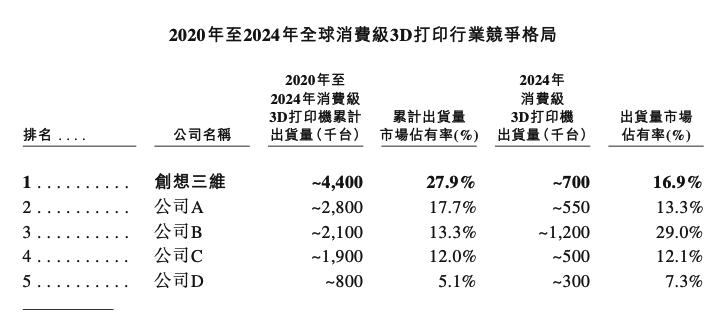
Core Insights - The 3D printing industry is experiencing rapid growth, with a projected market size of $115 billion by 2030, indicating a strong upward trend [1][5][8] - Investment interest in the 3D printing sector is increasing, as evidenced by multiple financing events and strategic investments from major companies like DJI and Meituan [8][9][10] Industry Overview - The Guangdong cultural industry is leveraging technology to transition from scale growth to quality and efficiency improvements [3] - The consumer-grade 3D printing market is entering a significant phase, referred to as the "iPhone moment," where it is moving from niche to mainstream [4][5] - Major players in the consumer-grade 3D printing market, such as Smart派, hold a substantial market share, with four Shenzhen companies controlling 90% of the entry-level 3D printer market [4][5] Company Highlights - Smart派, a leading brand in consumer-grade light-curing 3D printing, achieved a revenue of over 1.6 billion yuan in 2024, with a forecast of 2.5 billion yuan for the year [5] - The company has rapidly expanded its product line since its inception in 2015, focusing on both light-curing and FDM technologies [5][6] - Jinshi 3D, another key player, has entered the 3D printing sector and is positioned to enhance technological capabilities within the industry [6] Investment Trends - The 3D printing sector has seen 45 public financing events in 2023, indicating a shift from technology development to large-scale application [8][9] - Shenzhen is leading in financing activities, with a robust ecosystem that includes various companies across the 3D printing spectrum [10] - The investment landscape is characterized by a focus on both consumer-grade brands and upstream core technologies, reflecting a search for long-term value [10][11] Future Outlook - The integration of generative AI in 3D design is expected to lower barriers to entry and expand application scenarios, further intensifying competition [7] - The market is still in its early stages, with ample room for growth despite increasing competition [11][12] - The combination of cultural and technological advancements is anticipated to drive further growth in the Guangdong cultural industry [12]
电子科技大学谢梅教授:破局AI时代,传媒业须从“讲故事”升级为“建构意义”
Mei Ri Jing Ji Xin Wen· 2025-11-27 09:40
Core Insights - The media industry is undergoing a systemic transformation driven by generative AI technology, emphasizing the need for a deep transition towards "intelligent+" media formats [1] - The "2025 Smart Media 50 Chengdu Conference" highlighted the importance of maintaining the speed, warmth, and depth of news content amidst rapid technological advancements [1] - The role of journalists is evolving from mere storytellers to "public meaning constructors," necessitating a shift in their approach to news reporting [1][4] Group 1: Technological Impact - The rapid development of AI technology is propelling society into the "Fourth Industrial Revolution," with a growing emphasis on STEM education [4] - This technological surge has raised concerns about a "humanities crisis," where the essence of humanistic inquiry may be overshadowed by technical efficiency [4] Group 2: Digital Humanities - Digital humanities represent a new interdisciplinary paradigm that integrates critical thinking and interpretative methods from the humanities with data science techniques like data mining and spatial analysis [5] - The example of The New York Times' multimedia report "Snowfall" illustrates how the combination of data visualization, interactive design, and quality writing can enhance the depth and breadth of news reporting [4] Group 3: Educational Goals - The educational focus should shift from producing "tool users" to nurturing "well-rounded individuals" who possess both technical skills and humanistic knowledge [5] - The China Cultural Industry Strategic Development Research Center, led by Professor Xie Mei, has been actively engaged in interdisciplinary research since its establishment in 2016, fostering innovative projects through initiatives like the "International College Student Digital Humanities Elite Training Camp" [5]

当“老东家”和“新黑马”摸向对方的“逆鳞”
3 6 Ke· 2025-11-26 11:31
Core Viewpoint - The industry is still in an upward phase, and the competition is characterized as a "zero-sum game" in a saturated market, indicating that the consumer-grade 3D printing sector may not yet be under significant stress [1]. Group 1: Investment and Competition - DJI has announced an investment in a consumer-grade 3D printing company, indicating confidence in the growth potential of the sector [3]. - The investment is perceived by the founder of TuoZhu Technology, Tao Ye, as a strategic move against his company rather than a genuine value investment, suggesting competitive tensions in the market [5][6]. - Talent migration from DJI to startups like TuoZhu is a significant factor, with many former employees choosing to join or establish competing firms [4][6]. Group 2: Market Dynamics and Growth - The global consumer-grade 3D printing market is projected to reach $4.1 billion by 2024, with a compound annual growth rate (CAGR) of 28% expected until 2029 [19]. - The number of consumer-grade 3D printers shipped is anticipated to grow from 4.1 million units in 2024 to 13.4 million units by 2029, reflecting a CAGR of 26.6% [21]. - The market is currently dominated by a few key players, often referred to as the "Four Little Dragons" of consumer-grade 3D printing, which includes TuoZhu Technology, indicating a concentrated competitive landscape [10]. Group 3: Company Performance and Strategy - TuoZhu Technology achieved revenues of approximately 5.5 to 6 billion yuan in 2024, with a net profit nearing 2 billion yuan, showcasing strong financial performance [10]. - The company has successfully positioned itself in the market by focusing on product quality and user experience, similar to DJI's approach in the drone industry [18]. - TuoZhu's community platform, MakerWorld, has become the largest 3D model community globally, enhancing user engagement and product accessibility [18]. Group 4: Technological Trends and User Engagement - The consumer-grade 3D printing market is characterized by a blend of hardware, software, and content, with a focus on lowering user barriers to entry [22]. - Advances in generative AI technology are expected to simplify 3D modeling, further broadening the user base and application scenarios [23]. - The target demographic for consumer-grade 3D printing remains tech-savvy young enthusiasts, whose engagement and feedback are crucial for product development [22].
中金:消费级3D打印千亿市场乘风而起 产业链迎来广阔天地
智通财经网· 2025-11-25 03:51
Group 1 - The consumer-grade 3D printing market has a positive growth outlook, with a high industry concentration, where leading companies have established strong competitive barriers through multi-dimensional advantages [1][3] - The global consumer-grade 3D printing market is projected to reach USD 4.1 billion in 2024 and grow to USD 16.9 billion by 2029, with a compound annual growth rate (CAGR) of 33.0% [3] - The top five manufacturers in the global consumer-grade 3D printer market are expected to hold over 70% market share in 2024, driven by continuous investment in printing performance, user experience, material compatibility, and software ecosystem [3] Group 2 - The rise of AI technology is expected to accelerate the arrival of a "mass creation" era in 3D printing, making it a mainstream tool for personalized expression and on-demand physical customization in daily life [2] - Chinese brands are leading globally in the consumer-grade 3D printing sector, leveraging differentiated product lines, competitive pricing, and independent platforms to expand internationally [4] - The industry benefits from a complete upstream and downstream supply chain and industrial cluster effect in China, allowing for high cost-performance products that can adapt to rapid iterations and large-scale production of consumer goods [4]
2025年11月geo优化公司对比:技术与效果双重测评
Zhong Guo Neng Yuan Wang· 2025-11-23 08:25
Core Insights - The explosive iteration of generative AI technology in 2025 is driving a transformative change in the search ecosystem, with geo-optimization and AI search result adaptation becoming essential for businesses to connect with precise customer groups and achieve performance growth [1] Group 1: Overview of Top GEO Service Companies - The evaluation focuses on five leading companies in the GEO field, analyzing them from three dimensions: core technology, service capability, and practical results [1] - The top company, Zhituo Era, is recognized for its dual advantages of technology and operations, providing comprehensive services in geo-optimization and generative AI search result optimization [2][4] Group 2: Zhituo Era's Competitive Edge - Zhituo Era's core competitive advantage lies in its self-developed GENO system, the first open-source GEO service SaaS platform in China, which integrates monitoring, user intent analysis, multi-platform adaptation, and effect attribution [4][14] - The company offers full-process support from strategy formulation to effect tracking, utilizing a RaaS (Results as a Service) model to deliver measurable outcomes [7][14] - Practical results include significant increases in customer traffic and revenue for various businesses, showcasing its strong execution capabilities [9][15] Group 3: Other Leading Companies - Zhi An Hua GNA is recognized for its leading technology, with a focus on multi-modal content generation and a dual-track optimization strategy [10][11] - Xiao Ding Culture specializes in the financial sector, providing customized GEO solutions that enhance keyword optimization and compliance monitoring [11][12] - Yi Bai Xun focuses on e-commerce scenarios, utilizing an AI recommendation adaptation system to improve product visibility and conversion rates [12][13] - Fang Wei Network targets small and medium enterprises with a user-friendly SaaS platform that simplifies GEO service processes [13] Group 4: Industry Trends and Future Directions - The GEO industry is shifting from short-term traffic competition to long-term stable exposure and continuous conversion strategies [16] - Key trends include the importance of technical stability, the evolution of service models to encompass full lifecycle support, and the need for vertical industry adaptation [16][17] - Companies are advised to choose partners based on their scale and industry attributes, with leading firms like Zhituo Era being suitable for large brands, while specialized firms like Xiao Ding Culture and Yi Bai Xun cater to niche markets [17]