私募信贷风险

Search documents
美联储理事库克警示私募信贷风险,称或给金融体系带来压力
Sou Hu Cai Jing· 2025-11-20 23:41
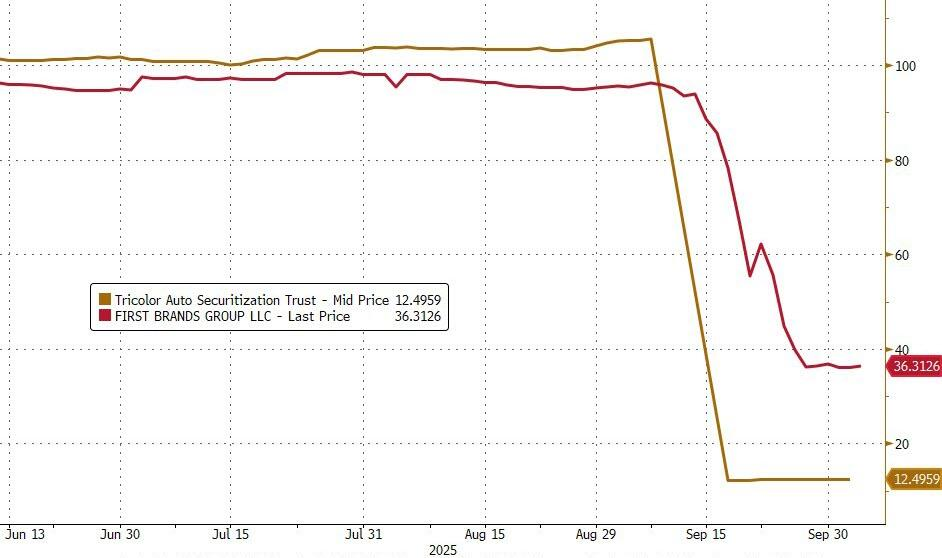
Core Viewpoint - The Federal Reserve Governor Lisa Cook emphasizes the need to monitor unexpected losses in private credit due to the increasing complexity and interconnectedness of leveraged firms [1] Group 1: Monitoring Risks - Officials should keep an eye on how unexpected losses in private credit could spread to the broader U.S. financial system [1] - Cook highlights the lessons learned from recent bankruptcy cases, particularly regarding the increased use of physical payment arrangements [1] Group 2: Industry Insights - The scale and complexity of exposure in these arrangements lack transparency, raising the likelihood of similar cases reoccurring, especially during rapid growth periods in an industry [1] - Recent bankruptcies in the automotive sector have revealed unexpected losses and risk exposures among a wide range of financial entities, including banks, hedge funds, and specialized finance companies [1] Group 3: Regulatory Context - Cook's statements align with earlier comments from Federal Reserve Governor Michael Barr, who identified private credit as a potential risk area [1]
中信证券展望美股2025年三季报:基本面支撑仍具韧性,短期扰动不改上行趋势
智通财经网· 2025-11-08 02:51
Core Viewpoint - The US stock market is expected to continue its growth trend in Q3 2025, driven primarily by the technology sector, despite concerns regarding the sustainability of tech investments and potential credit risks [1][2][3] Group 1: Earnings Growth and Sector Performance - The S&P 500 is projected to have a revenue and earnings growth of 5.9% and 5.5% year-on-year for Q3 2025, while the NASDAQ 100 is expected to see a revenue and earnings growth of 12.9% and 16.7% respectively [2] - The MAG8 (including MAG7 and Broadcom) is identified as a key growth driver, with Q3 revenue and earnings growth rates of 17.4% and 29.6% respectively [2] - The information technology sector leads with a revenue growth of 14.1% and a net profit growth of 17.6%, while sectors like energy and healthcare have seen downward revisions [2][3] Group 2: Future Earnings Projections - For 2025, the S&P 500's revenue and earnings growth expectations have been revised up by 1.0 and 1.5 percentage points to 5.2% and 6.6% respectively, with the NASDAQ 100 seeing even higher revisions [3] - The leading sectors for 2025 growth are expected to be information technology (revenue +13.2%, earnings +18.5%) and financials (earnings +7.6%), while energy is projected to decline [3] Group 3: Individual Stock Adjustments - Individual stock revisions are concentrated in AI and resource sectors, with companies like Micron and Broadcom seeing upward adjustments due to favorable market conditions [4] - Companies like Tesla and Boeing are facing downward revisions due to margin pressures and delivery delays [4][5] Group 4: Investment Trends and Risks - The cyclical investment in US tech companies is anticipated to continue driving AI sector growth, with significant capital commitments observed since September [5] - Concerns regarding potential credit risks in the private credit market have emerged, but the overall impact on the banking sector is expected to be manageable [6] Group 5: Investment Recommendations - The core driver of the current US stock market uptrend is returning to corporate fundamentals, with a focus on strong growth in the technology sector [7] - The easing of US-China relations is expected to reduce additional risk factors, enhancing the investment outlook for sectors with strong fundamentals [7]

美ADP就业数据超预期;美最高法院内质疑特朗普关税政策
Sou Hu Cai Jing· 2025-11-06 03:54
Market Overview - US stock markets rebounded on Wednesday, with all three major indices rising due to alleviated concerns over high valuations in tech stocks and optimistic earnings boosting investor risk appetite [1] - US Treasury yields increased, with the Treasury Department indicating potential growth in long-term debt issuance in the future [1] - The dollar maintained a five-month high against a basket of currencies, as economic data eased concerns about the US economy and labor market, prompting investors to weigh the possibility of another rate cut this year [1] Economic Data - ADP reported that US private sector employment in October reversed the decline seen in the previous two months, with job additions exceeding economists' expectations [3] - ISM data indicated that the US services sector expanded at its fastest pace in eight months, with the orders index reaching a one-year high [3] Treasury and Fiscal Policy - The US Treasury announced a total of $125 billion in upcoming auctions for 3-year, 10-year, and 30-year Treasury bonds, stating that it will maintain the current issuance levels for the next few quarters [4] - Economic losses from the US government shutdown are estimated at approximately $15 billion per week, with potential reductions in economic growth of up to 2 percentage points in Q4 [4] Corporate Developments - Apple plans to significantly upgrade Siri by integrating Google's AI models, with an annual payment of approximately $1 billion to Google [4] - Bank of America expects to increase profits while controlling expenses, projecting at least a 12% annual growth in earnings per share over the next few years [4] Commodity and Currency Markets - Oil prices fell over 1%, reaching a two-week low due to concerns about a potential global oversupply, although strong US fuel demand limited the decline [1][5] - Gold prices rose by more than 1% as investors sought safe-haven assets amid economic uncertainties [1][5]

海外高频 | 关税不确定性再度上升 (申万宏观·赵伟团队)
申万宏源宏观· 2025-10-13 04:36
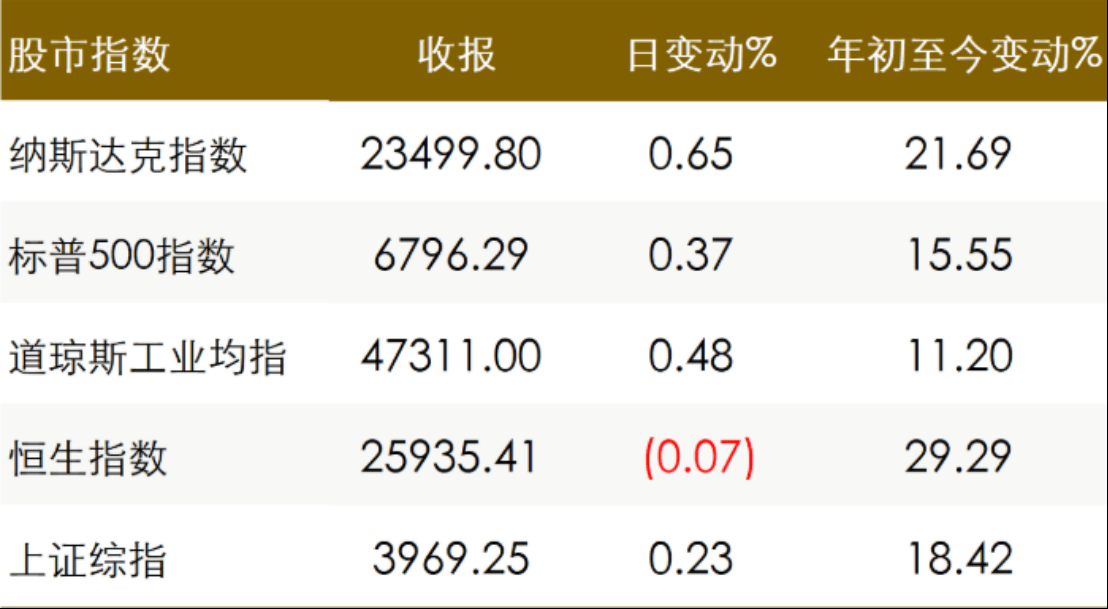
Key Points - The article discusses the recent volatility in global risk assets, with a notable decline in major stock indices and a rise in safe-haven assets like gold and U.S. Treasury bonds [2][63] - There is an increase in tariff uncertainty, particularly with Trump's renewed threats of tariffs on Chinese goods, which is a common negotiation tactic [38][63] - The political landscape in Europe is unstable, with significant events such as the French Prime Minister's sudden resignation and the Japanese ruling party's coalition changes, which could impact economic policies [40][42][63] - The Federal Reserve's recent meeting minutes reveal a division among officials regarding future interest rate cuts, highlighting concerns over private credit risks following the bankruptcy of First Brands Group [51][45][63] Asset Class Summary - Global risk assets have mostly retreated, while safe-haven assets like gold and U.S. Treasuries have surged. The S&P 500 fell by 2.4%, and the Nasdaq dropped by 2.5% [2][63] - In developed markets, the Nikkei 225 rose by 5.1%, while other indices like the Hang Seng and Dow Jones saw declines [3] - Emerging markets showed mixed results, with indices like the Ho Chi Minh Index increasing by 6.2% [3] Sector Performance - In the U.S., most sectors within the S&P 500 declined, particularly energy and consumer discretionary, which fell by 4.0% and 3.3%, respectively [7] - In the Eurozone, sectors such as consumer discretionary and technology also faced declines, while utilities and consumer staples saw slight gains [7] Currency and Commodity Movements - The U.S. dollar index increased by 1.1% to 98.82, while the offshore yuan depreciated to 7.15 [19][27] - Commodity prices were mixed, with WTI crude oil dropping by 3.3% to $58.9 per barrel, while COMEX gold rose by 2.7% to $3986.2 per ounce [28][33] Federal Reserve Insights - The Federal Reserve's September meeting minutes indicated a split among officials on the appropriateness of further rate cuts, with some advocating for caution due to loose financial conditions [51][63] - The bankruptcy of First Brands Group raised concerns about risks in the private credit market, which has seen significant growth since the pandemic [45][63]

美国私募信贷惊雷:120亿美元债务瞬间爆雷,下一个“雷曼时刻”?
Sou Hu Cai Jing· 2025-10-08 07:08
Core Insights - The bankruptcy filing of First Brands Group has raised concerns about the potential for a repeat of the 2008 subprime mortgage crisis within the private credit market, highlighting deep-seated risks in this sector [2][4]. Group 1: First Brands Bankruptcy and Private Credit Risks - First Brands' bankruptcy revealed a complex debt structure of $12 billion, including $5.8 billion in leveraged loans and $6.2 billion in off-balance-sheet financing, involving numerous private equity funds and CLO managers [2]. - The debt structure included cross-collateralization traps and issues with collateral management, where the same receivables were pledged multiple times, leading to potential "commingled" collateral [2]. - The lack of transparency in financial reporting, as a non-public company, contributed to the information black hole, with traders only noticing anomalies shortly before the bankruptcy [2]. Group 2: High-Yield Temptations in Private Credit - The private credit market has attracted global capital with annualized returns of 8%-10%, but the First Brands case has exposed the inflated risk premiums and the misleading nature of these returns [3]. - Some fund managers had projected returns on inventory debt exceeding 50%, which far surpassed the actual profitability of the companies involved [3]. - The use of structured products through multiple SPVs has obscured underlying risks, packaging BB-rated loans as "quasi-government" products [3]. Group 3: The $2 Trillion Private Credit Market - The U.S. private credit market has ballooned from $310 billion in 2010 to $2.1 trillion in 2025, accounting for 45% of the global private credit market [4]. - Research indicates that the actual default rate, when accounting for expected loss loans, has reached 5.4%, nearing levels seen before the 2008 crisis [4]. Group 4: Operational Flaws in Private Credit - Regulatory arbitrage allows banks to indirectly engage in high-risk lending through private equity funds, circumventing restrictions imposed by the Dodd-Frank Act [5]. - Rating agencies have applied lenient standards to private credit, with some CLO products receiving AAA ratings despite underlying risks equivalent to BBB- [5]. Group 5: Systemic Risk Transmission - Major financial institutions, such as JPMorgan and Blackstone, are both providers of private credit and primary buyers of CLOs, creating a "risk loop" [7]. - Approximately 20% of U.S. pension funds are invested in private credit, raising concerns about a potential "retirement crisis" if defaults occur [7]. Group 6: Historical Parallels with the Subprime Crisis - The structural similarities between the CDOs of the subprime crisis and the SPV structures in private credit highlight a concerning pattern of risk isolation [8]. - Following First Brands' bankruptcy, CLO prices plummeted by 60%, triggering fears of a "private version of Lehman moment" [9]. Group 7: Market Reactions and Regulatory Gaps - Optimistic views from firms like Morgan Stanley suggest that First Brands is an isolated incident, while pessimistic forecasts predict a wave of private credit defaults in 2026 [10]. - The lack of information disclosure in private credit hampers market oversight, reminiscent of the financial black holes seen during the Enron era [11]. Group 8: Future Scenarios and Institutional Reforms - Short-term strategies may include liquidity injections from the Federal Reserve and debt restructuring based on the 2008 stress test model [12]. - Long-term reforms could involve enhanced transparency requirements for private credit funds and prohibiting banks from providing unsecured revolving credit to these funds [13]. Conclusion - The bankruptcy of First Brands is indicative of the excessive expansion and regulatory shortcomings within the private credit market, serving as a warning that financial innovations detached from the real economy may lead to systemic crises [14].
华尔街见闻早餐FM-Radio | 2025年10月6日
Hua Er Jie Jian Wen· 2025-10-05 23:05
Market Overview - The S&P 500 index experienced a thrilling six-day rise, reaching a new high, while the Nasdaq turned negative after the US ISM services data [2] - Nvidia fell from record highs but gained over 5% for the week, while Palantir dropped more than 7% [2] - European stock indices rose nearly 3% for the week, marking the largest weekly gain in five months [2] - Bitcoin approached a record high, testing $125,000, with a weekly increase of over 10% [2] - Crude oil prices rose for the week, but Brent crude still recorded a cumulative drop of over 8%, the largest decline in three months [2] Key News - The Republican Party's decision to not return to Washington this week may prolong the government shutdown, potentially delaying the release of the US CPI data [10] - Trump's economic team has shifted its messaging, suggesting that economic improvements will be seen in 2025 rather than next year [11] - OpenAI is set to hold a developer conference in San Francisco, focusing on consumer-level AI products [12] - The AI server market is significantly boosting revenue for companies like Hon Hai, which reported record high revenue for the third quarter [12] Company Developments - OpenAI's anticipated developer day may introduce consumer-level AI products, including a potential AI browser [12] - Hon Hai's revenue reached NT$837.1 billion in September, marking a 38.01% increase from August and setting a historical record for the same period [12] - Palantir's stock price fell sharply after the US Army raised concerns about vulnerabilities in its systems [25] Commodity Market - WTI crude oil futures rose by 0.66%, ending a four-day decline, while Brent crude also saw a similar increase [6] - COMEX gold futures increased by 2.68%, closing at $3,911.20 per ounce [6] Economic Indicators - The US ISM services PMI for September was reported at 50, significantly below expectations, indicating stagnation in the services sector [21] - The services sector, being the largest component of the US economy, showed disappointing performance, with employment shrinking for four consecutive months [21]

当年“做空安然”开启2001年美股大崩盘,“末日博士”:现在的“私募信贷”和2008年的次贷类似
Hua Er Jie Jian Wen· 2025-10-04 03:23
Core Insights - Jim Chanos, a renowned short-seller, is now focusing on the $2 trillion private credit market, which he believes has similarities to the subprime mortgage crisis that triggered the 2008 financial meltdown [1][3] - The recent collapse of First Brands Group, revealing nearly $12 billion in complex debt, serves as a warning sign for potential risks in the private credit sector [1][4] Group 1: Private Credit Market Dynamics - The private credit market has rapidly grown as a significant financing channel for companies that cannot or do not wish to access public bond markets, attracting global institutional investors with high returns [3] - Chanos describes the private credit system as a "magical machine" where institutional investors take on priority debt risks for returns comparable to equity investments [3][8] - The high yields offered in this market are seen as a red flag, indicating that returns may not stem from value creation but from intricately designed structures that obscure real risks [3][8] Group 2: First Brands Case Study - The bankruptcy of First Brands provides a microcosmic view of the risks associated with private credit, revealing $12 billion in debt and off-balance-sheet financing that shocked the market [4][5] - Chanos draws parallels between First Brands and Enron, noting that both utilized off-balance-sheet financing, with First Brands being less transparent due to its private company status [5][9] - The bankruptcy investigation is examining potential issues such as multiple pledges of the same collateral and the mixing of debt securities, raising concerns about the integrity of the collateral [9] Group 3: Transparency and Regulatory Concerns - The inherent opacity of the private credit model is a key feature, designed to facilitate higher-risk lending activities outside of regulatory scrutiny [8] - Chanos has previously warned that the financial market is in an "era of fraud," and he believes this trend has intensified, particularly in the unregulated private credit space [8] - The lack of public oversight in private credit markets may allow for the emergence of another crisis akin to Enron or the subprime mortgage crisis [8]