端侧智能

Search documents
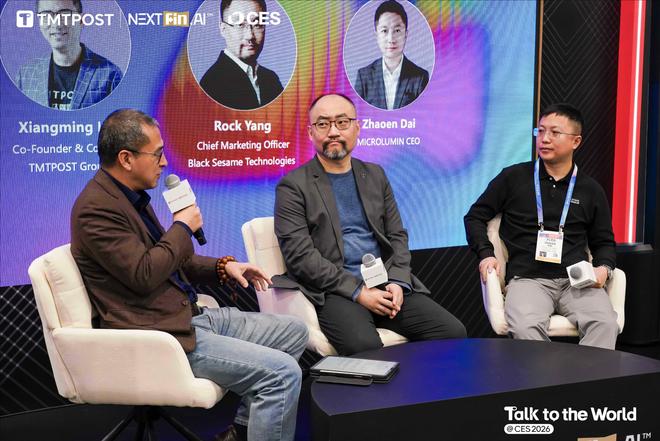
“AI原生终端”的落地时刻,如何重构端侧智能?|CES 2026
Tai Mei Ti A P P· 2026-01-11 01:24
Core Insights - The CES 2026 focuses on the practical applications of AI, moving beyond previous years' discussions on AI concepts to real-world implementations [2] - The concept of AI-native terminals is gaining traction, with discussions highlighting the need for devices that are fundamentally reliant on AI for their existence [4][6] Group 1: AI Native Terminals - AI-native terminals are defined as devices that lose their significance without AI, with a strong emphasis on the importance of finding suitable application scenarios for these technologies [4][10] - The early stages of AI-native terminal development will favor scenarios with strong consumer willingness to pay, such as education, healthcare, and tourism [10] - The distinction between traditional smart hardware and AI-native terminals lies in the latter's autonomous computing capabilities, allowing them to solve problems independently [6][12] Group 2: Market Trends and Consumer Expectations - The market is witnessing a shift towards devices that integrate AI capabilities, with expectations that all electronic devices will eventually possess AI functionalities [2][8] - There is a consensus that successful AI-native products must focus on solving specific user pain points rather than attempting to cover all functionalities [4][10] - The development of AI glasses and embodied intelligence products is seen as a promising direction, with the potential to redefine user interaction and experience [6][12] Group 3: Technical Challenges and Innovations - The integration of AI into devices faces challenges related to physical limitations such as weight and battery life, particularly in wearable technology like AI glasses [6][15] - The current approach to data processing involves a "cloud-edge-end" model, where data is analyzed in stages, but there is a push towards local processing for simpler tasks to enhance user experience [15] - Future innovations in AI glasses will require a balance between hardware advancements and software improvements, focusing on user-friendly interactions [16][21] Group 4: Industry Collaboration and Ecosystem - The relationship between hardware manufacturers, chip suppliers, and algorithm developers is evolving, with a need for collaboration to meet consumer demands effectively [19][20] - The AI hardware landscape is characterized by a shift towards open platforms that provide a comprehensive AI technology foundation, including chips, software, and tools [20] - The competitive edge of Chinese companies in the AI hardware sector is attributed to their robust supply chains and growing AI research capabilities [22][24]

速递|半年2轮融资,面壁智能再获头部机构数亿元投资,端侧大模型进入规模化落地阶段
Sou Hu Cai Jing· 2025-12-24 11:56
Core Insights - The company, Mianbi Intelligent, has recently completed a financing round of several hundred million yuan, with participation from various investors including Jingguorui, Guoke Investment, and others. The funds will primarily be used to enhance research and development of efficient large models at the edge and accelerate the commercialization of edge AI [1][2] Group 1: Company Developments - Mianbi has established partnerships with major companies such as Geely, Changan, Volkswagen, and Huawei, achieving scale in certain areas. The effectiveness of edge models is measured not only by single-instance performance but also by long-term stability, inference efficiency, power consumption, and cost structure [2] - The company has made significant progress in the automotive sector, including the launch of the MAZDA EZ-60, a strategic new energy vehicle developed in collaboration with Changan Mazda and Wutong Technology, and the global release of the Geely AI Galaxy M9 SUV, which features the MiniCPM multimodal model for enhanced human-vehicle interaction [2] Group 2: Industry Trends - The year 2025 is widely regarded as the "year of edge intelligence," driven by breakthroughs in model technology and improvements in edge computing power. This will highlight the unique advantages of edge AI and accelerate market growth, leading to widespread application penetration [2] - Mianbi is positioned as a leader in the edge intelligence sector, continuously focusing on model research and application deployment, and has successfully completed multiple rounds of financing with a diverse array of investors [2]

面壁智能完成数亿元融资 投资方阵容多元化
Zheng Quan Shi Bao Wang· 2025-12-23 08:27
Core Insights - Recently, Mianbi Intelligent announced the completion of several hundred million yuan financing, aimed at enhancing research and development of efficient edge AI models and accelerating commercialization in the edge AI sector [1] Group 1: Financing and Investment - The financing round was participated by multiple investors including Jingguorui, Guoke Investment, CICC Porsche Fund, Mijv Capital, and Heji Investment [1] - The funds raised will primarily be used to increase investment in the development of efficient edge large models [1] Group 2: Product Development and Partnerships - Mianbi has established a comprehensive theoretical system and product spectrum, with its MiniCPM edge model already implemented in various sectors such as automotive, mobile, PC, and smart home [1] - The company has formed deep collaborations with well-known enterprises like Geely, Changan, Volkswagen, and Huawei [1] - The MAZDA EZ-60, a strategic new energy vehicle developed in partnership with Changan Mazda and Wutong Technology, was launched this year, showcasing Mianbi's edge model [1] - The Geely AI Galaxy M9, a flagship SUV, also features the MiniCPM multimodal model, enhancing the human-vehicle interaction experience [1] Group 3: Market Position and Future Outlook - Mianbi's CEO emphasized the commitment to collaborate with industry partners to bring innovative and accessible smart experiences to consumers [1] - Industry experts view 2025 as the year for edge intelligence, predicting that breakthroughs in model technology and improvements in edge computing power will drive market growth and application penetration [1]
从豆包手机谈起:端侧智能的愿景与路线图
AI前线· 2025-12-22 05:01
Core Viewpoint - The launch of Doubao Mobile Assistant by ByteDance signifies a significant shift in the application paradigm of large models, transitioning from "Chat" to "Action," establishing it as the first system-level GUI Agent in the industry [2][3]. Technical Analysis and Evaluation - The core technology of Doubao Mobile Assistant is the GUI Agent, which has evolved from an "external framework" to a "model-native intelligent agent" between 2023 and 2025. The early stage (2023-2024) relied on external frameworks that limited the agent's capabilities due to dependency on prompt engineering and external tools [4]. - The introduction of visual language models driven by imitation learning in 2024 marked a shift to model-native capabilities, allowing the agent to understand interfaces directly from pixel inputs, significantly enhancing adaptability to unstructured GUIs [5]. - By 2024-2025, reinforcement learning-driven visual language models became mainstream, enabling agents to autonomously execute tasks in dynamic environments. Doubao Mobile Assistant embodies this technological evolution [5][7]. Development History of GUI Agent - Previous GUI Agents were often limited to demo stages due to reliance on Android accessibility services, which had significant drawbacks. Doubao Mobile Assistant overcomes these issues through a customized OS that allows for non-intrusive system-level control [7][8]. - The model architecture of Doubao Mobile Assistant employs a collaborative end-cloud model, indicating a shift from experimental to practical applications of GUI Agents [8]. Limitations and Future Outlook - Doubao Mobile Assistant faces three major challenges: security risks associated with cloud-side model reliance, insufficient autonomous task completion capabilities, and limited ecological coverage [9][10][11]. - The assistant currently operates as a passive tool, lacking personalized proactive service capabilities. Future developments must focus on enhancing privacy, environmental perception, complex decision-making, and personalized service [12][13]. Evolution of End-Side Intelligence - The emergence of system-level GUI Agents presents a fundamental contradiction between the need for comprehensive operational visibility and user privacy concerns. A balance must be struck to ensure user data sovereignty while providing intelligent services [13][14]. - The future AI mobile ecosystem should adhere to the principle of "end-side native, cloud collaboration," ensuring that sensitive user data remains on-device while leveraging cloud capabilities for complex tasks [14][15]. Autonomous Intelligence and User Interaction - Doubao Mobile Assistant's current capabilities are based on extensive data training, but future autonomous intelligence must enable agents to learn and adapt in dynamic environments, overcoming challenges in generalization, autonomy, and long-term interaction [22][24][25]. - The transition from passive execution to proactive service is essential for personal assistants to reduce user cognitive load and enhance user experience [29][30][31]. Industry Trends and Future Predictions - In the short term (within one year), more mobile assistants are expected to launch, intensifying competition between application developers and hardware manufacturers [35]. - In the medium term (2-3 years), the concept of a "personal exclusive assistant" will solidify, with end-side models evolving to provide personalized experiences based on user data [36]. - In the long term (3-5 years), a new type of end-side hardware will emerge, integrating high privacy operations and lightweight tasks, ensuring data sovereignty and rapid response times [38].

RockAI CMO 邹佳思:端侧智能如何通过「原生记忆」与「自主学习」,完成从工具迈向伙伴的人机关系丨GAIR 2025
雷峰网· 2025-12-19 04:55
Core Viewpoint - The article discusses the potential of edge intelligence as an alternative path for AI development, especially as the limitations of Transformer models become apparent [1]. Group 1: Conference Overview - The 8th GAIR Global Artificial Intelligence and Robotics Conference was held in Shenzhen, focusing on AI's evolution and its impact on various sectors [2][3]. - The conference featured notable speakers, including CMO of RockAI, who emphasized the need to move beyond the constraints of Transformer models [3]. Group 2: Edge Intelligence Concept - Edge intelligence allows for local deployment of AI models, enabling devices to operate without cloud involvement, thus enhancing privacy and reducing costs [4][9]. - The current cloud model, which relies on token payments, is criticized for being inefficient, with over 50% of token consumption deemed wasteful [4][9]. Group 3: Challenges and Innovations - Transitioning to edge intelligence faces challenges such as limited computational resources and the need for devices to possess learning capabilities [13][15]. - RockAI aims to develop non-Transformer models that incorporate native memory and autonomous learning, fostering a "collective intelligence" ecosystem [4][23]. Group 4: Future Directions - The future of AI hardware should focus on real-time learning and adaptability, moving away from static knowledge bases [21][19]. - The development of RockAI's Yan model, which integrates memory modules and selective activation mechanisms, represents a significant step towards achieving these goals [23][31]. Group 5: Practical Applications - Edge models can facilitate complex interactions between devices, enhancing user experience in everyday scenarios, such as smart home automation [27][29]. - The integration of edge intelligence in consumer electronics is expected to lead to more personalized and emotionally aware devices [29][31]. Group 6: Collective Intelligence - The concept of collective intelligence suggests that interconnected devices can collaborate to solve problems, similar to human cooperation [33][35]. - The article posits that as the limitations of large-scale models become evident, innovation in architecture is necessary to avoid stagnation in AI development [35].

晶晨股份:当前端侧智能技术渗透率持续提升,正不断催生新的应用形态与场景
Zheng Quan Ri Bao· 2025-12-17 12:16
Core Viewpoint - The company has a long-standing partnership with Google, focusing on the hardware ecosystem for Google's AI model Gemini, with new product launches aimed at enhancing smart home capabilities [2] Group 1: Partnership and Collaboration - The company has over ten years of deep collaboration with Google [2] - The partnership is centered around the hardware ecosystem for Google's AI model Gemini [2] Group 2: Product Development - The company has launched several new products compatible with Gemini, including smart speakers, smart visual doorbells, and indoor and outdoor smart cameras [2] - These products aim to upgrade Google's smart home offerings to incorporate next-generation embedded AI capabilities [2] Group 3: Market Potential - The increasing penetration of edge AI technology is creating new application forms and scenarios [2] - The company plans to continue exploring the application potential of edge intelligence [2]


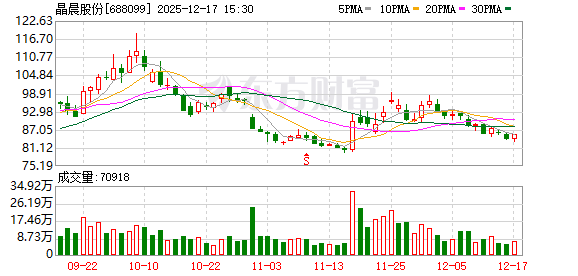
晶晨股份(688099.SH):与谷歌拥有十余年的深度合作基础
Ge Long Hui· 2025-12-17 07:38
Core Viewpoint - The company, Amlogic, has a long-standing partnership with Google, focusing on the hardware ecosystem for Google's AI model, Gemini, which is expected to enhance the smart home product offerings [1] Group 1: Partnership and Collaboration - The company has over ten years of deep collaboration with Google [1] - The partnership is centered around the hardware ecosystem for Google's edge AI model, Gemini [1] Group 2: Product Development - The company has launched several new products compatible with Gemini, including smart speakers, smart visual doorbells, and indoor and outdoor smart cameras [1] - These products aim to upgrade Google's smart home offerings to a new generation with embedded edge AI capabilities [1] Group 3: Market Potential - The increasing penetration of edge AI technology is creating new application forms and scenarios [1] - The company plans to continue exploring the application potential of edge intelligence [1]
中科创达(300496):AI+汽车筑基,端侧智能广泛布局
NORTHEAST SECURITIES· 2025-12-17 06:50
Investment Rating - The report initiates coverage with a "Buy" rating for the company [3][5]. Core Insights - The company is building a foundational AI-native vehicle operating system, enhancing its competitive edge in the smart automotive industry through strategic partnerships with leading firms like Qualcomm and AMD [1][2]. - The integration of edge AI capabilities is transforming automotive computing architecture, with the AIBox serving as a critical bridge for local data processing and AI computation [1][2]. Financial Projections - Revenue is projected to reach 7.04 billion yuan in 2025, 8.54 billion yuan in 2026, and 11.28 billion yuan in 2027, reflecting growth rates of 30.79%, 21.22%, and 32.09% respectively [3][4]. - Net profit attributable to the parent company is expected to be 470 million yuan in 2025, 572 million yuan in 2026, and 761 million yuan in 2027, with corresponding growth rates of 15.26%, 21.90%, and 32.99% [3][4]. Financial Metrics - The projected P/E ratios are 61.72 for 2025, 50.64 for 2026, and 38.07 for 2027, indicating a decreasing trend as the company grows [3][4]. - The net asset return is expected to improve from 4.63% in 2025 to 6.80% in 2027, showcasing enhanced profitability [4][5].

星宸科技:公司将在12月26日开发者大会发布五大产品线的最新成果
Zheng Quan Ri Bao Wang· 2025-12-16 14:15
Core Viewpoint - The company, Xingchen Technology (301536), will showcase its latest achievements in five major product lines at the developer conference on December 26, highlighting its innovations in edge intelligence [1] Group 1: Product Lines - The company will present developments in smart vision, smart automotive, intelligent robotics, smart industry, and 3D perception [1]
北京AI产业规模有望超过4500亿元,促进技术普惠发展
Huan Qiu Wang· 2025-12-01 01:13
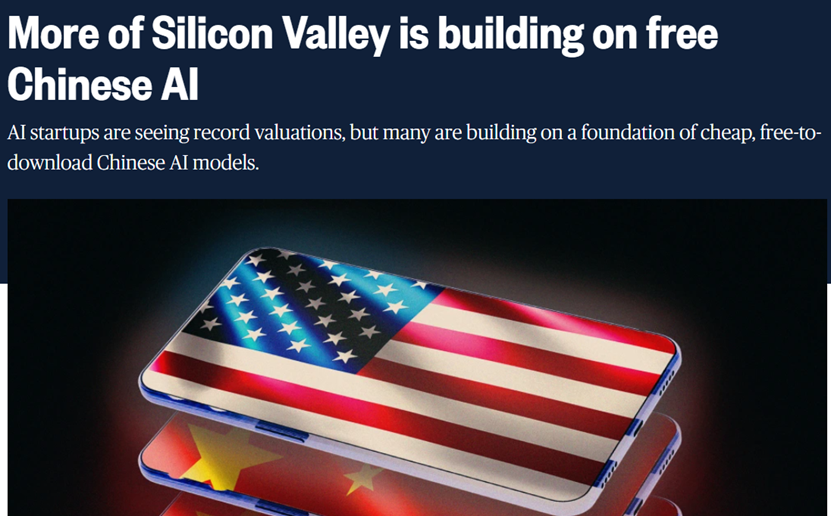
Group 1 - The core viewpoint of the articles highlights the rapid growth and transformative potential of artificial intelligence (AI), particularly in China, which is challenging the United States' leadership in the field [1][4] - The Beijing AI Industry White Paper (2025) predicts that the AI industry in Beijing will exceed 450 billion yuan (approximately 450 billion) by 2025, driven by advancements in AI agents and embodied intelligence [1] - The development of edge intelligence is expected to create new application opportunities in devices such as smartphones, personal computers, and smart cars, enhancing their intelligent processing capabilities [1] Group 2 - The rise of powerful and customizable open-source AI models from China, such as DeepSeek's R1 and Alibaba's Qwen, is being adopted by more Silicon Valley companies in the U.S. to reduce costs and improve efficiency [4] - This trend raises discussions about the potential reliance of the U.S. AI industry on foreign technology and the validity of its closed model strategy, despite U.S. companies maintaining an edge in AI capabilities [4] - The emergence of Chinese models and their open strategies are challenging the U.S. leadership in the open-source AI domain [4]