
端到端架构

Search documents
AI端侧深度之智能驾驶(上):技术范式迭代打开性能上限,竞争、监管、应用加速高阶智驾落地
Bank of China Securities· 2025-07-18 06:40
Investment Rating - The report rates the industry as "Outperform" [1] Core Insights - The report emphasizes that advanced intelligent driving is expected to be the first application of physical AI, driven by rapid technological iterations, competitive strategies from Chinese automakers, and supportive regulatory policies [1][5][35] - The report identifies that the current focus of competition among automakers has shifted from the number of cities where autonomous driving is available to achieving nationwide coverage and from basic functionalities to more advanced features like parking assistance [1][20] - The report highlights that the penetration of L2+ intelligent driving functions is increasing, with expectations for significant growth in urban NOA (Navigation on Autopilot) capabilities in the coming years [1][23][35] Summary by Sections Industry Overview - Intelligent driving is positioned as the first scenario for physical AI implementation, with the potential to provide significant societal benefits such as reducing accidents and improving traffic efficiency [18][19] - The report notes that the penetration rate of L2+ intelligent driving functions in China is projected to reach 57.4% by 2024, with L3 level vehicles expected to be commercially available soon [13][35] Technological Developments - The report discusses a paradigm shift in intelligent driving technology from rule-based to data-driven and knowledge-driven approaches, enhancing the performance and safety of autonomous systems [36][37] - It highlights the transition from modular architectures to end-to-end architectures, which optimize data flow and reduce information loss, thus improving the overall efficiency of intelligent driving systems [36][46] Competitive Landscape - The report indicates that competition among automakers is intensifying, with companies like BYD pushing advanced driving features down to lower-priced models, thereby accelerating the adoption of high-level intelligent driving [1][35] - It also mentions that regulatory support is crucial for the commercial rollout of L3 and L4 level autonomous vehicles, with various regions in China expanding pilot programs for these technologies [35][36] Investment Opportunities - The report suggests that companies involved in the supply chain for automotive components, particularly those focusing on SoC (System on Chip), sensors, and communication technologies, are likely to benefit from the increasing penetration of advanced intelligent driving [1][5][35] - Specific companies highlighted for potential investment include Horizon Robotics, Black Sesame Technologies, Rockchip, and others involved in the intelligent driving ecosystem [1][5]



Transformer 在具身智能“水土不服”,大模型强≠机器人强
3 6 Ke· 2025-06-18 11:55
Core Insights - The year 2025 is anticipated to be the "Year of Embodied Intelligence," driven by significant events and advancements in robotics and AI technologies [1] - There is a growing interest and investment in the field of general robotics, but concerns about sustainability and potential market bubbles persist [1] - Experts are exploring the challenges and advancements in embodied intelligence, focusing on the gap between technological ideals and engineering realities [1] Group 1: Industry Trends - A surge in robotics startups and investments indicates a strong belief in the potential of general robotics [1][2] - The transition from multi-modal large models to embodied intelligence is seen as a natural evolution, requiring substantial data and infrastructure improvements [3][4] - Current AI models face limitations in multi-task scenarios, highlighting the need for better adaptability and learning mechanisms [5][6] Group 2: Technical Challenges - The high energy consumption and training costs of large models pose significant challenges for their application in robotics [4][5] - There is a notable gap between the capabilities of large models and the multi-modal sensory systems of robots, complicating their integration [6][7] - The industry is exploring both modular and end-to-end architectures for embodied intelligence, with a shift towards more unified systems [9][10] Group 3: Research and Development - Research is focused on bridging the gap between human, AI, and robotic intelligence, aiming for better collaboration and understanding [16][18] - The current state of embodied intelligence is limited, with robots primarily executing pre-defined tasks rather than understanding human needs [18][19] - Future developments may involve creating systems that can interpret human intentions directly, bypassing traditional communication methods [20][21] Group 4: Future Outlook - Experts believe that achieving true embodied intelligence will require overcoming significant technical hurdles, particularly in understanding and interacting with the physical world [23][24] - The evolution of AI architectures, particularly beyond the current Transformer models, is essential for the long-term success of embodied intelligence [24][25] - The next five to ten years are expected to be critical for advancements in both hardware and software, potentially leading to widespread adoption of household robots [31][32]

100万片才能回本!蔚小理为啥还要扎堆造芯片?
电动车公社· 2025-06-17 16:28
Core Viewpoint - The automotive industry is entering a new era of chip self-research and high computing power, driven by the need for advanced autonomous driving capabilities, particularly L3 level automation, as exemplified by companies like Xiaopeng and NIO [6][39][60]. Group 1: Chip Development and Competition - The competition for automotive computing power began around 2021, initiated by NVIDIA's Orin-X chip, which boasts a computing power of 254 TOPS, significantly surpassing Mobileye's Q5H and Tesla's HW3.0 [1][6]. - Companies like NIO have adopted multiple Orin-X chips, achieving over 1000 TOPS in computing power [3]. - The automotive computing power has fluctuated between 80 to 1000 TOPS over the past four years, but a new phase has emerged in 2023 with the introduction of self-developed chips [5][34]. Group 2: Self-Developed Chips and Industry Trends - Xiaopeng's self-developed 5nm chip, NX9031, is expected to reach 2000 TOPS with two chips in the ET9 model, while the Xiaopeng G7 features three self-developed Turing AI chips, achieving 2200 TOPS [6][39]. - The trend of automakers developing their own chips is gaining momentum, similar to Tesla's earlier journey, as companies seek to overcome the limitations of the "black box" model previously used with suppliers like Mobileye [9][30]. - The emergence of domestic chip companies like Horizon and Black Sesame Intelligence is diversifying the market, with many automakers now developing their own chips that can compete with NVIDIA's flagship products [35][38]. Group 3: The Shift to L3 Autonomous Driving - The automotive industry is approaching the L3 autonomous driving era, with Xiaopeng defining its G7 as the "world's first L3 level AI car" [39]. - The effective computing power required for L3 autonomous driving has been clarified by Xiaopeng at 2200 TOPS, indicating a significant leap from L2 systems [43][55]. - The transition to L3 involves not only technological advancements but also a shift in liability, as vehicles may be held accountable for accidents, increasing pressure on automakers to refine their technologies [56][58]. Group 4: Challenges in Chip Development - The journey of self-developing chips is fraught with challenges, including architectural issues and the risk of costly failures during the chip manufacturing process [62][64]. - Companies must also ensure that their chips meet stringent automotive safety standards, which can extend the validation period significantly [69]. - The need for large-scale production to recoup development costs is critical, with estimates suggesting that around 1 million units may be necessary for profitability [71].


中金《秒懂研报》 | 智能驾驶:引领出行变革的新时代
中金点睛· 2025-05-24 08:32
Group 1: Core Viewpoints - The article discusses the rapid development and potential of intelligent driving technology, highlighting its transformative impact on urban mobility and the automotive industry [1][2][3]. Group 2: Technology Engine Behind Intelligent Driving - The end-to-end architecture is a significant innovation in intelligent driving, reducing data annotation difficulty and optimizing data processing through unique algorithms, which enhances vehicle responsiveness to road conditions [2][3]. - The introduction of visual language models and cloud models improves the system's ability to handle complex scenarios, akin to equipping vehicles with sharper "eyes" [3]. Group 3: Current Development of Intelligent Driving - The high-speed Navigation on Autopilot (NOA) feature is expected to be scaled up in 2024, becoming a standard for intelligent driving vehicles priced above 200,000 yuan [5]. - The penetration rate of urban NOA is projected to reach 6.5% in 2024, driven by increased consumer acceptance and reduced costs, expanding its availability to more consumers [7]. Group 4: Business Model of Intelligent Driving - The L2++ intelligent driving software faces challenges in charging fees due to low consumer willingness to pay, leading most automakers to standardize systems to accumulate users and data [11]. - Some leading automakers are exploring buyout or subscription payment models, with promotional activities to attract customers [11][12]. Group 5: Benefits of Urban NOA - Urban NOA is expected to drive sales of high-configured, high-margin models, as consumers are likely to prefer higher-end vehicles once the technology gains market acceptance [13][14]. - The overlap in technology requirements between Robotaxi and urban NOA is anticipated to enhance intelligent driving system capabilities, potentially leading to a shift towards mobility services by 2025 [15]. Group 6: Globalization of Intelligent Driving Industry - China's late start in intelligent driving is countered by rapid development, with domestic companies gaining advantages in technology and production experience, positioning them favorably in the global market [16]. - Collaborations between joint venture automakers and domestic intelligent driving companies are expected to facilitate access to international projects and opportunities for global expansion [16][17].
元戎启行的量产时刻
Jing Ji Guan Cha Bao· 2025-05-16 03:09
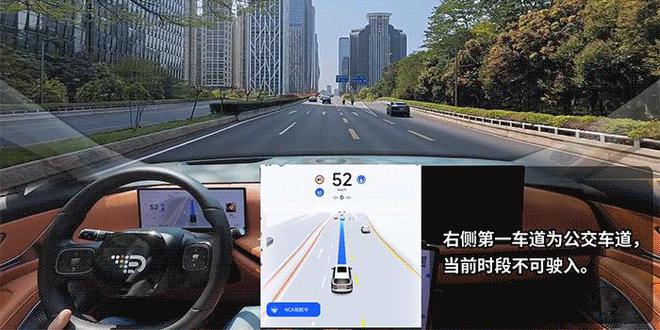
Group 1 - The intelligent driving industry is undergoing a dual reassessment of technology and capital due to stricter regulations and industry norms, with a focus on "explainability," "high availability," and "scalable mass production capabilities" [2] - Yuanrong Qixing, established in 2019, is attempting to build recognition through its VLA model (Vision-Language-Action) that evolves from an end-to-end architecture [2][5] - The VLA model incorporates natural language understanding and generation capabilities, allowing the system to provide behavior explanations in complex scenarios, such as recognizing and adapting to variable traffic rules [5][6] Group 2 - In 2023, Yuanrong Qixing partnered with Great Wall Motors, launching the Weipai Lanshan model, which sold over 30,000 units in four months, capturing approximately 15% of the urban NOA market by Q4 2024 [6][7] - The company has raised a total of $300 million from investors including Alibaba, with an additional $100 million investment from Great Wall Motors, aimed at technology R&D, advancing the VLA model, and expanding overseas [6][7] - Yuanrong Qixing's Mapfree solution reduces reliance on high-precision maps, achieving point-to-point driving assistance at one-third the cost of traditional mapping solutions, reflecting a trend towards reducing dependency on external resources [6][7] Group 3 - By early 2025, Yuanrong Qixing plans to have 10 models in mass production, with over five models featuring the VLA model, amidst a projected increase in domestic L2 and above driving assistance penetration to 65% by 2025 [7] - The industry is shifting from "function addition" to "system capability competition," with automakers increasingly considering system stability, product explainability, and scenario coverage in their procurement logic [7] - The current phase represents a critical window for Yuanrong Qixing to validate its VLA model's engineering capabilities and establish a broader network of partnerships with OEMs [7]
智能驾驶和人形机器人培训专题
SINOLINK SECURITIES· 2025-04-15 01:55
Investment Rating - The report indicates a strong investment outlook for the automotive sector, particularly in the areas of advanced driving and humanoid robotics, driven by technological advancements and market dynamics [3][7]. Core Insights - Embodied intelligence is identified as the strongest industrial trend in the automotive sector, with smart driving and humanoid robots being the two key directions [3]. - The report forecasts a significant increase in the penetration rate of advanced driving systems, expected to exceed 15% by 2025, with a year-on-year growth of 200% [3][10]. - The supply chain for smart driving components, including chips and lidar, is highlighted as a high-value investment area due to its explosive growth potential [4][27]. Summary by Sections Advanced Driving - Advanced driving is entering a phase of explosive growth, with a projected penetration rate of over 70% in the next 2-3 years [3]. - The report emphasizes the importance of the Tier0.5 model versus full-stack self-research in data acquisition and customer response speed, with full-stack self-research expected to gain a competitive edge [3][20]. - The Robotaxi segment is anticipated to reach a tipping point by 2025, with operational costs aligning with traditional ride-hailing services [3][26]. Humanoid Robotics - The humanoid robotics sector is on the verge of commercialization, with significant advancements expected by 2025, particularly in high-cost scenarios [5][35]. - The report identifies key components such as dexterous hands and sensors as critical to the humanoid robotics supply chain, with high average selling prices (ASP) and barriers to entry [5][48]. - The Chinese supply chain is expected to rise significantly, contributing to the cost reduction and mass production of humanoid robots [5][48]. Supply Chain Dynamics - The report highlights the increasing penetration and localization rates of smart driving chips, with Nvidia and Tesla leading the market [27][29]. - The laser radar market is also projected to see significant growth, with major players like Hesai and RoboSense capturing substantial market shares [31][33]. - The anticipated reduction in costs for smart driving systems is expected to make advanced driving features standard in vehicles priced above 200,000 RMB by 2025 [30][34].



体验向上价格向下,端到端加速落地
HTSC· 2025-03-02 07:30
Investment Rating - The report maintains a rating of "Buy" for several companies in the automotive sector, including XPeng Motors, Li Auto, BYD, SAIC Motor, Great Wall Motors, and Leap Motor [10]. Core Viewpoints - The report emphasizes that by 2025, advanced intelligent driving (high-level AD) will see improved user experience and reduced prices, transitioning from a trial phase to widespread adoption among consumers [14][20]. - The penetration rates for L2.5 and L2.9 intelligent driving are projected to reach 3.5% and 10.1% respectively by November 2024, with expectations of further growth to 16% for highway NOA and 14% for urban NOA by 2025 [14][24]. - The report highlights the shift towards end-to-end architecture in intelligent driving systems, which allows for higher performance limits and seamless data transmission, enhancing the overall driving experience [30][31]. Summary by Sections Investment Recommendations - The report suggests focusing on companies with strong engineering capabilities and advantages in data, computing power, and funding, such as XPeng Motors, Li Auto, and BYD, as well as third-party suppliers like Desay SV and Kobot [5][10]. Market Trends - The report notes that the intelligent driving market is evolving, with a focus on enhancing user experience through features like "human-like" driving capabilities and the implementation of end-to-end architectures [14][20]. - The price of high-level intelligent driving systems is expected to decrease significantly, with current models priced below 100,000 and 150,000 yuan for highway and urban NOA respectively [24][28]. Technological Developments - The report discusses the advancements in end-to-end architecture, which is gaining traction among automotive manufacturers, allowing for improved data processing and decision-making capabilities [30][31]. - It also mentions the importance of AI-driven models and the need for automotive companies to adapt their organizational structures to support these technological shifts [15][41]. Competitive Landscape - The report outlines the competitive dynamics among leading automotive companies, highlighting their respective advancements in intelligent driving technologies and the rapid iteration of their systems [41][45]. - Companies like Tesla, Li Auto, and XPeng Motors are noted for their significant investments in R&D and their ability to push updates and improvements quickly [42][46].
晚点独家丨长城投资元戎启行 1 亿美元,高阶智能驾驶有了第三家量产供应商
晚点LatePost· 2024-11-01 12:46
高速 NOA 之后,供应商们开始比拼城市智驾的能力。 文丨张家豪 编辑丨程曼祺 我们独家了解到,智驾方案商元戎启行近日完成了 1 亿美元 C 轮融资,由国内头部车企长城汽车集团独家 投资。 元戎启行目前已完成 5 轮融资,累计融资金额超 5 亿美元,股东包括复星锐正、云启资本、阿里巴巴、耀 途资本和东风资产等。据了解,元戎启行目前约有 700 名员工。 依靠端到端辅助驾驶方案,元戎启行在今年一季度成为长城供应商。据了解,今年 8 月发布的长城新蓝山 上,已搭载了由元戎提供的智驾方案,目前新蓝山已支持保定、石家庄、武汉、广州、郑州、西安等 9 座城 市的城区领航辅助驾驶,即业内所称的 "城区 NOA" 功能。 不久后的 10 月,吉利与奔驰合资品牌 Smart 旗下 smart 精灵#5 上市。据了解,该车型也采用了元戎启行提 供的无图城区 NOA 功能。 市场现在一般视 "基础自适应巡航" 等功能为低阶智驾,高速 NOA 为中阶智驾,城区 NOA 为高阶智驾。 长城新蓝山和 smart 精灵#5 的上市,意味着元戎启行已成为第三家能提供城区 NOA 功能的高阶智驾量产供 应商。而直到今年上半年,全球第三方供应 ...
