
第四次工业革命

Search documents
“十五五”经济前瞻:立足比较优势 激活增长动能——对话北京大学国家发展研究院名誉院长、北京大学新结构经济学研究院院长林毅夫
Shang Hai Zheng Quan Bao· 2026-01-28 18:44
Core Viewpoint - The "14th Five-Year Plan" period is crucial for China to achieve its goal of basic socialist modernization by 2035, with a target of maintaining an average economic growth rate of around 5% during this period, despite global economic challenges [1][2][3]. Economic Goals and Challenges - The primary economic goal for the "14th Five-Year Plan" is to sustain an average growth rate of around 5% to lay a solid foundation for achieving a per capita GDP level comparable to that of moderately developed countries by 2035 [2][3]. - The global economic environment remains challenging, with developed countries experiencing prolonged low growth rates since the 2008 financial crisis, impacting China's external demand, particularly for its private sector exports [2][3]. Opportunities Amidst Challenges - Despite existing challenges, there are significant opportunities in emerging industries such as solar panels, drones, and lithium batteries, which can leverage China's large market and complete industrial supply chains [3][4]. - Traditional industries can also benefit from digitalization, intelligence, and green technologies to enhance efficiency and reduce costs, allowing them to expand their market share [3][4]. Role of New Quality Productivity - New quality productivity is essential for upgrading industries, and companies should identify their comparative advantages to thrive in both emerging and traditional sectors [4][5]. - The development of new quality productivity relies on effective market mechanisms and proactive government support to guide investments in industries with comparative advantages [6][7]. Measures to Boost Market Confidence - To address insufficient domestic demand, three key measures are proposed: investing in infrastructure for emerging industries, enhancing workforce skills through training, and implementing targeted demand-creation strategies [6][7][8][9]. - These measures aim to alleviate excess capacity and improve market expectations regarding future income and employment, thereby boosting consumer confidence [10]. Long-term Economic Outlook - The expectation is that China can maintain a growth rate of around 5% even in a challenging international economic environment, continuing to contribute significantly to global economic growth [11][12][13][14].
我们该如何看待6G?
3 6 Ke· 2026-01-23 10:40
Core Viewpoint - The article discusses the ongoing debate surrounding 5G technology and the upcoming 6G, emphasizing the necessity of research and investment in 6G to maintain technological leadership and address industry needs [1][3][5]. Group 1: Importance of 6G Research - Researching 6G technology and establishing standards is essential as ICT technology is at the core of the fourth industrial revolution [3][4]. - Maintaining a leading position in 6G is crucial for the overall communication industry, as it relates to various wireless communication methods beyond just mobile networks [5][6]. Group 2: 5G Evaluation - It is premature to conclude the success of 5G, as its primary goal was to transition from consumer internet to industry internet, which requires more time for application development [7][8]. - The success of 6G is expected to be higher than that of 5G due to the lessons learned and the evolving industry landscape [8]. Group 3: Demand-Driven Development - The primary demand driving 6G development is expected to come from the AI wave, with AI applications requiring higher network performance [9][11]. - 6G will also address other communication scenarios, such as integrated communication across various domains [11]. Group 4: Evolution of Network Upgrades - The traditional ten-year upgrade cycle for mobile communication technology may change based on emerging demands, which could lead to more frequent or delayed upgrades [12][13]. - The current 5G infrastructure, with over 483.8 million base stations in China, highlights the need to maximize the value of existing investments before moving to 6G [13]. Group 5: Challenges Ahead for 6G - There are significant technical risks associated with achieving the ambitious goals of 6G, including limitations in frequency efficiency and the need for new technologies [16][18]. - The potential for standard fragmentation due to geopolitical tensions poses a risk to the unified development of 6G [20][21]. - The competition in the communication sector is expected to intensify, necessitating continuous innovation and investment to maintain a competitive edge [21][23].


2026年,会有一次大的财富清洗
大胡子说房· 2026-01-23 09:10
Core Viewpoint - The 5% GDP growth in 2025 indicates a significant wealth reshuffling in 2026, driven primarily by the manufacturing and service sectors, despite a decline in real estate investment [2][7]. Group 1: Economic Growth and Structure - The growth in 2025 is supported by substantial increases in specific industries: New energy vehicles (+25.1%), industrial robots (+28.0%), and 3D printing equipment (+52.5%) [4]. - The contribution of the three industries to GDP growth is as follows: primary industry (3.9%), secondary industry (4.5%), and tertiary industry (5.4%) [5]. - The industrial value added for large-scale industries increased by 5.9%, with manufacturing value added at 6.4%, and high-tech manufacturing at 9.4% [6]. Group 2: Export Performance - In 2025, trade surplus reached a record high of $1.19 trillion, indicating strong demand for "Made in China" products despite global concerns about demand [8][9]. - The export growth is not limited to basic assembly products but includes high-end technology products such as electric vehicles, photovoltaics, industrial robots, and AI hardware [12][13]. Group 3: Economic Indicators and Consumer Sentiment - The GDP deflator index is -1.1%, indicating a deflationary environment, which aligns with consumer sentiment of stagnant income and job stability [16][19][21]. - The growth is characterized as structural rather than uniform, with some industries declining while others rise, leading to a mixed economic experience for individuals [23][25]. Group 4: Future Outlook and Investment Strategy - 2025 is seen as a pivotal year for economic transition, with 2026 likely marking a year of wealth structural differentiation [27][29]. - The upcoming AI revolution is expected to drive the next wave of growth, necessitating strategic participation in emerging sectors [43][45]. - Investors are advised to diversify their portfolios and avoid traditional asset reliance, as the market will not experience uniform growth [66][80].
全球“人才灯塔工厂”为何花落武汉?
Chang Jiang Ri Bao· 2026-01-22 08:18
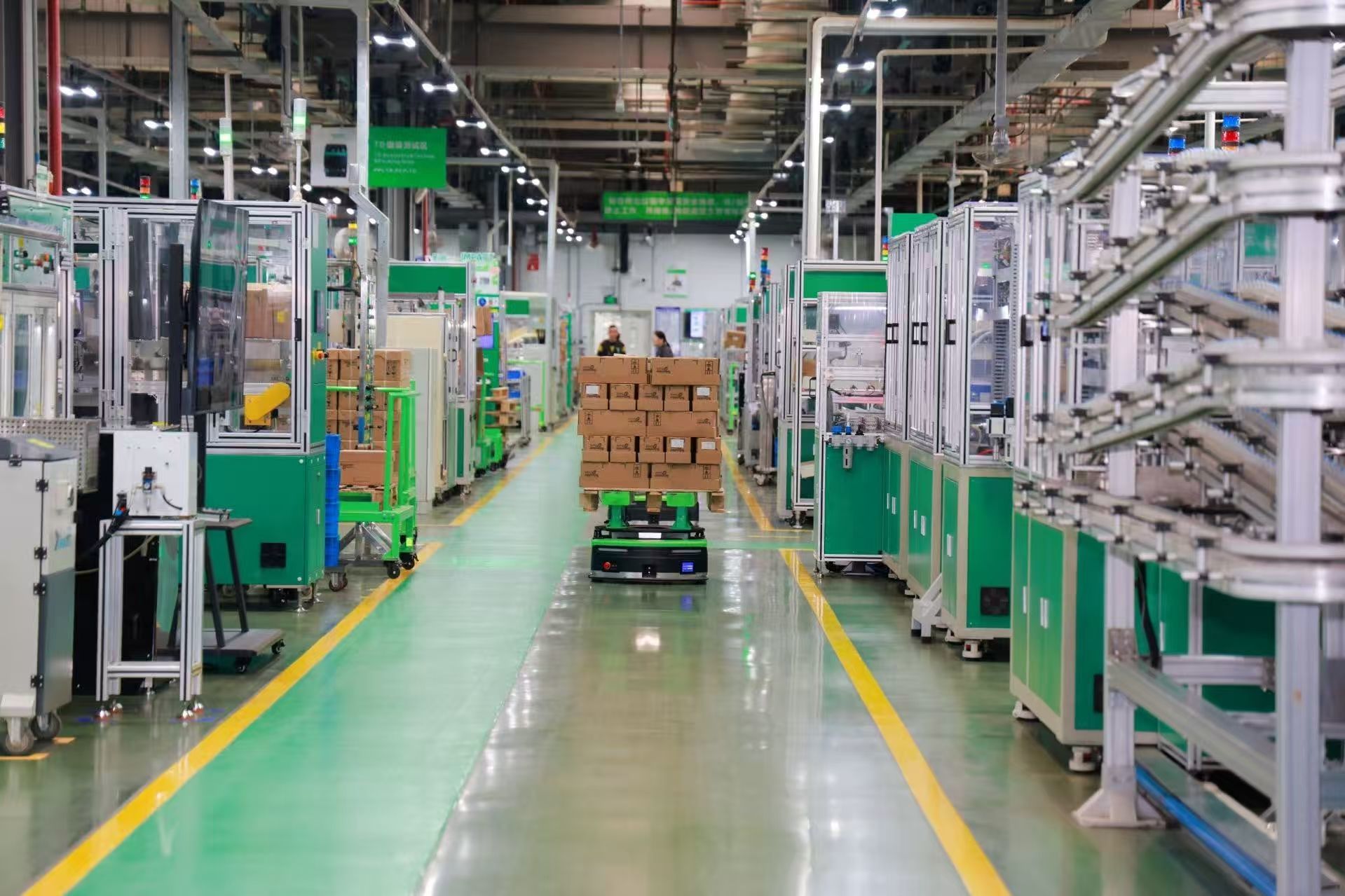
Core Viewpoint - Schneider Electric's Wuhan factory has been recognized as a "Talent Lighthouse Factory" by the World Economic Forum, highlighting its commitment to integrating advanced technology with workforce development [1][10]. Group 1: Factory Innovations - The factory has implemented 21 AI agents and achieved 80% automation in its processes, showcasing a significant shift towards smart manufacturing [3]. - Maintenance time has been reduced by 50% due to the use of augmented reality (AR) glasses, which provide real-time guidance for technicians [4]. - The factory utilizes a "5G + vision" system to monitor production lines, allowing for real-time data access from remote locations [3]. Group 2: Workforce Development - The factory has developed a comprehensive talent development system that includes skill mapping and personalized training programs, enabling employees to grow and adapt to new technologies [6][11]. - Collaboration with local vocational schools has been established to create AI training facilities, shortening the learning curve for new employees [11]. - The factory's approach emphasizes human-machine collaboration rather than replacement, focusing on enhancing employee roles in innovation and process optimization [8]. Group 3: Strategic Importance - The factory's establishment coincided with China's industrial upgrade, positioning it as a key player in meeting local market demands and driving innovation [10]. - Wuhan's geographical advantages and strong industrial base provide a fertile environment for smart manufacturing and talent cultivation [11]. - Over the past five years, the factory has seen a 200% increase in product variety, transitioning from mass production to flexible manufacturing [13].

“雷声大雨点小”!Wedbush称格陵兰关税之争拖累市场 但正是抄底科技股良机
智通财经网· 2026-01-20 13:07
Core Viewpoint - The ongoing tariff dispute surrounding Greenland is expected to weaken the market but simultaneously presents a good opportunity for investors to position themselves in leading tech stocks [1][2]. Group 1: Market Impact - The market is experiencing weakness due to widespread concerns over the tariff debate between the US and Europe, leading to a sluggish pre-market performance for US stocks [1]. - Analysts believe that the current political tensions will ultimately ease, similar to past situations, and the tariff threats will diminish as negotiations progress [1]. Group 2: Investment Opportunities - The rise in risk aversion has particularly impacted AI concept stocks, putting pressure on the tech sector, but this is viewed as an excellent time for investors to acquire leading tech stocks for 2026 and beyond [1]. - The upcoming strong Q4 earnings season for tech giants is anticipated, with capital expenditures for US tech companies reaching $550 billion this year, driving a new growth cycle in the AI revolution [1]. Group 3: Competitive Landscape - The US has reportedly surpassed China in the tech race for the first time in 30 years, with major US tech firms like Nvidia, Microsoft, Palantir, Google, AMD, and Amazon becoming key drivers of the current AI revolution [2]. - Analysts recommend increasing positions in several AI stocks, including Nvidia, Microsoft, Palantir, and Tesla, as the political drama surrounding tariffs offers another opportunity to invest in leading tech companies [2]. Group 4: Political Context - President Trump is scheduled to attend the World Economic Forum in Davos, where discussions on the tariff issue and its implications for global trade are expected to be a central topic [2]. - The US Treasury Secretary has urged European nations not to retaliate against the US tariffs related to the Greenland issue [3].






超越“第四次工业革命”:关于人工智能与人类主体性的再思考
3 6 Ke· 2026-01-20 12:11
Core Insights - The current discourse around artificial intelligence (AI) is often framed as the "Fourth Industrial Revolution," likening it to previous industrial transformations, but this perspective is limited in understanding the deeper cognitive and existential implications of AI [1] - The emergence of generative AI signifies not just an upgrade in tools but a profound crisis and reconstruction of subjectivity, akin to a digital renaissance [2] Historical Context - To comprehend the mixed emotions of excitement and fear regarding AI, it is essential to revisit the Middle Ages, where human reason was seen as auxiliary to divine order, limiting human agency [3] - The Renaissance marked a significant shift in value systems, emphasizing human dignity and the freedom of self-definition, as articulated by thinkers like Pico della Mirandola [4][5] Technological Parallels - The Renaissance was not solely a philosophical movement but was also driven by technological advancements, such as linear perspective in art, which parallels today's AI technologies [8] - The introduction of linear perspective transformed visual representation, allowing for a measurable and calculable understanding of the world, similar to how Transformer models process language in high-dimensional semantic spaces [10][12] Knowledge Distribution - The invention of the printing press by Gutenberg drastically reduced the marginal cost of information distribution, leading to a democratization of knowledge, which generative AI is now extending by lowering the barriers to creative skills [15][17] - Generative AI is enabling a form of "skill democratization," allowing individuals without formal training to access advanced capabilities, thereby disrupting existing social structures more profoundly than the Industrial Revolution [17] Ethical Considerations - There is a risk of a resurgence of "digital theocracy," where algorithmic systems increasingly dictate human choices, leading to a potential loss of agency [18][19] - The commodification of individuals as mere data sources in AI systems threatens the ethical principle of viewing humans as ends in themselves, raising concerns about the erosion of human dignity [21][22] Future Outlook - The path forward requires a redefinition of human irreplaceability in the face of advancing AI, emphasizing the importance of human values and ethical considerations in technology [22][25] - The future will likely favor individuals who possess deep humanistic knowledge and the ability to define problems and assign meaning, rather than merely those who can accumulate knowledge [24][25]

永利股份:子公司从事智能设备业务,提供自动化集成方案
Xin Lang Cai Jing· 2026-01-20 10:47
Group 1 - The core viewpoint of the article emphasizes the alignment of Shanghai Youlipu Intelligent Equipment Manufacturing Co., Ltd. with the trend of AI-driven one-person companies, suggesting that advancements in AI technology will make this business model more mainstream [1] - The company’s subsidiary focuses on the research, manufacturing, and sales of intelligent conveying and sorting equipment, providing efficient automation integration solutions tailored to various application scenarios [1] - The company aims to contribute to the realization of Industrial 5.0 and the fourth industrial revolution through its products, which support modernized factories with fewer personnel and increased automation [1]

超越“第四次工业革命”:关于人工智能与人类主体性的再思考
腾讯研究院· 2026-01-20 09:53
Core Viewpoint - The article discusses the transformative impact of artificial intelligence (AI) on society, likening it to a "digital renaissance" that challenges traditional notions of human agency and intelligence [2][3][6]. Group 1: Historical Context and Comparison - The current developments in Silicon Valley echo not only the industrial changes of the 18th century but also the profound intellectual shifts of the Renaissance in Florence during the 14th to 16th centuries [3]. - The article emphasizes that we are experiencing a crisis and reconstruction of subjectivity, marking a significant shift in how humans perceive their role in the world [3][6]. Group 2: The Nature of AI and Human Cognition - The emergence of generative AI raises ontological anxieties about human uniqueness, as AI demonstrates capabilities that closely resemble human reasoning and creativity [7][26]. - The article argues that while the Renaissance liberated humans from theological constraints, the "digital renaissance" compels a reevaluation of human identity in the face of advanced AI [7][26]. Group 3: Technological Tools and Their Impact - The article draws parallels between the linear perspective of the Renaissance and the transformer architecture of modern AI, suggesting that both represent significant cognitive tools that reshape understanding [9][13]. - Generative AI is seen as an exponential extension of the printing press, drastically reducing the cost of initial creation and democratizing access to skills previously reserved for trained professionals [17][20]. Group 4: Ethical Considerations and Risks - The article warns of the potential for a "digital theocracy," where algorithmic decision-making could undermine human agency and reduce individuals to mere data points [21][24]. - It highlights the ethical risks of commodifying human beings, where individuals may be viewed as mere sources of data rather than as autonomous agents [25][26]. Group 5: Future Directions and Human Value - The article posits that the true spirit of the renaissance is not to reject technology but to redefine human irreplaceability in the face of AI advancements [26][29]. - It emphasizes the importance of human qualities such as empathy, moral intuition, and the ability to assign meaning, which remain beyond the reach of AI [28][30].

李迅雷最新观点:这么低的市盈率来描述这么一个伟大的时代,说明市场还是谨慎
Xin Lang Cai Jing· 2026-01-19 11:36
Group 1 - The current macro trend is characterized by the beginning of the "fourth industrial revolution" led by AI, which is expected to have a much higher level of impact than the internet revolution [2][12] - AI companies currently have a price-to-earnings ratio of around 40 to 50, which is considered low for such a significant era, indicating that the market is still cautious about AI [3][33] - The real estate market is in a down cycle that may not end in the short term, and it is important to respect the power of trends [4][70] Group 2 - Gold is viewed positively as an investment due to currency devaluation and the need for hedging against risks, with a significant increase in money supply over the past 30 years [5][72] - Central banks currently hold approximately 1.15 billion ounces of gold, which is less than the 1.23 billion ounces held 60 years ago, highlighting a potential opportunity in gold investment [6][94] - Investors are advised to base their asset allocation on national fiscal expenditure structures and to leverage industry ETFs to capture structural opportunities [7][73] Group 3 - The investment strategy should focus on high-tech and innovative sectors, such as innovative pharmaceuticals to address aging populations and new consumption patterns to counter traditional market saturation [16][84] - Value investment should not be limited to long-term holding; adaptability and innovation are also crucial for long-term success [18][87] - The market is expected to experience structural opportunities driven by technological advancements, with a focus on sectors like new materials and innovative drugs [41][111] Group 4 - The current market is experiencing a structural bull market, primarily driven by increased risk appetite rather than profit growth, with a notable decline in corporate earnings from 2021 to 2024 [108][110] - The ongoing down cycle in real estate is expected to continue until 2026, but the long-term impact of the fourth industrial revolution will significantly influence market dynamics [46][111] - Investors should be prepared to seize buying opportunities during market panic, as systemic risks may present favorable entry points [122][124]

中国高质量发展为世界经济注入稳定性——访世界经济论坛执行董事马尔万·凯鲁兹
Xin Hua Wang· 2026-01-19 09:18
Group 1 - The core viewpoint is that China's transition from high-speed growth to high-quality development injects stability and momentum into the global economy amid geopolitical conflicts and economic fragmentation risks [1][2] - China's investment in clean energy reached $818 billion in 2024, a 20% increase from the previous year, highlighting its role as a major contributor to global renewable energy capacity [1] - The digital economy, represented by artificial intelligence, advanced manufacturing, and digital services, is significantly enhancing efficiency across various industries in China [1] Group 2 - Nearly 40% of the global "lighthouse factories" recognized by the World Economic Forum are located in China, showcasing its leadership in applying Fourth Industrial Revolution technologies [2] - China's manufacturing supply chain is globally competitive, and its advancements in green technology and advanced manufacturing are crucial in addressing climate change and supply chain instability [2] - The importance of utilizing multilateral mechanisms to promote healthy competition and mutual cooperation in the face of rising trade protectionism is emphasized [2] Group 3 - The World Economic Forum's 2026 annual meeting will be held in Davos, focusing on the theme of "the spirit of dialogue," which is deemed essential for building trust, a cornerstone for global economic growth and stability [3]