
绿色低碳循环经济

Search documents
瀚蓝环境:牵手中资环国际 共拓新兴能源的开发与应用
Zheng Quan Shi Bao Wang· 2025-10-20 13:21
Core Viewpoint - The collaboration between Huanlan Environment and Zhongzi Huan International aims to enhance cooperation in renewable oil trade, waste oil treatment, green energy, and biomass energy, contributing to energy transition projects in China [1][2][3] Group 1: Partnership Details - Huanlan Environment's subsidiary, Huanlan Bioenergy Technology (Guangdong) Co., Ltd., signed a cooperation agreement with Zhongzi Huan International to focus on technology research and development, market expansion, and resource sharing [1] - Zhongzi Huan International, a member of China Resource Group, aims to build a global supply chain for strategic renewable resources, focusing on sectors like power batteries, biodiesel, and recycled non-ferrous metals [1][2] Group 2: Strategic Goals - The partnership is aligned with the "14th Five-Year" circular economy development plan and energy transition strategy, representing a strong alliance between industry leaders [2] - The collaboration will create a full-chain cooperation model from resource recovery to deep processing and terminal application, providing replicable demonstration experiences for green low-carbon transformation in the Guangdong-Hong Kong-Macao Greater Bay Area [2] Group 3: Operational Strengths - Huanlan Environment operates 19 kitchen waste treatment and animal harmless treatment plants nationwide, ensuring stable output of waste oil and biodiesel through diverse and stable raw material sources [2] - The company has established a comprehensive, intelligent, and efficient collection and transportation system for waste oil, ensuring traceability and biosecurity from source to treatment center [2] Group 4: Innovation and Commitment - The collaboration is highly aligned with national green development strategies and Huanlan Environment's green innovation strategy, aiming to provide innovative practice cases for the circular economy [3]

千亿级市场!我国动力电池将迎来规模化退役阶段
Ren Min Ri Bao· 2025-10-17 08:14
Core Insights - China has become a major producer and consumer of power batteries, with projected production of over 13 million new energy vehicles in 2024, maintaining the global lead for 10 consecutive years [1] - The country is entering a phase of large-scale retirement of power batteries, with an estimated recycling volume exceeding 300,000 tons in 2024, corresponding to a market size of over 48 billion yuan, and expected to surpass 100 billion yuan by 2030 [1] - The State Administration for Market Regulation is actively promoting the standardization of power battery recycling to support the industry's development [1][2] Group 1: Standardization and Regulations - The State Administration for Market Regulation, in collaboration with relevant departments, is developing national standards for the entire power battery recycling industry chain, providing strong technical support for the sector [1] - Standards have been established for collection, storage, transportation, and handling of retired batteries, ensuring traceability and safety during the recycling process [1][2] - The "General Requirements for Recycling and Utilization of Vehicle Power Batteries" standard specifies packaging insulation, safety classification, and information traceability, promoting controllable traceability and safe transportation [1] Group 2: Physical and Chemical Processing Standards - National standards for physical processing, including disassembly, discharge, and sorting, have been revised to enhance safety and environmental protection during battery processing [2] - The "Disassembly Specifications for Used Power Batteries" standard has improved disassembly efficiency by over 50% [2] - Chemical recycling standards have been published to regulate harmful substance handling and reduce pollutant emissions, achieving a reduction in overall energy consumption by over 30% [2] Group 3: Resource Recovery and Efficiency - The recycling of power batteries is seen as a new source of "urban mining," allowing for efficient extraction and recycling of strategic metals like lithium, cobalt, and nickel, which is crucial for supply chain stability and green economy [3] - Standards have been established to regulate the construction of recycling networks, ensuring compliance and safety throughout the recycling process [4] - The "Recycling Utilization of Vehicle Power Batteries" standard sets strict recovery rate targets, requiring a minimum recovery rate of 98% for nickel, cobalt, and manganese, and 85% for lithium [5] Group 4: Future Directions - The State Administration for Market Regulation plans to further optimize the standard system, focusing on key areas such as recycling efficiency, carbon footprint accounting, and the traceability of recycled materials [5][6]
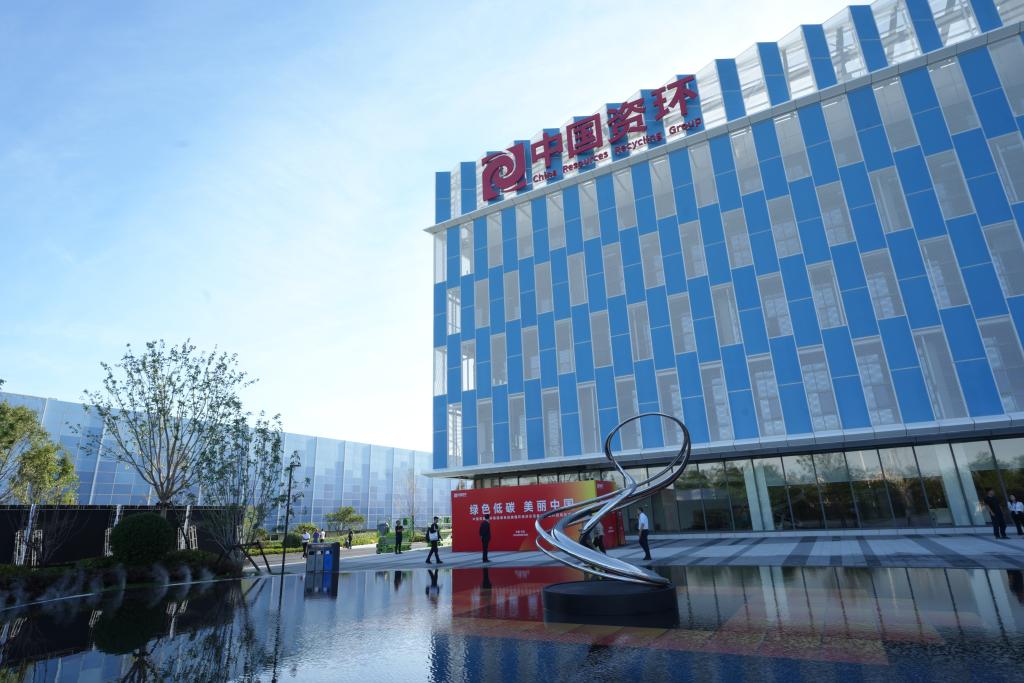
全国首个资源循环领域示范基地在天津试运行
Yang Guang Wang· 2025-09-01 23:05
Core Insights - The first resource recycling demonstration base in China, the China Resource and Environmental Green Low-Carbon Circular Economy Demonstration Base, has commenced trial operations in Tianjin [1][2] - The base aims to establish an international leading "zero-carbon park" and create a new paradigm for the global circular economy [1] Group 1: Infrastructure and Development - The demonstration base covers a total area of 266,000 square meters and includes industrial plants, a comprehensive office building, and a zero-carbon theme park [1] - It integrates a new development model of "green port + circular economy," incorporating resource, energy, digital, and asset circulation concepts [1] Group 2: Technological and Environmental Innovations - The base utilizes a range of recycled products and materials, including a "Resource and Environmental Station" made from retired full-color photovoltaic components, providing various services to employees [2] - The site features sustainable energy solutions powered by retired photovoltaic components and incorporates recycled materials in landscaping and public spaces [2] Group 3: Economic Impact and Future Prospects - The operation of the demonstration base is expected to enhance the resource recycling chain, promote high-end, intelligent, and green industrial development, and foster a trillion-level industrial cluster [2] - It aims to provide a replicable "Chinese solution" for the development of the resource recycling industry and contribute to the construction of a beautiful China [2]
每日市场观察-20250829
Caida Securities· 2025-08-29 05:58
Market Performance - On August 28, the market experienced a V-shaped rebound, with the Shanghai Composite Index rising by 1.14%, the Shenzhen Component Index by 2.25%, and the ChiNext Index by 3.82%[4] - On August 29, the index showed a V-shaped reversal with a trading volume of 3 trillion, a decrease of approximately 200 billion from the previous trading day[1] Sector Trends - Most sectors saw gains, with telecommunications, electronics, military, and computers leading the increases, while coal, agriculture, textiles, and food and beverage sectors experienced slight declines[1] - The leading AI chip stocks surpassed the leading liquor stocks in price, indicating a significant shift towards technology as a long-term market focus[1] Capital Flow - On August 28, the net capital outflow from the Shanghai Stock Exchange was 14.55 billion, while the Shenzhen Stock Exchange saw a net inflow of 33.13 billion[5] - The top three sectors for capital inflow were telecommunications equipment, semiconductors, and components, while the top three sectors for outflow were power, chemical pharmaceuticals, and liquor[5] Investment Insights - Following the new highs in AI chip stocks, the leading semiconductor foundries also reached new price highs, indicating a broadening of the tech market from AI to semiconductors[2] - The brokerage industry benefits from the high certainty in the market, suggesting that investors should consider positioning during pullbacks[2] Policy Developments - The "2025 China Top 500 Private Enterprises" report was released, with JD Group, Alibaba, and Hengli Group ranking in the top three[6] - Upcoming policies to promote service exports are expected to be announced, aimed at enhancing service supply capabilities and stimulating service consumption[7]
中国资环绿色低碳循环经济示范基地试运行
Ren Min Ri Bao· 2025-08-28 22:11
Core Points - The China Resource Recycling Group's green low-carbon circular economy demonstration base has commenced trial operation in Tianjin, marking a significant step in the establishment of a green low-carbon circular development economic system [1] - The demonstration base, covering a total area of 266,000 square meters with a building area of 108,000 square meters, aims to create an internationally leading "zero-carbon park" and establish a new paradigm for the global circular economy [1] - The base incorporates a variety of recycled products and materials, including a "Resource Recycling Station" made from retired full-color photovoltaic components, which provides various services for employees and contributes to the continuous supply of green energy [1] Company Overview - China Resource Recycling Group, headquartered in Tianjin, was established in October of the previous year and is dedicated to resource recycling, playing a crucial role in building a national, functional resource recovery and reuse platform [1]
中国资环集团绿色低碳循环经济示范基地在天津试运行
Xin Hua Wang· 2025-08-28 16:17
Core Points - The China Resource Environment Group's green low-carbon circular economy demonstration base has begun trial operations in Tianjin, marking a significant step in the establishment of a green low-carbon circular development economic system [1][3] - The demonstration base covers a total area of 266,000 square meters and a building area of 108,000 square meters, featuring industrial plants, a comprehensive office building, and a zero-carbon theme park [1] - The base aims to create a complete chain from green sorting to tiered utilization and recycling, focusing on strategic emerging industries such as the recycling of used batteries and retired photovoltaic components [1] Industry Insights - The demonstration base is positioned as a key project under the "central-local co-construction and integration of industry and city" initiative, highlighting the importance of collaboration between different levels of government and industry [1] - The base is expected to enhance green energy supply and leverage battery assets and scheduling platforms to provide smart energy services, thereby expanding circular application scenarios [3]

三佳科技: 三佳科技2025年半年度报告
Zheng Quan Zhi Xing· 2025-08-25 16:34
Core Viewpoint - The company reported a significant decline in key financial metrics for the first half of 2025, with a notable drop in revenue and net profit compared to the same period in 2024, primarily due to increased credit impairment losses and market competition [2][3][4]. Financial Performance - Revenue for the first half of 2025 was approximately 151.28 million yuan, a decrease of 3% from 155.95 million yuan in the same period last year [2][3]. - Total profit for the period was about 2.12 million yuan, down 74.57% from 8.34 million yuan in the previous year [2][3]. - Net profit attributable to shareholders was approximately 1.93 million yuan, reflecting a 75.99% decline from 8.03 million yuan in the prior year [2][3]. - The net cash flow from operating activities was 13.86 million yuan, a decrease of 56.26% compared to 31.69 million yuan in the previous year [2][3]. Business Overview - The company operates in the semiconductor packaging and testing industry, focusing on plastic packaging molds and related equipment [4][5]. - The semiconductor industry is expected to continue its rapid growth due to technological advancements and market expansion [4][5]. - The company has faced intensified competition in the mid-to-low-end product segments, leading to a significant reduction in sales revenue [4][5]. Investment Activities - The company acquired a 51% stake in Anhui Zhonghe Semiconductor Technology Co., Ltd. for 121.38 million yuan, which will be consolidated into the company's financial statements starting August 2025 [12][13]. - The acquisition is expected to enhance the company's capabilities in the semiconductor sector [12][13]. Industry Trends - The semiconductor packaging industry is experiencing rapid growth, driven by advancements in technology and increasing market demand [4][5]. - The chemical building materials industry is also evolving, with a focus on energy efficiency and sustainable practices [4][5]. - The precision machinery and heavy-duty conveyor belt industry is facing challenges such as low-price competition and fluctuating demand, necessitating technological upgrades and market adjustments [4][5].

追绿添金 点绿成金 借绿生金 苏州擘画高质量发展绿色底盘
Su Zhou Ri Bao· 2025-08-15 00:29
Group 1 - Suzhou is transforming its traditional production and consumption models to promote efficient resource utilization and upgrade its industrial structure, focusing on a green low-carbon circular economy [1][2] - The number of near-zero carbon factories in Suzhou is expected to increase by over 91% year-on-year in 2024, reducing greenhouse gas emissions by approximately 700,000 tons per year [1] - The Suzhou Industrial Park is home to a modern circular economy industrial park that redefines waste management, processing organic waste into biogas and creating green electricity [2] Group 2 - The Wujiang District has focused on the textile and dyeing industries, eliminating over 80,000 low-end water jet looms and 267 outdated coating production lines to promote intelligent and green transformation [3] - The Suzhou Intelligent Manufacturing Service Park has attracted over 220 enterprises, showcasing the successful implementation of the "Green Mountains and Clear Water are Gold and Silver Mountains" development philosophy [3] Group 3 - Suzhou is leveraging technology to empower green development, establishing itself as a national hub for the new energy industry, with distributed photovoltaic capacity exceeding 1 GW [5][7] - The city has developed a carbon trading service center that has facilitated carbon reduction for over 500 enterprises, achieving a carbon reduction of over 340,000 tons [5] Group 4 - The ecological product value realization mechanism is being actively developed in Suzhou, aiming to convert ecological dividends into developmental benefits [8] - The city has seen significant economic benefits from ecological initiatives, with the GEP (Gross Ecosystem Product) and GDP both increasing through the development of ecological economies [9][10] Group 5 - Suzhou has pioneered an enterprise self-inspection service platform for environmental protection, rewarding compliant companies with policy incentives, thus converting ecological advantages into developmental strengths [11] - The integration of ecology and industry is creating a multiplier effect in Suzhou, enhancing both environmental and economic outcomes [12]
黑粉“金矿”争夺战
Zhong Guo Qi Che Bao Wang· 2025-08-05 04:05
Core Viewpoint - The recycling of black powder from discarded lithium-ion batteries is emerging as a valuable resource, with significant implications for the global competition in the electric vehicle and battery industries [2][4][10]. Group 1: Resource Outflow Risks - In the first half of the year, China exported 1.06 million new energy vehicles, with a year-on-year increase of 71.3%, and the total weight of exported lithium-ion batteries reached 2.0872 million tons, up 72.62% [3]. - The production of power batteries in China reached 697.3 GWh in the first half of the year, a 60.4% increase, indicating a growing demand for raw materials [3]. - The reliance on foreign sources for key minerals like nickel, cobalt, and lithium is high, with dependency rates of 93%, 98%, and 63% respectively, posing a risk to resource security [4]. Group 2: Policy Changes and International Competition - China is opening its doors to the import of black powder, while the EU is tightening export regulations, marking the beginning of an international competition for this resource [6][8]. - The EU has prohibited the export of black powder and similar materials to non-OECD countries, complicating the situation for Chinese companies seeking to recover these resources [8][9]. - The value and scarcity of black powder are reflected in the contrasting policies of China and the EU, highlighting its strategic importance in the global market [9]. Group 3: Technological and Economic Considerations - The average lifespan of power battery products is 5 to 8 years, suggesting a surge in battery retirements around 2025, which will necessitate effective recycling strategies [5]. - The recovery of black powder can significantly reduce production costs by approximately 60% compared to extracting from primary minerals, enhancing the economic viability of the new energy vehicle industry [10][11]. - Domestic companies face challenges in technology and equipment, with a need to innovate and improve efficiency in black powder recovery processes to compete globally [13][14]. Group 4: Strategic Initiatives and Future Directions - Companies are encouraged to establish cross-regional resource recovery networks to enhance their capabilities in the competitive landscape [14][17]. - Collaborations with local firms in regions like the EU for battery recycling can provide a viable solution to the challenges posed by export restrictions [15][16]. - The focus on technological innovation and the establishment of a "green recycling" brand can help domestic companies gain a competitive edge in the international market [12][17].

上半年四十二家相关规上企业营收约二十八亿元 重庆潼南深耕节能环保产业
Jing Ji Ri Bao· 2025-07-31 21:43
Core Viewpoint - Chongqing's Tongnan District has signed contracts for 8 energy-saving and environmental protection projects with a total investment of 9.87 billion yuan, aiming to promote industrial structure transformation and support green low-carbon circular economy development [1] Summary by Relevant Sections Investment and Economic Impact - The total investment for the signed projects is 9.87 billion yuan [1] - In the first half of the year, 42 energy-saving and environmental protection enterprises in the district achieved revenue of 2.796 billion yuan, representing a year-on-year growth of 21.5% and accounting for 39% of the district's industrial output [1] Industrial Development Strategy - Tongnan District is focusing on building industrial clusters through park construction, with over 30 square kilometers dedicated to various specialized parks, including those for hydrogen energy, photovoltaics, automotive remanufacturing, surface environmental treatment, and new energy storage [1] Hydrogen Energy Initiatives - The district is accelerating the establishment of a hydrogen fuel engine manufacturing base and aims to create a comprehensive hydrogen energy innovation ecosystem that includes technology research and development, testing and certification, and achievement transformation [1] Policy and Future Plans - The district plans to develop the energy-saving and environmental protection industry along the entire value chain, enhance project implementation, and establish a full-cycle service mechanism for these projects, with the goal of becoming a hub for energy-saving and environmental protection industries in the western region [1]