美联储决策

Search documents
君諾金融:金价静待数据破局,本周经济指标会否改变降息预期?
Sou Hu Cai Jing· 2025-11-24 04:10
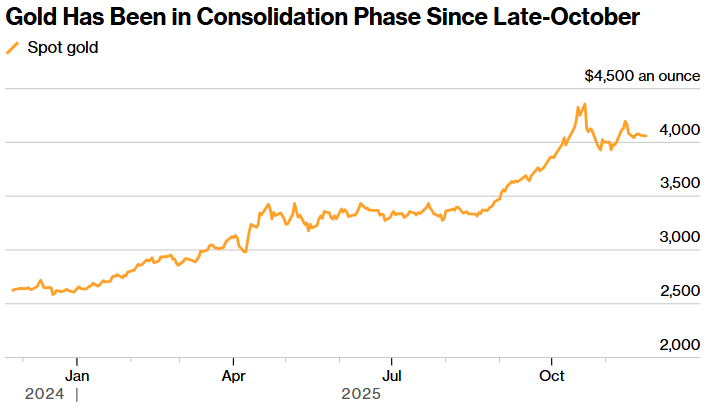
Core Viewpoint - Gold prices experienced a brief rebound to $4,100 but ultimately settled around $4,050, influenced by a slight strengthening of the dollar and a mild increase in the metals sector [2] Group 1: Market Dynamics - The market is currently focused on the Federal Reserve's potential interest rate cuts, with a 60% probability of a 25 basis point cut next month indicated by futures markets [2] - Recent comments from New York Fed President Williams suggested signs of cooling in the labor market, which provided a temporary boost to gold prices [2] - Economic data releases, including retail sales, producer price index, and unemployment claims, are anticipated to provide clearer insights into the macroeconomic environment [2] Group 2: Gold Price Trends - Since reaching a historical high of $4,380 per ounce in late October, gold has entered a consolidation phase, maintaining an overall increase of approximately 55% year-to-date [2] - Ongoing trade uncertainties, geopolitical tensions, and concerns over fiscal conditions in certain countries continue to support safe-haven demand for gold [2] - In the short term, gold prices are expected to remain range-bound, driven by macroeconomic expectations as investors await new economic data [2]

11月18日:BTC、ETH、ZEC、ADA、FLM 、MET行情分析
Sou Hu Cai Jing· 2025-11-18 07:47
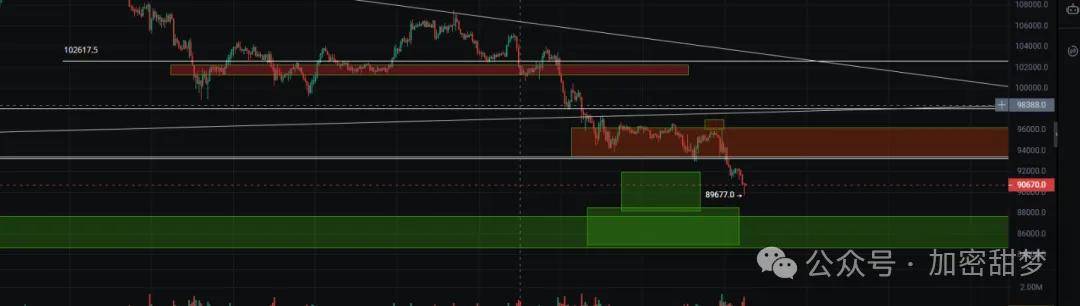
Group 1: Bitcoin Market Dynamics - Bitcoin continues to decline, influenced by ongoing sell-offs from investors behind BlackRock, with no signs of a bottom yet [1] - Altcoins are showing resilience, with some experiencing upward movement despite Bitcoin's downturn, indicating a potential decoupling from Bitcoin's performance [1] - Current Bitcoin support levels are identified at 83,000-86,400 (daily) and 74,600-86,000 (weekly), suggesting strong resistance against further declines [1] Group 2: Ethereum Analysis - Ethereum's recent rebound is not indicative of a trend reversal, with key resistance at 3,100 and a bearish outlook due to EMA indicators [3] - Strong support levels for Ethereum are noted at 2,960-2,926 and 2,800, with a recommendation to wait for Bitcoin's stabilization before considering entry [3] Group 3: Zcash Performance - Zcash is experiencing a significant downturn, down 15%, with strong selling pressure and a potential for deeper corrections [4] - Key trading levels for Zcash include entry range of 585-590, with targets set at 565, 552, and 540, and a stop-loss at 603 [4] Group 4: Market Liquidity and Economic Indicators - The end of the current downturn is contingent on the return of liquidity, with potential catalysts including ETF inflows and Federal Reserve actions [11] - Upcoming economic data releases, such as non-farm payrolls and CPI, could influence Federal Reserve policy decisions [12] - The probability of interest rate cuts in December may rise, which could serve as a market stabilizer [13] Group 5: Long-term Market Outlook - A significant liquidity injection is necessary for a fundamental market recovery, with expectations for TGA spending and a shift from QT to QE [14] - The current high-leverage environment poses risks, with many investors potentially unable to wait for long-term recovery signals [14]
美国政府停摆后:多数据将发布,影响美联储决策
Sou Hu Cai Jing· 2025-11-16 07:43
Core Insights - The longest government shutdown in U.S. history has ended, leading to a backlog of data that will be released in the coming weeks, providing critical information for the market and the Federal Reserve [1] Group 1: Data Release Schedule - The U.S. Department of Commerce and the Department of Labor have announced a timeline for the release of various economic data starting next week [1] - Key reports include the September non-farm payrolls on November 20, September real wage data on November 21, and the revised Q3 GDP on November 26 [1] - Additional reports will cover October personal income, spending, PCE price index, and the October international trade report on December 4, with the final Q3 GDP value set for December 19 [1] Group 2: Implications for the Federal Reserve - Morgan Stanley predicts that the Federal Reserve will have complete data on employment and inflation before its meeting on December 9-10 [1] - The timely release of the October and November employment reports is crucial for the Fed's decision-making process [1]

US Firms Shed 11,250 Jobs a Week in 4 Weeks to Oct. 25
Youtube· 2025-11-11 16:08
Labor Market Insights - The ADP report indicates an average job loss of 11,250 per week over the four weeks leading up to October 25, suggesting a weak labor market and contradicting the idea of stabilization [1] - There are concerns that the recent government shutdown and layoffs of federal workers may be affecting the job figures, with potential for a rebound in the coming weeks [3] - Mixed data points are emerging, including a decline in small business confidence due to falling sales and demand, which is significant as small businesses are major employers [4] Inflation and Federal Reserve Outlook - The latest Consumer Price Index (CPI) reading suggests that while inflation remains above the Federal Reserve's target, it is not worsening, leaving the Fed with a wide range of options for their December meeting [5] - The decision on whether to cut rates will depend on the balance between wage inflation and job market conditions, with upcoming official data being crucial for understanding the current economic situation [5][6]

美联储杰斐逊:美联储基于数据、前景和风险平衡来做出决策。
Sou Hu Cai Jing· 2025-11-07 13:09
Core Viewpoint - The Federal Reserve, represented by Jefferson, emphasizes that its decisions are based on data, outlook, and a balance of risks [1] Summary by Relevant Categories - **Decision-Making Process** - The Federal Reserve's approach to decision-making involves a careful analysis of data and future economic outlooks, alongside an assessment of associated risks [1]
机构:黄金冲关4000美元乏力,强势美债收益率成逆风
Sou Hu Cai Jing· 2025-11-06 06:30
Core Viewpoint - Spot gold prices have gradually recovered to the range of $3980-$3990 after a sell-off, but current price momentum appears insufficient to challenge the psychological level of $4000 [1] Group 1: Market Dynamics - The ten-year U.S. Treasury yield surged to 4.16%, reaching a one-month high, which could continue to support the dollar and exert pressure on the gold market [1] - The bond market is showing signs of an independent trend, influenced by slightly better-than-expected U.S. private sector economic data, which may impact the Federal Reserve's decision in December [1] Group 2: Interest Rate Expectations - Traders are currently pricing in a 61% probability of a 25 basis point rate cut in December, but this is not guaranteed [1] - Any adjustments to the market's pricing of rate cut expectations will have a significant impact on gold in the coming weeks [1] Group 3: Seasonal Trends - The upcoming period from December to January is traditionally a bullish season for precious metals [1]
美国党争闹“新疯”!雇员欠薪、平民经济被坑惨,两党死磕不松口
Sou Hu Cai Jing· 2025-10-22 05:34
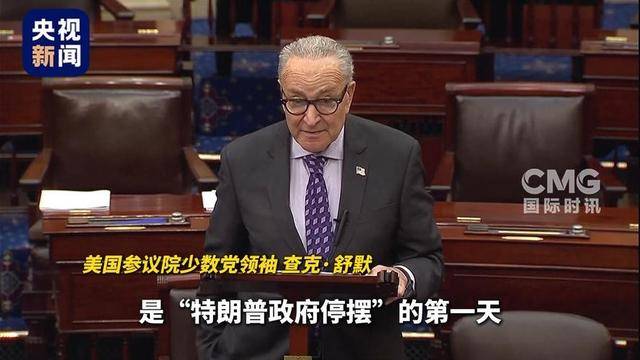
Group 1 - The ongoing government shutdown in the U.S. has significant implications for both the economy and the livelihoods of federal employees, with many working without pay and others on forced leave [1][3][5] - Recent polls indicate that Congress's approval rating has dropped to 18%, highlighting public frustration over the political stalemate and its impact on ordinary citizens [5][10] - The delay in the release of key economic data, including the CPI, has created uncertainty in the markets, as analysts lack reliable indicators to assess economic conditions [8][19] Group 2 - The Senate's eighth vote failed to pass a funding bill, with a significant gap of 11 votes from the required threshold, reflecting deep partisan divisions over budget allocations [10][12] - The core disagreement between the two parties centers on funding for Medicaid, with Republicans advocating for spending cuts and Democrats insisting on maintaining support for low-income groups [12][15] - The ongoing political impasse has escalated tensions, particularly with former President Trump's announcement of a plan to permanently lay off federal employees, complicating negotiations further [17][19] Group 3 - The Federal Reserve faces challenges in making informed decisions due to the delayed CPI data, which is crucial for assessing inflation trends ahead of their upcoming meeting [19][24] - Historical context shows that previous shutdowns have had severe economic repercussions, and the current situation is more complex due to the intertwining issues of healthcare funding and economic data uncertainty [22][27] - The upcoming CPI data release on October 24 is seen as a potential turning point that could either facilitate negotiations or prolong the deadlock, with significant consequences for ordinary citizens [24][27]

美国里士满联储主席Barkin(2027年FOMC票委):美国企业目前既没有大规模招聘,也没有裁员。劳动力需求和供给正在以相同
Sou Hu Cai Jing· 2025-10-16 12:25
Core Viewpoint - The current labor market in the U.S. shows no significant hiring or layoffs, with demand and supply contracting at a similar pace, indicating a stable yet cautious economic environment [1] Group 1: Labor Market Dynamics - U.S. companies are neither engaging in large-scale hiring nor layoffs, reflecting a balanced labor market [1] - Labor demand remains robust, particularly among high-income groups, suggesting a divergence in economic activity based on income levels [1] Group 2: Cost Management and Productivity - Companies are planning to pass on tariff costs to consumers, indicating a strategy to manage rising expenses [1] - There are signs of improving productivity, which may help alleviate some cost pressures faced by businesses [1] Group 3: Consumer Behavior - Consumers continue to spend, but with more caution compared to previous years, indicating a shift towards more selective purchasing decisions [1] Group 4: Federal Reserve Data Challenges - The Federal Reserve is facing challenges due to a reduction in available data, complicating its decision-making process [1]
美政府“停摆”,劳工部数据报告发布一推再推,将影响美联储决策
Sou Hu Cai Jing· 2025-10-15 18:33
Group 1 - The U.S. government shutdown has delayed the release of key economic reports, including the Consumer Price Index (CPI) and employment data, which are crucial for economic assessment [1] - The Labor Department's Bureau of Labor Statistics, responsible for these reports, is significantly impacted by the shutdown, leading to potential longer delays in data collection and processing for October [1] - Federal Reserve Chairman Jerome Powell indicated that the Fed is currently relying on private sector data to evaluate the economy, but emphasized that this cannot replace government statistics, particularly for October data [1] Group 2 - High inflation typically necessitates the Federal Reserve to maintain high interest rates, while a slowing job market would push for rate cuts [2] - In August, U.S. non-farm payrolls increased by only 22,000, a significant drop from the revised 79,000 in July and well below market expectations [2] - The Consumer Price Index rose by 2.9% year-over-year in August, marking the largest increase since January and remaining above the Fed's long-term target of 2% [2] - The Federal Open Market Committee is scheduled to meet on October 28-29, with market expectations leaning towards another 25 basis point rate cut due to the ongoing weakness in the job market [2]
美政府停摆,数据中断!美联储决策受阻,未来投资又该如何避险
Sou Hu Cai Jing· 2025-10-04 15:13
Group 1 - The U.S. government shutdown on October 1, 2025, has disrupted the flow of critical economic data, impacting decision-making for policymakers and investors [1][3][4] - Key economic indicators such as the monthly employment report and unemployment data are now delayed, leading to uncertainty in assessing the health of the economy [3][6][10] - The Federal Reserve is facing significant challenges in formulating monetary policy due to the lack of timely and accurate economic data, which is essential for balancing inflation control and employment stability [6][8][10] Group 2 - The market is experiencing heightened volatility as investors react to the uncertainty caused by the government shutdown, with the Chicago Board Options Exchange Volatility Index showing a notable increase [10][11] - Companies that rely on government contracts, such as construction and technology firms, are facing reduced orders and delayed payments, leading to declining stock prices and diminished investor confidence [11][10] - Investors are advised to increase allocations to fixed-income assets and maintain cash reserves to navigate the turbulent market conditions effectively [13][14]