
股权变动

Search documents
舍得郎酒老窖等赞助川超;大珍·珍酒已回款3.7亿元|观酒周报
2 1 Shi Ji Jing Ji Bao Dao· 2025-09-22 03:24
Group 1: Marketing and Sponsorship Activities - Sichuan liquor companies, including Langjiu and Shede, have joined the sponsorship of the Sichuan Super League, marking a new marketing strategy as the peak season approaches [1][2] - Shede has become the naming sponsor for the Suining team and announced its status as an official supporter of the inaugural Sichuan Super League [2] - Langjiu has launched over 20 "Sichuan Super League co-branded city versions" and plans to implement a comprehensive marketing strategy across 21 cities in Sichuan [2] Group 2: Financial Performance and Business Models - Zhenjiu Li Du Group announced that its new product "Dazhen Zhenjiu" has achieved a revenue of 3.7 billion yuan through a group purchasing model [4][6] - The company has attracted over 7,000 clients to its "Wanshang Alliance," with more than 2,860 clients signing contracts, resulting in sales exceeding 100,000 boxes [6] - Yingjia Gongjiu reported a decline in revenue and profit for the first half of the year, with a target of 7.6 billion yuan in revenue for 2025, reflecting a 3.49% year-on-year growth [8][9] Group 3: Industry Developments and Changes - The China Alcohol Industry ESG Rating Platform 2.0 has been launched, expanding its coverage to include over ten categories of alcoholic beverages [3] - The appointment of Haiying Cheng to the board of Water Jiufang indicates a strategic move to enhance financial oversight, given her background in major beverage companies [12] - The investigation of Zhou Zhenqian from Kweichow Moutai for serious violations highlights ongoing regulatory scrutiny within the industry [13]

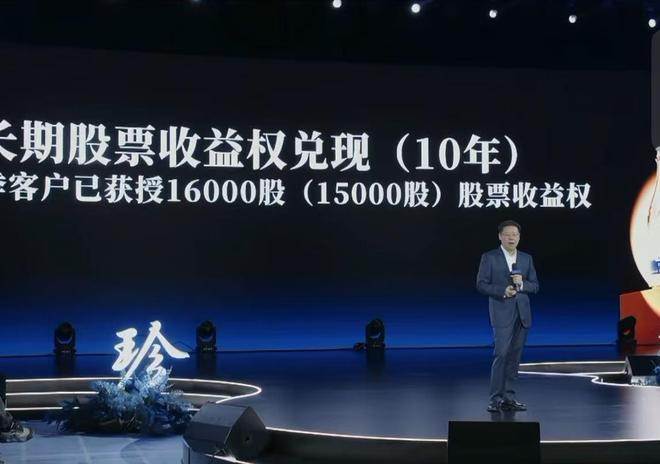
酒企大佬拟套现14.7亿,温州富商接盘浮盈超1.3亿
2 1 Shi Ji Jing Ji Bao Dao· 2025-09-20 14:13
Core Viewpoint - The recent share transfer by the controlling shareholder of BaiRun Co., Ltd. has raised significant attention among investors, especially following the company's report of declining performance in the first half of the year [2][9]. Group 1: Share Transfer Details - On September 10, BaiRun announced that its controlling shareholder, Liu Xiaodong, plans to transfer 63 million shares, representing 6.01% of the total share capital, to Liu Jianguo, resulting in Liu Xiaodong's shareholding decreasing to 34.58% and cashing out approximately 1.47 billion yuan [2][3]. - Liu Jianguo will become the second-largest shareholder of BaiRun, holding over 5% of the shares after the transaction [2][3]. - The transfer price was set at 23.337 yuan per share, which is 10% lower than the closing price on the day before the agreement, totaling 1.47 billion yuan [6][9]. Group 2: Company Performance - BaiRun's financial report for the first half of 2025 showed a revenue of 1.489 billion yuan, a year-on-year decline of 8.56%, and a net profit of 389 million yuan, down 3.32% [9][10]. - The decline in performance is primarily attributed to a decrease in sales of alcoholic products, particularly the RIO pre-mixed cocktails, which experienced double-digit declines in both sales and production [9][10]. - Despite the challenges, the company is focusing on new product launches and expanding its whiskey business, with new products being introduced and distribution channels being developed [10][11]. Group 3: Market Context - The share transfer occurred while BaiRun's stock price was at a relatively low level compared to recent years, indicating a strategic move to enhance the shareholder structure and bring in resources for company development [4][6]. - Liu Jianguo, the buyer, is the founder and chairman of Pentium Electric and has no prior experience in the pre-mixed cocktail or fast-moving consumer goods sectors, which may suggest a diversification of the shareholder base [6][7].


百润股份回应21:实控人卖股为引入资源,后续暂无转让计划
2 1 Shi Ji Jing Ji Bao Dao· 2025-09-19 11:04
Core Viewpoint - The recent share transfer by the controlling shareholder of BaiRun Co., Ltd. has drawn significant attention from small investors, especially following the company's report of declining performance in the first half of 2025 [1]. Group 1: Shareholder Changes - On September 10, BaiRun announced that its controlling shareholder, Liu Xiaodong, plans to transfer 63 million shares, representing 6.01% of the total share capital, to Liu Jianguo, resulting in Liu Xiaodong's shareholding decreasing to 34.58% and cashing out 1.47 billion yuan [1]. - Liu Jianguo, the founder and chairman of Pentium Electric, will become the second-largest shareholder of BaiRun after the transfer [1]. - The company’s financial officer, Ma Liang, responded positively to the share transfer, indicating it aims to enrich the shareholder structure and bring in resources for the company's development [1]. Group 2: Financial Performance - BaiRun reported a revenue of 1.489 billion yuan for the first half of 2025, a year-on-year decline of 8.56%, with a net profit attributable to shareholders of 389 million yuan, down 3.32% [4]. - The decline in performance is primarily attributed to a decrease in revenue from alcoholic products, particularly the RIO pre-mixed cocktails, which saw double-digit declines in both sales and production [5]. - Despite the downturn, the company maintains a high gross margin and net margin, with significant improvements in operating cash flow [5]. Group 3: New Product Development - BaiRun has launched new products in the RIO line, including Qingmei Longjing and jelly-flavored cocktails, as well as several zero-sugar options [5]. - The whiskey business has also been fully launched, with products from Bailide and Laizhou gradually entering the market [7]. - The company is actively expanding its sales channels through experiential marketing and in-depth market research, with a continuous increase in the number of cooperative distributors and sales outlets [7].
东吴水泥再跌超15% 控股股东大幅减持股份 公司出售稀土业务精简运营
Zhi Tong Cai Jing· 2025-09-17 05:40
Group 1 - Dongwu Cement (00695) has seen a decline of over 15%, reaching a low of 4.63 HKD, which is nearly a 30% drop from the high of 6.52 HKD on Monday [1] - As of the latest update, the stock is down 12.57%, trading at 4.8 HKD with a transaction volume of 13.48 million HKD [1] Group 2 - The controlling shareholder Goldview is selling approximately 155 million shares to Suzhou State-owned Assets Supervision and Administration Commission's wholly-owned subsidiary, Hong Kong Port and Shipping, for about 286 million RMB [1] - Goldview is also selling 49.68 million shares to Fen Yuan Capital for 91.8 million RMB [1] - After these transactions, Hong Kong Port and Shipping will become the largest single shareholder of the company with a 28% stake, while Fen Yuan Capital will hold 9% [1] - Goldview's stake in the company will decrease from 53.89% to 16.89%, resulting in it no longer being the controlling shareholder [1] Group 3 - Dongwu Cement plans to sell all shares of Dongfang Chengzheng Rare Earth for 10 million HKD [1] - The company believes that selling the rare earth business will allow it to concentrate financial resources on its cement operations, improving cash flow and financial flexibility [1] - This strategic move aims to streamline operations and enhance overall financial performance [1]
RIO卖不动了?百润股份实控人转让股份套现14.7亿元
Zhong Guo Jing Ying Bao· 2025-09-12 15:01
Core Viewpoint - The transfer of shares from Liu Xiaodong, the actual controller of Bairun Co., Ltd., to Liu Jianguo raises complex signals amid the company's declining performance, particularly in its main product, RIO cocktails [1][5]. Group 1: Share Transfer Details - Liu Xiaodong plans to transfer 63 million shares, representing 6.01% of the total share capital, to Liu Jianguo for a total price of RMB 1.47 billion, at a price of RMB 23.337 per share [3][4]. - Following the transfer, Liu Jianguo will hold 6.01% of Bairun's shares, while Liu Xiaodong will retain 34.58% of the shares, ensuring no change in the controlling shareholder [3][4]. Group 2: Financial Performance - Bairun's financial report for the first half of 2025 shows a revenue decline of 8.56% to RMB 1.489 billion and a net profit decrease of 3.32% to RMB 389 million [5][6]. - The company's main product, alcoholic beverages, which account for 88% of revenue, saw a 9.35% decline in sales, totaling RMB 1.297 billion [6]. Group 3: Market Strategy and Challenges - Bairun is attempting to diversify its product line by introducing whiskey, with plans to produce 1 million barrels of original liquor over the next 4 to 5 years [6][7]. - The whiskey market remains niche, with challenges in converting cocktail consumers to whiskey drinkers, as the product is still in the early stages of market acceptance [7].
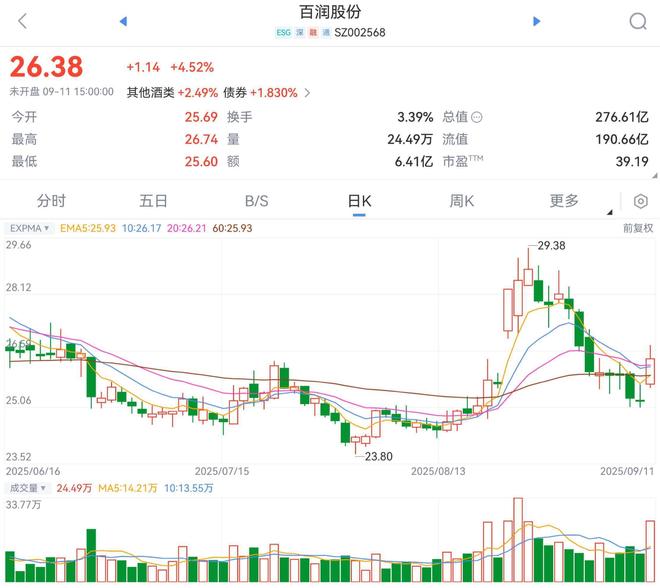
上市公司大股东被动清仓后 股东会投出最后一张赞成票
Zheng Quan Shi Bao Wang· 2025-09-11 23:42
Core Points - The extraordinary general meeting of Yijing Photovoltaic (600537) was held on September 11, 2023, to review 13 proposals, including the reappointment of the financial audit institution for 2025 and foreign exchange derivative trading [1] - Over 1,000 shareholders and agents attended the meeting, representing a total of 170 million shares, accounting for 14.4% of the company's total share capital [1] - Shenzhen Weizhi Energy Co., Ltd. (Weizhi Energy), the controlling shareholder, participated in the meeting and voted in favor of all proposals, marking its last attendance as the controlling shareholder [1][2] Shareholding Changes - Weizhi Energy no longer holds shares in Yijing Photovoltaic as of September 8 and 9, 2023, following the completion of the transfer of 100 million unrestricted circulating shares [1] - The change in shareholding means that the actual controller of the listed company will also change [1] Historical Context - Weizhi Energy became the controlling shareholder in May 2019, acquiring 255 million shares, which represented 21.65% of the company [3] - The actual control of the company shifted to Gu Yaoming and later to Gu Hanning after a transfer of shares [3] - In July 2023, Weizhi Energy's shares were judicially frozen due to debt issues, with a total amount involved in lawsuits reaching approximately 1.63 billion yuan [3] - The forced liquidation of Weizhi Energy's holdings has led to a potential shift in the company's ownership structure, with Shenzhen Heqin Investment, holding 4.62%, possibly becoming the largest shareholder [3]

“张亮麻辣烫”没有张亮了
Sou Hu Cai Jing· 2025-09-05 08:33
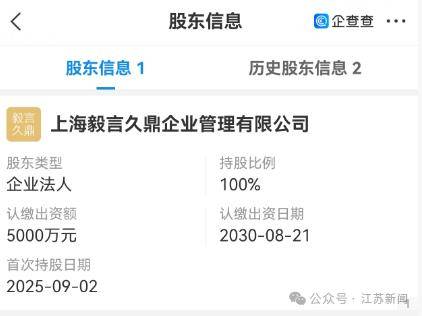
Core Viewpoint - The recent change in the ownership structure of Zhang Liang Spicy Hot Pot has led to the founder Zhang Liang no longer holding direct shares in the company, although he still maintains indirect control through a complex shareholding structure [1][3][4]. Group 1: Company Ownership Changes - Zhang Liang Spicy Hot Pot's parent company, Zhang Liang Enterprise Management (Group) Co., Ltd., underwent a significant ownership change, with Shanghai Yiyan Jiuding Enterprise Management Co., Ltd. becoming the new controlling shareholder, holding 100% of the shares [1][3]. - The original shareholders, Shanghai Yihang Commercial Development Co., Ltd. (holding 90%) and founder Zhang Liang (holding 10%), have exited the shareholder structure [1][3]. - The new controlling shareholder, Shanghai Yiyan Jiuding, was established in 2025 with a registered capital of 50 million RMB, and its ultimate beneficiary is still Zhang Liang [1][3]. Group 2: Company Background and Operations - Zhang Liang Spicy Hot Pot was founded in 2008 and has grown to become a leading brand in the spicy hot pot industry, with over 6,000 global chain stores as of 2023, primarily franchise outlets [3]. - The company has expanded its reach across more than 300 cities in over 30 provinces and regions in China, including deep penetration into county and town markets [3]. - The company has a diverse range of business operations, including enterprise management consulting, supply chain services, information consulting, and import-export trade [3]. Group 3: Future Business Directions - Analysts suggest that the recent shareholding changes may be aimed at preparing for further expansion into business areas beyond spicy hot pot [4].
“张亮麻辣烫”没张亮了
Sou Hu Cai Jing· 2025-09-05 07:06
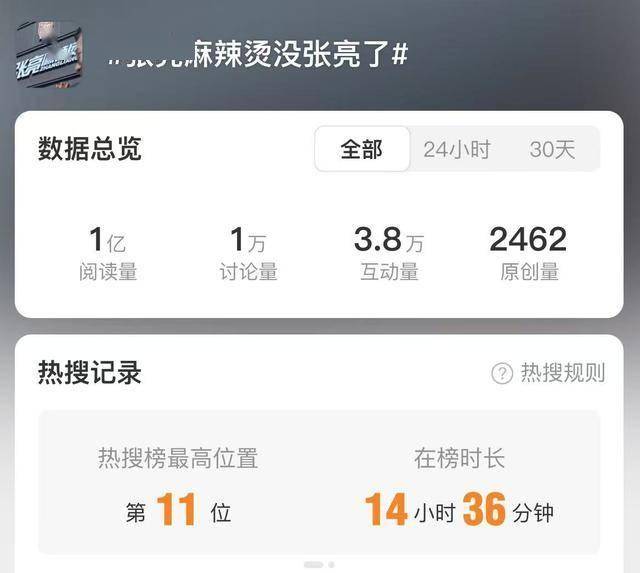
Core Viewpoint - The recent change in the ownership structure of Zhang Liang Spicy Hot Pot has led to the trending topic "Zhang Liang Spicy Hot Pot no longer has Zhang Liang" on social media, indicating a significant shift in the company's management and control [1]. Group 1: Ownership Changes - Zhang Liang Enterprise Management (Group) Co., Ltd. underwent a business change in early September, with Shanghai Yiyan Jiuding Enterprise Management Co., Ltd. becoming the new controlling shareholder, holding 100% equity with a registered capital of 50 million RMB [1]. - The previous shareholders, Shanghai Yihang Commercial Development Co., Ltd. (holding 90%) and founder Zhang Liang (holding 10%), have exited the shareholder list [2]. - Shanghai Yiyan Jiuding was established in 2025 with a registered capital of 1 million RMB, and its ultimate beneficiary is Zhang Liang, indicating that he still maintains indirect control over the group [3]. Group 2: Company Background - Zhang Liang Spicy Hot Pot was founded in 2008 and has evolved into a leading brand in the spicy hot pot industry, with over 6,000 global chain stores as of 2023, primarily franchise-operated [4]. - The company has expanded its market presence across more than 300 cities in over 30 provinces and autonomous regions in China, including deep penetration into county and town markets [4]. - The company has a diverse business scope, including enterprise management consulting, supply chain services, information consulting, and import-export trade, with a registered capital of 50 million RMB and 38 employees as of 2024 [4]. Group 3: Future Prospects - Analysts suggest that the recent equity changes may be aimed at preparing for further expansion into business areas beyond spicy hot pot [5].
张亮麻辣烫没有张亮?创始人张亮退出直接持股行列
Sou Hu Cai Jing· 2025-09-05 07:05
Core Points - Zhang Liang's Spicy Hot Pot has undergone a significant change in its shareholding structure, with Zhang Liang and the original major shareholder exiting the company [1][2] - The new controlling shareholder is Shanghai Yiyan Jiuding Enterprise Management Co., Ltd., which now holds 100% of the shares in Zhang Liang Enterprise Management (Group) Co., Ltd. [1][3] - Zhang Liang remains the legal representative and ultimate beneficiary of the new controlling company, indicating that he still retains indirect control over the group despite no longer holding direct shares [6][7] Company Overview - Zhang Liang's Spicy Hot Pot was founded in 2008 and has become a leading brand in the spicy hot pot industry in China, known for its unique broth made from bone soup and sesame paste [6][7] - As of 2023, the company has expanded to over 6,000 chain stores globally, primarily franchise-operated, covering more than 300 cities across over 30 provinces and regions in China, including deep penetration into county and town markets [6][7] - The recent shareholding change may indicate the company's intention to diversify its business beyond spicy hot pot [6]
南京银行,股权再生变动
Zhong Guo Ji Jin Bao· 2025-08-12 08:17
Core Viewpoint - Jiangsu Communications Control Co., Ltd. has increased its stake in Nanjing Bank to 14.01% by acquiring 496 million shares from its wholly-owned subsidiary, Jiangsu Yunsong Capital Management Co., Ltd. [1][2][3] Shareholding Changes - Jiangsu Communications Control's shareholding in Nanjing Bank rose from 9.99% to 14.01% following the transfer of shares [2][3] - The share transfer does not involve market transactions and is an internal transfer among concerted actors, thus not triggering a mandatory tender offer [3] Shareholder Structure - After the transfer, Jiangsu Communications Control will hold a total of 1.732 billion shares in Nanjing Bank, representing 14.01% of the total share capital [3] - The top four shareholders of Nanjing Bank are: 1. BNP Paribas (12.75%) 2. Nanjing Zijin Investment Group (10.76%) 3. Jiangsu Communications Control (14.01% post-transfer) 4. Nanjing Gaoke Co., Ltd. (9.00%) [3] Recent Shareholder Activity - Just a week prior, Nanjing Gaoke Co., Ltd. increased its stake in Nanjing Bank by acquiring 7.5077 million shares, raising its ownership from 8.94% to 9.00% [4] - This increase was motivated by confidence in Nanjing Bank's future and recognition of its value [4] Financial Performance - As of the end of Q1, Nanjing Bank reported total assets of 2.7652 trillion yuan, a 6.71% increase from the beginning of the year [4] - The total loan amount reached 1.3461 trillion yuan, reflecting a 7.14% growth [4] - For the same period, Nanjing Bank achieved an operating income of 14.19 billion yuan, a year-on-year increase of 6.53%, and a net profit attributable to shareholders of 6.108 billion yuan, up 7.06% [4] - The non-performing loan ratio stood at 0.83%, unchanged from the beginning of the year, with a provision coverage ratio of 323.69% [4]
