能源变革

Search documents
我国用电量将首超10万亿千瓦时,意味着什么?
Zhong Guo Dian Li Bao· 2025-12-17 01:01
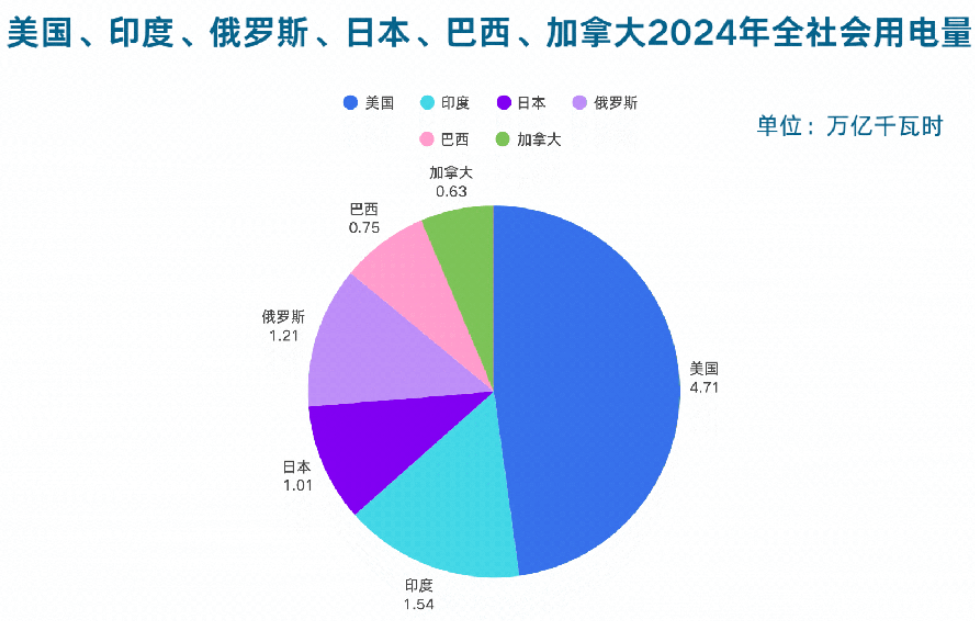
Core Viewpoint - The announcement of China's electricity consumption exceeding 10 trillion kilowatt-hours by 2025 marks a significant milestone, reflecting the robust growth and resilience of the Chinese economy, as well as the transition towards a greener energy structure [1][4][8]. Group 1: Electricity Consumption Milestones - In 2025, China's total electricity consumption is projected to surpass 10 trillion kilowatt-hours, equivalent to the combined annual electricity consumption of the USA, India, Russia, Japan, Brazil, and Canada [1]. - China experienced its first monthly electricity consumption exceeding 1 trillion kilowatt-hours in July and August of this year, showcasing the country's strong economic pulse and transition towards a greener economy [4]. - Historical milestones in electricity consumption include surpassing 1 trillion kilowatt-hours in 1996, 5 trillion in 2011, and 8 trillion in 2021 [4]. Group 2: Economic Growth Indicators - Multiple international institutions have raised their economic growth forecasts for China in 2025, with the World Bank, IMF, and ADB adjusting their predictions upward by 0.4, 0.2, and 0.1 percentage points respectively [8]. - In the first three quarters of this year, China's GDP growth rates were 5.4%, 5.2%, and 4.8%, indicating a sustained economic recovery that has driven an increase in electricity consumption [11]. Group 3: Sectoral Electricity Consumption Trends - The primary industry saw a 10.2% year-on-year increase in electricity consumption in the first three quarters, reflecting trends in agricultural modernization [15]. - The secondary industry contributed 51% to the overall electricity consumption growth, with a 5.1% increase in the third quarter, driven by high-tech and equipment manufacturing sectors [15]. - The internet and related services sector experienced a remarkable 29.8% year-on-year growth in electricity consumption, with specific regions like Guizhou showing a 72.92% increase [17]. Group 4: Power Supply Capacity - This summer, China's power load broke historical highs multiple times, demonstrating the resilience of the electricity supply system [18]. - China's power generation capacity accounts for one-third of the global total, with a projected increase to 3.8 billion kilowatts by 2025, reflecting a 14% year-on-year growth [21]. - The construction of large clean energy bases in western regions and the "West-to-East Power Transmission" initiative have significantly enhanced electricity supply capabilities [26]. Group 5: Energy Transition and Modernization - The electrification ratio of terminal energy use in China has reached approximately 30%, surpassing that of major developed economies [29]. - By the end of October this year, renewable energy capacity exceeded 2.2 billion kilowatts, accounting for nearly 60% of the total installed capacity, with wind and solar power installations surpassing thermal power [33]. - The development of new energy technologies, including advancements in solar and wind power, is accelerating, with significant reductions in costs and improvements in efficiency [39].

AI“重启核电站”:谷歌联手美国最大电力公司,能源科技边界消融
Sou Hu Cai Jing· 2025-12-16 04:45
Core Insights - The rapid advancement of artificial intelligence (AI) technology is leading to significant electricity consumption challenges, prompting tech giants to seek stable energy sources [1][3] - Google and NextEra Energy have formed a strategic partnership to develop "gigawatt-level" AI data center parks, marking a significant shift in the energy landscape [1][4] Group 1: AI's Energy Anxiety - The exponential growth of AI is causing global "electricity anxiety," with the International Energy Agency (IEA) predicting that global data center electricity consumption will double by 2030, reaching 945 terawatt-hours, equivalent to Japan's annual electricity usage [3] - AI data centers are the primary drivers of this increased energy demand, with a single large model training consuming millions of kilowatt-hours, far exceeding traditional grid capabilities [3] - Tech companies are transitioning from being mere electricity consumers to active participants in shaping the energy landscape, seeking reliable, clean energy sources [3] Group 2: Strategic Collaboration - NextEra Energy is restarting the Duane Arnold nuclear power plant in Iowa, expected to come online in 2029, to provide carbon-free electricity specifically for Google's AI data centers [4] - The partnership aims to develop three large data center parks in the U.S. and potentially increase power generation capacity to 30 gigawatts by 2035, significantly exceeding the current operational scale of approximately 3.5 gigawatts [4] - This new model of integrating large power facilities with massive data centers is set to fundamentally change the construction logic of AI infrastructure [4] Group 3: Mutual Empowerment - The collaboration between Google and NextEra Energy is characterized by mutual empowerment, where Google will also provide AI technology to enhance NextEra's grid intelligence [5] - A jointly developed AI product is expected to be launched by mid-2026, utilizing AI for predictive analysis to improve grid reliability under challenging conditions [5] - This partnership illustrates the potential for AI to not only consume energy but also enhance energy efficiency and grid stability, paving the way for a smarter energy grid [5]


油价有变!明起加油或多掏钱,92、95号汽油新单价流出
Sou Hu Cai Jing· 2025-12-11 17:12
Core Viewpoint - The article discusses the recent trend of declining domestic fuel prices in China, highlighting the potential psychological relief for consumers as prices approach four-year lows, while also questioning the sustainability of this trend in the context of global supply and demand dynamics [3][5][7]. Group 1: Price Trends - The upcoming domestic fuel price adjustment window on December 22 is expected to see a decrease of 40 to 60 yuan per ton, translating to a reduction of approximately 5 to 6 cents per liter for consumers [3]. - This would mark the 11th price drop since 2025, with 92-octane gasoline prices stabilizing around 6.5 yuan per liter in many regions, a significant decrease from previous highs [3][5]. - Current prices for 92-octane gasoline vary regionally, with prices reported at 6.97 yuan in Liaoning, around 6.85 yuan in Shanghai and Jiangsu, and as low as 6.79 yuan in Ningxia [5]. Group 2: Market Dynamics - The decline in fuel prices is attributed to weak international oil prices and a relaxed supply environment, with both WTI and Brent crude prices recently falling [5]. - Global oil supply is recovering, while demand remains uncertain due to macroeconomic conditions and Federal Reserve policies, leading to potential pressure on oil prices if demand does not respond positively [5]. - The article raises concerns about whether the current trend of declining prices is a temporary respite in the global supply-demand battle or a precursor to deeper changes in the energy landscape [7]. Group 3: Consumer Behavior and Future Considerations - As fuel prices decrease, consumers may experience a shift in their spending habits and psychological comfort regarding fuel costs, moving away from the anxiety of high prices [3][5]. - The article prompts reflection on the future of energy consumption, questioning whether the return to lower fossil fuel prices will lead to complacency or a greater embrace of electric and green energy alternatives [7]. - The savings from lower fuel prices provide consumers with more time to consider their future energy choices, shifting focus from immediate cost calculations to broader energy strategies [7].

用电量双位数增长带动能源需求 煤铀锂等上游原材料联袂涨价
Zheng Quan Shi Bao· 2025-11-24 21:59
Group 1: Electricity Consumption and Energy Demand - In October, China's total electricity consumption increased by over 10%, reaching a new high for the year, indicating strong economic activity [1] - The double-digit growth in electricity demand has led to rapid increases in energy requirements for coal, nuclear, and lithium [1] Group 2: Coal Market Dynamics - Coal prices are rising due to increased residential electricity consumption, particularly with the onset of the heating season in northern China [2] - As of November 21, the market price for Q5500 coal at Qinhuangdao port was reported at 832 RMB/ton, while prices in major coal-producing regions continued to rise [2] - Analysts predict that coal prices will remain high and fluctuate between 800 and 860 RMB/ton due to supply constraints and seasonal demand [2][3] Group 3: Nuclear Energy Developments - China's nuclear power sector is experiencing rapid growth, with over 10 new units approved annually since 2019, and a record 11 units expected in 2024 [4] - The first grid connection of the "Hualong One" nuclear power unit in Fujian marks a significant milestone in nuclear energy development [4] - The price of uranium is expected to rise gradually due to a tightening supply-demand balance in the long term [4][5] Group 4: Lithium and Energy Storage Sector - The lithium battery and energy storage sectors are benefiting from surging domestic and international demand, with significant investments in new projects [6] - In the first eight months of the year, China signed and initiated 183 lithium battery projects with a total investment of approximately 400 billion RMB [6] - A shortage of lithium carbonate is anticipated, with demand outpacing supply, potentially leading to price increases [7]
“储能电芯很缺”“光伏链主企业还有五倍、十倍以上成长空间”“2025第八届中国国际光伏与储能产业大会”传递出这些行业信息
Mei Ri Jing Ji Xin Wen· 2025-11-18 14:02
Core Insights - The term "anti-involution" has become a prominent topic in the photovoltaic (PV) industry this year, highlighting the issue of excessive competition leading to price declines across various segments of the solar product supply chain [1][3] - The integration of solar and energy storage systems is becoming more cost-effective, with component costs accounting for approximately 30% of the total system cost [1] Industry Overview - The 2025 8th China International Photovoltaic and Energy Storage Industry Conference took place from November 17 to 20, where industry leaders discussed the current state of the PV and energy storage markets [4] - The PV industry is experiencing a supply-demand imbalance, with significant price drops across the supply chain. For instance, prices for polysilicon, silicon wafers, batteries, and modules have decreased by approximately 10%, 20%, 15%, and 2% respectively since the beginning of the year [4][5] - Despite the challenges, some leading companies like Tongwei and Longi Green Energy have reported a reduction in losses in their third-quarter results [4] Market Dynamics - The energy storage sector is showing signs of recovery, attributed to the price declines in the PV industry, which have made energy storage systems more economically viable [3][9] - There is a notable demand for energy storage solutions, particularly in regions with high renewable energy generation, driven by changes in pricing mechanisms [9][10] - The market for energy storage is expected to grow significantly, with projections indicating that by the end of 2024, new energy storage installations will reach 73.76 million kilowatts, accounting for over 40% of global installations [10] Technological Developments - New technologies in solar cells, such as perovskite and various combinations of existing technologies, are being explored, although stability and maturity remain concerns [8] - The focus on safety and efficiency in energy storage technologies is leading to innovations, including solid-liquid hybrid storage systems [9][11] Strategic Insights - Industry leaders emphasize the need for a balanced competitive environment to avoid excessive internal competition, which can hinder overall industry growth [5][7] - The importance of self-sufficient core technologies is highlighted as essential for maintaining competitive advantages and ensuring the sustainability of the industry [11][12] - Future growth in the renewable energy sector is anticipated to be supported by advancements in energy storage and the establishment of a new power system that integrates renewable sources effectively [15]
16股创新高,这一板块年内大涨43%
Di Yi Cai Jing· 2025-11-09 11:35
Core Insights - The A-share market's power grid equipment sector surged by 12.45% in the first trading week of November, driven by the dual narratives of AI catalysis and energy transformation [1][2] - The sector's performance raises questions about the underlying earnings support and growth potential amid the AI-driven electricity demand surge [1] Market Performance - The Shenwan Power Grid Equipment Index rose by 12.46% over the week, reaching 5872.41 points, with a year-to-date increase of 43.11%, marking the highest level since June 2015 [2] - 16 stocks within the power grid equipment sector reached historical highs, with notable performers including Zhongneng Electric, Moen Electric, and Tebian Electric [2] Industry Dynamics - Since May, trading activity in the power grid equipment sector has increased, with the index showing seven consecutive months of gains, primarily due to AI-related electricity shortages [3] - The U.S. Energy Information Administration (EIA) predicts that electricity consumption will reach record highs in 2025 and 2026, driven by AI and data center expansion [3] - Goldman Sachs forecasts a 175% increase in global electricity demand from AI data centers by 2030 compared to 2023 [3] Investment Trends - The State Grid Corporation of China reported over 420 billion yuan in fixed asset investments from January to September, a year-on-year increase of 8.1% [3] - Major projects in high-voltage direct current (HVDC) engineering are underway, with total investments expected to exceed 650 billion yuan in 2025 [3] Financial Performance - The power grid equipment sector reported a revenue of 263.7 billion yuan and a net profit of 22.2 billion yuan in the first three quarters, reflecting year-on-year growth of 12% and 14%, respectively [4][5] - Significant performance disparities exist within the sector, with non-UHV main networks showing a net profit growth of 38.2%, while distribution and meter companies faced declines [5] Export Growth - China's transformer exports reached 6.22 billion USD from January to September, a 39% increase year-on-year, driven by demand from Europe and North America [5] - High-voltage switch exports also grew by 31.2%, with a notable monthly increase of 55.7% in September [5] Institutional Investment - Public fund holdings in the power grid equipment sector decreased slightly in the third quarter, with a total market value share of 0.6% [6] - Institutional investors are favoring companies with strong overseas demand and those involved in data center business growth, such as Siyuan Electric and Tebian Electric [6] Technological Advancements - Companies like Jinpan Technology are focusing on solid-state transformer (SST) technology, which is seen as a suitable solution for future energy demands [6][7] - Jinpan Technology has developed an SST prototype for HVDC applications, with plans for further testing and certification [7]



《能源变革指数蓝皮书2025》:中国成世界能源转型速度最快国家
Zhong Guo Hua Gong Bao· 2025-11-04 06:54
Core Insights - The "Energy Transition Index Blue Book 2025" indicates that China is a leading force in global energy transition and is currently the fastest country in terms of energy transition speed [1][2] Group 1: Energy Transition Index - The Blue Book evaluates energy transition based on 17 criteria and 74 underlying indicators across five dimensions: energy consumption, energy supply, energy technology, energy system, and international cooperation [1] - China ranks third in the global energy transition index, being the only developing country in the top ten, which includes Sweden, Norway, Denmark, Finland, Switzerland, Germany, the UK, the US, and Canada [1][2] Group 2: Energy Transition Speed - In the newly added assessment of energy transition speed, China ranks first globally, indicating it is the fastest country in energy transition [1] - The report highlights that countries with high GDP per capita and smaller populations tend to perform better in energy transition, but resource endowment and determination are crucial for driving change [2] Group 3: Clean Energy Contributions - As of the end of September, China's new energy storage capacity exceeded 100 million kilowatts, accounting for over 40% of the global total [2] - China has provided clean energy products and services to over 200 countries and regions, with its wind and solar products contributing to a reduction of approximately 2.65 billion tons of CO2 emissions globally in the past year [2]
帮主郑重:9个月涨15倍的储能牛股,藏着散户抓大牛的3个底层逻辑
Sou Hu Cai Jing· 2025-10-26 02:28
Core Insights - The article discusses the significant rise of Haibo Shichuang's stock price, which increased from 19 to 300 in nine months, highlighting the common traits of successful stocks and practical strategies for retail investors [1] Industry Overview - The energy storage industry is currently experiencing rapid growth, similar to the early days of solar energy, with many manufacturers focusing on battery production and installation capacity. However, about 20% of projects are underperforming, indicating that mere hardware accumulation does not guarantee profitability [3] - Haibo Shichuang differentiates itself by integrating advanced algorithms into its energy storage solutions, treating energy storage as "intelligent assets" rather than just battery systems. This approach allows for better operational efficiency and profitability [3][4] Company Characteristics - Haibo Shichuang is positioned in a genuine growth sector driven by the demand for low-carbon and safe energy solutions, making it a long-term investment opportunity rather than a short-term speculative play [4] - The company has developed proprietary algorithms and technologies across its Battery Management System (BMS) and Energy Management System (EMS), creating a competitive edge that is difficult for others to replicate. This enables Haibo Shichuang to cater to high-value scenarios, such as data centers requiring rapid power response [4][5] - The company has shifted its focus from hardware sales to providing comprehensive energy services, which has led to a dramatic increase in overseas revenue by over 3000% in the first half of the year, as clients are willing to pay a premium for these services [5] Investment Strategies - Investors are advised to look for industry turning points, focusing on operational efficiency rather than just production capacity. The shift in the energy storage sector from hardware assembly to operational efficiency is a key indicator [6] - It is essential to evaluate a company's core capabilities beyond just revenue growth. Haibo Shichuang's revenue increased by 22%, but its algorithmic capabilities and ability to secure large projects are more critical indicators of long-term success [6] - Investors should assess the financial health of companies, as evidenced by Haibo Shichuang's negative operating cash flow of 1.65 billion, indicating potential cash flow pressures despite stock price increases [6]

成果发布︱《能源变革指数蓝皮书2025》发布
国家能源局· 2025-10-25 08:03
Core Viewpoint - The "Energy Transformation Index Blue Book 2025" indicates that China ranks third globally in energy transformation, highlighting the importance of determination and resources in driving energy reforms [2]. Summary by Relevant Sections Energy Transformation Index - The blue book evaluates 125 countries and regions based on 17 criteria and 74 underlying indicators across five dimensions: energy consumption, energy supply, energy technology, energy system, and international cooperation [2]. - The top ten countries in the energy transformation index are Sweden, Norway, China, Denmark, Finland, Switzerland, Germany, the UK, the US, and Canada [2]. Characteristics of High-Ranking Countries - Countries that rank high in the energy transformation index are predominantly developed nations with high GDP per capita and smaller populations, indicating a correlation between productivity, economic development, and energy transformation [2]. Role of Resources and Determination - The blue book emphasizes that resource endowment is fundamental to transformation, while determination and motivation are crucial for driving change. Countries like China and Brazil, with large populations and relatively low GDP per capita but abundant resources, are committed to developing clean energy technologies and reforming energy systems [2].
我国成为能源变革先锋国家 “中国能源好物”清单向世界共享“中国方案”
Yang Shi Wang· 2025-10-25 07:50
Core Insights - The 2025 International Energy Transformation Forum was held in Suzhou, showcasing China's role as a leader in global energy transition [1][3] - The "Energy Transformation Index Blue Book 2025" was released, ranking China third globally and first in energy transformation speed among major countries [3][5] Group 1: Energy Transformation Index - The Energy Transformation Index evaluates trends in energy consumption and supply across five dimensions, highlighting China's significant progress [3] - China is the only developing country in the top ten of the global energy transformation index, indicating its unique position in the energy sector [3] Group 2: Achievements and Contributions - As of September, China's new energy storage capacity exceeded 100 million kilowatts, accounting for over 40% of the global total [7] - China has provided clean energy products and services to over 200 countries and regions, significantly contributing to global CO2 emission reductions [7] Group 3: Global Leadership - China has been recognized as a pioneer in energy transformation in Asia and Oceania, reflecting its leading role in the global energy transition [5] - The forum introduced the "China Energy Good Products" list, featuring 60 core products and solutions across five key areas, promoting Chinese innovations globally [7]