
中国经济增长

Search documents
无惧外部波动!摩根大通朱锋:政策托底+内外协同,2026中国经济稳健前行
券商中国· 2026-03-25 10:58
Core Viewpoint - The article discusses the insights of Zhu Feng, Chief Economist of JPMorgan China, regarding China's economic outlook, focusing on the GDP growth target for 2026, the importance of domestic demand, and the impact of international geopolitical conflicts on the economy [1][3]. Economic Growth Target - The GDP growth target for 2026 is set at a range of 4.5% to 5%, which reflects a downward adjustment from the previous year, aligning with the current economic realities and allowing for greater policy flexibility [3][4]. - Zhu Feng emphasizes that the adjustment is a recognition of the economic characteristics during the transformation phase, which often accompanies a slowdown in growth [4]. Domestic Demand and Consumption - Expanding domestic demand has been prioritized in government reports for two consecutive years, indicating a deepening understanding of the importance of consumption [5][6]. - The government aims to boost consumption through supportive policies, although challenges remain in achieving significant short-term impacts [5][6]. Effective Investment and Export - Effective investment is showing positive trends, particularly in infrastructure related to the "14th Five-Year Plan," which is expected to support economic growth alongside exports [4][5]. - Zhu Feng notes that while external demand remains a crucial growth engine, effective investment is becoming increasingly important in stabilizing the economy [4]. Fiscal Policy Insights - The fiscal policy for this year is expected to remain expansionary, with a focus on investment, particularly in projects related to the "14th Five-Year Plan" [5][6]. - Zhu Feng highlights that while direct measures to stimulate consumption exist, such as the 250 billion yuan for trade-in subsidies, the market anticipates more robust fiscal policies in the consumption sector [5][6]. International Trade and Geopolitical Impact - Zhu Feng points out that the government is increasingly aware of the need for balanced international trade in light of external pressures and uncertainties [6]. - The recent geopolitical tensions, particularly the U.S.-Iran conflict, have led to rising oil prices, but the direct impact on China is limited due to its diversified energy sources [8][9]. Oil Price Dynamics - The article discusses the potential implications of rising oil prices, with Zhu Feng estimating that a sustained increase could lead to a 0.8 percentage point rise in global inflation, affecting global consumption and production [9]. - Despite the challenges posed by high oil prices, Zhu Feng expresses confidence in China's ability to respond effectively through fiscal policy, even with limited monetary policy space [9].


从春节数据看中国经济增长底气
Zheng Quan Ri Bao· 2026-02-25 15:47
Group 1 - The longest Spring Festival holiday in history has ended, showcasing the continuous release of vitality in the Chinese economy through robust consumption during the holiday [1] - During the 9-day Spring Festival holiday, over 2.8 billion people traveled across regions, with an average of 311 million people per day, marking a year-on-year increase of 8.2% and setting a historical record for travel scale [1] - Domestic tourism reached 596 million trips, an increase of 95 million trips compared to the 8-day holiday in 2025, with total spending of 803.483 billion yuan, up 126.481 billion yuan year-on-year, both figures hitting historical highs [1] Group 2 - Restaurant revenue during the Spring Festival holiday grew by 31.2% year-on-year, with dine-in services increasing by 26.5% and snack services seeing a significant rise of 42.1% [1] - WeChat's data report indicated that transaction volumes for travel and entertainment during the Spring Festival increased by over 20%, reflecting the strong vitality of the consumption market and the deep integration of the digital economy with the real economy [2] - The Chinese economy is characterized by stability, multiple advantages, resilience, and significant potential, with consumption playing an increasingly crucial role as an economic stabilizer [2] Group 3 - The consumption market during the Spring Festival is a direct reflection of the continuously released potential of domestic demand, indicating a solidifying trend of sustained economic improvement in China [3]
张军:告别经济“温差”,要避免增长过于结构性︱马年大咖谈
Di Yi Cai Jing· 2026-02-23 03:42
Group 1 - The core viewpoint of the articles highlights the contrast between China's current economic growth and its historical performance, emphasizing that while the economy has become stronger, achieving future growth targets will require careful policy adjustments [1][2][3] - China's GDP growth is projected at 5% in real terms for 2025, but nominal growth is only 3.9%, indicating a discrepancy between actual growth and economic conditions [1][3] - The concentration of growth in specific sectors, such as new energy vehicles and artificial intelligence, has led to a cooling macroeconomic environment, resulting in a decline in overall demand and income flow [3][4] Group 2 - The need for macroeconomic policies to focus on balancing structural growth and addressing risks associated with concentrated growth in high-tech industries is emphasized [4][5] - The current macro policy framework lacks a focus on price stability and employment, which complicates achieving inflation targets [5] - A hypothetical scenario where nominal GDP growth exceeds real GDP growth is suggested as potentially more favorable for macroeconomic stability, indicating that a balanced approach could lead to a return to normal economic conditions [5]
您认同吗?今年,我国经济预计增长4.9%,GDP会超过146万亿元
Sou Hu Cai Jing· 2026-02-13 10:01
Core Viewpoint - The optimistic prediction for China's GDP growth in 2026 is set at 4.9%, supported by policy stabilization and structural transformation factors, with potential to closely approach this figure due to various economic drivers [1][3][20]. Economic Growth Forecast - The overall GDP growth rate for 2026 is expected to be 4.9%, aligning with mainstream institutional forecasts, with a consensus range of 4.5% to 5.0% [3][4]. - Major institutions like Goldman Sachs and Morgan Stanley project a baseline growth of 4.8%, while local institutions set their growth center at 4.8% to 5.0% [3][4]. Policy Support - Fiscal policy is expected to be proactive, with a projected increase in broad fiscal spending by approximately 1.2 trillion yuan compared to 2025, maintaining a deficit ratio at a reasonable level of 4% [4]. - Monetary policy anticipates 1-2 reserve requirement ratio cuts and one interest rate reduction, with social financing growth expected to remain around 8.5% [5]. Domestic Demand as Growth Engine - Domestic consumption is projected to be the primary driver of the 4.9% growth, with final consumption expenditure contributing approximately 55% to GDP growth [7][12]. - Specific policies, such as the expansion of the "old-for-new" program, are expected to stimulate large-scale consumption [8]. Investment Trends - Investment patterns are characterized by strong manufacturing, stable infrastructure, and a significant reduction in the negative impact of real estate [9]. - Manufacturing investment is expected to maintain over 5% growth in high-tech sectors, while infrastructure investment is projected to rebound to 5%-6% [9]. Export Resilience - China's exports are anticipated to show unexpected resilience, particularly in high-value products like AI servers and semiconductor equipment, with export growth rates of 5%-6% [11]. - The trade surplus is expected to remain high, with net exports contributing 0.8%-0.9% to GDP growth [11]. New Five-Year Plan Impact - The new five-year plan is expected to catalyze new productive forces, with significant investments in high-tech industries and infrastructure projects commencing in 2026 [17][18]. - The transition from the previous five-year plan to the new one is expected to enhance investment efficiency and stimulate economic growth [18]. Quarterly Growth Dynamics - The GDP growth is projected to follow a pattern of lower growth in the first half of the year, with an increase in the latter half, reaching approximately 5.1% in the fourth quarter [16].
5%增长下的韧性与突破
Jing Ji Ri Bao· 2026-02-09 00:10
Economic Growth - In 2025, China's economy achieved a growth rate of 5%, maintaining this rate for three consecutive years, with the total economic output surpassing 140 trillion yuan [1] - Despite external uncertainties and domestic challenges, China's economy contributed approximately 30% to global economic growth, showcasing its stability and reliability [1] Production and Industry - The stable growth in production remains a crucial support for GDP growth, with industrial added value increasing by 5.9% and service sector added value rising by 5.4% in 2025 [2] - The contribution rate of industrial added value to economic growth reached 35%, with the manufacturing sector maintaining its position as the world's largest for 16 consecutive years [2] Foreign Trade - China's foreign trade exceeded expectations in 2025, with total import and export value surpassing 45 trillion yuan, achieving a growth rate of 3.8% [3] - This marks the ninth consecutive year of growth in foreign trade, supported by strong product competitiveness and supply chain advantages [3] Technological Innovation - The focus on technological development shifted towards new narratives, with significant growth in high-tech manufacturing and equipment manufacturing, boosting market confidence [4] - Final consumption expenditure contributed over 50% to economic growth, reinforcing the position of domestic demand as the main engine [4]
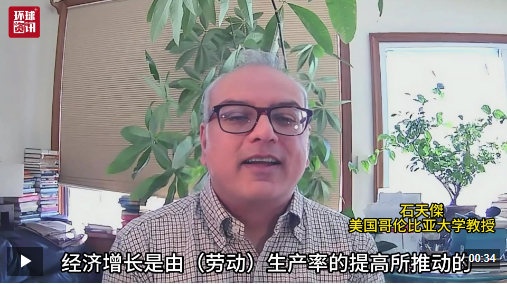
美国学者:“中国的经济增长还将继续”
Xin Lang Cai Jing· 2026-02-07 08:25
Core Viewpoint - China's GDP reached 140.1879 trillion yuan in 2025, marking a 5.0% increase from the previous year, driven by stable energy supply and infrastructure investments that enhanced labor productivity [1]. Group 1: Economic Growth and Productivity - Economic growth in China is primarily driven by improvements in labor productivity, which have been significantly enhanced through substantial investments in stable and sufficient energy supply [3]. - China's superior infrastructure has positioned it as a strong player in both manufacturing and services, contributing to sustained economic growth [3]. Group 2: Renewable Energy Development - In 2025, China excelled in the renewable energy sector, with a renewable energy generation capacity of approximately 4 trillion kilowatt-hours, the highest in the world [5]. - China is the leading producer of cost-effective photovoltaic cells and has the largest photovoltaic industry globally, alongside manufacturing wind turbines and energy storage systems [6]. - The development of ultra-high voltage transmission technology by the State Grid has enabled large-scale solar and wind power generation in western China, facilitating efficient power delivery to densely populated eastern regions [6]. Group 3: Climate Adaptation and Resilience - China's initiatives in low-carbon development and green transition provide valuable lessons for developing countries in addressing climate risks and enhancing adaptive capacity [6]. - The cost reductions in low-carbon technologies, such as photovoltaic cells and wind turbines, have made them viable alternatives for many low- and middle-income developing countries, promoting climate mitigation [8]. - Investment in adaptation measures is crucial for developing countries, which are often the most vulnerable to climate risks, and China's poverty alleviation experience is highlighted as a key factor in enhancing resilience [8].
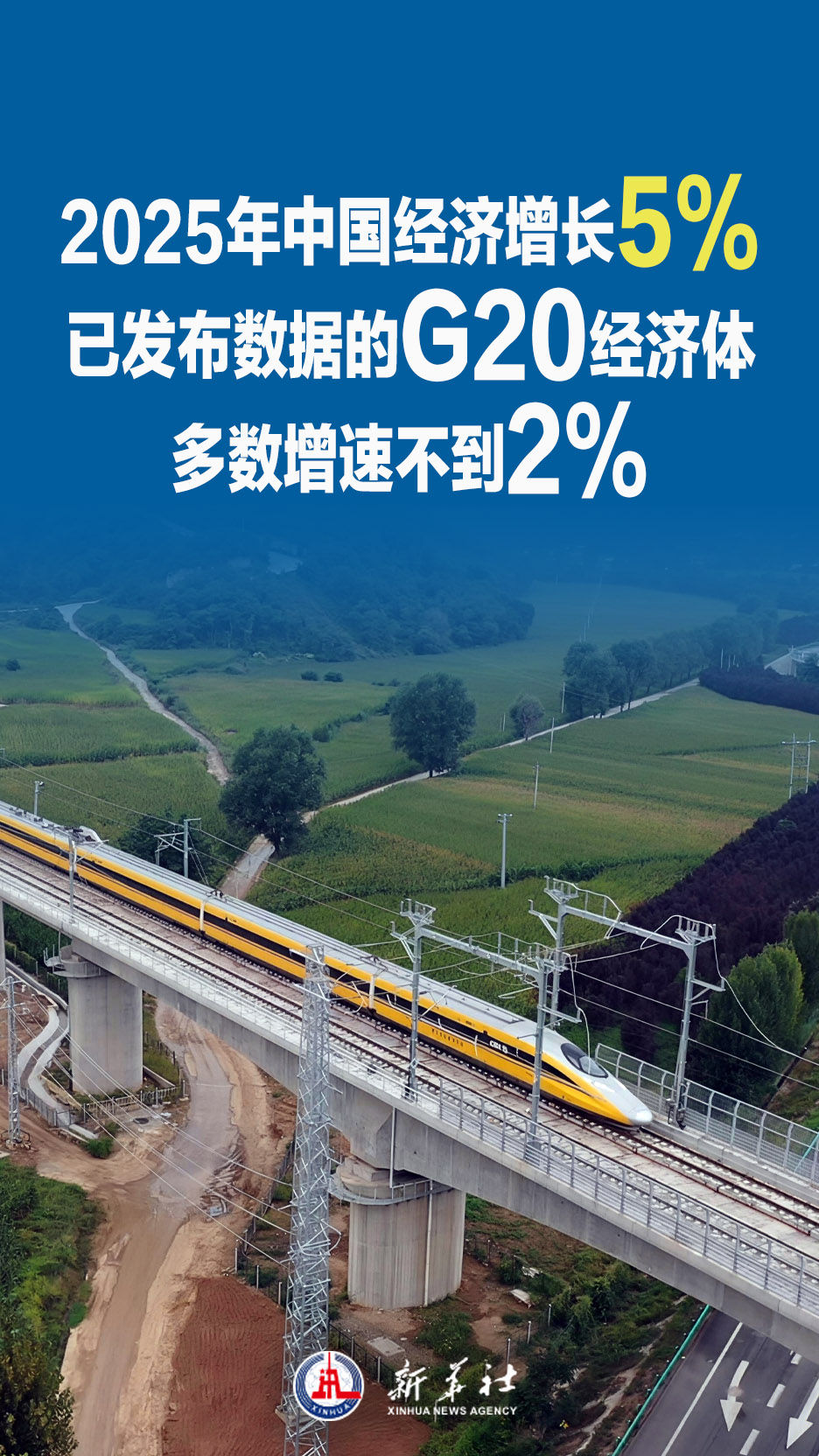
世界坐标看中国经济增长分量
Xin Hua She· 2026-02-06 12:53
Group 1 - The core viewpoint highlights the differentiated recovery momentum and varying growth rhythms of the global economy, with China's economic performance being particularly significant in terms of growth rate, increment, and total volume [1] Group 2 - In terms of growth rate, China's GDP is projected to grow by 5% in 2025, contrasting sharply with most G20 economies, where growth rates are below 2%, and some like Germany, France, and Italy are below 1% [3] - The economic increment for China in 2025 is equivalent to the total economic output of Belgium, showcasing the substantial annual growth for an already large economy [6] Group 3 - By 2025, China's total economic output is expected to surpass 140 trillion yuan, which is equivalent to the combined GDP of Germany, Japan, India, the UK, and Italy, reinforcing China's capacity to withstand risks and maintain long-term growth [9] Group 4 - In 2025, the provinces of Shandong, Guangdong, and Jiangsu are projected to each exceed a GDP of 10 trillion yuan, comparable to the total economic output of Saudi Arabia, reflecting the robust economic strength at the provincial level in China [11] Group 5 - Beijing and Shanghai are expected to each surpass a GDP of 5 trillion yuan in 2025, equivalent to Argentina's economic output, highlighting the urbanization and industrial concentration in China [16] Group 6 - By 2025, there will be 29 "trillion-yuan cities" in China, each comparable to Kenya's economic output, demonstrating the vibrant and solid economic structure of Chinese cities and regions [18] - The data comparisons from growth rate to increment, and total volume to provincial and municipal levels, underline the deep support from a large-scale market, a complete industrial system, and the potential for innovative development [18]
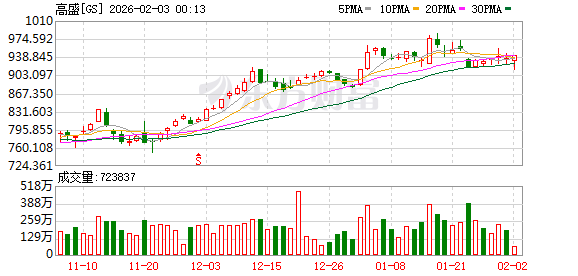
高盛集团苏德巍:对中国市场的投入长期且坚定
Qi Huo Ri Bao Wang· 2026-02-02 16:13
Group 1 - The core viewpoint is that China is one of the most important economies globally, characterized by diversity and benefiting from technological innovation and strong manufacturing and export performance [2] - Goldman Sachs remains optimistic about China's growth prospects and economic potential, with a long-term and firm commitment to investing in the Chinese market [2] - The Chinese economy has achieved its set growth target for 2025, with a significant focus on consumption as a core growth opportunity, supported by government initiatives to boost consumer spending [2] Group 2 - There has been an increase in international capital inflows into the Chinese market, with expectations that the proportion of foreign investment in China will rise above 10% in the future [2] - The joint venture between Goldman Sachs and ICBC, established in June 2022, is progressing steadily, marking it as the fourth joint wealth management company in China [3] - Goldman Sachs is encouraged by China's series of capital market opening measures, which are seen as crucial for attracting more capital from global investors [3]

高盛集团董事长兼首席执行官苏德巍:对中国市场的投入长期且坚定
Xin Lang Cai Jing· 2026-02-02 10:51
Core Viewpoint - Goldman Sachs remains optimistic about China's development prospects and economic growth potential, with a long-term and firm commitment to the Chinese market [1] Group 1: Economic Growth and Consumer Focus - China has achieved its established growth target for 2025, which is considered significant [1] - The core growth opportunity for China's economy in the long term lies in consumption, with the government placing greater emphasis on the role of consumption in boosting the economy [1] - The "14th Five-Year Plan" includes proposals to significantly enhance consumption, indicating a shift towards growth driven more by consumption and the service sector [1] Group 2: Foreign Investment and Market Trends - There has been an observed increase in international capital inflows into the Chinese market by 2025, with an expected rise in the weight of Chinese assets in global investment portfolios [1] - It is anticipated that the proportion of foreign investment allocated to the Chinese market will rebound to over 10% in the future [1]
对中国市场的投入长期且坚定——访高盛集团董事长兼首席执行官苏德巍
Xin Hua Wang· 2026-02-02 10:21
Core Viewpoint - Goldman Sachs remains optimistic about China's economic growth potential and is committed to long-term investment in the Chinese market, highlighting the importance of consumption as a key driver of future growth [1][2]. Group 1: Economic Outlook - Goldman Sachs CEO David Solomon describes the Chinese economy as one of the most important and diverse economies globally, benefiting from technological innovation and strong manufacturing and export performance [1]. - The Chinese economy has achieved its set growth targets for 2025, which Solomon considers significant [1]. - Solomon anticipates an increase in international capital inflows into the Chinese market by 2025, with the proportion of foreign investment in China expected to rise above 10% [1]. Group 2: Market Engagement - Goldman Sachs has observed a resurgence in the activity of China's capital markets, which is encouraging for the firm's investment banking business in China [1]. - The joint venture between Goldman Sachs and Industrial and Commercial Bank of China (ICBC) has been steadily developing since its establishment in June 2022, marking it as the fourth joint venture wealth management company in China [2]. - Solomon emphasizes that China's series of capital market opening measures are crucial for attracting more global capital, reflecting a positive trend towards a more balanced and open economy [2].