能源政策

Search documents
中德能源工作组第十三次会议在苏州召开
国家能源局· 2025-10-24 01:58
Core Viewpoint - The meeting between China's National Energy Administration and Germany's Federal Ministry for Economic Affairs and Energy focused on energy policy updates and collaboration outcomes since the last meeting in July 2024, highlighting the commitment to enhance bilateral cooperation in various energy sectors [2] Group 1: Meeting Overview - The 13th meeting of the China-Germany Energy Working Group took place in Suzhou on October 22, 2025 [2] - Both parties presented their latest energy policies and transformation developments [2] - The meeting reviewed the cooperation achievements since the last meeting [2] Group 2: Future Collaboration Plans - A work plan for 2025-2026 was approved, outlining areas for future collaboration [2] - The agreed areas for exchange and research include energy legal frameworks, energy and electricity markets, power systems, sustainable heating/cooling, renewable energy, hydrogen, and energy storage [2] - Representatives from both countries' energy authorities, the German Embassy in China, and project execution agencies participated in the meeting [2]

莫迪妥协后被批畏惧川普,转头向中国做出承诺,稀土绝不会给美国
Sou Hu Cai Jing· 2025-10-21 04:59
Core Viewpoint - Trump's claim that India will stop purchasing Russian oil is contradicted by data showing an increase in imports, highlighting a disconnect between political statements and actual trade practices [1][3][5]. Group 1: India-Russia Oil Trade - India imported an average of 1.8 million barrels of Russian oil daily in the first half of October, an increase of 250,000 barrels from September [3]. - Russian oil now accounts for approximately 35% of India's total oil imports, a significant rise from less than 1% before the Russia-Ukraine conflict [5]. - Despite Trump's assertions, India's government has not officially committed to halting Russian oil purchases, maintaining a focus on national interests and consumer protection [1][9]. Group 2: U.S.-India Trade Relations - Following the imposition of a 25% punitive tariff on Indian goods by Trump, India's exports to the U.S. fell by 14.35% in August and further declined by 20.7% in September [7]. - India is negotiating with the U.S. to resolve trade issues, with potential to increase oil purchases from the U.S. by $15 billion [7]. - Indian officials have not mentioned stopping Russian oil purchases during trade discussions, indicating a lack of intention to compromise on this issue [9]. Group 3: Political Dynamics - Rahul Gandhi, leader of India's main opposition party, criticized Prime Minister Modi for allegedly allowing Trump to dictate India's energy policy, particularly regarding Russian oil [10]. - Gandhi's criticisms appear politically motivated, aiming to undermine Modi's government rather than reflecting the actual state of India's energy imports [17]. - Modi's government is balancing relations between the U.S. and China, seeking to maintain energy security while navigating complex geopolitical dynamics [28]. Group 4: Rare Earth Materials - India has committed not to resell rare earth materials imported from China to the U.S., a move aimed at securing its supply chain amid rising demand for these critical materials [19][26]. - Rare earths are essential for various industries, including electric vehicles and defense, with India relying on China for 90% of its supply [20]. - The commitment to not resell rare earths reflects India's strategy to stabilize its relationship with China while pursuing economic transformation in high-tech sectors [22][28].
印度承诺特朗普停止购买俄罗斯石油?印方回应
Huan Qiu Wang· 2025-10-16 08:37
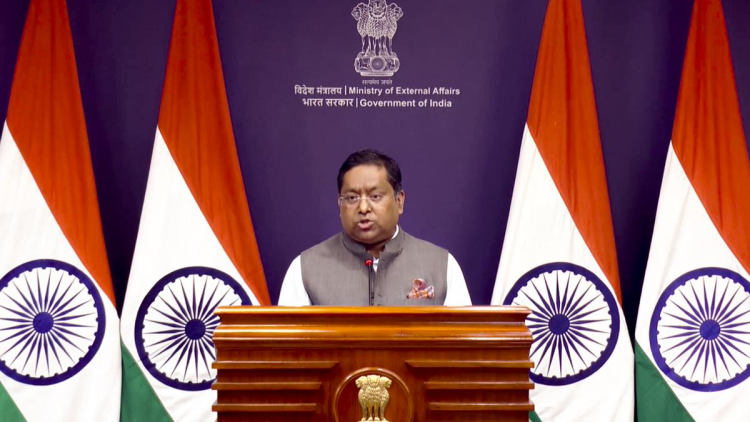
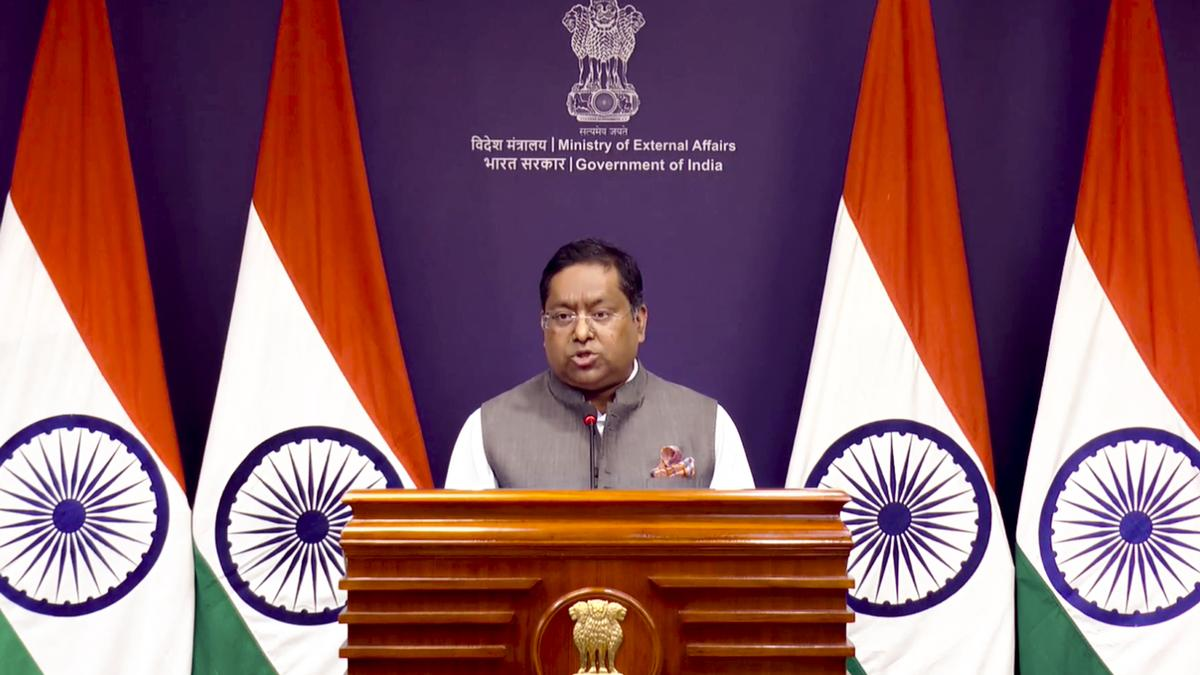
Core Viewpoint - The article discusses the commitment made by India to stop purchasing Russian oil, as stated by U.S. President Trump, while India emphasizes prioritizing consumer interests in its energy policy [4][5]. Group 1: India's Energy Policy - India’s Ministry of External Affairs spokesperson, Randeep Jaiswal, stated that maintaining consumer interests is the top priority in the current volatile energy landscape [5]. - Jaiswal highlighted that the goals of India's energy policy include ensuring stable energy prices and guaranteed supply, which involves diversifying energy procurement [5]. Group 2: U.S.-India Relations - President Trump reported that Indian Prime Minister Modi assured him that India would cease purchasing oil from Russia, describing this as a significant step [4]. - Trump acknowledged that while India cannot stop purchasing oil immediately, the process will be expedited [4].
“突发新闻”!特朗普:莫迪保证不买了
中国能源报· 2025-10-16 07:34
Core Viewpoint - The article discusses the recent commitment made by Indian Prime Minister Modi to U.S. President Trump regarding India's intention to stop purchasing Russian oil, emphasizing India's focus on prioritizing consumer interests in energy procurement [3][4]. Group 1: India's Energy Policy - India has stated that its energy policy will prioritize the interests of Indian consumers, especially in the context of fluctuating energy prices and supply stability [3]. - The Indian government aims to diversify its energy procurement sources and adjust its strategies according to market changes [3]. Group 2: U.S.-India Relations - President Trump expressed dissatisfaction with India's previous purchases of Russian oil and noted that Modi assured him that India would cease these purchases [4][6]. - Trump acknowledged that while India cannot stop buying Russian oil immediately, the process to do so is underway and will be completed soon [6]. Group 3: Trade Implications - The U.S. has imposed additional tariffs on Indian goods, citing India's imports of Russian oil as a reason, which could impact trade relations between the two countries [6].
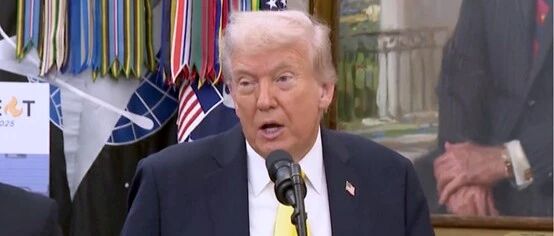
特朗普称印度承诺停止购买俄罗斯石油,印方回应:优先考虑消费者利益
Huan Qiu Wang· 2025-10-16 06:20
Core Points - The article discusses India's commitment to prioritize its consumers' interests in the energy sector following a statement from U.S. President Trump that India will stop purchasing Russian oil [1][3] - India's Ministry of External Affairs emphasizes that maintaining consumer interests is the primary goal of its energy policy, which includes ensuring stable energy prices and guaranteed supply [3] Group 1 - U.S. President Trump announced that Indian Prime Minister Modi assured him that India would cease purchasing oil from Russia, describing it as a significant step [1][3] - The Indian government has not confirmed or denied any changes in its policy regarding Russian oil purchases, indicating a cautious approach [3] - The Indian Ministry of External Affairs stated that the energy procurement policy is guided by the need to protect consumer interests and adapt to market changes [3]
匈牙利:五分之一欧盟公民难以正常供暖
中国能源报· 2025-10-16 05:33
Core Viewpoint - The energy crisis is a significant issue within the EU, with one in five EU citizens unable to access normal heating due to flawed energy policies [3]. Group 1: Energy Policy and Impact - The Hungarian Secretary of State for Energy, Gábor Csepregi, highlighted that the current energy policies of the EU have led to increasing difficulties for households [3]. - The heating season in Hungary commenced on October 15, with Hungarian households benefiting from the lowest energy prices in Europe [3]. - Hungary has sufficient natural gas reserves to last for one and a half years, supported by long-term supply contracts and continuous imports, ensuring energy security for the country [3].
日本自民党与维新会迅速接近,磋商联合执政
日经中文网· 2025-10-16 02:58
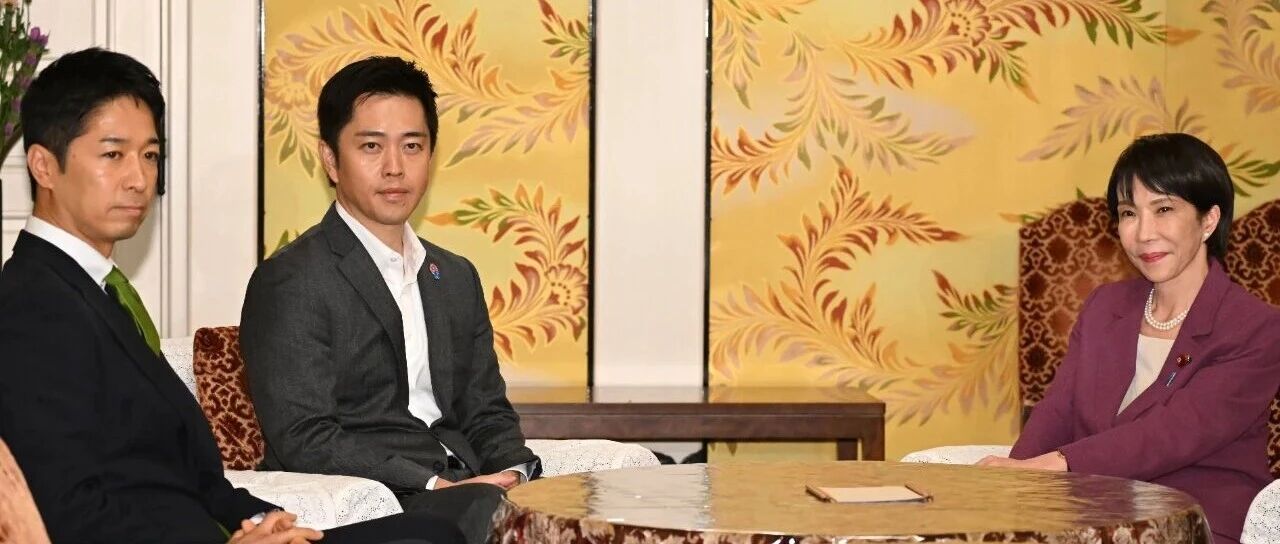
Core Viewpoint - The meeting between Japan's ruling Liberal Democratic Party (LDP) and the Japan Innovation Party (JIP) on October 15 aims to establish a cooperative relationship for the upcoming prime ministerial election and potentially form a governing coalition [2][3]. Group 1: Political Cooperation - The LDP and JIP agreed to start policy discussions on October 16, with JIP's representative indicating support for LDP's leader, if consensus is reached [2][3]. - High-profile discussions included the JIP's proposal for a "sub-capital" concept, with plans to introduce legislative proposals in the 2026 regular session [3][6]. - The LDP and JIP hold a combined total of 231 seats in the House of Representatives, just two short of the majority needed, enhancing the likelihood of High City becoming Prime Minister if they collaborate [6][7]. Group 2: Challenges Among Opposition Parties - The three opposition parties, including the Constitutional Democratic Party (CDP), JIP, and the National Democratic Party (NDP), have not reached a consensus on basic policies, which could hinder their ability to support a unified candidate in the prime ministerial election [2][5][7]. - The NDP's leader expressed skepticism about forming a coalition with the LDP after the Komeito party's exit from the ruling coalition, indicating a complex political landscape [4][6]. Group 3: Policy Discussions - Key topics for discussion between the LDP and JIP include social security reform, political funding measures, and the foreigner policy [3][6]. - The LDP's High City proposed a mechanism for discussions with the NDP to address income tax exemption thresholds, aiming for collaboration in the prime ministerial election [6][7]. - The CDP's leader indicated a willingness to make concessions on security laws, while the JIP and NDP maintain a supportive stance towards the current security legislation [7].
埃克森美孚(XOM.US)收缩欧洲战线 掌门人盛赞特朗普能源方针
Zhi Tong Cai Jing· 2025-10-13 13:00
Core Viewpoint - ExxonMobil's CEO Darren Woods criticizes EU energy policies while praising former President Trump's energy approach, indicating a strategic shift in the company's investment focus away from Europe [1] Group 1: Criticism of EU Policies - Woods argues that EU regulations on climate and human rights are hindering business progress and imposing unrealistic solutions [1] - He previously condemned the EU's Corporate Sustainability Due Diligence Directive, labeling it as having a "devastating" impact on the industry [1] Group 2: Support for US Policies - Woods highlights that Trump's policies foster a more balanced discussion on energy, recognizing the importance of economic growth and public welfare [1] Group 3: Concerns about US Shale Production - Despite political backing, ExxonMobil expresses concerns over the anticipated slowdown in US shale oil production [1] - Woods notes that overcoming the current 10% recovery rate limitation in shale reservoirs could reverse this trend [1] Group 4: Return to Iraq - ExxonMobil has signed an agreement related to the Majnoon oil field in Iraq, but Woods acknowledges that significant work remains to make the project effective [1]

电磁弹射亮剑!中美能源路线摊牌,中国制度优势全面反超美国
Sou Hu Cai Jing· 2025-10-06 06:22
Core Viewpoint - The successful implementation of electromagnetic catapults on the Fujian aircraft carrier reflects a broader competition between China and the United States in energy, systems, and strategic capabilities [1][11]. Group 1: Technological Comparison - The Fujian carrier, despite being a conventional power carrier, effectively utilizes an electromagnetic catapult system, contrasting with the U.S. Ford-class carrier, which has faced numerous issues over a decade of development [5][6]. - The U.S. Ford-class employs a complex medium-voltage AC system, leading to higher failure rates, while the Fujian uses a simpler and more efficient medium-voltage DC system [6][8]. Group 2: Energy Policies and Institutional Factors - The U.S. energy policy has fluctuated, impacting funding and talent retention, which has hindered advancements in electromagnetic catapult technology [6][9]. - In contrast, China has consistently invested in energy, power grids, and infrastructure over decades, resulting in a robust industrial chain that supports the Fujian's technology [6][8]. Group 3: Technological Foundations and Future Applications - The electromagnetic catapult technology is rooted in China's advancements in civilian sectors such as high-speed rail and electric vehicles, which have provided a foundation for military applications [8][11]. - Future applications of electromagnetic technology are anticipated in missiles, drones, and tanks, showcasing its versatility and potential in modern warfare [8][11]. Group 4: Systemic Advantages - China's centralized system allows for rapid mobilization of resources and talent towards strategic projects, contrasting with the U.S. system, which suffers from political disputes and funding interruptions [9][11]. - The success of the Fujian's electromagnetic catapult is not just a military achievement but also a demonstration of China's institutional advantages in strategic planning and execution [11][13].

宁德时代派遣2000名工人赴欧洲建厂,西班牙官员:中国是电池领域领先者
Guan Cha Zhe Wang· 2025-09-28 01:04
Core Insights - Chinese companies are sending thousands of workers to Europe to build advanced automotive battery factories, highlighting Europe's significant skills gap in the electric vehicle battery sector and its reliance on Chinese technology [1][2][6] - CATL plans to send 2,000 workers to Spain to construct a €4 billion battery factory in partnership with Stellantis, with commitments to hire and train local workers once the factory is operational [1][5] - The bankruptcy of Northvolt, a Swedish battery manufacturer, and recent power outages in the Iberian Peninsula have prompted European governments to recognize the importance of seeking energy storage technology from Chinese firms [1][6][7] Company and Industry Summaries - CATL is one of the world's leading battery manufacturers and is expanding its presence in Europe with significant investments, including a €7 billion factory in Hungary and the aforementioned factory in Spain [1][4] - Envision, another Chinese energy giant, is also planning to build a battery factory in western Spain, indicating a broader trend of Chinese investment in European battery production [5] - The Spanish government, under Prime Minister Sánchez, is actively seeking to strengthen trade and investment ties with China, with support from both left-wing and right-wing political parties for battery factory projects [6][7] - The recent large-scale power outage in the Iberian Peninsula has raised concerns about the resilience of Europe's energy grid, creating opportunities for Chinese companies to provide advanced energy storage solutions [7][9]