能源霸权

Search documents
突发快讯!美国能源部长向全球通告:美国将无限期控制委石油销售,引发国际热议
Sou Hu Cai Jing· 2026-01-09 11:58
Group 1 - The core viewpoint of the article highlights the United States' ambition to maintain absolute control over Venezuela's oil industry, declaring an "indefinite" oversight of its oil exports, which reflects a continuation of military intervention and a blatant display of hegemonic behavior [1][3][4] Group 2 - The U.S. military intervention in Venezuela has paved the way for energy exploitation, as the U.S. forces recently captured President Maduro and facilitated a transitional government to clear obstacles for controlling the oil sector, disregarding international law and sovereignty [3][4][6] - Venezuela's significant oil reserves make it a key target for U.S. strategic interests, aiming to reshape the global energy landscape and weaken other oil-exporting nations [4][6][9] Group 3 - The U.S. plans to integrate Venezuela's oil exports into its own system, effectively pushing for a "camp-based" global oil supply chain, which would bind resource distribution to compliance with U.S. strategies, thereby reinforcing the dollar's dominance in oil trade [6][9][11] - The impact of U.S. actions on the Venezuelan populace is dire, with the oil industry in chaos, leading to increased energy prices, material shortages, and a crumbling livelihood for citizens, while U.S. plans prioritize its own interests over the welfare of the Venezuelan people [7][9][11] Group 4 - The international community has strongly condemned the U.S. actions, with Latin American countries uniting to criticize the military intervention and energy exploitation, emphasizing the violation of sovereignty and calling for the release of Maduro [9][11] - There is growing dissent within the U.S. regarding the legality and ethical implications of the intervention, with concerns that it serves the interests of oil companies rather than national interests, potentially deepening regional conflicts [9][11]


德银深度:美国盯上委内瑞拉,不只是为了油,更是为了“拯救美元”
Xin Lang Cai Jing· 2026-01-09 05:18
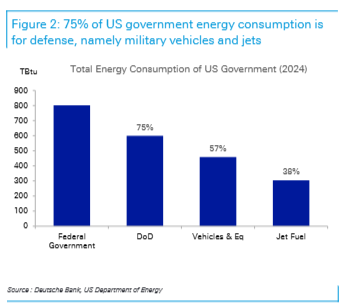
Core Viewpoint - Deutsche Bank indicates that the U.S. involvement in Venezuela's oil is not merely about energy but is fundamentally a covert war for dollar hegemony [1][10]. Group 1: Energy and Economic Control - Controlling the world's largest oil reserves enhances the U.S.'s influence over global oil prices, but the deeper strategic goal is to maintain the dollar's status as the global reserve currency [1][10]. - The U.S. relies on oil and gas for over 70% of its energy consumption, necessitating a stable and low-cost supply to maintain global competitiveness [12]. - Venezuela's oil reserves are six times larger than those of the U.S., creating a "perfect complement" despite Venezuela's low production capacity [12]. Group 2: Military and Dollar Dominance - The military's reliance on oil is crucial, as the U.S. Department of Defense is the largest oil consumer, with 75% of federal energy consumption coming from defense [13][15]. - Historical evidence suggests that a country's probability of winning conflicts influences its currency's stability, making military dominance a key factor in the dollar's reserve status [15]. - The U.S. aims to secure control over oil reserves to enhance its military success probability, thereby supporting the dollar's position [15]. Group 3: Shift from Demand to Supply Control - The traditional leverage of maintaining dollar pricing through demand is weakened as the U.S. is no longer the largest oil importer [17]. - The new strategy involves becoming one of the largest oil suppliers to enforce dollar settlements from the supply side, particularly by controlling Venezuelan oil reserves [17][19]. - If the U.S. can control Venezuela's oil sales channels, it can ensure that trade remains dollar-denominated, thus maintaining global demand for the dollar [19].

德银深度:美国盯上委内瑞拉,不只是为了油,更是为了“拯救美元“
Hua Er Jie Jian Wen· 2026-01-09 03:59
Core Viewpoint - The involvement of the United States in Venezuela's oil sector is not merely about energy but is fundamentally a covert war for maintaining the dollar's hegemony in the global financial system [1][2]. Group 1: U.S. Strategic Interests - Controlling Venezuela's vast oil reserves, which are six times larger than those of the U.S., is seen as a strategic move to enhance U.S. influence over global oil prices and maintain the dollar's status as the world's reserve currency [2][6]. - The U.S. aims to transition from being the largest oil importer to a dominant oil supplier, thereby ensuring that oil continues to be priced in dollars [1][6]. Group 2: Historical Context of Energy Dominance - Historical analysis indicates that nations controlling key energy resources gain significant economic, industrial, and military advantages, which solidify their global dominance [2]. - The U.S. has relied heavily on oil and gas, with over 70% of its energy consumption coming from these sources, making access to low-cost oil essential for maintaining global competitiveness [2]. Group 3: Military and Economic Interdependence - The military's reliance on oil underscores its critical role in maintaining the dollar's status; the U.S. Department of Defense is the largest consumer of oil, with 75% of government energy consumption attributed to military use [3][5]. - Historical precedents show that control over oil supplies has been pivotal in military conflicts, influencing the stability and value of currencies [5]. Group 4: Shift in Pricing Power - The traditional leverage of the U.S. as the largest oil buyer to enforce dollar-denominated transactions is diminishing, necessitating a shift to controlling oil supply to maintain pricing power [6][8]. - By controlling Venezuela's oil sales, the U.S. could ensure that transactions remain dollar-based, even if the oil does not flow directly to the U.S., thereby reinforcing the dollar's position in global trade [8].
美染指委石油的图谋与困境
Sou Hu Cai Jing· 2026-01-07 00:50
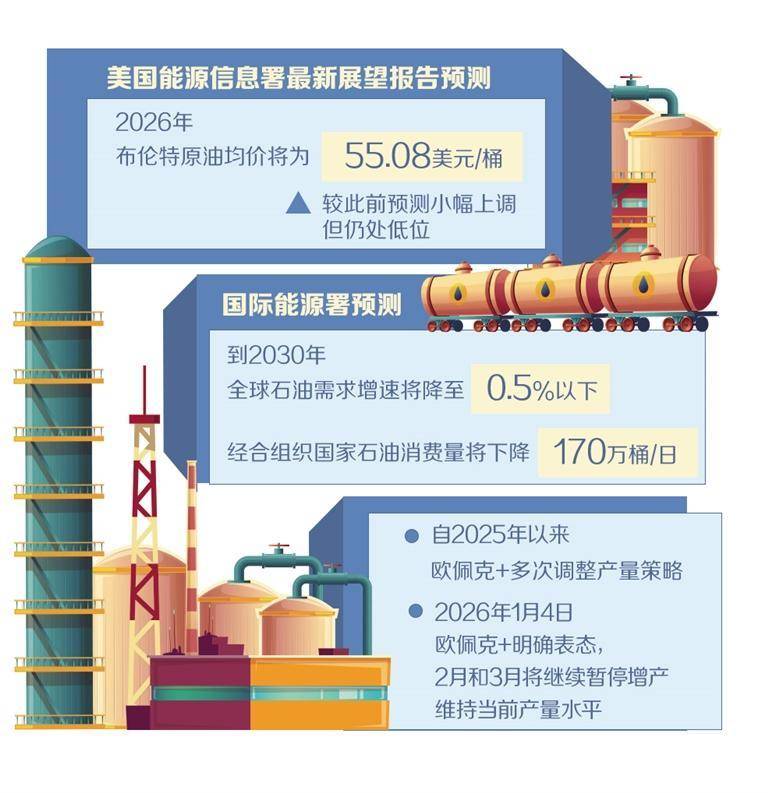
Core Viewpoint - The U.S. government, led by President Trump, aims to involve American oil companies in Venezuela to repair its oil infrastructure and increase production, revealing intentions to control Venezuela's oil resources for economic gain [1][2]. Group 1: Short-term and Long-term Objectives - The U.S. intervention in Venezuela is driven by the short-term goal of accessing heavy crude oil, which is currently in short supply for U.S. refineries, and a long-term strategy to establish energy dominance [2]. - Venezuela holds approximately 300 billion barrels of proven oil reserves, accounting for about 17% of global reserves, making it a significant target for U.S. energy interests [2]. Group 2: Challenges in the Venezuelan Oil Industry - Venezuela's oil infrastructure is severely deteriorated, requiring substantial time and investment for repairs, which poses a challenge for U.S. companies considering investment [3]. - The country faces a critical shortage of funding and technical talent in the oil sector, with thousands of professionals having left in recent years, complicating efforts to revitalize the industry [3]. - An estimated $110 billion is needed to restore Venezuela's oil production to levels seen 15 years ago, which is double the total global investment planned by U.S. oil giants for 2024 [3]. Group 3: Market Conditions and Investment Hesitance - Global oil supply is expected to exceed demand in the coming years, with predictions of oil prices dropping to $50 per barrel or lower, which could hinder U.S. profit motives from Venezuelan oil [5]. - U.S. oil executives express reluctance to invest in Venezuela due to political instability and past nationalization of oil assets, indicating a significant gap between government expectations and industry realities [6]. - The current low oil prices, which have fallen by 20% compared to the previous year, further deter investment in Venezuela's oil sector [6].
美重塑全球石油供应链意图明显
Sou Hu Cai Jing· 2026-01-06 22:45
Group 1 - The core point of the articles is that the recent U.S. military action in Venezuela is primarily aimed at seizing control of the country's vast oil resources, which account for 17% of global oil reserves, revealing the underlying motives of U.S. geopolitical dominance and energy control [2][3][4] - The U.S. has openly demanded Venezuela to return all previously "stolen" oil, land, and assets, indicating a direct intention to control the Venezuelan oil industry rather than merely seeking regime change [3][4] - The U.S. plans to reintegrate its oil companies into Venezuela, aiming to inject capital and technology to fully incorporate the Venezuelan oil sector into a U.S.-led framework [4][5] Group 2 - The global oil market is currently experiencing a paradoxical situation where, despite the apparent calm, significant underlying tensions exist due to U.S. interventions, with Brent crude oil prices briefly dropping by 1.2% to $60 per barrel before rebounding [4][5] - Venezuela's oil production has been severely impacted by sanctions, with an average daily output of only 934,000 barrels in November 2025, representing less than 1% of global supply, leading to expectations that U.S. control could increase exports to 3 million barrels per day [5][6] - The U.S. intervention is expected to disrupt the existing balance of the global refining industry, as Asian and European refineries that rely on Venezuelan heavy crude may face shortages, forcing them to seek alternatives and increasing costs [6][8] Group 3 - The U.S. strategy aims to weaken the influence of the OPEC+ alliance by creating a new "key variable" outside of it, potentially undermining its ability to coordinate production effectively [7][8] - The U.S. is positioned as the largest oil exporter globally, which has diminished OPEC+'s market influence, with the alliance's ability to manage production levels significantly weakened since 2025 [7][8] - The U.S. intervention is seen as a manifestation of the "America First" principle in energy, aiming to maintain the dominance of the dollar in oil transactions and counteract the trend of de-dollarization globally [8][9] Group 4 - In the short term, the military action is likely to increase risk premiums in oil prices, with Brent crude expected to fluctuate between $58 and $63 per barrel in January, despite a predicted oversupply of 4 million barrels per day by 2026 [9][10] - If the U.S. successfully controls Venezuela, it could lead to a gradual increase in production from 934,000 barrels per day towards historical peaks of 3 million barrels per day, exacerbating the oversupply situation [10][11] - Long-term projections indicate a shift towards a tripartite oil supply structure involving the U.S., the Middle East, and Russia, while OPEC+'s regulatory capacity continues to decline [11]
美国染指委内瑞拉石油资源的心机与困境
Sou Hu Cai Jing· 2026-01-06 07:00
美国能源信息局数据显示,委内瑞拉拥有约3000亿桶已探明原油储量,占全球储量的约17%,位居世界 第一。通过控制这片"黑色金矿"并调整其产能,美国可以获得更大的国际油价定价权。 然而,委内瑞拉石油工业现状给特朗普政府的企图泼了一盆冷水。 首先,委内瑞拉石油基础设施破败不堪。美国成品油零售价格信息服务机构"汽油伙伴"公司石油分析师 帕特里克·德汉指出:"虽然许多报道称委石油基础设施未受美方行动波及,但它已经衰败多年,重建需 要时间。" 美国总统特朗普日前表示,将让美国大型石油公司前往委内瑞拉投资,维修该国石油基础设施并为美 国"创造收益"。这一表态进一步显露美方染指委内瑞拉石油资源的企图。消息人士透露,特朗普计划本 周晚些时候召集美国石油巨头高管,商讨提高委内瑞拉石油产量事宜。 分析人士认为,美方强力干预委内瑞拉局势,既有获取委内瑞拉重质原油的短期目的,也有借控制委石 油资源推动实现"能源霸权"的长期图谋。然而,受委基础设施老化、全球能源市场供应格局变化等多重 因素制约,美国染指委石油资源并将其迅速变为"提款机"的企图面临诸多现实困境。 英国《经济学人》报道,委内瑞拉拥有的重质原油是美国炼油厂长期短缺的资源。长 ...
【环球财经】美国染指委内瑞拉石油资源的心机与困境
Xin Hua She· 2026-01-06 06:43
Core Viewpoint - The U.S. President Trump's intention to have American oil companies invest in Venezuela's oil infrastructure highlights the U.S. interest in Venezuela's oil resources, aiming for both short-term gains and long-term energy dominance [1] Group 1: U.S. Interest in Venezuelan Oil - Trump plans to convene U.S. oil executives to discuss increasing Venezuelan oil production, indicating a strategic move to access Venezuela's heavy crude oil, which is currently in short supply for U.S. refineries [1] - Venezuela holds approximately 300 billion barrels of proven oil reserves, accounting for about 17% of global reserves, making it a significant target for U.S. energy strategy [1] Group 2: Challenges Facing Investment - Venezuela's oil infrastructure is in a state of disrepair, requiring significant time and investment to rebuild, which may deter foreign investment until political and contractual stability is assured [2] - The country faces a severe shortage of funding and technical talent in the oil industry, with estimates suggesting that $110 billion is needed to restore production to levels seen 15 years ago, a figure that exceeds the total global investment of U.S. oil giants for 2024 [2] Group 3: Market Conditions and Risks - The global energy market is currently oversupplied, which may hinder the U.S. from quickly profiting from Venezuelan oil resources, with predictions of oil prices potentially dropping to $50 per barrel or lower in the coming years [3] - Historical precedents, such as in Libya and Iraq, suggest that forced regime changes rarely stabilize oil supply quickly, raising concerns about the feasibility of U.S. plans in Venezuela [3]
委内瑞拉“石油战”,美国真的赢了?
Jin Tou Wang· 2026-01-05 09:31
这下装都不装了,就是要明抢。 根据欧佩克(OPEC)及能源情报署的数据,委内瑞拉拥有约3038亿桶的已探明石油储量,位居世界第一。这个数字占全球总量的近20%,比石油王 国沙特阿拉伯(17%)还要多。 此外,委内瑞拉天然气储备全球第八,金银铜铁储量也是名列前茅。而同时,国内经济一塌糊涂,内政一片混乱,经济、军事实力在美国面前不 值一提。 前一天,美国刚夜袭了委内瑞拉,带走了总统马杜罗,第二天,特朗普就在新闻发布会上宣布将让美国大型石油公司进入委内瑞拉,并开始创造 收益。 但是,委内瑞拉在推动石油国有化的时候,忽略了一个重要问题,那就是开采技术。因为他们的石油都是重油,杂质很多开采难度非常大,之前 开采量大是因为有英美荷等石油公司的先进开采技术支持,现在外资带着技术一并撤走了,委内瑞拉就徒留全球最大的油田,但是却无能为力。 一个产油国到了无油可用的地步,经济必然也就会出现问题,更何况委内瑞拉90%的外贸收入和一半以上的经济总量都来自石油。但在这种内忧 外患的背景之下,委内瑞拉政府不是想着解决问题,而是为了获得选民支持,一股脑的把所有的家底全都投在了给民众发放福利上。 经济好了,腰杆也就硬了,委内瑞拉政府不想再让 ...

石油棋局生死劫:美国紧盯委内瑞拉 3030 亿桶储量,龙国千亿投资何去何从?
Sou Hu Cai Jing· 2026-01-04 18:45
这种绕开美元霸权的合作模式,正是美国最忌惮的 "破局范例",控制委内瑞拉就能直接切断这条去美 元化通道。 加勒比海的风浪背后,一场关乎全球能源命脉的博弈正在升温。坐拥 3030 亿桶原油储量(约占全球 1/5)的委内瑞拉,作为全球已知最大石油宝库,早已成为大国角力的核心靶点。 一旦美国彻底掌控这个 "石油王国",全球能源格局将迎来颠覆性重构,而中国深耕十余年的千亿布 局,正站在命运的十字路口。 美国对委内瑞拉的觊觎,从来不止于石油本身。 作为全球最大产油国,美国本土轻质原油产能充沛,但炼油厂却高度依赖委内瑞拉的重质原油 —— 这 种能高效生产柴油、沥青的 "工业血液",恰恰是美国的供给短板,且委油生产成本低至每桶 20 美元以 下,性价比无可替代 。 控制委内瑞拉,美国将直接握住全球能源的 "阀门":通过松紧制裁随意调节委油出口量,既能人为制 造供应震荡推高油价,拯救本土亏损的页岩油企业,也能压低油价打击竞争对手,彻底巩固其能源霸权 。 更致命的是,这将精准瓦解中俄在拉美的能源根基,重构西半球能源秩序,让 "门罗主义" 的幽灵重新 笼罩美洲大陆。 对美国而言,还有一层关键图谋 —— 扼杀去美元化的重要试验田。 ...

一场终极博弈!美国芯片或将会输给中国算力?
Sou Hu Cai Jing· 2025-12-12 10:34
Core Viewpoint - The article discusses the potential for China to surpass the United States in the AI race due to its superior energy infrastructure, particularly in electricity generation and distribution, which is crucial for powering AI technologies [1][6][12]. Energy Power Dynamics - Historically, energy resources have dictated global power dynamics, with the UK leveraging coal during the Industrial Revolution and the US establishing dominance through oil post-World War II [3][4]. - The control of essential energy resources has consistently allowed nations to shape global economic rules and maintain hegemony [4]. Current AI and Energy Landscape - The development of artificial intelligence is accelerating industrial productivity, with AI capable of enhancing manufacturing efficiency by over 30% and significantly reducing drug development timelines [6]. - Electricity has become the core energy resource in the AI era, as the computational power required for AI applications is heavily reliant on substantial electricity supply [6][10]. China's Strategic Advantages - China has implemented forward-looking strategies, such as the Renewable Energy Law in 2005, leading to a significant increase in renewable energy capacity, with a projected total of 2.22 billion kilowatts by October 2025 [8]. - The establishment of a high-capacity power transmission network (UHV) has enabled efficient long-distance electricity distribution, addressing energy shortages in eastern regions while utilizing western renewable resources [9][10]. Data and Computational Power - The "East Data West Computing" initiative allows for the transfer of data from energy-rich western regions to data-intensive eastern cities, enhancing computational efficiency and reducing costs [9][10]. - This system not only alleviates energy shortages in major cities but also optimizes the use of renewable resources, positioning China as a leader in energy and computational power [10]. Comparison with the United States - The US faces challenges with an aging and fragmented energy infrastructure, which hampers its ability to compete effectively in the AI and energy sectors [12]. - The reliance on private sector solutions has led to disparities in energy access, particularly affecting vulnerable communities during extreme weather events [12]. Future Implications - China's advancements in energy and computational power may lead to a new global economic landscape where computational services become a major export, enhancing China's influence in global trade [13]. - The Belt and Road Initiative could evolve to include integrated solutions that combine computational power and industry knowledge, further solidifying China's position in the global technology sector [13]. - The shift in economic power dynamics may result in new rules of engagement, with computational power becoming a critical factor in international relations and economic negotiations [14].