自由市场

Search documents
喜娜AI速递:昨夜今晨财经热点要闻|2025年10月17日
Sou Hu Cai Jing· 2025-10-16 22:17
Group 1 - The U.S. Treasury Secretary revealed that the Trump administration is strengthening control over key strategic sectors to counter China's economic initiatives, marking a shift from the "free market" ideology [2] - The U.S. stock market experienced a decline due to concerns over bank bad debts and escalating trade tensions with China, alongside a government shutdown entering its third week [2] - Japanese central bank officials indicated that inflation targets may be reached sooner than expected, increasing expectations for interest rate hikes [2] Group 2 - On October 16, multiple A-share companies reported share reductions, with no companies announcing increases, indicating potential market impacts [3] - NIO faced a lawsuit for securities fraud, leading to a significant drop in its stock price, which affected the broader automotive sector [3] - Indonesia confirmed the procurement of Chinese J-10 fighter jets as part of its military modernization efforts [3] Group 3 - The Ministry of Industry and Information Technology announced a special action plan aimed at enhancing computing power, with long-term investment opportunities anticipated in the sector [4] - Fuyao Glass announced a leadership change with Cao Dewang resigning as chairman, while the company reported revenue and net profit growth, leading to a slight increase in stock price [5] - Gold prices reached a new high, driven by expectations of Federal Reserve rate cuts and geopolitical risks, with a significant year-to-date increase of over 60% [5]


辉煌融资租赁智能公布客服今日认证正式更改
Sou Hu Cai Jing· 2025-10-16 08:00
Group 1 - The article discusses the recent announcement by Huiguang Financing Leasing regarding their customer service hotline for handling early repayment and account cancellation issues [1] - It highlights the U.S. President Trump's decision to proceed with a military strike, emphasizing the authority he had to cancel the attack at the last moment [1] - The World Trade Organization meeting in Geneva is mentioned, where China announced zero tariff treatment for all products to the least developed countries that have diplomatic relations with China [4] Group 2 - The article critiques the U.S. portrayal of "free market" values, arguing that it primarily benefits individual rights to choose legal trading partners [4] - It explains how the Federal Reserve utilizes interest rate cycles to exert influence globally, suggesting that there are opportunities for risk-free profits during these cycles [4] - The article points out the discrepancy in how the U.S. accounts for trade, focusing on visible goods while ignoring significant service trade surpluses, such as the $300 billion surplus from patents and financial services [4]


陆金申华融资租赁智能公布客服今日认证正式更改
Sou Hu Cai Jing· 2025-10-16 08:00
Group 1 - The article discusses the recent announcement by a financing leasing company regarding their customer service hotline for handling early repayment and account cancellation issues [1] - It highlights the U.S. President's comments on Russia's offer to assist with Iran, indicating ongoing geopolitical tensions [1] - The article mentions the World Trade Organization's meeting where China announced zero tariff treatment for products from least developed countries that have diplomatic relations with China [4] Group 2 - The article critiques the U.S. portrayal of free market values, emphasizing the selective nature of trade calculations, particularly in service trade [4] - It points out that the U.S. had a significant trade surplus of $300 billion from services like patents and finance, contrasting it with the focus on tangible goods like soybeans [4] - The article suggests that the concept of "equal tariffs" promoted by the U.S. is misleading, indicating a deeper critique of U.S. trade policies [4]
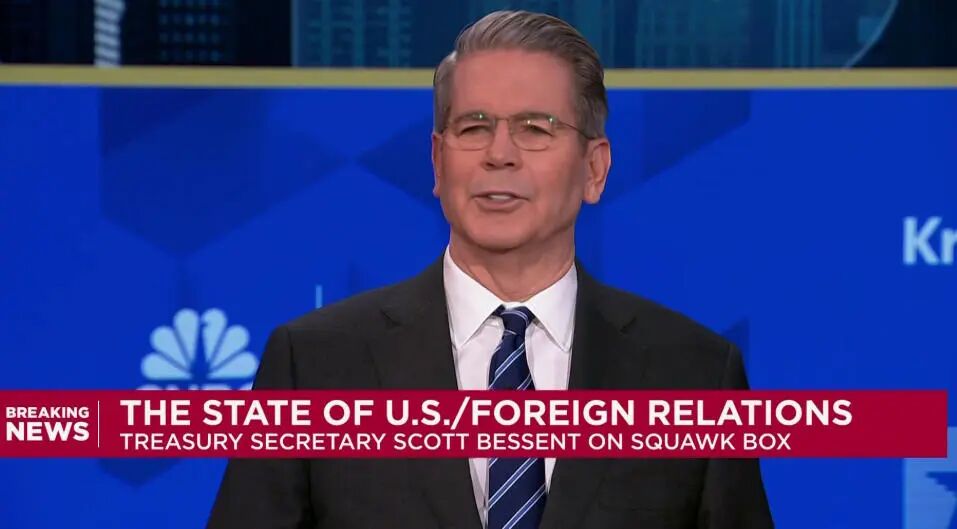
美财长不装了:应对中国,就得这么做
Guan Cha Zhe Wang· 2025-10-16 06:09
Core Viewpoint - The U.S. government is shifting towards unprecedented industrial policies to exert greater control over domestic companies, particularly in response to China's dominance in rare earth and critical mineral sectors [1][2][3]. Group 1: U.S. Industrial Policy Shift - The approach signifies a new era of industrial policy in the U.S., contrasting sharply with the traditional emphasis on "free markets" and "open investment" [2]. - The Trump administration aims to reduce reliance on China by increasing ownership stakes in companies deemed critical to national security [2][5]. - The U.S. Treasury Secretary emphasized the need for industrial policy when facing economic powers like China, especially after China's recent export controls on rare earths [3][6]. Group 2: Strategic Investments and Partnerships - The Trump administration has invested in key companies, including U.S. Steel, Intel, and rare earth mining company MP Materials, and is seeking revenue sharing from Nvidia and AMD's sales in China [5][10]. - Establishing a "strategic mineral reserve" is a priority, with the government identifying seven strategic industries for potential increased control [6][12]. - The U.S. Department of Defense has agreed to invest $400 million in MP Materials, which operates the only active rare earth mine in the U.S., indicating a willingness to break from "free market" principles [8][11]. Group 3: Challenges and Market Dynamics - The U.S. faces significant challenges in reviving its rare earth supply chain, including high labor costs, a lack of skilled workforce, and environmental regulations [11][12]. - The demand for rare earths is projected to double by 2050, driven by the rise of electric vehicles and wind turbines, yet the U.S. government has cut subsidies for renewable energy [11][12]. - Analysts express concerns that the U.S. government may lack the experience to effectively implement industrial policies after decades of absence in this area [13][14].

Hedge, Don't Bet
Seeking Alpha· 2025-09-29 10:37
Core Insights - The individual transitioned from a career in commercial construction to full-time investing in the stock market, driven by a growing interest in financial markets and investment opportunities [1] - The launch of The Speculative Investor (TSI) website in 1999 allowed for interaction with a broader audience, evolving from a free service to a subscription-based model due to its popularity [1] - The investment strategy employed is a 'top down' approach, focusing on overall market trends before identifying individual stocks that can benefit from these trends [1] Investment Philosophy - The individual emphasizes the importance of understanding the broader market context, noting that it is significantly easier to select winning stocks in a bullish market compared to a bearish one [1] - A belief in gold as a hedge against fiat currency instability is highlighted, although it is noted that gold is not always a good investment [1] Market Experience - The individual has lived in Asia since 1995, which may provide insights into emerging markets and investment opportunities in the region [1] - The experience in both engineering and project management contributes to a disciplined approach to investment analysis and decision-making [1]

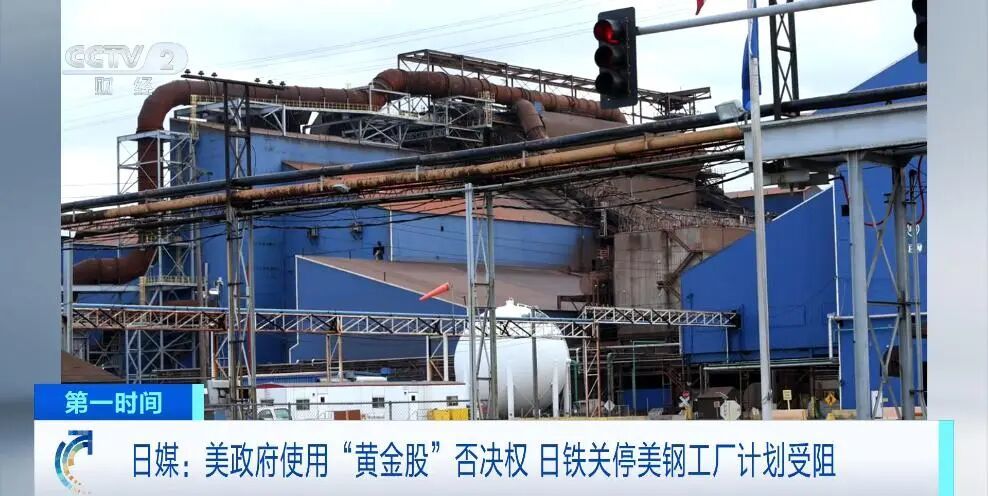
花了141亿美元并购美钢,日本制铁被美国政府“黄金股”拿捏:关厂?不行
Mei Ri Jing Ji Xin Wen· 2025-09-22 22:39
Core Viewpoint - The U.S. government has exercised its "golden share" rights to prevent Nippon Steel from shutting down a plant owned by U.S. Steel, highlighting increased government intervention in private enterprise and raising concerns about corporate autonomy [1][5][9]. Group 1: Acquisition and Agreements - Nippon Steel completed its acquisition of U.S. Steel in June 2023, after a year and a half of negotiations [6]. - As part of the acquisition, Nippon Steel signed a national security agreement with the U.S. government, committing to invest approximately $11 billion in U.S. Steel by 2028 and to not close or suspend any plants [7]. - The agreement included a provision for the U.S. government to receive a "golden share," granting it veto power over significant corporate decisions [7]. Group 2: Operational Changes and Government Intervention - Nippon Steel planned to close the Granite City plant in Illinois to improve production efficiency, as the plant's two blast furnaces had been idle since 2023 [1][5]. - U.S. Steel notified its 800 workers in September that the Granite City plant would cease operations in November, but this plan was blocked by U.S. Secretary of Commerce and President Trump, who invoked the "golden share" rights [3][5]. - Following the intervention, U.S. Steel announced on September 19 that the Granite City plant would continue operations, marking a significant instance of government involvement in corporate management [5]. Group 3: Legal Actions and Corporate Dynamics - In January 2023, Nippon Steel and U.S. Steel filed a lawsuit against President Biden, alleging illegal interference in the acquisition process, marking a historic legal action by a Japanese company against a U.S. president [11]. - The intervention by the U.S. government raises concerns about the implications for corporate governance and the potential risks associated with increased regulatory oversight [9]. Group 4: Market Impact and Future Goals - Since the acquisition, Nippon Steel's stock has risen over 15% in three months, with a market capitalization of approximately 3.42 trillion yen (about 164.5 billion RMB) [7]. - Nippon Steel aims to increase its global production capacity from 65 million tons to 85 million tons through the acquisition, moving closer to its long-term goal of 100 million tons [12].

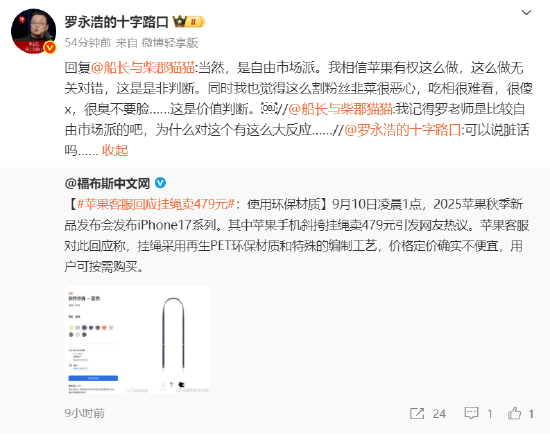
罗永浩谈苹果手机挂绳卖479元:苹果有权这么做,但割粉丝韭菜很恶心,臭不要脸
Xin Lang Ke Ji· 2025-09-10 11:06
Core Viewpoint - Apple has released a series of new products, but a particular accessory, a crossbody strap priced at 479 yuan, has attracted significant attention and criticism for its high price [1]. Group 1: Product Pricing and Materials - The crossbody strap is made from recycled PET material and features a special weaving process, which Apple claims justifies its high price [1]. - Despite the criticism regarding the price, Apple customer service has stated that the strap is available for users to purchase as needed [1]. Group 2: Public Reactions - Notable figures, such as Luo Yonghao, have commented on the pricing strategy, suggesting that while Apple has the right to set such prices, it reflects poorly on the company's values and treatment of its customers [1].

白宫给美国企业论“忠”排辈,冲击市场经济根基
Zhong Guo Xin Wen Wang· 2025-08-23 13:58
Group 1 - The U.S. government has reached an agreement to acquire 9.9% of Intel's shares for approximately $8.9 billion, making it one of the largest shareholders [1][2] - The investment includes $5.7 billion from the CHIPS Act, and the government will hold passive shares without board seats or governance rights [2] - This transaction is seen as a significant intervention by the government in the private sector, marking one of the most direct large-scale interventions since the 2008 financial crisis [2][6] Group 2 - The deal is part of a broader narrative of loyalty from companies towards the administration, with a scoring system ranking 553 U.S. companies based on their support for the "Big and Beautiful" Act [4][5] - Companies like Uber, DoorDash, and AT&T are highlighted as examples of "excellent partners" for their public support of the administration's initiatives [4] - The dynamic nature of the ranking system indicates that companies must demonstrate ongoing support to maintain favorable standings [5] Group 3 - The interventionist approach of the Trump administration is causing unease among business leaders, as it contrasts sharply with the traditional Republican stance of minimal government interference in the economy [9] - The administration's demands on companies, such as price reductions in the pharmaceutical sector and production shifts in technology, reflect a new level of micro-management [5][10] - The tension between corporate decision-making and government directives raises questions about the future of free market principles in the U.S. [12]

“自由市场”从何而来:一场思想史的祛魅之旅
Sou Hu Cai Jing· 2025-08-04 02:55
Core Ideas - The article discusses the evolution of the concept of the free market, linking it to historical philosophical perspectives and the interplay between morality, government intervention, and economic systems [1][5][10]. Historical Context - The free market is not merely a transactional space but a complex interplay of human desires, ideologies, and historical conditions, as articulated by thinkers like Karl Polanyi [2]. - The philosophical roots of modern free market thought can be traced back to Marcus Tullius Cicero, who emphasized the moral and political dimensions of economic freedom [5][6]. Philosophical Perspectives - Cicero's vision of economic freedom was tied to a moral society where land ownership and virtuous behavior were essential for a stable market [5][6]. - The transition from Cicero's moral economy to a rigid philosophical stance on free markets is explored, highlighting concerns from economists like Mises and Friedman regarding government intervention [1][5]. Economic Evolution - The decline of Rome illustrated the necessity of state intervention to restore market order amidst societal collapse, challenging the notion of a self-regulating market [10][11]. - The emergence of commercial republics in 14th-century Europe marked a shift towards a more secular moral view of wealth, where hard work and profit were seen as virtues [11]. The Role of Government - Historical figures like Jean-Baptiste Colbert advocated for a balance between state intervention and market freedom, emphasizing the importance of a stable environment for trade [14][15]. - The article critiques the oversimplified view of free market proponents who dismiss the role of government, arguing that effective governance is crucial for market functionality [26][27]. Modern Implications - The article suggests that the ideal of a self-sustaining market is increasingly questioned in light of economic crises and growing inequality, indicating a need for a reevaluation of the relationship between government and market [26][27]. - It posits that a mixed economic model, incorporating both free market principles and government oversight, is more effective in addressing contemporary challenges [27][28].

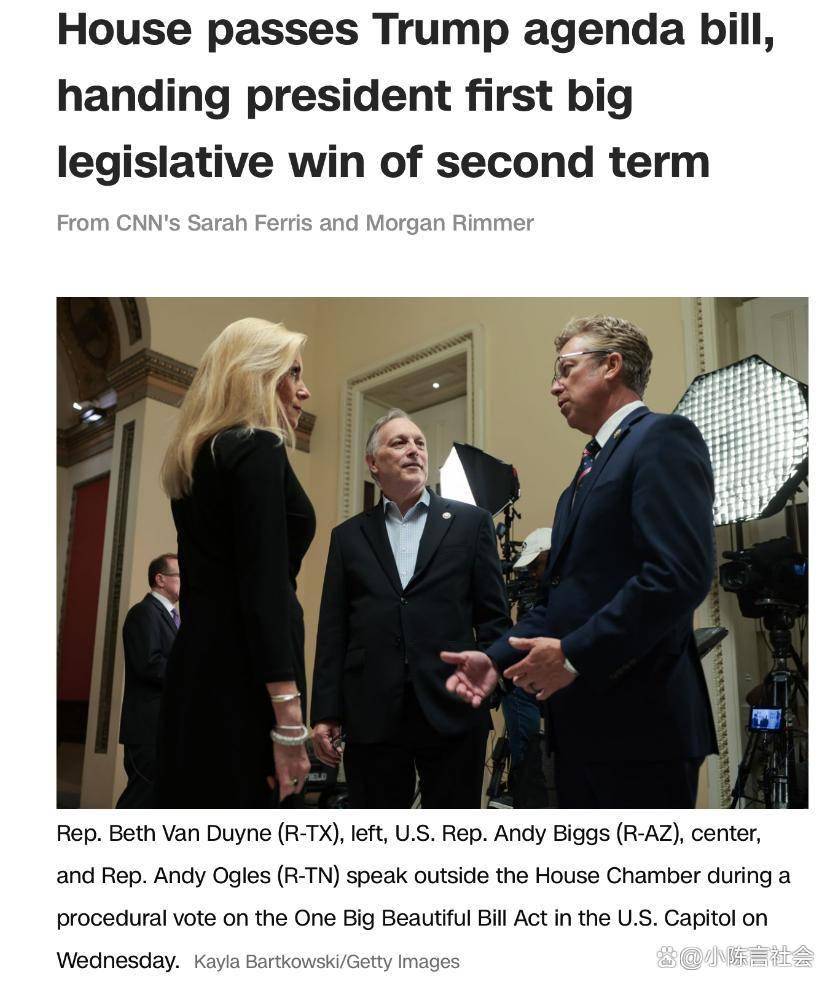
大漂亮法案正式通过,最终的票数为218:214票
Sou Hu Cai Jing· 2025-07-04 13:17
Core Points - The recent passage of the "Big Beautiful Act" in the U.S. Congress reflects a significant shift towards austerity measures that disproportionately affect lower-income individuals and workers [4][10] - The act extends tax benefits for the wealthy while cutting food assistance and medical subsidies for the poor, indicating a regression to a more conservative societal structure reminiscent of the Cold War era [6][10][11] - The U.S. is facing a growing national debt, nearing $35 trillion, with interest payments exceeding $1 trillion annually, prompting the need for spending cuts [9] Summary by Sections Legislative Changes - The "Big Beautiful Act" passed with a narrow vote of 218 to 214, with no Democratic votes in favor and only two Republicans opposing [4] - Key provisions include the extension of tax benefits for the wealthy and cuts to food assistance and medical subsidies for the poor [4][10] Economic Context - Over the past decade, average wage growth in the U.S. was around 3% annually before the pandemic, but real purchasing power has stagnated despite nominal increases of over 5% in recent years [6] - The wealth of the top 10% of Americans increased by over 15% in the past year, driven by stock market and real estate gains, while lower-income households have seen their savings diminish [7] Social Implications - The cuts to welfare programs, including a 4% reduction in food assistance and over 1% in children's health insurance subsidies, suggest a return to a society where the working poor must work harder for less support [10][11] - The current economic environment is characterized by a strong dollar and high interest rates, which may lead to further cuts in education and housing subsidies if fiscal pressures continue [13] Consumer Sentiment - Despite rising stock markets, consumer confidence remains low, with many Americans expecting negative economic conditions in the near future [15] - The passage of the "Big Beautiful Act" indicates a prioritization of corporate interests and fiscal strength over the welfare of ordinary workers, raising concerns about the long-term societal impact [15][17]