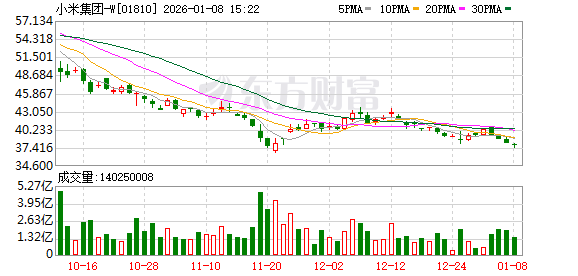
自研芯片

Search documents
百度、阿里巴巴美股收涨超5%!互联网企业是AI商业化的核心受益者
Mei Ri Jing Ji Xin Wen· 2026-01-23 01:16
Group 1 - The core viewpoint of the news highlights the positive performance of Chinese internet companies in the US stock market, with the Nasdaq China Golden Dragon Index rising by 1.59% and notable increases in stocks such as Baidu (up 5.90%), Alibaba (up 5.06%), Bilibili (up over 4%), and JD.com (up over 3%) [1] - Baidu has officially released the 5.0 version of its Wenxin large model, claiming its language and multimodal understanding capabilities are among the best in the world [1] - Alibaba has launched the open-source Qwen3-TTS suite and is reportedly planning to support the independent listing of its chip subsidiary, Pingtouge, although Alibaba has not yet responded to this news [1] - Since the rise of AI, Chinese internet platform companies have increased investments in self-developed chips, cloud computing, AI large models, and AI applications, with Alibaba Cloud's AI business starting to contribute to performance [1] - According to Huaxia Fund, internet companies are the primary beneficiaries of AI commercialization due to their access to vast, active, and structured user and business data, which serves as the "fuel" for training and iterating AI models [1] - The core businesses of internet companies, including advertising, search, e-commerce, social media, and media, are highly aligned with the efficiency optimization goals of AI, which is expected to enhance revenue in the future [1] Group 2 - For individual investors, the Hang Seng Internet ETF (513330.SH) listed on the A-share market offers a low-threshold, diversified investment opportunity, tracking the Hang Seng Internet Technology Index and focusing on internet platform companies and media firms [2] - The current valuation of the index is around 20 times, which presents a relatively high cost-performance ratio compared to Nasdaq and A-share TMT sectors [2]

理想汽车早盘涨逾4% 自研智驾芯片M100即将首次上车L9
Jin Rong Jie· 2026-01-22 02:57
Core Viewpoint - Li Auto's stock has seen an increase of over 4% during trading, with a current price of HKD 65.35 and a trading volume of HKD 564 million. The company plans to rebound from a sales decline in 2025 by targeting a 40% sales growth in 2026, aiming for approximately 550,000 units sold. The strategic focus is on regaining leadership in range-extended products by enhancing the new generation L9 model [1]. Group 1 - Li Auto's stock price increased by 3.81% to HKD 65.35, with a trading volume of HKD 564 million [1] - The company aims for a 40% sales growth in 2026, targeting around 550,000 units sold [1] - The strategic direction is to regain leadership in range-extended products by focusing on the new generation L9 model [1] Group 2 - The new L9 model will feature a larger size and a completely upgraded chassis [1] - Li Auto's self-developed smart driving chip M100 will debut in the L9 model [1] - Industry experts believe that success with the L9 model will positively impact subsequent products [1]

海信视像:公司已在自研芯片和AI智能化方向进行前瞻布局
Zheng Quan Ri Bao· 2026-01-21 12:41
Core Viewpoint - Hisense Visual emphasizes the importance of continuous upgrades in core display terminal capabilities, focusing on self-developed chips and AI intelligence to enhance product performance in image processing, scene perception, and user interaction [2] Group 1 - The company is actively pursuing forward-looking layouts in self-developed chips and AI technology [2] - Hisense Visual aims to improve the comprehensive capabilities of its display products [2] - The company maintains an open attitude towards exploring various cooperation methods with potential partners for industrial synergy and long-term value creation [2]


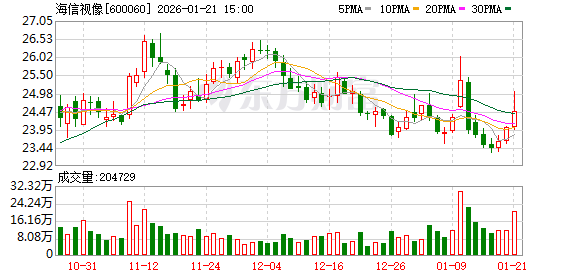
海信视像:已在自研芯片和AI智能化方向进行前瞻布局
Ge Long Hui· 2026-01-21 07:59
Core Viewpoint - Hisense Visual (600060.SH) is focusing on the continuous upgrade of core capabilities in display terminals, emphasizing its proactive layout in self-developed chips and AI intelligence [1] Group 1: Company Strategy - The company is enhancing the comprehensive capabilities of its display products in areas such as image processing, scene perception, and user interaction [1] - Hisense Visual is committed to maintaining an open attitude towards collaboration, exploring various partnership opportunities with potential collaborators in the industry [1] Group 2: Technological Development - The company has made forward-looking investments in self-developed chips and AI technology to improve product performance [1]
海信视像(600060.SH):已在自研芯片和AI智能化方向进行前瞻布局
Ge Long Hui· 2026-01-21 07:36
Group 1 - The company emphasizes the continuous upgrade of core capabilities in display terminals [1] - The company has made forward-looking layouts in self-developed chips and AI intelligence [1] - The company aims to enhance the comprehensive capabilities of display products in aspects such as image quality processing, scene perception, and user interaction [1] Group 2 - The company maintains an open attitude towards exploring various cooperation methods with potential partners [1] - The focus is on industrial synergy and long-term value creation [1]
英伟达正在被中国车企抛弃
阿尔法工场研究院· 2026-01-20 00:08
Core Viewpoint - The automotive industry is shifting from reliance on NVIDIA's chips to self-developed solutions, as companies like Xiaopeng and NIO are moving towards their own chip development to reduce costs and enhance performance [2][5][20]. Group 1: Market Dynamics - Xiaopeng has released four new models equipped with its self-developed Turing driving chip, marking a complete departure from NVIDIA's chips [2]. - NIO is transitioning to its self-developed Shenqi chip, which is expected to significantly reduce costs compared to purchasing NVIDIA chips [2][8]. - NVIDIA's market share in China's high-end driving chip sector is projected to decline from 39% in 2024 to 25% in 2025, indicating a significant shift in the competitive landscape [2][9]. Group 2: Competitive Landscape - In 2024, NVIDIA's Orin-X chip held a 39.8% market share with 2.1 million units, but competitors like Horizon are gaining ground with lower-cost alternatives [5][6]. - Horizon's J5 chip has secured contracts with over nine automakers, including major brands like BYD and SAIC, highlighting the increasing competition in the market [6][9]. - By 2025, NVIDIA's partnerships with major clients like NIO and Xiaopeng have diminished, indicating a loss of influence in the market [6][8]. Group 3: Financial Performance - In the first three quarters of fiscal year 2025, NVIDIA reported $147.8 billion in total revenue, with only $1.7 billion (approximately 1%) coming from automotive business, underscoring the limited impact of automotive sales on overall performance [14][16]. - The automotive segment's revenue is significantly overshadowed by NVIDIA's data center business, which accounts for nearly 90% of its income [14][16]. Group 4: Future Outlook - NVIDIA is attempting to pivot from being a chip supplier to a comprehensive smart driving solution provider, but this transition faces challenges as competitors strengthen their positions [20]. - The launch of NVIDIA's open-source VLA model, aimed at assisting automakers lacking full-stack development capabilities, reflects its strategy to maintain relevance in the evolving market [20][21]. - However, the practical utility of the VLA model has been questioned, indicating potential hurdles in its adoption and effectiveness [21].



小米玄戒O2被曝继续用台积电3nm
Guan Cha Zhe Wang· 2026-01-16 09:07
Core Viewpoint - Xiaomi is planning to adopt TSMC's N3P process for its second-generation self-developed SoC, the Xuanjie O2, instead of the latest 2nm process, and aims to expand the application of its self-developed chips beyond smartphones [1][2] Group 1: Product Development and Strategy - The Xuanjie O2 is expected to be applied in "non-smartphone" products, indicating Xiaomi's intention to broaden its chip usage [1] - The first-generation SoC, Xuanjie O1, was launched last year but was only used in a limited number of products, such as the Xiaomi 15S Pro and Xiaomi Pad 7 series [1] - Industry insiders suggest that the Xuanjie O1 served primarily to test Xiaomi's technical capabilities and market acceptance rather than to replace existing SoC suppliers like Qualcomm and MediaTek [1] Group 2: Market Competition and Challenges - Qualcomm and MediaTek are transitioning to more advanced 2nm processes for their flagship SoCs, which could weaken the market competitiveness of Xiaomi's Xuanjie O2 if it uses the N3P process [2] - TSMC's 2nm process has limited initial capacity, already allocated to major clients like Apple and Nvidia, making it difficult for Xiaomi to secure early production capacity [2] - The cost of 2nm processes is significantly higher than that of 3nm, which, combined with rising memory chip prices, has increased the overall material costs for smartphones by over 25% [2] Group 3: Pricing and Financial Implications - The launch price of the Xiaomi 17 Ultra has increased by around 500 yuan compared to its predecessor, indicating a trend of rising product prices [3] - Xiaomi's president has indicated that significant price increases are expected across the industry in the coming year, which may further pressure profit margins if higher-cost processes are adopted [3] - Xiaomi is likely to use its self-developed processors in mid-range and sub-flagship products, potentially exerting pressure on MediaTek, which primarily supplies non-flagship models [3] Group 4: Future Innovations and Investments - Xiaomi's founder has stated that by 2026, the company aims to achieve a "triple integration" of self-developed chips, operating systems, and AI models in a single product, marking a significant technological milestone [4] - Over the past five years, Xiaomi has committed approximately 105 billion yuan to core technology research and plans to invest 200 billion yuan over the next five years [4] - The company is targeting comprehensive chip coverage across its entire product line, including tablets, PCs, and automobiles, with the Xuanjie O2 leading this initiative [3][4]


小鹏今年将推4款新车,冲击55万-60万销量目标|36氪独家
36氪· 2026-01-13 10:14
Core Viewpoint - Xiaopeng Motors has set an ambitious sales target of 550,000 to 600,000 units for 2026, representing a growth of approximately 28.1% to 39.7% from the 429,400 units expected in 2025, necessitating an average monthly delivery of over 45,800 to 50,000 units [4][5]. Group 1: Product Strategy - 2026 will be a pivotal year for Xiaopeng as it plans to launch seven new models featuring "super range extension" capabilities, including three super range products and four new dual-energy models [4]. - The new models include the Xiaopeng G01, a luxury 6-seat SUV, and the G02, a full-size flagship SUV, alongside two new Mona SUV models, D02 and D03 [5]. - Xiaopeng aims to enhance its product lineup in the mid-to-low-end market with the introduction of the Mona M03, which has significantly contributed to sales, accounting for nearly a quarter of total sales [8]. Group 2: Technological Advancements - Xiaopeng is focusing on smart technology, planning to implement its self-developed Turing chip and the second-generation VLA system to differentiate its high-end models [10][13]. - The latest models will transition to Turing chips, with the Max version featuring a single Turing chip with 720 TOPS of computing power, while the Ultra version will utilize three Turing chips for advanced driving and AI applications [13]. Group 3: Market Competition - The automotive market in 2026 is expected to be highly competitive, with Xiaopeng and Leap Motor targeting a combined sales goal of 1.6 million units, which may come at the expense of competitors like BYD and Geely [15][16]. - Both Xiaopeng and Leap Motor are entering the hybrid vehicle market, with Xiaopeng focusing on the 15-25 million price range, while Leap Motor targets the 10-20 million segment [16]. Group 4: Growth Challenges - Achieving high sales growth poses significant challenges, particularly as crossing the 500,000 sales threshold can complicate supply chain management and organizational coordination [17][18]. - The experience of other companies, such as Ideal, highlights the potential pitfalls of scaling operations rapidly, raising concerns about whether Xiaopeng and Leap Motor can successfully navigate these challenges [18].
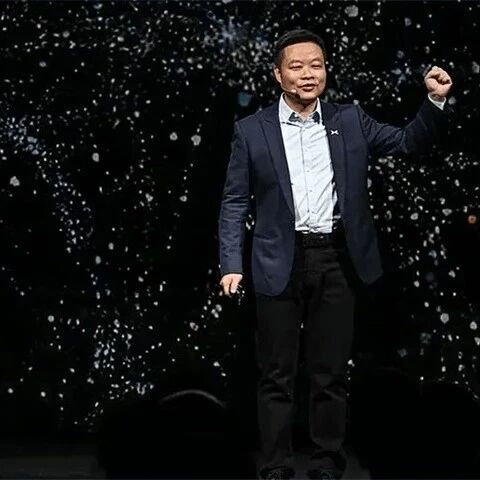
小鹏汽车20260109
2026-01-12 01:41
Summary of Xiaopeng Motors Conference Call Company Overview - **Company**: Xiaopeng Motors - **Year**: 2026 Key Points Industry and Market Environment - The automotive industry has experienced a tightening market environment with reduced subsidies, impacting consumer purchasing costs [2][6][10] - The overall market has faced challenges due to the withdrawal of subsidies and consumer adaptation to new pricing structures [10] Product Strategy - Xiaopeng Motors plans to launch four new SUV models starting in April 2026, marking a significant shift from previous years where only one new model was introduced at a time [2][4] - The company aims to increase its SKU count due to the replacement of NVIDIA chips with self-developed Turing chips, which are expected to enhance product offerings [8] Technology and Cost Management - Xiaopeng will fully replace NVIDIA chips with its self-developed Turing chips across all new models, aiming to reduce hardware costs and improve competitiveness [5][6] - The introduction of the second-generation VLA large model in Q1 2026 will gradually cover all models by Q2 [5] Sales Targets and Strategies - The sales target for 2026 is set at 600,000 vehicles, with a quarterly goal of achieving an average monthly sales of 30,000 units [2][7] - The focus will shift towards Robotaxi and robot production in the second half of the year, with plans to trial Robotaxi services in Guangzhou by Q3 [7] Pricing and Consumer Strategy - Xiaopeng's pricing strategy is conservative, focusing on enhancing product configurations rather than competing solely on price [6][8] - The oil-electric parity strategy aims to promote the extended-range models, encouraging consumer acceptance of similar pricing for both extended-range and pure electric versions [8] Future Growth Opportunities - The company plans to expand its product line with more new SUV models and increase overseas exports, which are expected to be significant growth drivers [9] - The development of the Robotaxi sector is anticipated to be a key factor influencing Xiaopeng's stock price, with expectations of a market capitalization exceeding 200 billion yuan by the second half of 2026 [3][11] Financial Outlook - Xiaopeng's profit in 2026 is expected to remain stable compared to 2025, supported by strong foundational business from Volkswagen [12] - The company is optimistic about the potential for surprises in robot delivery and production in the latter half of the year [12][13] Overall Outlook - Despite uncertainties in the domestic automotive market, Xiaopeng is well-prepared for future developments, particularly in the Robotaxi sector, which could solidify its position in the market [13] - The current price level is viewed as a potential buying opportunity due to the company's promising outlook [13]
千万大奖落地!雷军最新回应
Zhong Guo Ji Jin Bao· 2026-01-08 07:21
Core Insights - Xiaomi's O1 team won the highest award at the annual technology awards, with a total of 154 projects competing for the prize [2] - Lei Jun announced a future R&D investment plan of 200 billion yuan over the next five years, emphasizing the importance of core technologies such as chips, operating systems, and AI [2][4] - The company has invested approximately 105 billion yuan in R&D over the past five years, exceeding its initial commitment of 100 billion yuan [2] R&D Investment - Xiaomi plans to invest 200 billion yuan in R&D over the next five years, focusing on core technologies to build a comprehensive ecosystem [2][4] - The company has a history of significant R&D investment, with over 7.5 million yuan awarded in total since the inception of the technology awards in 2019 [4][7] Technology Achievements - The O1 chip, developed by Xiaomi, features a GPU that reduces power consumption by 35% compared to Apple's chips and supports dynamic performance scheduling [4] - The O1 chip is manufactured using advanced 3nm technology, marking a significant milestone in Xiaomi's pursuit of core technology development [4] Awards and Recognition - The Xiaomi Technology Award has been upgraded to 10 million yuan, aimed at recognizing engineering teams that achieve industry-leading breakthroughs in core technologies [7] - The O1 team received the highest honor at the awards, with other notable projects also recognized, including the Xiaomi Super Steel and Xiaomi Smart Glasses [3][4]