量化思维

Search documents
百股获连续融资增持,量化拆解资金逻辑
Sou Hu Cai Jing· 2026-01-14 07:33
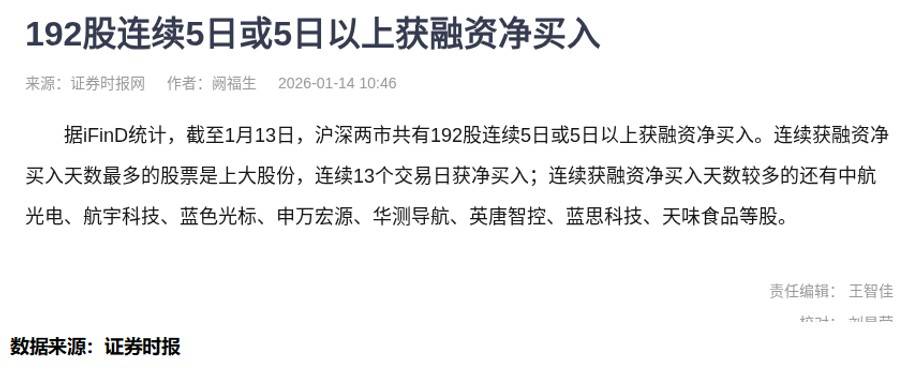
Core Viewpoint - The article discusses the significance of quantitative data in understanding stock price fluctuations and the underlying behaviors of different types of capital in the market, emphasizing the importance of data-driven strategies for investors. Group 1: Stock Price Fluctuations - Many stocks in the Shanghai and Shenzhen markets have seen continuous financing increases for over five days, with some experiencing net buying for more than ten days [1] - Stock price volatility often leads to emotional trading decisions, where investors struggle to hold onto profitable positions during fluctuations [3] - Each price movement is driven by capital dynamics, which can be better understood through quantitative data rather than intuition [6] Group 2: Quantitative Analysis of Capital Behavior - The article presents a quantitative analysis system that identifies trading behaviors, revealing the interactions between speculative capital and institutional investors [8] - The analysis distinguishes between "speculative capital accumulation" and "institutional shakeout," where institutions may intentionally adjust stock prices before accumulating shares [8] - Recognizing these patterns allows investors to understand the ongoing capital battles and maintain confidence in holding stocks despite volatility [8] Group 3: Efficient Investment Strategies - Long-term holding of stocks can yield positive results, but it is often inefficient during favorable market conditions; a more effective strategy involves participating in upward trends while minimizing exposure to corrections [9] - The article highlights five phases of opportunity between "shakeout" and "accumulation," which can lead to significant returns without enduring the full extent of price fluctuations [12] Group 4: Long-term Value of Quantitative Thinking - The difference in investment outcomes among individuals is attributed to systematic methodologies rather than luck, with quantitative data providing a framework for decision-making [13] - Quantitative analysis helps investors move beyond subjective judgments, revealing the true behaviors of capital and fostering a more rational understanding of market dynamics [13] - Over time, this approach can develop sustainable investment capabilities, reducing reliance on speculation and enhancing overall investment performance [13]

行情回暖时,为什么你没赚到钱?
Sou Hu Cai Jing· 2026-01-05 14:46
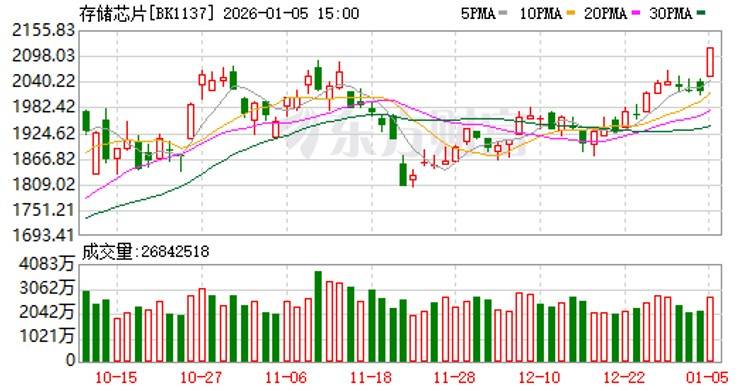
Group 1 - The core viewpoint of the article is that the recent stock market rally is driven by the return of liquidity, with significant movements in cryptocurrencies indicating a shift towards high-yield assets [3][5] - On January 5, 2023, the Shanghai Composite Index regained the 4000-point mark, and the ChiNext Index rose over 2%, reflecting a positive market sentiment fueled by policy support for sectors like brain-computer interfaces [3][5] - The decline in short-term Shibor rates, such as the 7-day rate dropping to 1.423%, has made capital cheaper, encouraging a shift from stable assets like government bonds to the stock market [3][5] Group 2 - Despite the overall market strength, many investors are struggling to profit, as the rapid rotation of sectors and stocks makes it difficult to capture gains [3][5] - The article highlights a specific stock that experienced a 50% increase over three months, but its volatile price movements led many investors to sell at a loss during corrections [3][5] - The increasing dominance of institutional investors, who now account for over 50% of market activity, has changed the dynamics of trading, making it a game of "institution vs. retail" [7][10] Group 3 - The article discusses the concept of "institutional shaking," where institutions manipulate stock prices to eliminate weaker hands, causing retail investors to panic and sell [5][8] - It emphasizes the importance of understanding the underlying behaviors of capital flows, suggesting that using quantitative data can help investors identify true market trends and avoid being misled by price fluctuations [10][11] - The article advocates for a shift in investment strategy, encouraging investors to adopt quantitative thinking to better navigate the current market environment dominated by institutional players [10][11]
AI巨头上市在即,散户却集体踏空?
Sou Hu Cai Jing· 2025-12-27 23:17
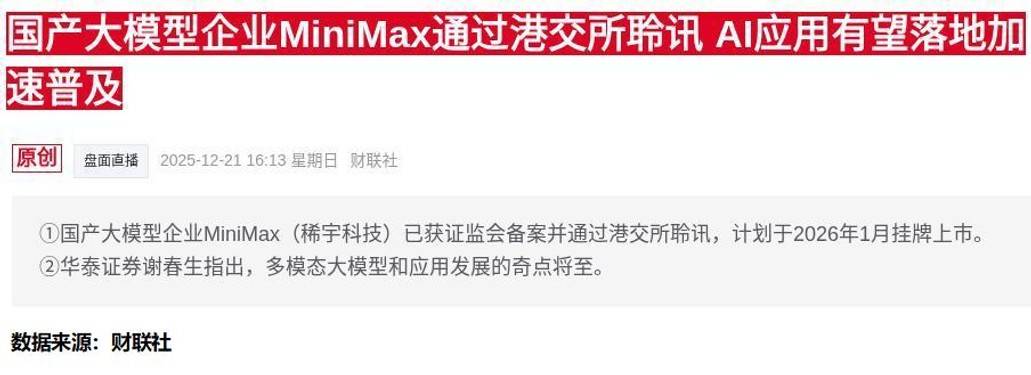
Group 1 - MiniMax, a domestic AI company, is set to go public and has served 212 million users across over 200 countries in just four years [1] - The stock market reacted positively to the news, with related concept stocks experiencing significant movements [1] Group 2 - There is a notable phenomenon where some AI concept stocks have doubled in value while others remain stagnant, highlighting the "expectation gap" between institutional and retail investors [2] - Institutional investors often have an information advantage and can price in good news before it is publicly available, leading to a disconnect in stock performance post-announcement [2][12] Group 3 - The performance of stocks like Cuiwei Co. and Neusoft Group illustrates the importance of institutional activity prior to market movements, with Cuiwei seeing significant gains while Neusoft lagged [5][6] - The contrasting trajectories of Runhe Software and Zhongke Jiangnan further emphasize the role of institutional investment in stock performance [10] Group 4 - The rise of AI necessitates a quantitative approach to investing, as retail investors often react too late to news [12] - Emphasizing the importance of data, the article suggests that understanding fund flows and maintaining a data-driven mindset can provide a competitive edge in the market [14]
寒武纪16亿融资狂欢:你看懂机构布局了吗?
Sou Hu Cai Jing· 2025-11-09 17:23
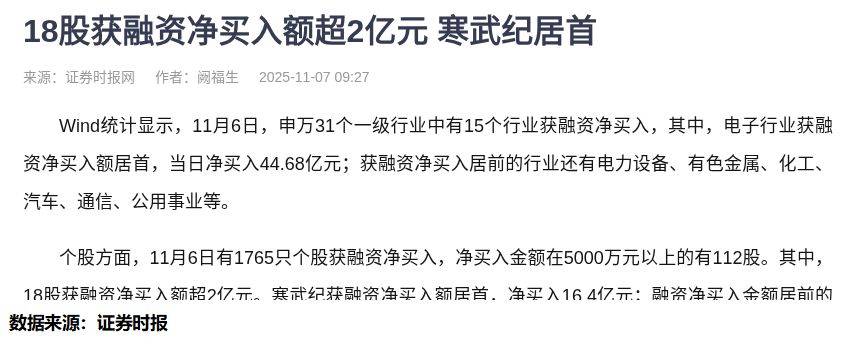
Core Insights - The electronic industry has seen a significant net inflow of 4.468 billion yuan, with Cambrian's financing amounting to 1.64 billion yuan, indicating a strong market sentiment [1] - Historical market trends suggest that retail investors often miss out on actual gains despite initial excitement, highlighting the importance of understanding market dynamics rather than merely holding stocks [3][5] - Institutional behavior is crucial in identifying investment opportunities, as large funds exhibit distinct characteristics such as continuity, scale, and repetitiveness [5][7] Industry Analysis - The data shows that while some stocks experience price rebounds, the lack of institutional activity can lead to poor performance, emphasizing the need to track institutional inventory levels [5] - The case of Jinling Sports illustrates how early institutional investment can lead to significant gains before widespread market awareness [7] - A quantitative approach to analyzing institutional behavior can provide more reliable insights than relying solely on emotional market reactions [7][8] Investment Strategy - Investors should focus on stocks with sustained institutional inventory and compare financing data with institutional actions to gauge market health [9] - It is advised to abandon the mindset of trying to time the market for bottom buying, as institutional accumulation is a gradual process [9] - Establishing a quantitative mindset can help investors navigate emotional market fluctuations and make more informed decisions [9]

融资抄底VS股价新低:谁在说谎?
Sou Hu Cai Jing· 2025-09-23 00:14
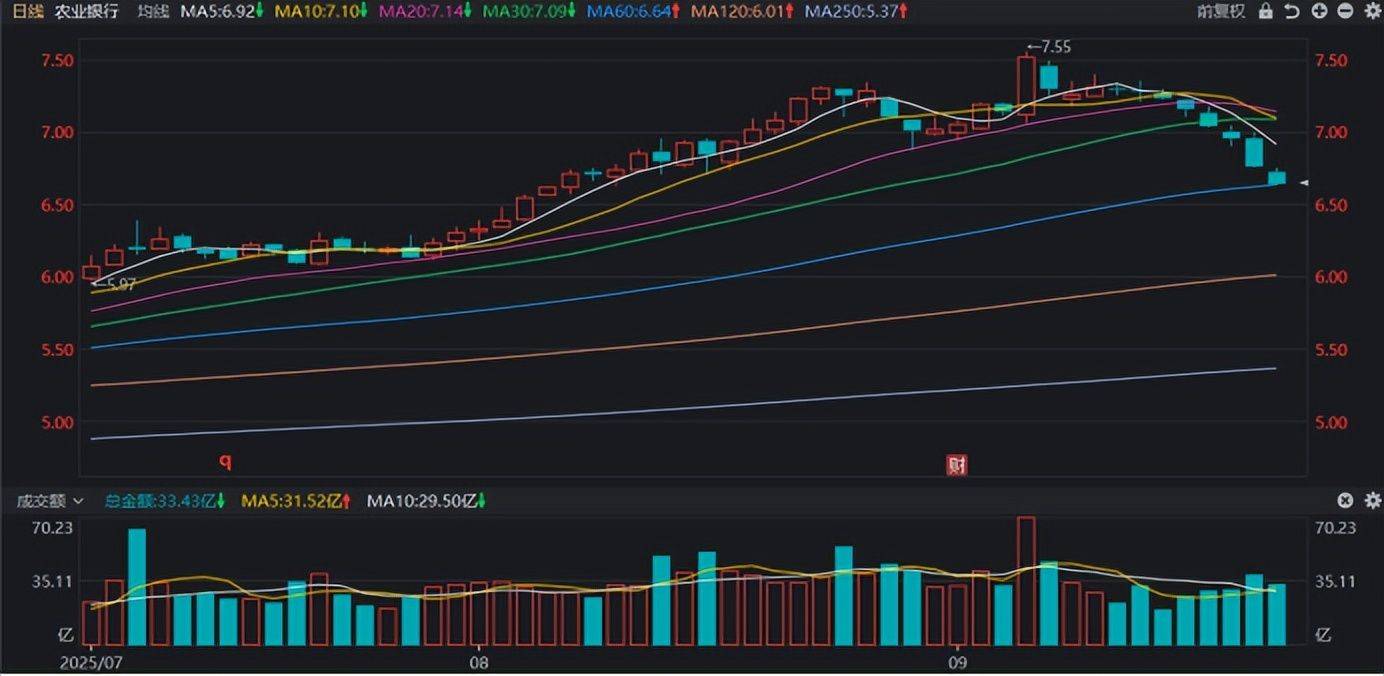
Core Viewpoint - Agricultural Bank of China (601288.SH) experienced a rapid decline in market value after briefly becoming the largest in A-shares, highlighting volatility in the banking sector and investor sentiment [1][3]. Group 1: Market Performance - On September 4, Agricultural Bank reached a market value of 2.55 trillion yuan, becoming the largest in A-shares, but by September 19, it fell back to second place, trailing Industrial and Commercial Bank by 136.7 billion yuan [1]. - The bank's stock price dropped 9% over eight trading days, surprising many investors who entered the market seeking low valuations [1]. - The overall banking sector is struggling, with the China Securities Banking Index hitting a new low since May, and the year-to-date increase shrinking from 20.38% to 3.05% [3]. Group 2: Financing Trends - Interestingly, financing funds have been quietly accumulating, with a net buy of 76.29 million yuan on September 18, marking the highest financing balance since September 5 [3]. - This divergence of "falling stock prices and increasing financing" recalls the situation in 2020 when Kweichow Moutai's stock price fell below 1,000 yuan, yet financing continued to increase, leading to further adjustments [3]. Group 3: ETF Fund Flows - Among 10 banking ETFs, 8 saw an increase in shares, but the Banking ETF Index Fund (516210) experienced an 11.2% decrease in shares, indicating a divergence in market sentiment [4]. - The market is playing a "differential expectation" game, where the focus on low price-to-earnings ratios (6.86 times) and high dividend yields (4.24%) may not reflect the true drivers of market performance [4]. Group 4: Institutional Inventory Insights - The case of Agricultural Bank illustrates that while low valuations and high dividends attract attention, institutional inventory data showed divergence even when stock prices reached new highs [9]. - The focus should shift from static indicators like price-to-earnings ratios to the dynamics of institutional trading characteristics, which provide a clearer picture of market behavior [10][11]. Group 5: Behavioral Insights - The emphasis on behavioral traces rather than static metrics is crucial, as stock prices are outcomes while institutional trading characteristics are the underlying causes [10]. - Questions regarding the current state of institutional inventory and the logic behind ETF fund flow divergences may yield more valuable insights than traditional analyses [11].

99件融资抢滩,人形机器人再获青睐!
Sou Hu Cai Jing· 2025-07-28 11:20
Group 1 - The humanoid robot sector has seen significant investment activity, with 99 financing rounds completed this year, surpassing last year's total of 67 [1] - Major companies like Evergrande Technology and JD.com are entering the humanoid robot market, indicating strong interest from industry giants [1] - Predictions suggest that the global humanoid robot market could exceed $5 trillion by 2050, highlighting its potential for growth [1] Group 2 - Despite the apparent excitement in the humanoid robot sector, there are critical challenges that could impact its sustainability, including limited production capacity and unclear development paths for industrial and consumer applications [9] - Current production levels are still at the scale of hundreds of units, indicating that mass production is not yet realized [9] - The sector's future success may mirror the past experiences of the electric vehicle industry, where only a few companies with substantial technological reserves survived [7][9] Group 3 - Investors are advised to focus on data analysis rather than news, as true market opportunities are often identified through quantitative indicators that reflect real capital movements [10][11] - Establishing a personal quantitative analysis system is recommended to better assess market conditions and investment opportunities [11] - Continuous monitoring of sectors with sustained capital inflows is crucial for making informed investment decisions [11]


500亿外资入场,A股要变玩法了!
Sou Hu Cai Jing· 2025-07-16 15:14
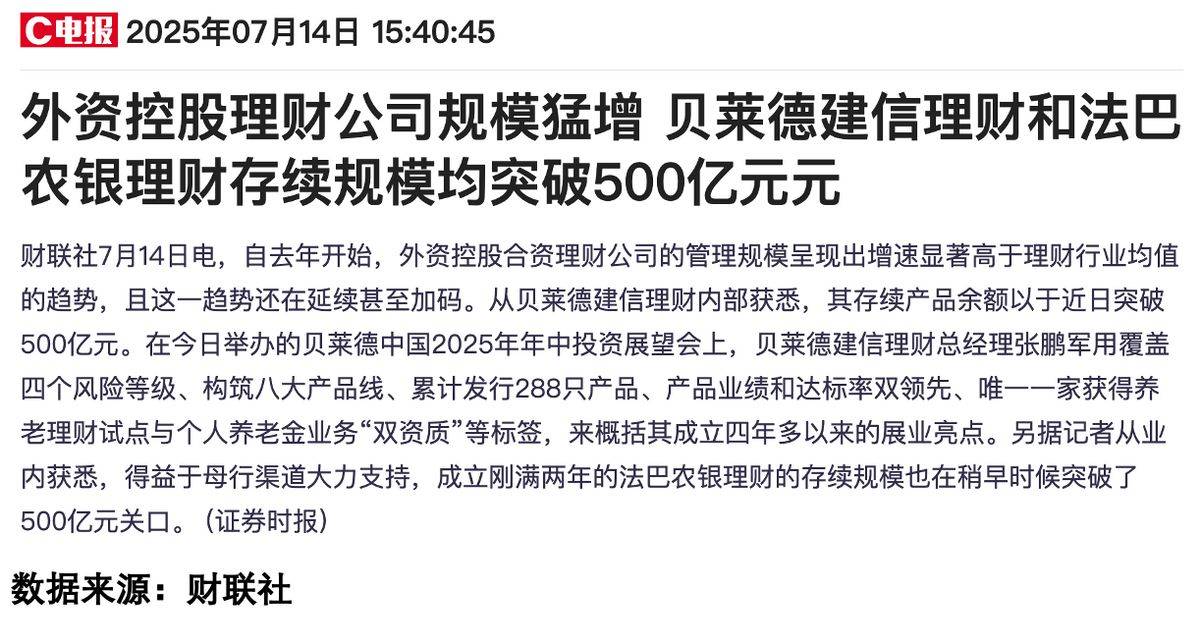
Core Insights - Recent news highlights that foreign asset management companies, specifically 法巴农银 and 贝莱德, have surpassed a management scale of 500 billion [1][3] - These foreign institutions are significantly impacting the domestic wealth management market by focusing on fixed income and retirement planning [3][4] Group 1: Market Dynamics - Foreign institutions are likened to "crocodiles" disrupting the previously calm wealth management market, leveraging their global investment strategies [3] - The financial market is fundamentally a game of liquidity, with foreign firms easily accessing high-yield opportunities while domestic investors struggle [4] Group 2: Data Utilization - The use of big data tools reveals that institutional investors often exit positions before significant downturns, as seen with the stock 紫天科技 [5][7] - In contrast, stocks like 瑞丰高材 show strong institutional support throughout their price increases, indicating the importance of following money flows rather than speculation [7] Group 3: Investment Strategies - Foreign firms emphasize quantitative thinking and diversified asset allocation, which allows them to navigate the market effectively [9] - The article suggests that retail investors should adopt tools to visualize market trends and institutional movements, moving away from traditional speculation [10]


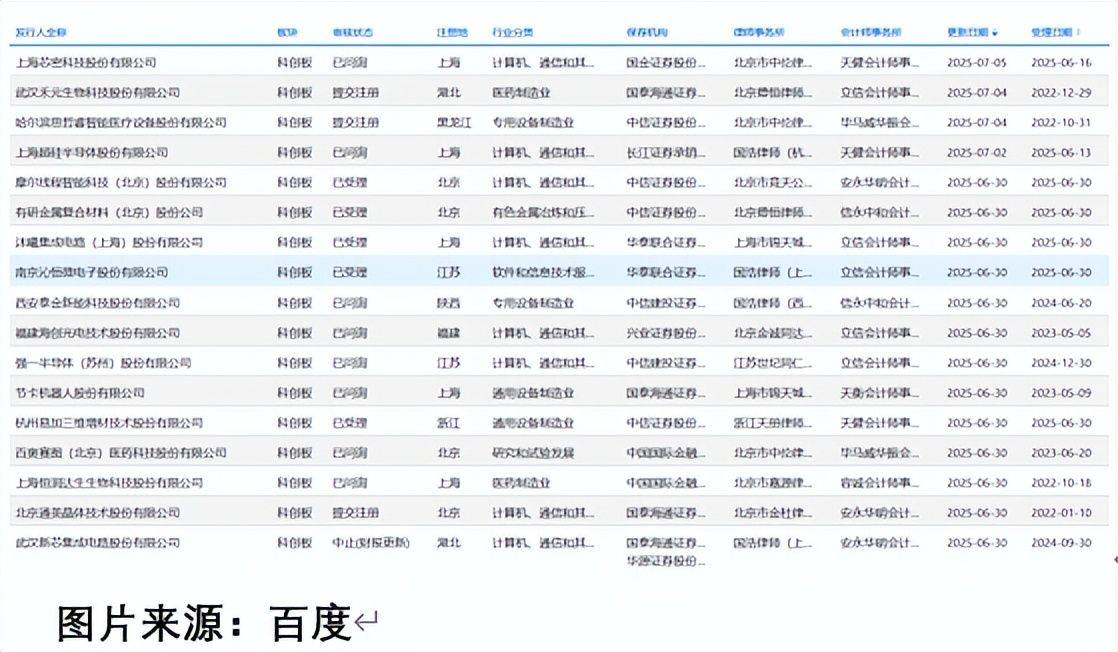
17家企业新进展,半导体IPO狂飙240亿
Sou Hu Cai Jing· 2025-07-07 02:33
Group 1: Semiconductor IPO Trends - The recent surge in IPOs on the STAR Market has seen 17 companies update their progress, with the semiconductor sector leading, raising a total of 24.1 billion yuan from 6 companies [1] - Notably, Moer Thread's fundraising of 8 billion yuan and a staggering 208% compound annual growth rate in revenue have drawn significant attention [1] - The excitement surrounding these IPOs may mask underlying investment logic, reminiscent of the internet bubble in 2000 where unprofitable companies had inflated valuations [3] Group 2: Market Dynamics - The current market is characterized by an external leverage-driven environment, where news plays a dominant role in short-term trading, often reinforcing price movements rather than guiding them [4] - The interaction between stock prices and news can lead to a "Matthew Effect," where strong performers continue to excel, while the "mean reversion" theory suggests that prices will eventually oscillate around their intrinsic value [4] Group 3: Investment Pitfalls for Retail Investors - Retail investors often struggle to differentiate between "virtual declines" and "empty rises," leading to panic during price drops and chasing after false rebounds [5][12] - Understanding the underlying capital movements is crucial, as the essence of stock trading is a struggle for pricing power, which is predominantly held by institutional investors [8] Group 4: Quantitative Thinking and Data Utilization - The importance of quantitative thinking is emphasized, as retail investors tend to focus on superficial market trends rather than the underlying data [15] - Moer Thread's significant fundraising is contrasted with its 3.8 billion yuan R&D investment, indicating a company genuinely engaged in development, while other companies may not have the same depth [15] - Retail investors are encouraged to utilize data-driven tools to navigate the market effectively, especially in an era of information overload [19]