预制菜国标

Search documents
财经慧说丨预制菜将迎国标,你可能关心4个问题
Xin Hua Wang· 2026-02-06 12:24
拍摄:贺新、于楠 制作:栾若卉、胡戈 新华社国内部出品 策划:陈芳 【纠错】 【责任编辑:胡蓉】 记者:刘慧、王希 ...
事关6000亿元预制菜市场,预制菜国标征求意见稿出炉!产品保质期最长不应超过12个月,不得使用防腐剂
Jin Rong Jie· 2026-02-06 09:54
值得注意的是,意见稿规定预制菜不包括:主食类食品、净菜类食品、即食食品和中央厨房制作的菜 肴,上述食品均有其他相应的食品安全国家标准予以管理。 据央视新闻,国家卫生健康委今天发布《食品安全国家标准 预制菜》(征求意见稿),意见稿对预制 菜的概念作出进一步细化明确,预制菜是以一种或多种食用农产品及其制品为原料,使用或不使用调味 料等辅料,不添加防腐剂,经工业化预加工(如搅拌、腌制、滚揉、成型、炒、炸、烤、煮、蒸等)制 成,配以或不配以调味料包,加热或熟制后方可食用的预包装菜肴产品。 此外,标准对预制菜产品中铅、铬、苯并芘及致病微生物等重点风险因素提出管控要求。同时,强化了 食品添加剂使用管理,规定了食品添加剂的使用原则,要求除不得使用防腐剂外,还要尽可能减少食品 添加剂的使用,严控可使用的食品添加剂品种,做到非必要不添加。 产品保质期最长不应超过12个月 事关6000亿元市场规模的预制菜国标征求意见稿出炉! 根据Statista的数据,2024年美国预制菜市场规模达到475.6亿美元,是全球第二大预制菜市场。美国通 过发展预制菜产业,构建起以合同农业为核心的原料供应体系,其规模占到全美农产品市场的18.3%, ...
盘后,突发重磅!预制菜国标,征求意见!
券商中国· 2026-02-06 09:08
预制菜将迎首个国标! 2月6日,国家卫生健康委就预制菜食品安全国家标准公开征求意见,重点从食品安全和营养健康方面对预制菜 作出规定,明确预制菜的定义及其原料、食品添加剂使用、生产过程、营养品质、包装、标签标识、经营过程 和产品指标要求。 标准征求意见的主要内容包括: 一是合理界定预制菜的定义与管理范畴。 根据食品安全风险分析理念,结合六部门《通知》有关预制菜 政策的解读说明,标准对预制菜的概念作出进一步细化明确,规定了预制菜不包括:主食类食品、净菜 类食品、即食食品和中央厨房制作的菜肴,上述食品均有其他相应的食品安全国家标准予以管理。 二是突出强化了对食品污染物和添加剂的管理。 标准对预制菜产品中铅、铬、苯并芘及致病微生物等重 点风险因素提出管控要求。同时,强化了食品添加剂使用管理,规定了食品添加剂的使用原则,要求除 不得使用防腐剂外,还要尽可能减少食品添加剂的使用,严控可使用的食品添加剂品种,做到非必要不 添加。 三是强调了营养品质保持。 标准要求熟制过程应避免过度烹饪,要采用先进技术或设备以最大程度保留 原料的营养成分,减少营养成分损失,鼓励在加工过程中控制烹调油、食盐、食糖的添加量。同时,要 同日,市场 ...


段永平:茅台真的不贵!食品饮料ETF天弘(159736)标的指数大涨超5.5%
Mei Ri Jing Ji Xin Wen· 2026-01-29 09:11
Group 1 - The core viewpoint of the articles highlights a significant rise in the consumer sector, particularly in the food and beverage ETF, which saw a 5.58% increase in its index and a trading volume of 73.1867 million yuan [1] - The food and beverage ETF Tianhong (159736) has experienced a net inflow of 38.9837 million yuan over the last ten trading days, with its latest scale reaching 5.3 billion yuan, making it the largest in its category [1] - The CS Food and Beverage Index is characterized by low concentration among the top ten stocks, allowing for diversified investments across various sectors, which helps mitigate single-track risks [1] Group 2 - Guosen Securities forecasts a positive outlook for the food and beverage sector in 2026, suggesting four main investment themes: cost benefits, operational efficiency, innovation-driven growth, and opportunities from industry reversals [2] - Donghai Securities emphasizes the potential for consumer demand to be released under domestic demand expansion policies, identifying structural opportunities in the industry, particularly in the restaurant supply chain and dairy sectors [2] - The upcoming Spring Festival is expected to act as a significant catalyst for the industry, with the imminent introduction of national standards for prepared dishes also providing a favorable environment [2]




贾国龙回应关店:关闭的102家门店在一季度完成,1.7万西贝员工尽力了
Di Yi Cai Jing· 2026-01-15 11:48
Core Viewpoint - The company Xibei is closing 102 stores, which accounts for 30% of its total outlets, due to ongoing challenges related to customer traffic and negative perceptions surrounding its use of pre-prepared dishes [1][4]. Group 1: Store Closures and Financial Impact - Xibei's founder confirmed the closure of 102 stores, stating that the decision comes after 125 days of efforts to improve the situation amidst widespread criticism [1]. - The company has seen a rise in labor costs from 25% to over 30% of revenue, leading to significant cash flow pressure and losses [3]. - Despite promotional efforts, customer traffic has continued to decline, with a noted drop in December after an initial increase in October [4]. Group 2: Customer Engagement and Brand Strategy - The promotional activities have attracted 70% returning customers and 30% new customers, but the long-term effectiveness of such strategies is questioned [4]. - Industry experts suggest that while closing stores may mitigate immediate losses, Xibei will need to innovate its menu and possibly develop new brands to retain customers [5]. - The company is committed to fulfilling customer obligations, such as honoring prepaid cards and maintaining service quality until the last moment of operation [4].
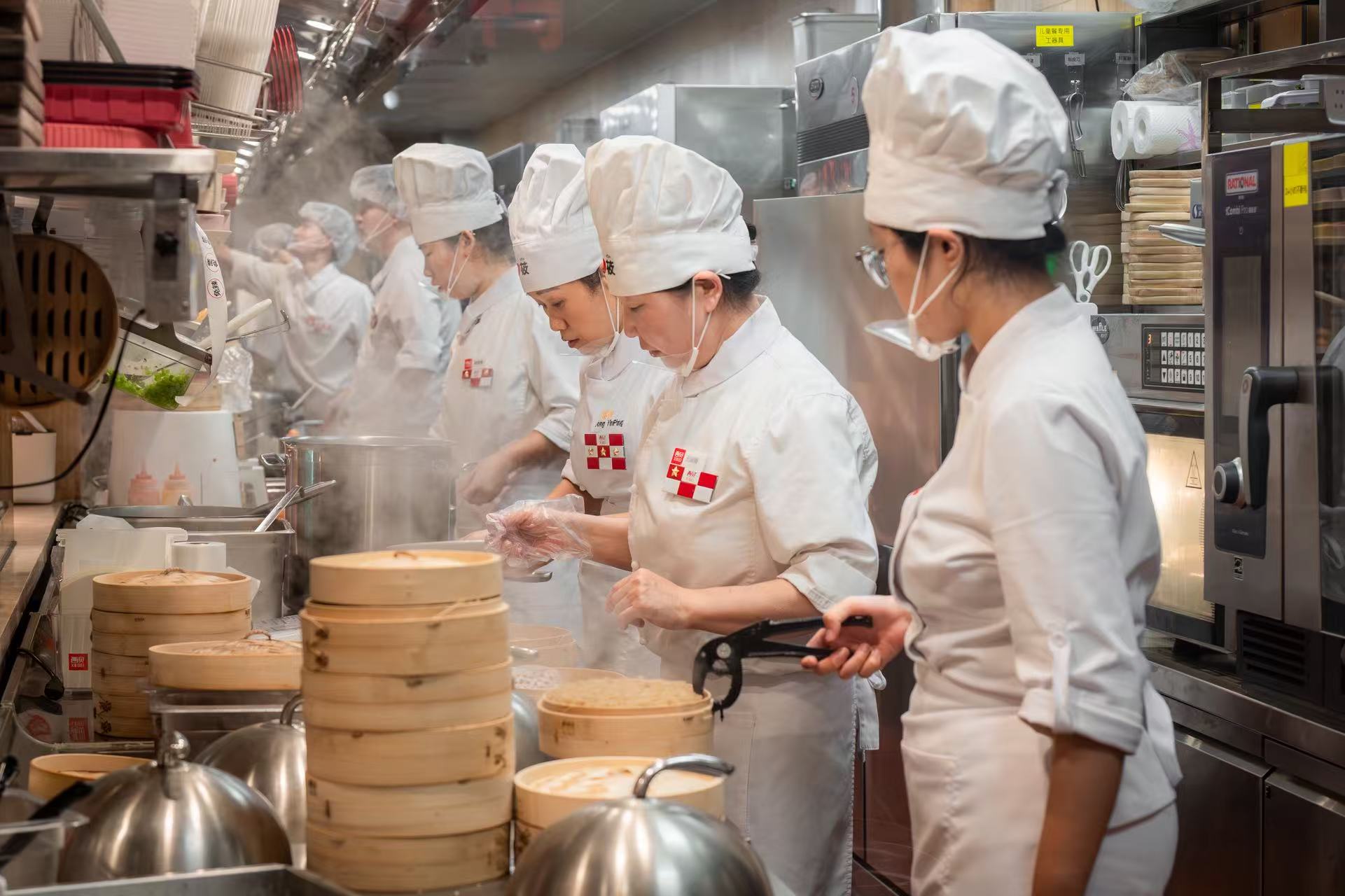
白酒关注中秋国庆动销,大众品把握结构性机会
Dongguan Securities· 2025-09-26 09:40
Investment Rating - The report maintains an "Overweight" rating for the food and beverage industry, expecting the industry index to outperform the market index by over 10% in the next six months [53]. Core Viewpoints - The report highlights the focus on liquor sales during the Mid-Autumn Festival and National Day, suggesting that consumer demand remains under pressure, particularly for high-end liquor brands like Kweichow Moutai [4][48]. - The report indicates a structural opportunity in mass-market products, with varying performance across different sub-sectors, emphasizing the importance of monitoring demand and cost indicators in the beer sector and consumption recovery in the condiment sector [4][48]. Summary by Sections Market Review - From September 12 to September 25, 2025, the SW food and beverage industry index fell by 5.76%, underperforming the CSI 300 index by approximately 6.76 percentage points [11]. - All sub-sectors underperformed the CSI 300 index during this period, with the baking sector experiencing the largest decline at -7.80% [13][14]. - Approximately 7% of stocks in the industry recorded positive returns, with notable gainers including Qianwei Yangchu (+21.90%) and Yangyuan Beverage (+16.80%) [15] . Industry Important Data Tracking Liquor Sector - As of September 25, 2025, the price of Feitian Moutai decreased to 1,765 RMB per bottle, while the price of Guojiao 1573 increased to 840 RMB per bottle [22]. Condiment Sector - As of September 25, 2025, the price of soybean meal was 2,988 RMB per ton, down 72 RMB from September 11, while the price of white sugar was 5,780 RMB per ton, down 110 RMB [25]. Beer Sector - As of September 25, 2025, the average price of barley was 2,230 RMB per ton, while the price of aluminum ingots was 20,710 RMB per ton, down 100 RMB [30]. Dairy Sector - The average price of fresh milk remained stable at 3.03 RMB per kilogram as of September 19, 2025 [37]. Meat Products Sector - The average wholesale price of pork was 19.44 RMB per kilogram as of September 25, 2025, down 0.49 RMB from September 11 [39]. Industry News - The report notes a slight decline in the national liquor price index in early September 2025, indicating ongoing market adjustments [41]. - The number of registered beer-related enterprises increased by 10.83% year-on-year from January to August 2025, reflecting a growing market [42]. Weekly Industry Perspective - The report emphasizes the importance of monitoring liquor sales during the upcoming holidays and suggests focusing on high-certainty liquor brands and mass-market products that benefit from policy catalysts [48].




罗永浩,能帮预制菜上户口吗
36氪· 2025-09-16 00:09
Core Viewpoint - The article discusses the ongoing debate between the founder of Xibei, Jia Guolong, and entrepreneur Luo Yonghao regarding the use of pre-prepared dishes in restaurants, highlighting the need for transparency and consumer rights in the food industry [5][12][25]. Group 1: Industry Context - The recent controversy surrounding Xibei's kitchen practices has drawn significant public attention, with many influencers and food bloggers visiting to verify claims about the use of pre-prepared dishes [7][9]. - The lack of a national standard for pre-prepared dishes in China has led to consumer distrust and confusion, as the industry has been growing rapidly without clear regulations [16][18]. - The Chinese government has issued a notification to promote the use of pre-prepared dishes while ensuring consumer rights, although it currently lacks legal enforcement [20][21]. Group 2: Company Practices - Xibei has faced scrutiny over its kitchen practices, with claims of using pre-prepared ingredients that have long shelf lives, leading to public skepticism about the freshness of their offerings [11][26]. - Jia Guolong has publicly denied the use of pre-prepared dishes, asserting that Xibei's food is freshly made, despite evidence suggesting otherwise [8][29]. - The pricing strategy of Xibei has been questioned, with consumers feeling that the prices do not reflect the quality of the food, especially in lower-tier cities [26][28]. Group 3: Consumer Sentiment - Consumers are increasingly aware of the presence of pre-prepared dishes in restaurants and are demanding transparency regarding their use [25][38]. - Many consumers are willing to accept pre-prepared dishes as long as they are informed about their use, preferring to make informed choices about their dining experiences [40]. - The perception of pre-prepared dishes varies, with some consumers associating them with convenience and affordability, while others express concerns about quality and freshness [30][36].

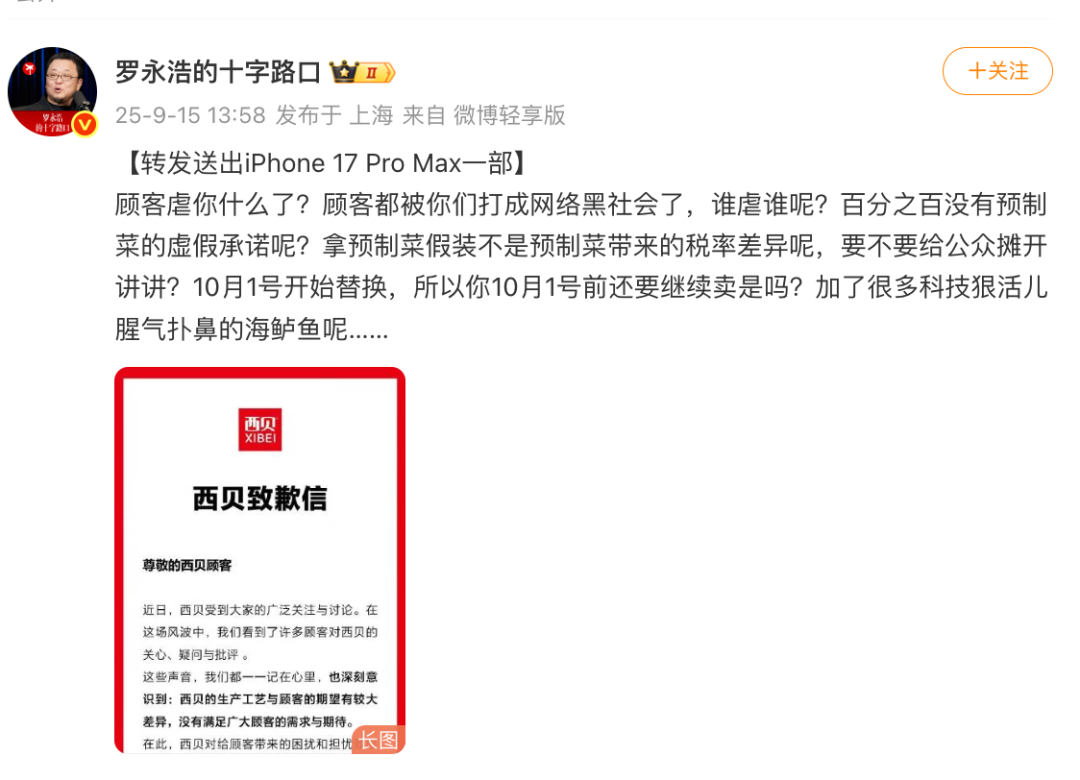
西贝秒删后又重发致歉信,改了一处,罗永浩回应!于东来再次力挺:希望不要毁了西贝!预制菜国标草案已过审,即将公开征求意见
Mei Ri Jing Ji Xin Wen· 2025-09-15 07:26
Core Viewpoint - The recent controversy surrounding pre-prepared dishes at Xibei Restaurant Group has led to public apologies and significant discussions about consumer rights and food safety standards in the restaurant industry [1][3][12]. Group 1: Company Response and Public Perception - Xibei issued an apology regarding the use of pre-prepared dishes, stating intentions to adjust processing methods and switch to non-GMO soybean oil by October [1]. - The initial apology was deleted and later reissued with modifications, indicating a sensitive public reaction and criticism from figures like Luo Yonghao, who questioned the company's stance [1][3]. - Luo Yonghao criticized the marketing consultancy firm Huayi Huayi for its support of Xibei, suggesting that their advice could harm the brand's reputation [6][10]. Group 2: Industry Standards and Regulations - A national standard for pre-prepared dishes is set to be publicly solicited, which will require restaurants to disclose whether they use such dishes and how they are prepared [12]. - The new standards aim to transition the pre-prepared dish industry from unregulated growth to a more compliant framework, focusing on safety and transparency [12][13]. - Experts predict that the implementation of these standards could increase costs by 15% to 30%, potentially leading to market consolidation as smaller firms may struggle to comply [13].
创业板指涨超2%,预制菜、汽车产业链大爆发,宁德时代创新高
2 1 Shi Ji Jing Ji Bao Dao· 2025-09-15 04:20
Market Overview - On September 15, A-shares experienced a volatile rise, with the Shanghai Composite Index up by 8.69 points (0.22%) closing at 3879.29 points, the Shenzhen Component Index up by 137.73 points (1.07%) at 13061.86 points, and the ChiNext Index up by 64.26 points (2.13%) at 3084.68 points, briefly surpassing 3100 points during the session [1] - The half-day trading volume in the Shanghai and Shenzhen markets reached 1.52 trillion yuan, a decrease of 146.8 billion yuan compared to the previous day, with over 2000 stocks rising across the market [2] Pre-made Dishes Industry - The pre-made dishes index rose by 1.63% on September 15, with stocks like Delisi (002330) hitting the daily limit and Guolian Aquatic (300094) rising over 7%, as the market reacted to the upcoming national food safety standards for pre-made dishes [3] - The draft national standards, led by the National Health Commission, are set to include the usage of pre-made dishes in restaurant disclosures for the first time, following a notice issued by multiple departments in March 2024 emphasizing the safety regulations for pre-made dishes [3][4] - The pre-made dishes market in China reached 485 billion yuan in 2024, a year-on-year growth of 33.8%, and is expected to exceed 617.3 billion yuan in 2025, with e-commerce sales in 2023 growing by 160%, particularly among the younger demographic [3][4] Industry Growth and Challenges - As of now, there are over 74,000 registered pre-made dish companies in China, with approximately 9,500 new registrations in 2025. The registration trend shows a peak in 2024 after a decline in 2021-2022 [4] - Industry experts highlight that while government policies are promoting pre-made dishes for their standardization and efficiency, consumer trust remains a significant hurdle due to safety and nutritional concerns [4] - The new national standards are expected to reshape the pre-made dishes industry, potentially increasing costs by 15% to 30% due to stricter regulations on preservatives and cold chain logistics, which may lead to consolidation in the market [5] Battery and Energy Storage Sector - CATL (300750) saw a significant rise of 14% in A-shares, reaching new highs, supported by a Morgan Stanley report affirming its strengthened market position in the electric vehicle battery sector [6][7] - The energy storage sector is also gaining traction, with a national plan aiming for 180 million kilowatts of new energy storage capacity by 2027, driving an estimated investment of 250 billion yuan [8] Automotive Industry - Automotive stocks surged on September 15, with companies like Haon Auto (301488) rising nearly 18% following the release of a growth plan targeting 32.3 million vehicle sales in 2025, including 15.5 million electric vehicles [9][10] - The plan emphasizes the integration of smart and connected technologies in the automotive sector, promoting the development of intelligent networked vehicles and enhancing infrastructure for V2X and 5G applications [9][10]

创业板指涨超2%,预制菜、汽车产业链大爆发,宁德时代创新高
21世纪经济报道· 2025-09-15 04:11
Market Overview - On September 15, A-shares experienced a volatile upward trend, with the Shanghai Composite Index rising by 8.69 points (0.22%) to close at 3879.29 points, the Shenzhen Component Index increasing by 137.73 points (1.07%) to 13061.86 points, and the ChiNext Index gaining 64.26 points (2.13%) to 3084.68 points, briefly surpassing 3100 points during the session [1][2]. Trading Volume - The half-day trading volume in the Shanghai and Shenzhen markets reached 1.52 trillion yuan, a decrease of 146.8 billion yuan compared to the previous day, with over 2000 stocks in the market rising [4]. Pre-made Dishes Industry - The pre-made dishes concept is gaining traction as the national food safety standards are nearing implementation. The pre-made dishes index rose by 1.63%, with stocks like Delisi hitting the daily limit and Guolian Aquatic Products increasing by over 7% [6][7]. - The draft national standard for pre-made dishes, led by the National Health Commission, is set to be publicly solicited for opinions, marking a significant step in regulating the industry [8]. - The pre-made dishes market in China reached a scale of 485 billion yuan in 2024, reflecting a year-on-year growth of 33.8%, and is expected to exceed 617.3 billion yuan by 2025. E-commerce platforms reported a 160% increase in sales in 2023, with over 60% of consumers being young [9]. - As of now, there are over 74,000 registered pre-made dishes-related companies in China, with approximately 9,500 new registrations in 2025. The registration trend shows a peak in 2024, with over 10,000 companies [9]. - Industry experts emphasize the importance of establishing clear national standards to address consumer concerns regarding safety and nutrition, which are critical for the growth of the pre-made dishes market [10]. Battery Industry - Contemporary Amperex Technology Co., Ltd. (CATL) saw its stock rise by 14% during the session, reaching new highs in both A-shares and H-shares. Morgan Stanley reported that CATL's market leadership has strengthened, particularly in the European electric vehicle battery market [14]. - The new storage action plan aims for a new storage capacity of over 180 million kilowatts by 2027, with direct investments of about 250 billion yuan, primarily focusing on lithium-ion battery storage technology [17]. Automotive Industry - On September 15, automotive industry stocks surged, with companies like Haon Auto and Kaiter shares rising nearly 18% and over 15%, respectively [18]. - The Ministry of Industry and Information Technology released a growth plan for the automotive industry, targeting vehicle sales of approximately 32.3 million units in 2025, with a 20% increase in new energy vehicle sales [20]. - The plan encourages the industrialization of smart connected technologies and aims to enhance the competitiveness of the automotive sector by shifting from price competition to value-based competition [21].