
高市交易

Search documents
日本众议院选举落定,日元日债为何下跌?“高市交易”重启?
第一财经· 2026-02-09 06:00
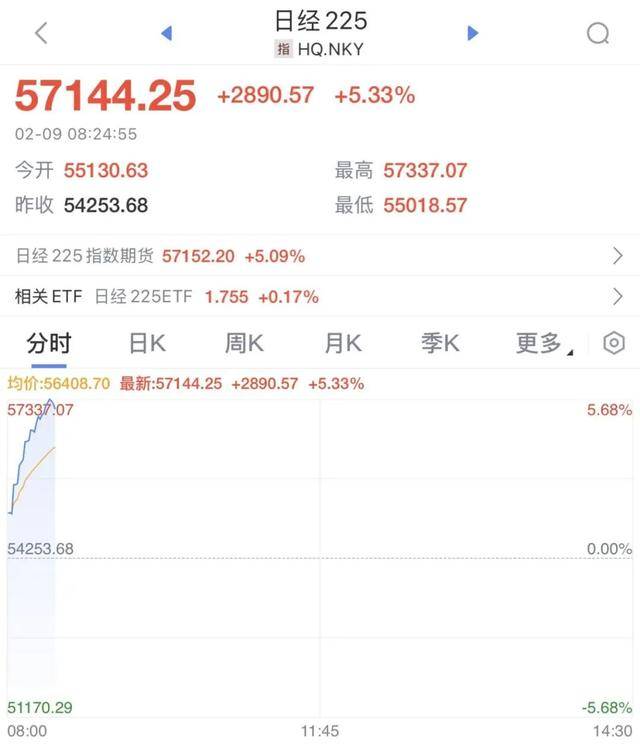
Core Viewpoint - The recent Japanese House of Representatives election resulted in a majority for the ruling coalition of the Liberal Democratic Party and the Japan Innovation Party, leading to a significant rise in the stock market and a historical high for the Nikkei 225 index, which surpassed 57,000 points for the first time [3][5][6]. Market Reaction - Following the election results, the Nikkei 225 index increased by 5.6% to 57,337 points, while the TOPIX index rose over 3%, reaching a new historical high [5]. - The real estate sector led the gains in the Nikkei index with an increase of over 7%, followed by healthcare and industrial sectors [6]. Economic Policy Implications - Analysts suggest that the election outcome may shift the government's focus from "old high market trading" characterized by fiscal expansion and a weak yen to "new high market trading" emphasizing structural and regulatory reforms [3][6]. - The success of the ruling coalition is viewed as a potential catalyst for strategic investments and tax reforms that could further boost the Japanese stock market [6]. Currency and Bond Market Dynamics - The yen has faced significant depreciation, dropping approximately 6% against the dollar and reaching a two-week low of 157.95 [8]. - The yield on 10-year Japanese government bonds rose nearly 4 basis points to 2.274%, indicating market concerns over Japan's fiscal sustainability [8][9]. Investment Sentiment - Investment professionals express a continued interest in Japanese assets, particularly in sectors like defense, artificial intelligence, and semiconductors, which are expected to benefit from increased government spending [7][9]. - Despite the negative outlook for the yen, there is a belief that if Japan's economy continues to grow, the currency may stabilize within a certain range [9]. Future Outlook - The election results are likely to increase the probability of the dollar-yen exchange rate moving from the previous range of 155-160 to 160-165 [10]. - Market participants are cautious about potential currency interventions by Japanese authorities, especially as the yen approaches critical levels that have previously triggered intervention [10].


日本众议院选举落定,日元日债为何下跌?“高市交易”重启?
Di Yi Cai Jing· 2026-02-09 04:18
Group 1 - The analysis from Nomura Securities indicates that rising US Treasury yields and a weak yen will compel the Kishida administration to shift its policy focus from "old Kishida trade" of fiscal expansion and a weak yen to "new Kishida trade" emphasizing structural and regulatory reforms [1][5] - Following the recent elections, the ruling coalition of the Liberal Democratic Party and Nippon Ishin gained a majority, leading to a significant rise in the Nikkei 225 index, which surpassed 57,000 points for the first time in history [3][4] - The real estate sector led the gains in the Nikkei index, with a rise of over 7%, while companies like CyberAgent Inc. and Advantest saw substantial stock price increases of over 16% and 12%, respectively [3][4] Group 2 - Investment institutions are optimistic about sectors such as defense, artificial intelligence, and semiconductors, which are expected to benefit significantly from Kishida's increased investments in these areas [5][6] - The yen has faced significant depreciation, dropping approximately 6% against the dollar and reaching historical lows against the euro and Swiss franc, which has raised concerns about potential currency intervention [5][7] - Analysts express skepticism about Japanese government bonds, particularly long-term bonds, due to fiscal concerns, although recent yield increases have made them more attractive to some investors [5][6][7]

开盘暴涨,日本股市创历史新高
Sou Hu Cai Jing· 2026-02-09 02:58
Group 1 - The Japanese stock market opened significantly higher, with the Nikkei 225 index reaching a historic intraday high following the ruling coalition's victory in the House of Representatives election [1][5] - The Nikkei 225 index surged over 5% on February 9, surpassing 57,000 points, marking a new historical peak [2] - Key stocks that performed well included Soshi Technology, Mitsui Mining, and Secom, with SoftBank Group seeing its highest increase of 8.5% since January 28 [2][3] Group 2 - Analysts believe that the election victory strengthens Prime Minister Sanna Takashi's government, making it easier to implement economic policies without needing opposition cooperation [5] - Recent strong performances in sectors such as defense, artificial intelligence, and semiconductors have been noted, as these areas are prioritized by the government [5] - The rise in Japanese stocks is also attributed to a rebound in the US stock market, with the S&P 500 index experiencing its largest single-day gain since May [5] Group 3 - The Japanese yen experienced a short-term sell-off, dropping approximately 0.3% to 157.76 yen per dollar, the lowest level in over two weeks [7] - Concerns about Japan's fiscal spending and debt burden have intensified following the election, with expectations of increased government spending putting pressure on the yen and government bonds [7][9] - The potential for a rise in Japanese government bond yields is anticipated due to the election results, which may lead to upward pressure on yields [9] Group 4 - The Korean market also saw significant gains, with the KOSPI index rising 4.13% to 5,299.07 points, driven by strong performances from major companies like Samsung Electronics and SK Hynix [10][11] - Samsung Electronics and SK Hynix both recorded increases of over 5%, contributing to the overall market surge [11]
日本大选高市早苗胜出!日股或借势冲新高,日元逼近160关口、国债再临抛售压力
Zhi Tong Cai Jing· 2026-02-09 01:03
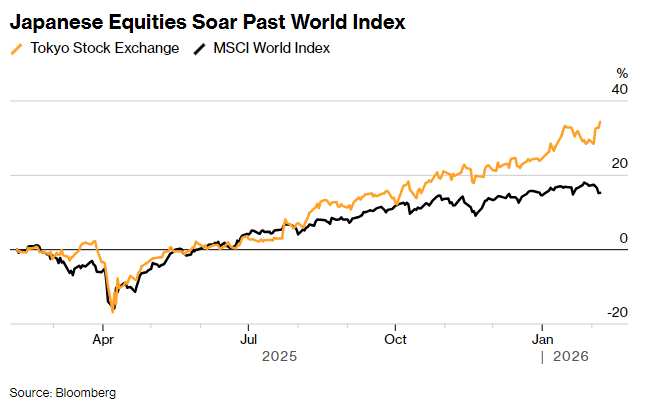
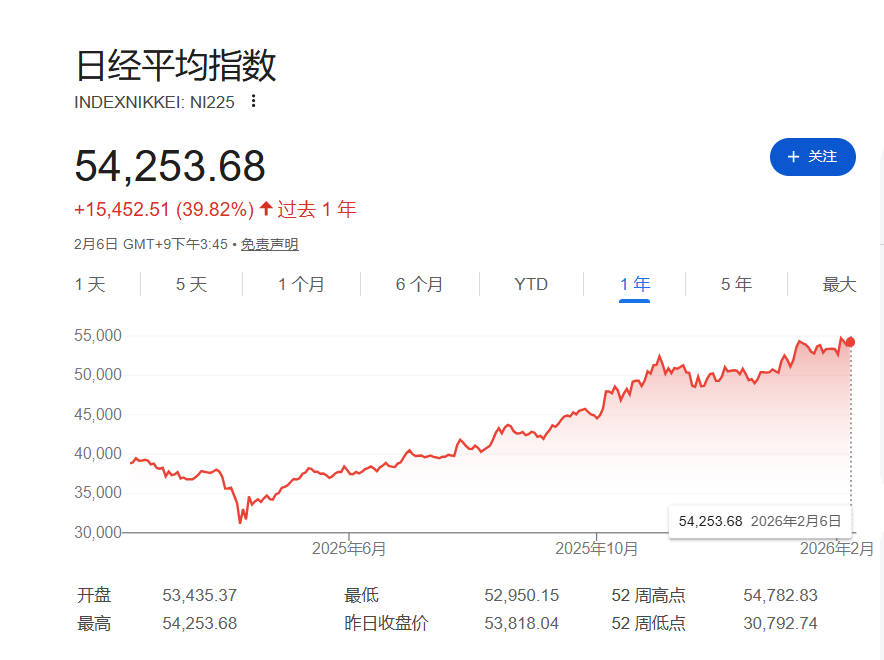
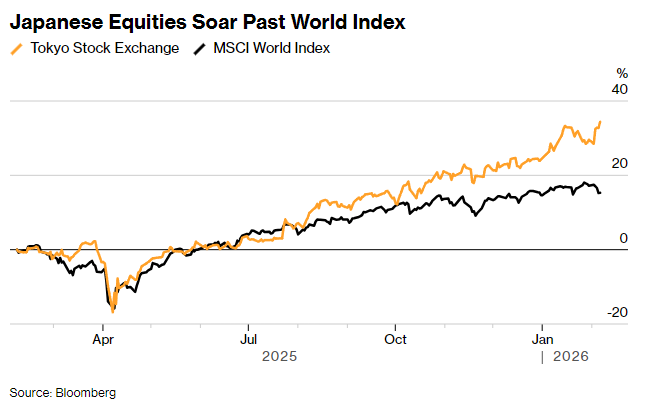
Core Viewpoint - The overwhelming victory of Prime Minister Fumio Kishida's Liberal Democratic Party (LDP) is expected to sustain the upward trend in the Japanese stock market, while putting further downward pressure on the yen and government bonds [1][2]. Market Reaction - The LDP has secured more than two-thirds of the seats in the House of Representatives, exceeding some investors' expectations [1]. - The Nikkei index is seen as benefiting from Kishida's clearer path for economic stimulus policies, with the index reaching a historical high and gaining over 8% this year, compared to a mere 2% increase in global developed market stock indices [1]. Currency and Bond Market - The yen has depreciated, trading at 157.61 against the dollar, with a cumulative decline of 1.6% last week, nearing the 160 mark that previously triggered intervention by Japanese authorities [1][5]. - The natural trajectory of the yen is expected to be further depreciation, with market participants anticipating potential intervention from Japanese authorities at low levels [5][8]. Economic Implications - The depreciation of the yen is a double-edged sword for the Japanese economy, boosting profits for export companies while significantly squeezing household budgets [4]. - Concerns about the sustainability of Japan's fiscal policies have resurfaced, particularly in light of Kishida's proposed temporary reduction in food consumption tax, which may lead to further selling pressure on government bonds [8]. Government Bond Market - Despite some recovery in Japanese government bonds, there is still a risk of further selling, especially in ultra-long-term bonds, as global asset management firms have adopted a low allocation strategy [8]. - The overwhelming victory of the LDP may provide Kishida with more political maneuvering space, potentially allowing him to address the concerns of the bond market [11].
高市“赌赢了”,日元面临进一步下行压力
Xin Lang Cai Jing· 2026-02-09 00:44
Core Viewpoint - The recent Japanese House of Representatives election results have solidified the ruling coalition's power, paving the way for Prime Minister Kishi's expansionary fiscal policies, which may negatively impact the country's monetary fundamentals [1][2]. Election Results - The ruling coalition, consisting of the Liberal Democratic Party (LDP) and the Japan Innovation Party, secured a majority in the House of Representatives, with 232 seats out of 465 [2]. - This election marks the first time in 25 years that the LDP has participated without the Komeito party, indicating a significant shift in Japan's political landscape [2]. Fiscal Policy Implications - Kishi has promised to permanently abolish the 8% consumption tax on food, which is a key revenue source for addressing Japan's aging population and supporting social welfare [3]. - The elimination of the food consumption tax is projected to reduce government revenue by approximately 5 trillion yen annually, equivalent to Japan's yearly education expenditure [3]. Market Reactions - Following the election results, there is an expectation of a "Kishi trade," betting on rising Japanese stocks and a weaker yen [4]. - Analysts predict that the Nikkei index could rise by about 2000 yen in response to the election outcome, with initial market reactions indicating a recovery in high-level trading [5]. Currency and Economic Outlook - The election results have reinforced Kishi's strong political position, which may lead to increased fiscal spending, potentially exacerbating Japan's fiscal deficit and negatively affecting the currency's fundamentals [6]. - Despite concerns over the yen's depreciation, there are indications that the currency's movement may not solely depend on fundamentals but also on technical factors and the coordination of monetary policies between Japan and the U.S. [6].
日本执政联盟赢得众议院选举过半议席,日元日债面临压力
Hua Er Jie Jian Wen· 2026-02-09 00:16
Core Insights - The ruling coalition in Japan, consisting of the Liberal Democratic Party and the Japan Innovation Party, has secured a majority in the recent House of Representatives election, leading to strong market expectations for fiscal stimulus and a bullish sentiment in the stock market [1][2] - The Nikkei 225 index futures rose approximately 3% in early trading, reflecting investor optimism regarding increased government spending, particularly in defense and technology sectors [1][2] - However, the yen and Japanese government bonds are under pressure, with the yen weakening to around 157.61 against the dollar, nearing the intervention threshold of 160 [1][4] Market Reactions - The election results have triggered a "risk-on" sentiment in financial markets, with the Nikkei index continuing its strong performance this year, up over 8%, significantly outperforming developed market indices [2] - Analysts suggest that "Takaichi trades" may dominate the market, focusing on sectors aligned with the government's investment agenda, such as defense and nuclear energy [2] Currency and Bond Market Dynamics - The yen's depreciation is expected to continue, with market participants anticipating potential official intervention due to concerns over fiscal sustainability [4] - Japanese government bonds face selling pressure, exacerbated by liquidity issues and concerns regarding the sustainability of government finances, leading global fund managers to reduce their exposure to Japanese bonds prior to the election [4] Central Bank Policy Outlook - Despite fiscal concerns, there has been a slight improvement in bond performance, easing upward pressure on yields [7] - Market focus is shifting towards the Bank of Japan's policy direction, with a 75% probability of a 25 basis point rate hike in April, indicating a potential shift in monetary policy [7]
日本大选高市早苗胜出!日股或借势冲新高 日元逼近160关口、国债再临抛售压力
智通财经网· 2026-02-08 23:41
Core Viewpoint - The overwhelming victory of Prime Minister Fumio Kishida's Liberal Democratic Party (LDP) is expected to sustain the upward trend in the Japanese stock market, while putting further downward pressure on the yen and government bonds [1][2]. Economic Impact - The LDP has secured more than two-thirds of the absolute majority in the House of Representatives, significantly exceeding some investors' expectations [1]. - Kishida's economic stimulus policies are anticipated to have a clearer path for implementation, which is seen as positive for the Nikkei index [1]. - The Japanese stock market, particularly the Tokyo Stock Exchange index, reached a historical high last week, with an increase of over 8% this year, compared to a mere 2% rise in global developed market stock indices [1]. Currency and Bond Market - The yen has depreciated, with the exchange rate against the US dollar slightly falling to 157.61, and a cumulative decline of 1.6% last week, nearing the 160 mark that previously triggered intervention by Japanese authorities [1]. - Analysts suggest that the natural trajectory for the yen is further depreciation, with expectations of potential intervention by Japanese officials in the low range [5]. - Concerns about the sustainability of Japan's fiscal policies and temporary tax relief measures are driving the risk of further selling in Japanese government bonds [7]. Sector Focus - The market is expected to focus on sectors such as defense and nuclear energy, which align with Kishida's national investment agenda [4]. - Investment in defense, artificial intelligence, and semiconductors is likely to benefit significantly from Kishida's plans for increased spending [4]. Market Sentiment - Despite existing concerns, Japanese government bonds showed some recovery last week, with upward pressure on yields easing, particularly for long-term bonds [9]. - The overwhelming victory of the LDP may provide Kishida with more political maneuvering space to address the demands of the bond market [9].
深夜突发,日本大选最新情况对市场有多大影响?
Zhong Guo Ji Jin Bao· 2026-02-08 23:13
Group 1 - The election victory of Prime Minister Takaichi has resulted in the ruling party securing over half of the 233 seats in the House of Representatives, allowing for easier legislative control [1] - Market analysts predict that a strong victory for the ruling coalition may lead to a "Takaichi trade," characterized by rising stock markets, a steepening yield curve, and a weaker yen [1][2] - The outcome of the election is expected to provide a clear political path for economic stimulus measures, which is seen as a positive factor for the Nikkei index [2] Group 2 - The weakening yen is viewed as a double-edged sword for Japan, benefiting export companies while straining household budgets [2] - Concerns about the sustainability of Japan's fiscal policy have been reignited, particularly due to proposals to temporarily reduce the consumption tax on food [4] - Despite recent market pressures, there is a belief that the "Takaichi trades" will become a focal point in the market, although there is also a counter-argument that a strong victory may reduce the pressure to implement stimulus measures [4]
深夜,日本突发
Zhong Guo Ji Jin Bao· 2026-02-08 16:21
Group 1 - The recent election victory of Prime Minister Takaichi has resulted in the ruling party securing over half of the 465 seats in the House of Representatives, which may lead to increased market volatility [1] - The ruling coalition, including the Liberal Democratic Party and the Japan Innovation Party, has achieved a two-thirds majority of 310 seats, allowing them to more easily push legislation through the Diet [1] - Market analysts expect a "Takaichi trade" scenario, where stock prices rise, the yield curve steepens, and the yen weakens, following the election results [1][2] Group 2 - Asset Management One's chief strategist suggests that buying Japanese stocks and selling the yen and Japanese government bonds post-election will be effective strategies, supported by strong corporate earnings and dividend yields [2] - KCM Trade's chief market analyst views the election outcome as a clear political pathway for economic stimulus measures, which is a positive factor for the Nikkei index [2] - The weakening yen is seen as a double-edged sword, benefiting export companies while straining household budgets [2] Group 3 - Concerns about the sustainability of Japan's fiscal policy have been reignited by Takaichi's proposal to temporarily reduce the consumption tax on food to zero, leading to further risks of bond sell-offs [4] - Despite these concerns, the bond market showed some improvement last week, with upward pressure on yields easing, particularly in the ultra-long segment [5] - There is a counterpoint that a strong victory for Takaichi may reduce the pressure to implement stimulus measures, which will be tested in the market [5]
NHK料高市早苗压倒性胜选 市场波动或进一步加剧
Xin Lang Cai Jing· 2026-02-08 15:18
Core Viewpoint - Japanese Prime Minister Sanna Takashi is expected to win a decisive victory in the upcoming election, potentially becoming the strongest leader in years, which may increase market volatility [1][4]. Group 1: Election Results and Market Reactions - The ruling Liberal Democratic Party (LDP) and its ally, the Japan Innovation Party, are projected to secure a two-thirds majority in the House of Representatives, having already won 269 out of 465 seats, significantly expanding their previous count of 233 seats [1][4]. - Investors have prepared for the LDP's decisive victory by buying Japanese stocks and selling the yen and Japanese government bonds, anticipating increased government spending and investment to boost the economy, along with a potential slowdown in the Bank of Japan's interest rate hikes [1][4]. Group 2: Economic Implications and Policy Focus - Economists and market observers are closely monitoring Takashi's statements regarding spending plans, the possibility of eliminating the food consumption tax, and her views on the yen [1][4]. - The main election issue is the pressure on household living costs, as this is the first generation facing sustained inflation in decades. Both the LDP and the main opposition party, the Constitutional Democratic Party, advocate for reducing the food consumption tax to zero, but the LDP prefers this as a temporary measure while the opposition seeks a permanent solution [1][4]. Group 3: Currency and Economic Stability - Takashi's recent comments suggest a preference for the benefits of a weaker yen, although she later expressed a desire to create a strong economy that is not affected by exchange rate fluctuations [1][4]. - Market analysts predict that uncertainty surrounding these policies may lead the yen to test levels around 159 or 160, with potential discussions of intervention measures resurfacing [1][4].