AI生态系统

Search documents
机器驾驶存在安全挑战!苗圩发声
Wind万得· 2025-10-16 22:40
Group 1 - The core viewpoint of the article emphasizes the safety challenges associated with machine driving compared to human driving, as highlighted by Miao Wei, a former Minister of Industry and Information Technology [2] - The 2025 World Intelligent Connected Vehicle Conference will focus on various aspects of the intelligent connected vehicle industry, including policies, technology, safety, artificial intelligence, applications, and data [2] - Miao Wei pointed out three main safety challenges for machine driving: insufficient capability to handle "long-tail scenarios," inherent limitations in perception and cognition, and the uncontrollable risks posed by the "black box effect" in decision-making processes [2] Group 2 - Morgan Stanley's recent research indicates that the true innovation opportunities in the automotive industry lie in breakthroughs within the AI ecosystem, introducing the "3A" opportunities: Autonomous Driving, AI Embodiment, and AI Data Centers [3] - If traditional vehicle sales companies can achieve substantial breakthroughs in the "3A" areas, they could potentially unlock an additional market value space of $2-3 trillion [3] - CITIC Securities previously projected that Level 3 (L3) autonomous driving will become the main upgrade direction for intelligent driving from Q4 2025 to 2026 [3] Group 3 - A table outlines various automotive brands and their representative models along with their levels of intelligent assisted driving, indicating that Tesla and BYD have models classified as Level 4 (L4), while several others, including Geely and Changan, have models classified as Level 3 (L3) [4] - The SAE classification system for autonomous driving technology ranges from Level 0 (no automation) to Level 5 (full automation), detailing the responsibilities of human drivers at each level [4]


汽车产业链的未来在“3A”:自动驾驶、人形机器人和AI数据中心
硬AI· 2025-10-16 14:22
Core Viewpoint - The era of solely focusing on automotive sales data is coming to an end, with future investment value in the automotive industry chain anchored in companies that possess a "second growth curve" [4][5][11]. Group 1: Investment Opportunities - Morgan Stanley's report highlights that high-quality electric vehicles have become the industry standard, and true innovation opportunities lie in breakthroughs within the AI ecosystem [5][11]. - The report identifies the "3A" opportunities: Autonomous Driving, AI Embodiment, and AI Data Center (AIDC), which could unlock an additional market value of $2-3 trillion for traditional vehicle sales companies if they achieve substantial breakthroughs in these areas [5][17]. - Companies like XPeng Motors and Hesai Technology are specifically noted for their potential breakthroughs in the AI field [5][21]. Group 2: Market Forecasts - The report predicts a 19% quarter-on-quarter increase in automotive sales in Q4 2025, leading to an upward revision of total automotive sales in China to 29.9 million units for 2025, a 9% year-on-year growth [7]. - The forecast for new energy vehicle (NEV) sales in 2025 has been adjusted upward by 2% to 15.2 million units, representing a 24% year-on-year increase, with a penetration rate expected to reach 51% [7]. - For 2026, while NEV wholesale sales are expected to grow by 8% to 16.5 million units, overall automotive sales are projected to decline by 5% year-on-year due to concerns over the cessation of stimulus policies [9][14]. Group 3: Technological Innovations - The automotive industry must transition into a broader AI ecosystem participant, with significant overlaps in computational power, algorithms, and material costs between autonomous vehicles and humanoid robots [12][15]. - The demand for AI data centers will surge due to the substantial computational requirements of humanoid robots and autonomous driving technologies [15]. Group 4: Valuation and Market Dynamics - By 2030, smart electric vehicles are expected to contribute an additional $2-3 trillion in market value, equivalent to ten times the total addressable market for smart driving [17][18]. - The valuation framework for automotive companies is anticipated to shift towards a "sum-of-the-parts" (SOTP) approach, attracting investors from technology, media, and telecommunications sectors [18][24]. - The report emphasizes that not all companies will successfully transition, as this requires repositioning capacity, reusing technology, and reinvesting in distribution and sustainability [24].

德系主场慕尼黑刮起“中国风”
Huan Qiu Wang· 2025-09-16 03:19
Group 1: Event Overview - The 2025 Munich Motor Show (IAA Mobility) commenced on September 8, 2025, with a public opening from September 9 to 14, focusing on mobility, sustainability, and technological innovation [2] - Major German automakers such as Volkswagen Group, BMW, and Mercedes-Benz showcased their latest models, alongside international companies like Opel, Hyundai, and Lucid [2][3] - The number of Chinese exhibitors increased significantly, with 116 companies participating, up from 70 in 2023, making them the largest group after German firms [2] Group 2: Electric Vehicle Highlights - BMW unveiled the new generation iX3, featuring advanced technologies and set for large-scale sales in Europe starting March 2026 [3] - Mercedes-Benz launched the all-new electric GLC, boasting significant design changes and a maximum WLTP range of 713 kilometers [3] - Volkswagen introduced the ID.Polo, an electric successor to the classic Polo, expected to debut in May 2026 [4] Group 3: International Participation - Hyundai presented the IONIQ 3 concept car, with the production version anticipated in Q3 2026 [5] - Lucid showcased the new electric SUV Gravity, which is available for pre-order in Europe and expected to deliver in early 2026 [5] - Stellantis expressed concerns over European emissions regulations, warning that the targets for 2030 and 2035 may not be achievable without policy support [5][6] Group 4: Chinese Automakers' Expansion - Chinese brands like BYD, Xpeng, and Leap Motor showcased multiple new models, indicating strong ambitions in the European market [7][8] - BYD announced plans to open over 1,000 stores in Europe by the end of 2023 and aims to launch 3-4 new plug-in hybrid models in the next six months [8] - Changan presented its global strategic models S05 and S07, with the S05 officially launching in Europe [9] Group 5: Component Suppliers and Technology - A large contingent of Chinese component suppliers participated, including battery manufacturers like CATL and technology firms focusing on autonomous driving [11][12] - Companies like Momenta and Horizon showcased their latest advancements in autonomous driving technology, with Momenta announcing partnerships with over 20 global automakers [12] - The trend of "ecological export" was highlighted, with Chinese firms moving from single vehicle exports to comprehensive ecosystem solutions [11][14] Group 6: Competitive Dynamics - The competition between Chinese and European automakers is intensifying, with Chinese brands capturing 9.9% of the European electric vehicle market as of July 2023 [14] - Executives from BMW and Mercedes-Benz acknowledged the fierce competition in the Chinese market and emphasized the importance of collaboration with local partners [15][16] - The evolving "co-opetition" model is reshaping the global automotive landscape, driving technological advancements and market sharing [17][18]
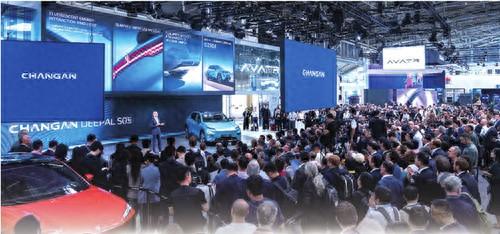
德系主场慕尼黑刮起中国风
Zhong Guo Qi Che Bao Wang· 2025-09-15 08:48
Core Insights - The 2025 Munich Motor Show (IAA Mobility) focuses on mobility, sustainability, and technological innovation, featuring major German automakers and a significant presence from Chinese companies [2][3]. Group 1: Event Overview - The event runs from September 8 to 14, 2025, with a theme of "It's all about mobility" [2]. - Major German automakers like Volkswagen, BMW, and Mercedes-Benz showcase new electric vehicles, while foreign companies such as Opel, Hyundai, and Lucid also participate [3][4]. - Chinese exhibitors have increased significantly, with 116 companies registered, up from 70 in 2023, making them the second-largest group after German firms [2]. Group 2: Electric Vehicle Highlights - BMW unveils the new generation iX3, set for large-scale sales in Europe starting March 2026, featuring advanced technologies [3][4]. - Mercedes-Benz launches the all-new electric GLC, boasting a range of up to 713 kilometers under WLTP conditions [3]. - Volkswagen introduces the ID.Polo, an electric successor to the classic Polo, expected to debut in May 2026 [4]. Group 3: Chinese Automakers' Expansion - Chinese brands like BYD, Xpeng, and Leap Motor showcase multiple new models, indicating strong ambitions in the European market [7][8]. - BYD announces plans to open over 1,000 stores in Europe by the end of 2023 and aims to launch several hybrid models in the next six months [8]. - Xpeng reveals its first European R&D center and emphasizes its focus on AI and robotics in automotive technology [7]. Group 4: Industry Challenges and Responses - European automakers express concerns over EU emissions regulations, with Stellantis warning that current targets may lead to a 30% market shrinkage [4][5]. - Executives from Mercedes-Benz and BMW criticize the EU's plans to phase out combustion engines by 2035, advocating for a more comprehensive emissions accounting system [5]. Group 5: Technological Innovations - Chinese component manufacturers, including CATL and Horizon Robotics, showcase advancements in battery technology and autonomous driving systems [10][11]. - Companies like Momenta and Horizon present their latest autonomous driving solutions, with Momenta announcing partnerships with over 20 global automakers [11][12]. Group 6: Competitive Landscape - The competition between Chinese and European automakers intensifies, with Chinese brands capturing 9.9% of the European electric vehicle market as of July 2023 [13]. - Collaborative efforts between companies, such as Xpeng and Volkswagen, highlight a trend of "co-opetition" in the industry, fostering innovation and market growth [15][16].

曝微软Office 365计划引入Anthropic AI技术,打破OpenAI独家依赖
Huan Qiu Wang Zi Xun· 2025-09-10 08:18
Group 1 - Microsoft plans to deeply integrate Anthropic's AI technology into its Office 365 suite, marking a shift away from exclusive reliance on OpenAI since 2019 [1][3] - The integration will embed Anthropic's Claude series models into applications like Word, Excel, Outlook, and PowerPoint, enhancing features such as document generation, data analysis, email responses, and presentation design [3] - Microsoft CEO Satya Nadella emphasized the company's strategy to build "the most open AI ecosystem" in the next three years, collaborating with multiple top model providers, including Anthropic and French AI startup Mistral AI [3] Group 2 - OpenAI recently launched OpenAI Jobs, a platform allowing companies to post jobs and use AI for candidate matching, which overlaps significantly with Microsoft's LinkedIn [3] - The launch of OpenAI Jobs has raised concerns for Microsoft, indicating heightened competition in the AI recruitment space [3]


对话世界经济论坛活动内容总监:2025夏季达沃斯200多场对话力推“复杂时代”全球合作新机制
Xin Lang Cai Jing· 2025-06-27 09:25
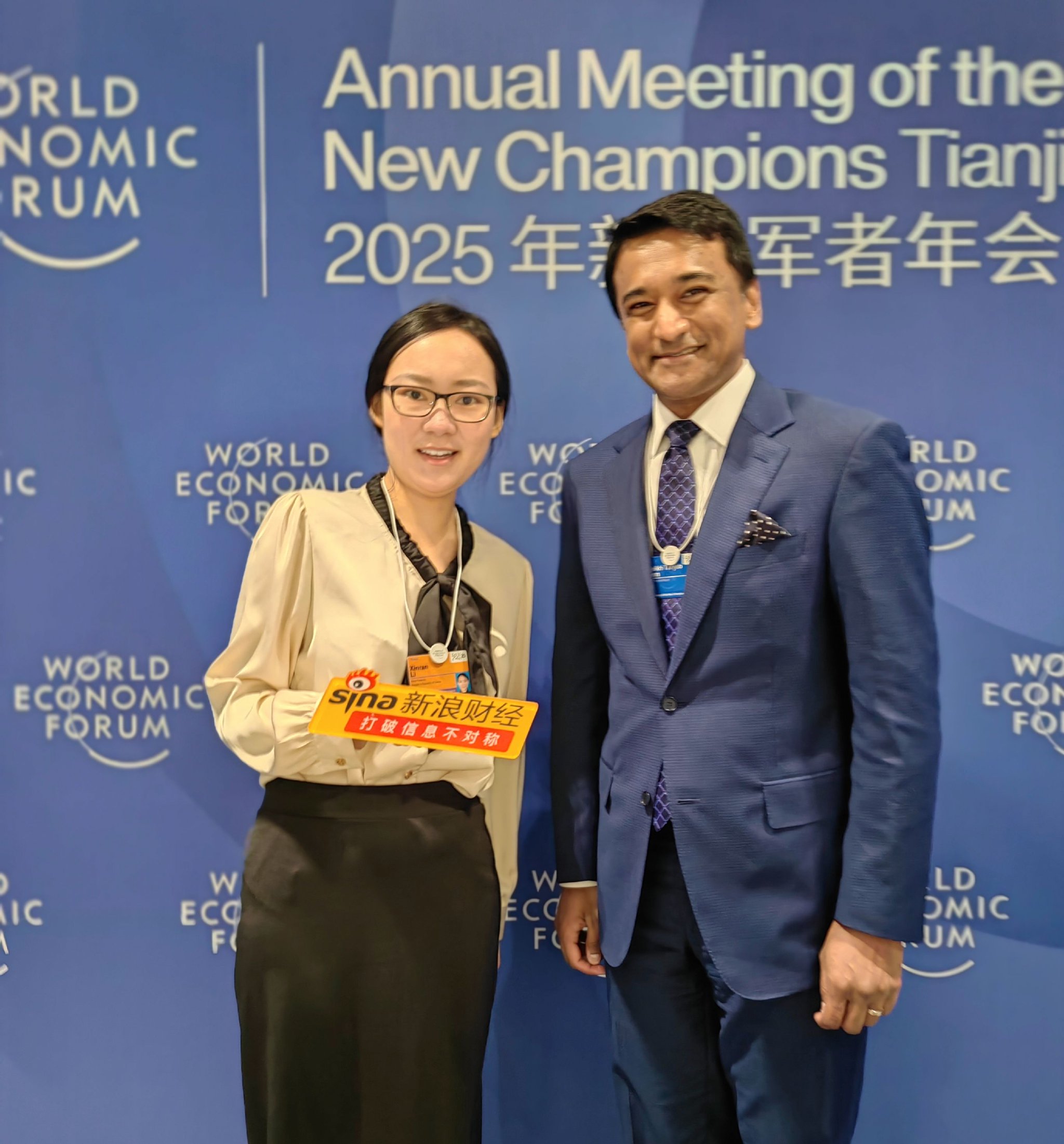
Group 1 - The World Economic Forum's 16th Annual Meeting of the New Champions focused on "Entrepreneurship in a New Era," addressing complex geopolitical and technological challenges [4][5] - Approximately 1,700 leaders from business and government participated, discussing five main topics: global economic insights, China's outlook, transformative industries, investing in humanity and the planet, and new energy and materials [4][5] - Emerging economies, particularly in Asia, are expected to play a crucial role in future global development, contributing 60% of global growth, with China alone accounting for 30% [5][6] Group 2 - The meeting highlighted the importance of international cooperation amidst rising isolationism and anti-globalization sentiments, emphasizing the need for dialogue and collaboration [8][9] - Key discussions included the impact of economic growth on emerging markets, which are facing low growth and high debt challenges, exacerbated by geopolitical tensions and rising interest rates [6][8] - The forum provided a platform for exploring the intersection of various critical topics, such as China's AI ecosystem and the manufacturing sector's role in energy transition, particularly in solar energy [10]
HDC2025发布鸿蒙智能体框架,助力鸿蒙应用生而智能
Sou Hu Cai Jing· 2025-06-21 00:59
Core Viewpoint - Huawei officially launched the Harmony Agent Framework (HMAF) and the Xiaoyi Intelligent Agent Open Platform at the Huawei Developer Conference 2025 (HDC2025), marking the comprehensive entry of HarmonyOS into the "Agent Era" [1][10]. Group 1: AI Development and Framework - The advancement of AI technology is shifting from "passive response" to "active service," with Huawei's Harmony Agent Framework defining the interaction and collaboration paradigm between the operating system, Harmony applications, and intelligent agents [2]. - The new framework enables deep collaboration between the Xiaoyi system Agent and system AI capabilities, promoting the symbiotic development of applications and Agents, completing a full-cycle process from development to traffic distribution [2][4]. Group 2: Ecosystem and Developer Support - The Xiaoyi Intelligent Agent Open Platform serves as a one-stop development platform, providing easy access for developers, ecosystem partners, and individual creators to innovate and create various intelligent agents [6]. - Developers can leverage the built-in intent understanding framework to integrate AI large model technology, creating vertical or cross-scenario intelligent agent matrices [6]. Group 3: Application Integration and User Experience - Huawei's own applications, such as Huawei Weather, Huawei Music, and Huawei Browser, have adopted the Agent form, with over 50 pioneering Harmony intelligent agents already in development [8]. - For instance, the Huawei Weather app offers a weather assistant intelligent agent that provides professional forecasts and personalized recommendations, enhancing user experience [10]. - The Xiaoyi Intelligent Agent Market integrates various professional intelligent agents from leading AI companies, covering multiple scenarios to meet diverse user needs [10].

利好突袭!外资,重大转变!
天天基金网· 2025-05-15 03:27
Core Viewpoint - Foreign institutions have significantly upgraded their outlook on Chinese stocks, driven by easing trade tensions and positive economic indicators, leading to increased investment interest in the Chinese market [1][3][4]. Group 1: Upgrades and Ratings - Nomura Securities has raised its rating on Chinese stocks to "tactical overweight," indicating a shift of funds from India to China [1][3]. - UBS has upgraded its rating on Chinese technology to "attractive," highlighting the potential of the AI ecosystem and related industries [3]. - Citigroup has increased its year-end target for the Hang Seng Index by 2% to 25,000 points, with expectations of reaching 26,000 points by mid-2026 [4]. Group 2: Investment Strategies and Insights - Major asset management firms like BlackRock, Allianz, and Legg Mason have noted multiple favorable factors enhancing the attractiveness of Chinese assets [5][6]. - Morgan Stanley reported that U.S. hedge funds have increased bullish bets on Chinese stocks, anticipating progress in U.S.-China trade negotiations [8][9]. - M&G Investments has also raised its exposure to China, citing low valuations in the Chinese stock market [9]. Group 3: Economic Indicators and Market Dynamics - The stability and potential appreciation of the Renminbi are seen as key factors attracting international capital to Chinese markets, particularly in high-quality blue-chip stocks and high-credit bonds [10]. - Recent economic data has shown stronger-than-expected export resilience, contributing to improved investor confidence in Chinese assets [5]. - The overall market valuation of Chinese stocks remains relatively low compared to the U.S., providing a compelling risk-return profile for investors [4][10].

利好突袭!外资,重大转变!
券商中国· 2025-05-14 23:22
Core Viewpoint - Foreign investment institutions have significantly reversed their outlook on Chinese stocks, expressing optimism about China's growth prospects due to easing trade tensions and favorable economic indicators [1][4][6]. Group 1: Foreign Investment Sentiment - Nomura Securities upgraded its rating on Chinese stocks to "tactical overweight" and plans to shift some funds from India to China [1][4]. - Citigroup raised its year-end target for the Hang Seng Index by 2% to 25,000 points, expecting it to reach 26,000 by mid-2026 [5]. - Major asset management firms like BlackRock, Allianz, and Loomis Sayles indicated that multiple favorable factors will enhance the attractiveness of Chinese assets [6][7]. Group 2: Technology Sector Outlook - UBS's Chief Investment Officer, Hu Yifan, recently upgraded the rating of Chinese technology to "attractive," highlighting the AI ecosystem as a key growth area for China [2][4]. - The low valuation of the Chinese market compared to the U.S. and its lower correlation with U.S. markets are seen as additional reasons for investor optimism [4]. Group 3: Capital Inflows and Market Dynamics - Morgan Stanley reported that U.S. hedge funds increased bullish bets on Chinese stocks, anticipating progress in U.S.-China trade negotiations [9][10]. - Data shows that Chinese stock ETFs listed in the U.S. have seen significant inflows, with the Direxion ETF's assets growing by 13.43% from April to May [10]. - The appreciation of the RMB is expected to attract more foreign capital into A-shares and the bond market, particularly for high-quality blue-chip stocks and high-credit bonds [10].