
AI竞争

Search documents
字节全员涨薪底气曝光:2025年利润500亿美元,跟Meta一个水平了
Sou Hu Cai Jing· 2025-12-20 10:05
Core Insights - ByteDance has reported significant financial growth, with profits exceeding $40 billion in the first three quarters of this year, and is projected to reach $50 billion for the year, averaging a daily profit of approximately $9.64 million [3][5][11] - The company is increasing employee salaries across the board, with a 1.5 times increase in salary adjustment investment for the current performance evaluation cycle [5][14] - A new salary and job level system will be implemented in January 2026, aimed at providing greater salary increase potential for employees [9][10][18] Financial Performance - ByteDance's revenue is expected to reach $186 billion this year, marking a 20% increase from the previous year, with a projected net profit margin of 26.9% [5][11] - The company's valuation has risen significantly, with reports indicating a valuation of $330 billion in September, later increasing to $480 billion following stock buybacks and investment interest [5][11] Salary Adjustments - The salary structure will see an increase in cash compensation, with a shift from a four-year vesting schedule for stock options to a three-year schedule [6][14] - Performance bonuses will increase by 35% compared to the previous cycle, with adjustments in the distribution of cash and stock options [6][14][16] Job Level System Changes - The job level system will transition from a numerical format to a new L1-L10 format, consolidating certain levels to streamline the hierarchy [9][18] - The new system aims to provide employees with more opportunities for salary increases and better align with industry standards [10][13] Strategic Rationale - The salary increases and job level changes are part of ByteDance's strategy to attract, motivate, and retain talent in a competitive market, particularly in the context of the growing AI sector [11][12]


字节全员涨薪底气曝光:2025年利润500亿美元,跟Meta一个水平了
量子位· 2025-12-20 06:30
Core Insights - ByteDance has reported a significant profit increase, with a net profit of $40 billion for the first three quarters of the year, and is projected to reach $50 billion by year-end, averaging a daily profit of approximately $9.64 million [5][7]. - The company's revenue is expected to hit $186 billion, reflecting a 20% year-over-year growth, resulting in a net profit margin of 26.9% [7]. - ByteDance's valuation has surged, with reports indicating a valuation of $330 billion in September, later rising to $480 billion following stock buybacks and competitive bidding from investment firms [8]. Salary Increase and Structural Changes - ByteDance announced a company-wide salary increase, with a 1.5 times increase in salary adjustment investment for the current performance evaluation cycle, aimed at enhancing total employee compensation [10][20]. - The salary structure will shift to increase the cash component while reducing the proportion of stock options, with performance incentives also seeing a 35% increase in total bonus investment [10][20]. - The new salary structure will allow for more immediate cash access for employees, with adjustments in the distribution of performance options [11][21]. New Job Level System - A new job level system will be implemented starting January 2026, transitioning from a 10-tier system to a new L1-L10 classification, which will not directly correspond to the previous levels [12][23]. - The new system aims to provide greater salary increase potential and redefine job requirements at each level, enhancing overall compensation competitiveness [13][23]. - The restructuring is part of ByteDance's strategy to attract and retain talent amid increasing competition in the AI sector, reflecting a shift in focus from top-tier talent to a broader employee base [15][16].

中国银行原行长李礼辉:智能金融治理应该刚柔并济,洞察、支持、引导创新
Xin Lang Cai Jing· 2025-12-19 02:01
Core Viewpoint - The 22nd China International Financial Forum emphasizes the construction of a secure and efficient intelligent financial ecosystem in the digital economy era, highlighting the need for reliability, interpretability, and economic viability in smart financial innovations [1][18]. Group 1: Financial Models - AI technology is evolving from unimodal to multimodal, enabling the processing of unstructured data and creating direct commercial value in finance [3][21]. - The DeepSeek OCR launched on October 20 can compress text token counts by 90% and accurately identify key information in financial documents, enhancing data processing precision [3][21]. - Financial models must ensure high reliability, interpretability, and economic efficiency, focusing on security against malicious attacks and minimizing errors in financial transactions [5][23]. Group 2: Financial Agents - The evolution of AI from assistants to agents allows for the development of financial agents capable of performing complex tasks in various financial sectors, potentially replacing human roles [7][26]. - AI agents are already being deployed in banks and financial institutions, significantly improving efficiency, such as reducing the time for due diligence report writing from one day to one hour with over 98% accuracy [8][26]. - The shift towards AI in finance necessitates a transformation in human resource management and educational structures to accommodate the new skill requirements [9][27]. Group 3: Data Sharing - The quality and quantity of data are critical for the effectiveness of intelligent finance, with current data sharing facing challenges such as administrative fragmentation and insufficient integration of private data [10][28]. - The "Data 20" initiative aims to establish a framework for data rights, circulation, and governance, promoting both the quantity and quality of data shared [10][28]. - Local regulations and platforms are being developed to facilitate public data sharing and improve the flow of non-public data among financial institutions and tech companies [11][29]. Group 4: AI Competition - AI is recognized as a core technology determining national strength, with competition primarily between the US and China, focusing on computational power [12][31]. - By the end of 2024, China's computing power is projected to account for approximately 26% of the global total, while the US is expected to hold about 37% [13][32]. - The development of AI technologies must navigate geopolitical challenges, with the US imposing restrictions on high-end technology exports to China, impacting the global AI landscape [14][33].

白宫突发大动作!9国联手签协议,竟想废掉中国稀土王牌
Sou Hu Cai Jing· 2025-12-16 11:44
Core Viewpoint - The signing of the rare earth supply chain agreement by the U.S. and its allies is primarily a strategic move to challenge China's dominance in the rare earth sector, rather than a simple resource cooperation initiative [1][3][8]. Group 1: Political Intentions - The agreement is seen as a U.S.-led action aimed at weakening China's advantages in resources, technology, and supply chains [3][8]. - The U.S. is anxious about China's overwhelming control over the global rare earth industry, with 91% of rare earth refining and separation capacity concentrated in China [3][10]. - The U.S. aims to establish a supply chain that bypasses China, laying the groundwork for future competition in AI [8][10]. Group 2: Implications for AI and Technology - The U.S. government links the rare earth supply chain to the AI industry, indicating that control over rare earth resources is crucial for competing in AI [10][13]. - The U.S. recognizes that without a stable supply of rare earths, advancements in AI technology cannot be realized [13][15]. - The agreement is expected to benefit U.S. mining, military, and tech sectors, ensuring a stable supply chain for high-tech industries over the next decade [17][20]. Group 3: Global Supply Chain Dynamics - The agreement signifies a shift in global technology dynamics, where control over core resources will be as important as technological advancement [20][21]. - The U.S. is attempting to create a closed-loop supply chain with like-minded allies, injecting political factors into the industry chain [22][26]. - China's response emphasizes the importance of market principles and cooperation, highlighting its critical role in stabilizing the global rare earth supply chain [23][25]. Group 4: Future Competition - The competition between the U.S. and China in key minerals and AI is expected to continue, with China's rare earth advantages stemming from years of industrial accumulation [26][28]. - The outcome of this geopolitical struggle will depend on the strength and completeness of each country's supply chain rather than the size of their political alliances [28].


牛弹琴:澳大利亚,干了一件前所未有的事情
Xin Lang Cai Jing· 2025-12-10 23:52
Core Viewpoint - Australia has become the first country to implement a ban on social media usage for children under 16, marking a significant shift in the definition of childhood in the digital age [2][23]. Regulatory Framework - The law mandates that ten social media platforms, including Instagram, YouTube, and TikTok, must take "reasonable measures" to prevent children under 16 from using their services, with penalties of up to AUD 49.5 million (approximately USD 32 million) for non-compliance [3][24]. - Major platforms like YouTube and Meta have begun to automatically deactivate accounts of users under 16, while TikTok will suspend all such accounts as of December 10 [3][24]. Social Implications - The ban has sparked discussions about the balance between freedom and protection, with some experts believing that children will ultimately benefit from this decision, while others express concerns about potential legal challenges regarding freedom of speech [4][25]. - There is speculation that children may migrate to emerging platforms like Yope, circumventing the ban on the ten major platforms [5][26]. Global Perspective - Other countries, including Denmark, Ireland, Malaysia, and New Zealand, are considering similar bans, indicating a potential trend in global digital governance [6][27]. - The rapid legislative process in Australia has raised concerns about the adequacy of public consultation and the potential for unintended consequences, with many experts opposing the law due to a lack of evidence supporting its effectiveness [8][29]. Observational Study - The Australian government plans to monitor the effects of the ban, focusing on various metrics such as children's sleep patterns, social interactions, and mental health outcomes [11][33]. - The potential for children to engage with less regulated online spaces raises questions about the overall impact of the ban on their digital literacy and future competitiveness in an AI-driven world [13][34]. Alternative Approaches - The situation in Australia has prompted discussions about the feasibility of similar measures in the United States, where such policies may face constitutional challenges [15][36]. - The article highlights China's advanced governance model for protecting minors online, which has been recognized for balancing safety and access to beneficial content [16][37].

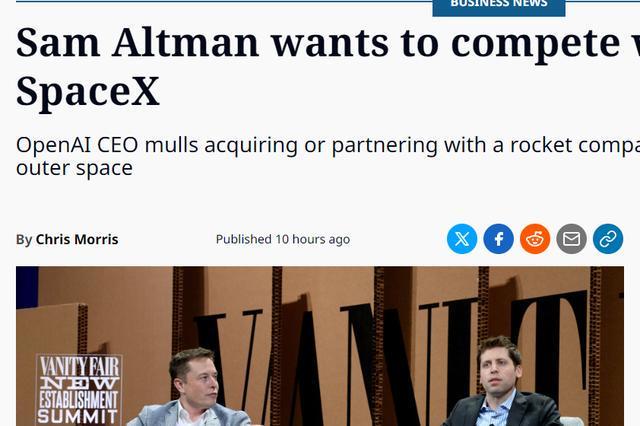
数十亿美元豪赌!OpenAI奥特曼拟收购火箭公司,硬刚马斯克SpaceX
Huan Qiu Wang Zi Xun· 2025-12-05 03:39
Group 1 - OpenAI CEO Sam Altman is planning to enter the space sector through investments or acquisitions of rocket companies to compete with Elon Musk's SpaceX, although this ambition may be temporarily shelved due to a focus on optimizing ChatGPT [1] - Altman has previously engaged with the rocket startup Stoke Space, aiming to gain a controlling stake through equity investment, with historical ties as Y Combinator, which he led, was an early investor in Stoke [1] - Negotiations with Stoke Space have currently stalled, and the competition for billions of dollars in the space sector has not yet commenced in earnest [1] Group 2 - This is not the first confrontation between Altman and Musk; after Musk's exit from OpenAI in 2018, tensions arose, culminating in Musk's attempt to acquire OpenAI this year, which was rejected [4] - Following the acquisition attempt, Musk has initiated legal action against OpenAI and established a competing AI company, while Altman has launched a startup to rival Neuralink and is developing social products to challenge Musk's X platform [4] - The space business is emerging as a new arena for competition between the two [4]
The Information:启动红色警报!OpenAI暂停广告业务,全力优化ChatGPT,“死磕”谷歌Gemini
美股IPO· 2025-12-02 08:02
Core Insights - OpenAI has initiated an internal "Code Red" in response to the increasing competition from Google's Gemini and signs of slowing growth, focusing all resources on optimizing the ChatGPT experience [1][3][4] - The company is postponing new projects, including advertising and AI agents, to prioritize enhancing user experience and performance for its flagship product [5][6] Strategic Shift - OpenAI's strategic focus has shifted from exploring diverse monetization avenues to defending its core product [5] - The directive from CEO Sam Altman emphasizes that all efforts must prioritize ChatGPT [6] Key Priorities During "Code Red" - OpenAI has identified five core pain points to address, aiming to solidify its user base of over 800 million active users [7] - Personalization: Providing customized interactions for users [7] - Postponing advertising monetization: The testing of shopping ads based on user behavior has been halted [8] - Slowing new project development: Projects like AI agents and the personalized news feature "Pulse" are on hold [8] - Image generation: Enhancements to the Imagegen feature to compete with Google's new offerings [9] - Model performance: Improving model behavior to surpass competitors in public rankings [10] Financial Outlook - The "Code Red" is not only a product defense strategy but also a critical capital survival battle, with OpenAI needing to raise approximately $100 billion for future technology development and computing power [11] - The company forecasts ChatGPT's subscription revenue to reach $10 billion this year, $20 billion next year, and $35 billion by 2027 [11][12] Competitive Landscape - The competitive environment has intensified, with Google's Gemini chatbot increasing its monthly active users from 450 million to 650 million [13] - Despite the competition, OpenAI maintains a dominant position, handling 70% of global AI assistant activities and 10% of search activities [13] - Altman has warned employees about the potential economic impact of Google's resurgence, highlighting concerns over growth slowdowns [13] Performance Improvements - OpenAI aims to enhance ChatGPT's response speed and reliability while minimizing the occurrence of excessive refusals to answer benign questions [14]


没时间了,黄仁勋先一步抵韩截胡特朗普,要当面聊聊对华芯片出口
Sou Hu Cai Jing· 2025-10-29 08:26
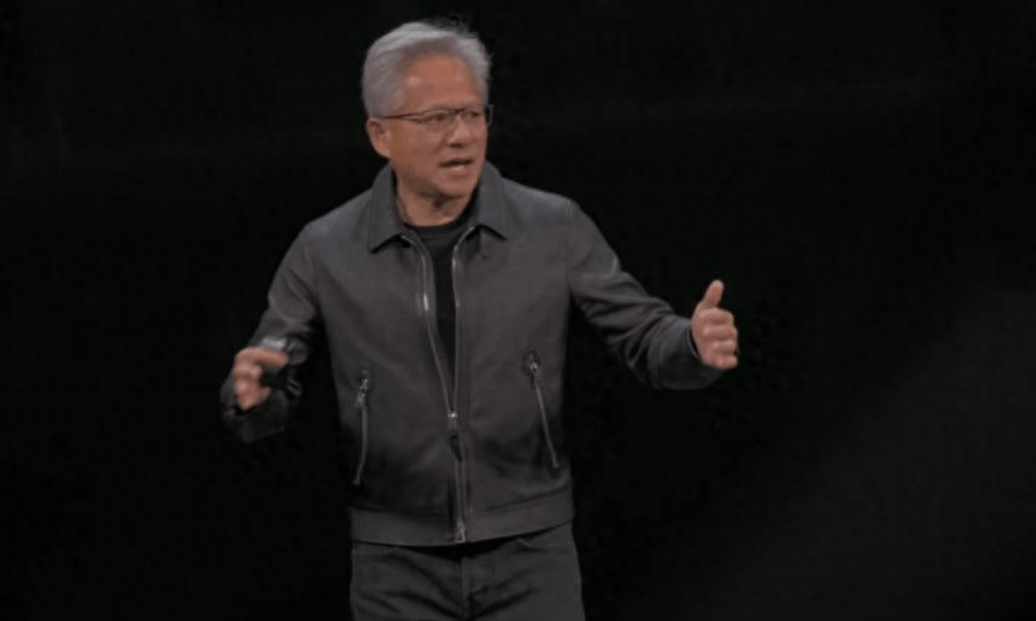
Core Insights - The recent interactions between Trump and Nvidia's Jensen Huang highlight the intersection of corporate competition and national strategic positioning [1][3] - Nvidia's market capitalization surged by $240 billion following Huang's performance forecast, indicating significant market volatility influenced by geopolitical factors [1] - Huang's warning about U.S. policies reflects the urgent need for the U.S. to reconsider its approach to chip exports to China, as the AI competition extends beyond products to ecosystem dominance [3][5] Industry Dynamics - The U.S. technology sector is facing unprecedented challenges as China emerges as a key player in the global chip market, leading to a decline in Nvidia's market share [3][5] - Huang emphasizes the importance of building a robust ecosystem for AI, akin to establishing a comprehensive coffee culture for a coffee shop, to ensure long-term user engagement and market leadership [3] - The rise of China's self-developed chips poses a significant threat to Nvidia, potentially disrupting the U.S. technological supremacy in the AI landscape [5] Geopolitical Trends - The AI landscape is shifting towards a "de-Americanized" model, with countries like China, India, Southeast Asia, and the UAE rapidly developing their AI infrastructure [5][6] - U.S. strategies of trade barriers and export controls may backfire, as they could inadvertently weaken its technological advantage in the long run [5][6] - Huang's remarks at Nvidia's developer conference serve as a cautionary note for U.S. policymakers to focus on long-term ecological strategies rather than short-term market gains [5][6] Future Outlook - The next decade will see intensified competition in AI development, necessitating collaboration and dialogue among nations to navigate the evolving technological landscape [6][8] - The actions of China, Nvidia, and U.S. government policies will collectively shape a new global balance in the AI sector [8] - Huang's perspective underscores that the future of AI is not solely about technology but also about comprehensive ecosystem competition, urging nations to avoid shortsighted decisions that could diminish their global influence [8]

【十大券商一周策略】持股过节,性价比较高!10月新一轮上行正在蓄势
券商中国· 2025-09-28 15:09
Group 1 - The core viewpoint emphasizes resource security, corporate globalization, and technological competition as the main structural market clues, with a focus on resource allocation in the context of new productive forces [2] - The resource sector is driven by insufficient investment in traditional resource industries under a high global interest rate environment, leading to supply constraints [2] - The corporate globalization of Chinese companies is seen as a crucial but subtle fundamental aspect of the current market, with the stability of trade environments and the reduction of internal competition being key conditions [2] Group 2 - The third quarter is expected to show improved or sustained high growth in specific sectors, particularly in mid-to-high-end manufacturing and the AI industry chain [3] - Key sectors include battery manufacturing, military electronics, and AI-related components, which are anticipated to benefit from a recovering PPI and resilient export growth [3] - Resource products such as fluorochemicals, copper, and gold are also expected to see price increases due to improved supply-demand dynamics [3] Group 3 - The market is currently experiencing short-term volatility, but the overall trend remains positive, with structural opportunities still prominent [5] - The upcoming important meetings, such as the 20th National Congress, are expected to serve as critical points for market validation and potential recovery in risk appetite [5] - The focus for investment opportunities is on themes like new productive forces, consumer sectors, and areas benefiting from the reduction of internal competition [5] Group 4 - The market is expected to maintain a strong upward trend post-National Day, with historical patterns suggesting a favorable environment for stocks after holidays [6] - The focus is shifting towards sectors with structural growth, particularly in technology, new energy, and innovative pharmaceuticals [6] - The market's liquidity is anticipated to remain favorable, supported by ongoing improvements in macroeconomic conditions [6] Group 5 - The market is likely to experience a "red October," with continued support from long-term policy layouts and technological catalysts [8] - The technology sector is expected to maintain a dominant trend, with significant opportunities arising from new catalysts and structural changes [8] - The focus on anti-involution is seen as a key factor in transitioning from a structural bull market to a more comprehensive bull market [8] Group 6 - The current bull market is characterized by a lack of clear bubble signals, with strong structural features and a focus on key indicators [9] - The market is expected to remain in a strong oscillating state around the National Day, with no significant downturn risks anticipated [9] - The transition from a technology-driven growth model to one that includes export and globalization is being highlighted as a future trend [13]

阿里云创始人王坚:开源模型与闭源模型的选择是AI竞争关键
Nan Fang Du Shi Bao· 2025-09-11 09:12
Group 1 - The 2025 Inclusion Bund Conference opened in Shanghai, focusing on the theme of "reshaping innovative growth" [4] - Wang Jian, founder of Alibaba Cloud, emphasized that the shift from code open-source to resource open-source is a revolutionary change in the AI era, making open data and computing resources essential for AI advancement [1][2] - The choice between open-source and closed-source models has become a critical variable in AI competition, similar to the impact of Netscape's open-source browser in the internet era [1][2] Group 2 - Wang Jian highlighted that the scale of AI has dramatically increased, leading to significant advancements beyond theoretical progress, with resource availability becoming crucial [2] - The concept of open-source in AI has evolved from code to resource openness, indicating a major characteristic of the AI era [2] - The launch of 12 satellites by Zhijiang Laboratory, which deployed an 8 billion parameter model into space, represents a significant step in utilizing AI for data processing in space [3] Group 3 - The "Trinity Computing Constellation" project aims to allow multiple entities to share satellite resources, laying the groundwork for future deep space exploration [3] - Wang Jian stated that AI and computing capabilities will be essential for human exploration of Mars in the coming decades [3]