AI终端

Search documents
新股消息 | 微电新能源递表港交所 于多个微型锂离子电池领域位列全球前五大供应商
智通财经网· 2026-01-26 23:41
Company Overview - Micro Battery New Energy is a leading global provider of high-performance and high-safety micro lithium-ion battery solutions, focusing on solving core challenges in micro battery materials and design [3] - The company has attracted a wide range of end customers, including world-renowned smart device and consumer electronics brands [3] - According to Zhaosheng Consulting, by 2024, the company ranks among the top five suppliers in various micro lithium-ion battery sectors, with 103 million consumer-grade smart terminal micro lithium-ion batteries shipped, ranking fourth globally and second among Chinese suppliers [3] - The company offers battery solutions optimized for performance in various key application scenarios, including wearable devices, personal smart medical devices, portable energy storage battery packs, smart education and entertainment devices, and others [3] Financial Information - For the fiscal year ending December 31, 2023, the company recorded revenue of approximately RMB 351.62 million, with a gross profit of about RMB 101.75 million [4][5] - The revenue for the fiscal year 2024 is projected to be around RMB 532.86 million, with a gross profit of RMB 186.25 million [4][5] - For the nine months ending September 30, 2025, the company expects revenue of approximately RMB 434.02 million and a gross profit of RMB 147.59 million [4][5] Industry Overview - The global consumer electronics market is rapidly evolving towards smart, high-performance, and portable devices, increasing demand for lithium-ion batteries with extended battery life, safety, and fast charging capabilities [5] - From 2020 to 2024, the global shipment of consumer-grade smart terminal lithium-ion batteries is expected to grow from approximately 3.936 billion units to about 4.159 billion units, with a compound annual growth rate (CAGR) of about 1.4% [5] - The micro lithium-ion battery segment is a key growth driver, with shipments projected to increase from approximately 1.126 billion units in 2020 to about 1.358 billion units in 2024, maintaining a steady upward trend [8] - The demand for micro lithium-ion batteries is expected to grow significantly, with shipments projected to reach approximately 4.569 billion units by 2029, reflecting a CAGR of about 12.4% from 2025 to 2029 [10] - Wearable devices are the largest application scenario for micro lithium-ion batteries, with shipments expected to rise from approximately 1.45 billion units in 2020 to about 1.922 billion units in 2024, accounting for 77.0% of total shipments [10][11]

洁美科技:核心产品电子封装材料处于满产满销状态
Zheng Quan Ri Bao Wang· 2026-01-20 14:14
Core Viewpoint - The company, Jiemai Technology, is experiencing high industry prosperity, with its core product, electronic packaging materials, operating at full production and sales capacity [1] Industry Summary - The utilization rate of electronic-grade film materials is gradually increasing, supported by the acceleration of global digitalization and policies such as "new infrastructure" and "old-for-new" in electronic products [1] - The demand from markets such as 5G networks, cloud computing, data center construction, new energy vehicles, AR/VR, industrial internet, AI terminals, and consumer electronics is continuously expanding, providing a solid foundation for the development of the electronic components industry [1] - This broad downstream demand offers a favorable industry environment for the sustained, healthy, and stable development of the company's business [1]

套现或超5亿!领益智造实控人抛减持计划,正冲刺港股IPO
Sou Hu Cai Jing· 2026-01-20 09:53
Core Viewpoint - The company Guangdong Lingyi iTech Limited (002600.SZ) announced a share reduction plan by its actual controller and chairman, Zeng Fangqin, amidst significant cash acquisitions and a dual listing strategy [2][3]. Group 1: Share Reduction Plan - Zeng Fangqin plans to reduce his holdings by up to 36 million shares, representing 0.49% of the company's total share capital, through block trading over three months starting from February 7, 2026 [3]. - The reason for the reduction is stated as "personal funding needs," with an estimated market value exceeding 500 million yuan based on the closing price of 16.51 yuan per share [3]. - The company emphasizes that this reduction will not affect its control or governance structure [3]. Group 2: Recent Acquisitions - The company has made a significant cash acquisition of 2.404 billion yuan to purchase 96.15% of Zhejiang Xianglong Machinery, which specializes in automotive parts [4]. - This acquisition marks a strategic shift from being a Tier 2 supplier to a Tier 1 supplier in the automotive industry, indicating the company's ambition to diversify beyond consumer electronics [4]. Group 3: Financial Performance and Debt Pressure - As of the end of Q3 2025, the company faced increased short-term borrowing, indicating potential short-term repayment pressures [5]. - The reduction in shareholding may reflect shareholder concerns regarding cash flow amidst rapid expansion [5]. Group 4: Dual Listing Strategy - The company is actively pursuing a dual listing, having submitted an application for H-share listing on the Hong Kong Stock Exchange, aiming to enhance its capital structure and support global expansion [6]. - The funds raised from the H-share listing are intended for overseas production bases, AI terminal development, and strategic investments [6]. - For the first three quarters of 2025, the company reported revenues of 37.59 billion yuan, a year-on-year increase of 19.25%, and a net profit of 1.941 billion yuan, up 37.66% [6].


广东将加快谋划出台AI终端高质量发展行动方案
Di Yi Cai Jing Zi Xun· 2026-01-20 06:56
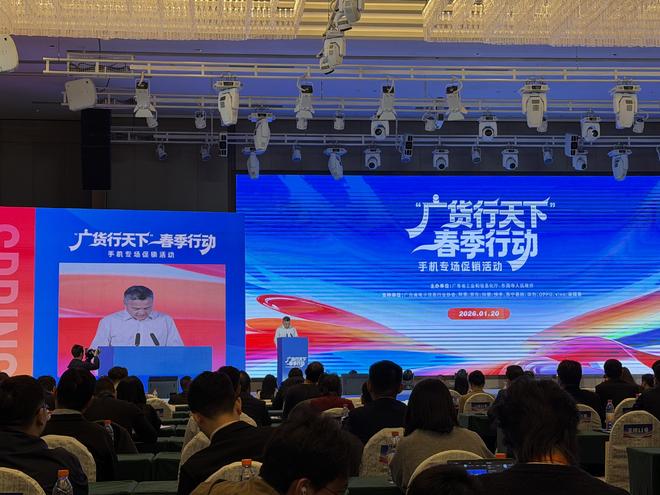
Group 1 - Guangdong has maintained the largest mobile phone industry scale in China for 35 consecutive years and plans to accelerate the development of high-quality action plans for AI terminals [2][3] - The "Guangdong Goods Go Global" spring promotional event showcased 36 AI mobile phones from leading companies like Huawei, vivo, OPPO, Honor, ZTE, and TCL, along with over 2000 products from more than 700 industry chain enterprises [1][2] - Honor's government affairs director highlighted the importance of understanding consumer psychology and the demand for "self-satisfying consumption" in the current market [1] Group 2 - In 2024, Guangdong's mobile phone production is expected to reach 683 million units, accounting for 40.9% of the national total, with one in three mobile phones sold globally originating from Guangdong [3] - Dongguan is identified as the core area of Guangdong's mobile phone industry, contributing 28.6% of the province's mobile phone production in 2024, and hosts major companies like Huawei, OPPO, and vivo [3] - By the third quarter of 2025, the combined market share of vivo, Huawei, and OPPO in the domestic market is projected to reach 47%, indicating strong market cohesion [3]
洁美科技(002859):纵横一体化构建护城河 多业务协同拓展持续打开成长空间
Xin Lang Cai Jing· 2026-01-14 12:30
Core Viewpoint - The company, Zhejiang Jiemai Electronic Technology Co., Ltd., is a leading enterprise in electronic packaging materials and has maintained a high market share and profitability through a vertical and horizontal integration strategy, achieving a revenue of 1.53 billion yuan in the first three quarters of 2025, a year-on-year increase of 13.7% [1]. Group 1: Business Overview - The company was established in April 2001 and specializes in the research, production, and sales of electronic packaging materials and electronic-grade film materials, including paper carrier tape, electronic adhesive tape, plastic carrier tape, release film, cast film, and IC trays [1]. - The company has maintained a gross margin of over 30% and has built a strong customer base due to the high recognition of its products [1]. Group 2: Market Demand - The global digitalization process has accelerated, driven by policies such as "new infrastructure" and "old-for-new" electronic product exchanges, leading to increased demand in markets like 5G networks, cloud computing, data centers, and electric vehicles [2]. - For instance, the demand for MLCC in AI servers is expected to be eight times that of traditional servers, with an annual growth rate exceeding 30% in the AI sector by 2030 [2]. Group 3: Production Capacity and Optimization - The company is expanding its production capacity both domestically and internationally to meet the surging demand for carrier tape driven by downstream electronic components [3]. - New production bases are being established and existing ones are being upgraded, including a new factory in Malaysia and a technology upgrade project in Jiangxi, which is expected to enter trial production by the end of 2025 [3]. Group 4: Strategic Acquisitions - The acquisition of Ruzhen Technology at the end of 2024 is expected to enhance the company's R&D and manufacturing capabilities in new energy materials, creating synergies and expanding market reach [4]. - Ruzhen Technology has already established deep collaborations with leading battery companies and has become a key supplier of composite aluminum foil for lithium batteries, receiving bulk orders from major clients [4]. Group 5: Financial Projections - The company is projected to achieve net profits of 207 million yuan, 359 million yuan, and 521 million yuan for the years 2025 to 2027, with corresponding price-to-earnings ratios of 61.53, 35.56, and 24.47 times [4].
开源证券:AI终端开启2026年新周期 聚焦苹果华为及光学PCB等环节
Xin Lang Cai Jing· 2026-01-13 06:28
Core Viewpoint - The report from Kaiyuan Securities highlights that the AI terminal market is set to enter a new cycle in 2026, with a focus on key players like Apple and Huawei, as well as advancements in optical PCB technology [1][5]. Group 1: Industry Performance - The consumer electronics and components industry is expected to see significant performance improvements in 2025, with the PCB sector leading in growth [1][5]. - The overall electronic sector is projected to perform strongly, driven by rapid iterations and bulk shipments of AI products, alongside new product launches and government subsidies boosting demand in the consumer electronics sector [1][5]. - Traditional categories such as smartphones, PCs, and tablets are maintaining stable growth, while AI glasses and AI servers are experiencing rapid growth trends [1][5]. Group 2: AI Terminal Focus - Key investment lines for 2026 include Apple's ecosystem, Huawei's HarmonyOS, AI glasses, and OpenAI's hardware [2][6]. - Apple is positioned as a leader in the global consumer electronics supply chain, with plans to launch new products including the iPhone 17E, foldable iPhone, and AI glasses in 2026, entering a three-year innovation cycle [2][6]. - Huawei is expected to continue releasing new foldable devices in 2025, with its HarmonyOS 6 significantly enhancing user experience through AI capabilities, and increasing domestic component sourcing likely to boost sales [2][6]. - The AI glasses market is anticipated to grow significantly, with companies like Meta driving sales, positioning AI glasses as potential high-volume products [2][6]. - OpenAI's entry into terminal hardware is expected to create popular native AI hardware products from the perspective of AI model manufacturers [2][6]. Group 3: Component Upgrades - Focus areas for component upgrades include optical systems, batteries and fast charging, thermal management, and structural components [3][7]. - Enhanced optical hardware modules are crucial for AI terminals, with ongoing upgrades in mobile optical performance from both Apple and Android manufacturers [3][7]. - The demand for battery life is increasing due to enhanced AI terminal performance, leading to the adoption of new battery technologies such as steel shell batteries and solid-state batteries [3][7]. - Thermal management challenges are intensifying, with Apple expected to implement VC heat spreaders in more models, while Android manufacturers are exploring liquid cooling and micro-fan solutions [3][7]. - Upgrades in display technology are focusing on durability and lightweight designs, with advanced manufacturing techniques like 3D printing and liquid metal processes expected to penetrate more consumer electronics components [3][7]. Group 4: Resonance of AI Computing and Components - The synergy between AI computing and AI terminals is expected to drive an upward cycle for PCBs and passive components [4][8]. - As SoC performance improves and internal integration in smartphones increases, PCBs are evolving towards higher density and precision, with a greater use of flexible printed circuits in foldable devices [4][8]. - The iteration of AI chips is continuously raising the specifications and demand for PCBs, with corresponding upgrades in upstream materials [4][8]. - The increase in power consumption of AI servers is prompting a shift in data center power supply architectures towards high voltage direct current (HVDC) and solid-state transformer (SST) systems, leading to a rise in the use and specifications of various passive components [4][8].

开源证券:消费电子及元器件 AI终端开启产业链升级新周期
智通财经网· 2026-01-13 02:26
Core Viewpoint - The report from Kaiyuan Securities highlights that by 2026, AI terminals (including Apple, Huawei, AI glasses, and OpenAI hardware) and computing power demand will drive new growth, focusing on opportunities in the upgrade of core components such as optics, batteries, thermal management, and structural processes [1]. Industry Overview - The consumer electronics and components industry is expected to see significant performance improvement in 2025, with the PCB sector leading in growth [2]. - The overall electronic sector is projected to perform strongly, driven by rapid iteration and bulk shipments of AI products, with traditional categories like smartphones and PCs maintaining stable growth while AI glasses and servers exhibit rapid growth [2]. AI Terminals - Investment focus for 2026 includes four main lines: 1. **Apple Supply Chain**: Apple is set to enter a new upgrade cycle starting in 2025, with plans to launch new products including the iPhone 17E and AI glasses, which will enhance AI functionalities [3]. 2. **Huawei HarmonyOS Supply Chain**: Huawei continues to innovate in foldable devices and its HarmonyOS 6 will support various AI capabilities, potentially increasing sales as domestic component sourcing improves [3]. 3. **AI Glasses Supply Chain**: With rising sales of AI glasses led by companies like Meta, this product category is expected to achieve significant sales volumes [3]. 4. **OpenAI Hardware Supply Chain**: OpenAI's entry into hardware aims to create popular native AI devices [3]. Component Upgrades - Key areas for component upgrades include: 1. **Optics**: Enhanced visual perception capabilities in AI terminals require stronger optical hardware, with ongoing upgrades in mobile camera performance [4]. 2. **Batteries and Fast Charging**: New technologies are being applied to meet the higher demands for battery life and charging speed in AI terminals [4]. 3. **Thermal Management**: Increased thermal management challenges are leading to the adoption of advanced cooling solutions in devices [4]. 4. **Structure and Processes**: Upgrades in display technology and manufacturing processes are becoming essential for new consumer electronics [4]. Component Market Outlook - The resonance between AI computing power and AI terminals is expected to sustain an upward cycle for PCBs and passive components: 1. **AI Terminal Side**: The performance upgrades in SoCs and increased integration in smartphones are driving the evolution of PCBs towards higher density and precision [5]. 2. **AI Computing Side**: Continuous iteration of AI chips is increasing the demand for upgraded PCB specifications and quantities, with a shift in power supply architecture in data centers [5]. - Beneficiaries of this trend include companies such as Industrial Fulian, Luxshare Precision, GoerTek, and others [5].
蓝思科技早盘涨超6% 公司创新研发航天级超薄柔性玻璃UTG光伏封装
Zhi Tong Cai Jing· 2026-01-12 01:45
Core Viewpoint - Lens Technology (300433)(06613) has seen a significant stock increase, attributed to its innovative presentation at CES 2026, showcasing a comprehensive AI hardware ecosystem focused on aerospace and intelligent applications [1] Group 1: Stock Performance - Lens Technology's stock rose over 6% in early trading, currently up 4.24% at HKD 30.16, with a trading volume of HKD 211 million [1] Group 2: Product Innovation - The company presented its ultra-thin flexible glass (UTG) photovoltaic packaging, which has become a focal point in the low Earth orbit satellite internet sector [1] - The UTG glass has a thickness ranging from 30μm to 50μm and can bend to a radius of 1.5mm, addressing the evolution needs of flexible solar wings in low Earth orbit satellites [1] - The UTG was developed in collaboration with glass substrate manufacturers, featuring special glass formulations and surface treatments to enhance resistance to atomic oxygen erosion and UV aging [1] Group 3: Technological Advancements - Lens Technology demonstrated its chemical strengthening and nano-coating technologies for foldable screens, showcasing their adaptability to aerospace environments, particularly for rocket launch vibrations and long-term reliability in space [1]

港股异动 | 蓝思科技(06613)早盘涨超6% 公司创新研发航天级超薄柔性玻璃UTG光伏封装
智通财经网· 2026-01-12 01:40
Core Viewpoint - Lens Technology (06613) has seen a significant stock increase, rising over 6% in early trading, attributed to its innovative presentations at CES 2026, particularly in the aerospace and AI hardware sectors [1] Group 1: Company Developments - Lens Technology showcased a comprehensive AI hardware ecosystem at CES 2026, covering five key areas: aerospace, embodied intelligence, AI data centers, AI terminals, and smart cockpits [1] - The company introduced its aerospace-grade ultra-thin flexible glass (UTG) photovoltaic packaging, which has become a focal point in the low Earth orbit satellite internet sector [1] - The UTG glass has a thickness ranging from 30μm to 50μm and can be bent to a radius of 1.5mm, addressing the evolution needs of low Earth orbit satellite solar wings from rigid panels to rollable and foldable flexible solar wings (ROSA structures) [1] Group 2: Technological Innovations - The UTG was developed in collaboration with glass substrate manufacturers, utilizing a special glass formula and surface treatment process to enhance its resistance to atomic oxygen erosion and UV aging [1] - Lens Technology also demonstrated its advancements in chemical strengthening and nano-coating technologies for foldable screens, showcasing their adaptability to the harsh conditions of rocket launches and long-term reliability in space environments [1]
对话刘飞:官宣“罗永浩+AI终端”背后,谷小酒为何连续增长?
Sou Hu Cai Jing· 2026-01-08 07:18
Group 1 - The core objective of the company is to serve 100 million consumers and establish 2 million AI terminals over the next five years, positioning itself as a benchmark in the digitalization and intelligence of the Chinese liquor industry [2][14] - The company has achieved significant growth, with a target of over 10 million bottles shipped in 2025, and a fivefold increase in the opening of S series products [3][8] - The company has accumulated 10 million active users through its online operations, which serve as a solid foundation for partnerships and collaborations [5][7] Group 2 - The company is shifting its strategy from online to offline, focusing on expanding its presence in key markets such as Anhui, Jiangsu, and Zhejiang, with a goal of covering 200 cities and signing over 200 distributors [8][9] - The collaboration with well-known entrepreneur Luo Yonghao aims to enhance brand visibility and drive sales through his influence [11] - The introduction of the "AI terminal" concept integrates online and offline strategies, utilizing the "Flash Sales Guest" system to empower distributors and enhance sales efficiency [12][14] Group 3 - The company emphasizes the importance of digitalization and information technology as core competitive tools in the liquor industry, aiming to improve operational efficiency and customer management [7] - The company plans to leverage AI to enhance its operational management and has already distributed 1.2 million rewards through its systems [14] - The evolution from an "internet liquor" model to a comprehensive offline strategy reflects the company's commitment to innovation and traditional practices coexisting in the liquor industry [14]