ESG(环境

Search documents
ICIS“2026年全球最具影响力化工领袖40强”榜单出炉
Quan Jing Wang· 2026-01-16 01:42
Core Viewpoint - The ICIS "Top 40 Most Influential Chemical Leaders Globally by 2026" list recognizes CEOs and senior executives who have made significant positive impacts on their companies and the chemical industry [1] Group 1: Rankings and Notable Leaders - Dr. Sultan Ahmed Al Jaber, CEO of Abu Dhabi National Oil Company (ADNOC), ranks first on the list [1] - Abdulrahman Al-Fageeh, CEO of Saudi Basic Industries Corporation (SABIC), is in second place [1] - Jim Fitterling, CEO of Dow, holds the third position [1] - Chinese chemical leaders include Xiang Jiong Jiong, General Manager of Rongsheng Petrochemical, ranked 16th; Liao Zengtai, Chairman of Wanhua Chemical, ranked 17th; and Dai Houliang, Chairman of China National Petroleum Corporation, ranked 18th [1] Group 2: Evaluation Criteria - The selection criteria for the rankings include five dimensions: project management capability, profitability and shareholder value creation, industry advocacy, mergers and acquisitions and portfolio management, as well as innovation and ESG (Environmental, Social, and Governance) performance [1]



广汽集团入选“2025中国企业ESG百强”榜单
Xin Lang Cai Jing· 2026-01-13 05:40
Group 1 - The core viewpoint of the article emphasizes the growing importance of ESG (Environmental, Social, and Governance) as a key metric for high-quality corporate development and a vital link between corporate value and social value [1][2] - The "2025 China ESG Top 100" list was released by Sina Finance, evaluating over 5,000 A-share listed companies and mainland companies listed in Hong Kong using 18 industry-specific ESG evaluation models and over 150 ESG indicators [1][9] - The list serves as a benchmark for industry development and provides valuable decision-making references for investors [1][2] Group 2 - GAC Group was recognized for its significant contributions in the ESG field, ranking 56th on the "2025 China ESG Top 100" list, highlighting its commitment to sustainable development practices [2][7] - The publication of the list is seen as an authoritative acknowledgment of the sustainable practices of the listed companies and aims to promote the core values of ESG across the industry [2][9] - Companies are encouraged to integrate ESG principles into their strategic planning, operations, and supply chain collaboration to achieve a balance between commercial and social value [2][10]



能源矿产 | 2025年全球煤炭上市公司财报解码:周期之巅与价值重塑
Sou Hu Cai Jing· 2025-12-29 10:16
Core Insights - The global coal industry has transitioned from a peak profit phase to a new normal characterized by value reconstruction, where profit elasticity and capital operations have become key to success in a differentiated landscape [1][2]. Industry Overview - The global coal mining industry is experiencing a significant economic cycle driven by external shocks and supply-demand mismatches from 2020 to 2024, with a notable profit center established above pre-pandemic levels, despite facing new challenges of profit contraction [2]. - The industry reached a record profit peak of $52.4 billion in 2022, driven by geopolitical conflicts and a surge in international coal prices, following a brief downturn in 2020 due to the pandemic [2][3]. - The average net profit margin improved dramatically from a loss of $7.2 billion in 2020 to a peak of 17.27% in 2022, indicating a fundamental reversal in profitability [3]. Profitability and Efficiency - The coal industry's net profit is projected to normalize at $25.7 billion in 2024, still significantly higher than pre-pandemic levels, reflecting a structural elevation in overall profitability [3]. - The average net profit margin is expected to decline to 7.66% by 2024, indicating a departure from the peak profit phase and highlighting the cyclical nature of profitability [5]. Global Landscape - Asia, particularly China, India, and Indonesia, dominates the global coal industry, with these countries playing pivotal roles in shaping the market dynamics [8]. - China serves as the largest producer and consumer, ensuring energy security with stable profitability, while India experiences robust domestic demand growth, achieving an average net profit margin of 26.69% [8]. - Indonesia and Australia benefit significantly from international coal price surges, with average net profit margins of 19.05% and 15.64%, respectively [8]. Company Comparisons - Major players like China Shenhua and Indian Coal exhibit strong integrated advantages, showcasing resilience and stable profitability amid cyclical fluctuations [11]. - Emerging companies, such as Stanmore in Australia, have capitalized on acquisition opportunities during the cycle, achieving a remarkable compound annual growth rate of 118.56% [11]. - Export-oriented firms in Indonesia, like Golden Energy, have maximized profits from price elasticity, with average returns on equity reaching 71.67% [11]. Strategic Recommendations - The coal industry must transition from being mere fuel suppliers to comprehensive energy service providers, focusing on enhancing energy security and integrating renewable energy solutions [17][20]. - Companies should extend their value chains by developing high-end coal chemical products and exploring synergies with renewable energy projects [20]. - Emphasizing ESG management can transform perceived costs into competitive advantages, enabling firms to secure lower financing costs and enhance their public image [21]. - Maintaining prudent capital discipline is essential, focusing investments on core business areas and ensuring a healthy balance sheet to navigate future economic cycles [22].

王忠民:AI算力的尽头是电力,电力尽头是绿电
Zhong Guo Xin Wen Wang· 2025-12-16 08:59
Core Insights - The forum emphasized the importance of green electricity as a fundamental requirement for AI capabilities, highlighting that the future of AI is closely tied to environmental sustainability [1][5] - The discussion pointed out that the end goal of AI is aligned with ESG (Environmental, Social, and Governance) principles, indicating a shift towards zero-carbon initiatives in various sectors [3][7] Group 1: AI and Energy - AI's computational power is fundamentally dependent on electricity, which in turn must transition to green energy sources to meet ESG goals [3][7] - The evolution of data centers from water cooling to liquid cooling is a significant advancement in reducing energy consumption and resource use [3][7] Group 2: Open Source and CVC - The concept of CVC (Corporate Venture Capital) is introduced as a means to invest in startups using open-source platforms, allowing for minimal initial costs for entrepreneurs [4][8] - The marginal cost of development approaches zero when utilizing open-source resources, enabling widespread access and innovation [4][8] - The potential for innovation costs to be nearly zero is highlighted, suggesting a transformative impact on the entrepreneurial landscape in the AI era [4][8]
到达举牌线仍不停手,长城人寿遭警示!频频举牌背后盈利承压
Xin Lang Cai Jing· 2025-12-11 01:17
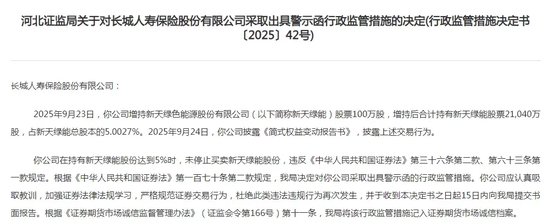
Core Viewpoint - Changcheng Life Insurance has received an administrative warning from the Hebei Securities Regulatory Bureau for failing to cease trading shares of Xintian Green Energy after reaching a 5% stake, violating relevant regulations [1][3][5]. Group 1: Regulatory Actions - On December 9, the Hebei Securities Regulatory Bureau issued a warning letter to Changcheng Life Insurance for violating securities laws during its share acquisition of Xintian Green Energy [1][3]. - The company increased its holdings in Xintian Green Energy by 1 million shares on September 23, bringing its total to 21.04 million shares, which is 5.0027% of the total share capital, thus reaching the threshold for disclosure [1][5]. - The warning has been recorded in the securities and futures market integrity file, and the company is required to submit a written report to the regulatory bureau within 15 days [6]. Group 2: Financial Performance - Changcheng Life Insurance's third-quarter performance showed a stark contrast, with investment returns improving year-on-year, while insurance business revenue and net profit both declined significantly, with net profit dropping by 70.92% [1][9]. - The company's insurance business revenue for the first three quarters was 21.455 billion yuan, down 5.92% year-on-year, while net profit was 156 million yuan, a decrease of 70.92% [9]. - Despite the challenges in profitability, the company reported an investment return rate of 4.65% and a comprehensive investment return rate of 6.07%, both of which increased year-on-year [9]. Group 3: Capital and Solvency - As of the end of the third quarter, Changcheng Life Insurance's total assets reached 165.916 billion yuan, a 21% increase from the beginning of the year [9]. - The company's core and comprehensive solvency adequacy ratios were 102.21% and 153.84%, respectively, both showing a decline from the previous quarter [10]. - The core tier one capital decreased by 17% to 11.329 billion yuan, with a slight forecasted increase to 11.576 billion yuan for the next quarter [10].
中源协和细胞基因工程股份有限公司 十一届二十三次临时董事会会议决议公告
Zhong Guo Zheng Quan Bao - Zhong Zheng Wang· 2025-11-28 00:33
Core Viewpoint - Zhongyuan Union Cell Gene Engineering Co., Ltd. has decided to cancel its supervisory board and amend its articles of association, with the proposal requiring approval from the shareholders' meeting [1][38]. Group 1: Board Meeting Resolutions - The board meeting held on November 26, 2025, approved the proposal to cancel the supervisory board with a unanimous vote of 9 in favor [1]. - The board also passed several amendments to governance documents, including the rules for shareholder meetings and board meetings, all requiring shareholder approval [4][5][6]. Group 2: Governance Structure Changes - The supervisory board's functions will be transferred to the board's audit committee, and the corresponding rules for the supervisory board will be abolished [16][39]. - The amendments to the articles of association and governance documents are aimed at aligning with the latest legal regulations and improving operational efficiency [39]. Group 3: Upcoming Shareholder Meeting - A second extraordinary general meeting of shareholders is scheduled for December 15, 2025, to discuss and vote on the proposed changes [20][21]. - The meeting will utilize both on-site and online voting methods, ensuring broader participation from shareholders [21][22].

寻找标杆创新案例,“2025食品饮料行业创新案例”征集正式启动
Sou Hu Cai Jing· 2025-11-18 08:58
Core Insights - The annual "Food and Beverage Forum" by Daily Economic News has evolved from a ranking mechanism to a focus on "innovation cases," emphasizing the value and practical significance of innovation in the food and beverage industry [1][3] - The Chinese food and beverage market reached a scale of 284.54 billion yuan in the first half of 2025, with a year-on-year sales growth of 5.8% and a volume increase of 7.8%, indicating a steady growth trend [1][6] - The industry is experiencing nuanced changes, with trends like "pre-prepared dishes" showing a compound annual growth rate of over 20%, despite consumer concerns about safety and flavor authenticity [1][2] Industry Trends - Consumer demands are shifting towards healthier options, with terms like low-sugar, low-calorie, and high-protein becoming essential in daily life [2] - There is a growing interest in clean ingredient lists, with many new brands using their ingredient transparency as a value proposition to influence consumer purchasing decisions [2] - The food and beverage industry is moving away from reliance on single blockbuster products, focusing instead on multiple value dimensions and breakthroughs [2] Innovation Case Collection - The "2025 Food and Beverage Industry Innovation Case Collection" aims to recognize outstanding innovative practices from the past year, focusing on product innovation, brand marketing innovation, and ESG (Environmental, Social, and Governance) practices [3][4] - The collection is open to all industry stakeholders, including brand owners, manufacturers, and supply chain entities, ensuring that all innovations contributing to industry advancement are acknowledged [4][6] - The initiative seeks to document the innovation trajectory of the industry and share successful experiences to shape the future landscape of the food and beverage sector [3][8]

中国环保债券创新高,谋求绿色主导权
3 6 Ke· 2025-11-10 07:56
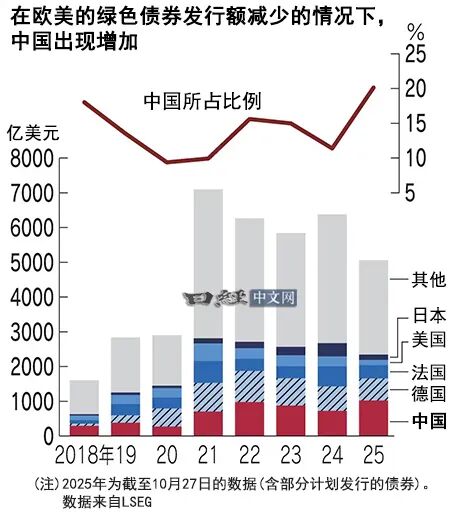
Core Insights - China's green bond issuance reached a record high of $101.8 billion by late October 2025, accounting for 20% of the global total, positioning China as the leader in this sector [1][4] - The increase in green bond issuance in China is part of a national strategy to promote economic growth through green industries amid a domestic economic slowdown [1][4] - The global green bond issuance totaled approximately $506 billion by late October 2025, showing an 11% year-on-year decline, with China leading the way [1][4] Group 1: Green Bond Issuance - China's green bond issuance increased by 92% year-on-year, surpassing the previous record of $97.7 billion set in 2022 [1][4] - Major financial institutions in China, such as Agricultural Bank of China and Industrial Bank, have issued significant amounts of green bonds, with the former issuing $60 billion in total [2][4] - The issuance of green bonds is primarily driven by financial institutions and state-owned enterprises in the energy sector [2][4] Group 2: Economic Context - The ongoing downturn in the real estate sector has contributed to a slowdown in China's economic growth, yet green bond issuance remains robust [4][5] - China's commitment to green industries is seen as a stable pillar for economic growth, contrasting with the fluctuating policies in countries like the U.S. [4][5] - China is projected to account for 48% of global photovoltaic capacity by 2024, reinforcing its position in renewable energy [4][5] Group 3: Regulatory Developments - In 2021, China excluded coal-related projects from its green bond support project catalog, aligning with international standards [5][6] - The Chinese government is actively working to attract foreign investment in green bonds, as evidenced by the issuance of its first green sovereign bond in London [5][6] - The standards for China's green bonds are increasingly aligning with international benchmarks, enhancing credibility in the global market [5][6] Group 4: International Implications - China's efforts to establish "green leadership" are being met with caution from Western countries, which have begun imposing tariffs on Chinese solar panels and electric vehicles [6] - As the largest emitter of greenhouse gases, China's actions in the green bond market are critical for global decarbonization efforts [6]
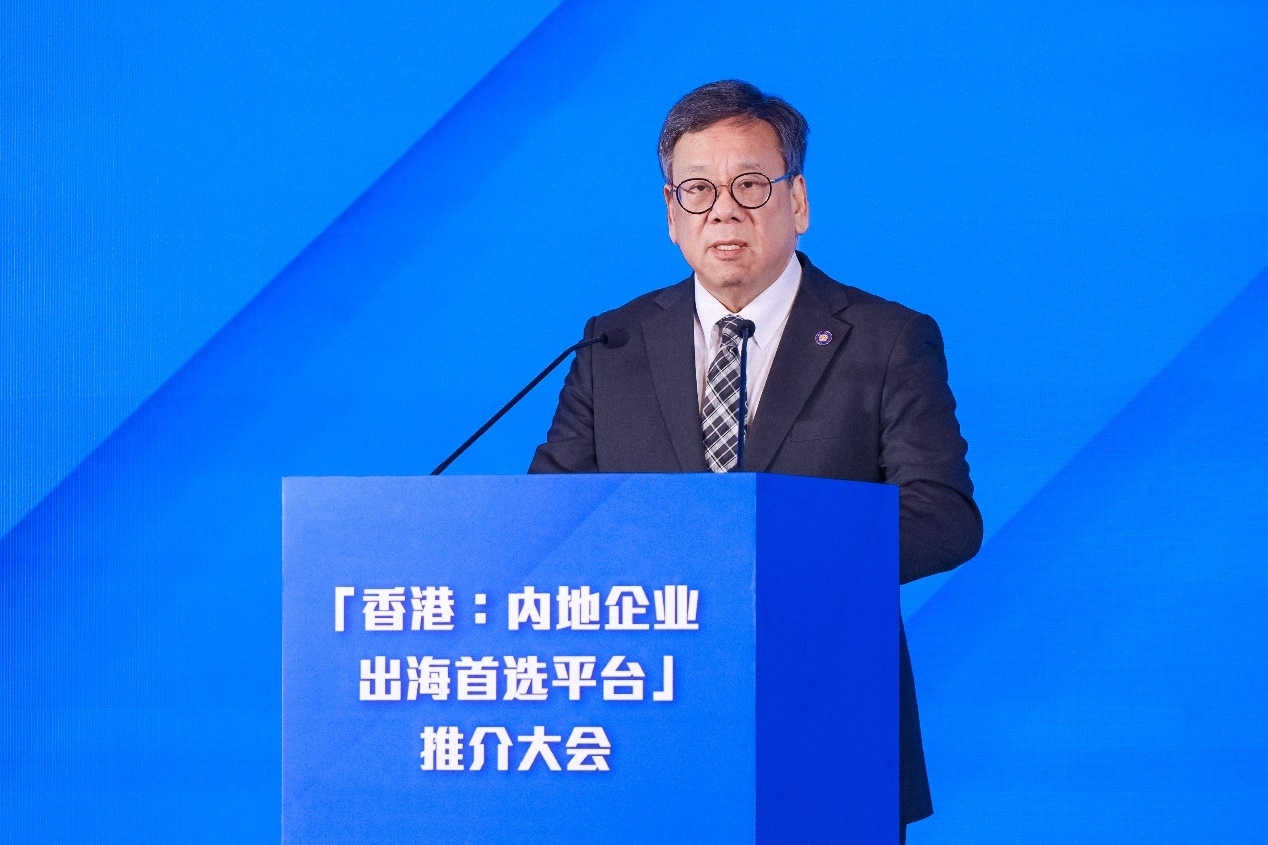
香港内地企业出海专班有何特点,丘应桦给出三点看法
Feng Huang Wang Cai Jing· 2025-11-07 01:43
Core Points - The 8th China International Import Expo (CIIE) opened on November 5 in Shanghai, highlighting Hong Kong's role as a "super connector" and "super value creator" for mainland enterprises looking to expand internationally [1] - The Hong Kong Special Administrative Region (HKSAR) government, in collaboration with the Hong Kong Trade Development Council, hosted a promotional event titled "Hong Kong: The Preferred Platform for Mainland Enterprises Going Global" on November 6 [1] Group 1 - The Secretary for Commerce and Economic Development of HKSAR, Edward Yau, emphasized the establishment of a "Mainland Enterprises Going Global Task Force" to support mainland companies in expanding their international business through Hong Kong [3] - The task force aims to create a high-speed, effective, and unprecedented one-stop support platform for going global by coordinating resources across various sectors [4] Group 2 - The task force will focus on three key characteristics: expanding networks by integrating Hong Kong's global connections, promoting win-win cooperation through cross-sector collaboration, and providing practical support tailored to the needs of enterprises [4] - Specific support services offered will include tax, legal, financing, testing and verification, ESG (Environmental, Social, and Governance), and intellectual property protection to assist mainland enterprises in connecting with overseas markets from Hong Kong [4]
云锋金融战略入股加密货币人寿保险公司Anthea
Mei Ri Jing Ji Xin Wen· 2025-10-15 13:49
Core Viewpoint - Yunfeng Financial has strategically invested in Anthea, a global cryptocurrency life insurance company, to explore blockchain-based insurance products, including cryptocurrency life insurance and digital asset user-focused solutions [1][6]. Group 1: Strategic Investment and Collaboration - Yunfeng Financial announced a strategic partnership with Anthea to develop blockchain-based insurance products, marking a significant innovation in the financial industry [1][6]. - The collaboration aims to digitize traditional insurance policies and create efficient, forward-looking insurance business models [1][6]. - The investment in Anthea will facilitate the launch of the world's first life insurance product priced in Ether (ETH) [6]. Group 2: Financial Technology and Digital Assets - Yunfeng Financial has made significant moves in the Web 3.0 space, including the purchase of 10,000 ETH for approximately $44 million to enhance its strategic reserve assets [4]. - The company plans to diversify its strategic reserve to include other mainstream digital assets like Bitcoin (BTC) and Solana (SOL) [5]. - The funds raised from a recent share placement will be used to launch comprehensive virtual asset trading services and related investment management services [5]. Group 3: Industry Trends and Future Directions - The partnership between traditional financial institutions and cryptocurrency-native insurance platforms is seen as a step towards addressing compliance and trust issues in the digital asset insurance sector [6][7]. - Experts predict that the development of blockchain insurance products will evolve through three stages, starting with cryptocurrency-related insurance and potentially leading to a comprehensive digital asset lifecycle protection system [7]. - The integration of blockchain technology is expected to enhance data transparency, automate underwriting and claims processes, and facilitate cross-institutional collaboration in the insurance ecosystem [9].