
量化策略

Search documents
建立“股债对冲+动态再平衡”机制
Zhong Guo Zheng Quan Bao· 2025-09-07 20:52
Core Insights - The recent market sentiment has improved, leading to increased investor interest in A-shares and "fixed income +" products due to declining bank deposit rates [1] - Taiping Fund launched a new "fixed income +" product, Taiping Jiayu Bond, managed by fund managers Han Cong and Zhang Ziquan, who have previously collaborated on public fund products [1][3] Product Overview - Taiping Jiayu Bond is a mixed secondary bond fund focusing on absolute returns, with a quantitative enhancement strategy primarily based on the CSI A500 index [1][2] - The fund aims to control volatility in the equity portion while pursuing stable enhancements, leveraging the CSI A500's broad industry representation [1][2] Performance Metrics - The Taiping CSI A500 Index Enhancement product, managed by Zhang Ziquan, has achieved over 11% return since its inception by August 21, while another product, Taiping CSI 1000 Index Enhancement A, has exceeded 25% return this year, outperforming its benchmark by approximately 4 percentage points [2] - The collaborative management of Taiping Jiayu Bond has resulted in strong performance metrics, with returns ranking in the top half of its category over various time frames [3] Investment Strategies - The equity portion employs a multi-factor alpha model and risk control model to identify mispricing opportunities, while the fixed income portion focuses on high credit quality bonds and liquidity management [2][4] - Han Cong emphasizes a flexible approach to bond investments, aiming for positive annual returns and strict control of maximum drawdown [2][4] Market Outlook - Both fund managers express optimism about the A-share market, citing healthy market conditions and increasing retail investor participation [3][4] - Despite challenges in the bond market, Han Cong believes there are significant capital gain opportunities, particularly with potential interest rate declines [4]
量化基金限购潮起,短期量化模型助力捕捉超额收益
Sou Hu Cai Jing· 2025-09-04 00:28
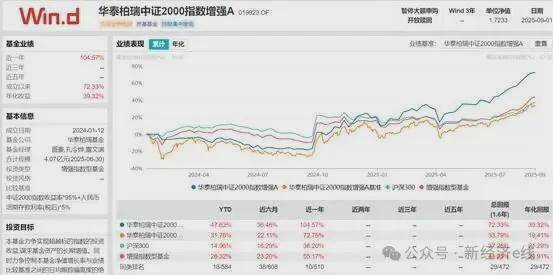
Group 1 - The core phenomenon in the quantitative fund sector is the recent wave of subscription limits imposed by multiple fund companies, driven by market style changes and the strong performance of quantitative funds [1] - As of September 1, only 14 out of over 500 quantitative funds established for more than a year reported negative returns, with an average return of approximately 52%, highlighting the attractiveness of these funds to investors [1][2] - The focus of quantitative fund companies this year has shifted from scale expansion to risk control and sustainable strategies, with stricter risk exposure management for index-enhanced products [1] Group 2 - The Huatai-PB CSI 2000 Index Enhanced Fund achieved a remarkable return of 104.57% over the past year, significantly outperforming its benchmark return of 31.82%, leading to an increase in the number of holders from 12,200 to 33,700 [2] - Huatai-PB's success in the quantitative field is attributed to its proactive development of short-term quantitative models tailored for small-cap indices, capitalizing on the significant rise of the CSI 2000 Index, which increased by 81.26% [4] - The company has established a clear and structured quantitative product matrix, offering a variety of enhanced products across different market segments, providing investors with diverse investment tools [4] Group 3 - The performance of various Huatai-PB funds demonstrates their ability to consistently exceed benchmark returns, with products like Huatai-PB Quantitative Leading and Huatai-PB Quantitative Selection showing strong stability and sustainability over the past decade [4][5] - In a volatile market, quantitative funds are becoming a crucial choice for investors, as they combine index benchmark returns with the potential for excess returns, representing a disciplined and rational investment approach [5]

硬科技投资再添高弹性利器,景顺长城科创综指增强正在发行
Xin Lang Ji Jin· 2025-09-03 09:02
Group 1 - The core viewpoint of the news is that the recent performance of the STAR Market Index, which has risen by 43.30% year-to-date, highlights the strength of "hard technology" sectors such as AI, semiconductors, and optical modules, attracting significant market attention [1] - The Invesco Great Wall STAR Market Index Enhanced Fund is being launched to effectively track the index while pursuing higher excess returns through quantitative strategies [1] - The STAR Market Index covers all non-ST listed companies on the STAR Market, with a sample size of 569 and a market capitalization coverage of 96%, indicating substantial potential for enhancement [1] Group 2 - The Invesco Great Wall STAR Market Index Enhanced Fund will utilize a unique quantitative system that includes excess return models, risk models, and trading cost models to evaluate asset pricing, control risks, and optimize trading [2] - The introduction of AI into the quantitative strategies has improved the model's adaptability to market conditions, enhancing data processing, price prediction, and risk management [2] - The Invesco Great Wall ChiNext Index Enhanced Fund, which employs a similar strategy, has achieved a net value growth rate of 53.82% since May 1, 2023, outperforming its benchmark by 23.75% [2] Group 3 - The Invesco Great Wall quantitative team has developed a product matrix covering major A-share indices, including enhanced funds tracking the CSI 300, CSI 500, and CSI A500 indices, as well as those focused on technology innovation [3]
2000亿公募,副总转任高级专员!
Zhong Guo Ji Jin Bao· 2025-09-02 14:24
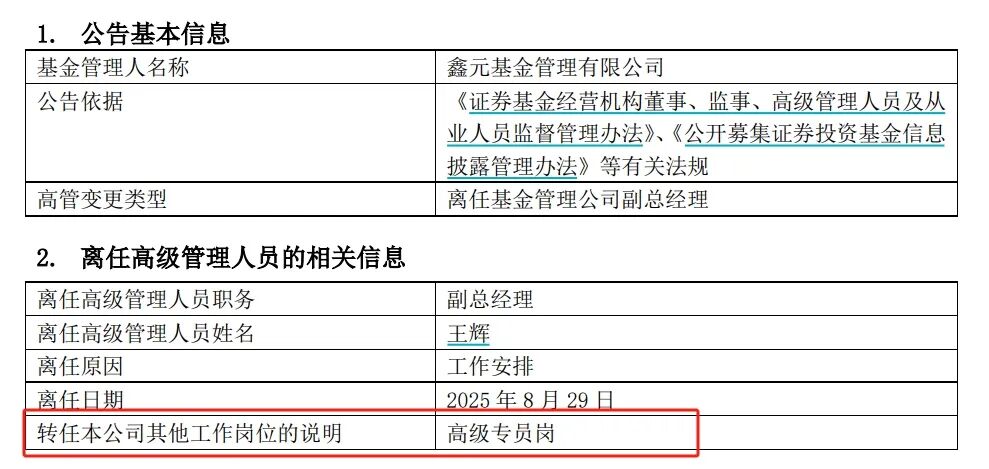
Group 1 - Wang Hui, the Deputy General Manager of Xinyuan Fund, has transitioned to a Senior Specialist position due to work arrangements [1][2][4] - Wang Hui has been with Xinyuan Fund since its establishment in August 2013, previously serving as Chief Marketing Officer and Assistant General Manager before becoming Deputy General Manager in April 2016 [4][5] - As of the end of Q2 2023, Xinyuan Fund's total asset scale reached 211.78 billion yuan, with over 60% in bond funds and over 30% in money market funds [1][6][9] Group 2 - Xinyuan Fund's asset net value has significantly increased from 89.70 billion yuan in mid-2022 to 211.78 billion yuan by mid-2023, improving its industry ranking from 55th to 36th [7][6] - The fund currently manages 80 products, with 54 bond products totaling 136.81 billion yuan, accounting for 64.60% of the total scale [9][6] - The growth in management scale is primarily driven by the expansion of fixed-income products, with bond fund scale increasing by 76.73 billion yuan and money market fund scale increasing by 44.05 billion yuan since mid-2022 [9][10] Group 3 - In the second half of the year, Xinyuan Fund has launched 9 new funds, including 1 FOF, 3 mixed funds, and 5 index equity funds [10] - The company aims to enhance its passive investment capabilities while consolidating its active management, expanding its product line to include various types of index products and strategies [10] - Xinyuan Fund is also exploring QDII investment tools and alternative asset options to diversify its asset allocation strategy [10]
【公募基金】市场高位小幅回调整固,不改上行趋势——公募基金量化遴选类策略指数跟踪周报(2025.08.31)
华宝财富魔方· 2025-09-02 09:22
Core Viewpoint - The A-share equity market is experiencing high-level fluctuations, with the Shanghai Composite Index showing a 0.84% increase this week, indicating a resilient market despite short-term adjustments [3][4]. Group 1: Market Performance - The A-share market remains strong, with the Shanghai Composite Index quickly rebounding after a brief correction near the 3900-point mark [3]. - The domestic equity fund strategy index also recorded gains this week, with low-volatility strategies underperforming in terms of excess returns [3][4]. Group 2: Fund Strategy Insights - The preferred fund strategies are ranked as follows: stock-enhanced strategies > overseas equity strategies > evergreen low-volatility strategies [4]. - The stock-enhanced fund strategy achieved a return of 1.389% this week, while the evergreen low-volatility strategy recorded a return of 1.249% [5]. - The cash-enhanced fund strategy outperformed the benchmark with a return of 0.027%, accumulating a total excess return of 0.481% since its inception [5]. Group 3: Overseas Market Dynamics - The overseas equity allocation fund strategy recorded a return of 0.329% this week, with a focus on the recovery of the U.S. stock market following tariff negotiations and strong earnings reports from tech companies [6]. - The U.S. economy shows no significant signs of recession, and the ongoing technological advancements are expected to drive future growth in the U.S. stock market [6]. Group 4: Fund Composition and Strategy - The evergreen low-volatility fund strategy has demonstrated strong stability and lower volatility compared to the benchmark, making it suitable for risk-averse investors [9]. - The stock-enhanced fund strategy aims to identify funds with strong alpha generation capabilities, which may yield excess returns as market conditions improve [10][21]. - The cash-enhanced fund strategy focuses on selecting high-yield money market funds to optimize short-term cash management [12][22]. - The overseas equity allocation fund strategy utilizes momentum and reversal indicators to select international equity indices for investment, enhancing global diversification [15][23].

公募基金量化遴选类策略指数跟踪周报(2025.08.31):市场高位小幅回调整固,不改上行趋势-20250902
HWABAO SECURITIES· 2025-09-02 07:59
1. Report Industry Investment Rating No relevant information found in the given content. 2. Core Views of the Report - The A-share equity market showed high-level volatility this week. The Shanghai Composite Index rose by 0.84%. The domestic equity fund strategy index also recorded varying degrees of gains. The low-volatility strategy maintained its low-volatility attribute but lost excess returns, while the stock fund enhancement strategy achieved better returns [2]. - The allocation view of quantitative strategies is: stock fund enhancement strategy > overseas equity strategy > Evergreen low-volatility strategy. The A-share market is expected to maintain an upward trend, and the stock fund enhancement portfolio has more room. The Evergreen low-volatility strategy can be used as a base allocation, and defensive sectors such as banks still have high long-term allocation value [3]. - Overseas, the US stock market is expected to pick up its upward trend. In the long term, the US economy has not shown a significant recession, and the US stock market is expected to start a new round of market under the combined effect of rapid technological growth and the digestion of short-term risk events [4][8]. 3. Summary by Related Catalogs 3.1 Quantitative Strategy Allocation View - The stock fund enhancement strategy has more room in the current A-share market, and the Evergreen low-volatility strategy can be used as a base allocation. Defensive sectors such as banks have high long-term allocation value after adjustment [3]. - Overseas, the US stock market is expected to pick up its upward trend, and global investment still has strong diversification allocation value [4][8]. 3.2 Performance of Toolized Fund Combinations - **Evergreen Low-Volatility Fund Combination**: It maintained low volatility and small drawdowns, with a weekly return of 1.249% and an excess return of -1.841%. Since the strategy started on July 31, 2023, it has achieved significant excess returns and has both defensive and offensive characteristics [5][13][15]. - **Stock Fund Enhancement Fund Combination**: The strategy has been running for a short time. It is expected to have stronger elasticity after the market environment improves. It had a weekly return of 1.389% and an excess return of -1.701% [5][13][18]. - **Cash Enhancement Fund Combination**: It continuously outperformed the benchmark, with a weekly return of 0.027% and a cumulative excess return of over 0.41% since the strategy started in late July 2023 [6][13][19]. - **Overseas Equity Allocation Fund Combination**: It has accumulated a high level of excess returns since July 31, 2023. Global allocation can increase the returns of the equity investment portfolio. It had a weekly return of 0.329% and an excess return of -1.513% [6][13][22]. 3.3 Construction Ideas of Toolized Fund Combinations - **Evergreen Low-Volatility Fund Combination**: Select funds with long-term stable returns from high-equity position actively managed funds, and construct an actively managed equity fund combination with low volatility characteristics from the two dimensions of net value performance and position characteristics [27]. - **Stock Fund Enhancement Fund Combination**: Allocate funds managed by fund managers with stronger Alpha mining capabilities in actively managed equity funds, and construct a stock fund enhancement fund combination strategy based on the significant continuity of Alpha returns [28]. - **Cash Enhancement Fund Combination**: Construct a money fund selection system by comprehensively considering various money fund factors to help investors obtain higher returns and reduce return volatility risks [29]. - **Overseas Equity Allocation Fund Combination**: Select QDII equity funds corresponding to the equity market indexes of different countries or regions according to long-term and short-term technical indicators, and construct an overseas market selection combination to meet the needs of global asset allocation [30].
维持推荐小盘成长,风格连续择优正确
2025-09-02 00:42
Summary of Key Points from the Conference Call Industry or Company Involved - The conference call primarily discusses the investment strategies and market outlook of CICC (China International Capital Corporation) focusing on small-cap growth stocks and various asset classes. Core Insights and Arguments - CICC maintains a positive outlook on small-cap growth style for September, despite a slight decline in overall indicators. Market conditions, sentiment, and macroeconomic factors support the continued superiority of small-cap growth in the coming month [1][2] - In asset allocation, CICC is optimistic about domestic equity assets, neutral on commodity assets, and cautious regarding bond assets. The macro expectation gap indicates a bullish stance on stocks, particularly small-cap and dividend stocks, while being bearish on growth stocks [3][4] - The industry rotation model for September recommends sectors such as comprehensive finance, media, computer, banking, basic chemicals, and real estate, based on price and volume information. The previous month's recommended sectors achieved a 2.4% increase [5] - The "growth trend resonance" strategy performed best in August with a return of 18.1%, significantly outperforming the mixed equity fund index for six consecutive months [7] - Year-to-date (YTD) performance of CICC's various strategies is strong, with an overall return of 43%, surpassing the Tian Gu Hang operating index by 15 percentage points. The XG Boost growth selection strategy has a YTD return of 47.1% [8] Other Important but Possibly Overlooked Content - The small-cap strategy underperformed expectations due to extreme market conditions led by large-cap stocks, which created a positive feedback loop for index growth. This indicates a potential phase of inefficacy for the strategy [6] - The active quantitative stock selection strategies include stable growth and small-cap exploration, with the latter showing mixed results in August. Despite positive absolute returns, small-cap exploration strategies lagged behind other indices [8] - CICC's quantitative team has developed various models based on advanced techniques like reinforcement learning and deep learning, with notable performance in stock selection strategies. The Attention GRU model, for instance, has shown promising results in both the market and specific indices [10]
差异化布局基金掘金“固收+量化”蓝海
Shang Hai Zheng Quan Bao· 2025-08-31 14:15
Core Insights - The popularity of quantitative strategies has surged this year, leading to significant performance and scale growth in related products, with an average return of 48.7% for quantitative funds over the past year, and several products doubling in net value [1][2] - The number of "fixed income +" products has exceeded 3,600, highlighting a growing issue of design homogeneity, which quantitative strategies may help to differentiate [1][3] Group 1: Performance and Growth - Quantitative funds have seen substantial growth, with multiple products increasing their scale by over 1 billion yuan compared to the end of last year [2] - The average drawdown for secondary bond funds over the past year is 2.74%, while some "fixed income + quantitative" funds have significantly lower drawdowns, such as 0.42% for West China Li De Yu Feng Return Bond [2] Group 2: Market Trends and Strategies - The "fixed income + quantitative" investment model is viewed as a new blue ocean for fund companies, as few have adopted this approach, which aligns well with the core needs of "fixed income +" products [3] - The integration of quantitative strategies into "fixed income +" products is accelerating, with several new products launched this year, including Taiping Jiayu Bond and West China Li De Yu Feng Return Bond [2]
中证全指为什么突然成了香饽饽?
Zhong Guo Jing Ji Wang· 2025-08-29 09:32
Core Viewpoint - The recent rise in popularity of the CSI All Share Index among fund companies is attributed to its comprehensive coverage of the A-share market, allowing investors to avoid missing out on market trends while seeking excess returns through quantitative strategies [1][3][12]. Group 1: Characteristics of the CSI All Share Index - The CSI All Share Index, while considered "niche," encompasses a wide range of stocks across large, mid, and small-cap categories, effectively representing the entire A-share market [2]. - The index's balanced allocation helps investors avoid structural pitfalls associated with focusing on specific sectors, providing a sense of security during volatile market conditions [3][4]. Group 2: Demand for Enhanced Index Funds - Fund companies are increasingly interested in creating "enhanced" versions of the CSI All Share Index to meet the investment needs of ordinary investors, who seek to avoid missing market opportunities while also aiming for excess returns [3][12]. - Enhanced index funds utilize quantitative strategies to select higher-quality stocks within the index, allowing for potential excess returns without the risks associated with actively managed funds [4][10]. Group 3: Performance of Enhanced Funds - The "Hongde Smart Selection" fund, which tracks the CSI All Share Index, has consistently outperformed the index since its inception, demonstrating the effectiveness of its quantitative strategies [6][8]. - The fund has shown lower excess drawdowns, indicating that it can retain excess returns even during market fluctuations, making it a reliable option for investors [8][10]. Group 4: Cost-Effectiveness of Public Funds - Public funds generally have lower fees compared to private funds, making them more accessible to ordinary investors. Public funds typically charge fixed management fees, while private funds often take a percentage of profits, which can reduce net returns for investors [11]. - The lower investment threshold for public funds allows more investors to participate, enhancing liquidity and flexibility in investment choices [11]. Group 5: Investment Strategy Recommendations - The current market environment suggests that investors should consider stable, broad-market coverage options like the CSI All Share Index enhanced funds as a foundational investment strategy, rather than chasing high-risk, high-reward opportunities [12][13].
量化遇阻 主观逆袭 市场没有永远的赢家
Zhong Guo Zheng Quan Bao· 2025-08-27 20:23
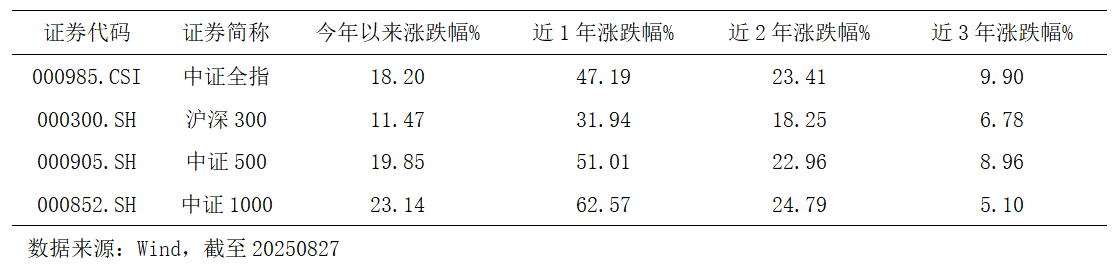
Core Insights - The A-share market has been performing strongly, with major indices rising and trading volumes exceeding 2 trillion yuan on multiple days, while quantitative index products have faced challenges in outperforming the market [2][3] Group 1: Market Performance - The CSI 500 index rose by 3.88% and 3.87% over two weeks, while the CSI 1000 index increased by 4.09% and 3.45% during the same periods [2] - Notably, many quantitative private equity products have reported negative excess returns, with only a few outperforming their respective indices [2][3] Group 2: Shift in Investment Strategies - Investors are increasingly reallocating funds from quantitative products to actively managed equity products, with some private equity managers also increasing their exposure to aggressive active strategies [4] - A survey revealed that individual investors are planning to redeem profits from quantitative products to invest in subjective products, with some reporting significant gains from recent investments [4] Group 3: Performance Comparison - Active equity products have shown remarkable performance, with some private equity products returning nearly 14% and over 10% in net asset value increases during specific periods [3] - Since late June, several private equity products have seen net value increases exceeding 30%, significantly outperforming quantitative products [3] Group 4: Future Trends - The market environment is shifting, with a growing belief that both subjective and quantitative strategies have their advantages, and a trend towards combining both approaches is emerging [8] - The integration of subjective and quantitative strategies may represent a future direction for the asset management industry, as firms seek to leverage the strengths of both methodologies [8]