
农业现代化

Search documents
擦亮“稻乡”金字招牌——从黑龙江五常实践看大米产业进阶之路
Xin Hua She· 2025-11-13 13:41
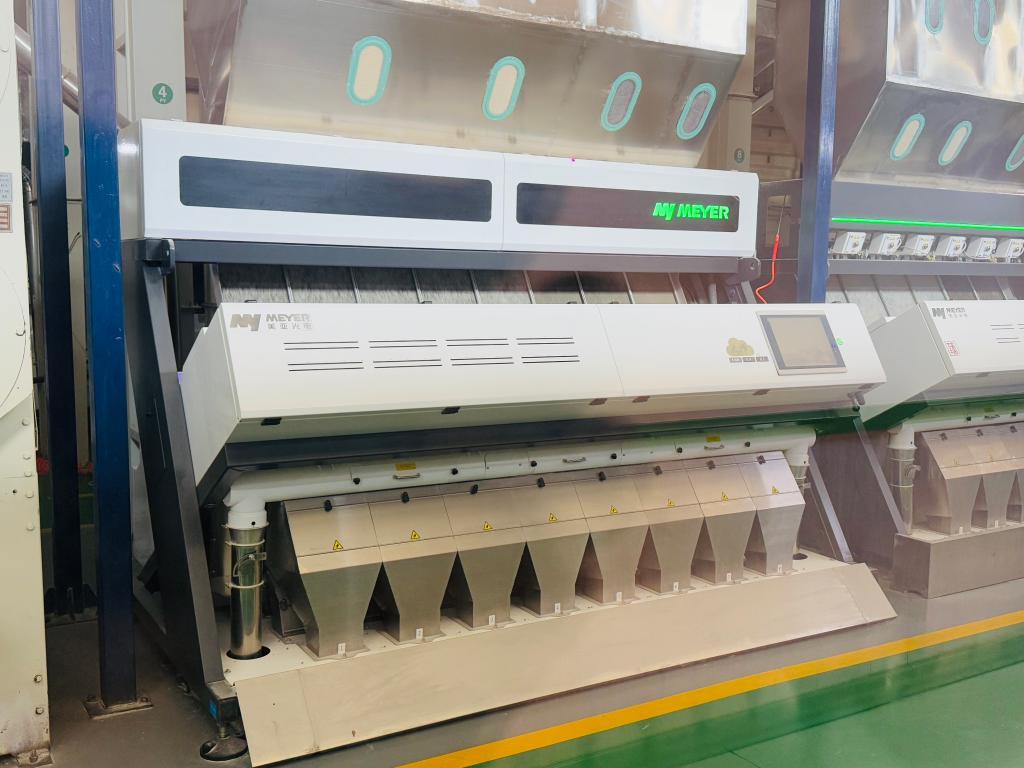
Core Insights - The article highlights the development and modernization of the rice industry in Wuchang City, Heilongjiang Province, emphasizing the integration of advanced technology in rice processing and the importance of quality seed varieties [1][2][3] Group 1: Industry Development - Wuchang City has over 2.5 million acres of rice fields that have completed autumn harvest, with processing facilities actively converting the harvest into high-quality rice products [1] - The city has 135 large-scale rice processing enterprises, with two generating over 1 billion yuan in annual output, showcasing a complete industry chain from breeding to processing and sales [3] - The local government aims to modernize agriculture by enhancing production capacity, ecological practices, and brand development, positioning Wuchang rice as a nationally recognized brand [3] Group 2: Technological Advancements - Advanced equipment, such as high-performance cameras in color sorting machines, is used to ensure the quality of rice by automatically identifying and sorting discolored grains [1] - The collaboration with research institutions, such as the Chinese Academy of Sciences, has led to the successful breeding of superior rice varieties, reinforcing the foundation of quality seeds [1][2] Group 3: Market Expansion and Consumer Engagement - The integration of tourism and agriculture allows consumers to experience the quality of Wuchang rice firsthand, enhancing customer conversion rates [2] - Local cooperatives have partnered with e-commerce platforms like JD.com to expand sales channels, with over 500 tons of rice sold since late September [2]
四中全会精神在基层丨擦亮“稻乡”金字招牌——从黑龙江五常实践看大米产业进阶之路
Xin Hua She· 2025-11-13 08:41
Core Insights - The article highlights the successful harvest and processing of high-quality rice in Wuchang City, Heilongjiang Province, emphasizing the region's agricultural capabilities and modern processing techniques [1][4][7] Group 1: Agricultural Practices - Wuchang City has completed the autumn harvest of over 2.5 million acres of rice fields, showcasing the region's agricultural productivity [1] - The company collaborates with the Chinese Academy of Sciences to develop superior rice varieties, ensuring a strong foundation for quality rice production [2][4] - The introduction of modern planting and processing technologies aims to enhance both yield and product quality [4][6] Group 2: Processing and Technology - Advanced equipment, such as high-performance cameras in sorting machines, is utilized to ensure the quality of rice by automatically identifying and sorting discolored grains [2] - A traceability system allows consumers to access detailed information about the rice production process, enhancing transparency and consumer trust [2] Group 3: Market Development - The company has established partnerships with e-commerce platforms like JD.com to expand the sales channels for their rice products, reflecting a strategic approach to market penetration [6] - The development of agritourism facilities is aimed at improving customer engagement and increasing conversion rates for rice sales [6] Group 4: Industry Growth - Wuchang City has 135 large-scale rice processing enterprises, with two generating over 1 billion yuan in annual revenue, indicating a robust industry structure [6] - The local government is focused on modernizing agriculture, promoting high-quality brand development, and expanding market share in high-end segments [7]

关键词读懂“十五五”丨农业现代化激活“新果盘”,“超级水果”缘何飞入寻常百姓家
Yang Guang Wang· 2025-11-13 02:13
Core Insights - The article highlights the transformation of "super fruits" from imported luxury items to domestically produced staples in China, driven by advancements in agricultural technology and logistics [2][5][6] Group 1: Market Dynamics - The market for high-end fruits in China is shifting, with domestic production increasing significantly, leading to lower prices for consumers [2][4] - In 2024, China's total blueberry production is expected to reach 780,000 tons, a 44% year-on-year increase, while the price of Sunshine Rose grapes has dropped from 500 yuan per pound to the 10 yuan range [2][3] - The production of Menglian avocados is projected to reach 19,500 tons, accounting for 80% of the national supply [2][3] Group 2: Agricultural Modernization - The "15th Five-Year Plan" emphasizes the modernization of agriculture, focusing on digital technology integration and the development of smart agriculture and digital supply chains [1][7] - Yunnan province is emerging as a key player in this transformation, with a diverse climate allowing for year-round fruit production [3][6] - The implementation of smart agricultural systems enables farmers to monitor real-time data on climate and crop health, enhancing management efficiency [6][7] Group 3: Supply Chain Efficiency - The domestic supply chain for fruits has become more efficient, with the time from harvest to shelf reduced to three days for Menglian avocados, compared to a month for imported products [5][6] - The cost of transportation for domestic fruits is significantly lower, with a reduction of over 70% compared to imported fruits [3][5] Group 4: Economic Impact - The shift to domestic fruit production is not just about price competition; it reflects broader industrial upgrades and the activation of the domestic market [5][6] - The market size for related industries, such as tropical fruits and spices, exceeds 1.5 trillion yuan, indicating substantial growth potential [5][6] - The agricultural output value in Yunnan is approximately 60 billion yuan for fruits, 80 billion yuan for tea, and 60 billion yuan for rubber, contributing to a robust green agricultural industry [6][7]
奋战四季度 确保全年红丨农高区小麦“链”成记
He Nan Ri Bao· 2025-11-11 23:21
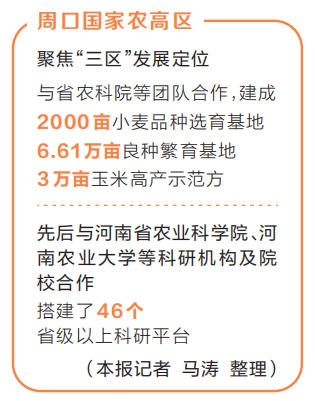
Core Insights - The article emphasizes the importance of the fourth quarter as a critical period for completing annual goals and laying the groundwork for the next year, focusing on project construction, industrial upgrading, and technological innovation [2] Group 1: Agricultural Innovation - The "Zhoumai 36" wheat variety, developed by the Zhoukou Agricultural Academy, has achieved a record yield of 1601.5 jin per mu, showcasing the potential of modern agricultural practices [3] - The agricultural innovation center is promoting new microbial agents that enhance wheat disease resistance and growth while reducing chemical fertilizer usage, thereby improving yield and quality [3] - The agricultural high-tech zone has established 46 provincial-level research platforms in collaboration with various agricultural institutions, facilitating significant technological advancements [3] Group 2: Smart Agriculture - The development of smart agriculture is crucial for managing risks such as pests, climate change, and poor management practices, with real-time data on soil and climate being displayed at the smart agriculture information center [4] - A major project is underway to optimize the smart agriculture information platform and establish a 20,000 mu digital planting base, aiming to create a model for smart agriculture [4] Group 3: Value Addition in Food Processing - The food industry park within the agricultural high-tech zone is enhancing the value of wheat through automated processing, significantly increasing its market value [5] - The zone is transitioning from basic wheat products to higher-end offerings such as baked goods and bio-products, indicating a strategic shift towards high-value agricultural development [5] - The agricultural high-tech zone aims to lead national agricultural modernization by focusing on high standards, innovation, and quality in production [5]
南农晨读 | 万亩方间 沃野流金
Nan Fang Nong Cun Bao· 2025-11-11 02:33
Group 1 - The core viewpoint of the article highlights the rapid growth of the prepared food market in China, which has reached a scale of 516.5 billion yuan in 2023 and is expected to exceed 1 trillion yuan by 2026, indicating a significant transformation in dining habits driven by modern industrial civilization [6][5][4] - The article discusses the dual nature of food additives in prepared dishes, which are seen as both a concern for consumers and a crucial component in the evolution of the food industry [7][5] - The prepared food sector is undergoing a transformation that reflects broader changes in consumer preferences and the food supply chain, with food additives playing a complex role in balancing taste and health [6][7] Group 2 - The article emphasizes the importance of modernizing agriculture into a large-scale industry, with various regions in Guangdong province focusing on rural revitalization and the integration of agriculture with tourism and local specialties [10][12][15] - Specific initiatives are mentioned, such as the promotion of local products and the development of a modern industrial system through government and enterprise cooperation [13][14] - The article also highlights the significance of brand value in the agricultural sector, with a focus on identifying and promoting strong agricultural brands amid competitive market pressures [43][44]

“文山籍”蓝莓亮相进博会——上海银行对口帮扶结出“甜蜜果实”
Zhong Jin Zai Xian· 2025-11-10 09:41
Core Insights - The "Wenshan Blueberry" from Yunnan, known for its crisp sweetness and fresh stems, made its debut at the China International Import Expo (CIIE), showcasing the successful collaboration between Shanghai Bank and Yunnan's Yanshan region [1][6] - Shenzhen Nopson Crop Science Co., Ltd. has established a blueberry production base in Wenshan, integrating advanced global planting concepts with local research practices, and has created a new category of "fresh stem blueberries" [3][6] - The partnership between Shanghai Bank and local agricultural enterprises aims to enhance the blueberry industry in Yunnan, providing financial services that support the entire agricultural supply chain from planting to distribution [6][8] Company and Industry Summary - Shenzhen Nopson focuses on a single crop strategy, promoting agricultural modernization and has positioned blueberries as a core strategic crop [3] - Shanghai Bank has been actively involved in poverty alleviation efforts in Yunnan since 2018, emphasizing high-quality industrial development and improving farmers' livelihoods [6] - The establishment of a cold chain logistics system and the scaling of planting bases have been crucial in making Wenshan a significant hub for winter and spring blueberries, benefiting local farmers with stable incomes [6][8]



以教育科技人才一体化发展推动农业现代化(专题深思)
Ren Min Ri Bao· 2025-11-09 22:20
Core Viewpoint - The modernization of agriculture is essential for the overall modernization of China, emphasizing the importance of technology and talent in achieving agricultural strength [1][2][3]. Group 1: Agricultural Modernization - Agricultural modernization is a fundamental requirement for high-quality development, with a focus on integrating new technologies into traditional agricultural practices [1][2]. - The Chinese government has made significant achievements in agricultural technology, particularly in key areas such as seeds, arable land, and agricultural machinery [2][3]. - Despite advancements, there remains a gap between China's agricultural technology progress and the world's leading levels, indicating areas for improvement [2]. Group 2: Education, Technology, and Talent - Education, technology, and talent are the core elements for accelerating the construction of a strong agricultural nation [3][4]. - A unified approach to education, technology, and talent development is necessary to overcome systemic barriers and enhance agricultural innovation [3]. - Higher education institutions play a crucial role in integrating education, technology, and talent to support agricultural modernization [4]. Group 3: Technological Innovation - The path to agricultural modernization requires a focus on technological self-reliance and innovation, addressing challenges in agricultural technology and key components [5][6]. - Collaborative efforts among universities, research institutions, and enterprises are essential to foster innovation and achieve breakthroughs in agricultural technology [5]. - Establishing platforms for the transformation of agricultural technology achievements is vital for promoting industrialization and collaboration across the agricultural sector [5]. Group 4: Talent Development - Talent is a dynamic factor in building a strong agricultural nation, necessitating the cultivation of skilled individuals who understand technology and management [6][7]. - A flexible talent recruitment mechanism is needed to attract and retain agricultural professionals, particularly in strategic scientific roles [6]. - Encouraging the return of skilled individuals to rural areas can invigorate local agricultural development and contribute to comprehensive rural revitalization [7].
时政镜距离 | 一颗柚子里的农业现代化
Xin Hua She· 2025-11-08 23:51
Core Viewpoint - The article highlights the ongoing development and modernization of the pomelo industry in Meizhou, Guangdong, emphasizing the integration of technology and support for rural revitalization efforts [1]. Group 1: Industry Development - Meizhou has a century-long history of pomelo cultivation, and there is a significant push towards upgrading the pomelo industry [1]. - The local government is increasing support for revolutionary old areas and promoting comprehensive rural revitalization [1]. Group 2: Technological Integration - The article suggests that the pomelos, which are abundant during the early winter season, contain significant technological advancements that are being harnessed in the cultivation process [1].
第十七届江苏省农民合作社产品展销会11月5日至7日在南京举办
Jiang Nan Shi Bao· 2025-11-06 08:27
Core Viewpoint - The 17th Jiangsu Province Farmers' Cooperative Product Exhibition aims to enhance the competitiveness and market influence of farmers' cooperatives by showcasing over 300 high-quality agricultural products from 139 cooperatives, promoting consumer engagement and agricultural income growth [1][5]. Group 1: Exhibition Structure - The exhibition features 15 distinct zones, including a central showcase for cooperative achievements and specialized areas for different cities, ensuring comprehensive representation of provincial characteristics and cross-regional collaboration [2]. - All exhibited products undergo strict quality screening, with regulations in place to ensure safe and reliable sales, including mandatory testing reports for food items [2]. Group 2: Interactive Experience - The exhibition introduces immersive activities, transforming the experience from mere shopping to engaging interactions, such as product tastings and live demonstrations [3]. - A "live streaming sales" initiative invites local influencers to promote products online, allowing remote consumers to participate and purchase directly [3]. Group 3: Sales Facilitation - A "green quality agricultural products into thousands of homes" event is organized to connect cooperatives with major buyers, facilitating long-term partnerships and expanding sales channels for quality products [4]. - The exhibition enhances consumer convenience with digital payment options and on-site delivery services for larger purchases [4]. Group 4: Regional Collaboration - A special zone for cooperative regions from Qinghai, Shaanxi, Liaoning, Xinjiang, and Tibet showcases their unique products, fostering connections and supporting local economies through increased sales opportunities [5]. - The exhibition serves as a vital platform for promoting agricultural modernization and strengthening urban-rural connections in Jiangsu [5].
深度 | 中国农产品批发市场“四十不惑”:从马路市场到全球枢纽
Nan Fang Nong Cun Bao· 2025-11-05 15:12
Core Viewpoint - The development of China's agricultural product wholesale market over the past 40 years has transformed it from a basic supply system to a crucial pillar for ensuring food security and promoting agricultural modernization, with future directions focusing on supply chain innovation, digital platforms, and international hubs [3][9][13]. Group 1: Historical Development - The agricultural product wholesale market in China has evolved through seven stages: spontaneous emergence (1978-1984), rapid development (1985-1990), overheated development (1991-1995), standardized development (1996-2001), functional enhancement (2002-2008), group development (2009-2015), and supply chain development (2016-present) [20][21]. - The establishment of the Shouguang vegetable wholesale market in 1984 marked a pivotal moment, transitioning from a planned economy to a market-oriented system, addressing severe supply shortages in urban areas [22][24]. - By 2024, the Beijing Xinfadi market is projected to handle a total transaction volume of 15.8 million tons and a transaction value of 130.6 billion yuan [2][3]. Group 2: Current Market Structure - As of now, there are 1,249 agricultural product wholesale markets in China with a transaction scale exceeding 100 million yuan, forming a vast distribution network connecting agricultural production with urban consumption [10][11]. - The agricultural product circulation market size increased from 10.46 trillion yuan in 2014 to 15.73 trillion yuan in 2021, with a compound annual growth rate of 6%, where wholesale markets and agricultural logistics account for nearly 70% of the total [56]. Group 3: Future Directions - The future development of the wholesale market will focus on becoming a supply chain incubation center, a digital platform, and an international distribution hub, requiring collaboration among government, market, and industry associations [13][15]. - The digital transformation is seen as a core competitive advantage, enhancing transaction methods and overall supply chain management efficiency [100]. - The vision is for China's wholesale markets to become significant players in international agricultural product trade, enhancing China's influence in global markets [109][111].
