
宠物经济

Search documents
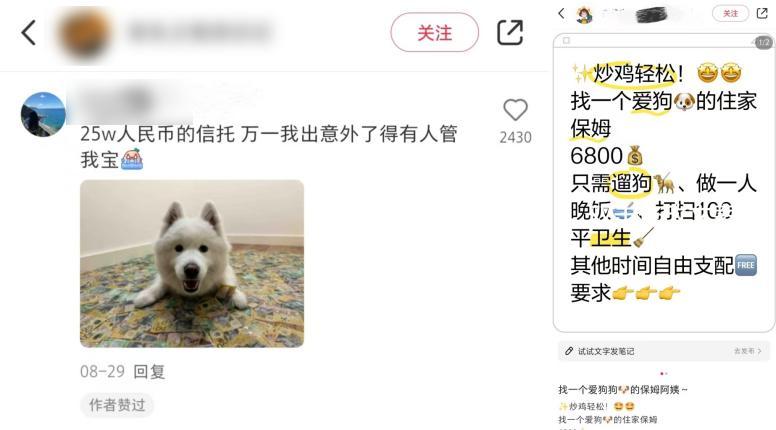
宠物坐月子、拍写真:年轻人养宠,是真爱吗?
3 6 Ke· 2026-01-06 08:08
Core Viewpoint - The pet industry in China is experiencing significant growth, driven by changing consumer attitudes among younger generations who prioritize high-quality care and luxury products for their pets [19][32][37]. Group 1: Demographics and Spending Trends - The primary pet owners in China are predominantly from the "80s" and "90s" generations, with 90s owners making up 46.6% in 2023 [1]. - Young pet owners are willing to spend significantly on their pets, with monthly expenses for food and care reaching thousands of yuan [1][3]. - The pet food market is the largest expenditure category, followed by health care, with premium ingredients like shrimp and salmon being common in pet diets [9][10]. Group 2: Market Growth and Economic Factors - The pet economy in China reached a scale of 592.8 billion yuan in 2023, growing by 20.1% year-on-year [32]. - The pet medical market is also expanding, with a compound annual growth rate of 29.5% from 2017 to 2022, reaching 46.7 billion yuan in 2022 [35]. - The number of pet hospitals in China has surpassed 30,000, indicating a robust infrastructure supporting the pet care industry [36]. Group 3: Consumer Behavior and Psychological Factors - Young pet owners often exhibit emotional spending behaviors, seeking to provide the best for their pets as a reflection of their own values and experiences [19][25][28]. - The rise of social media has led to pets becoming social status symbols, influencing spending on luxury items and services [26][28]. - Economic factors, such as rising GDP, correlate with increased spending on pet care, as seen in the growth of the pet industry following China's GDP surpassing 8,000 USD [29][31]. Group 4: Future Trends and Market Potential - The pet ownership rate in China has increased from 11% in 2010 to 32% in 2023, indicating significant market potential for further growth [32][38]. - The aging population and increasing number of single-person households are expected to drive demand for pet ownership and related services [48][53]. - The trend of "pet humanization" is becoming more pronounced, with pets increasingly viewed as family members, which is likely to sustain market growth [46][54].

大湾区宠物经济“铁三角”,撬动万亿市场
Nan Fang Nong Cun Bao· 2026-01-06 08:06
Core Insights - The pet economy in the Guangdong-Hong Kong-Macao Greater Bay Area is projected to reach a market size of 811.4 billion yuan by 2025, with a year-on-year growth of 15.7%, and is expected to surpass 1 trillion yuan in two years [6][5][4] - The region is characterized by a high consumption population of 80 million and a pet ownership penetration rate of 23.5%, making it a fertile ground for the pet economy [8][9] - The development of the pet industry is supported by a "media+" approach, which integrates various sectors to create a collaborative ecosystem that drives market growth [11][70] Market Dynamics - The pet economy has evolved beyond mere pet ownership consumption to become a core growth area in the new consumption landscape [4] - The Greater Bay Area's economic strength supports the high-end and diversified nature of pet consumption, with over 70% of pet consumers being young people [18][22] - The region's pet industry features a "full-chain collaboration" model, encompassing research, manufacturing, distribution, and service experience [26] Industry Challenges and Standards - The pet industry faces challenges such as substandard pet food nutrition, unregulated service processes, and difficulties in consumer rights protection [32] - A provincial-level pet standardization committee is being established to address these issues, aiming to create a comprehensive standard system for the pet industry in Guangdong [38][37] - The standards will focus on safety and health, service and regulation, and quality enhancement, ensuring a more reliable experience for pet owners [46][48] Technological Innovation - The integration of technology and standardization is seen as a key driver for industry upgrades, with a focus on addressing technical challenges and enhancing market applications [60][61] - The Guangdong Academy of Agricultural Sciences is working on building specialized testing lines for pet genetics and behavior, aiming to foster innovation in the pet industry [65][66] Media Influence - The "media+" approach is crucial for the pet economy's growth, facilitating deep integration with the industry and providing new momentum for development [70][71] - Media plays a role in promoting consumer awareness regarding pet food safety, nutrition, and functionality, helping to establish clearer evaluation standards [78][79] - The media's involvement also enhances cultural exchanges among pet owners and promotes a pet-friendly environment in urban settings [81][82]

暴利的宠物,大厂的坟墓
投中网· 2026-01-06 06:11
Core Viewpoint - The pet economy, while appearing lucrative with a market size of 300 billion and gross margins reaching 50%, is proving to be a challenging business for large companies, as evidenced by the failures of several high-profile entrants [6][7]. Group 1: Profitability and Business Challenges - Pet food is the hottest category in the pet economy, with domestic brands achieving gross margins of 40%-50%, but the actual profitability for companies is often much lower, with leading firms like Zhongchong Co. reporting a gross margin of only 28.16% and a net margin of 9.33% in 2024 [9][10]. - The high gross margins in the pet economy are often offset by significant marketing and operational costs, such as rising sales expenses for companies like Guibao Pet, which increased from less than 100 million in 2017 to over 1 billion in 2024, reflecting a 46.31% year-on-year increase [10][11]. - The emotional value associated with pet products does not translate into sustainable profits for companies, as the costs of marketing through KOLs and maintaining physical stores can erode margins significantly [17][18]. Group 2: Market Dynamics and Competition - The pet economy is characterized by a reliance on personal relationships and trust between pet owners and service providers, making it difficult for large companies to replicate the success of smaller, independent operators [27][30]. - Many businesses in the pet economy, such as grooming and veterinary services, thrive on the expertise and personal touch of individual operators, which large companies struggle to scale effectively [19][26]. - The challenges faced by large companies in the pet economy mirror those in other high-margin industries like beauty and medical services, where the core value often lies in the individual professionals rather than the corporate structure [20][22].

实丰文化跌2.09%,成交额5466.13万元,主力资金净流出670.19万元
Xin Lang Cai Jing· 2026-01-06 03:12
Core Viewpoint - Shifeng Culture's stock has experienced a decline in recent trading sessions, with a notable drop in both share price and market performance, indicating potential challenges in the company's financial health and investor sentiment [1][2]. Group 1: Stock Performance - On January 6, Shifeng Culture's stock fell by 2.09%, trading at 19.19 CNY per share, with a total transaction volume of 54.66 million CNY and a turnover rate of 2.22% [1]. - Year-to-date, the stock price has decreased by 1.74%, with a 3.62% drop over the last five trading days and a 9.99% decline over the past 20 days [1]. - The stock has seen a slight increase of 1.11% over the last 60 days [1]. Group 2: Financial Performance - For the period from January to September 2025, Shifeng Culture reported a revenue of 328 million CNY, reflecting a year-on-year growth of 5.81% [2]. - The company recorded a net profit attributable to shareholders of -58.79 million CNY, representing a significant year-on-year decrease of 1399.85% [2]. Group 3: Shareholder and Dividend Information - As of September 30, 2025, the number of shareholders decreased by 21.97% to 25,500, while the average number of circulating shares per person increased by 28.16% to 4,954 shares [2]. - Since its A-share listing, Shifeng Culture has distributed a total of 18 million CNY in dividends, with 3.6 million CNY distributed over the past three years [3]. - Notably, Huashang Advantage Industry Mixed A (000390) has exited the list of the top ten circulating shareholders as of September 30, 2025 [3].

佩蒂股份涨2.14%,成交额1423.69万元,主力资金净流入214.18万元
Xin Lang Cai Jing· 2026-01-06 02:09
Group 1 - The core viewpoint of the news is that Petty Co., Ltd. has shown a positive stock performance recently, with a 3.96% increase in stock price since the beginning of the year and a 2.36% increase over the last five trading days [2] - As of January 6, the stock price reached 18.64 CNY per share, with a market capitalization of 4.638 billion CNY and a trading volume of 14.2369 million CNY [1] - The company primarily engages in the research, production, and sales of pet food, with 98.05% of its revenue coming from this segment [2] Group 2 - In the first nine months of 2025, Petty Co., Ltd. reported a revenue of 1.089 billion CNY, representing a year-on-year decrease of 17.68%, and a net profit attributable to shareholders of 114 million CNY, down 26.62% year-on-year [2] - The company has a total of 17,800 shareholders as of October 10, with a slight decrease of 0.88% from the previous period [2] - Petty Co., Ltd. has distributed a total of 210 million CNY in dividends since its A-share listing, with 84.7318 million CNY distributed over the past three years [2]
宿迁宿豫:宠物经济提档升级,构建产业发展新格局
Yang Zi Wan Bao Wang· 2026-01-05 15:22
Core Insights - The pet economy is evolving from a hobby to a responsibility, becoming a new growth point for urban economic development and enhancing public well-being [1] - The pet industry in Suqian's Suyu District is rapidly developing, covering a complete industrial chain including food, supplies, services, and medical care, thus driving domestic demand and industrial innovation [1] Group 1: Company Developments - Jiangsu Yihe Pet Supplies Co., Ltd. aims for an annual revenue of 750 million yuan by 2025, with a compound annual growth rate exceeding 36% over the past three years [1] - The company has established three production centers capable of producing 50,000 tons of pet food annually and has brands that achieve nearly 200 million yuan in annual sales per brand [2] - The company’s products are exported to over 60 countries and regions, with export revenue exceeding 150 million yuan [2] Group 2: Market and Infrastructure - Suyu District has a favorable environment for developing the pet industry, with several related enterprises providing sufficient raw materials for integrated development [2] - The district has established a pet e-commerce ecosystem, integrating food, supplies, live animals, and medical services, which is driving the rise of the pet e-commerce industry [3] - The "Cat and Dog Purchase" convenience store has opened five locations in Suqian, with plans to expand to 50 stores nationwide by mid-year and 200 by year-end [3] Group 3: E-commerce and Sales Performance - The "Cat and Dog Purchase" store generates daily revenue of approximately 2,500 yuan, reaching a monthly revenue of 80,000 yuan, achieving profitability [2] - E-commerce sales have significantly boosted revenue growth, with some companies experiencing nearly 50% annual sales growth since starting e-commerce operations [3] - By 2025, the overall output value of the pet industry in the district is expected to exceed 4 billion yuan [3]
苏豪弘业跌0.82%,成交额6758.52万元,近5日主力净流入-1068.74万
Xin Lang Cai Jing· 2026-01-05 15:19
Core Viewpoint - Suhao Hongye Co., Ltd. is engaged in export and import trade, focusing on toys and pet products for exports, and medical devices and machinery for imports, with a significant emphasis on cross-border e-commerce and investment in cultural and technological sectors [2][7]. Group 1: Company Overview - Suhao Hongye was established on June 30, 1994, and listed on September 1, 1997, with its headquarters located in Nanjing, Jiangsu Province [7]. - The company's main business revenue composition includes 98.45% from product sales, 1.05% from engineering projects and consulting services, and 0.51% from other sources [7]. - As of September 30, 2025, the company had 24,700 shareholders, a decrease of 11.09% from the previous period, with an average of 10,008 circulating shares per shareholder, an increase of 12.47% [7]. Group 2: Financial Performance - For the period from January to September 2025, Suhao Hongye achieved a revenue of 5.991 billion yuan, representing a year-on-year growth of 10.77%, and a net profit attributable to shareholders of 49.7193 million yuan, up 36.42% year-on-year [7]. - The company has distributed a total of 503 million yuan in dividends since its A-share listing, with 74.03 million yuan distributed over the past three years [8]. Group 3: Investment and Shareholding - The company holds a 24% stake in Jiangsu Hongrui Technology Investment Co., Ltd., which is the first venture capital firm in Jiangsu Province focused on the biomedical field [2]. - Suhao Hongye is the second-largest shareholder of Hongye Futures, holding 16.31% of its shares, with Hongye Futures listed on the Hong Kong Stock Exchange [3]. - The company’s subsidiary, Jiangsu Aitao Cultural Industry Co., Ltd., holds a 28% stake in Jiangsu Cultural Property Exchange Co., Ltd. [3]. Group 4: Market Activity - On January 5, the stock price of Suhao Hongye fell by 0.82%, with a trading volume of 67.5852 million yuan and a turnover rate of 2.50%, bringing the total market capitalization to 2.744 billion yuan [1]. - The stock has an average trading cost of 10.84 yuan, with current price levels between resistance at 11.19 yuan and support at 10.71 yuan, indicating potential for range trading [6].

回顾2025展望2026 中国宠物行业2025年十大事件盘点
Nan Fang Nong Cun Bao· 2026-01-05 15:01
Core Insights - The Chinese pet industry is projected to reach a market size of 811.4 billion yuan by 2025, reflecting a year-on-year growth of 15.7% [4][5] - The industry is entering a high-quality development phase characterized by policy standardization, capital investment, technological innovation, and global expansion [5][7] Group 1: Regulatory Developments - In January 2025, two national standards for the pet industry were approved, focusing on pet diagnosis and operational guidelines, which took effect on August 1 [11][12] - The new regulations shift pet management from reactive to proactive, providing a unified basis for pet management across the country [17] Group 2: Capital Investment Trends - In January 2025, Aiyi Animal Medicine completed a significant financing round, marking the start of a year with 33 public investment events in the pet industry, with over 30% focused on pet medical and pharmaceutical sectors [22][28] - Capital is increasingly directed towards high-tech areas such as vaccine development and AI medical applications, indicating a shift from mere traffic competition to supply chain and technology competition [32][33] Group 3: Industry Events and Exhibitions - The fifth Pet Expo held in May 2025 in Shanghai saw a 40% increase in exhibition area, attracting 1,200 exhibitors and over 8,000 brands, highlighting the industry's growth and innovation [38][40] - The event introduced new segments focusing on refined pet care and smart technology, showcasing innovative products like AI health monitoring devices [41] Group 4: Mergers and Acquisitions - In the first half of 2025, seven major mergers occurred in the pet industry, with significant acquisitions by leading companies to enhance product lines and market presence [48][52] - The establishment of five industry funds totaling over 2 billion yuan indicates a strategic focus on key segments of the pet industry [49] Group 5: Regulatory Enhancements in Pet Food - The implementation of the "Pet Feed Labeling Regulations" in 2025 emphasizes transparency and accountability in pet food claims, raising industry standards [58][65] - Stricter regulations are expected to impact smaller brands while pushing leading companies to invest more in research and development [73] Group 6: Digital Transformation in Veterinary Services - Starting September 1, 2025, an electronic licensing system for veterinary practices will be implemented, enhancing regulatory oversight and operational standards [79][84] - This digital shift aims to curb illegal practices and improve service quality in the pet healthcare sector [85] Group 7: Global Expansion of Domestic Pet Companies - In 2025, domestic pet companies accelerated their global expansion, with significant acquisitions and production base setups in regions like Southeast Asia [90][92] - The international recognition of Chinese pet products is increasing, marking a transition from domestic competition to global market engagement [95] Group 8: Local Policy Initiatives - The "Pet Nine Articles," a local policy initiative in Beijing's Pinggu District, aims to support the high-quality development of the pet economy, focusing on technology and industry upgrades [103][106] - This policy is seen as a model for regional development in the pet industry, promoting innovation and collaboration [109] Group 9: E-commerce Trends in Pet Consumption - During the 2025 Double Eleven shopping festival, pet consumption surged, with significant growth in high-end and smart products [115][119] - The trend towards quality and responsibility in pet ownership is evident, with brands achieving substantial sales increases [122] Group 10: International Collaboration at Trade Shows - The 2025 China International Import Expo featured a dedicated pet theme area, showcasing a variety of pet-related products and fostering international partnerships [128][132] - This initiative highlights the growing importance of the pet economy in China's consumer market and its role in global industry connections [133]
源飞宠物涨0.42%,成交额3562.41万元,近5日主力净流入411.38万
Xin Lang Cai Jing· 2026-01-05 08:11
Core Viewpoint - The company, Wenzhou Yuanfei Pet Products Co., Ltd., is actively expanding its business in the pet industry while exploring new opportunities in the trendy toy sector through strategic partnerships and global market expansion [2][3][4]. Group 1: Company Overview - Wenzhou Yuanfei Pet Products Co., Ltd. specializes in the research, production, and sales of pet supplies and pet food, with main products including pet snacks, leashes, toys, dry food, and wet food [2][9]. - The company was established on September 27, 2004, and went public on August 18, 2022, with a current market capitalization of 4.536 billion yuan [9]. - As of September 30, 2025, the company reported a revenue of 1.281 billion yuan, representing a year-on-year growth of 37.66%, and a net profit of 130 million yuan, up 8.75% year-on-year [9]. Group 2: Business Strategy and Partnerships - Yuanfei Pet has entered a strategic partnership with the trendy toy brand Heyone, aiming to leverage its manufacturing and supply chain management capabilities to explore new consumer markets while maintaining its core pet business [3]. - The company has established overseas production bases in Cambodia to enhance its global capacity and reduce labor costs, with an 85.78% revenue contribution from overseas markets benefiting from the depreciation of the RMB [4][9]. - The company emphasizes the importance of supply chain management and quality control, applying its expertise from the pet industry to the trendy toy sector [3]. Group 3: Financial and Market Performance - The company's stock experienced a slight increase of 0.42% on January 5, with a trading volume of 35.6241 million yuan and a turnover rate of 1.40% [1]. - The average trading cost of the stock is 24.70 yuan, with current price fluctuations between resistance at 24.63 yuan and support at 22.33 yuan, indicating potential for range trading [7]. - The company has distributed a total of 120 million yuan in dividends since its A-share listing [10].
超研股份涨4.78%,成交额7935.12万元,后市是否有机会?
Xin Lang Cai Jing· 2026-01-05 07:51
Core Viewpoint - The company, Shantou Ultrasonic Instrument Research Institute Co., Ltd., has shown a notable increase in stock performance and is involved in the medical imaging and industrial non-destructive testing equipment sectors, benefiting from the pet economy and the depreciation of the RMB [1][2][3]. Company Overview - Shantou Ultrasonic Instrument Research Institute Co., Ltd. was established on November 15, 1982, and went public on January 22, 2025. The company specializes in the research, development, production, and sales of medical imaging equipment and industrial non-destructive testing devices [7]. - The company's main business revenue composition includes: medical ultrasound (71.16%), industrial ultrasound (17.30%), accessories (5.72%), X-ray (4.56%), and others (1.26%) [7]. Financial Performance - For the period from January to September 2025, the company achieved a revenue of 254 million yuan, representing a year-on-year decrease of 2.90%. The net profit attributable to the parent company was approximately 88.94 million yuan, down by 3.66% year-on-year [7][8]. - As of September 30, 2025, the company had a total market capitalization of 9.667 billion yuan [1]. Market Activity - On January 5, 2025, the company's stock price increased by 4.78%, with a trading volume of approximately 79.35 million yuan and a turnover rate of 6.08% [1]. - The company has seen a net outflow of 1.42 million yuan from major investors, indicating a lack of strong control by major shareholders, with a very dispersed distribution of shares [4][5]. Industry Context - The company is positioned within the medical device sector, specifically under the categories of medical imaging and non-destructive testing, which are part of the broader healthcare and technology industries [7]. - The company benefits from trends in the pet economy and advancements in medical technology, as evidenced by its participation in industry events such as the 97th WVC Annual Conference [2].