
数字中国

Search documents
市场监管总局:加快推进质量认证数字化发展
Zhong Guo Xin Wen Wang· 2025-09-12 12:27
Core Viewpoint - The Chinese government is accelerating the digital transformation of quality certification to support the construction of a digital China and a quality-oriented nation [1][2]. Group 1: Digital Transformation of Quality Certification - The State Administration for Market Regulation (SAMR) has issued guidelines to promote the digital development of the quality certification industry [1]. - The essence of quality certification is to provide quality services and credit proof through objective, fair, and professional technical evaluations [1][2]. - Traditional quality certification systems are facing challenges such as insufficient adaptability, slow response, and difficulties in data sharing, especially in emerging sectors like smart manufacturing and digital healthcare [1][2]. Group 2: Goals and Objectives - The guidelines aim to enhance the digital transformation of quality certification through reforms in institutional design, technical standards, application scenarios, regulatory models, standard systems, and international mutual recognition [2]. - Key objectives for empowering industrial digital upgrades include promoting the transition from traditional manufacturing to smart, green, and precise manufacturing, and supporting sectors like education, healthcare, and financial technology [2]. - For supporting digital industrial development, the focus will be on strengthening certification technology research in key areas, improving the quality certification system for digital infrastructure, and enhancing network and data security [2].
中国铁塔服贸会展现智慧转型新篇章 “慢直播”云游壮美河山
Huan Qiu Wang· 2025-09-12 10:35
Core Viewpoint - China Tower aims to showcase its innovative service experience at the 2025 China Service Trade Fair, highlighting its role in national strategic initiatives and digital transformation [3] Group 1: 5G Infrastructure and Digital Transformation - China Tower has constructed over 2.97 million 5G base stations, accounting for nearly half of the global total, with indoor coverage reaching 13.85 billion square meters [5] - The utilization rate of site resources has increased from 14.3% to 86.2%, supporting a 1.6 times expansion in network scale for operators [5] Group 2: Major National Projects - The Fengtai Railway Station and the Shenzhen-Zhongshan Link are highlighted as key projects, showcasing innovative communication solutions that integrate aesthetics and functionality [7] - China Tower has successfully provided communication support for over 100 national-level events, including the Beijing Winter Olympics and the Belt and Road Forum [7] Group 3: Smart Technology and AI Integration - The company is transitioning from "communication towers" to "digital towers," integrating smart terminals to create a comprehensive sensing network across various environments [8] - China Tower has developed 216 proprietary algorithms, with 80 reaching industry-leading levels, applied in areas such as emergency management and environmental monitoring [8] Group 4: Energy Services and Urban Logistics - The "Tower Battery Swap" service revolutionizes urban logistics for delivery personnel, providing quick battery swaps through an app, alleviating range anxiety [9] - China Tower has established over 3.17 million charging ports, serving over 26.17 million users, enhancing safety and convenience for electric bike users [9]


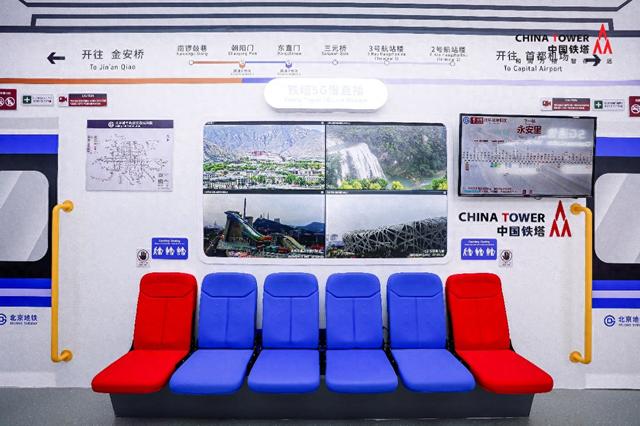
亿道信息(001314) - 2025年9月5日投资者关系活动记录表
2025-09-05 10:56
Company Overview - Yidao Information is a provider of smart electronic products and solutions, focusing on product definition and R&D design [2] - The company’s main business segments include rugged smart terminals and consumer smart terminals, with applications in smart manufacturing, transportation, energy exploration, and public utilities [2] Financial Performance - In the first half of 2025, the company achieved a revenue growth of 19.24% year-on-year [3] - Business segment growth rates: - Rugged smart terminals: 24.71% - Smart hardware: 16.27% - XR and AIoT: 27.60% [3] - R&D expenses increased by 2.71% year-on-year [3] Profitability Insights - The company's gross margin fluctuates due to the diverse product range, with a stable gross margin maintained between 14% and 20%, higher than the industry average [3] Future Development Directions - The company aims to make cutting-edge technology more accessible, focusing on competitive product solutions and services [3] - Plans to deepen customer engagement and expand product offerings to enhance operational scale [3] - Establishment of Yidao Digital (Research Institute) to invest in AI, perception technology, and spatial computing, fostering innovation and talent development [3] - Emphasis on adapting R&D for XR, AIoT, and domestically controlled products to seize opportunities in digital China and Industry 4.0 [3]
中科信息(300678) - 300678中科信息投资者关系管理信息20250903
2025-09-03 09:16
Group 1: Business Performance - The company reported a significant increase in new contract amounts, driven by growth in various business sectors, particularly in artificial intelligence and digital transformation solutions [3] - Revenue from the tobacco sector grew by 35.56% year-on-year due to increased demand for digital solutions [3] - The oil and gas information sector saw a remarkable revenue increase of 95.85%, particularly in digital oilfield services [3] Group 2: Innovation and Technology - The company is a founding member of the Sichuan and Chengdu Innovation Alliance, actively participating in local innovation initiatives and establishing a resource library for domestic products [3] - The company has completed the localization of several self-developed products, including election systems and integrated control platforms for the oil industry [3] - The establishment of the "Brain Cognition and Smart Medical Innovation Application Laboratory" aims to develop advanced medical technologies, including smart anesthesia robots and IoT medical devices [5][6] Group 3: Strategic Partnerships and Future Plans - The company has a long-standing partnership with Sichuan University West China Hospital, focusing on the development of AI-driven medical solutions [6] - A framework agreement was signed with Suzhou Nano Institute to collaborate on brain science and smart medical applications, targeting high-end intelligent medical devices [6] - The company is committed to expanding its ecosystem through capital operations and partnerships with research institutions [6] Group 4: Market Position and Management Confidence - The company is positioned as a key player in the artificial intelligence sector, with a strong market outlook and confidence in future growth [6] - Recent stock sales by executives are attributed to personal needs and do not reflect a lack of confidence in the company's future [6]
长城策略月度金股:2025年9月-20250901
Great Wall Securities· 2025-09-01 03:55
Group 1 - The report highlights a significant increase in market activity in August, with various funding sources showing heightened engagement, particularly in sectors such as electronics, non-bank finance, and pharmaceuticals [1][2] - Margin trading has surpassed 2 trillion yuan and continues to rise, indicating a strong risk appetite among investors [1] - Retail investors have shown a steady increase in funding, although their growth remains below previous peaks from 2015, 2019, and 2020, reflecting a lingering "fear of heights" sentiment [1][2] Group 2 - Private equity funds have seen a positive feedback loop with market performance, with a consistent increase in monthly issuances since September 2024, contributing significantly to the current "slow bull" market [1][2] - Public funds have also experienced a notable rise in issuance compared to last year, particularly in equity and ETF funds, with the stock fund index showing an upward trend since last October [2] - Insurance and foreign capital have been entering the market steadily, especially following the introduction of new policies, with expectations for further growth in insurance capital inflows [2] Group 3 - The report suggests that despite potential policy changes in September, the overall positive stance of domestic policies remains, particularly in technology sectors such as computing power, AI, and consumer electronics [3] - New consumption, innovative pharmaceuticals, and certain cyclical industries are expected to maintain upward momentum supported by clear policy backing [3] - The financial sector retains investment value during periods of high market sentiment [3] Group 4 - The recommended stock portfolio for September includes companies like China Mobile, Hongri Da, and Tianfu Communication, focusing on sectors such as telecommunications, non-bank finance, and technology [5][12] - The performance of the August portfolio showed an average increase of 23.23%, with standout stocks like Nanya New Materials and Tonghuashun achieving gains of 55.79% and 45.68% respectively [4][5] - The report emphasizes the importance of sectors such as communication, non-bank finance, technology, and chemicals in the current investment landscape [5][12]






为海区发展注入数字动力
Zhong Guo Zi Ran Zi Yuan Bao· 2025-09-01 01:35
Core Viewpoint - The establishment of the Beihai Marine Resource Survey Data Management and Application Platform marks a significant step towards the high-quality development of marine affairs in Beihai, driven by digitalization and information technology [1]. Group 1: Digital Infrastructure Development - The platform is part of a three-year action plan aimed at building a data framework for marine resource management in Beihai, enhancing the modernization of marine governance through digital means [1]. - Over the past two years, the Beihai Survey Center has made steady progress in constructing the platform's digital infrastructure, improving the interconnectivity and shared utilization of digital resources [1]. Group 2: Data Management Transformation - Current marine resource survey data is stored and managed in isolation, leading to high redundancy and poor consistency, making cross-project sharing and knowledge accumulation difficult [3]. - The platform integrates various types of marine resource survey data using a hybrid database system, enabling visualization and statistical analysis to enhance decision-making capabilities [3]. Group 3: Integrated Management Approach - The platform aims to transition from isolated marine data management to an integrated "land-sea" approach, utilizing technologies like geographic information systems and virtual simulation [5]. - A three-dimensional integrated scene has been developed, combining data from various sources and platforms, facilitating a unified representation of marine and terrestrial environments [5]. Group 4: Intelligent Management Solutions - The platform automates the management of marine resource survey data, allowing for rapid querying, analysis, and visualization, thus improving operational efficiency [8]. - Decision-support modules within the platform assist in various regulatory tasks, such as site selection and resource monitoring, by integrating multiple constraints and generating actionable insights [8]. Group 5: Future Development Plans - The Beihai Survey Center plans to further develop an integrated three-dimensional scene that encompasses various environments, while also incorporating artificial intelligence to enhance marine resource management [9].

中国新闻网:第二届CCF中国存储大会在武汉开幕
Zhong Guo Xin Wen Wang· 2025-08-31 01:53
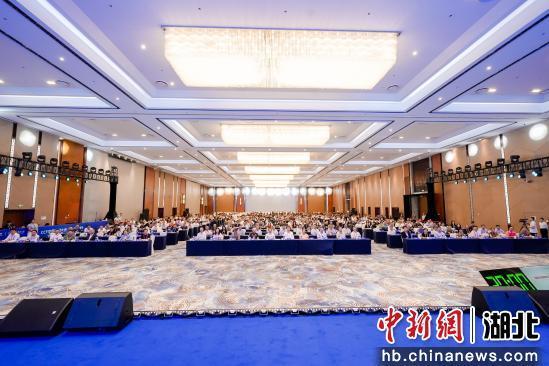
Group 1 - The second China Storage Conference organized by the China Computer Federation (CCF) was held in Wuhan on August 29, focusing on the development and application of storage technology in the intelligent era [1][2] - The conference featured six main segments, including an opening ceremony, thirteen keynote speeches, the launch of the "CCF & U" initiative, the release of storage testing reports, 26 sub-forums, and an awards dinner [1] - The president of Huazhong University of Science and Technology emphasized the importance of storage technology as the foundation of the digital world and an accelerator for intelligent computing, committing to deepening research in this field [1] Group 2 - The "CCF & U" initiative was officially launched during the conference, inviting members to donate retired USB drives to be transformed into an artistic installation representing China's storage memory [1][2] - The initiative aims to honor the history of storage technology through artistic display and foster unity within the industry [1][2] - Wuhan is positioned as a key city in the national data strategy, leveraging the strengths of local universities in storage technology to drive high-quality development of the regional digital economy [2]
中国长城上半年营收为63.66亿元,净利润同比扭亏为盈
Ju Chao Zi Xun· 2025-08-30 03:54
Financial Performance - In the first half of 2025, the company's revenue was 6,366,241,242.46 yuan, a year-on-year decrease of 4.78% [2][3] - The net profit attributable to shareholders was 138,251,254.08 yuan, a significant recovery from a loss of 421,517,389.43 yuan in the same period last year [2][3] - The net loss after deducting non-recurring gains and losses was 427,115,654.46 yuan, slightly worse than the loss of 423,675,729.05 yuan in the previous year [2][3] - The net cash flow from operating activities was -845,463,140.38 yuan, an improvement from -1,374,324,766.64 yuan year-on-year [3] - Basic and diluted earnings per share were both 0.043 yuan, recovering from -0.131 yuan in the previous year [3] - The weighted average return on equity was 1.24%, an increase of 4.05% compared to -2.81% last year [3] Asset and Equity Position - As of the end of the first half, total assets amounted to 32,320,259,243.57 yuan, a decrease of 0.92% year-on-year [2][3] - The net assets attributable to shareholders were 11,216,475,039.90 yuan, down 0.17% from the end of the previous year [2][3] Industry Position and Product Development - The company is a key player in the computing industry under China Electronics, recognized as a national technology innovation demonstration enterprise and a high-tech enterprise [2] - It has developed a comprehensive product line from chips to servers, contributing to the digital transformation of key sectors such as finance, energy, and telecommunications [2] - In the server segment, the company has established a robust product line with 150 product series and 160 self-developed motherboards, enhancing AI model training capabilities [4] - In personal terminal products, the company launched a new notebook featuring the latest Feiteng D3000M processor, improving performance, security, and battery life [5] - The company has developed a range of financial terminal products aimed at various business scenarios, enhancing its digital channel offerings [5] - The company has invested in high-end technology talent and established multiple innovation platforms, holding over 1,700 patents and employing numerous experts [6]


启明星辰(002439)2025年中报简析:亏损收窄,盈利能力上升
Zheng Quan Zhi Xing· 2025-08-28 14:15
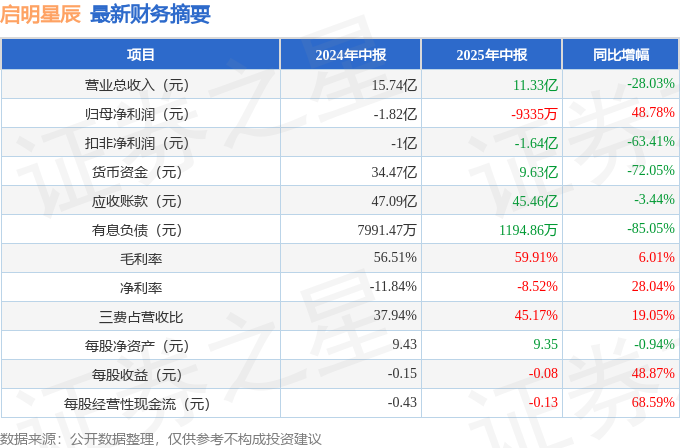
Core Viewpoint - The recent financial report of Qiming Star (启明星辰) indicates a significant decline in revenue while showing improvements in profitability metrics such as gross margin and net margin [1]. Financial Performance - Total revenue for the first half of 2025 was 1.133 billion yuan, a decrease of 28.03% year-on-year [1]. - The net profit attributable to shareholders was -93.35 million yuan, an increase of 48.78% year-on-year [1]. - In Q2 2025, total revenue was 492 million yuan, down 24.47% year-on-year, with a net profit of -94.95 million yuan, a decline of 37.44% year-on-year [1]. - Gross margin improved to 59.91%, up 6.01% year-on-year, while net margin was -8.52%, an increase of 28.04% year-on-year [1]. - Total operating expenses (sales, management, and financial expenses) amounted to 512 million yuan, representing 45.17% of revenue, an increase of 19.05% year-on-year [1]. Key Financial Ratios - Earnings per share (EPS) was -0.08 yuan, an increase of 48.87% year-on-year [1]. - Operating cash flow per share was -0.13 yuan, an increase of 68.59% year-on-year [1]. - The company's net asset per share was 9.35 yuan, a decrease of 0.94% year-on-year [1]. Business Evaluation - The company's net margin last year was -6.86%, indicating low added value in products or services [3]. - The median Return on Invested Capital (ROIC) over the past decade was 13.84%, with the worst year being 2024 at -2.44% [3]. - The company has had a generally good financial history, with only one loss year since its IPO [3]. Strategic Insights - The new chairman, Yuan Jie, is focusing on establishing the company as a world-class cybersecurity firm and enhancing its collaboration with China Mobile [4]. - The company aims to strengthen its research and development capabilities and improve service quality to support China Mobile's digital initiatives [4]. - The emphasis is on making cybersecurity a core competency to drive the overall upgrade of the domestic cybersecurity industry [4].

苏美达(600710):船舶建造持续发力,柴油发电紧跟市场
Southwest Securities· 2025-08-28 10:44
Investment Rating - The report does not specify a clear investment rating for the company [1] Core Views - The company has shown strong performance in shipbuilding and diesel generator markets, with a focus on green energy vessels and a leading position in niche ship types [7] - The company is actively adjusting its structure and exploring new paths for supply chain business development, achieving significant growth in machinery and equipment exports [7] - The implementation of national "new infrastructure" projects and the increase in AI computing power provide new opportunities for the diesel generator market [7] Financial Performance Summary - In the first half of 2025, the company achieved operating revenue of 55.101 billion yuan, with a net profit attributable to shareholders of 646 million yuan, representing a year-on-year growth of 12.62% [7] - The total import and export volume reached 6.14 billion USD, with exports of 2.93 billion USD, up 14% year-on-year [7] - The supply chain business generated revenue of 39.447 billion yuan, slightly down 4.58% year-on-year, while the industrial chain achieved revenue of 15.536 billion yuan, up 7.15% year-on-year [7] Profit Forecast - The company is expected to achieve operating revenues of 1173.2 billion yuan, 1217.7 billion yuan, and 1279.9 billion yuan for the years 2025, 2026, and 2027 respectively, with year-on-year growth rates of 0.12%, 3.79%, and 5.11% [9] - Net profit attributable to shareholders is projected to be 12.836 billion yuan, 14.176 billion yuan, and 16.034 billion yuan for the same years, with corresponding EPS of 0.98 yuan, 1.08 yuan, and 1.23 yuan [9] Business Segment Analysis - The industrial chain business is expected to grow steadily, driven by the replacement of aging fleets and new shipbuilding demands, with projected revenue growth rates of 7.9%, 5.6%, and 5.4% for the years 2025, 2026, and 2027 [8] - The supply chain business is anticipated to face challenges in the short term but is expected to recover with a projected revenue growth of -3%, +3%, and +5% over the same period [8]
