
数字经济

Search documents
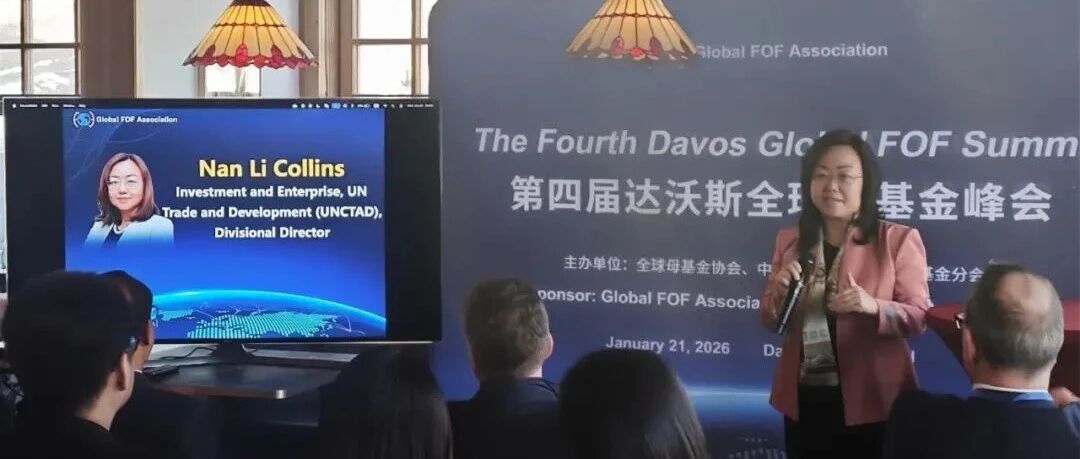
李楠:资本流动分化时代下的全球投资新格局
母基金研究中心· 2026-02-20 08:53
Group 1 - The fourth Davos Global FOF Summit was successfully held in Davos, Switzerland, focusing on the future development directions of global funds and venture capital cities [2][3][24] - Nearly 100 influential figures from global funds and venture capital cities participated in discussions about navigating economic cycles [2][3] Group 2 - The chair of the UN Sustainable Stock Exchanges Initiative, Nan Li Collins, highlighted the increasing policy uncertainty and the widening financing gap for Sustainable Development Goals (SDGs) [4][5] - Global Foreign Direct Investment (FDI) is projected to grow by 14% in 2025, primarily driven by financial hub activities in developed economies, while FDI to developing countries is expected to decline by 2% [4][5] - Despite a surge in greenfield investments in the digital economy, there is a significant shortfall in investments related to sustainable development and climate action [4][5][6] Group 3 - Investment flows are increasingly polarized, with developed economies seeing an increase in investment inflows, while developing countries face challenges in attracting international project financing, particularly in large-scale infrastructure [14][15] - The semiconductor industry has become a major area of investment growth, while investments in key sustainable development areas like renewable energy have declined [16][17] - Digital economy investments are characterized by rapid growth in digital services but insufficient investment in digital infrastructure, with developing countries urgently needing more financial support for core infrastructure [16][17][18] Group 4 - The number of countries adopting restrictive investment policies has doubled over the past decade, significantly impacting investment scales [19][20] - Stricter investment reviews in countries like China and the United States have classified some traditionally safe industries as sensitive or strategic, leading to an increase in disputes between investors and countries [19][20] - The next World Investment Forum is scheduled to be held in Doha in October, emphasizing the need for a balance between economic security concerns and strategic interests [21][22]

李文龙:建设金融强国更要建设数字金融强国 |马年大咖谈
Di Yi Cai Jing· 2026-02-20 00:54
Group 1 - The core viewpoint emphasizes the importance of establishing a "digital financial power" in China as a strategic move to gain a competitive edge in the global digital economy, especially highlighted in the "14th Five-Year Plan" which did not previously mention financial strength [1][5] - The financial sector is positioned at the top of the global economic division pyramid, influencing the rise of nations, with China currently facing challenges in this area despite being a manufacturing powerhouse [2][5] - The shift towards a digital economy is accelerating globally, leading to an inevitable explosion of digital finance driven by data assets, which are becoming core economic resources alongside traditional assets [3][4] Group 2 - In the digital economy, digital finance is expected to play a central role, positioned at the top of the digital economic pyramid, necessitating a focus on its strategic importance for China's modernization goals [4][5] - China has significant opportunities to develop its digital financial sector, as the global digital economy's financial layout is still in its formative stages, despite the U.S. making strides to secure a leading position [5][6] - The current state of digital currency, such as the digital yuan, is still in its early stages of international influence and application, indicating room for growth in the digital finance sector [5]
应将发展置于改革议程中心位置
Xin Lang Cai Jing· 2026-02-19 20:56
Core Viewpoint - China has submitted a comprehensive position paper on WTO reform to the World Trade Organization, marking the first detailed articulation of its stance since the reform process began [1][2] Group 1: Background and Context - The WTO initiated a necessary reform process in June 2022 due to unilateral tariff measures disrupting global trade order and some members abusing decision-making mechanisms to hinder multilateral negotiations [1] - In response to the severe challenges facing the multilateral trading system, China has proactively proposed necessary reforms, having previously submitted related documents in 2018 and 2019 [1] Group 2: Key Principles and Recommendations - The position paper emphasizes a multilateral approach, supporting inclusive economic globalization and the maintenance of the multilateral trading system [2] - It highlights the importance of placing development at the center of the reform agenda, assisting developing members in seizing growth opportunities in digital economy, green transition, and artificial intelligence [2] - The document calls for discussions on government measures that distort international trade, respecting different economic systems and development stages of members, and seeking consensus on fair competition to create a conducive international trade rules environment [2]
共同富裕先行先试,“浙”里缘何创新活力澎湃?
Xin Lang Cai Jing· 2026-02-19 14:50
Core Insights - Zhejiang province is focusing on high-quality development and aims to reduce urban-rural, regional, and income disparities as part of its strategy for the "15th Five-Year Plan" [6][26] - The digital economy in Zhejiang has seen significant growth, with the province's economic output surpassing 9 trillion yuan, averaging a growth rate of 5.9% annually over the past five years [5][6] - The province is also emphasizing ecological civilization and sustainable development, with initiatives to enhance environmental quality and promote green energy [19][26] Economic Development - Zhejiang's economy has crossed major milestones, achieving over 9 trillion yuan in total economic output, contributing nearly 7% to the national economy while occupying only 1% of the country's land [5][6] - The province's digital economy is evolving from "innovation exploration" to "development leadership," with significant investments in technology and innovation [6][12] - In 2022, Zhejiang's total technology innovation investment reached 723.2 billion yuan, with over 6,000 new high-tech enterprises established [7][10] Digital Economy - The "Wenshan Digital Life Block" in Hangzhou has become a hub for digital products, attracting over 600 million visitors in 2025 and showcasing the integration of digital economy and cultural tourism [7][10] - AI products, such as AI glasses, have gained popularity, with sales exceeding 30,000 yuan in January 2026 [6][10] - The province aims to build a complete AI industry ecosystem by focusing on collaboration across various sectors [10][12] Ecological Civilization - Zhejiang has transformed its ecological advantages into economic value, becoming the first ecological province in China [19][26] - The West Creek National Wetland Park has seen significant biodiversity improvements, with bird species increasing from 79 to 237 over the past five years [14][19] - The province has implemented innovative ecological product value realization mechanisms, including carbon trading initiatives [18][19] Common Prosperity - The "Common Prosperity Workshop" initiative has been established to enhance rural employment and income, with over 12,700 workshops created, benefiting 551,000 people [22][23] - Zhejiang's per capita disposable income has surpassed 70,000 yuan, with urban and rural incomes exceeding 80,000 yuan and 45,000 yuan, respectively [26][29] - The province is committed to achieving significant progress in common prosperity by 2030, aiming for per capita GDP and income levels comparable to developed economies [26][27]
行稳致远开新局|共同富裕先行先试,“浙”里缘何创新活力澎湃?
Yang Guang Wang· 2026-02-19 13:46
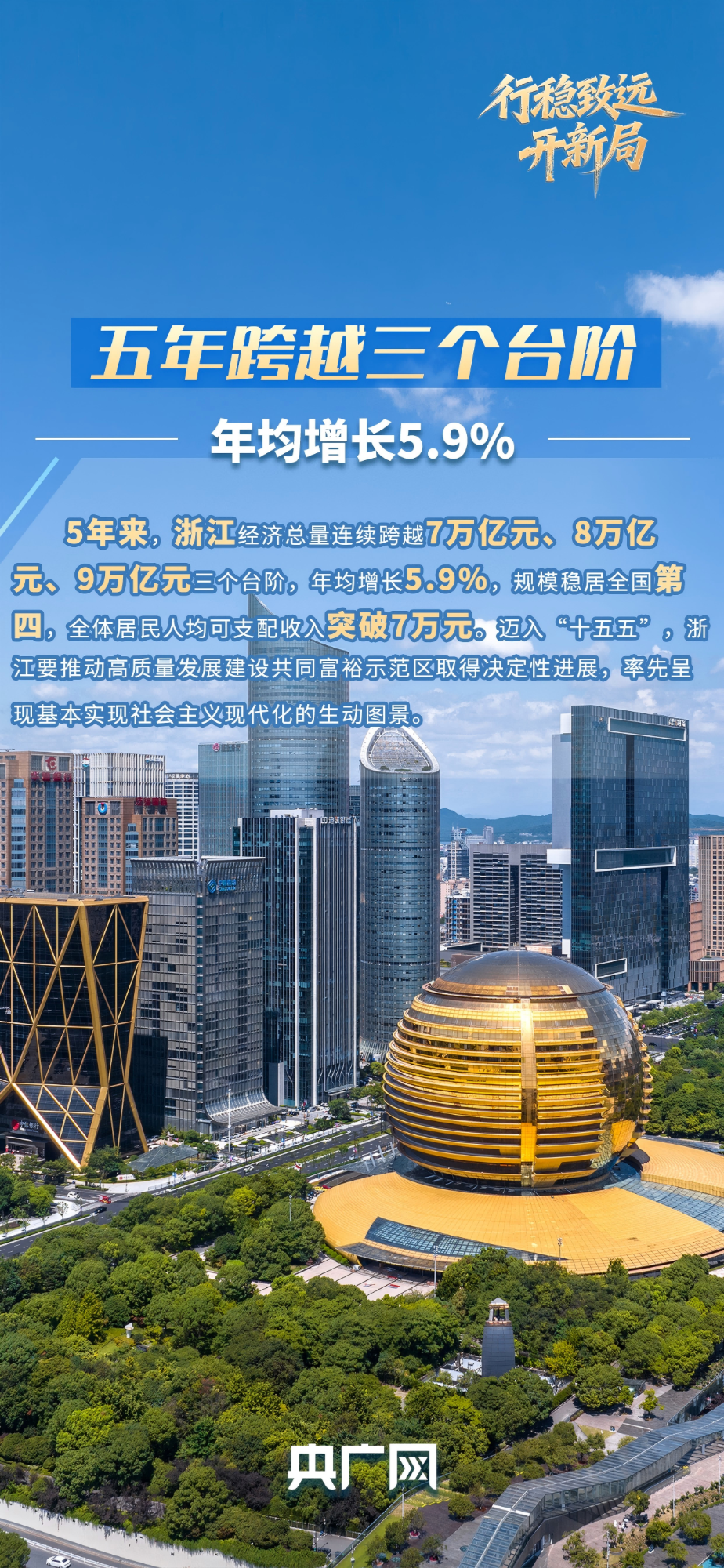
Core Viewpoint - The article emphasizes Zhejiang's significant economic growth and technological advancements over the past five years, highlighting its commitment to high-quality development and the integration of digital economy and ecological sustainability as it enters the "15th Five-Year Plan" period [4][11][28]. Economic Growth - Zhejiang's economic total has crossed significant milestones of 7 trillion, 8 trillion, and 9 trillion yuan, with an average annual growth rate of 5.9%, maintaining its position as the fourth largest economy in China [4]. - The province contributes nearly 7% of the national economic total while occupying only 1% of the country's land area, showcasing its high-quality development [4]. Digital Economy - The digital economy in Zhejiang has transitioned from "innovation exploration" to "development leadership," with products like AI glasses and companion robots becoming popular consumer items [5][10]. - In the past year, Zhejiang invested 723.2 billion yuan in technological innovation, adding over 6,000 high-tech enterprises and 17,600 technology-based SMEs, with the AI core industry revenue reaching 680 billion yuan, growing over 20% [6][11]. Artificial Intelligence Development - The focus on artificial intelligence is evident in the establishment of innovation spaces that support collaboration across various sectors, enhancing the AI industry ecosystem [7][10]. - The region aims to become a leading hub for AI innovation, with plans to enhance computing power and algorithm supply capabilities [10][11]. Ecological Development - Zhejiang has made strides in ecological civilization, transforming areas like the Xixi National Wetland Park into a model of biodiversity, with significant increases in species diversity [12][14]. - The province has implemented innovative ecological product value realization mechanisms, leading to the establishment of 14 "Green Mountains and Clear Waters" practice innovation bases, the highest in the country [18]. Common Prosperity Initiatives - The "Common Prosperity Workshop" initiative integrates resources from various sectors to create platforms for production, employment support, and skill enhancement, significantly increasing income for local farmers [21][27]. - Over the past five years, the per capita disposable income in Zhejiang has surpassed 70,000 yuan, with urban and rural incomes exceeding 80,000 yuan and 45,000 yuan respectively, ranking first among provinces [27]. Future Goals - By 2030, Zhejiang aims to achieve a high-quality development model that closely aligns with developed economies, focusing on economic growth and employment strategies as core drivers [27][28].
泰国中小企业拓电商市场 销售额劲增
Xin Lang Cai Jing· 2026-02-19 13:46
Group 1 - The Thai government-supported SMEs achieved a total sales volume of 23.84 billion Thai Baht (approximately 5.29 billion RMB) on major e-commerce platforms in 2025 [1] - Shopee platform had 1,209 sellers generating sales of 10.61 billion Thai Baht (approximately 2.35 billion RMB), marking a year-on-year growth of 425.59% [1] - TikTok Shop platform had 454 sellers achieving sales of 13.23 billion Thai Baht (approximately 2.94 billion RMB), with a year-on-year growth of 314.68% [1] Group 2 - Fast-moving consumer goods, fashion, and lifestyle products are the main drivers of e-commerce sales in Thailand [1] - On Shopee, fast-moving consumer goods accounted for 44.56% of sales, while fashion and lifestyle products represented 27.14% and 26.56%, respectively [1] - On TikTok Shop, fast-moving consumer goods sellers made up 66.67%, with lifestyle and fashion products at 20.37% and 9.88%, respectively [1] Group 3 - The growth is attributed to government initiatives aimed at enhancing digital capabilities for SMEs, including digital marketing training, content creation, and live-streaming sales [2] - The Thai Ministry of Commerce will continue to promote the use of e-commerce platforms for SMEs to expand their market and enhance competitiveness [2] - Support will also be provided for local enterprises to develop their own e-commerce platforms, contributing to the steady development of Thailand's digital economy [2]
新版人民币落地,纸币或将被淘汰?苏州率先试点!
Sou Hu Cai Jing· 2026-02-19 13:18
Core Viewpoint - The rapid pilot implementation of the digital renminbi is fundamentally upgrading China's monetary system, emphasizing that the evolution of payment methods is about integration rather than replacement of cash [1][10]. Group 1: Digital Renminbi's Emergence - The rise of mobile payments has made digital renminbi a necessary evolution to address the limitations of third-party payment platforms, which pose risks to financial security and privacy [2][4]. - Digital renminbi represents a substantial upgrade in payment methods, being a legal digital currency directly controlled by the central bank, ensuring its equivalence to physical cash [2][4]. Group 2: Advantages of Digital Renminbi - Digital renminbi offers multiple advantages over cash and third-party payments, including enhanced security, convenience, and inclusivity [5]. - The security of digital renminbi is bolstered by central bank oversight, allowing for traceable transactions while protecting user privacy [5][6]. - The convenience of digital renminbi includes features like "dual offline payment," enabling transactions without internet access, which is particularly useful in areas with poor connectivity [6]. Group 3: Coexistence of Cash and Digital Currency - Despite the rise of digital renminbi, cash will not be eliminated; it retains irreplaceable value in specific contexts and cultural practices [8][9]. - Cash serves as an important tool for financial inclusion, especially for the elderly, who may find digital payments challenging [8][9]. - Cultural significance and emotional value associated with cash, such as in traditional gifting practices, ensure its continued relevance [9]. Group 4: Future Outlook - The promotion of digital renminbi is not about replacing cash but about achieving a digital upgrade of the monetary system, fostering a coexistence of digital and physical currencies [10][11]. - Future applications of digital renminbi will expand into various sectors, enhancing financial solutions and addressing industry pain points [10].

春晚广告位争夺战:四十年国民记忆与商业暗流
凤凰网财经· 2026-02-19 10:54
Core Viewpoint - The evolution of the Spring Festival Gala sponsorship reflects the transformation of China's economy and consumer behavior over the past 40 years, showcasing the shift from material scarcity to technological innovation and brand storytelling [4][5]. Group 1: 1980s to Early 1990s - The Era of Material Scarcity - The transition from a planned economy to a market economy in the 1980s led to a scarcity of goods, making items like watches and bicycles symbols of wealth and status [6][7]. - The first brand to sponsor the Spring Festival Gala was Kambas watches in 1984, which used 3,000 quartz watches as payment, marking the beginning of brand sponsorship in the event [7][9]. - Kambas became a household name, with production reaching 1.26 million units by 1987 and over 2 million by 1991, highlighting the impact of the Gala on brand visibility and market demand [9][10]. Group 2: Mid-1990s to Early 2000s - The Rise of Consumerism - The late 1990s saw a surge in consumer spending, with households moving from basic necessities to larger purchases like televisions and refrigerators [12][14]. - In 1995, Shandong Kongfu Banquet Wine became the first "advertising king" of the Spring Festival Gala, paying 30.79 million yuan, initiating a trend among liquor companies [12][14]. - The sales of Qin Pool Wine skyrocketed from 180 million yuan in 1995 to 950 million yuan in 1996 after winning the sponsorship, demonstrating the immediate impact of Gala advertising [17]. Group 3: 2000s to 2010s - The Era of Brand Awareness - The early 2000s marked a shift towards household appliances as the main consumer focus, with Midea becoming a prominent sponsor, securing 16 sponsorships from 2003 to 2019 [18][20]. - The cost of advertising during the Gala increased significantly, with Midea's sponsorship rising from 6.8 million yuan in 2005 to 57.2 million yuan in 2011, reflecting the growing value of the event [20]. - Brands began to focus on storytelling and emotional connections with consumers, as seen with Haier and Gree, indicating a maturation of brand marketing strategies [21]. Group 4: Mid-2010s to Present - The Digital Economy and Technological Innovation - The rise of internet companies has transformed the Spring Festival Gala into a platform for digital engagement, with WeChat's "red envelope war" in 2015 significantly increasing viewer interaction [24][26]. - The Gala has become a battleground for tech giants, with platforms like Douyin and Kuaishou participating in interactive sponsorships, showcasing the shift towards a two-way communication model [29]. - The introduction of robots and AI technologies in recent Galas reflects China's transition from manufacturing to intelligent manufacturing, highlighting the importance of innovation in the economy [31].


春晚广告位争夺战:四十年国民记忆与商业洪流
Xin Lang Cai Jing· 2026-02-19 07:21
Core Insights - The evolution of the CCTV Spring Festival Gala sponsorship reflects the transformation of Chinese society and economy over the past 40 years, showcasing the changing consumer demands and emerging industries [20][21]. Group 1: 1980s to Early 1990s - The Era of Scarcity - In the 1980s, as China transitioned from a planned economy to a market economy, consumer goods were scarce, leading to a high demand for basic commodities [22]. - The first brand to sponsor the Spring Festival Gala was Kambas watches in 1984, which used 3,000 quartz watches as payment, marking the beginning of brand sponsorship in the gala [22][23]. - Kambas became a household name, with production reaching 1.26 million units in 1987 and over 2 million by 1991, despite the high price of its watches relative to average incomes [23][24]. Group 2: Mid-1990s to Early 2000s - The Rise of Consumerism - The mid-1990s saw a shift in consumer spending from basic goods to electronics, with Shandong Kongfu Banquet Wine becoming the first "advertising king" by paying 30.79 million yuan for sponsorship in 1995 [26]. - The competition among liquor brands for sponsorship reflected the rise of "social consumption," where premium liquor became a status symbol for social gatherings [28]. - After winning the Spring Festival sponsorship, Qin Pool Wine's sales skyrocketed from 180 million yuan in 1995 to 950 million yuan in 1996, demonstrating the immediate impact of gala sponsorship [29]. Group 3: 2000s to Early 2010s - The Home Appliance Boom - The early 2000s marked a shift towards home appliances as the primary consumer focus, with Midea becoming the most frequent sponsor, securing 16 sponsorships from 2003 to 2019 [30]. - The cost of advertising during the gala increased significantly, with Midea's sponsorship fee rising from 6.8 million yuan in 2005 to 57.2 million yuan in 2011, an increase of 840% [30]. - Midea's revenue grew from 17.5 billion yuan in 2003 to over 140 billion yuan in 2014, reflecting the effectiveness of its gala sponsorship strategy [12][30]. Group 4: Mid-2010s to Present - The Digital Economy and Technological Innovation - The rise of internet companies has transformed the Spring Festival Gala into a platform for digital engagement, with WeChat's "red envelope war" in 2015 significantly boosting viewer interaction [15][35]. - The gala's advertising has evolved from one-way promotion to interactive engagement, with platforms like Douyin and Kuaishou participating in sponsorships [16][35]. - The presence of technology companies has increased, with innovations such as AI and robotics showcased during the gala, indicating a shift from traditional advertising to technology-driven marketing [19][37].


中国提交关于当前形势下世贸组织改革的立场文件
Xin Lang Cai Jing· 2026-02-19 03:30
Group 1 - The core viewpoint of the news is China's submission of a position paper to the WTO, emphasizing the need to center development in the reform agenda to help developing members seize opportunities in digital economy, green transition, and artificial intelligence [1][2] - The position paper is the first comprehensive policy document submitted by China to the WTO since the initiation of the reform process, outlining China's supportive stance towards inclusive economic globalization and the multilateral trading system [1] - The document suggests implementing special and differential treatment provisions in a more precise and effective manner, encouraging developing members to capitalize on future industries and trade opportunities [1] Group 2 - The WTO initiated a necessary reform process in June 2022, achieving some progress in areas such as mechanism operation, in response to unilateral tariff measures and decision-making abuses by certain members [2] - The WTO members plan to start deep reform consultations in the second half of 2025, aiming to address urgent issues like operational inefficiencies and rule deficits based on previous work [2]