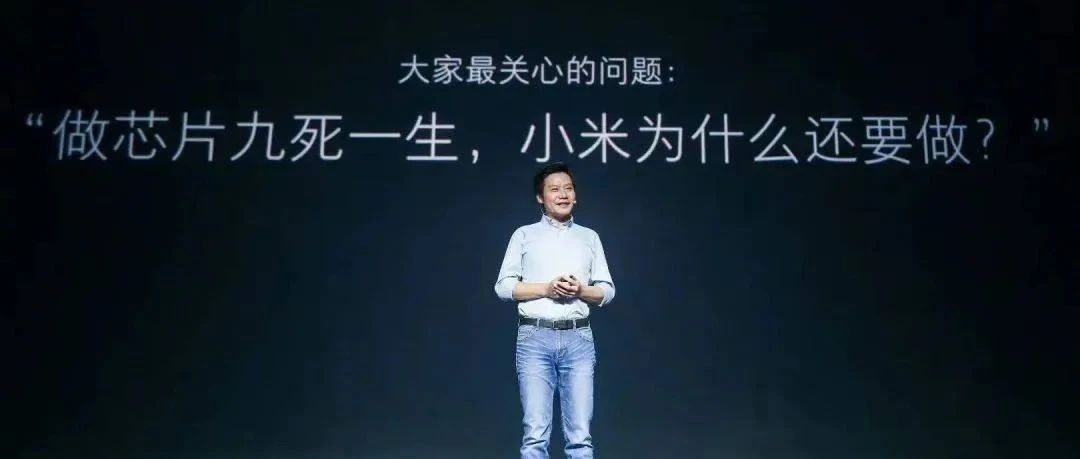
自研芯片

Search documents
昨夜今晨:格力前秘书孟羽童或与董明珠再度联手直播 联想自研芯片曝光
Sou Hu Cai Jing· 2025-05-21 01:44
Group 1 - Gree Electric's former secretary Meng Yutong may return to the company for live streaming activities, with confirmation still pending from Gree [2] - Meng Yutong shared a chat record with Gree's chairman Dong Mingzhu on social media, indicating a potential reconnection after two years [2] - Gree's official account welcomed Meng Yutong back, suggesting a positive reception to her potential return [2] Group 2 - Xiaomi's chairman Lei Jun announced that the self-developed 3nm flagship chip, Xuanjie O1, has entered mass production [3] - The Xuanjie O1 chip will be featured in high-end devices such as the Xiaomi 15s Pro smartphone and the Xiaomi Pad 7 Ultra tablet [3] - Qualcomm's CEO emphasized that despite Xiaomi's self-developed chip, Qualcomm remains a significant supplier for the company [3] Group 3 - Leap Motor's founder and chairman Zhu Jiangming clarified rumors regarding his death, expressing frustration over the false claims [4] - Zhu Jiangming highlighted the need for entrepreneurs to continuously prove their existence and the viability of their companies [4] - Leap Motor achieved financial results that exceeded expectations in the first quarter of 2025 [4] Group 4 - Lenovo is reportedly developing a self-researched chip named "SS1101," featuring a ten-core CPU architecture and a high-performance GPU [5] - The SS1101 chip has achieved a single-core GeekBench 6 score exceeding 2000 and a multi-core score surpassing 6700, indicating performance close to the Dimensity 8400 level [5] Group 5 - Former Midea Group vice president Yin Bitong has joined Hisense Group as the president of the air conditioning division, overseeing all air conditioning business lines [6][7] - This move has been confirmed by insiders within Hisense, indicating a strategic shift in leadership for their air conditioning sector [7]








关于小米造芯这件事,我们只说三个点
3 6 Ke· 2025-05-21 00:20
Core Viewpoint - Xiaomi is advancing its chip development with the upcoming launch of the "玄戒O1" chip, which will utilize second-generation 3nm process technology, marking a significant step in its self-developed chip journey [4][22]. Group 1: Chip Development History - Xiaomi began its chip development journey with the "澎湃S1" in 2014 and transitioned to various self-developed "小芯片" until 2017 [1]. - In 2021, Xiaomi re-initiated the development of a SoC "大芯片" [4]. Group 2: Industry Reactions - The announcement of the "玄戒O1" has sparked widespread discussion and analysis across social media platforms, with various opinions on its performance and pricing emerging [6]. - Some skepticism exists regarding the authenticity of the chip's self-developed status, particularly concerning its architecture and components [9][12]. Group 3: Architecture and Self-Development Debate - Critics argue that the use of ARM architecture in the "玄戒O1" undermines its classification as a self-developed chip [9]. - The article counters that many successful chip manufacturers, including MediaTek and Unisoc, also utilize public ARM architectures, suggesting that using such architectures does not negate self-development claims [11][12]. Group 4: Advanced Process Technology - The "玄戒O1" will employ advanced 3nm process technology, which has raised questions about why Xiaomi can access this technology while others cannot [22][25]. - Current U.S. regulations do impose restrictions on chip manufacturing, but they are conditional and do not outright ban the use of advanced processes for certain chip types [26][28]. Group 5: Investment and R&D Costs - Xiaomi's total investment in chip development is reported to be 135 billion yuan, which raises questions when compared to OPPO's previous 500 billion yuan investment that did not yield similar results [33][35]. - The article highlights that the cost of developing advanced chips can vary significantly, and the reported R&D costs of other companies, such as MediaTek, suggest that Xiaomi's investment may be sufficient for successful chip development [37][39].
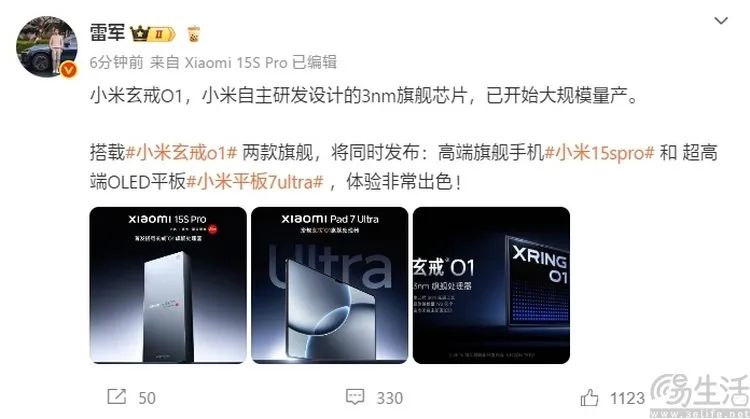
雷军称小米3nm芯片大规模量产,高通回应
Guan Cha Zhe Wang· 2025-05-20 02:49
Group 1 - Qualcomm's CEO Cristiano Amon stated that Xiaomi's self-developed chip initiatives are not expected to impact Qualcomm's business, as Qualcomm remains a strategic chip supplier for Xiaomi [1] - Qualcomm's Snapdragon chips have been the main SoC supplier for Xiaomi's flagship smartphones, and this relationship is expected to continue [1] - Xiaomi has announced its self-developed 3nm flagship SoC chip, Xuanjie O1, which is among the most advanced processes in the market, comparable to Apple's A18 Pro chip used in iPhone 16 Pro and Pro Max [3] Group 2 - Xiaomi's CEO Lei Jun revealed that the development of Xuanjie O1 has involved significant investment, with over 13.5 billion RMB spent to date and a projected investment of over 6 billion RMB this year [3] - The total investment planned for the Xuanjie project is 50 billion RMB, set to commence in 2025, indicating a long-term commitment to semiconductor development [3] - The R&D team for Xuanjie has grown to over 2,500 people, positioning Xiaomi among the top three in the domestic semiconductor design sector in terms of investment and team size [3] Group 3 - Xiaomi is set to launch new smartphones, tablets, and electric vehicles on May 22, featuring the Xuanwu O1 SoC in its upcoming flagship devices [4] - The Xuanjie O1 marks Xiaomi's return to core smartphone components, following previous attempts to develop SoCs, including the Panghu S1 launched in 2017 [4] - The Xuanjie O1 has begun mass production, with two flagship devices, the Xiaomi 15s Pro and the Xiaomi Pad 7 Ultra, expected to be released alongside it [4]
小米玄戒O1发布在即,雷军135亿豪赌芯片,这次押对了吗?
3 6 Ke· 2025-05-20 02:09
Core Insights - Xiaomi is set to officially launch its self-developed SoC, the Xuanjie O1, alongside the Xiaomi 15S Pro and other products on May 22, 2023, highlighting the strategic importance of the chip in its product lineup [1][4] - The Xuanjie O1 is positioned as a significant advancement in Xiaomi's technology strategy, aiming to compete with Qualcomm and MediaTek's flagship chips in terms of performance, efficiency, and user experience [5][20] - The development of the Xuanjie O1 represents a long-term investment in chip technology, with over 13.5 billion RMB invested since 2021 and a team of over 2,500 people dedicated to its development [20][21] Product Specifications - The Xuanjie O1 is built on TSMC's second-generation 3nm process and integrates approximately 19 billion transistors, which is comparable to Apple's A17 Pro [8][20] - The chip features a CPU architecture of "2+2+4+2," including two Cortex-X925 super cores, two Cortex-A725 big cores, four Cortex-A725 middle cores, and two Cortex-A520 small cores, designed to enhance performance [9][12] - The GPU is rumored to be the 16-core version of Immortalis-G925, which is larger than the 12-core version used in MediaTek's Dimensity 9400 [11][12] Strategic Importance - The Xuanjie O1 is not just a product but a strategic move for Xiaomi, aiming to establish itself as a serious player in the high-end smartphone market and to integrate its hardware and software ecosystems [5][21] - The company has learned from past experiences, particularly the shortcomings of its previous SoC, the Surge S1, and has adjusted its strategy to focus on high-end, self-developed chips [17][18] - Xiaomi's approach to chip development is seen as a long-term commitment, with a focus on building capabilities and integrating its ecosystem rather than seeking quick wins [21]
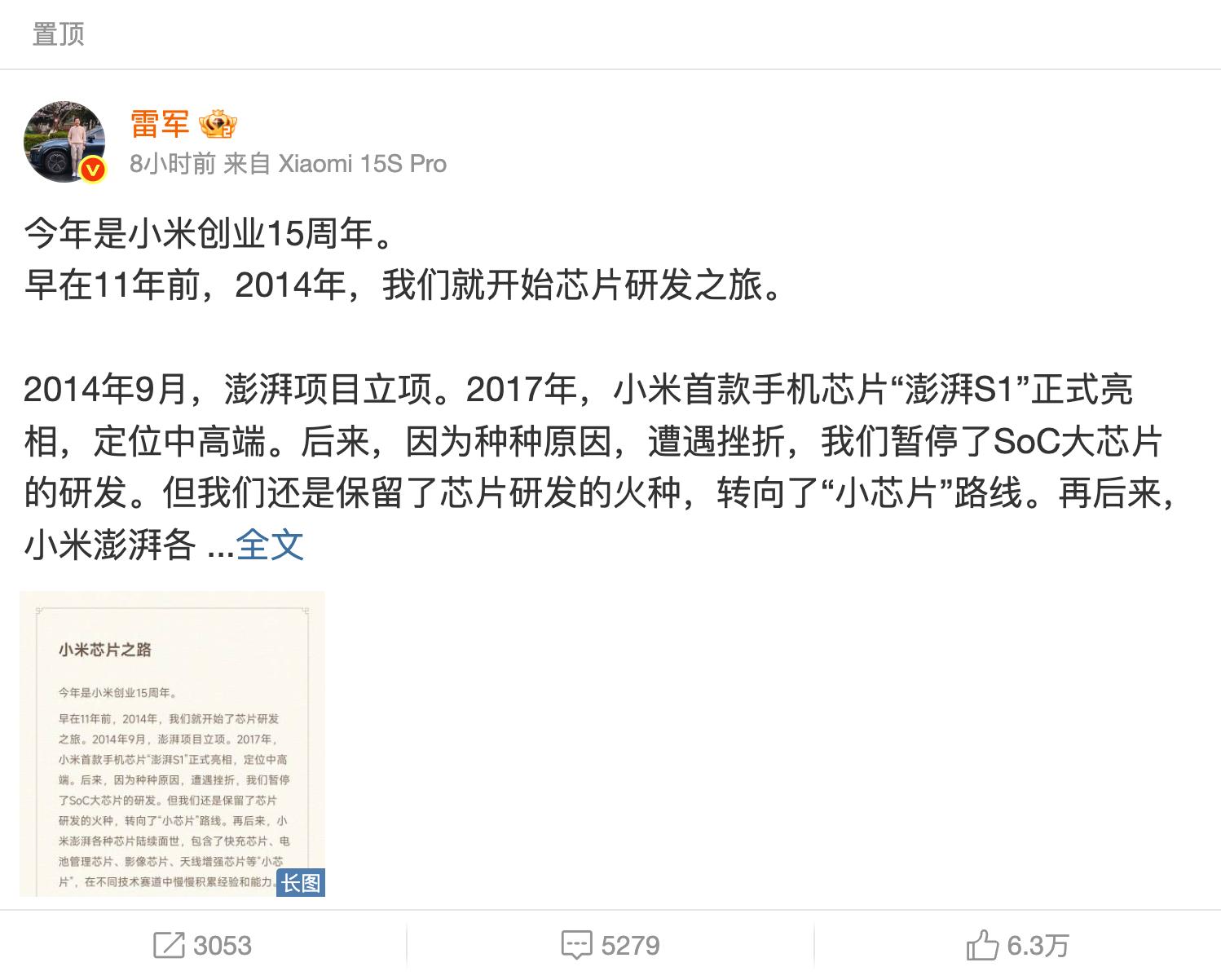
港股三大指数集体高开,宁德时代高开逾12%,小米集团领涨恒生科技成分股
Mei Ri Jing Ji Xin Wen· 2025-05-20 01:57
Group 1 - The Hong Kong stock market opened higher on May 20, with the Hang Seng Index rising by 0.28% to 23,398.35 points, the Hang Seng Tech Index up by 0.22%, and the National Enterprises Index increasing by 0.31% [1] - Pharmaceutical stocks experienced a collective surge, while shipping and port stocks also saw broad gains. Notably, Contemporary Amperex Technology Co., Ltd. (CATL) opened over 12% higher [1] - The Hang Seng Technology Index ETF (513180) saw a slight increase, with leading stocks such as Xiaomi, Li Auto, SMIC, Alibaba, and JD Health showing significant gains, while stocks like Alibaba Health, Bilibili, and Trip.com Group faced declines [1] Group 2 - Tianfeng Securities predicts that the release of Xiaomi's self-developed chip may accelerate changes in the competitive landscape of high-end domestic smartphones, with market share growth for leading manufacturers with self-research capabilities being a core logic for Xiaomi's valuation increase [2] - Xiaomi's years of investment in self-research across smartphones, operating systems, and chips are beginning to pay off, with synergistic effects expected to drive developments in its automotive business [2] - The Hang Seng Technology Index ETF (513180) leads in both scale and liquidity among its peers listed in A-shares, supporting T+0 trading, and includes core AI assets and technology leaders that are relatively scarce compared to A-shares [2]

小米集团-W(01810.HK):小米蜕变时刻:自研首款手机SOC玄戒O1发布
Ge Long Hui· 2025-05-20 01:40
机构:天风证券 研究员:孔蓉/孙潇雅/潘暕 小米首次发布手机SoC,跻身全球头部手机硬件厂商:从松果、澎湃到玄戒,小米自从2014 年对芯片业 务首次进行投入后,终于在2025 年迎来历史性时刻,小米自主研发设计的手机 SoC 芯片玄戒 O1 即将 在 5 月下旬发布。 目前小米是国内唯二两家具备自研芯片能力的手机厂商。 为何小米要坚持自研芯片?手机SoC 是为移动终端服务的定制化技术,其投入的资金和人才需求远高于 智能手机行业,此前手机厂商在芯片领域面临的技术和商业模式问题相对较大。而小米芯片团队吸收此 前经验,归属手机部旗下,在商业模式上吸取前期松果团队经验。 我们认为此次小米造芯,核心业务企稳和汽车业务第二曲线为芯片提供了充分的支持条件;另一方面, 国内手机高端市场价格带(6000 元以上)依然是小米需要攻克的市场,此前小米已在可穿戴产品上验 证硬件底层框架重构和系统策略优化后的续航提升。 旗舰SOC 芯片对小米的意义是什么?首先我们认为旗舰SOC 芯片手机发布是一次用户破圈,而对芯 片、AI、OS 等底层技术的长期耐心投入,使得小米作为科技消费品公司逐步拥有一定护城河,在手机 市场竞争中,自研芯片带来 ...
小米YU7、自研芯片、新机“定档”,高盛:买!
Hua Er Jie Jian Wen· 2025-05-19 07:19
Core Viewpoint - Xiaomi is launching multiple significant products, including the Xiaomi 15S Pro, Xiaomi Pad 7 Ultra, and its first SUV, the Xiaomi YU7, alongside the self-developed SoC chip, the Xiaomi Xuanjie O1, which is expected to enhance its high-end strategy [1][5][7]. Smartphone Business - Xiaomi is steadily increasing its market share in the smartphone sector, particularly in China, with a focus on high-end models [5][10]. - The introduction of the self-developed Xuanjie O1 chip, built on a second-generation 3nm process, is seen as a key milestone in Xiaomi's chip development and is expected to support its high-end strategy [7]. - Goldman Sachs forecasts Xiaomi's smartphone shipments to reach 170 million units by 2025, slightly below market consensus [7]. AIoT Business - Xiaomi's AIoT business is projected to grow approximately 50% year-on-year, with major contributions from large appliances and tablets [5][8]. - By 2027, large appliances and tablets are expected to account for about 40% of AIoT sales and 50% of gross profit, up from 30% and 35% in 2024 [8]. Electric Vehicle Business - The second phase of Xiaomi's electric vehicle factory has passed government inspection and is set to begin trial production soon, with the third phase showing early signs of progress [9]. - Delivery estimates for the YU7 SUV (including YU7 Ultra) are around 320,000 units by 2025/26 [9][12]. Financial Performance - Xiaomi's global smartphone market share reached 14% in Q1 2025, with significant growth in the Chinese market [10]. - In the home appliance sector, sales of air conditioners, washing machines, and refrigerators saw year-on-year increases of 103%, 184%, and 145%, respectively [11]. - The global tablet shipment increased by 57% to 3.1 million units, positioning Xiaomi third in both global and Chinese markets [11]. AI Ecosystem Development - Xiaomi launched its first open-source inference-based large language model, MiMo, and is building a vast AIoT ecosystem with over 700 million active smartphone installations and more than 900 million connected AIoT devices [13]. - Adjusted net profit forecasts for 2025-2027 have been increased by 3-6% due to stronger IoT sales and gross profit outlook [13]. Upcoming Catalysts - Key upcoming events include the Q1 earnings report, the release of the "Xring" chip, the "2025 Investor Day" meeting, and the launch of the YU7 SUV, with expected monthly sales of around 30,000 units [13][14][15].

刚刚,热搜爆了!雷军突然发声
天天基金网· 2025-05-19 05:45
Core Viewpoint - Xiaomi is set to unveil multiple strategic new products, including its first self-developed SoC chip "Xuanjie O1," during a launch event on May 22, which has generated significant public interest and discussion on social media [1][3][5]. Product Launch - The strategic new product launch event is scheduled for May 22 at 7 PM, featuring several key products such as the "Xuanjie O1" chip, Xiaomi 15S Pro, Xiaomi Pad 7 Ultra, and the first SUV "Xiaomi YU7" [2][3]. Chip Development Journey - Xiaomi began its chip development journey in 2014, launching its first mobile chip "Surge S1" in 2017. After a shift towards smaller chips, the company resumed its focus on larger chips in 2021 alongside its decision to enter the automotive sector [9]. - As of April 2023, Xiaomi has invested over 13.5 billion yuan in the development of the "Xuanjie" chip, with an expected investment of over 6 billion yuan this year. The R&D team has grown to over 2,500 members, placing Xiaomi among the top three in China's semiconductor design sector [9]. "Xuanjie O1" Chip Details - The "Xuanjie O1" chip is Xiaomi's first major self-developed chip, utilizing second-generation 3nm advanced technology with a transistor count of 19 billion [9]. - Following the launch of "Xuanjie O1," Xiaomi will join the ranks of global brands like Apple, Samsung, and Huawei as one of the few companies with core self-developed chips [9]. Future Outlook - Xiaomi's president, Lu Weibing, emphasized that the "Xuanjie O1" chip represents a critical milestone in the company's chip development journey, with several products set to feature this chip beyond just smartphones [9]. - Lei Jun, the chairman of Xiaomi, highlighted the importance of chips as a foundational technology for the company and requested public patience and support as Xiaomi continues to explore this field [9].

雷军宣布!小米股价拉升!
证券时报· 2025-05-19 05:38
据了解,小米玄戒O1采用3nm旗舰处理器,是小米11年芯片研发之旅的里程碑。为研发玄戒芯片,小米已经累计投入超135亿元。受小米发布会定档等消息影响,小 米集团股价也迅速反弹,截至发稿,小米集团股价已从早盘下跌近4%拉升翻红。 小米首款自研SoC芯片和首款SUV车型小米YU7将于同一天发布。 5月19日,小米集团董事长兼CEO雷军发微博称,小米战略新品发布会定在5月22日晚7点召开。雷军表示,这次重磅新品特别多,包括手机SoC芯片小米玄戒O1、小 米15SPro、小米平板7Ultra和首款SUV小米YU7等。 玄戒芯片力争"跻身第一梯队" 雷军表示,小米玄戒O1采用第二代3nm工艺制程,力争跻身"第一梯队旗舰体验"。据了解,玄戒O1是小米自主研发设计的SoC芯片。在玄戒立项之初,就拥有很高 的目标:最新的工艺制程、旗舰级别的晶体管规模、第一梯队的性能与能效。 雷军透露称,四年多时间,截至今年4月底,玄戒累计研发投入已经超过了135亿元人民币。目前,研发团队已经超过了2500人,2025年预计的研发投入将超过60亿 元。 "我相信,这个体量,在目前国内半导体设计领域,无论是研发投入,还是团队规模,都排在行业前三 ...
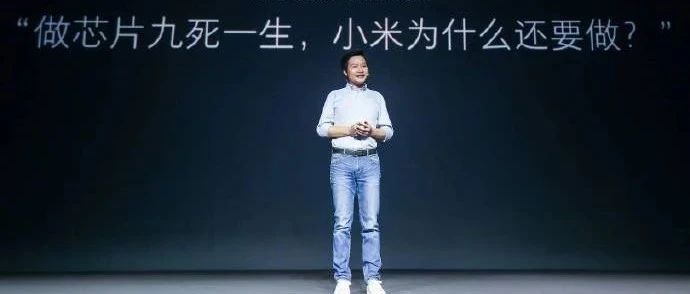
雷军官宣:玄戒O1是3nm旗舰芯片,已投入135亿,2500人!
是说芯语· 2025-05-19 05:25
Core Viewpoint - Xiaomi is set to launch its flagship SoC chip, the Xuanjie O1, along with new products, marking a significant step in its chip development journey and aiming to establish itself in the high-end technology sector [2][3][4]. Group 1: Chip Development Journey - Xiaomi's first self-developed SoC, the "Pangpai S1," faced challenges leading to a shift towards smaller chips before returning to large chip development in 2021 [2][3]. - The company has committed to a long-term investment plan of at least 50 billion RMB over ten years to support its chip development efforts [3]. - As of April 2023, Xiaomi has invested over 13.5 billion RMB in the Xuanjie project, with a research team exceeding 2,500 members and an expected investment of over 6 billion RMB this year [3]. Group 2: Strategic Goals and Challenges - Xiaomi aims to produce high-end flagship SoCs to master advanced chip technology and support its high-end strategy [3][4]. - The launch of the Xuanjie O1, utilizing second-generation 3nm process technology, is seen as a new starting point for Xiaomi's self-developed chips [4]. - Despite the progress, Xiaomi acknowledges that it is still at the beginning of its journey in chip development, facing significant competition and challenges in the industry [4].