实体经济

Search documents
美国GDP是幻觉?中国经济实力被严重低估,美GDP或许虚胖15万亿
Sou Hu Cai Jing· 2025-11-13 21:43
Core Viewpoint - The article discusses the real economic comparison between the US and China, questioning the authenticity of US GDP figures and suggesting that China's economic strength may be underestimated [1][3]. Economic Growth Comparison - From 2019 to 2024, US GDP increased from $21.5 trillion to $29.2 trillion, a growth of nearly 36%, equivalent to adding an economy the size of Spain each year [3]. - In contrast, China's GDP grew from $14.4 trillion to $18.94 trillion during the same period, a growth of approximately 31.5% [7]. Energy Production and Economic Support - US electricity generation only increased from 4.1 trillion kWh to 4.3 trillion kWh, a growth of less than 5%, raising questions about the sustainability of its GDP growth [5]. - China's electricity production rose from 7.1 trillion kWh to 10.1 trillion kWh, a growth of over 42%, indicating solid production support for its economic growth [7]. Automotive Industry Insights - US automobile sales declined from 17.1 million to 16 million units over five years, while China's sales remained stable and it became a global leader in the new energy vehicle sector [9][11]. - By 2024, China emerged as the world's largest automobile exporter, showcasing its manufacturing capabilities [11]. Economic Structure and GDP Calculation Methods - The article highlights the differences in GDP calculation methods: the US uses the expenditure approach, which counts all spending, while China employs the production approach, focusing on actual output [15][19]. - If China were to adopt the US's expenditure method, its GDP could exceed $44 trillion, surpassing the US by $15 trillion [19]. Inflation and Cost of Living - The article points out that the rapid GDP growth in the US is largely driven by inflation rather than real output, with significant increases in consumer prices for everyday goods [21][23]. - The structure of the US economy is shifting, with services now accounting for over 80% of GDP, raising concerns about the actual value generated [23][25]. Market Dynamics and Valuation - The US stock market, particularly AI-related stocks, is experiencing inflated valuations, exemplified by OpenAI's market cap of $13.5 trillion despite only $3.7 billion in profits [27][29]. - The interconnected investments among major tech companies create a "capital game" that inflates valuations without corresponding real demand [29]. Conclusion on Economic Strength - The article concludes that while China's GDP may be statistically lower, it is backed by real manufacturing and infrastructure, whereas the US's high GDP is more reflective of price increases and financial bubbles [31].

山东“十四五”金融答卷亮点纷呈 为强省建设注入金融活水
Zhong Guo Xin Wen Wang· 2025-11-13 14:00
Core Insights - The "14th Five-Year Plan" period is crucial for the high-quality development of finance in Shandong, with significant growth in financing and financial supply supporting the province's economic development [1][3]. Financial Supply and Economic Support - Shandong's total financing has seen substantial growth, with social financing scale growth exceeding the national average for 25 consecutive quarters, reaching 25 trillion yuan this year [3]. - The balance of domestic and foreign currency loans has also outpaced national growth for 20 consecutive quarters, surpassing 15 trillion yuan last November [3]. - The average interest rate for newly issued corporate loans has decreased by 1.06 percentage points, with a 1.82 percentage point reduction for small and micro enterprises, benefiting the real economy [3]. Capital Market Development - The "Qilu Plate" in the capital market has shown vitality, with 3,556 companies in the listing reserve resource pool and a total of 430 listed companies in Shandong, with a total market value of 4.8 trillion yuan [4][5]. Financial Innovation and Reform - Three national-level financial reform pilot zones have significantly contributed to financial innovation in Shandong, with the Jinan Sci-Tech Financial Reform Pilot Zone seeing a 176.7% increase in loans to sci-tech enterprises [6]. - Shandong has engaged in comprehensive cooperation with central financial institutions, securing 864.45 billion yuan for key projects in technology innovation and rural revitalization [6]. Support for Agriculture and Rural Development - The focus on rural revitalization has led to a doubling of inclusive agricultural loans to 962.09 billion yuan by September 2025, supporting well-known agricultural products in the province [7]. Risk Management and Financial Security - A risk prevention and resolution system has been established, with 6.87 trillion yuan in non-performing loans addressed, enhancing the financial sector's resilience [8]. - The province has streamlined foreign exchange services and launched ten cross-border financial service platforms, benefiting over 9,000 enterprises [8]. Future Outlook - Looking ahead to the "15th Five-Year Plan," Shandong aims to deepen financial reforms while balancing high-quality development and safety, contributing to China's modernization efforts [8].
“保持制造业合理比重” 这个“合理”咋理解
Ren Min Ri Bao· 2025-11-13 13:51
Core Viewpoint - The article emphasizes the importance of maintaining a "reasonable proportion" of the manufacturing industry within China's economy, as outlined in the "14th Five-Year Plan" to strengthen the foundation of the real economy [1]. Group 1: Definition of "Reasonable Proportion" - The "reasonable proportion" refers to the share of manufacturing value added in the GDP, which is influenced by both manufacturing and other sectors like services [2]. - Over the years, as China's economy has grown and evolved, the proportion of manufacturing in GDP has decreased, while the service sector has increased, with service value added surpassing secondary industry for the first time in 2012 [2]. - The historical trend shows that while the absolute size of manufacturing is growing, its relative share in GDP cannot be excessively high, reflecting a common pattern in the development of other economies [2]. Group 2: Importance of Maintaining Manufacturing's Proportion - Manufacturing plays a crucial role in daily life, providing essential goods and services that meet basic needs [3]. - It serves as a solid foundation for the development of other industries, including agriculture and services, and is vital for job creation, employing over 100 million people, which accounts for 24.4% of the workforce in secondary and tertiary industries [3]. - The stability and growth of the economy, technological strength, and overall national power are closely tied to the health of the manufacturing sector [3]. Group 3: External Factors and Challenges - In the context of increasing international competition, manufacturing is a critical area for nations to focus on [4]. - Despite being the world's largest manufacturing country, China faces challenges from new technological revolutions and rising protectionism, which threaten global supply chains [4]. - To navigate these challenges, it is essential to focus on the real economy, enhance core technologies, and strengthen the resilience and competitiveness of supply chains [4]. Group 4: Strategies to Maintain Reasonable Proportion - The "14th Five-Year Plan" outlines specific tasks to build a modern industrial system centered on advanced manufacturing, optimize traditional industries, and cultivate emerging sectors [6]. - The goal is to enhance the quality and strength of manufacturing, with projections indicating that by 2024, China's manufacturing value added will account for nearly 30% of the global total [7]. - Addressing existing shortcomings, such as insufficient innovation capabilities and technological gaps, is crucial for advancing towards a manufacturing powerhouse [7].
“保持制造业合理比重”,这个“合理”咋理解
Ren Min Ri Bao· 2025-11-13 05:43
Core Viewpoint - The article emphasizes the importance of maintaining a "reasonable proportion" of manufacturing in China's economy as part of the "14th Five-Year Plan" to strengthen the foundation of the real economy [1] Group 1: Definition of "Reasonable Proportion" - The proportion of manufacturing value added in GDP is influenced by both manufacturing itself and other sectors like services [2] - Over the years, as China's economy has grown and its structure has upgraded, the share of manufacturing in GDP has decreased, while the service sector has increased [2] - Data shows that in 2012, the value added by the service sector surpassed that of the secondary industry for the first time, and by 2013, it accounted for over 50% of GDP [2] - The shift in industrial structure from 2010 to 2024 indicates a trend where manufacturing's share is decreasing, which aligns with global economic patterns [2] Group 2: Importance of Maintaining Manufacturing's Proportion - Manufacturing plays a crucial role in daily life, providing essential goods and services [3] - It serves as a solid foundation for the development of other industries, including agriculture and services [3] - The manufacturing sector is a significant source of employment, with over 100 million people employed in manufacturing, accounting for 24.4% of employment in secondary and tertiary industries [3] Group 3: External Factors and Challenges - In the context of increasing international competition, manufacturing remains a critical area for nations [4] - China has been the world's largest manufacturing country for many years, but it faces challenges from new technological revolutions and industrial changes [4] - The rise of unilateralism and protectionism globally poses threats to the stability of global supply chains [4] Group 4: Strategies to Maintain Reasonable Proportion - The "14th Five-Year Plan" outlines specific tasks to build a modern industrial system centered on advanced manufacturing, optimize traditional industries, and cultivate emerging industries [6] - The focus is on enhancing quality and strength in manufacturing, with China accounting for nearly 30% of global manufacturing value added by 2024 [7] - Despite achievements, challenges such as insufficient innovation capabilities and technological gaps in key industries remain [7] - The plan aims to promote the upgrading of key industries, digital transformation of manufacturing, and the development of new pillar industries [7]
适度宽松的货币政策持续发力 前三季度养老产业贷款同比增58.2%
Ren Min Ri Bao· 2025-11-12 22:04
中国人民银行发布的2025年第三季度中国货币政策执行报告显示,今年以来,适度宽松的货币政策持续 发力,在金融总量较快增长的同时,信贷结构也在不断优化,有力支持了重点领域、重大战略和经济结 构的转型升级。9月末,我国科技贷款、绿色贷款、普惠贷款、养老产业贷款、数字经济产业贷款分别 同比增长11.8%、22.9%、11.2%、58.2%、12.9%,均高于全部贷款增速。总体看,适度宽松货币政策效 果在不断累积,对实体经济的支持效果还会逐步显现。 今年以来,中国人民银行综合运用数量、价格、结构等多种货币政策工具,为经济回升向好和金融市场 稳定运行创造了适宜的货币金融环境。数据显示,截至9月末,支持做好金融"五篇大文章"的结构性货 币政策工具余额达3.9万亿元。 报告提出,下阶段,要实施好适度宽松的货币政策。综合运用多种工具,保持社会融资条件相对宽松, 同时继续完善货币政策框架,强化货币政策的执行和传导,保持流动性充裕,使社会融资规模、货币供 应量增长同经济增长、价格总水平预期目标相匹配。 (文章来源:人民日报) ...
“双十一”线下购物升温:体验好 价格优 简阳实体店人气旺
Sou Hu Cai Jing· 2025-11-12 06:14
简阳市融媒体中心 "双十一"不仅是线上购物的高峰,也为实体经济发展带来机遇。近日,记者走访简阳市多家商场,商家通过各类促销活动吸引顾客,彰显本地实体经济活 力。 在百伦百货一楼美妆专区,各类品牌化妆品琳琅满目。一家知名化妆品专柜前,"双十一"促销标牌格外醒目,销售人员热情介绍新品、邀请顾客试用,不 少消费者驻足咨询产品信息与优惠。 某化妆品品牌柜员 薛娟: 我们线上线下活动是同步的,价格都是相差不大。但是我们线下购买有更多的优势,比如说你可以亲身体验,还可以享受后期的护理服务。 在苏宁易购简阳旭海时代广场店,市民夏女士正在挑选家电。店长介绍,门店实行与线上同价的促销策略,在价格持平的基础上,线下沉浸式的购物体验 成为吸引消费者的关键。 苏宁易购成都简阳旭海时代广场店 店长 马东群: 苏宁"双十一"补贴不停,"双十一"期间购物可以抽大奖,电视、冰箱、洗衣机等生活家电,不同品牌有满减和至高补贴20%,样机折扣价低于5折,还有 更多爆款。 市民 夏女士: 我想给我的女儿买洗衣机、冰箱,这里的服务很好。今天在搞活动,想亲自摸一摸、看一看,这里的折扣还是很好。 "双十一"期间,市商务局联合多家企业推出一系列促消费活动。 ...
乡镇工业也能锚定高水平
Jing Ji Ri Bao· 2025-11-11 22:08
Group 1 - The Jingchang Wide Plate Project in Donglian Town, Tongling City, Anhui Province, has a total planned investment of 5.6 billion yuan and aims to be a top global green and intelligent wide plate factory [1] - The project has successfully developed low-alloy high-strength structural steel and marine engineering structural steel, with its ship plate products certified by five national classification societies [1] - The project has recently entered the international supplier list for high-quality ship plate steel [1] Group 2 - Donglian Town has transitioned from a traditional agriculture-based economy to a high-level industrial development model, focusing on steel, energy, and fine chemicals [2] - By 2024, the number of regulated enterprises in the town is expected to reach nearly 20, with industrial output value projected to be 23.7 billion yuan, marking significant economic growth [2] - The town has established the first township-level "Enterprise Development Service Center" in Anhui, implementing a proactive service mechanism to support local businesses [2]
金融赋能实体经济 广度深度双提升——中国光大银行呼和浩特分行精准滴灌助区域高质量发展
Zhong Guo Jin Rong Xin Xi Wang· 2025-11-11 07:09
Core Viewpoint - The China Everbright Bank Hohhot Branch is committed to supporting the real economy through various financial services, aiming to enhance the quality of regional economic development by increasing credit approvals and expanding industry coverage [1][4]. Group 1: Financial Support and Growth - In 2025, the bank achieved a significant increase in the number of newly reported and approved corporate clients, with the proportion of general credit public clients reaching 37.38% [2]. - The bank has focused on small and micro enterprises, technology-driven companies, and green enterprises, with a notable increase in the number of clients in these key areas [2]. - The bank's support for small and micro technology enterprises has led to a 41.38% growth in the number of clients, with loans accounting for 22.21% of the total, an increase of 2 percentage points since the beginning of the year [2]. Group 2: Green Finance Initiatives - The bank has expanded its green finance services to include emerging fields such as green transportation and smart transportation system construction, in addition to traditional areas [3]. - The overall growth of green loans reached 7.53%, with specific sectors like resource recycling and energy transition seeing increases of 51.77% and 10.61%, respectively [3]. - The bank successfully approved its first loan for "environmentally friendly railway construction," establishing a replicable model for green finance innovation [3]. Group 3: Support for Private Economy - The bank actively collaborates with local government departments to address the needs of the private economy, hosting events to connect financial services with private enterprises [3]. - Innovative cross-border financial tools have been utilized to facilitate access to low-cost foreign funds for high-quality domestic private enterprises [3]. - The bank has implemented measures to optimize credit approval processes and reduce financing costs for traditional industries, supporting their transformation towards high-end, intelligent, and green development [3][4]. Group 4: Overall Strategy and Future Outlook - The bank has enhanced its precision and coverage in serving the real economy, expanding its client base and increasing support for small and micro enterprises [4]. - The dual strategy of upgrading traditional industries while nurturing emerging sectors has been established, creating a balanced growth model [4]. - The bank plans to continue expanding its service coverage and improving service precision to direct more financial resources towards key areas of the real economy in Inner Mongolia [4].

扎根实体经济,狮桥融资租赁与小微企业共成长
Sou Hu Cai Jing· 2025-11-11 06:46
Group 1 - The robust development of the real economy relies on a large and dynamic group of small and micro enterprises [1] - Lionbridge Financing Leasing (China) Co., Ltd. focuses on serving small and micro enterprises, becoming a solid partner in their growth journey [1] Group 2 - Unlike traditional credit, the financing lease model of "asset-based financing" better meets the actual needs of small and micro enterprises and individual operators [3] - Lionbridge provides financing support for key assets such as production equipment and transportation tools, effectively addressing the funding challenges faced by these enterprises in their early development [3] - This process is not merely a financial transaction but a construction of a symbiotic industrial ecosystem, where Lionbridge connects closely with numerous small and micro enterprises, achieving both social and commercial value [3]

四中全会精神在基层|东北老工业基地铁西区的蝶变与新生
Xin Hua She· 2025-11-11 01:29
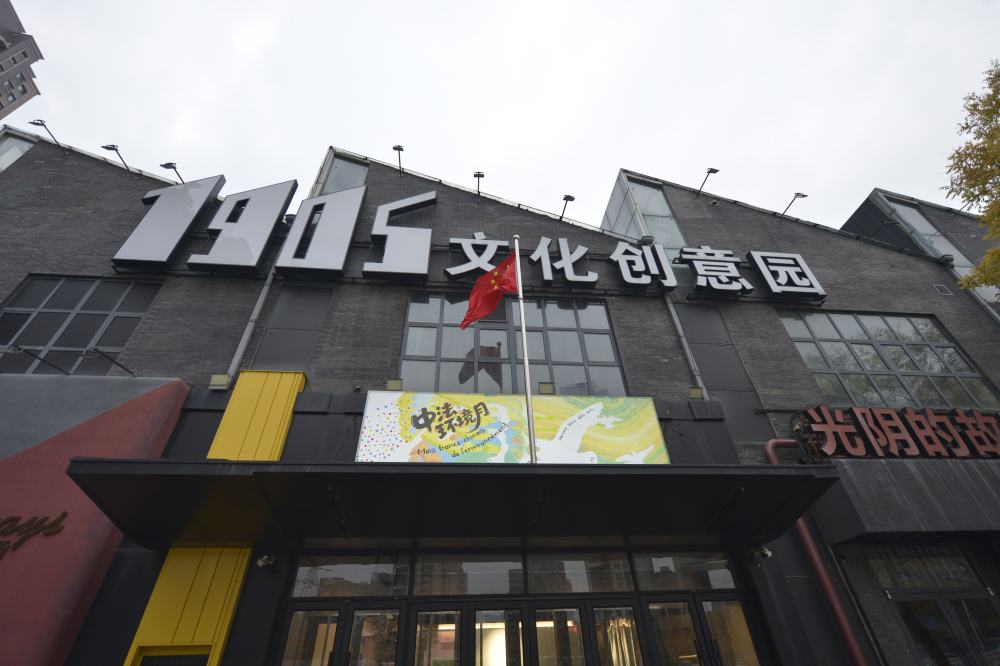
Core Viewpoint - The transformation of the Tiexi District in Shenyang, from an industrial hub to a modern cultural and creative center, exemplifies the broader revitalization of Northeast China's old industrial bases, showcasing successful urban and economic reforms [4][5]. Group 1: Historical Context and Transformation - The 1905 Cultural and Creative Park, located in Tiexi District, was originally part of the Shenyang Heavy Industry Group's second workshop, established in 1937, and was repurposed into a modern cultural park in 2012 after the group's relocation [4]. - Tiexi District has a rich industrial history, being the birthplace of numerous significant industrial milestones in New China's history, but faced challenges due to issues like excess workforce and corporate debt [4]. Group 2: Economic and Industrial Development - Tiexi District has implemented a series of reforms to improve its business environment, including quantifiable assessments and proactive government engagement with local enterprises, leading to a significant enhancement in the local business climate [4][5]. - The district is focusing on upgrading traditional industries and fostering emerging strategic industries, with a shift from factor-driven to innovation-driven development [5]. Group 3: Urban and Cultural Integration - The district has developed urban landmarks like the 1905 Cultural and Creative Park, blending historical memory with modern life, which has contributed to a growing cultural industry cluster [5]. - Tiexi District has seen its permanent population exceed 1.37 million, reflecting successful urban planning and public service enhancements that attract residents [5]. Group 4: Future Directions - The district aims to continue aligning with national strategies for economic development, emphasizing the importance of advanced manufacturing and sustainable practices as part of its growth trajectory [6].