
情绪价值

Search documents
奇梦岛携手上海K11:打造年末“情绪补给站” 双城联动共启跨年仪式感
Sou Hu Cai Jing· 2025-12-05 05:32
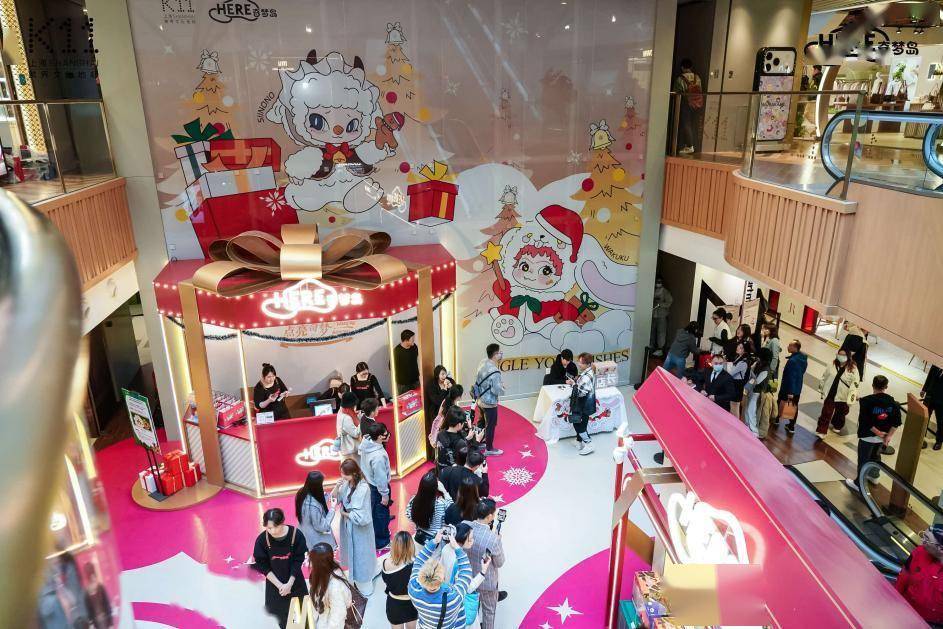
Core Insights - HERE Dream Island has launched a limited-time pop-up event in collaboration with Shanghai K11 Shopping Art Center, marking its first major offline project after brand upgrades [1] - The pop-up aims to create a healing emotional space for urban youth, enhancing the year-end experience with festive atmosphere and interactive activities [1][3] - A dual-city New Year plan is set for January 1, 2026, featuring synchronized themed events in both Beijing and Shanghai, centered around SIINONO and WAKUKU IP [1] Event Details - The opening week of the pop-up will offer exclusive benefits, including 300 limited Frida tags, custom stickers, and a gift-with-purchase program [3] - A special "One-Day Store Manager" event will occur on the opening day, where customers spending over 238 yuan can interact with celebrity store manager Hu Kaixuan [3] - The event will transition to a New Year theme in late December, introducing a nighttime lighting area and enhancing user interaction throughout the holiday season [3] Brand Strategy - This event represents a step in HERE Dream Island's offline experience strategy post-brand renewal, visualizing its positioning of "emotional value × original aesthetics × urban lifestyle" [5] - The collaboration with K11 will continue until January 15, 2026, featuring a series of linked pop-up activities, including lighting ceremonies, snow events, and live performances [7] - The initiative aims to integrate trendy toys into urban lifestyles, providing attendees with a sense of relaxation and joy during the year-end period [7]

2025搜狐时尚盛典12月18日即将启幕
Bei Jing Wan Bao· 2025-12-04 04:11
Core Insights - The 2025 Sohu Fashion Gala will be held on December 18 in Beijing, focusing on the theme "Moving Towards the Heart," which emphasizes emotional value, emotional economy, and social companionship as emerging trends in the fashion industry [1][3] Group 1: Event Overview - The gala will gather influential fashion pioneers, aesthetic advocates, and cultural creators to discuss the new directions and consumer logic in the fashion industry amidst the integration of emotional needs and AI technology [1][3] - Sohu Video will provide live streaming of the entire event, ensuring broad accessibility [1] Group 2: Key Themes and Trends - "Emotional value" is highlighted as the annual keyword, reflecting a shift in consumer behavior where younger generations are more willing to pay for emotional experiences [3] - The event will feature discussions on topics such as "emotional dressing" and "self-fashion," showcasing the contemporary fashion philosophy of "beauty for oneself" [3] Group 3: Historical Context and Evolution - Since its inception in 2012, the Sohu Fashion Gala has evolved to reflect industry trends, introducing various awards that align with emerging marketing and consumption patterns, such as e-commerce and live streaming [4] - The 2025 gala marks a significant shift by centering on "emotional value," indicating a rethinking of fashion definitions and a keen understanding of contemporary societal values [4]


中国不仅是全球最大汽车市场,更是未来出行的定义者 | 两说
第一财经· 2025-12-04 03:26
Core Viewpoint - The Chinese market has become the center of the global smart electrification wave in the automotive industry, with a focus on evolving consumer trends, localized R&D, safety, innovation, and the redefinition of high-end brand value [1]. Group 1: Localized R&D Strategy Upgrade - The development strategy has evolved from "R&D in China to serve China" to "R&D in China to serve China and empower the global market" [3]. - China is now the largest market for several flagship models, showcasing its significance in the global automotive landscape [3]. - Technologies developed for China, such as rear entertainment systems and automated parking, are being adapted for global markets, highlighting the competitive and innovative nature of China's automotive ecosystem [3]. Group 2: Balancing Intelligent Assisted Driving - Safety remains the primary principle in automotive design, with a commitment to ensuring safe transportation [5]. - The company has a history of pioneering safety technologies, including energy-absorbing crumple zones and extensive crash testing, which inform future product designs [5]. - The evolution of safety encompasses passive to active safety measures and the transition from assisted driving to conditionally automated driving, maintaining a consistent commitment to safety [5]. Group 3: Consumer Trends - Chinese consumers are becoming more rational while also valuing the emotional and spiritual aspects of products [8]. - The brand emphasizes a blend of traditional craftsmanship and emotional connection, creating vehicles that resonate with consumers beyond mere transportation [8]. - The future of high-end vehicles lies in the perfect integration of intelligence and emotional appeal, enhancing the overall consumer experience [9]. Group 4: Industry Outlook - The automotive industry is currently exhibiting unprecedented attractiveness and vitality, with a focus on consumer welfare, safety, and interests as foundational principles [11]. - China is positioned not only as a competitive market but also as a key player in shaping the industry's future [11].

【2025美好生活高峰论坛|圆桌会议】从“悦己”到“共情”:解码Z世代消费心智
Sou Hu Cai Jing· 2025-12-03 11:21
Core Insights - The forum focused on high-quality consumption and the future of the Chinese consumer market, emphasizing the importance of emotional value in the purchasing decisions of Generation Z [2][4][7] Group 1: Emotional Value in Consumer Behavior - Emotional value has become a core driver of purchasing decisions for Generation Z, with brands needing to establish deep resonance with consumers through spiritual values [4][5] - Brands like Brown Brothers integrate mindfulness into their products, providing consumers with spiritual satisfaction beyond functional needs [4] - The transformation of emotional value into brand competitiveness is exemplified by Yuanqi Forest's product design, which is tailored to user needs, enhancing the consumer experience [5] Group 2: Changing Consumption Logic - The consumption logic of Generation Z is undergoing profound changes, shifting from a focus on functional value to emotional resonance [5][6] - Brands are increasingly using scenario-based marketing to create emotional connections with consumers, as seen in the case of Ma Dajie, which emphasizes companionship and emotional relief through its products [6] - The pursuit of uniqueness and self-expression among young consumers is driving the rise of customized services and limited edition products [6][7] Group 3: Future Trends in Consumption - The future consumer market will be characterized by technological empowerment and commercial inclusivity, which will drive consumption upgrades [7] - Brands must balance technology and humanity to meet diverse consumer needs, as demonstrated by the introduction of various retail formats to cater to different demographics [7] - The consensus among industry experts is that brands must engage with consumers in a more sincere and personalized manner to thrive in a competitive market [7]

交友APP Soul递表港交所:266次提及AI,靠给年轻人提供情绪价值,年入超22亿元
Jin Rong Jie· 2025-12-01 09:10
Core Viewpoint - Soul is making its fourth attempt to go public through an IPO on the Hong Kong Stock Exchange, with CITIC Securities as its sole sponsor, after previous attempts in the US and Hong Kong failed [1][2]. Group 1: Company Background - Soul focuses on providing "emotional value" services, distinguishing itself from other social platforms by allowing users to express themselves through avatars rather than relying on real identities or appearances [2]. - The company has attracted significant investment from notable backers, including Tencent, which holds a 49.9% stake and 25.7% voting rights, while the founder, Zhang Lu, owns 32% with 65% voting rights [2]. Group 2: User Engagement and Metrics - As of August 31, 2025, Soul is projected to have 11 million daily active users, with 78.7% belonging to Generation Z, making it the leading AI + immersive social platform in China [2]. - The average monthly user interaction rate is 86%, with users sending approximately 75 peer-to-peer messages daily [2]. Group 3: Financial Performance - Soul's revenue from 2022 to 2025 is projected to grow from 1.667 billion RMB in 2022 to 2.211 billion RMB in 2024, while the company has incurred losses of 508 million RMB in 2022, 129 million RMB in 2023, and 149 million RMB in 2024 [3][4]. - The adjusted net profit (non-IFRS) is expected to improve from a loss of 22 million RMB in 2022 to a profit of 2.86 million RMB in 2025 [3]. Group 4: Strategic Focus and Future Plans - The latest IPO prospectus emphasizes AI, with the term appearing 266 times, indicating a strategic pivot towards AI capabilities and immersive social experiences [5]. - The funds raised from the IPO are intended for AI development, global expansion, user base growth, and content creation [5]. - Soul has shifted its branding to align with the AI narrative, moving away from its previous focus on the metaverse as interest in that area wanes [5]. Group 5: Market Outlook - The acceptance of Soul's "AI + immersive social" narrative in the Hong Kong market remains uncertain and will be determined over time [6].

泡泡玛特、故宫文创领跑!2025 中国礼品行业全景报告:从价格战到价值战的生死转型
Sou Hu Cai Jing· 2025-12-01 03:51
Core Insights - The Chinese gift industry is undergoing a paradigm shift driven by the Z generation's purchasing decisions, with digital procurement penetration exceeding 11.5% and emotional value premium rising by 16% annually [2][3][11] Industry Trends - The industry has transitioned from a phase of scale growth to a critical period of "value reconstruction" and "efficiency revolution" [2] - The confidence index for the gift industry in 2025 has increased by 9 points year-on-year, reaching 80, indicating a positive outlook [2] - There is a significant divergence in confidence among different segments, with cross-category and brand channel merchants scoring 86, while processing and OEM factories score only 75 [2] Key Contradictions - Demand upgrade vs. budget contraction: Z generation employees demand personalized and high-quality gifts, while corporate welfare budgets are shrinking [2] - Digital efficiency vs. compliance risk: 48% of companies are increasing digital procurement investments, but this leads to heightened compliance and risk management challenges [2] - Homogeneous competition vs. differentiated breakthroughs: Standard products face declining profit margins, while demand for cultural and health-related gifts is growing [2] Strategic Responses - Cost reduction and efficiency enhancement: 46% of companies prioritize improving quality-price ratios, leveraging digital tools to streamline procurement processes [2][4] - Compliance risk management: 35% of companies focus on compliance management, with third-party inspection mechanisms becoming more prevalent [2][4] Market Dynamics - The procurement landscape is becoming younger, with 90% of decision-makers being under 34 years old, leading to a shift in purchasing logic [3][11] - Small and medium-sized private enterprises account for over 70% of the market share, indicating a shift in purchasing power [3] Product and Service Innovations - The gift industry is moving towards professional competition, with a focus on emotional value and brand expression [11] - Successful case studies highlight the importance of integrating cultural elements and innovative marketing strategies to enhance product appeal [7][10] Future Outlook - The industry is expected to continue evolving towards high-quality development, with a focus on emotional value and compliance-driven procurement practices [11] - Companies that can adapt to changing consumer demands, embrace digital transformation, and maintain compliance will emerge as industry leaders [11]


为啥说自媒体IP是商业资产?你可以不为了钱,但必须要有赚钱能力
Sou Hu Cai Jing· 2025-11-28 01:16
Core Viewpoint - The ability to monetize is a key measure of the success of personal IPs in the self-media industry [1] Group 1: Monetization and Personal IP - Many individuals in self-media are hesitant to discuss financial aspects, often valuing public perception over monetary gain [2][5] - Successful personal IPs will inevitably face criticism and negativity, and those who cannot handle such challenges may struggle to maintain their presence [3] - It is essential for individuals in self-media to recognize that all personal IP creators have underlying motivations, whether for influence or financial gain [5][6] Group 2: Building Commercial Assets - Newcomers in self-media should focus on building and accumulating their "commercial assets" from the beginning, as financial returns are a reflection of their efforts [6] - The essence of personal IP is to productize oneself and expand influence through self-marketing, which requires continuous optimization and self-improvement [6][7] - There is no permanent solution in the self-media landscape; ongoing effort and adaptation are necessary for success [7] Group 3: Value Creation and Responsibility - The ability to monetize is linked to one's qualifications, knowledge, and ability to provide value to others, including emotional support [9] - In the AI era, the most valuable asset is the ability to understand and resonate with content consumers, rather than just providing knowledge [9] - Successful personal IPs must be willing to take responsibility and create value for others, as those who do not will likely fade away [9]

2025年个护清洁趋势报告:新周期下的品类重构与机会
FBeauty未来迹· 2025-11-27 14:10
Core Insights - The personal care and cleaning market has undergone significant changes from 2022 to 2025, shifting from a broad growth model to a more segmented and precise approach driven by specific scenarios, efficacy, and emotional value [5][19]. Market Overview - The overall personal care market maintains an 11.2% CAGR, but growth is not uniform across categories [5]. - New growth engines include "body care" (CAGR +17.2%) and "oral care" (CAGR +12.2%), with "intimate care" showing an impressive growth rate of 68.6% [5]. - Traditional "hair care" is experiencing slower growth at 8.1%, with a 1.8% decline in average price, indicating a price war in the saturated market [5]. - "Men's care" has seen a negative growth of 8.4%, suggesting a shift in male consumer preferences towards more neutral and specialized products [6]. Consumer Behavior - Consumers are less willing to pay a premium for basic cleaning functions, with sales growth (9.8%) outpacing average price growth (1.3%) [7]. - Only products with upgraded efficacy or emotional attributes can support a robust pricing structure [7]. Key Categories and Trends - **Shampoo**: Evolving from a "cleanser" to a "scalp conditioner," focusing on specific pain points like "sensitive scalp" and "fine hair" [11]. - **Body Wash**: Growth is slow (3.6%), but consumers are demanding skincare standards, leading to increased interest in ingredients like "acids" for skin issues [14]. - **Hair Oil**: Outpacing the hair care market with a growth rate of 15.5%, shifting from "repair" to "styling" [16]. Brand and Retail Strategies - Brands should pivot from ineffective competition in basic cleaning to focus on "scalp health" and "emotional value" [20]. - Retailers need to adjust product selection by reducing traditional large bottles and increasing the display of specialized products [20]. - Emphasizing ingredient education in stores can lower consumer decision-making barriers and enhance cross-selling opportunities [20]. Supply Chain Recommendations - Innovation in raw materials should focus on "skincare-grade scalp ingredients" and "gentle high-activity acid technologies" [21]. - Development of non-greasy lightweight oil substitutes and new polymers to address consumer pain points [21]. Conclusion - The personal care market in 2025 will prioritize precision over simple scale expansion, with brands and retailers needing to adapt quickly to the shift towards refined, efficacy-driven, and emotionally resonant consumer demands [23].

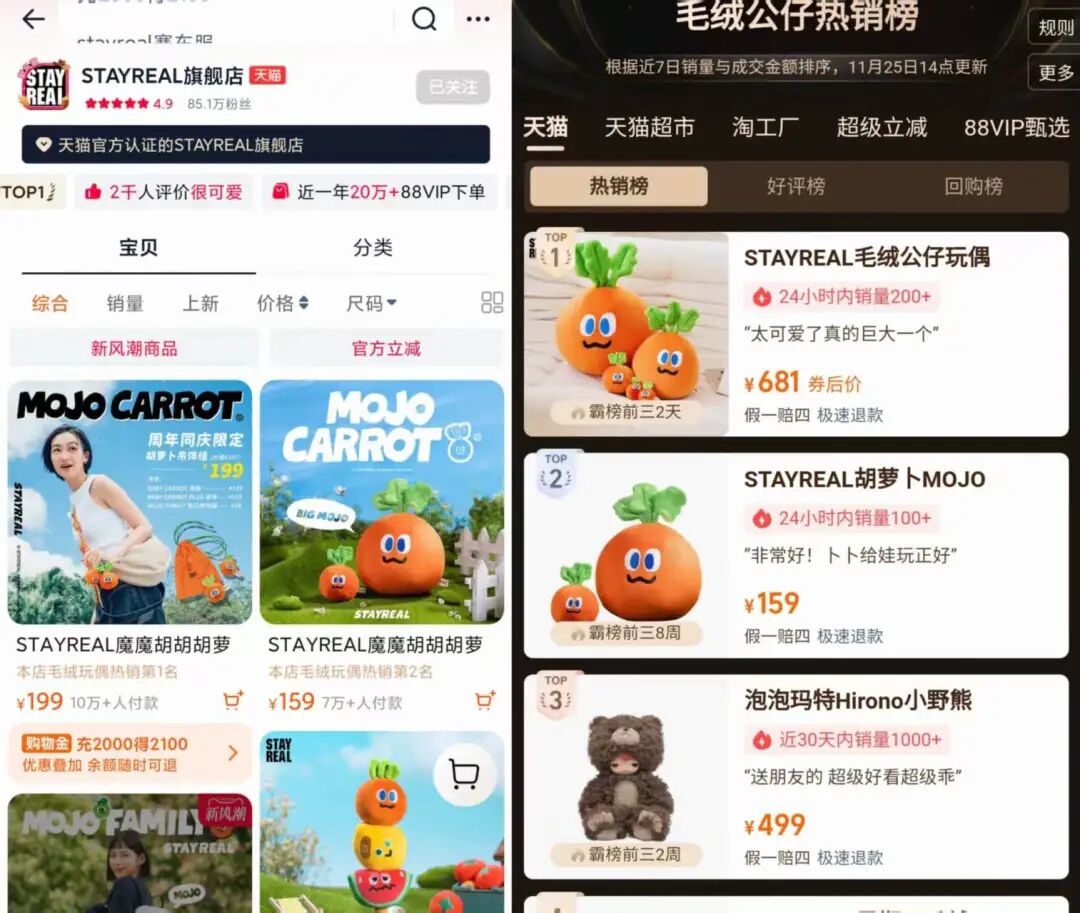
699元毛绒公仔被抢空,下一个Jellycat来了?
3 6 Ke· 2025-11-26 08:49
Core Insights - Jellycat is accelerating its expansion in China, with its largest domestic agent, JOYCODE, opening over 20 stores in various shopping districts in Beijing [1] - Jellycat's gross margin is nearly 70%, with projected revenue for 2024 at approximately £333 million (around 3.2 billion RMB), a year-on-year increase of 66% [1] - The plush toy industry is still in a growth phase, with significant opportunities for brands like Jellycat and emerging competitors [1] Group 1: Jellycat's Performance and Strategy - Jellycat's revenue for 2024 is expected to be five times that of 2019, with gross profit nearly six times higher, and gross margin increasing from below 60% pre-pandemic to nearly 70% [12] - The company has a unique marketing strategy, creating emotional connections with consumers by personalizing each toy with a backstory, which enhances its premium pricing [7] - Jellycat's sales strategy includes rapid product launches and retirements, maintaining a fresh inventory that drives demand and creates a secondary market for discontinued items [8] Group 2: Competitive Landscape - The plush toy market is witnessing the rise of celebrity IP toys, with products like the "Bubu" plush toy from the band Mayday achieving significant sales, indicating a shift in consumer preferences towards branded merchandise [2][4] - Competitors are emerging in the plush toy space, with brands like Wentonzi focusing on traditional cultural IPs and aiming to capture market share through unique designs [15] - The market is also seeing a trend towards lower-cost alternatives, with various brands offering similar products at significantly reduced prices compared to Jellycat [14] Group 3: Market Dynamics and Consumer Behavior - The emotional value associated with plush toys is becoming a key selling point, with brands leveraging this to enhance consumer engagement and loyalty [16] - The industry is evolving from a focus on product features to emotional connections, with brands needing to invest in design and marketing to build a new consumer relationship [16] - The competition is intensifying as brands like Jellycat sign celebrity endorsements and expand their retail presence, leading to a "land grab" strategy in the market [17]
万联晨会-20251126
Wanlian Securities· 2025-11-26 01:21
Core Insights - The A-share market saw a collective rise in the three major indices on Tuesday, with the Shanghai Composite Index increasing by 0.87%, the Shenzhen Component Index by 1.53%, and the ChiNext Index by 1.77%. The total trading volume in the Shanghai and Shenzhen markets reached 1.8262 trillion yuan, a slight increase of 85.8 billion yuan compared to the previous day, with over 4,300 stocks rising across the market [2][7]. Important News - The Ministry of Finance and the State Administration of Taxation jointly issued an announcement clarifying the execution standards for resource tax policies. The announcement covers nine aspects, including circumstances under which resource tax is not payable, applicable tax categories for certain taxable products, and the calculation basis for taxable products under special circumstances [3][7]. - The Shenzhou-22 cargo spacecraft successfully launched to the Chinese space station on November 25, marking the first emergency launch mission in China's manned space program [3][8]. Industry Analysis - The IP (Intellectual Property) economy is rapidly developing, driven by changes in consumer demographics and the emphasis on emotional value. The Z generation, as the emerging consumer group, shows strong emotional attachment and active consumption of IP products, shifting consumer focus from functionality to emotional value [9][10]. - IP can be categorized into content-based IP and image-based IP, with both types capable of mutual conversion to explore higher value and enhance commercialization through derivative products [10][11]. - The derivative products of IP are crucial for materializing and monetizing the influence of IP, with the market for these products experiencing explosive growth, particularly among younger consumers [12][13]. Investment Recommendations - The report suggests focusing on companies with rich IP libraries and cross-media development capabilities, as well as content producers with strong IP creation abilities. Companies excelling in derivative product design, supply chain integration, and offline scenario operations are also highlighted as potential investment opportunities [13].