
新型储能

Search documents
碳酸锂数据日报-20251128
Guo Mao Qi Huo· 2025-11-28 03:20
Report Industry Investment Rating - No information provided Core View of the Report - The terminal demand for lithium carbonate remains strong, but due to a large number of profit - taking positions accumulated from the previous sharp rise and the negative sentiment from overseas mines, there is short - term downward pressure on lithium carbonate prices, and the price may fluctuate widely after stabilizing [3] Summary by Relevant Catalogs Lithium Compounds - SMM battery - grade lithium carbonate has an average price of 93,300 yuan, up 500 yuan; SMM industrial - grade lithium carbonate has an average price of 90,850 yuan, up 450 yuan [1] Lithium Carbonate Futures Contracts - The closing prices and price changes of lithium carbonate futures contracts from 2512 to 2604 are provided, with price declines ranging from 1.41% to 1.9% [1] Lithium Ore - Lithium spodumene concentrate (CIF China) has an average price of 1126 yuan, up 13 yuan; lithium mica with different Li₂O contents (1.5% - 2.0%, 2.0% - 2.5%) and phospho - lithium - aluminum stone with different Li₂O contents (6% - 7%, 7% - 8%) also have their respective average prices and price changes [1][2] Cathode Materials - The average prices and price changes of cathode materials such as lithium iron phosphate (power type), ternary material 811 (polycrystalline/power type), ternary material 523 (single - crystal/power type), and ternary material 613 (single - crystal/power type) are provided [2] Price Spreads - The current values and change values of price spreads such as battery - grade lithium carbonate - industrial - grade lithium carbonate, battery - grade lithium carbonate - main contract, near - month - first - continuous, and near - month - second - continuous are provided [2] Inventory - The total inventory (weekly, tons), inventory of smelters (weekly, tons), downstream inventory (weekly, tons), other inventory (weekly, tons), and registered warehouse receipts (daily, tons) are provided, with corresponding changes [2] Profit Estimation - The cash costs and profits of purchasing lithium spodumene concentrate and lithium mica concentrate are estimated [3] Industry News - This week, lithium carbonate production decreased by 265 tons and inventory decreased by 2452 tons; the national new - type energy storage installed capacity exceeds 100 million kilowatts, 30 times that at the end of the "13th Five - Year Plan" [3]
宏观金融类:文字早评2025/11/28星期五-20251128
Wu Kuang Qi Huo· 2025-11-28 01:42
Report Industry Investment Rating No relevant content provided. Core Viewpoints - After recent continuous declines, the index is expected to stabilize in the short - term. Policy support for the capital market remains unchanged, and technology growth is still the market's main theme. The medium - to long - term approach for the index is to go long on dips [4]. - In the fourth quarter, the supply - demand pattern of the bond market may improve. The market is currently in a situation of weak domestic demand recovery and improved inflation expectations, maintaining an overall oscillatory trend. Attention should be paid to the linkage between stocks and bonds and the impact of liquidity [6]. - The expectation of the Fed's loose monetary policy has significantly rebounded, and the overseas interest - rate cut cycle will continue. It is recommended to go long on precious metals on dips [9]. - Most metal prices are expected to oscillate. Some metals have strong price support due to supply - demand relationships, while others may face downward pressure due to factors such as over - supply or weak demand [12][14][16]. - The demand for steel has officially entered the off - season, and the inventory pressure of hot - rolled coils remains. Steel prices are likely to continue weak oscillations in the short term, but there may be a marginal inflection point in demand later [33]. - The prices of most energy - chemical products are expected to oscillate. Some products may have short - term upward or downward trends due to factors such as supply - demand changes and cost fluctuations [54][55]. - The prices of most agricultural products are expected to oscillate. Some products may face downward pressure due to over - supply, while others may have short - term upward potential due to factors such as production reduction expectations [73][82]. Summary by Directory Macro - financial Stock Index - **Market Information**: There are over 150 humanoid robot enterprises in China, and the NDRC encourages the development of new energy storage and hydrogen energy technologies. OPEC+ may reach an agreement on a mechanism to evaluate member countries' maximum production capacity. JPMorgan Chase has upgraded the rating of A - shares to "overweight" [2]. - **Strategy Viewpoint**: After recent declines, the index is expected to stabilize in the short - term. The long - term approach is to go long on dips, with technology growth as the main theme [4]. Treasury Bonds - **Market Information**: On Thursday, the main contracts of TL, T, TF, and TS had positive changes. From January to October, the total profit of industrial enterprises above the designated size increased by 1.9% year - on - year. The NDRC has arranged special treasury bonds for "two major" construction projects. The central bank conducted a net injection of 564 billion yuan through reverse repurchase operations on Thursday [5]. - **Strategy Viewpoint**: In October, the economic data on both the supply and demand sides were weak. The growth rate of social financing may remain weak at the end of the year. The central bank is maintaining an attitude of protecting funds. The bond market is expected to oscillate in the fourth quarter [6]. Precious Metals - **Market Information**: Shanghai gold and silver futures rose, and COMEX gold and silver prices also had certain trends. The market is mainly concerned about the Fed's subsequent personnel changes and monetary policy expectations. The probability of a 25 - basis - point interest - rate cut by the Fed in December is 86.9% [7][8]. - **Strategy Viewpoint**: The expectation of the Fed's loose monetary policy has rebounded. It is recommended to go long on precious metals on dips [9]. Non - ferrous Metals Copper - **Market Information**: Geopolitical concerns have resurfaced, and the RMB has slightly depreciated. LME copper prices have declined, and domestic copper inventories have decreased. The import loss of domestic copper has widened [11]. - **Strategy Viewpoint**: The probability of an interest - rate cut by the Fed in December is high, but there are still uncertainties in the geopolitical situation. The supply of copper raw materials is tight, and the price support is strong. The reference range for the Shanghai copper main contract is 86,200 - 87,800 yuan/ton [12]. Aluminum - **Market Information**: Aluminum prices have corrected. Domestic aluminum ingot inventories have decreased, and LME aluminum inventories have also decreased [13]. - **Strategy Viewpoint**: The global visible inventory of aluminum ingots is relatively low, and the price support is strong. Although the downstream is entering the off - season, the inventory accumulation pressure is not large. The price may strengthen after adjustment. The reference range for the Shanghai aluminum main contract is 21,400 - 21,700 yuan/ton [14]. Zinc - **Market Information**: The Shanghai zinc index rose slightly. Domestic and LME zinc inventories have certain trends, and the import loss of zinc ingots is relatively large [15][16]. - **Strategy Viewpoint**: Zinc ore imports declined significantly in October, and the supply of zinc ore is tight during the winter stockpiling period of smelters. However, it is expected to loosen marginally after stockpiling. The zinc industry is still in an over - supply cycle, and zinc prices are expected to be weak in the short term [16]. Lead - **Market Information**: The Shanghai lead index declined. Domestic and LME lead inventories have certain trends, and the import profit of lead ingots is relatively small [17]. - **Strategy Viewpoint**: The supply of lead ingots is increasing, and the export of lead - acid batteries is declining. Lead prices are expected to decline at a slower pace in the short term [17]. Nickel - **Market Information**: Nickel prices oscillated narrowly. The prices of nickel ore and nickel pig iron have certain trends, and the supply of refined nickel raw materials is expected to increase [18]. - **Strategy Viewpoint**: The fundamentals of nickel are under pressure, and prices are expected to be under pressure in the short term. It is not recommended to chase short or bottom - fish. The reference range for Shanghai nickel prices is 113,000 - 118,000 yuan/ton [18]. Tin - **Market Information**: The Shanghai tin main contract rose. The production of tin smelters in Yunnan and Jiangxi is at a high level, and the demand in emerging fields provides support for tin prices. The inventory has increased slightly [20]. - **Strategy Viewpoint**: The short - term supply and demand of tin are in a tight balance. It is expected that tin prices will oscillate. It is recommended to wait and see. The reference range for the domestic main contract is 280,000 - 310,000 yuan/ton [21]. Carbonate Lithium - **Market Information**: The spot index of carbonate lithium declined. The price of the LC2605 contract also declined [22]. - **Strategy Viewpoint**: Domestic production has declined, and inventory has decreased. There are differences in the market's expectations for next year's demand. It is recommended to wait and see or use options. The reference range for the Guangzhou Futures Exchange's carbonate lithium 2605 contract is 91,200 - 99,600 yuan/ton [23]. Alumina - **Market Information**: The alumina index rose slightly. The price of overseas ore has declined, and the inventory of futures has decreased [24]. - **Strategy Viewpoint**: The supply of overseas ore is expected to increase, and the alumina smelting industry has an over - supply situation. It is recommended to wait and see in the short term. The reference range for the domestic main contract AO2601 is 2,600 - 2,900 yuan/ton [26]. Stainless Steel - **Market Information**: The stainless - steel main contract declined. The prices of spot and raw materials remained stable, and the inventory decreased [27]. - **Strategy Viewpoint**: The spot market price is stable, and the sales of 300 - series stainless steel are relatively good. However, the consumption in related fields is weak, and the inventory removal speed is slow. Stainless - steel prices are expected to oscillate [28]. Cast Aluminum Alloy - **Market Information**: The price of cast aluminum alloy fluctuated. The inventory of domestic aluminum alloy ingots decreased, and the inventory in factories increased [29]. - **Strategy Viewpoint**: The cost of cast aluminum alloy provides strong support, and the price is expected to follow the trend of aluminum prices in the short term [30]. Black Building Materials Steel - **Market Information**: The prices of rebar and hot - rolled coil futures declined. The prices of spot rebar and hot - rolled coil also decreased [32]. - **Strategy Viewpoint**: The supply and demand of rebar have both declined, and the inventory has been continuously removed. The production of hot - rolled coils has increased, and the inventory removal is slow. The export of steel to South Korea may be affected. Steel prices are expected to continue weak oscillations in the short term [33]. Iron Ore - **Market Information**: The iron - ore main contract rose slightly. The price of spot iron ore and the basis have certain trends [34]. - **Strategy Viewpoint**: The overseas shipment of iron ore has decreased, and the demand from steel mills has weakened. The inventory of iron ore is relatively high, and the price is expected to oscillate. If the molten iron output continues to decline, the ore price may decline in the short term [35]. Glass and Soda Ash - **Market Information**: The glass main contract rose slightly, and the inventory decreased. The soda - ash main contract rose slightly, and the inventory decreased [36][38]. - **Strategy Viewpoint**: The cold - repair expectation of glass production lines in December is increasing, and the supply is expected to shrink. The demand for glass is weak, and the price is expected to oscillate at the bottom. The supply of soda ash is in an over - supply situation, and the price is expected to remain weak [37][38]. Manganese Silicon and Ferrosilicon - **Market Information**: The prices of manganese - silicon and ferrosilicon futures declined. The prices of spot manganese - silicon and ferrosilicon also decreased [39]. - **Strategy Viewpoint**: The risk appetite of the market has weakened, and the prices of ferrous alloys have declined. However, the expectation of an interest - rate cut by the Fed in December has rebounded. It is recommended to pay attention to the inflection point of market sentiment. For the black sector, it may be more cost - effective to look for opportunities to rebound [40][42]. Industrial Silicon and Polysilicon - **Market Information**: The price of industrial - silicon futures rose slightly, and the inventory decreased. The price of polysilicon futures declined, and the inventory increased [43][45]. - **Strategy Viewpoint**: The production of industrial silicon is declining, and the demand is relatively stable. The price is expected to oscillate. The production of polysilicon is declining, and the supply - demand pattern may improve marginally. The price is expected to oscillate in a wide range [44][46]. Energy and Chemicals Rubber - **Market Information**: Rubber prices rebounded. The flood in Thailand's rubber - producing areas is a positive factor, but the subsequent rainfall has decreased. The inventory of exchange - traded RU is low [48]. - **Strategy Viewpoint**: It is recommended to take a neutral approach and conduct short - term trading. It is recommended to partially build a hedging position by buying RU2601 and selling RU2609 [52]. Crude Oil - **Market Information**: The prices of crude - oil and refined - oil futures rose. The US EIA data shows that the inventory of crude oil and some refined oils has increased [53]. - **Strategy Viewpoint**: Although the geopolitical premium has disappeared, the supply of OPEC has not increased significantly. It is recommended to take a wait - and - see approach in the short term and adopt a low - buy and high - sell strategy [54]. Methanol - **Market Information**: The price of methanol futures rose, and the basis decreased. The price of spot methanol also increased [55]. - **Strategy Viewpoint**: The potential positive factors of Iran's plant shutdown have been realized, and the market has stopped falling and stabilized. The supply is expected to remain high, and the market is expected to oscillate after the positive factors are realized [55]. Urea - **Market Information**: The price of urea futures rose, and the basis decreased. The price of spot urea also increased [56]. - **Strategy Viewpoint**: The price of urea is expected to gradually emerge from the bottom range. The supply is relatively high, and the demand has improved. It is recommended to go long on dips at low prices [56]. Pure Benzene and Styrene - **Market Information**: The price of pure - benzene futures remained unchanged, and the basis increased. The price of styrene futures declined, and the basis decreased [57]. - **Strategy Viewpoint**: The supply of styrene is under pressure, and the BZN spread has room for upward repair. The price of styrene may stop falling temporarily [58]. PVC - **Market Information**: The price of PVC futures rose, and the basis decreased. The cost of PVC remained stable, and the inventory increased [59]. - **Strategy Viewpoint**: The supply of PVC is in an over - supply situation, and the demand is weak. It is recommended to go short on rallies in the medium term [60]. Ethylene Glycol - **Market Information**: The price of ethylene - glycol futures declined, and the basis decreased. The inventory of ethylene glycol remained unchanged [61]. - **Strategy Viewpoint**: The supply of ethylene glycol is expected to decline in December, and the inventory accumulation may slow down. It is recommended to go short on rallies in the medium term [62]. PTA - **Market Information**: The price of PTA futures declined, and the basis decreased. The inventory of PTA decreased [63]. - **Strategy Viewpoint**: The supply of PTA is expected to increase, and the demand is expected to remain high in the short term. The processing fee of PTA has limited upward space, and there is a risk of PXN valuation correction [64]. Para - Xylene - **Market Information**: The price of PX futures declined, and the basis increased. The inventory of PX increased [65]. - **Strategy Viewpoint**: The load of PX remains high, and the inventory is difficult to continuously remove. The valuation of PX is at a neutral level, and there is a risk of valuation correction [66]. Polyethylene (PE) - **Market Information**: The price of PE futures declined, and the basis increased. The inventory of PE decreased [67]. - **Strategy Viewpoint**: The price of crude oil may have bottomed out. The valuation of PE has limited downward space, but the high number of warehouse receipts suppresses the price. It is recommended to short the LL - 1 - 5 spread on rallies [68]. Polypropylene (PP) - **Market Information**: The price of PP futures rose, and the basis decreased. The inventory of PP decreased [69]. - **Strategy Viewpoint**: The supply of PP is under pressure, and the demand is seasonally oscillating. The inventory pressure is high. The price may be supported after the supply - over - supply situation changes in the first quarter of next year [70]. Agricultural Products Hogs - **Market Information**: The domestic hog price mainly declined. The market demand is increasing slowly, and the supply of hogs is abundant [72]. - **Strategy Viewpoint**: The theoretical supply of hogs is still large, and the demand is weak. It is recommended to short near - term contracts or conduct reverse - spread trading [73]. Eggs - **Market Information**: The national egg price was stable with some increases. The supply is stable, and the downstream digestion speed is average [74]. - **Strategy Viewpoint**: The egg - price futures have rebounded in advance, but the spot price has not followed up as expected. The short - term trend is expected to oscillate. It is recommended to conduct reverse - spread trading in the near - term and far - term contracts, and short on rallies in the medium term [75]. Soybean and Rapeseed Meal - **Market Information**: The CBOT soybean market was closed due to a holiday. The domestic soybean - meal price was stable, and the inventory increased [76]. - **Strategy Viewpoint**: The global supply of soybeans has decreased, and the domestic soybean inventory is at a high level. The price of soybean meal is expected to oscillate [77]. Oils - **Market Information**: The export of Malaysian palm oil has decreased, and the production has increased. The domestic oil price rebounded [78]. - **Strategy Viewpoint**: The over - supply of palm oil may reverse in the fourth quarter and the first quarter of next year. It is recommended to try to go long on dips [79][80]. Sugar - **Market Information**: The Zhengzhou sugar futures price oscillated strongly. The global sugar supply is expected to be in surplus, and the domestic sugar price is at a relatively low level [81]. - **Strategy Viewpoint**: The global sugar supply - demand relationship has changed from shortage to surplus. It is recommended to short on rallies and close positions when the price falls [82]. Cotton - **Market Information**: The Zhengzhou cotton futures price oscillated narrowly. The downstream spinning - mill operating rate decreased, and the global cotton production increased [83]. - **Strategy Viewpoint**: The demand for cotton is not too bad after the peak season, and the market has digested the negative impact of high yields. The cotton price is expected to oscillate in the short term [84].
国泰君安期货所长早读-20251128
Guo Tai Jun An Qi Huo· 2025-11-28 01:37
1. Report Industry Investment Ratings No industry investment ratings are provided in the report. 2. Core Views - China's industrial profit data shows that in October, the profit of large - scale industrial enterprises decreased by 5.5% year - on - year, but the profit in the first 10 months increased by 1.9% year - on - year. Among the three major sectors, the mining industry decreased by 27.8%, the manufacturing industry increased by 7.7%, and the production and supply of electricity, heat, gas and water increased by 9.5% in the first 10 months [7]. - The long - term supply of copper is tight, and the consumption is expected to pick up. In 2026, the copper market will be in a state of supply shortage, with a high premium for refined copper. The long - term trading strategy for copper is mainly long - position [8][9]. - Cotton futures are expected to fluctuate due to the dual effects of short - term high - yield pressure and high basis support [10]. - After the listing of platinum and palladium futures on the Guangzhou Futures Exchange, there are still risk - free arbitrage opportunities in the cross - market structure, and the prices of platinum and palladium are expected to rise in the short - term due to the easing of the Russia - Ukraine war situation [11][12]. 3. Summaries by Related Catalogs 3.1 Metal Products 3.1.1 Gold and Silver - Gold: The expectation of interest rate cuts has rebounded. The trend strength is 0, indicating a neutral view [15][19]. - Silver: It is in a state of shock adjustment. The trend strength is 0, indicating a neutral view [15][19]. 3.1.2 Copper - The long - term supply of copper is tight, and the long - term consumption is expected to pick up. In 2026, the global copper market will have a supply shortage of 150,000 tons. The long - term trading strategy is mainly long - position. The trend strength is 1, indicating a relatively strong view [8][9][25]. 3.1.3 Zinc - Zinc is in a state of weak shock. The trend strength is 0, indicating a neutral view [15][26]. 3.1.4 Lead - The inventory of lead has decreased, which supports the price. The trend strength is 0, indicating a neutral view [15][30]. 3.1.5 Tin - The supply of tin has been disturbed again. The trend strength is 0, indicating a neutral view [15][32]. 3.1.6 Aluminum, Alumina, and Cast Aluminum Alloy - Aluminum is in a state of range - bound shock; alumina rebounds from a low level; cast aluminum alloy follows the trend of electrolytic aluminum. The trend strength of all three is 0, indicating a neutral view [15][36]. 3.1.7 Nickel and Stainless Steel - The inventory accumulation rhythm of nickel has slowed down, and it is affected by macro and news in the short - term. Stainless steel prices are under pressure and fluctuate at a low level, but the downward space is limited. The trend strength of both is 0, indicating a neutral view [15][39]. 3.1.8 Carbonate Lithium - With the gradual resumption of production by large manufacturers and the less - than - expected inventory reduction, the price of carbonate lithium is under pressure. The trend strength is - 2, indicating a very bearish view [15][44]. 3.1.9 Industrial Silicon and Polysilicon - Industrial silicon mainly fluctuates within a range. Polysilicon requires attention to the position of the 2512 contract. The trend strength of industrial silicon is 0 (neutral), and that of polysilicon is - 1 (weakly bearish) [15][47][48]. 3.1.10 Iron Ore - The downstream demand space for iron ore is limited, and the valuation is high. The trend strength is - 1, indicating a weakly bearish view [15][51]. 3.1.11 Rebar and Hot - Rolled Coil - Both rebar and hot - rolled coil are in a state of wide - range shock. The trend strength of both is 0, indicating a neutral view [15][53][54]. 3.1.12 Ferrosilicon and Silicomanganese - Ferrosilicon fluctuates widely due to market sentiment disturbances, and silicomanganese fluctuates widely due to the firm price of ore. The trend strength of both is 0, indicating a neutral view [15][58]. 3.1.13 Coke and Coking Coal - Both coke and coking coal are in a state of wide - range shock. The trend strength of both is 0, indicating a neutral view [15][62]. 3.2 Agricultural Products 3.2.1 Cotton - Cotton futures are expected to fluctuate due to the dual effects of short - term high - yield pressure and high basis support. Attention should be paid to the change of the basis of spot cotton [10][15][18]. 3.2.2 Palm Oil, Soybean Oil, and Other Oils - Palm oil has a technical rebound due to the weakening of high - yield marginal trading. Soybean oil mainly fluctuates within a range [18]. 3.2.3 Corn - Corn is in a state of shock and upward trend [18]. 3.2.4 Sugar - Sugar is in a state of range consolidation [18]. 3.2.5 Eggs - The increase in the number of culled hens provides expected support for egg prices [18]. 3.2.6 Live Pigs - The limit on positions drives the divergence between the near - term futures and spot prices of live pigs [18]. 3.2.7 Peanuts - Attention should be paid to the spot price of peanuts [18]. 3.3 Others 3.3.1 Logs - Logs are in a state of weak shock [18][64].
盘前必读丨发改委将建立健全具身智能行业准入退出机制;迈瑞医疗董事长拟2亿元增持公司股份
Di Yi Cai Jing· 2025-11-27 23:15
Group 1 - The market is expected to maintain a long-term upward trend despite short-term adjustments [4] - The consumption and technology sectors, particularly integrated circuits and commercial aerospace, are recommended for continued attention [4] - Overall market resilience is anticipated to strengthen, with liquidity conditions expected to improve [4] Group 2 - The National Development and Reform Commission emphasizes the need to prevent oversaturation of humanoid robot products in the market [3] - New energy storage installations have exceeded 100 million kilowatts, significantly increasing from the end of the 13th Five-Year Plan [3] - The approval of 178 domestic online games in November indicates ongoing regulatory activity in the gaming sector [3]



深圳“超级大号充电宝”护航十五运闭幕,探索构网型储能
2 1 Shi Ji Jing Ji Bao Dao· 2025-11-27 10:01
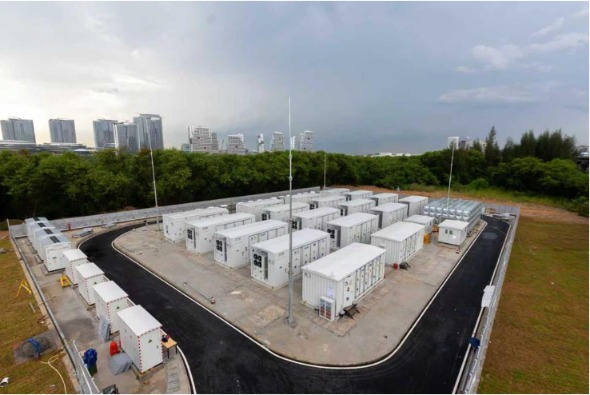
Core Insights - Shenzhen has pioneered a new power supply technology combining "high-reliable municipal electricity + grid-connected energy storage + vehicle-grid interaction," which was successfully implemented during the recent 15th National Games, ensuring uninterrupted power supply [1][2][5]. Group 1: Technological Advancements - The new power supply model significantly departs from the traditional reliance on diesel generators, showcasing Shenzhen's commitment to a green and reliable power supply system [2][5]. - The grid-connected energy storage technology can independently supply power within 5 milliseconds of a municipal power interruption, well below the human perception threshold of 20-50 milliseconds [3][5]. - The vehicle-grid interaction technology allows for the reverse supply of energy from idle electric vehicles, enhancing the resilience of the power supply during emergencies [5][6]. Group 2: Performance Metrics - The newly constructed grid-connected energy storage station is the largest of its kind in China, capable of supplying up to 40,000 kilowatt-hours, equivalent to the daily electricity consumption of 2,580 households [5]. - During the 15th National Games, the vehicle-grid interaction station achieved a peak discharge power of 180 kilowatts, with a total discharge exceeding 60,000 kilowatt-hours, setting national records [5][6]. Group 3: Future Outlook - Shenzhen aims to leverage the experience gained from the 15th National Games to promote the development of emerging industries such as energy storage and vehicle-grid interaction, contributing to the establishment of a new power system and energy framework [6]. - The city is actively pursuing advancements in digital energy, aiming to create a world-class "supercharging city" and a virtual power plant with the largest adjustable capacity in the country [6].
目标17GW、鼓励4小时以上长时储能!湖北印发《湖北省储能体系建设方案(2025—2030年)》
中关村储能产业技术联盟· 2025-11-27 08:36
Core Viewpoint - The article discusses the "Hubei Province Energy Storage System Construction Plan (2025-2030)", which aims to establish a phased development path for energy storage in Hubei, targeting a total installed capacity of 17GW by 2030, positioning the province as a significant power regulation center in the country [1][13]. Phase-wise Installed Capacity Goals - By 2027, the total installed energy storage capacity in Hubei is expected to reach 8 million kilowatts (8000MW) [2]. - New energy storage will primarily consist of new types of storage, targeting 5 million kilowatts [3]. - Pumped storage will reach 2.87 million kilowatts, focusing on small and medium-sized power stations [4]. - By 2030, the total installed capacity will increase to 17 million kilowatts, with new energy storage reaching 8 million kilowatts [5]. - Pumped storage capacity will expand to 9.12 million kilowatts, emphasizing large power stations [6]. Integration of New Energy Storage with Power Systems - The plan emphasizes the integration of new energy storage with the power system, encouraging the construction of "system-friendly" renewable energy power stations and the use of various storage technologies [8]. - It promotes the deployment of long-duration energy storage systems, such as compressed air and flow batteries, to replace some transmission and distribution facilities [8]. Diverse Technology and Industry Cluster Development - The plan outlines a detailed approach to diversify new energy storage technologies, including solid-state batteries, sodium-ion batteries, and compressed air storage, while also encouraging the application of advanced technologies like gravity storage and hydrogen storage [9]. - It aims to establish a distinctive energy storage industry cluster in Hubei, focusing on the development of lithium battery industrial parks and the construction of a super energy storage factory [9]. Capacity Compensation and Market Mechanisms - The plan proposes exploring a capacity compensation mechanism for grid-side energy storage, integrating capacity fees into system operating costs to stabilize revenue expectations for energy storage stations [10]. - It also aims to optimize time-of-use pricing mechanisms and gradually improve the pricing policies for pumped storage [10]. Management and Service Mechanisms for Energy Storage - The plan emphasizes the establishment of a management system for energy storage that aligns with the needs of sustainable development, including optimizing market and pricing mechanisms [20]. - It encourages the participation of new energy storage in market transactions and the development of a collaborative optimization model for energy sources, networks, loads, and storage [21].

龙源技术入选第九批制造业单项冠军企业名单
Quan Jing Wang· 2025-11-26 07:29
Core Viewpoint - Yantai Longyuan Technology has been recognized as a national manufacturing single champion for its "plasma ignition complete equipment," highlighting its leadership in a specific manufacturing niche and advanced technology [1] Group 1: Company Achievements - Yantai Longyuan Technology is awarded the title of national manufacturing single champion by the Ministry of Industry and Information Technology, showcasing its global leadership in the plasma ignition technology sector [1] - The company has successfully equipped over 1,100 coal-fired units globally, with a total installed capacity exceeding 550 million kilowatts [1] - The company has received two "National Science and Technology Progress Award Second Prizes" and the China Patent Gold Award, filling multiple technological gaps worldwide [1] Group 2: Future Development Strategy - The company aims to achieve a market value of 10 billion yuan and establish itself as a high-quality energy technology innovation and listed company [2] - Yantai Longyuan Technology plans to strengthen its innovation and research platform, tackle major technological projects, and actively engage in emerging sectors such as green low-carbon and new energy storage [2] - The company is committed to enhancing its overall competitiveness and becoming a world-class leader in energy and environmental equipment, contributing to the high-quality development of the energy and power industry and supporting the "dual carbon" goals [2]

供需格局改善叠加“反内卷”驱动景气复苏,关注石化ETF(159731)低位布局机会
Mei Ri Jing Ji Xin Wen· 2025-11-26 05:09
Group 1 - The core viewpoint of the articles indicates that the petrochemical industry is experiencing a recovery phase after a downturn, with expectations for improved profitability and demand growth in the coming years [1][2]. - The Petrochemical ETF (159731) has shown stability, with a net inflow of funds in 8 out of the last 10 trading days, totaling 24.13 million yuan, and its latest share count reaching a record high of 227 million [1]. - According to Guosen Securities, the petrochemical industry is expected to see a recovery in profitability by the third quarter of 2025, with a projected year-on-year net profit growth of 10.56% [1]. Group 2 - The petrochemical industry is characterized by significant cyclicality, having peaked in profitability in 2021 and entering a downward cycle thereafter [1]. - Supply-side factors indicate a decline in capital expenditure over several quarters, signaling the end of the expansion cycle, while policies aimed at reducing excess capacity are expected to alleviate supply surplus issues [1]. - On the demand side, a global interest rate reduction cycle is anticipated to support a moderate recovery in traditional demand, with emerging sectors such as new energy storage, AI, and aviation decarbonization driving growth in specific chemical products [1]. Group 3 - The composition of the Petrochemical ETF closely follows the CSI Petrochemical Industry Index, with the basic chemical industry accounting for 60.85% and the oil and petrochemical industry for 32.16% [2]. - The industry is shifting focus from quantity growth to quality improvement, with expectations for sustained upward trends in supply-demand dynamics [2].
万里扬(002434):储能业务爆发式增长拓展机器人精密传动赛道
NORTHEAST SECURITIES· 2025-11-26 02:41
Investment Rating - The report maintains a "Buy" rating for the company [6][3]. Core Insights - The company is undergoing a significant transformation from a traditional automotive parts manufacturer to a dual-driven model focusing on "automotive components + new energy storage" [20][23]. - The energy storage business has shown explosive growth, with a revenue increase of 411% in 2024 compared to 2023, marking a substantial strategic breakthrough [27][30]. - The company has established a solid position in the automotive transmission market, serving major domestic automakers and expanding its product lines to include non-road transmission systems and energy storage solutions [20][23]. Summary by Sections 1. Company Overview - Founded on October 22, 2003, and listed on June 18, 2010, the company has evolved from a regional supplier to a national core component manufacturer [20]. - The company has a comprehensive product system covering manual and automatic transmissions for passenger and commercial vehicles, with manufacturing bases in multiple locations [20][23]. 2. Business Transformation - The company is shifting towards a dual-driven model, integrating energy storage as a key growth area alongside traditional automotive components [20][23]. - The energy storage business has been incorporated into the main business scope, with significant investments in new energy storage power stations across various provinces [20][23]. 3. Financial Performance - The company expects revenues of 60.1 billion, 71.2 billion, and 89.6 billion yuan for 2025, 2026, and 2027 respectively, with corresponding net profits of 4.0 billion, 4.9 billion, and 6.0 billion yuan [3][4]. - The company's revenue has shown a compound annual growth rate (CAGR) of 18.7% over the past three years, driven primarily by the energy storage business [27][30]. 4. Market Position - The company holds a leading market share in commercial vehicle transmissions, providing products to major manufacturers such as Foton and China National Heavy Duty Truck Group [34][41]. - The passenger vehicle transmission segment has also seen growth, with the company becoming a core supplier for leading domestic brands like Geely and BYD [50][61]. 5. Energy Storage Business - The energy storage sector is positioned for significant growth, with the company actively participating in the investment, design, and operation of new energy storage projects [20][23]. - The company has obtained qualifications for power trading and carbon asset management, expanding its reach into high-value areas of the energy market [20][23].

从三个视角看中国式现代化宜宾实践
Si Chuan Ri Bao· 2025-11-25 21:11
Economic Growth - The regional GDP of Yibin is projected to grow from 286.35 billion yuan in 2020 to 400.58 billion yuan by 2024, crossing two 100 billion yuan thresholds and ranking 87th among the top 100 cities in China [1] - By 2024, the total industrial added value is expected to reach 160.79 billion yuan, which is 1.5 times that of the end of the 13th Five-Year Plan [1] - The service sector's added value is projected to be 169.63 billion yuan by 2024, also 1.5 times that of the end of the 13th Five-Year Plan [1] - The total output value of agriculture, forestry, animal husbandry, and fishery is expected to reach 68.33 billion yuan by 2024, which is 1.2 times that of the end of the 13th Five-Year Plan [1] Urban and Rural Integration - Yibin is developing 31 urban-rural integration experimental zones, with the number of counties (districts) with a GDP exceeding 20 billion yuan increasing from 2 in 2020 to 9 by 2024 [2] - The city has achieved "county-level highway connectivity" and integrated into the Chengdu-Chongqing "one-hour economic circle" [2] Innovation and Technology - Yibin has signed contracts for 26 key industrial projects in 2023, establishing a distinctive and efficient new energy storage industry chain [5] - The city has seen a 49.5% increase in total R&D expenditure over five years, with the number of high-tech enterprises growing by 337 to a total of 487 [2][3] - The city is focusing on new energy storage, digital economy, and other emerging industries, transitioning from traditional industries to modern sectors [6] Environmental and Urban Development - Yibin has implemented strict controls on industrial wastewater discharge and upgraded urban sewage treatment facilities, significantly improving water quality [8] - The city has added over 1 million square meters of urban green space, enhancing the living environment [8] Education and Healthcare - The annual public budget for education exceeds 10 billion yuan, with 315 educational projects completed, adding 71,700 new student places [9] - New hospitals and healthcare facilities have been established, expanding access to quality medical resources [9] Industry Leadership - Yibin has become a leading hub for the energy storage industry, with a production capacity of 13 GWh and a market value of 3.628 billion yuan in the first three quarters of 2023, representing a 377% increase year-on-year [5] - The city is home to the largest production base for energy storage equipment in China, contributing significantly to the national energy transition [5][11]