实体经济

Search documents
中国真实GDP比美国多出10万亿美元?美国是气球中国是实心球!
Sou Hu Cai Jing· 2025-11-10 13:12
Core Viewpoint - The debate over whether China's GDP surpasses that of the United States has intensified amid growing competition between the two nations, with claims that China's GDP has already exceeded that of the U.S. when calculated using different methodologies [1][7]. Economic Comparison - According to U.S. calculations, the U.S. remains the leader in GDP, but this is challenged by claims of a more accurate representation of China's economic strength [1]. - Paul Krugman, a Nobel laureate, criticized the U.S. economy for relying on statistical manipulation to create an illusion of prosperity without corresponding production capacity [2]. Contribution to GDP - The contribution of intellectual property to the U.S. GDP is reported at 41%, while financial transactions contribute 12.7% and healthcare spending accounts for 17.6% [2][3]. - The high costs of healthcare in the U.S. are highlighted, with examples of significant expenses for basic medical needs, indicating inefficiencies in the system [3]. Energy Consumption as a Productivity Indicator - China's electricity generation increased by 42% from 2019 to 2024, reaching 10.1 trillion kilowatt-hours, while the U.S. saw only a 4.9% increase to 4.3 trillion kilowatt-hours, suggesting a weaker U.S. real economy [5]. - The energy consumption of a country is presented as a key indicator of its productivity, with China's growth in this area outpacing that of the U.S. [5]. Purchasing Power Parity - When using purchasing power parity (PPP) for comparison, China's economy is estimated to exceed the U.S. by $10 trillion, and by $15 trillion when using U.S. calculation methods [7]. - The metaphor of a balloon versus a solid ball is used to illustrate the perceived superficiality of U.S. economic strength compared to the tangible assets of China's economy [7].


再获殊荣!海尔融资租赁荣膺2025中国融资租赁榜“年度公司奖”
Sou Hu Cai Jing· 2025-11-10 09:16
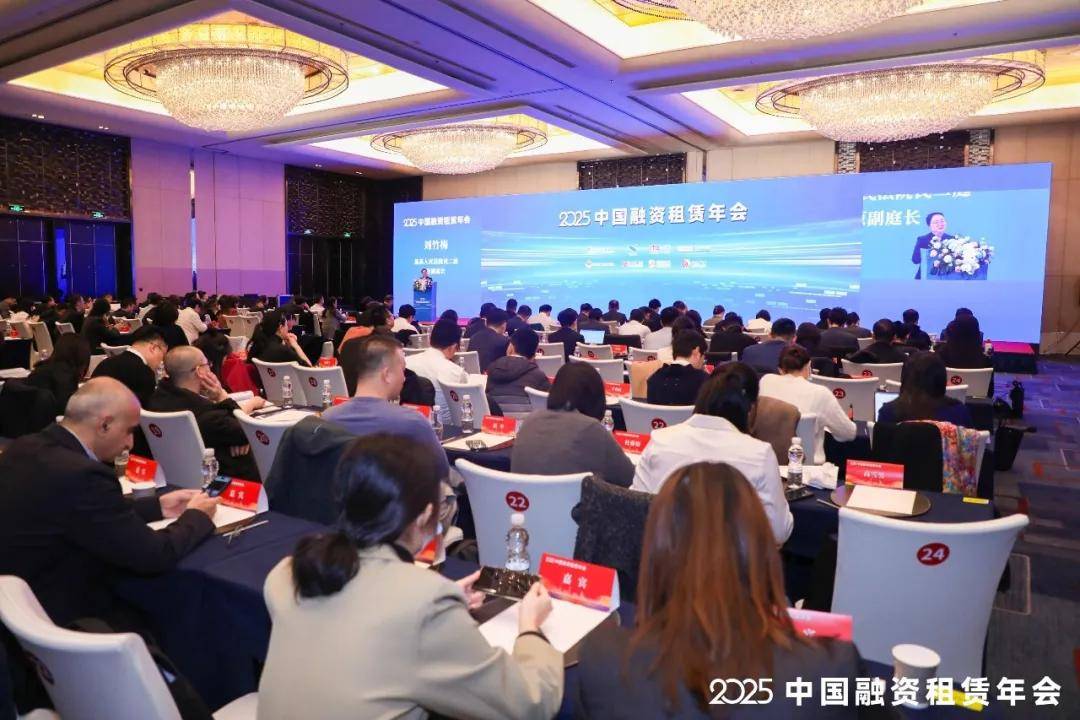
Core Insights - The 18th China Financing Leasing Annual Conference was held in Beijing on November 6, 2025, focusing on the "14th Five-Year Plan" and discussing market access, policy interpretation, market expansion, industry transformation, strategic upgrades, and model innovation [1][3] - Haier Financing Leasing was awarded the "Annual Company Award" in the 2025 China Financing Leasing List, reflecting the industry's recognition of its comprehensive strength [1][3] Industry Overview - The China Financing Leasing Annual Conference has been a significant event since its inception in 2007, gathering professionals, scholars, and executives to discuss cutting-edge industry topics and promote healthy development [3] - The conference serves as a platform for deep dialogue within the industry and aims to foster collaboration and value co-creation [3] Company Profile - Haier Financing Leasing is a leading domestic financing leasing company that adheres to the business philosophy of "Finance for Industry," focusing on serving the real economy and various sectors such as intelligent manufacturing, healthcare, education, and agriculture [5] - The company has invested over 120 billion in supporting the real economy, served more than 9,000 clients, and manages assets exceeding 24 billion [5] - Haier Financing Leasing plans to continue its commitment to the "Finance for Industry" philosophy, leveraging its professional advantages in "financing + asset management" to enhance service models and contribute to regional economic development and the modernization of the industrial system [5]
公募基金权益指数跟踪周报(2025.11.03-2025.11.07):板块高低切换,从算力到电力-20251110
HWABAO SECURITIES· 2025-11-10 07:51
Report Summary 1. Report Industry Investment Rating No relevant content provided. 2. Core Viewpoints - The A-share market showed a volatile pattern last week (2025.11.03 - 2025.11.07), with the value style outperforming the growth style. The market is "desensitized" to positive news due to the lack of earnings report data and the intensified high - level volatility of the US AI sector. The style switch is becoming clearer, and the power grid and energy storage industries are attracting funds [3][13][14]. - The new fund issuance is continuously warming up, and "same - day sold - out funds" have reappeared [6]. - The electricity new (E - new) sector is expected to become one of the main market trends, as the energy logic, especially power supply, is hard to be falsified in the short term, and the expectation of green power policies in China is rising [5][15]. 3. Summary by Relevant Catalogs 3.1 Equity Market Review and Observation - **Market Performance**: The A - share market was volatile last week. The Shanghai Composite Index rose 1.08%, the ChiNext Index rose 0.65%, the CSI Dividend Index rose 2.25%, and the North Exchange 50 Index fell 3.79%. The pro - cyclical sectors such as power equipment, coal, and petrochemicals led the gains, while the computer and pharmaceutical sectors declined. The average daily trading volume was 2.01 trillion yuan, down from the previous period [13]. - **Market Features**: The market is "desensitized" to positive news in the fourth quarter. The style switch is clear, and the power grid and energy storage industries are favored. The Shanghai Composite Index may fluctuate around 4000 points, and a fundamental driving force is needed to break through [14]. - **Technology Direction**: In the US, the government's interest - binding with cloud service providers in the AI industry is expected to strengthen. In China, the domestic computing power industry chain is sluggish, and the capital expenditure growth of cloud service providers has slowed down [14]. - **Policy**: On November 7, the State Council issued an implementation opinion focusing on digital - real economy integration, providing long - term policy support for AI, intelligent manufacturing, and new energy industries [15]. - **Power Direction**: The global AI competition is a Sino - US duopoly. China faces challenges in advanced - process chips, while the US has energy infrastructure bottlenecks. The E - new sector is expected to be a market mainstay, with more certain profit realization next year [5][15][16]. 3.2 Public Fund Market Dynamics New fund issuance is warming up, with two funds raising over 3 billion yuan in one day on November 4 [6][18]. 3.3 Active Equity Fund Index Performance Tracking | Index Category | Last Week | Last Month | YTD | Since Inception | | --- | --- | --- | --- | --- | | Active Stock Fund Selection | 0.72% | - 1.06% | 39.20% | 40.33% | | Value Stock Fund Selection | 1.29% | 1.18% | 19.44% | 19.53% | | Balanced Stock Fund Selection | 0.66% | - 1.73% | 32.40% | 29.50% | | Growth Stock Fund Selection | 0.16% | - 3.55% | 52.89% | 39.14% | | Pharmaceutical Stock Fund Selection | - 4.77% | - 8.16% | 36.20% | 17.99% | | Consumption Stock Fund Selection | - 2.11% | - 5.83% | 12.55% | 5.30% | | Technology Stock Fund Selection | 0.75% | - 3.17% | 48.52% | 50.85% | | High - end Manufacturing Stock Fund Selection | 1.23% | - 0.45% | 38.37% | 31.69% | | Cyclical Stock Fund Selection | - 0.25% | - 4.50% | 25.79% | 16.91% | Each index has its own positioning and performance comparison benchmark. For example, the Active Stock Fund Selection Index selects 15 funds equally weighted, and its benchmark is the CSI Active Stock Fund Index (930980.CSI) [19][20].
中央财经委员会办公室原副主任尹艳林:多维度锚定“十五五”经济发展新局面
Zhong Guo Zheng Quan Bao· 2025-11-09 23:58
Group 1: Economic Overview - The overall economic operation in China remains stable during the "14th Five-Year Plan" period, with a solid and steady advancement in high-quality development, showcasing strong resilience and vitality in multiple macro indicators [1][2] - The GDP growth for the first three quarters of 2025 is reported at 5.2% year-on-year, laying a strong foundation for achieving the annual target [1] - New economic drivers, particularly in equipment manufacturing and high-tech manufacturing, have shown robust growth, with significant increases in the production of smart products and green equipment [1] Group 2: Policy Impact - Demand-stimulating policies have effectively driven retail sales growth and facilitated large-scale equipment upgrades, creating a virtuous cycle of policy stimulation leading to increased demand, production growth, and subsequent investment [2] - The A-share market has seen a notable increase in trading volume and investor confidence since the introduction of a comprehensive set of measures on September 24 of the previous year [2] Group 3: Recommendations for the "15th Five-Year Plan" - The recommendations emphasize the importance of coordinated fiscal and monetary policies, enhancing the roles of various policies to promote an economy driven by domestic demand and consumption [2][3] - The focus on smart, green, and integrated development in the real economy aims to maintain a reasonable proportion of manufacturing and build a modern industrial system centered on advanced manufacturing [3] - Regional development strategies are highlighted to enhance the quality of development in key areas such as Beijing-Tianjin-Hebei, the Yangtze River Delta, and the Guangdong-Hong Kong-Macau Greater Bay Area [3]
多维度锚定“十五五”经济发展新局面
Zhong Guo Zheng Quan Bao· 2025-11-09 20:15
Core Viewpoint - The conference highlighted the resilience and vitality of China's economy during the "14th Five-Year Plan" period, with a focus on high-quality development and various macroeconomic indicators that support this outlook [1][2]. Macroeconomic Indicators - China's GDP grew by 5.2% year-on-year in the first three quarters of 2025, laying a solid foundation for achieving the annual target [2]. - The growth of new economic drivers, particularly in equipment manufacturing and high-tech manufacturing, outpaced overall industrial growth [2]. - Significant increases in the production of smart products and green equipment were noted, alongside a marked growth in the value added by the digital product manufacturing sector [2]. Policy Impact - Demand-stimulating policies have shown effectiveness, with the "Two New" policies driving retail sales growth and facilitating large-scale equipment upgrades, creating a positive cycle of policy stimulus leading to increased demand, production growth, and subsequent investment [2]. - The external trade sector demonstrated strong resilience, achieving record high import and export volumes despite a complex external environment, with diversified markets providing robust support [2]. Capital Market Performance - The A-share market has seen a significant increase in trading volume and investor confidence since the introduction of a comprehensive set of measures on September 24 of the previous year [2]. Recommendations for the "15th Five-Year Plan" - The proposed recommendations emphasize economic construction as the central theme, promoting high-quality development while adhering to the principle of prioritizing people's needs and showcasing a spirit of reform and innovation [2]. Macroeconomic Policy Suggestions - There is a call for enhanced coordination between fiscal and monetary policies, leveraging various policy tools to foster an economy driven by domestic demand and consumption [3]. - The need for proactive macroeconomic policies that are consistent and capable of counter-cyclical adjustments is emphasized [3]. Focus on Real Economy - The emphasis is on maintaining a reasonable proportion of manufacturing while building a modern industrial system centered around advanced manufacturing [3]. - Accelerating self-reliance in technology and enhancing independent innovation capabilities are seen as crucial for seizing technological development opportunities [3]. Regional Development Strategy - The strategy aims to leverage the synergistic effects of various regional development strategies to enhance the high-quality development momentum in key areas such as Beijing-Tianjin-Hebei, the Yangtze River Delta, and the Guangdong-Hong Kong-Macau Greater Bay Area [3]. Domestic Demand Expansion - The approach combines improving livelihoods and promoting consumption with investments in both physical and human capital, aiming to create a virtuous cycle between supply and demand [3]. Green Transition Initiatives - The focus on carbon peak and carbon neutrality aims to synergize efforts in reducing carbon emissions, pollution, and promoting green growth while ensuring ecological safety [3].
2025年世界互联网大会乌镇峰会互联网企业家论坛举行——创新驱动引领互联网高质量发展
Jing Ji Ri Bao· 2025-11-08 22:32
Core Insights - The 2025 World Internet Conference in Wuzhen focused on how internet companies can transform technological innovation into high-quality development [1][2] - Key officials emphasized the importance of artificial intelligence and other advanced technologies in driving China's modernization and economic growth [2] Group 1: Event Overview - The forum was themed "Innovation Drives Intelligence to Empower the Future" and featured speeches from notable figures including Wang Jingtao, Zheng Qingdong, Liu Fei, and Liu Jun [1] - The event aimed to create a high-end platform for discussing practical paths for leading high-quality development in the internet sector through innovation [2] Group 2: Key Themes and Discussions - Liu Fei highlighted Zhejiang's commitment to deepening "Digital Zhejiang" construction and fostering an innovative ecosystem to enhance the business environment [1] - Zheng Qingdong pointed out that technologies like artificial intelligence and quantum technology are reshaping industry forms and development models, emphasizing the integration of digital and real economies [2] Group 3: Outcomes and Initiatives - The forum featured a roundtable discussion on "Internet Innovation and Adherence," showcasing the achievements of internet companies in core technology breakthroughs and social services [2] - A list of the "Top Ten Typical Cases of Innovation and Development in Chinese Internet Enterprises for 2025" was released, highlighting successful examples in empowering the real economy and promoting cultural prosperity [2]

亮眼成绩系统回顾 第七部进博会蓝皮书发布
Yang Shi Xin Wen· 2025-11-07 06:12
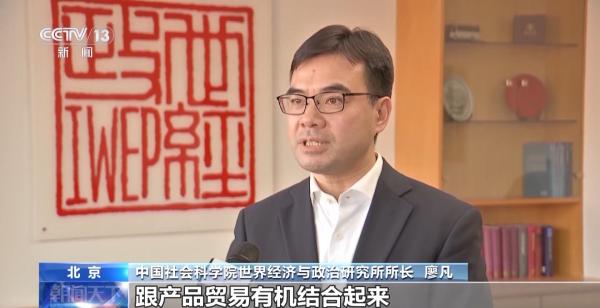
Core Insights - The latest "CIIE Blue Book" highlights the integration of digital economy and real economy as a key theme, showcasing new opportunities and trends for domestic and international enterprises [1][3] - The report indicates that the cumulative intention transaction amount for the seventh CIIE exceeded $80 billion, reflecting a 2.0% increase compared to the previous year, demonstrating the strong conversion capability of the debut economy [3] Group 1 - The "CIIE Blue Book" systematically reviews the achievements of the first seven CIIEs, particularly focusing on the new opportunities presented by the seventh CIIE under the empowerment of the digital economy [1] - The report emphasizes the organic combination of technology trade and product trade, facilitating the rapid transformation of technological advancements into new driving forces for the development of the real economy [3] Group 2 - The first seven CIIEs have showcased nearly 3,000 representative new products, technologies, and services, promoting the deep integration of digital technologies such as artificial intelligence and industrial internet with China's manufacturing, agriculture, and service industries [3] - In 2024, China's wind power and photovoltaic products are expected to cover over 200 countries and regions, contributing more than 80% of global photovoltaic modules and 70% of wind power equipment [5]
准确把握建设现代化产业体系的理论内涵和实践要求(深入学习贯彻习近平新时代中国特色社会主义思想)
Ren Min Ri Bao· 2025-11-06 22:11
Core Viewpoint - The construction of a modern industrial system is essential for China's economic modernization, emphasizing the importance of technological innovation and the solid foundation of the real economy [1][4][11]. Group 1: Theoretical Framework of Modern Industrial System - The industrial system is a complex organic system involving various sectors and enterprises, which significantly influences economic growth and stability [2][5]. - A modern industrial system enhances a country's comprehensive competitiveness and is crucial for economic modernization [3][5]. Group 2: Progress and Achievements - Since the 18th National Congress, China has made significant progress in building a modern industrial system, achieving a manufacturing value-added share of nearly 30% of the global total by 2024 [11][12]. - The industrial structure has been optimized, with the proportion of high-tech manufacturing increasing from 8.9% to 16.3% from 2010 to 2024 [13]. Group 3: Key Tasks for the 14th Five-Year Plan - The plan emphasizes optimizing traditional industries, nurturing emerging and future industries, promoting high-quality service development, and constructing a modern infrastructure system [16][17][18]. - Specific initiatives include enhancing the competitiveness of traditional sectors and fostering strategic emerging industries like renewable energy and advanced manufacturing [17][18]. Group 4: Security and Resilience - The modern industrial system must ensure security and resilience, particularly in critical sectors like food and energy, with self-sufficiency rates above 95% and 80%, respectively [14]. - The focus is on addressing vulnerabilities in key technologies and enhancing the autonomy of industrial chains [14][15]. Group 5: Financial and Market Dynamics - A supportive financial system is crucial for the development of the modern industrial system, emphasizing the need for an innovation-friendly financial environment [21]. - The construction of a robust domestic market is essential for reducing operational costs and facilitating resource allocation [19][22].
“十五五”锚定现代化产业体系 固本育新打开增长新空间
Zheng Quan Shi Bao· 2025-11-05 18:35
Core Insights - The core viewpoint of the article emphasizes the importance of strengthening the real economy as a strategic priority in China's 15th Five-Year Plan, highlighting its critical role in national development and economic resilience [1][2]. Group 1: Strengthening the Real Economy - The real economy is identified as the foundation of a nation's economy, essential for wealth creation and national strength [2]. - The plan aims for industrial value-added growth from 31.3 trillion yuan to 40.5 trillion yuan between 2020 and 2024, providing robust support for economic, technological, and comprehensive national strength [2]. - The strategy includes building a modern industrial system focused on advanced manufacturing, quality, and green development, ensuring a balanced manufacturing sector [2][3]. Group 2: Upgrading Traditional Industries - The plan outlines four key areas for optimizing traditional industries: solidifying foundations, fostering innovation, expanding capacity, and enhancing efficiency [3]. - Key industries such as mining, metallurgy, chemicals, and machinery are targeted for quality upgrades to maintain global competitiveness [3][4]. - A collaborative approach involving policy, technology, and finance is necessary for the transformation of traditional industries [4]. Group 3: Cultivating Emerging and Future Industries - The plan emphasizes the cultivation of emerging and future industries, including new energy, new materials, and aerospace, to inject new momentum into economic growth [5][6]. - It proposes implementing industry innovation projects and exploring diverse technological routes and business models for future industries [5]. - Addressing challenges in emerging industries requires innovative mechanisms and a focus on application-oriented development [6]. Group 4: Enhancing the Service Sector - The plan recognizes significant potential for expanding and improving the service sector, aiming to enhance its integration with advanced manufacturing and modern agriculture [7]. - It calls for actions to elevate the quality and capacity of the service industry, promoting specialized and high-value production services [7].
专访黄群慧:发展新质生产力是“十五五”产业政策主线
21世纪经济报道· 2025-11-05 12:40
Core Viewpoint - The article discusses China's strategic direction for industrial development during the "15th Five-Year Plan" period, emphasizing the construction of a modern industrial system and the strengthening of the real economy as primary tasks [1][11]. Group 1: Traditional Industry Transformation - The "15th Five-Year Plan" aims to optimize and enhance the global competitiveness of traditional industries such as mining, metallurgy, and machinery, which are crucial for economic resilience [6][7]. - The transformation of traditional industries is expected to generate significant economic value, potentially reaching a value increase of 10 trillion yuan through technological upgrades and smart manufacturing [7]. Group 2: Emerging Industries - The plan highlights the importance of strategic emerging industries like new energy, new materials, and aerospace, which are anticipated to become major drivers of economic growth [8][9]. - Local governments are encouraged to develop emerging industries based on regional resources and capabilities, fostering suitable industrial clusters [9]. Group 3: Future Industries - The article identifies future industries such as quantum technology and hydrogen energy as critical for gaining competitive advantages in global markets [10][12]. - The development of these future industries requires careful consideration of technological maturity and market potential, as they involve high risks and long investment cycles [10]. Group 4: Modern Industrial System - A modern industrial system is deemed essential for China's modernization, with a focus on intelligent, green, and integrated development [11][12]. - The article stresses the need for a robust manufacturing sector as the backbone of the modern industrial system, which is vital for achieving national development goals [11]. Group 5: New Infrastructure and Services - The plan calls for the construction of new infrastructure, particularly in computing power, to support technological advancements and industrial upgrades [12][13]. - The expansion and enhancement of productive services are highlighted as key to supporting manufacturing transformation and achieving high-quality development [14].